
This weekend, China celebrated Dragon Boat Festival, marking the holiday with a 3-day weekend. On a whim, I decided to book a last-minute trip to Shaoxing, Zhejiang, approximately 1hr 20 mins from Shanghai by high-speed train.
I was able to secure a 2nd-class ticket for a train leaving in less than 24 hours, which was a bit surprising, considering it was a public holiday weekend. I would expect a popular route like this to have standing tickets only or be completely sold out.
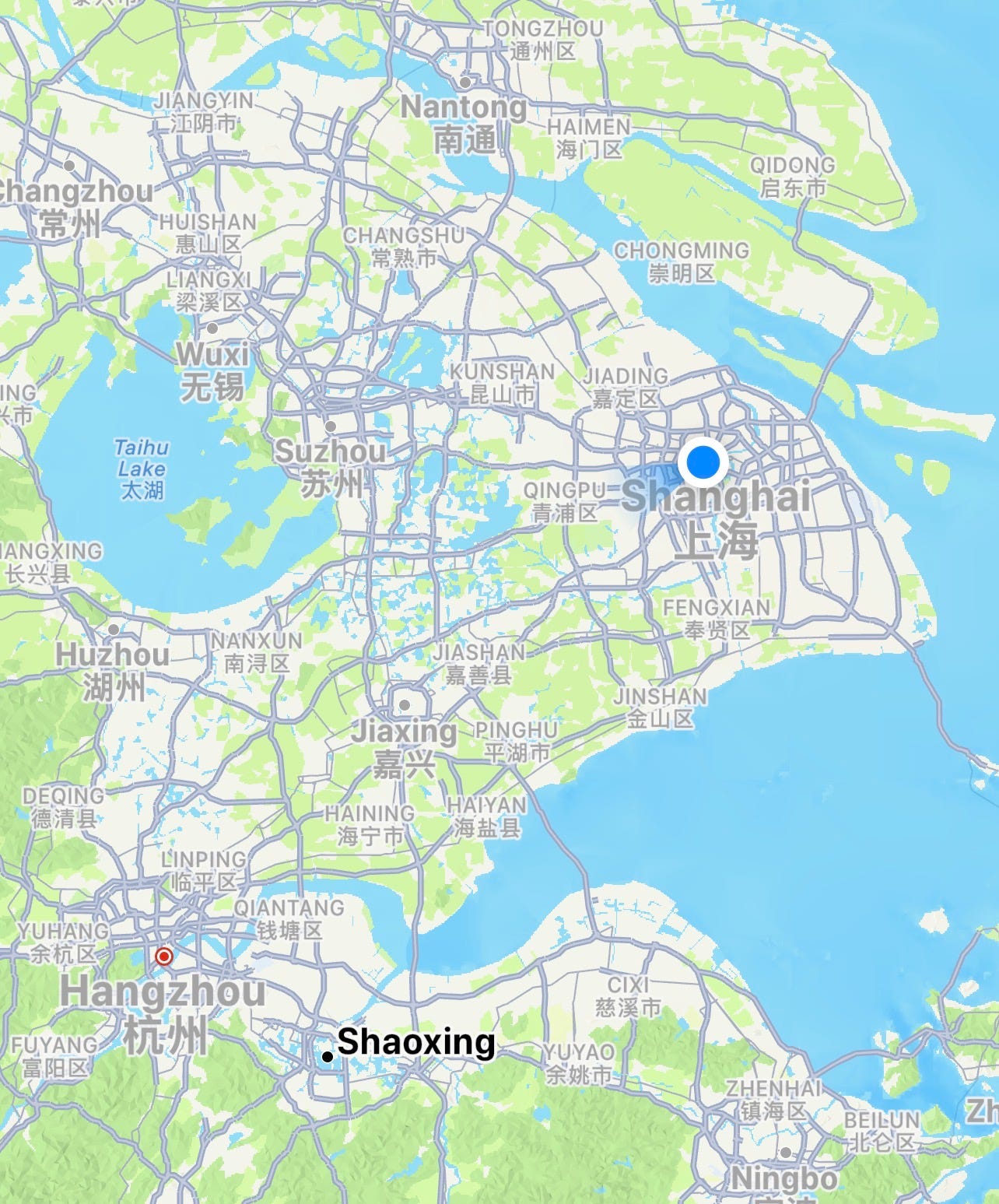
On the train, I encountered fewer tourists than I imagined I would; mostly, aunties and migrant workers occupied my coach. I passed one group of young girls who also got off in Shaoxing, fully armed in vlogging gear.
Over the course of the weekend, I devoured the novel “Butter,” by Japanese author Asako Yuzuki. It’s about a female gourmet cook-turned-serial killer and a journalist who becomes entangled in her aura. I’ve grown partial to a few Japanese authors recently. The stories are all faintly disturbing (in a way that’s hard to put a finger on) but profoundly introspective. I sleep terribly when I’m in the middle of these novels, plagued by fits of dreams that slip through the cracks of my memory but leave me with a dull, lingering sensation of unease.
In between consuming “Butter” (as in, the novel, though I did make my way through some baked goods too), I listened to an interview between Ezra Klein and the writer Gary Shteyngart, author of the now ironically accurate 2010 novel, “Super Sad True Love Story,” and upcoming book, “The Sensualist: Adventures in Pure Pleasure.”
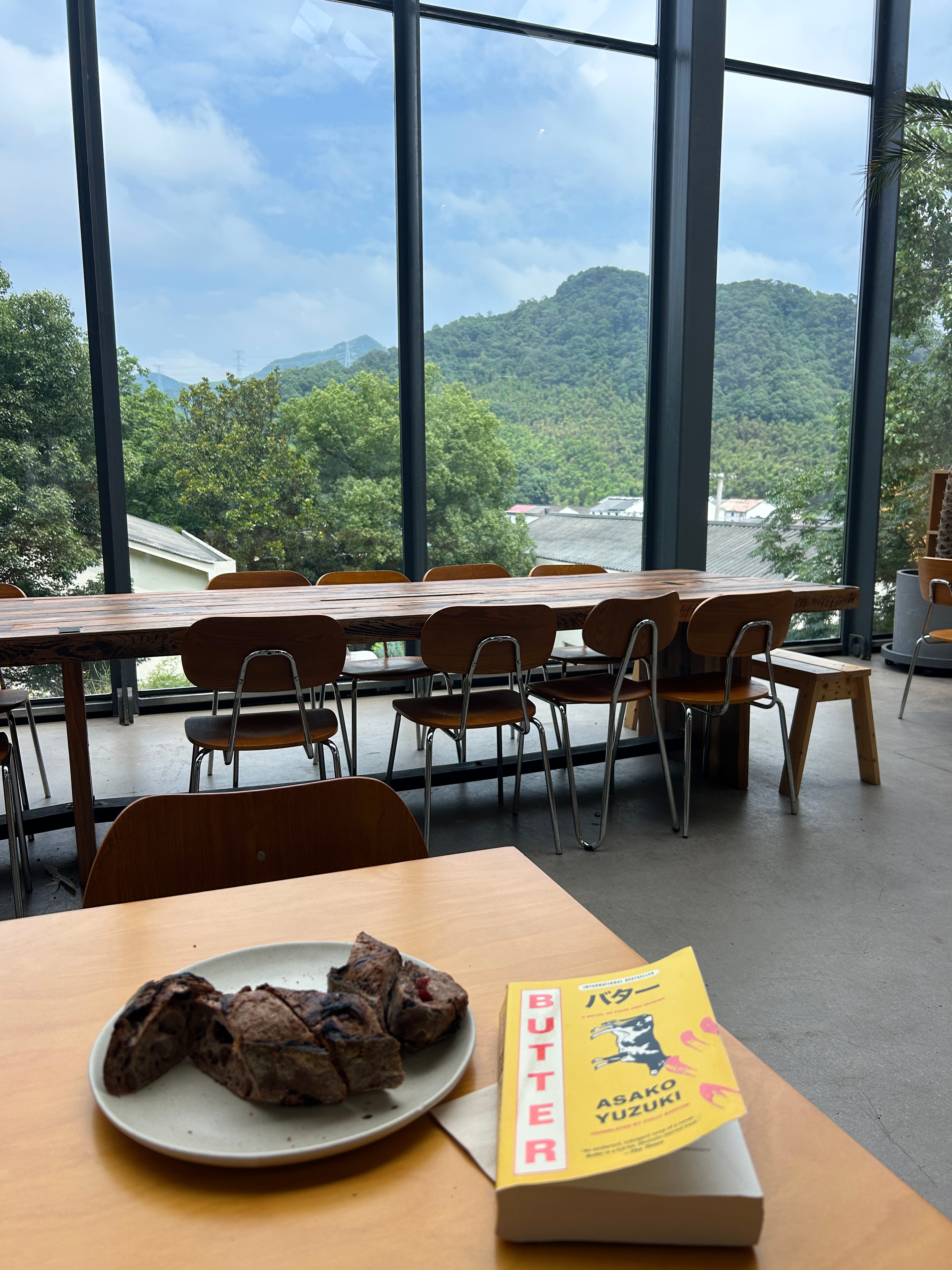
Both “Butter” and Klein’s interview with Shteyngart reflect (albeit through very different journeys) on the experience of life. Each calls into question our modern obsession with dieting, optimization, and discipline, all in the name of prolonging life and retaining a sense of control. Yet these very methods we so fervently adhere to in order to live longer actually strip away many of the greatest joys and pleasures of a life worth living.
We’ve become obsessed with proving to ourselves and the world that we are living the best life possible, so much so that we have detached ourselves from the actual living of it.
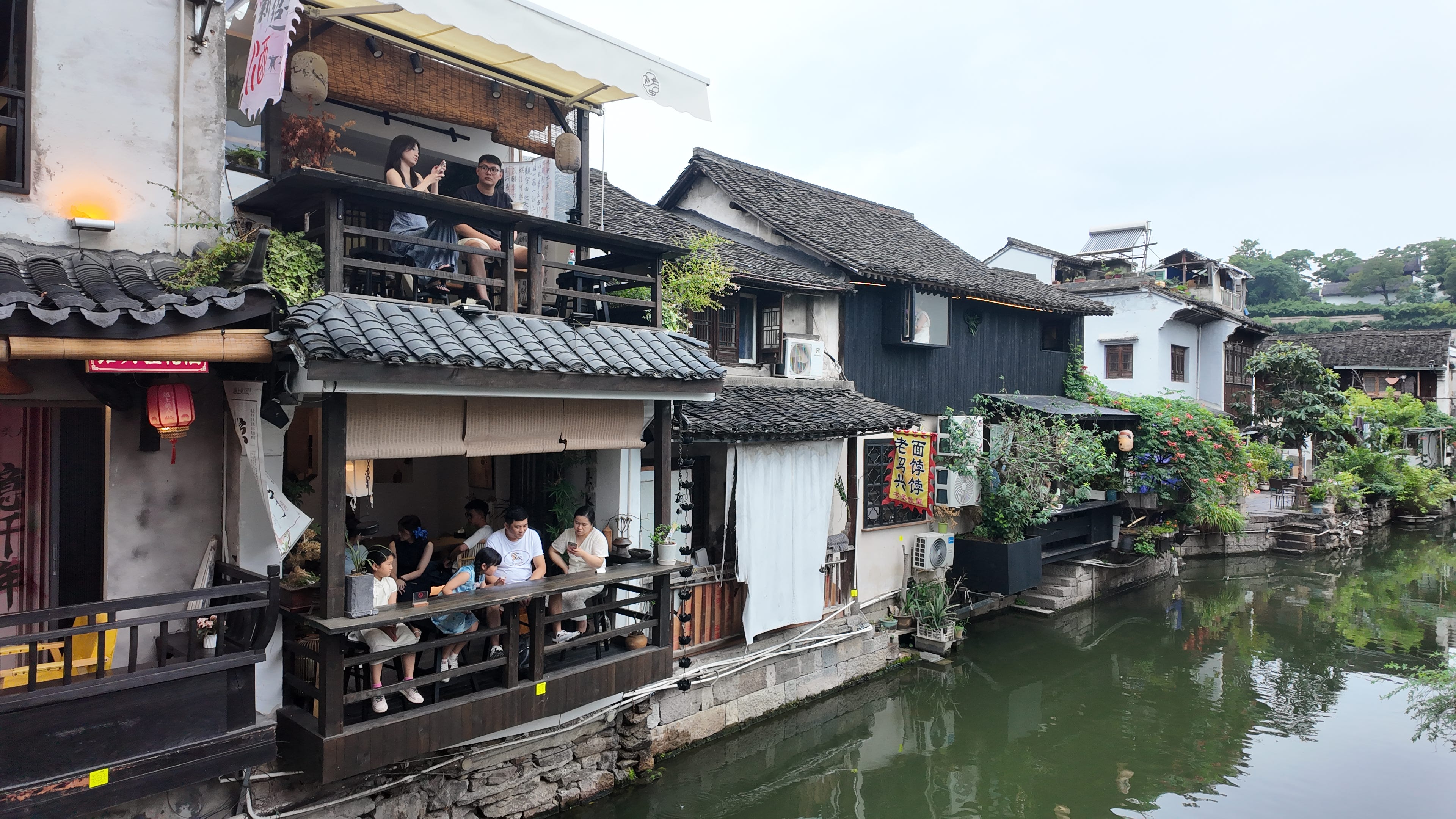
After arriving in Shaoxing, I sat in a cafe overlooking a canal. A picturesque scene straight out of a Xiaohongshu post. The couple in front of me ordered several of the cafe’s specialty drinks, beautifully crafted, aesthetic creations. They spent the next hour photographing the drinks, and themselves in pose after pose. By the time I left, the ice in the drinks had melted, the decorative flowers had wilted into the dissipating foam, and condensation ran down the glass onto the napkin below, pooling into a soupy mess. They never took a sip.
I meandered through the maze of streets lined with cafes, trinket shops, and street food vendors. Clothing and souvenir shops remained largely empty, while the wait time at a popular coffee shop exceeded 1 hour.
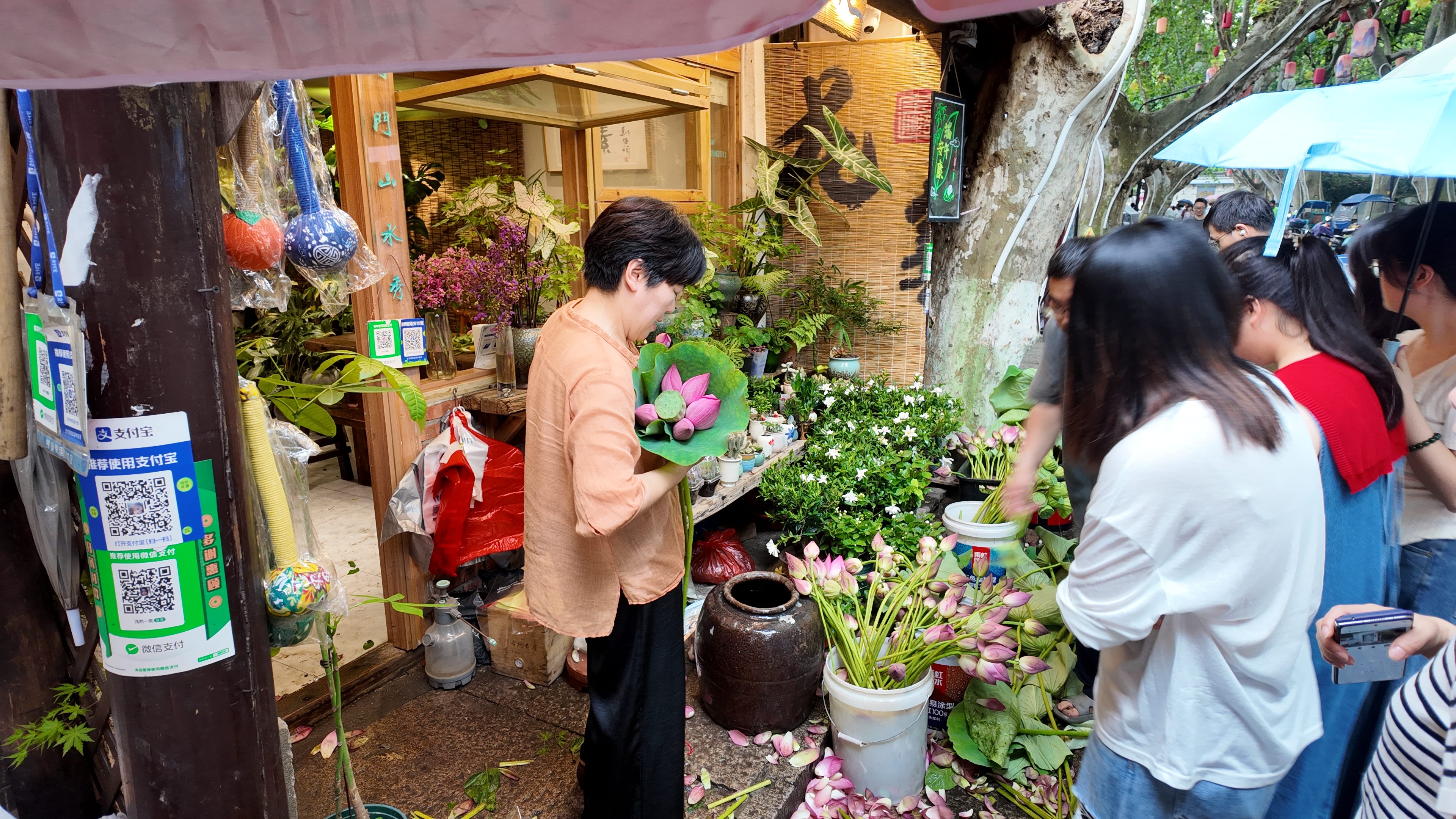
I passed by a woman selling flowers, surrounded by a crowd of customers. Her hands flew through the air in a flurry of continuous motion, producing perfectly wrapped bouquets one after another.
I took a Didi to a bakery I had discovered on Xiaohongshu about 30 minutes outside of the city. The location was quite remote, and I had a feeling I would not be able to find a ride back into the city using the same method. But this is China, and I have an unwavering faith in the public transportation system. If that failed, I told myself, I have always wanted to try hitchhiking.
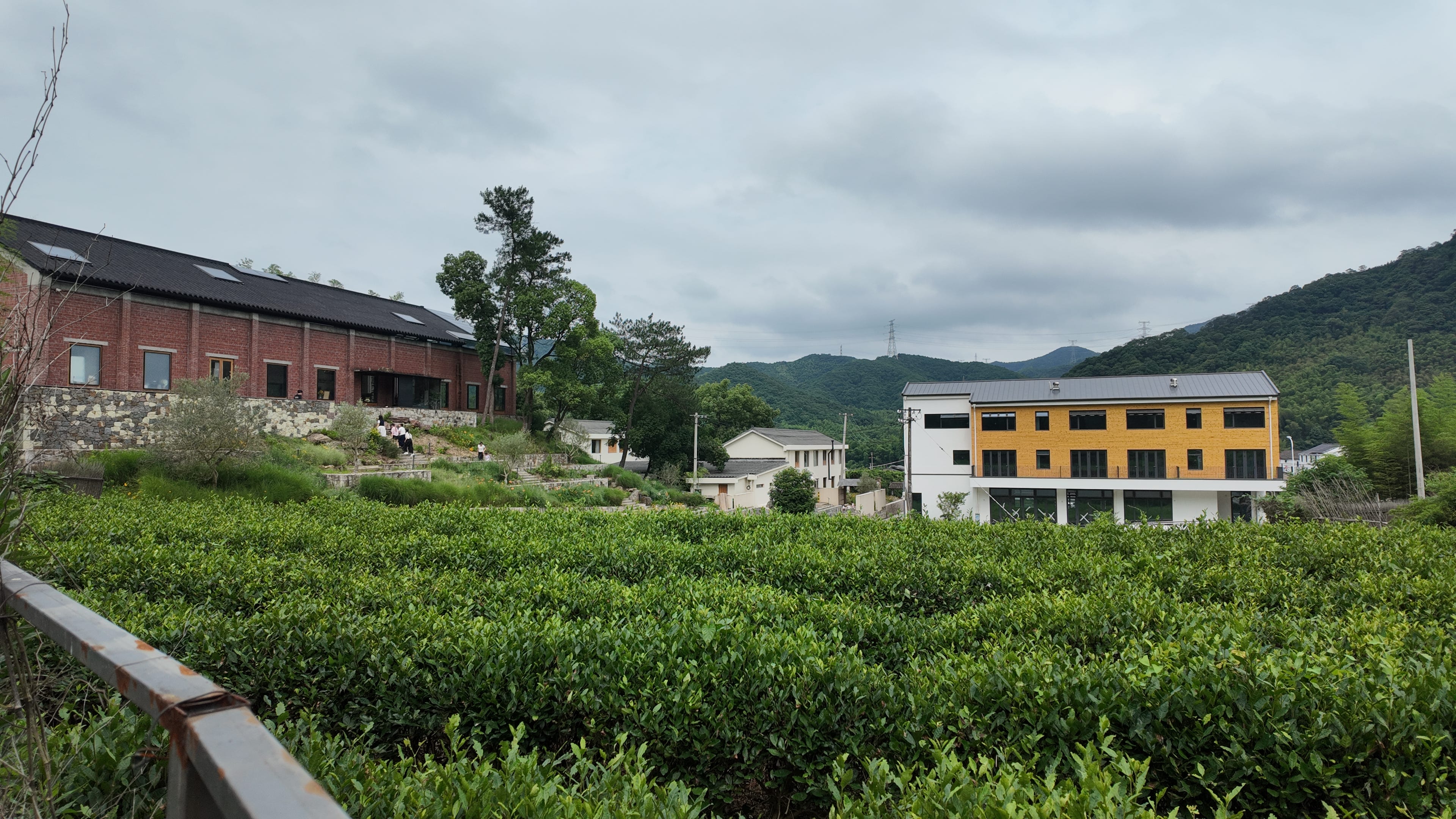
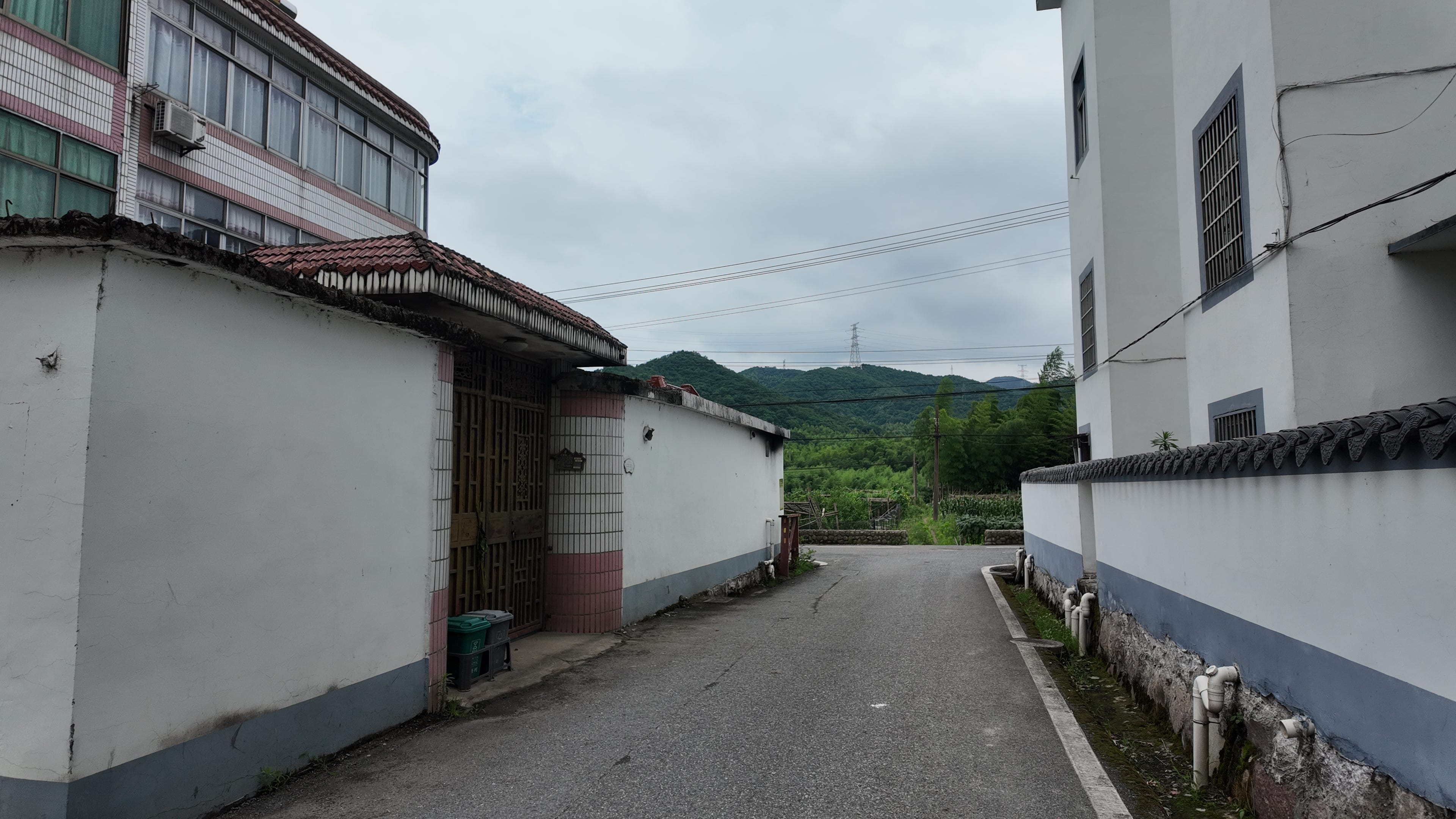
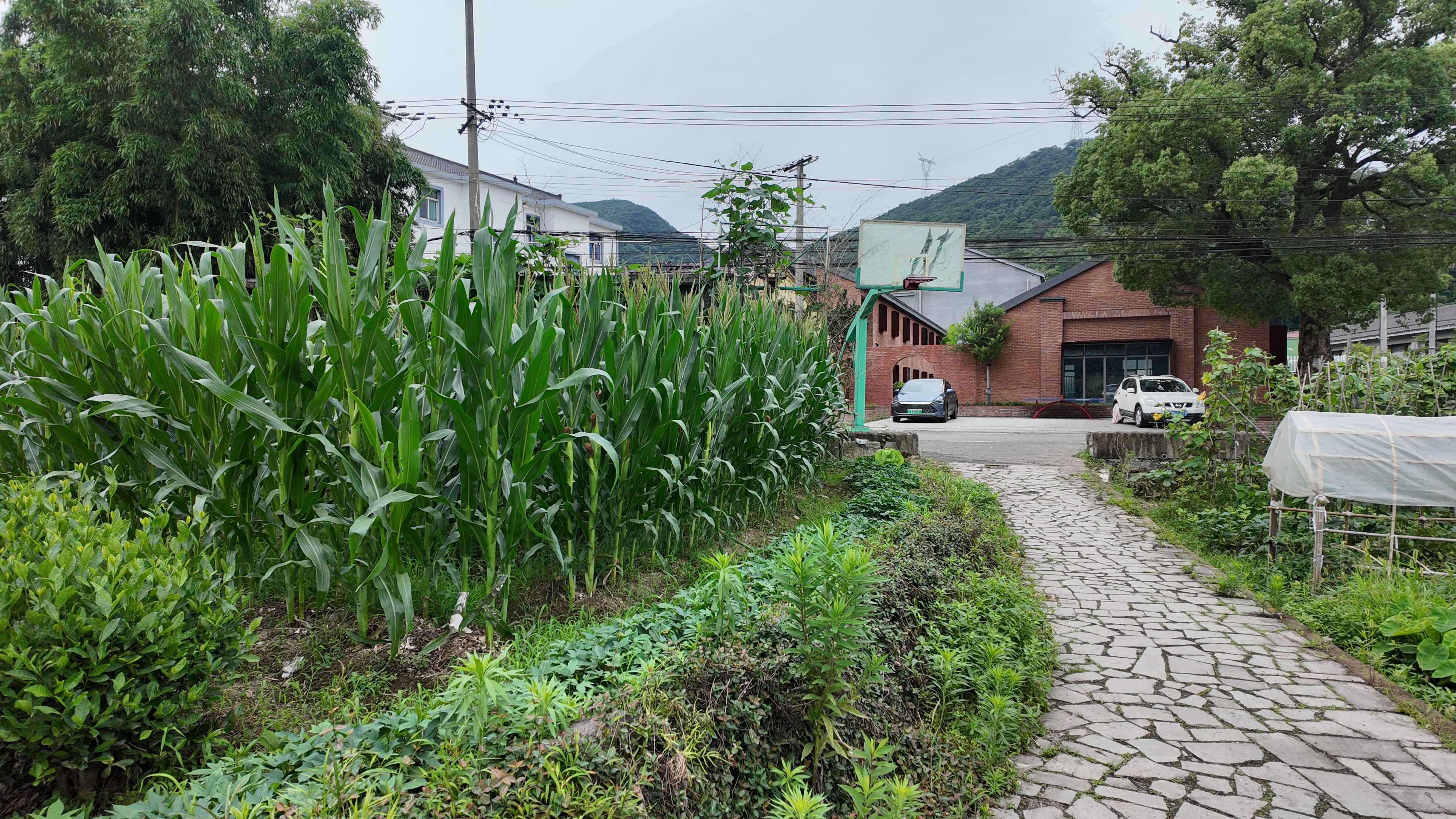
At first, I wasn’t sure if I had arrived at the right place. A newly constructed building with tape still covering the windows sat vacant along the road. I closed the door of the Didi behind me and began walking down a gravel pathway past the new structure to a brick building just behind it overlooking a field.
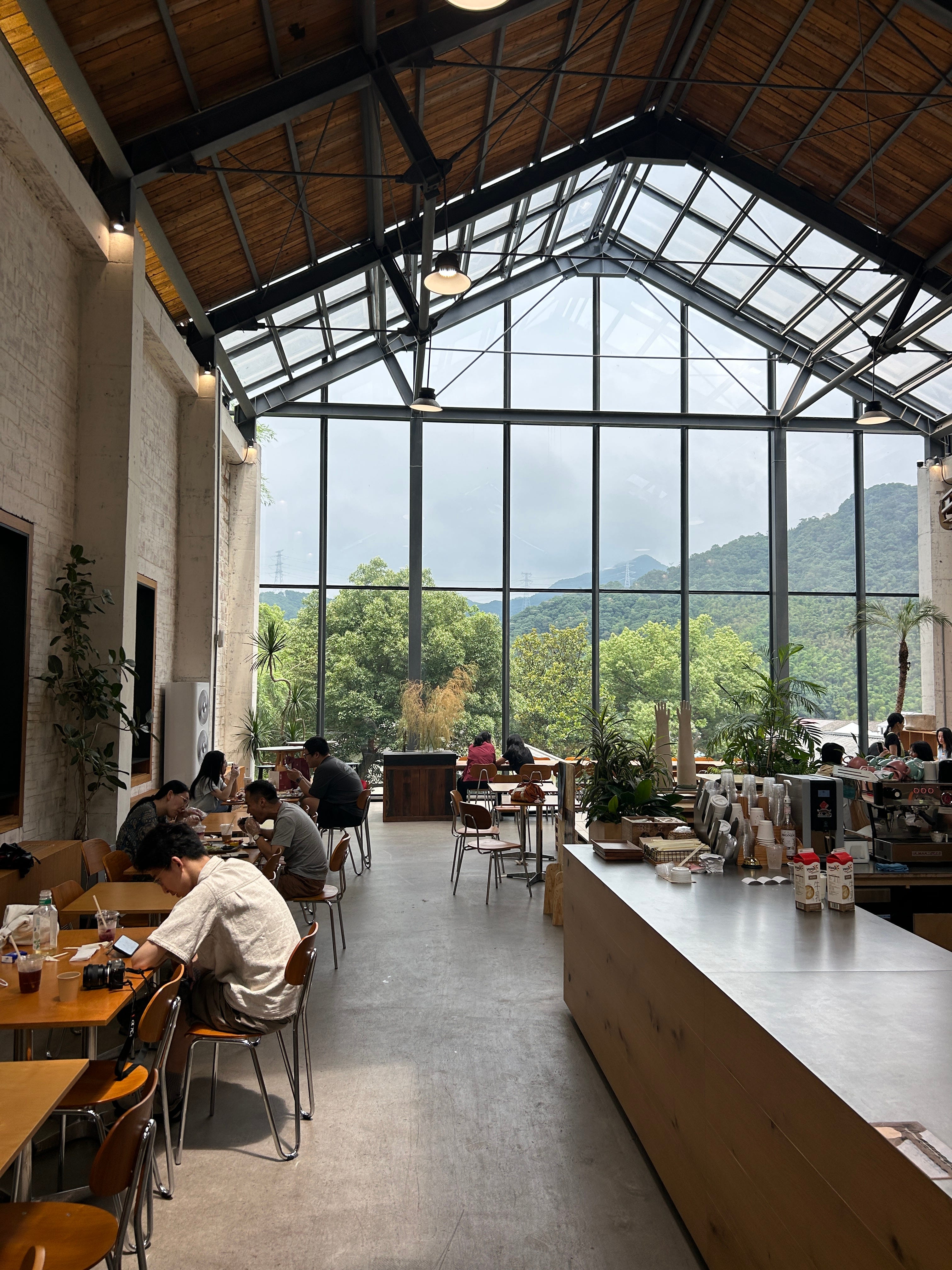
Entering felt like stepping through a portal. The large barn-style room was flooded with light from floor-to-ceiling windows that opened onto lush green mountains.
A large brick oven stood in the back, and in front of it was a counter brimming with freshly baked goods.
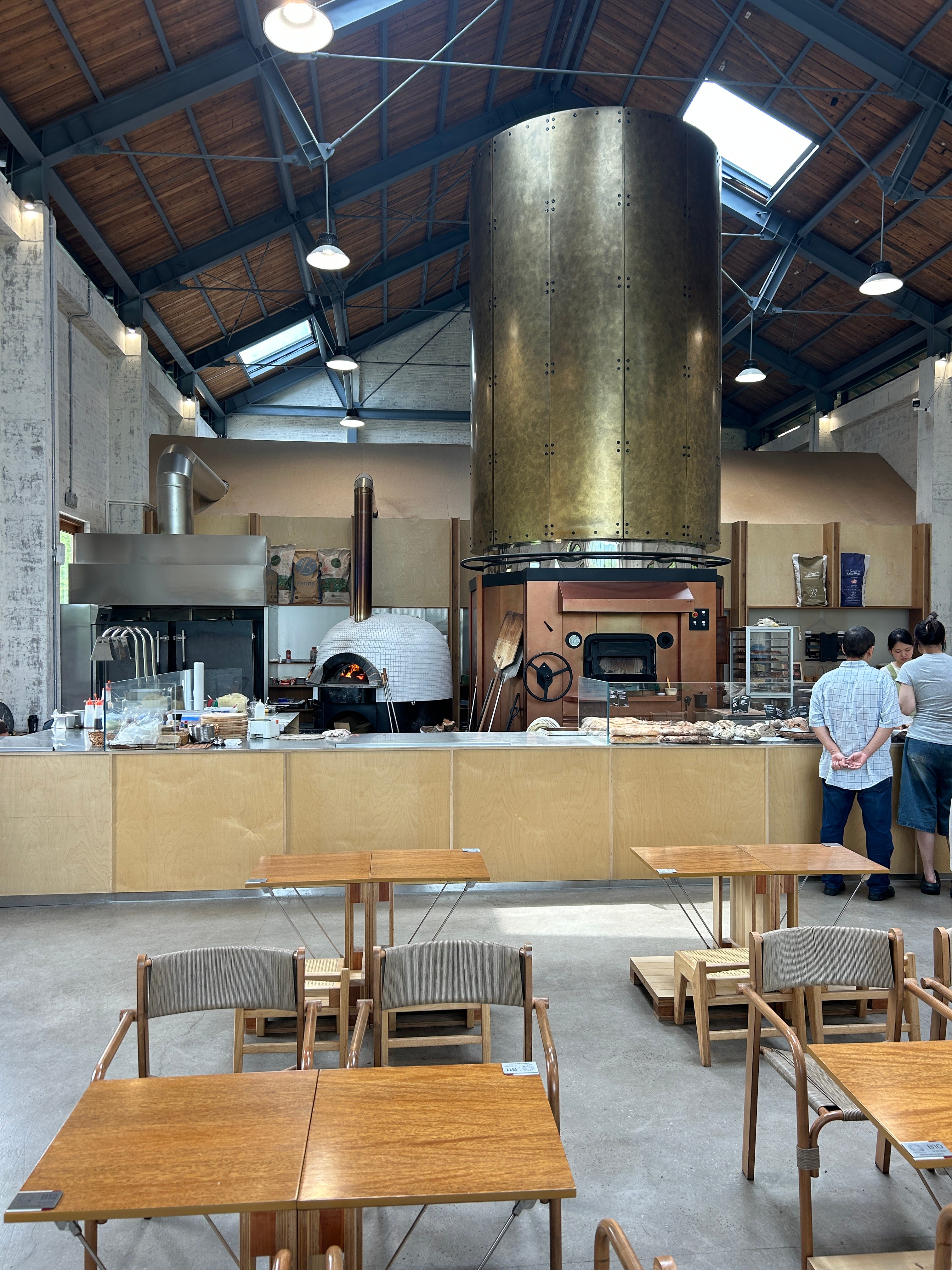
Ample seating filled the space around a large barista counter in the center. I claimed a small table near the large windows, close, but far enough back to enjoy the full view.
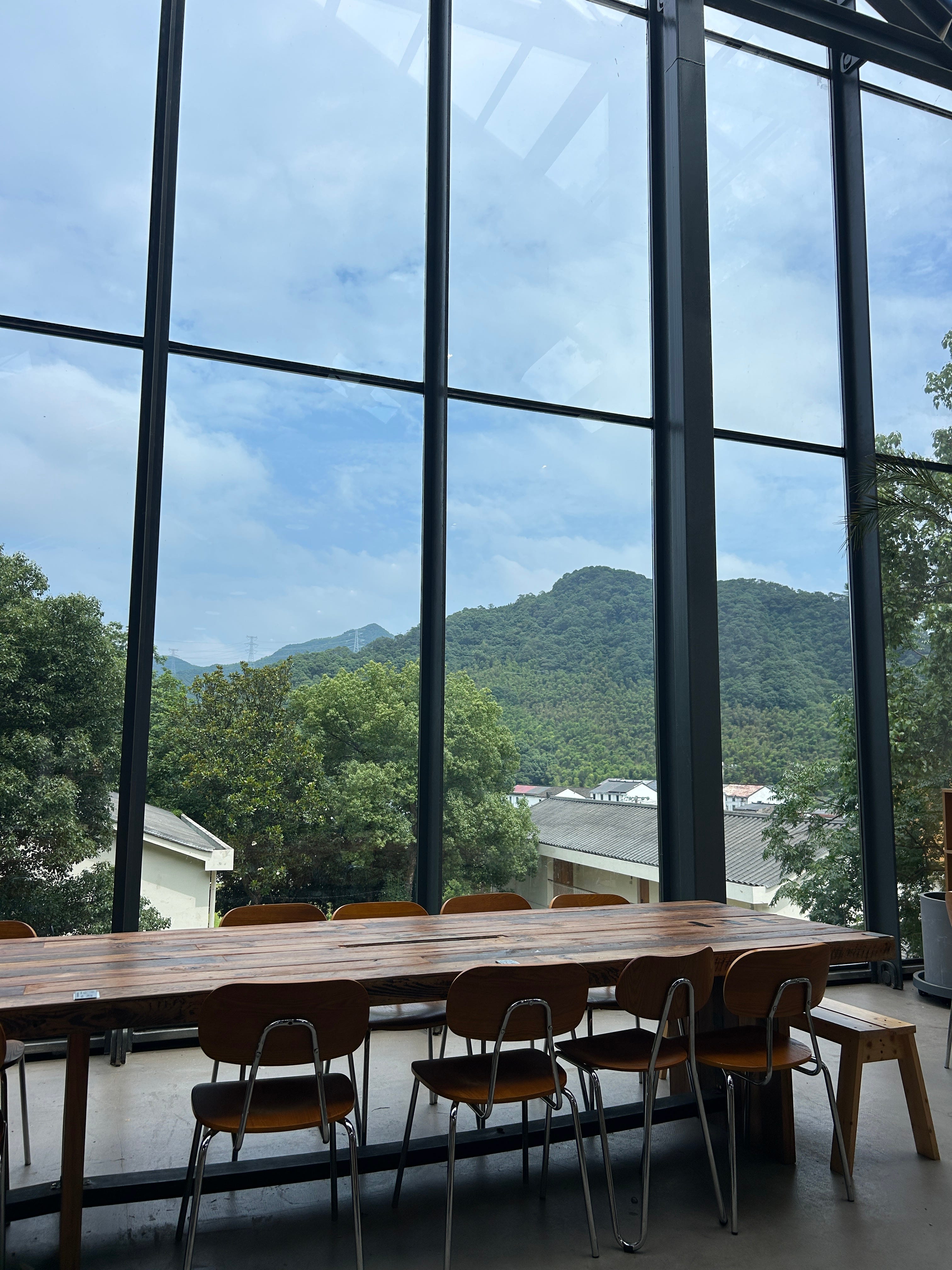
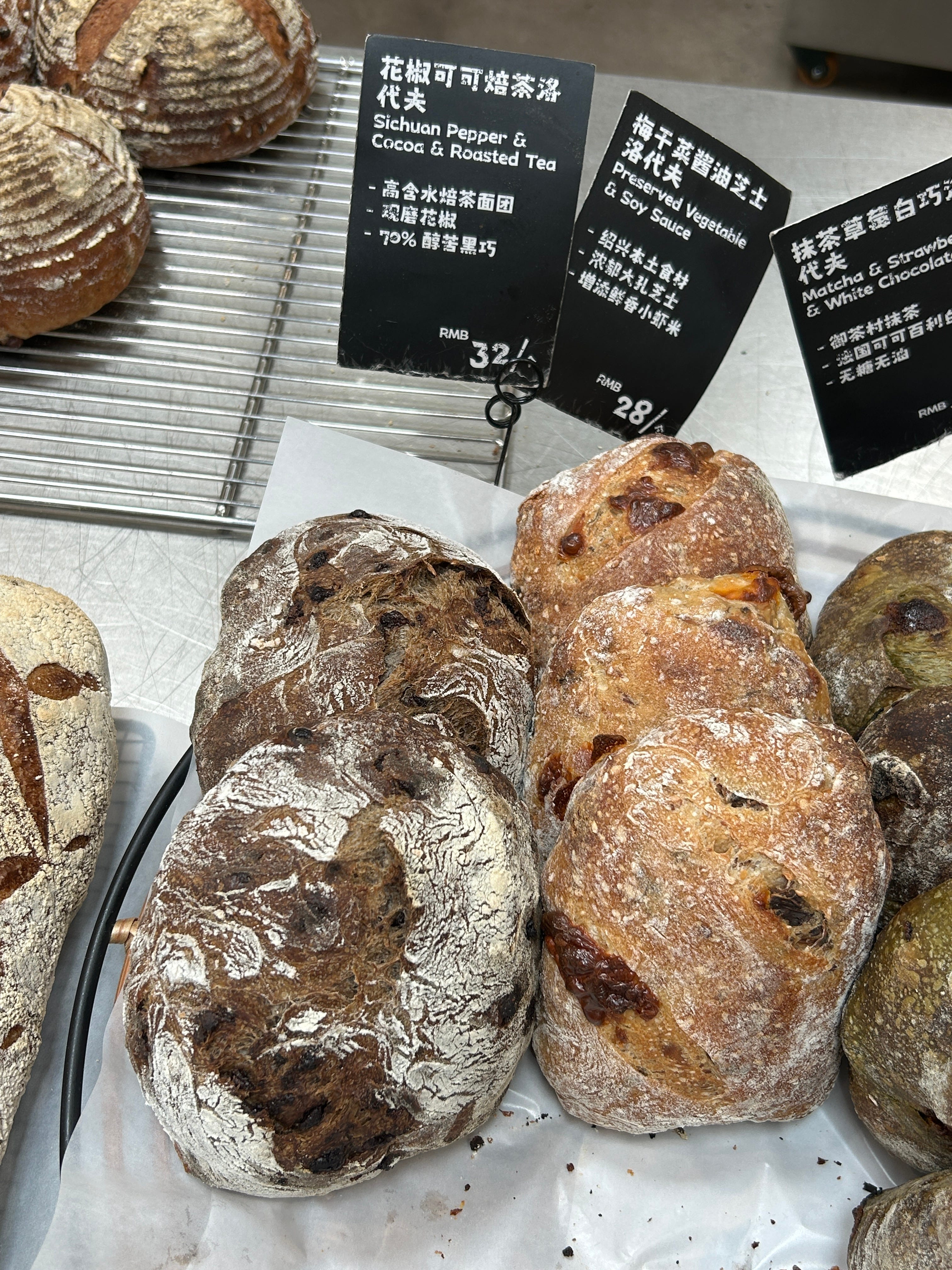
I arrived just before noon, and only a few other tables were occupied. I treated myself to a refreshing drink and some baked goods, which could have rivaled a bakery in Shanghai or even Paris. By the time I left, every table was full, and the space was brimming with chatter.
I collected my belongings and decided to wander, sans agenda, through the surrounding area.
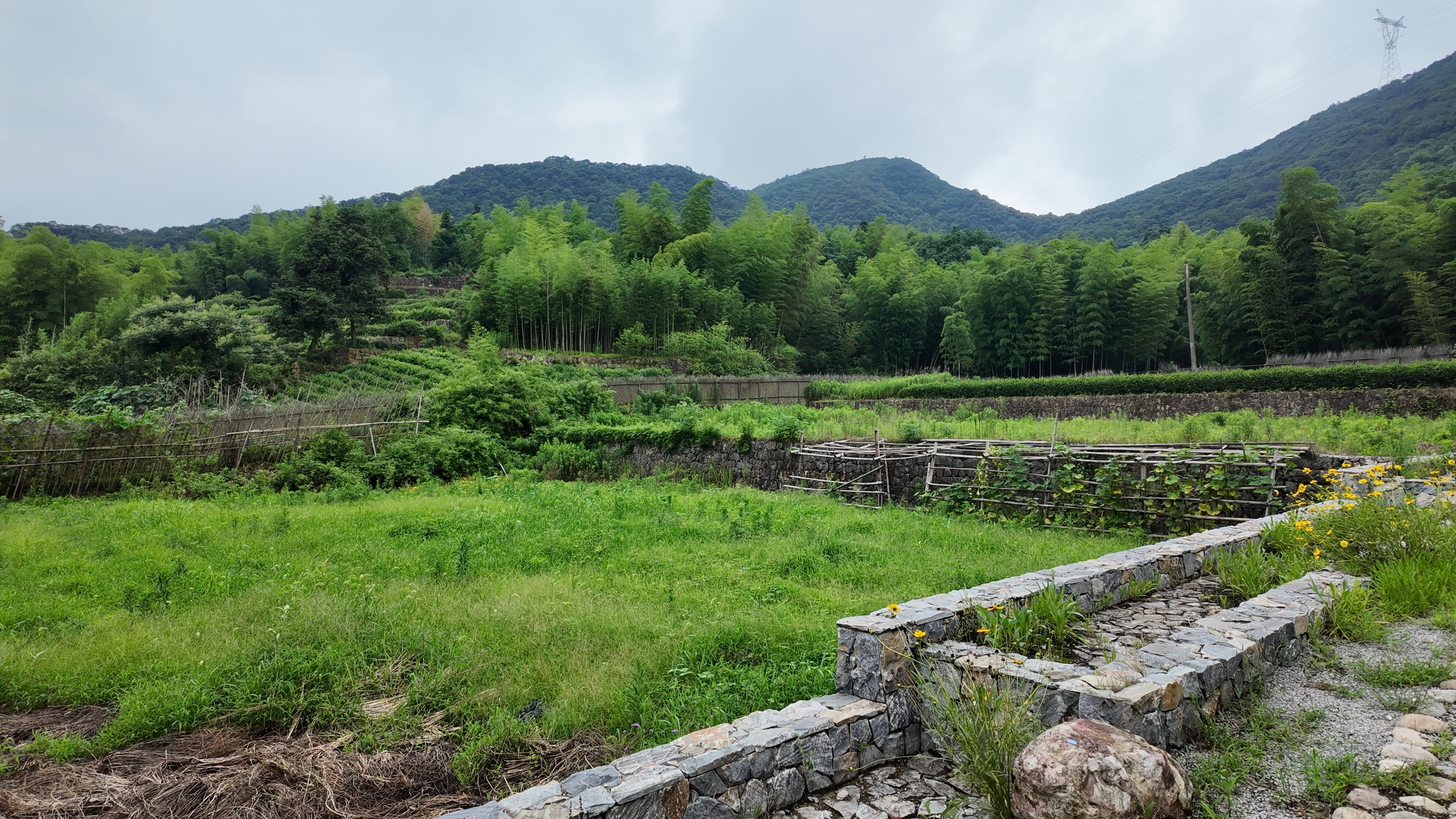
As I made my way down the main road, I clocked a bus station — China’s trusty transportation network to the rescue. Undoubtedly, there would be a bus that would take me to an area where I could more reasonably call a car.
Drawn in by a large sign and an arrow that said “coffee,” I veered into an empty compound with two rows of empty warehouses that stretched backwards into farmland. As it turns out, the area is part of a rural revitalization project meant to bring in investment and tourism.
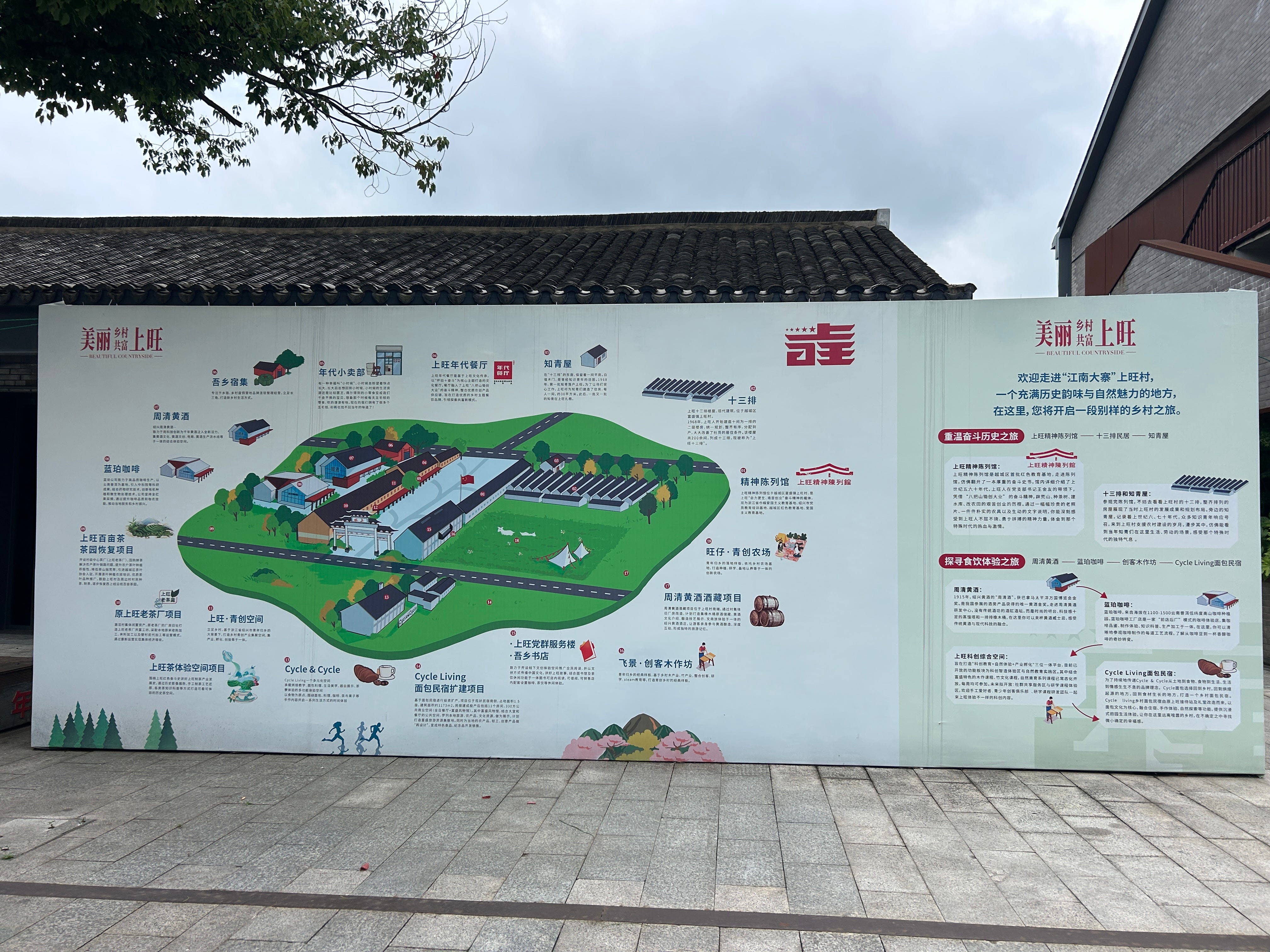
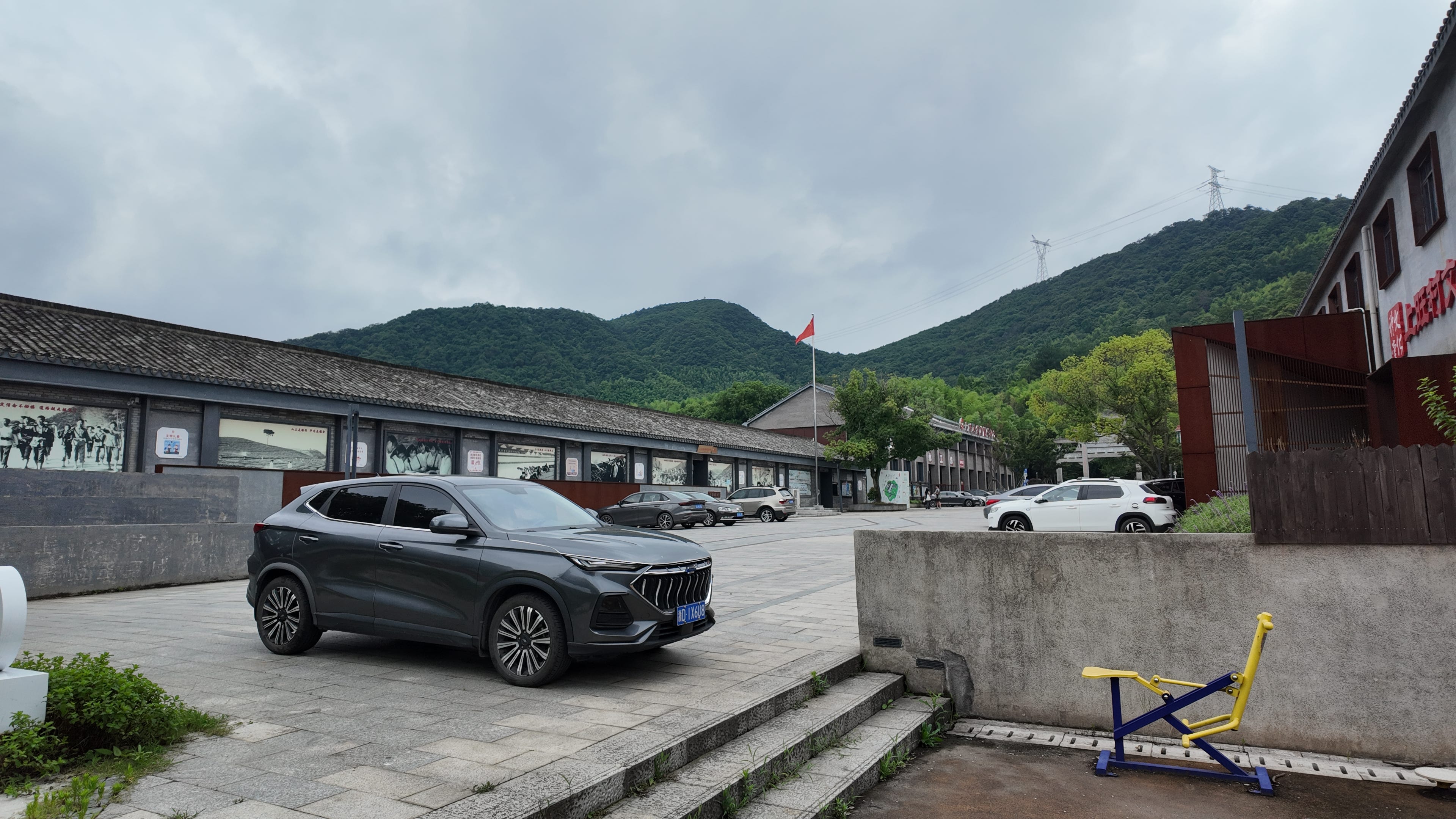
This project, however, seems stalled, or possibly abandoned. The buildings all appeared vacant, though there were some cars parked outside.
According to the sign, the compound is supposed to include specialty coffee, artisan bread, woodworking, home-stays, and a youth maker-space.
I approached the back of one of the large warehouses to find the coffee shop. Inside, tables and small camping chairs were arranged near the coffee bar in the middle, with an arts and crafts corner near the entrance and large roasting machines behind plexiglass in the far back. Large photographs of women dressed in bright, traditional clothing, hands outstretched and overflowing with coffee beans, and photos of workers harvesting coffee beans hung from the ceiling.
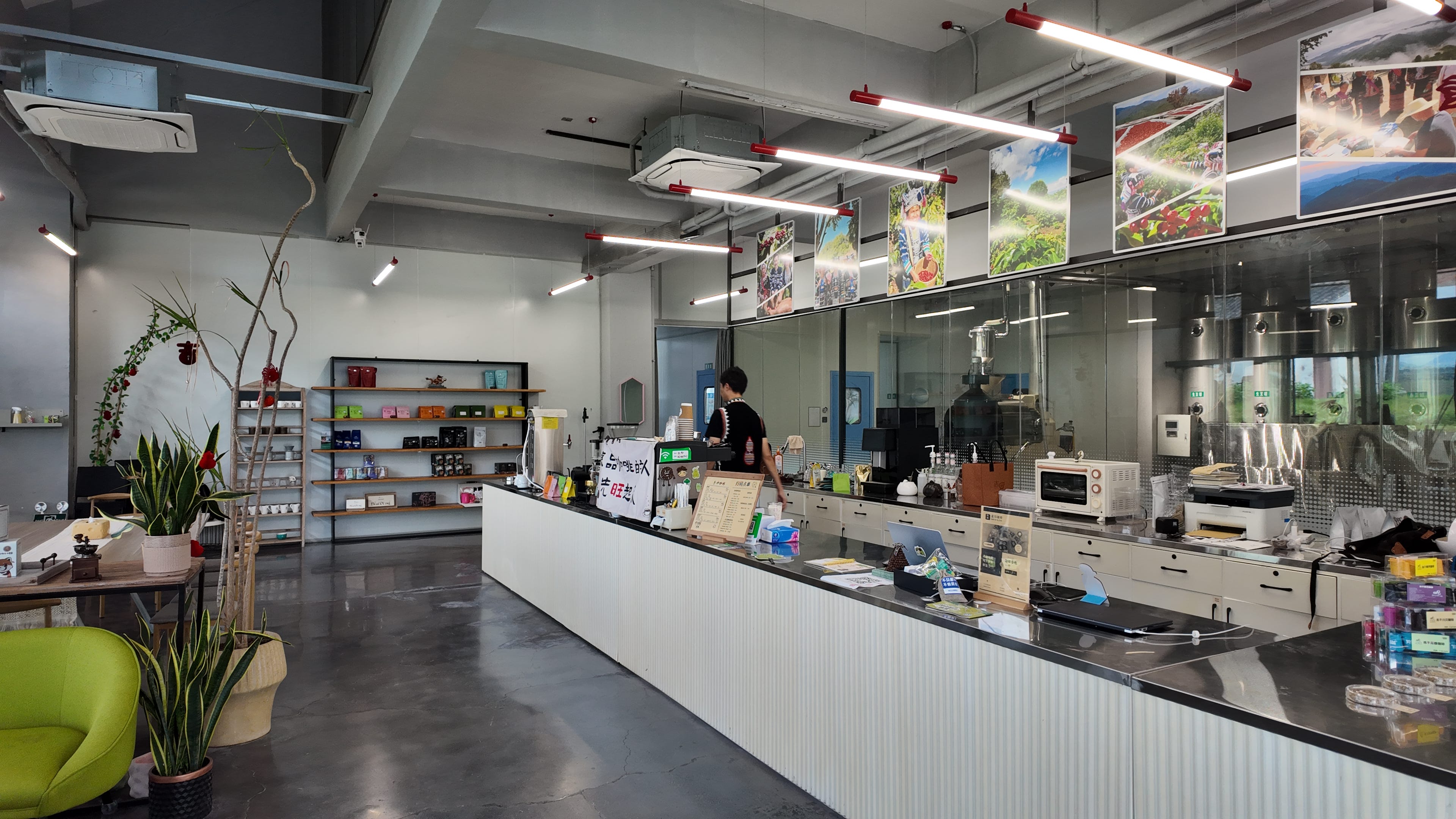
All the beans come from the Pu’er region, in Yunnan. The barista-owner tells me they’ve been managing their farm there for over 15 years. Yunnan beans were long treated as flavorless filler — a base for blends sold to big brands like Starbucks — but over the years, he’s worked to bring forward the region’s more distinctive notes.
This shop, he tells me, is part of the rural revitalization project.
“Right now we’re hoping to make Yunnan beans really well, so they flourish, gain recognition, and people domestically come to love them. Part of what we’re doing is the storytelling. The other part is our farmers — helping them raise their income. Poverty alleviation. Growing vegetables and crops, because their income is very low.”
I tell him about my obsession with China’s exploding coffee industry, particularly the staggering number of coffee shops in Shanghai, the most of any city in the the world.
Yes, he nods in agreement.
“There’s something like more than 10,000, right? Because incomes went up, and people started pursuing spiritual/cultural things, we need to relax a bit, to find a space to be quiet for a while. So we go to coffee shops. And that creates a really nice commercial atmosphere, and it slowly built up from there. But Yunnan coffee still needs more work.”
I regret to say here that I proceeded to order a matcha latte. It was past 3 pm, and I knew the combination of a coffee + my Japanese murder mystery would result in a terrible night of sleep. Guilty as charged — a sleep-obsessed millennial not indulging in life as I should be. However, I was told that their matcha was incredibly special and better than most anything I could find in Japan.
After presenting me with my matcha, the owner plopped himself down in the child-size camping chair across the table from me, and our conversation turned from coffee to AI.
“You probably think being from Hangzhou (or so close to it) I am using DeepSeek, right?” He asks me with a coy smile that spreads across his face.“But my favorite AI to use is Claude, it’s like a teacher — all of the others, they are like a college student, only slightly more capable than you are.”
I asked him how he uses AI in his life. Do they use it in the coffee business?
“Let me explain. Coffee is very traditional, and we’re all a bit old-fashioned, haha. But I’m an exception. I’m an owner-operator, and here’s what I want to do — I want to use AI to replace human customer service. As orders come in one by one, I feed the AI enough data, so when a customer wants something, it can tell them — including checking order information in real time. That solves the customer-service problem.
Second, marketing. Say I set up a scheduled task — from existing material, it can make things: images, short videos, picking what to post on Xiaohongshu or short-video accounts. I just give it a direction periodically, and the routine execution is handled by the AI. So what do we humans need to do? We just handle shipping — the final delivery.
And it solves one more thing: direction. What does the customer want? We set that. The rest — thinking it through, executing — we let the AI handle and don’t interfere too much. It forms a closed loop. Marketing covered, customer service covered, and we ship by hand. Once it’s all set up, this system can drastically cut labor costs.
What AI brings to our marketing is unimaginable, because AI doesn’t iterate like a person does. I go to university for three years, study abroad for a year, and maybe I come back retaining 50%, 60%, or 30 to 40% of it. AI completely iterates everything it had before, taking it up another level. It changes every day — a big shift every three months, and in half a year it can transform completely. You use that power to create infinite possibilities.
Then you take our physical side — the coffee beans we produce — and combine them with this, and make it something with market value. It really can. The most direct thing is cutting my labor costs. Second, in the market, on marketing — if it really does better than people, then it can be commercialized. As for how I personally envision and plan this, and want to build it up — that’s still one direction. We’re implementing it now.”
I tell him I work in marketing, and I see the proliferation of AI content on social media platforms. It makes me feel sad in some ways, for the industry and for humans. Is the ease of creating this much content really better for us as people and as businesses?
“I’ve really thought about this. Ten years ago we used our phones maybe an hour or two a day — checking WeChat and so on — and that already counted as a lot. But now it’s completely normal for the average person to be over four or five hours. And four or five hours is just the floor; it can be seven or eight. You wake up and start scrolling, you finish eating and start scrolling, busy or not, you’re scrolling. That’s really not good for the human brain.
So I think it’s better to just sit down face-to-face. Chat, take in the scenery — that’s more nourishing. After you’ve finished talking, after you’ve looked at the view, you come away — how to put it — with energy. That’s the right state to be in. Not drained, not left in that tired, worn-out state.”
We both turn our heads to look out of the large glass windows of the entrance wall. There’s a patch of grass directly in front. Beyond the adjacent warehouse, you can see a sliver of the fields and the mountains that frame the skyline behind.
It’s past 4 pm now, and I mention to him that I plan to take the bus back to Shaoxing. He shows me a few options of how to get back, and before leaving, I buy a box of their packaged drip coffee, and we add each other on WeChat.
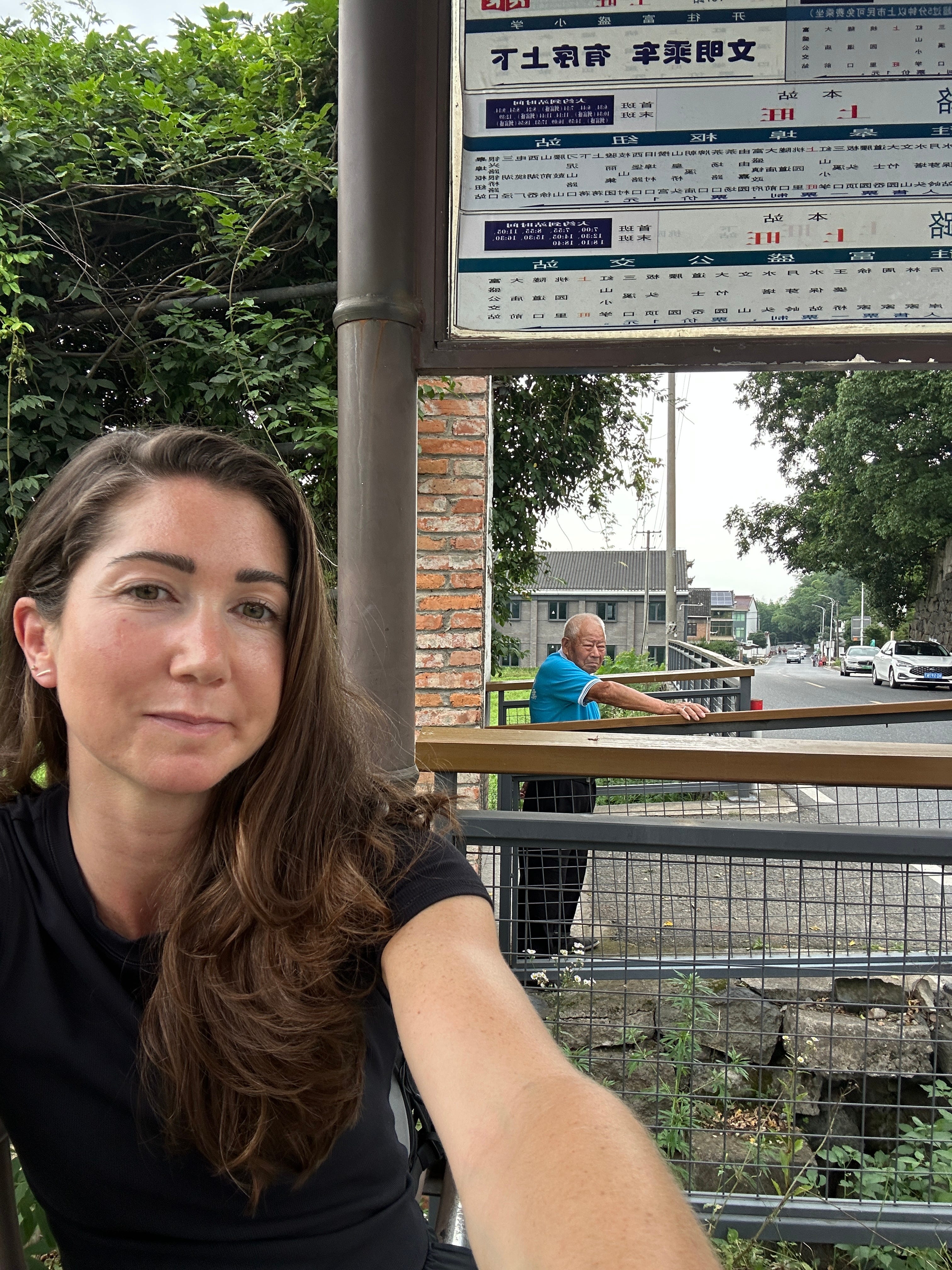
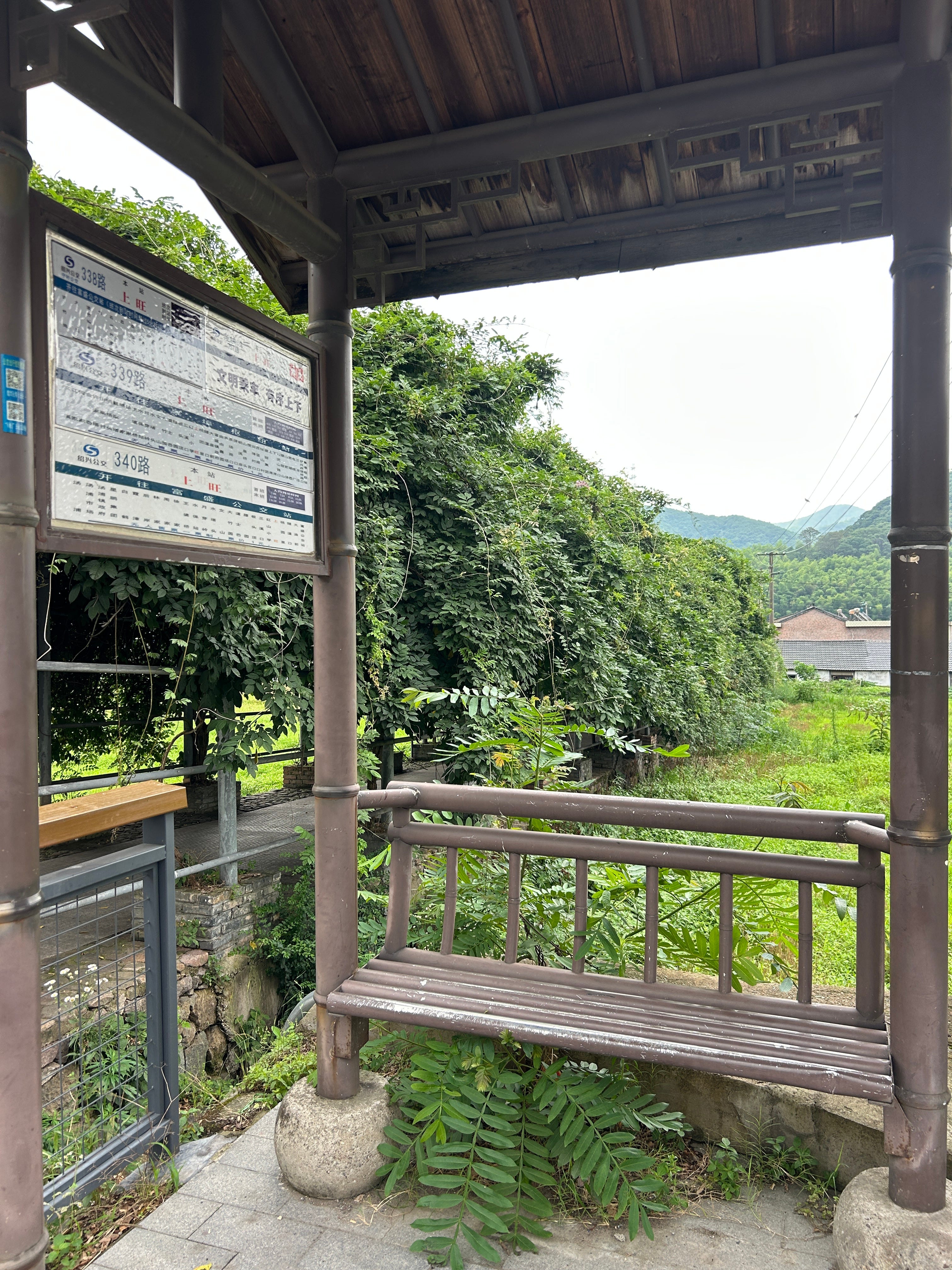
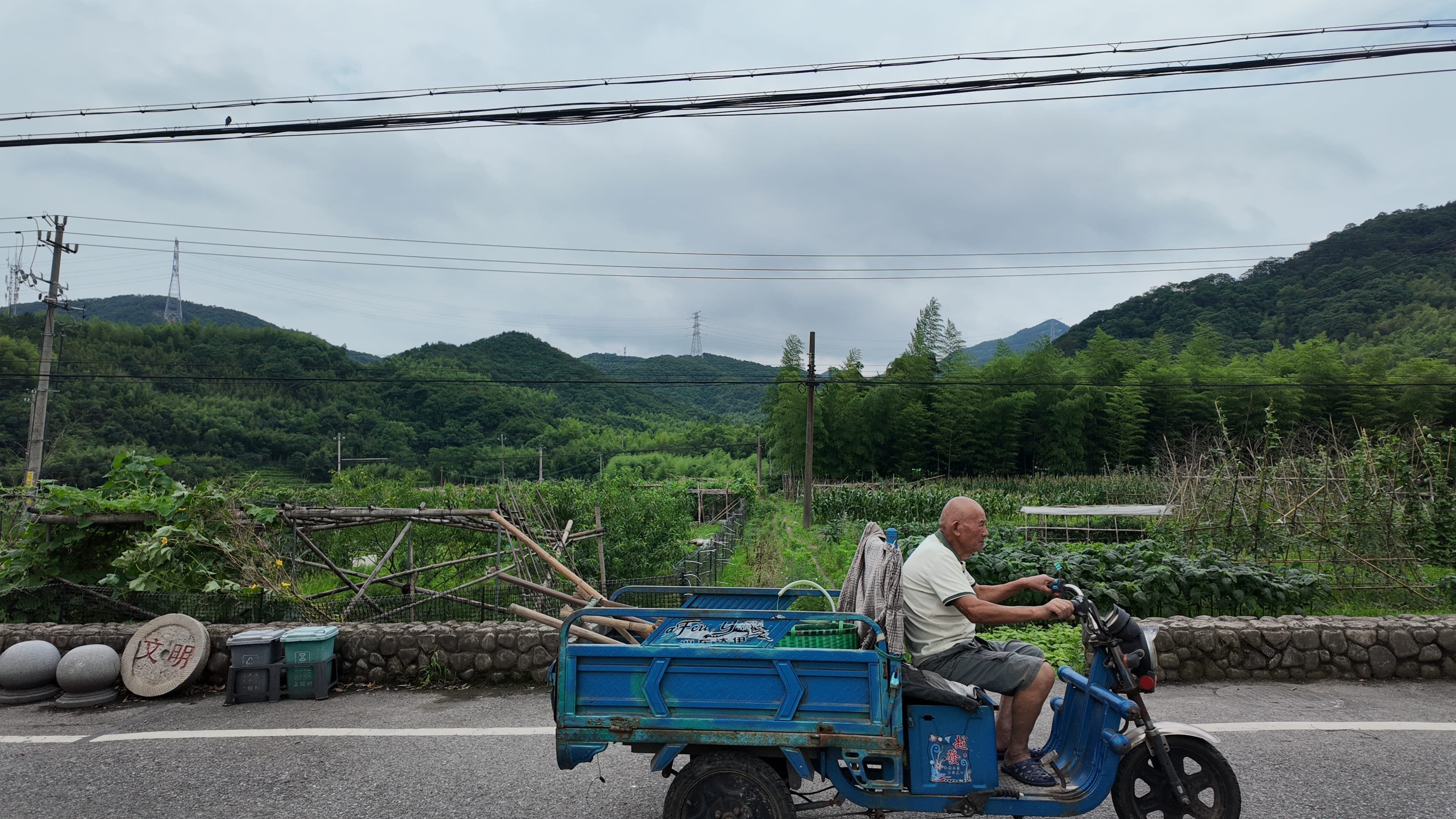
When I get to the old bus stop, I realize I’ve just missed the bus. The next one, which happens to be the very the last one for the day, arrives in an hour. I sit down and pull out my book. A grandpa leans on the fence on the next road over and watches me curiously.
Sometimes, I sprint down the stairs in the subway station in Shanghai to avoid missing the train. Even though in less than 3 minutes, another one will arrive. Here, I’ve surrendered to my circumstances. I feel no rush. I’ll get to wherever I am supposed to be whenever it is that I arrive.
They say time is the ultimate luxury — but the reality is, regardless of net worth, we are all transfixed by it. We’re constantly tracking it, measuring it, doing everything we can to predict and profit from its outcome. Perhaps, then, the ultimate luxury is not time itself, but to be unbound by it. To simply experience the passing of it.
The bus is wildly uncomfortable. The slick plastic and poorly angled seats make it impossible to sit up straight for a sustained period of time, which, combined with a decades-old suspension system, makes it imperative to white-knuckle the pole in front of me as we careen through county roads past old abandoned factories and farmland.
There are only a few other passengers on the bus, all older women, perhaps in their 70s, their skin hardened and leathery from years of working outside. It’s impossible not to look at them and wonder what their lives must have looked like, and the magnitude of change they have lived through.
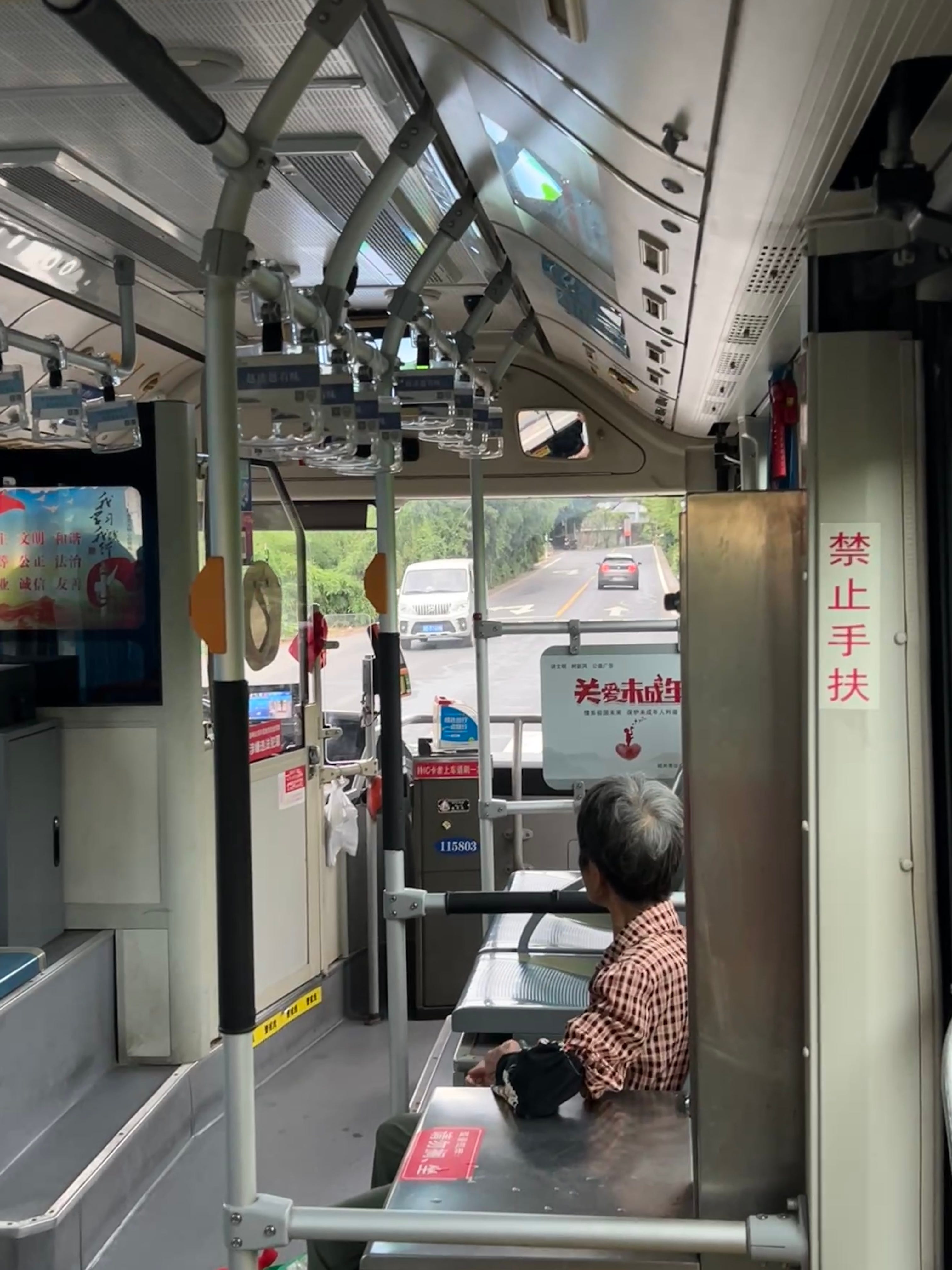
The bus pulls into the city, and farmland gives way to glass and concrete buildings and subway-line construction. I get off at the stop nearest my hotel, though I still need to walk for about 20 minutes. After checking in, I head back out towards the pedestrian streets to find something to eat.
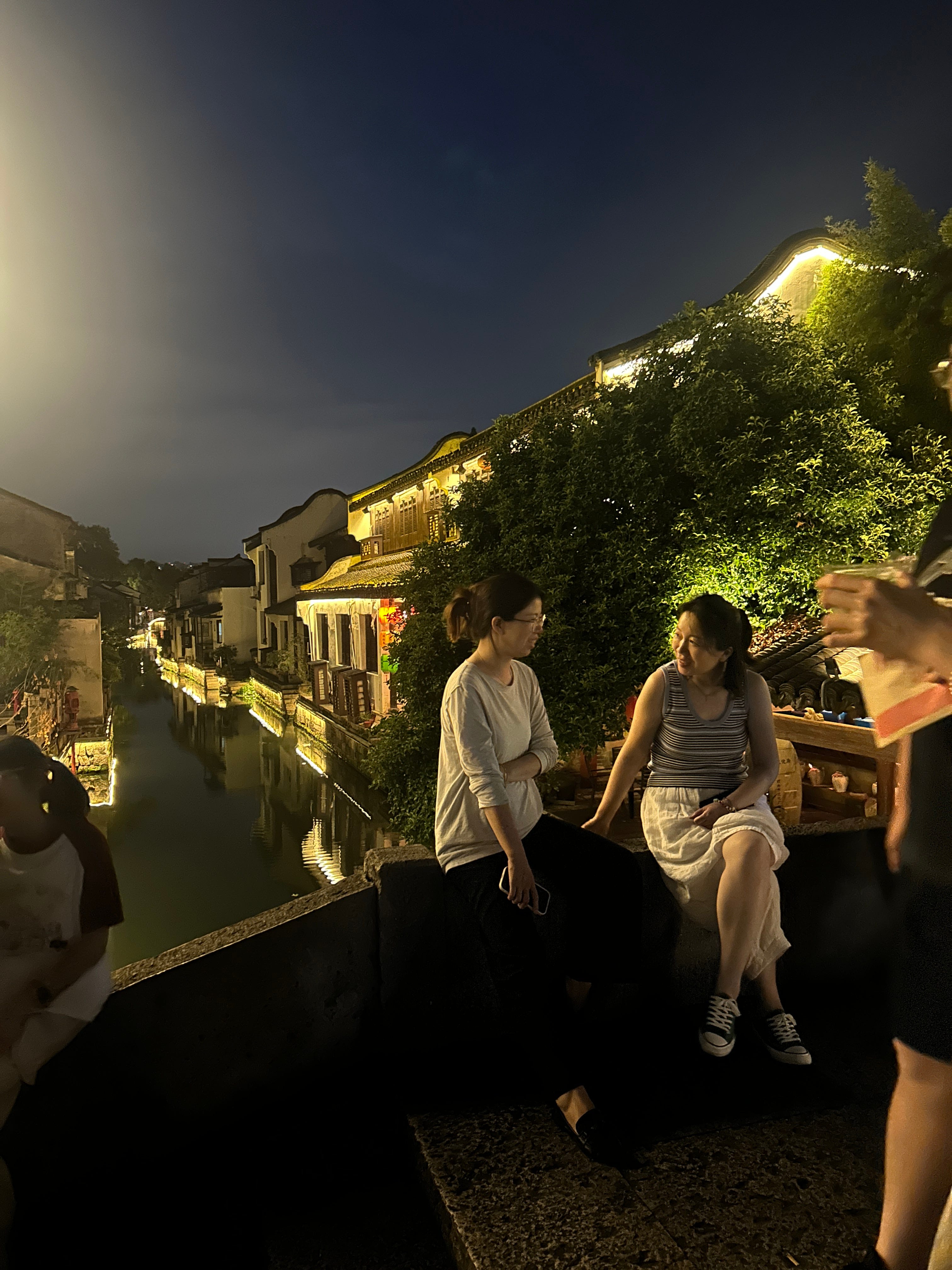
At night, the canals are lit up in a yellow glow, teaming with people carrying bowls of stinky tofu and sausage skewers. It’s a humid summer evening, the kids that dart and weave through the crowds at hip-level and below have hair slicked to their faces with sweat and ice cream running down their arms.
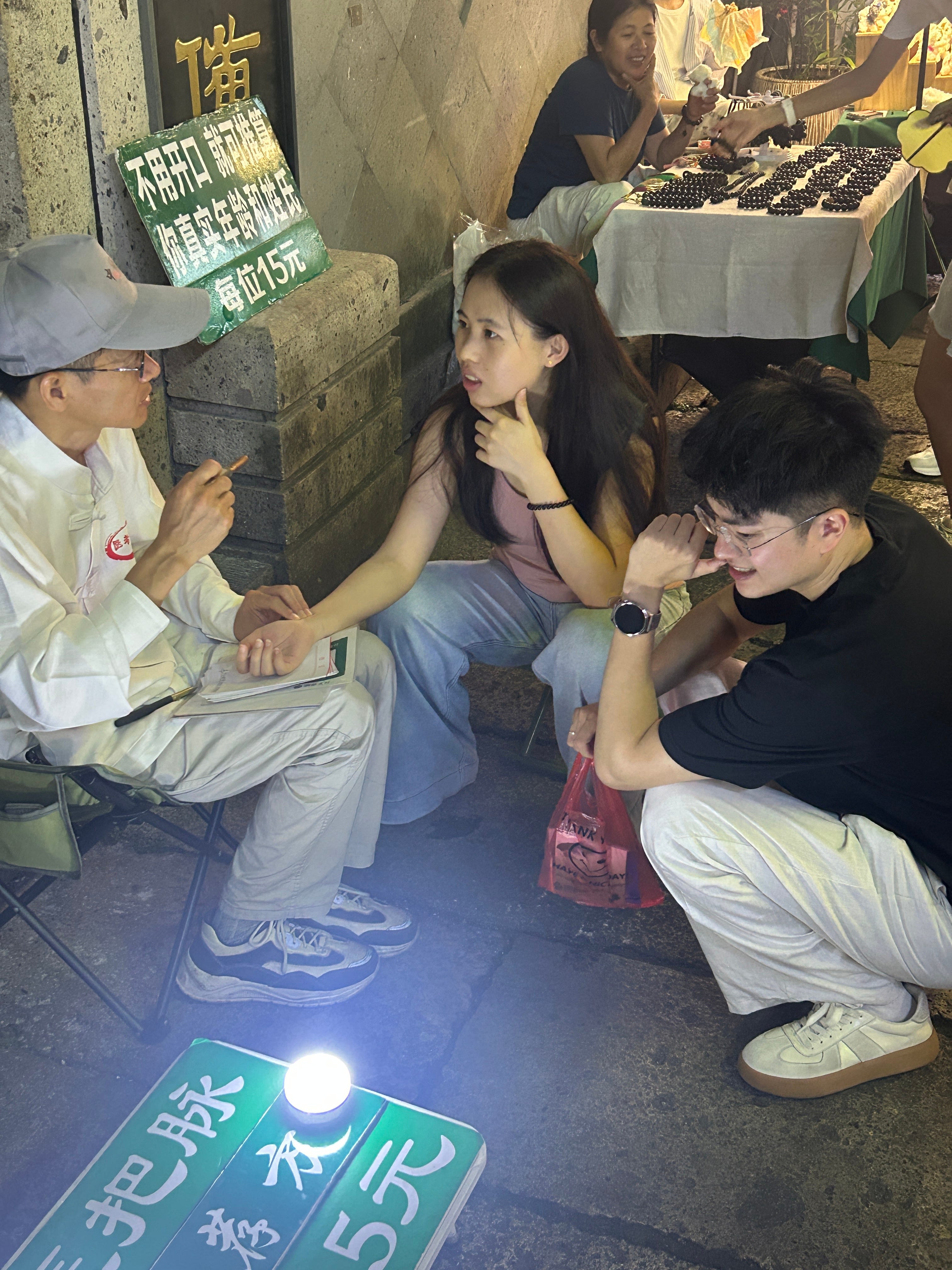
There’s a milk tea stand every 20 meters. A TCM doctor sits on a stool and inspects passersby, checking tongues and palms, prescribing remedies. His customers are mainly young people, who seem fully on board with this ancient wisdom and then reach for their smartphones as soon as they walk away.
It was only after returning to Shanghai that I noticed the Economist ran a story 3 days ago on Shaoxing as one of China’s most livable cities;
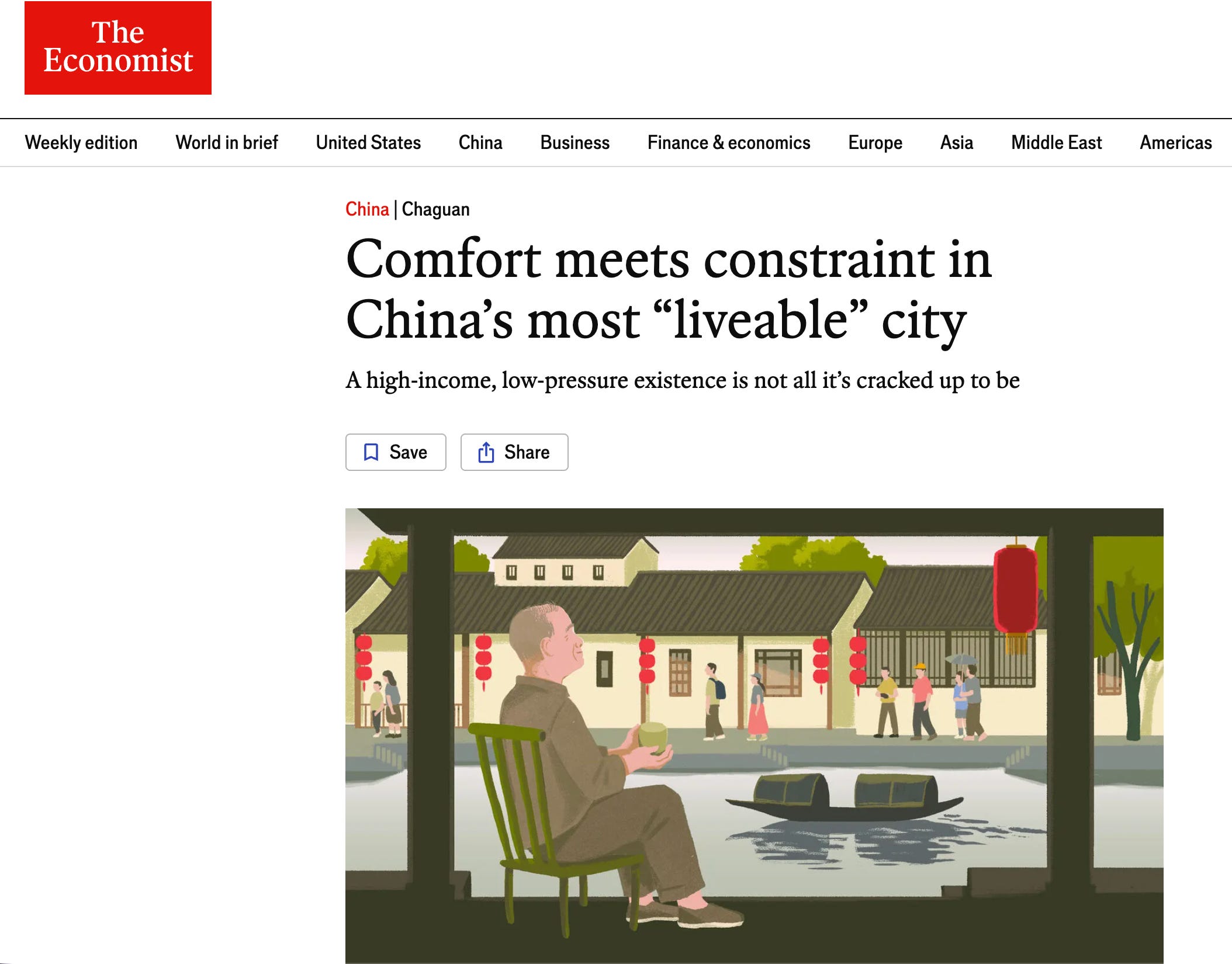
“Southern Weekly, an influential newspaper, has given top marks to Shaoxing for four straight years after considering housing costs, incomes and commutes. A couple on average local wages needs to work ten years to get a home in Shaoxing versus 30 in Shanghai. Hence its selection of the smaller city as China’s best, a paragon of a “high-income, low-pressure” life.”
In my opinion, while the article cites both the opportunities (low-pressure and low-cost) and challenges (few employment opportunities), it lacks any substantial narrative and regrettably misses a great opportunity to tell any number of truly interesting stories that could have been uncovered.
The question “What is happening in China?” is like an invisible stone I keep in my pocket at all times. I’m constantly reaching for it, turning it over and over, so often that the edges have worn smooth.
On the 30-minute metro ride from Shanghai Hongqiao Railway Station back to my apartment in Jing’An, I roll the stone over in my mind.
There’s never a clear answer.
Finding proof of one hypothesis or another feels like trying to catch lightning in a bottle — everything is constantly changing, contradicting itself.
Perhaps the only way to understand it is to experience it. To become unburdened by the need to define it in a single answer — to accept, just like time, it is always moving.
⏳ Thanks for reading!
We help global brands localize for China — from understanding how you’re perceived on Chinese social media to managing platforms, influencer collaborations, paid media, and crafting campaigns that create lasting impact. If China feels complex, let’s unpack it together. olivia@waisocial.com or simply respond to this email.
No posts
Comments
Nothing yet. Say the first thing.
Sign in to join the conversation.