
A few months ago, a good friend took me to an immersive horror house experience in Shanghai. Growing up in the US, haunted houses were an October thing, a reliable precursor to Halloween. Nothing gets you in the mood for spooky season like a high school drama club takeover of an old abandoned farmhouse. Going to a haunted house in February felt a bit like celebrating Christmas in May, but I’m a sucker for a good thrill.
This haunted house was on the third floor of a newly built (empty) shopping mall in Jing’An district. After handing over our phones and watches, we were deposited in a dimly lit foyer to await our impending reckoning.
There were flickering lights, ominous music, bloodshed (not ours), ghosts, and plenty of plot twists over the next 30 minutes. We were shepherded, nudged, and at one point dragged through a series of rooms by our ‘guide’ — who doubled as a character in the horror story we so viscerally took part in. At the end, after a debrief of who murdered whom, we were spat back out into the mall feeling like we’d just been on a rollercoaster ride.
Escape rooms had been on my radar for a while, but I hadn’t noticed this type of live-action, role-playing haunted house experience in China before. Fast forward a few months, and I found myself in Nanchang, Jiangxi, where I passed by a noticeable number of these horror houses.
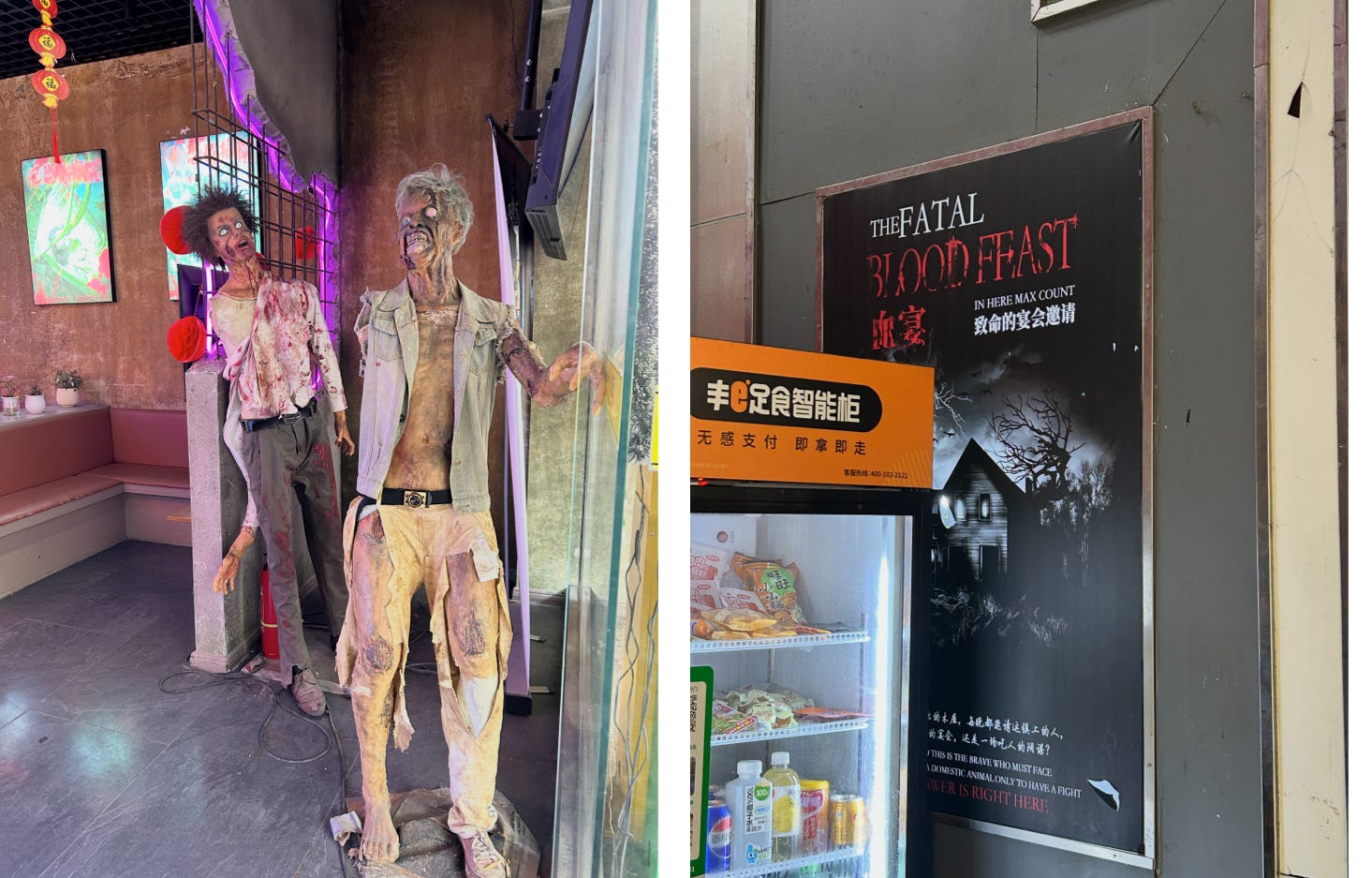
Let’s just say that I wasn’t looking for any additional heebie-jeebies on this particular trip so I did not partake.
But I haven’t been able to get these out of my mind since, and it’s not because I’m still expecting a headless woman to appear in my closet.
With the industry in China expected to reach nearly $2.5 billion in value this year, it’s worth digging into because it falls under the same category as emotional consumption, but from an angle that doesn’t get covered as much. This isn’t finding solace in a fuzzy, faceless bag charm; it’s a cathartic release of anxiety by zapping your nervous system.
▶️ So, first, let’s do a mini overview of the industry, because it’s pretty interesting.
▶️ Next, I’ll lay out why this formula has become so popular among Chinese youth.
▶️ And finally, some thoughts this sparked about a generation that's done being a passive audience — and what brands should do about it.
Here’s something I bet you didn’t expect: China’s first live-action escape room reportedly opened in Harbin in October 2008. I guess when you cannot go outside for the majority of the year without freezing your brains, you’ve got to get creative with indoor activities.
Then, in 2017, the popularity of the variety show, “Great Escape Room”《密室大逃脱》- where celebrities attempt escape rooms significantly accelerated market growth. During this period, immersive horror escape rooms became one of the industry’s most popular segments.
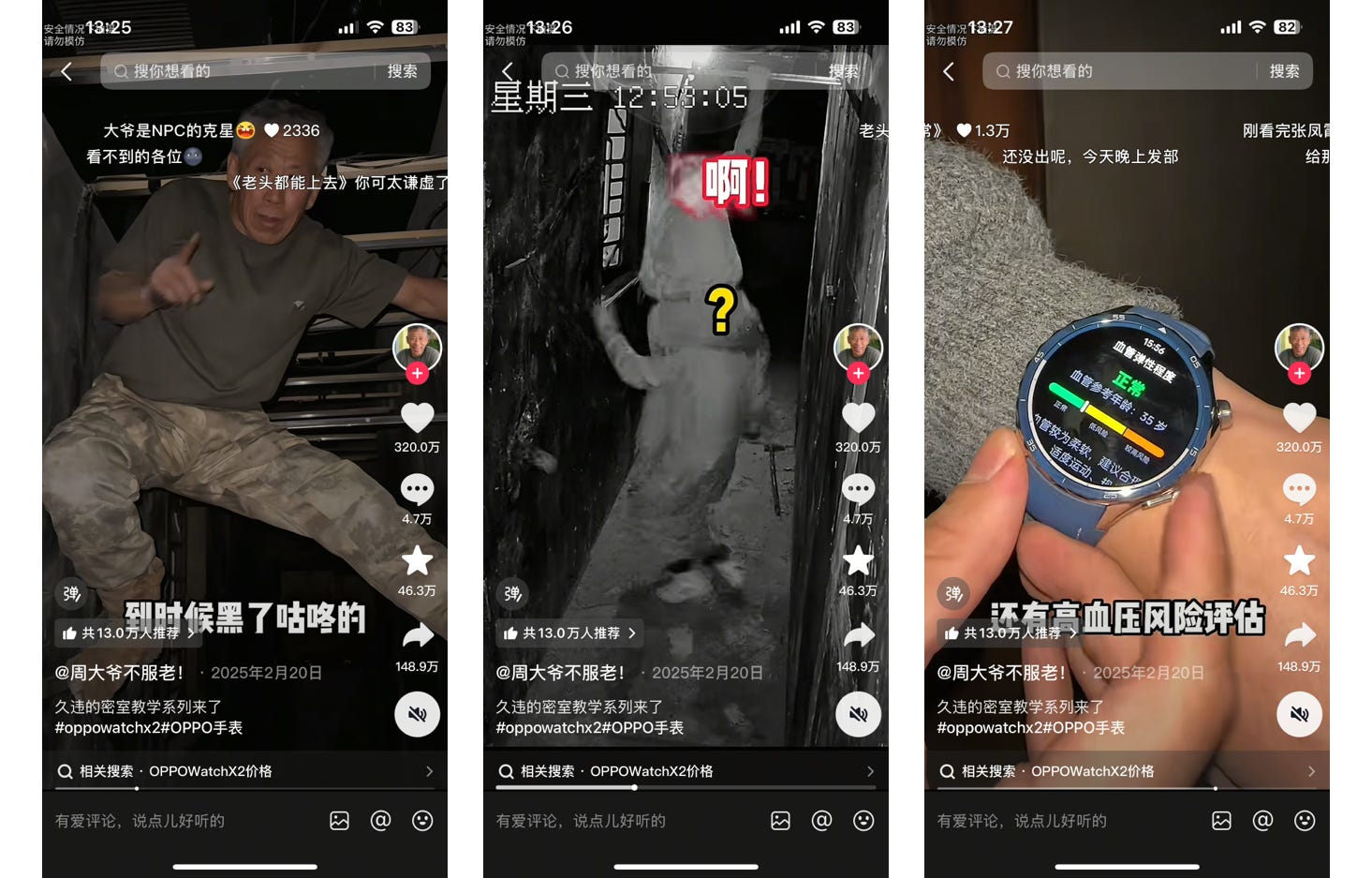
The format evolved from simple haunted-house experiences into highly theatrical immersive productions featuring scripted narratives, actors, cinematic environments, and interactive performance elements.
The phrase “immersive horror escape room” became popular on social media around 2019, when short-video platforms such as Douyin and Bilibili drove exposure through viral clips of players screaming, panicking, or reacting emotionally inside the rooms.
We can also attribute the rise in popularity to some other factors, including:
Japanese horror culture
Immersive theater
LARP (live- action role- playing)
China’s growing demand for offline experiential entertainment
Today, three major categories dominate the industry:
Mechanical puzzle escape rooms
Immersive horror experiences
Live- action RPG / role- playing formats
We can also see some distinct characteristics emerge based on geography —
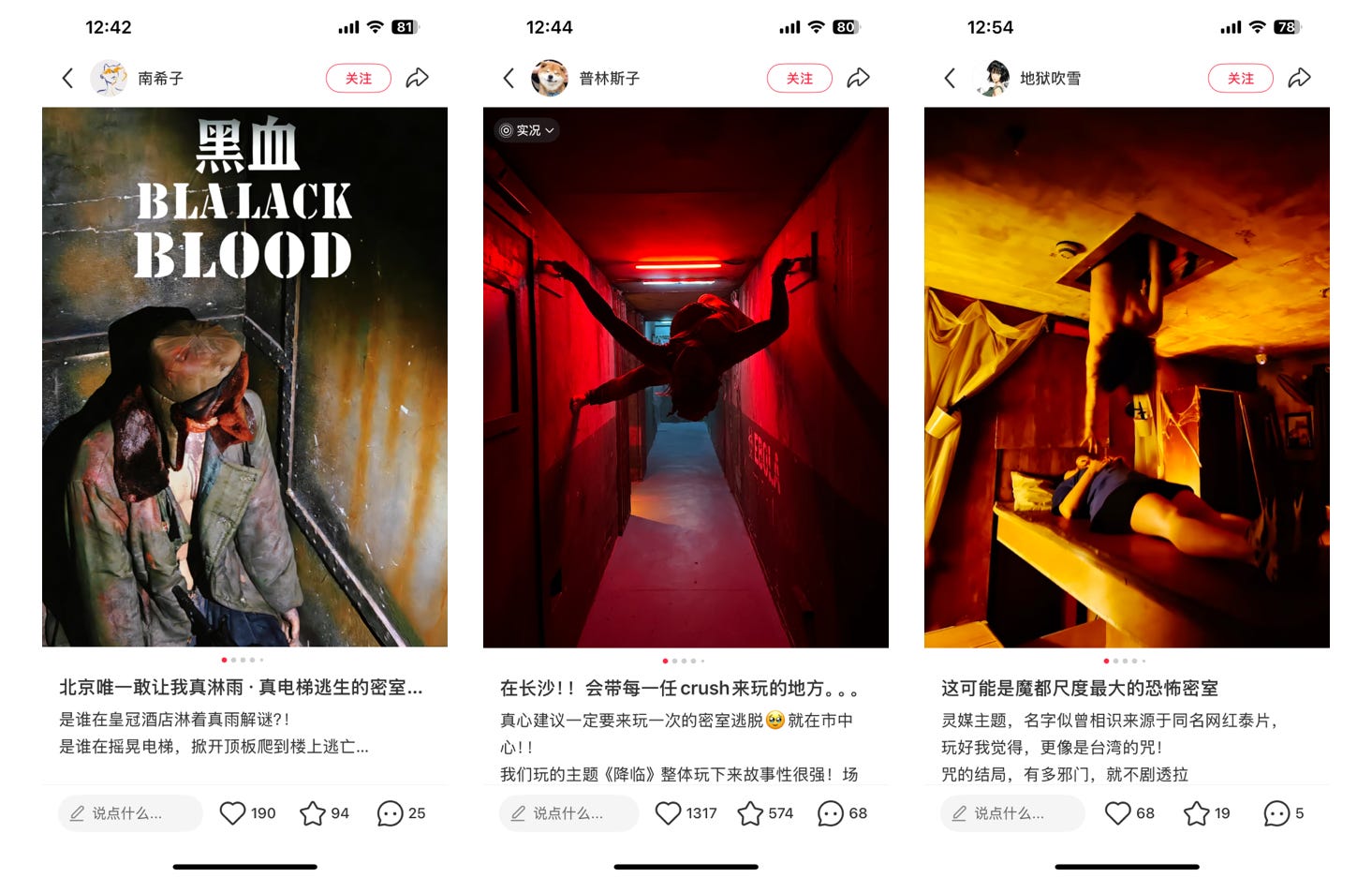
📍Beijing
Many leading brands and flagship venues are concentrated in Beijing, and it’s considered the industry’s “trendsetting” market. Experiences here are typically more expensive and emphasize:
luxury- level set design
costumes
immersive acting
large- scale theatrical production
📍Shanghai
Shanghai tends to favor more refined and story- driven experiences and places are known for a stronger emphasis on:
suspense
narrative logic
sophisticated puzzle design
📍Chongqing
Chongqing is often referred to as the “escape room capital of Southwest China.” Its mountainous urban landscape and underground spaces, including former air-raid shelters, naturally enhance the atmosphere for horror experiences.
The city has:
a very large number of venues,
highly active player communities,
particularly strong demand for horror themes.
Other cities with a notable concentration include:
Chengdu
Changsha
Xi’an
There is currently no exact figure for the total number of operating horror escape rooms in these three cities. Based on rough estimates, Shanghai has around 400 venues, Beijing around 200, and Chongqing more than 150 escape room entertainment venues citywide.
Some interesting factors that I think play a (small to medium-sized?) role in why young people appreciate this form of entertainment:
Low(er) effort
Traditional escape rooms demand a level of logical reasoning and puzzle-solving. Horror-focused experiences, however, rely more on emotional and sensory stimulation. Players do not necessarily need to work through a problem — they simply need to show up and move through the experience. This widens the audience appeal.
*Tbh, this is definitely the appeal for me. I have enough problems to solve, just give me the thrills, please.
Social
Among Chinese Gen Z, we have observed an increase in conversations on social media around ‘social anxiety’. Compared to previous generations, this cohort expresses difficulty in initiating social interactions and forming close bonds.
Horror experience rooms create a “forced collaboration” environment where players must communicate, cooperate, and emotionally rely on one another. Experiencing fear and heightened emotion as a shared group accelerates the formation of those bonds.
Desire for IRL
In an age dominated by short videos and constant digital distraction, immersive escape rooms offer something increasingly rare: complete real-world attention.
Unlike online entertainment, the experience cannot be paused or skipped. Players must stay fully engaged in the present moment. This intense sense of immersion and “flow state” provides a powerful and, in a way, soothing contrast to fragmented digital life.
And perhaps the biggest driver…
Emotional consumption has dominated consumer trend conversations over the past year, particularly in China, where it’s become the default explanation for how young people are spending under pressure.
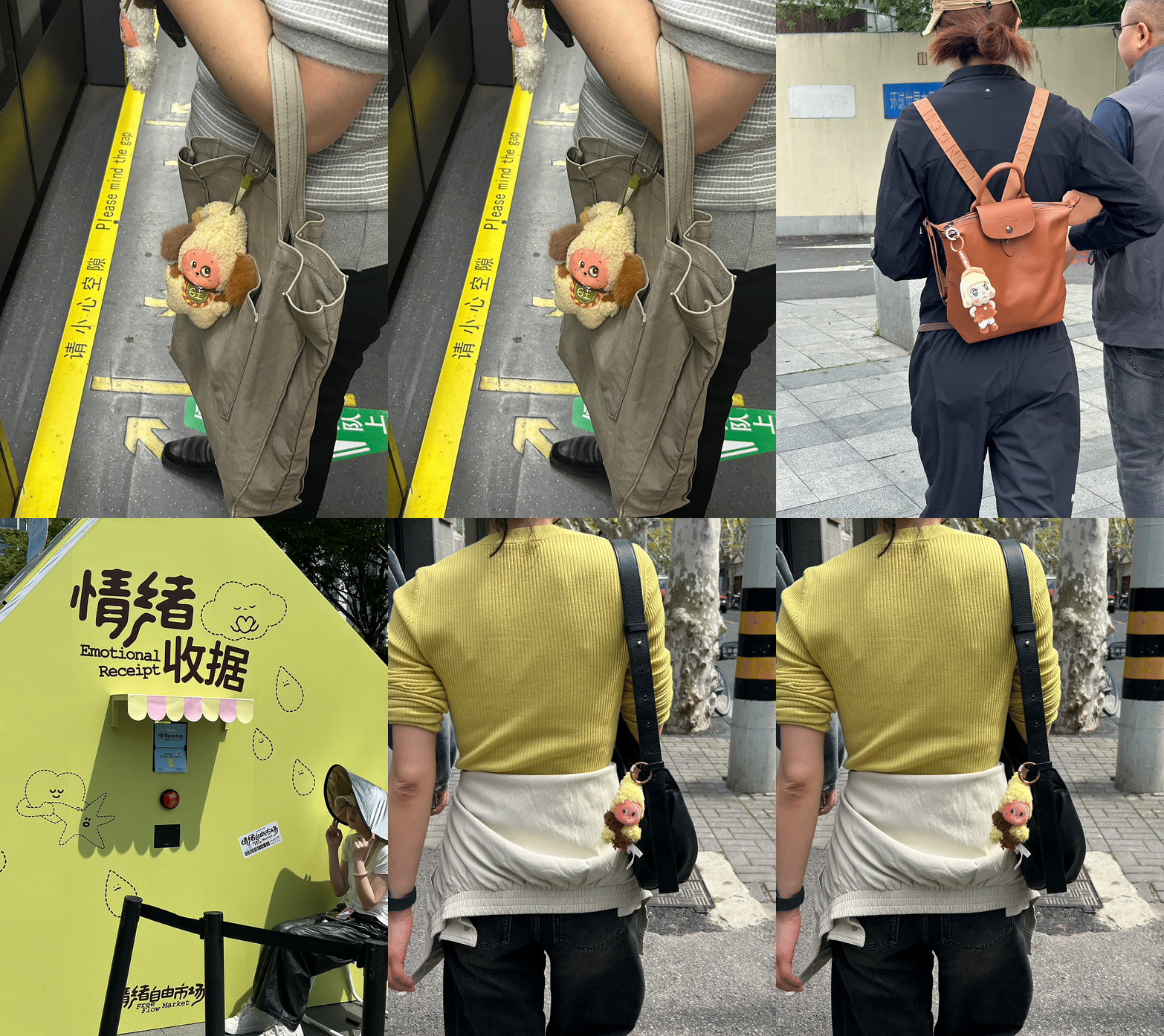
It’s most often associated with cute (or ugly-cute), soft, comforting objects or activities that soothe and calm the body and mind — the Labubu keychain, milk tea, or aromatherapy candle. These “little joys” work because they trigger a dopamine release. But dopamine isn’t exclusive to cuteness. Fear gets you there too.
Under extreme stimulation (like getting the bejeezus scared out of you for 30 minutes) the brain releases adrenaline and dopamine. After completing horror room experiences, players often experience a strong sense of relief and emotional release.
For many young consumers facing academic, workplace, and urban life pressures, these experiences function as a form of “safe emotional escape.” It’s fake, but visceral enough to feel real. Players know they won’t actually be harmed, yet their bodies react with genuine fear and excitement.
And when it ends, there’s something else: a sense of accomplishment and closure. You were scared. You stayed. You overcame. For a generation navigating pressures that often feel shapeless and unresolvable, that finality is a precious gift.
Let me be clear: I’m not advocating that we scare everyone into a state of bliss.
The angle I want to focus on isn’t how to create more bag charms or scarier horror rooms — whether it’s something soft and fuzzy or bloody and headless, I think the deeper implication is that younger consumers want experiences/objects/brands that allow them to feel something and retain a sense of control.
That desire is a… symptom? Cause? Related to? Running in parallel to? (I’m not really sure) to the evolution of social media/the internet as a whole.
We’re moving from consumption (I want to connect) to participation (I want control). The trajectory, as I see it:
2010–2018: Connect
Social media/the internet was built around people you actually knew and things you specifically searched for. You followed your friends, you added people you met in real life. You Googled “where to buy jeggings ” because you knew exactly what you wanted (IYKYK 💀).
2018–2022: Consume
Algorithmic feeds took over. Users drifted away from direct connections and were pushed content from people they’d never interacted with before. Platforms decided what you wanted to see and what you should buy before you did.
2022–now: Co-create
Anyone can be a creator. Short videos, stitching, reacting, voting, and gambling on live outcomes — users don’t just watch or scroll anymore. They talk back to brands in comment sections, co-design drops, and expect to have a hand (control) in what gets made, not just what gets watched.
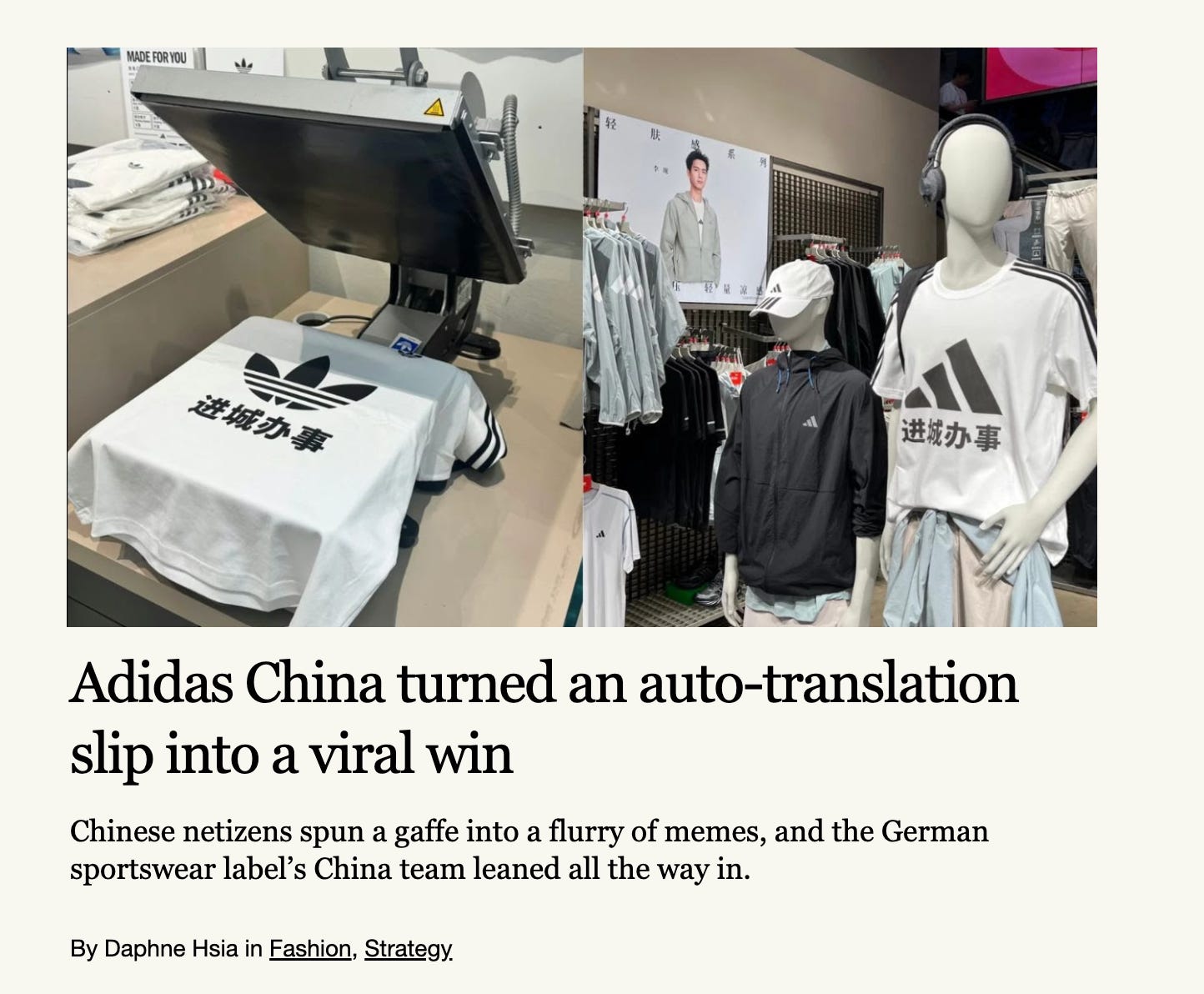
Adidas is the perfect example of this. The brand had a translation error on a product photo, describing a jacket as ‘good for running errands around town.’ However, the translation came out more like ‘going into the city to handle important business’. The internet exploded with hilarious memes.
The brand turned the self-deprecating moment into something fun. They fully embraced user participation and co-creation. At some Adidas locations, customers even started using the custom-printing service to print the viral phrase on t-shirts.
I keep thinking about the horror room experience, as well as elements of some of the most impactful pop-ups, and viral products I’ve seen from brands recently, and what they all have in common is that they hand something over to the consumer: a feeling, a role, a space, a story to tell. Younger consumers in China — and honestly, everywhere — are done being passive recipients of carefully crafted brand moments. They want in. They want a role.
✌🏼 As always, thanks for reading!
We help global brands localize for China — from understanding how you’re perceived on Chinese social media to managing platforms, influencer collaborations, paid media, and crafting campaigns that create lasting impact. If China feels complex, let’s unpack it together. olivia@waisocial.com or simply respond to this email.
No posts
Comments
Nothing yet. Say the first thing.
Sign in to join the conversation.