

As usual, we start with a few plants and creatures that we happened upon in our neighbourhood in the past week. Just s few things that it is too easy to just walk past without noticing their presence. Nothing especially rare, but all worthy of notice - these are our neighbours.
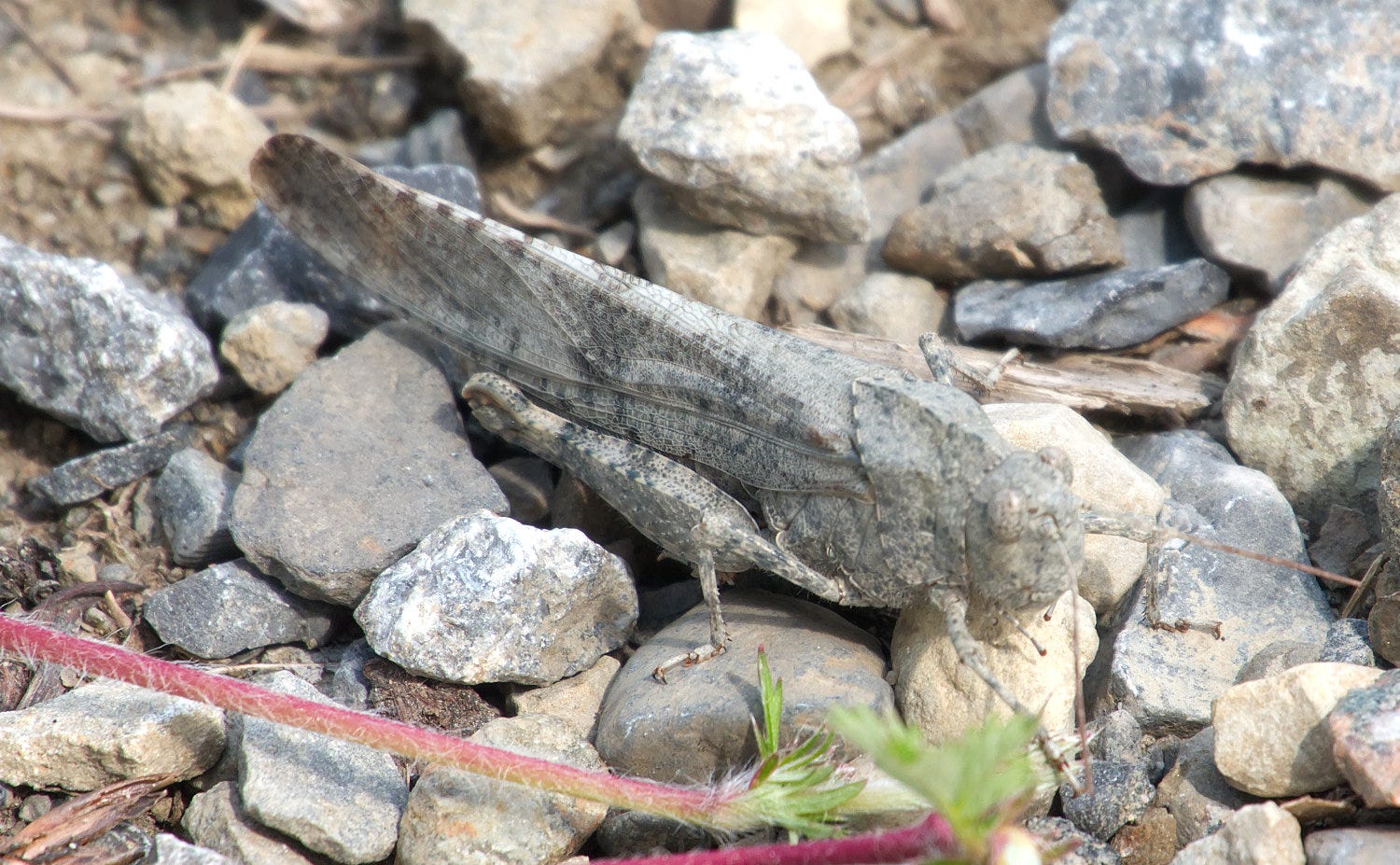
On looking it up, we have eleven grasshopper species in Quebec - despite its name this one is quite widespread here. This fellow and its friends were skipping along the dry margins of the lakeshore. Around 100m away from the water though, grasshoppers were more likely to be Two-striped or the Red-legged species.
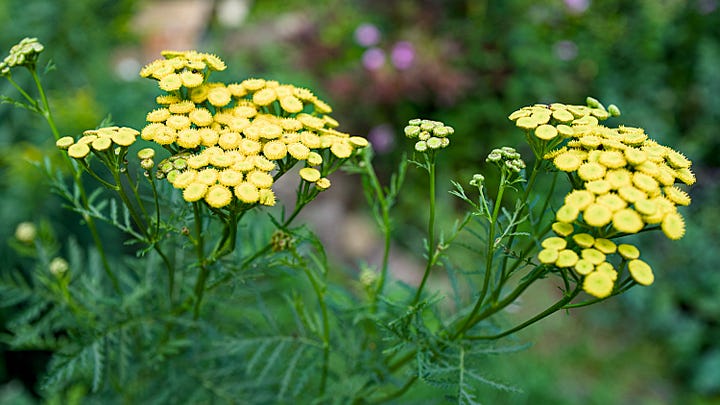

On the left is Tansy. Not a plant you would want to eat if you value your health but the scent is quite appealing and it is attractive to look at - also rather a thug that likes to spread itself at the expense of some other places its nearby.
All parts of the one on the right - White Snakeroot - are toxic but the small white flowers are attractive, so good and bad. But it also seems to be susceptible to being bullied by the Tansy (above) and is losing ground this summer in the garden.
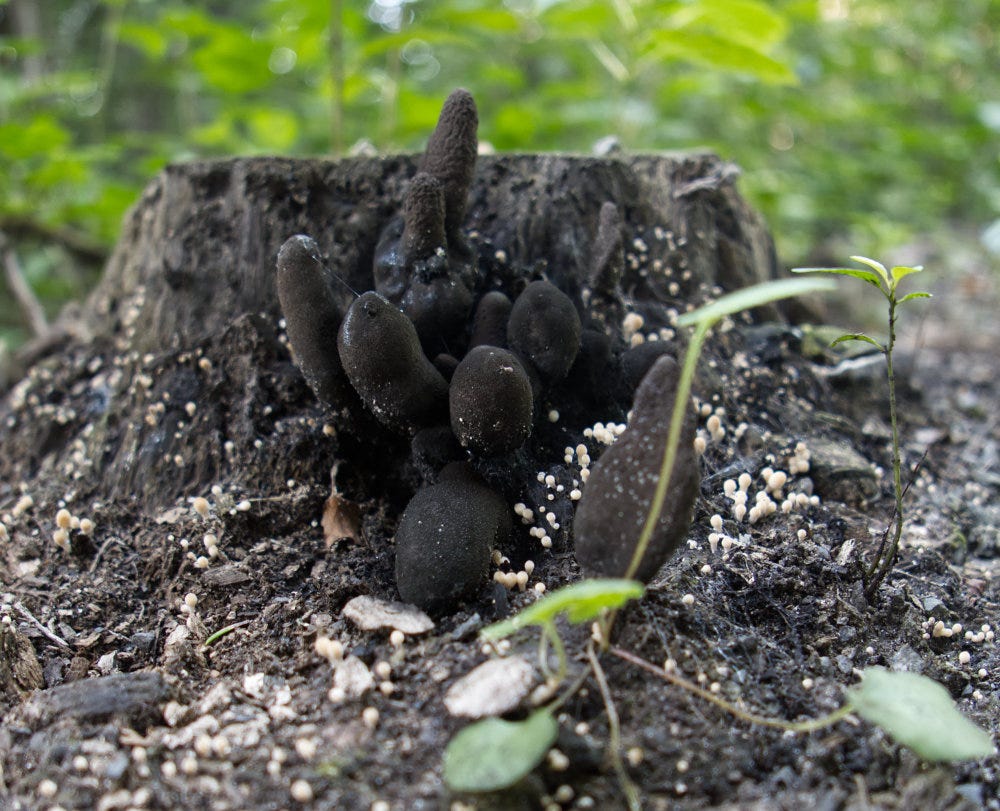
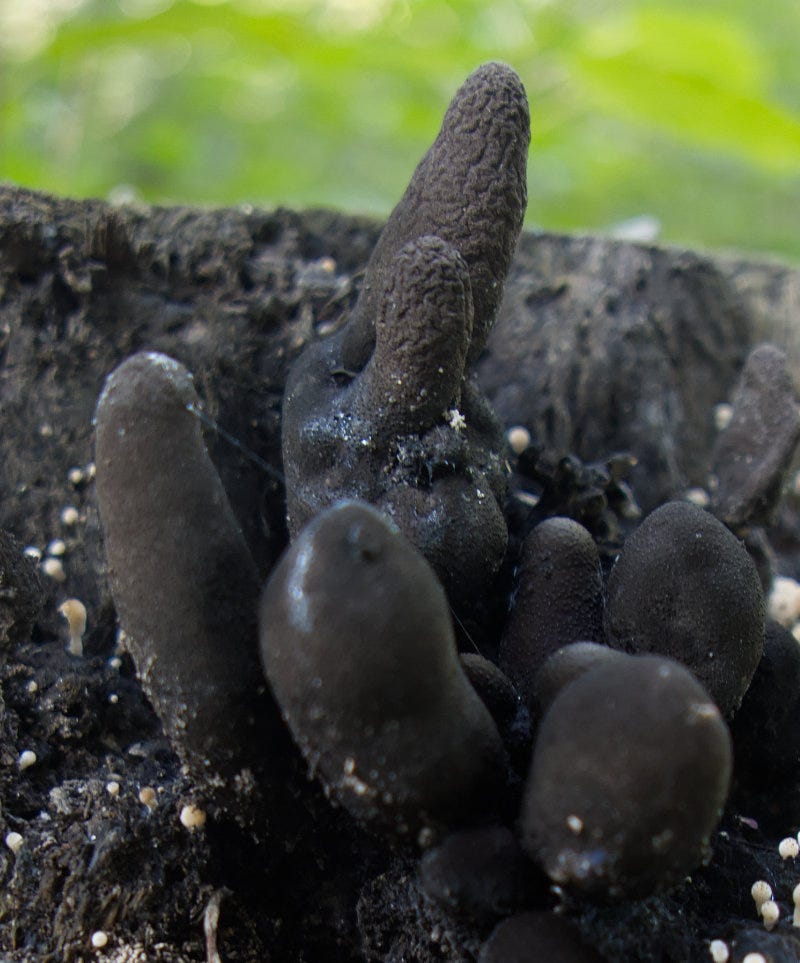
This was an unexpected find - a species of Dead Man’s Fingers (Xylaria polymorpha) - not the usual white ones growing from the stump of a long felled tree on a path between our road and the next. (Bending over to take this photograph I was nearly flattened by the totally silent approach of a high speed electric bike ridden by a youth who should know better. No apologies, he just headed off as fast as his legs could take him. It’s a clear path with good visibility too.)
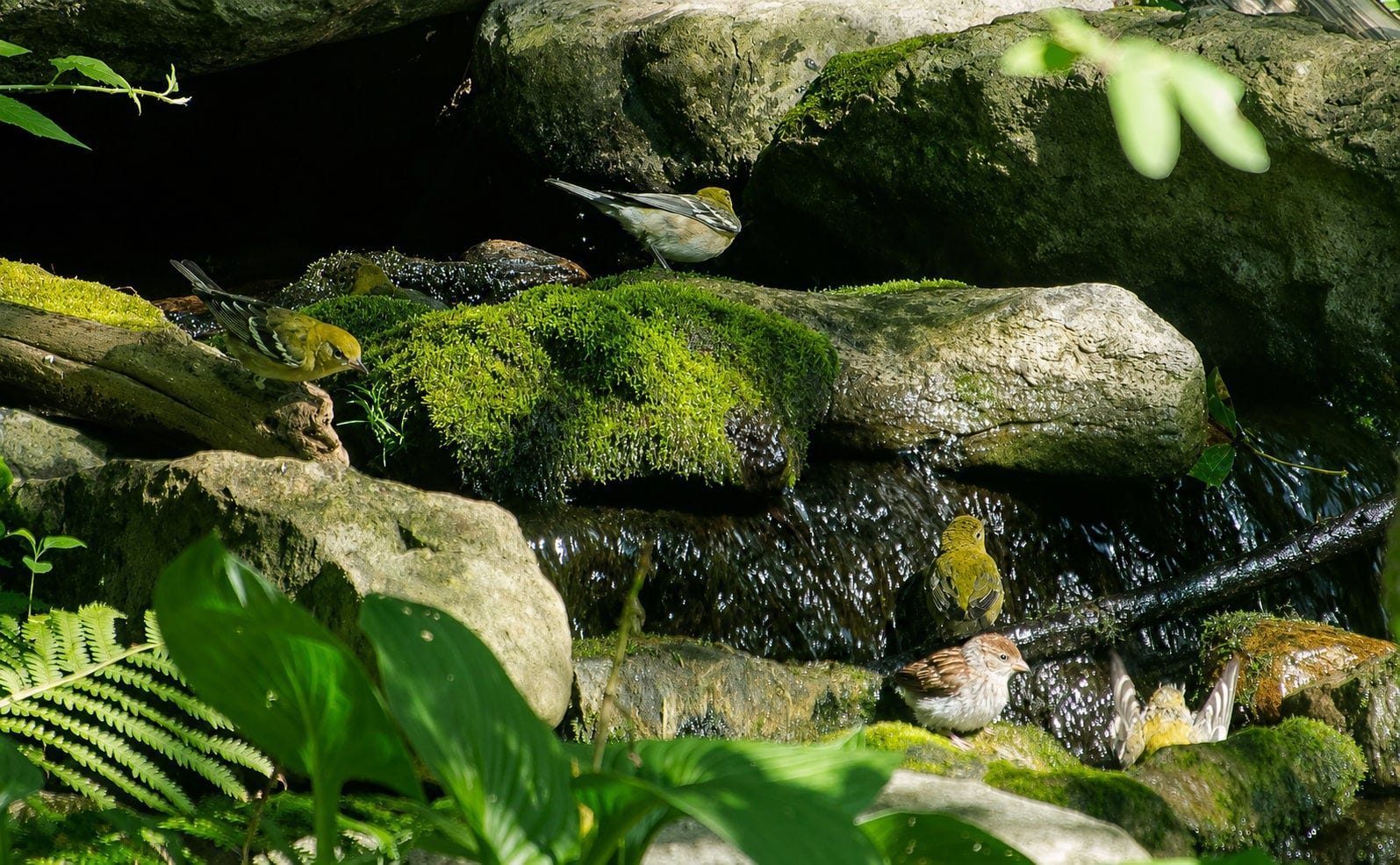
And birds. Must have birds. A travelling group of six or eight Bay-breasted Warblers in their confusing fall plumage decided to join one of our summer-resident Chipping Sparrows for a splash in the waterfall mid-week.

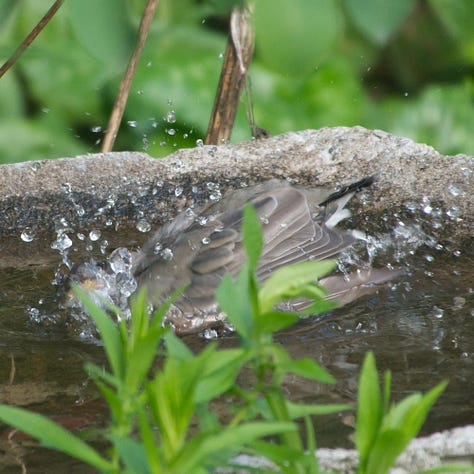
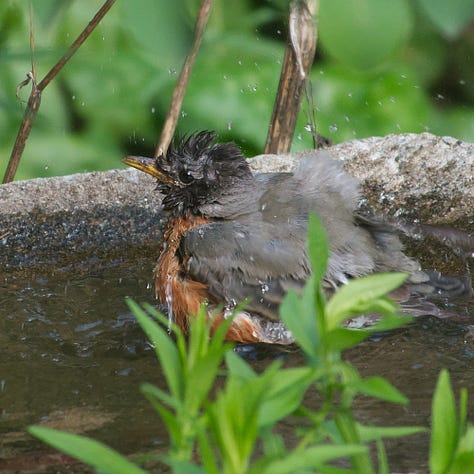
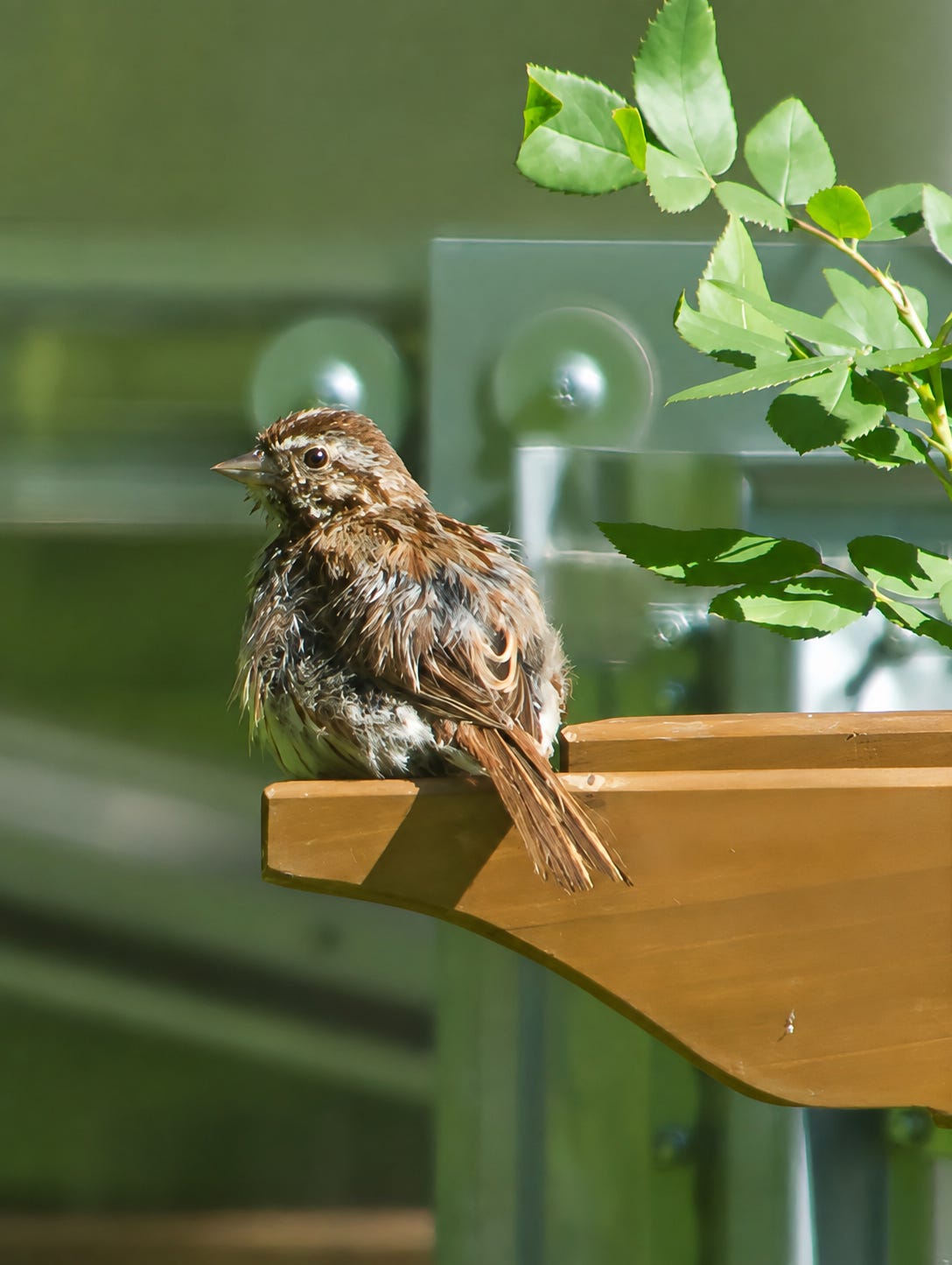
Lastly, this young Song Sparrow was busy sorting out his feathers after a refreshing splash at the top of the waterfall.
Coming later this month:
Growing garden plants for Hummingbirds - 23 August
Quadrats, transects and paying for education - 30 August
Earlier this week, The Old Bookshop published a short piece about some small things we might be able to do to look after our local environment … with some nice pictures too. You might enjoy it, it is not at all lengthy.

You may think that this newsletter totally ignores my commitment stated last week, to keeping things short and pithy 😉 … that’s coming soon - in fact, if you were drawn here by a new suggestion that brevity is my watchword then maybe view it a special bonus for waiting out the postcard weeks
While we were walking and writing postcards we received a message, a request, from one reader who said “I still enjoy the mix of birds, plants and insects. Maybe more about TREES too?” It’s true, trees, despite there being Canada’s biggest arboretum no more than ten minutes drive from home, have not featured as much as some other creatures … This is probably undeserved and so, trees it is.
A few years ago after a long and cold winter I self-published a guide book to wildlife within walking distance of the small town I live in on Montreal island. It could do with a serious re-write, but the following, with new illustrations, is abstracted from that book, lightly edited for this medium, and introduces the predominant families of trees. Trees are not always easy to identify, but at least getting them into the right families is a good place to begin. For an outer city suburb, Baie-D’Urfé and nearby is exceptionally well provided for when it comes to trees and shrubs with a 31% canopy cover of the town’s land area in 2023 determined by a comprehensive individual-tree inventory using GIS-based mapping. Trees, as we all know, are really important when it comes to keeping the air cool in high summer and providing essential habitat for birds and insects and not a few mammals too.
The natural forest around Montreal is quite rich and diverse and is dominated by deciduous, broad-leaved trees. Sugar maple and beech dominate in association with species such as black maple, black cherry, white ash and basswood. There are stands of black walnut, bitternut and shagbark hickory, cottonwood, pin oak, box elder and black willow.. It is categorized as being in the Sugar Maple-Bitternut Hickory Domain of the Hardwood Forest Subzone of the Northern temperate Zone. Ressources naturelles Quebec describe this as follows: “Confined to southwestern Québec, with its more clement climate, the sugar maple-bitternut hickory domain contains Québec’s most southerly species, some of which are thermophiles. Its forests are highly diversified. Some of the species found here are at the northernmost limit of their range. This is the case of the bitternut hickory, after which the forest is named, as well as the shagbark hickory, hackberry, black maple, swamp white oak, cork elm, pitch pine and several shrubs and herbaceous plants. The forest also contains other species that extend further north, such as the sugar maple, fir and spruce.”
The major families of trees and shrubs are briefly introduced as follows:
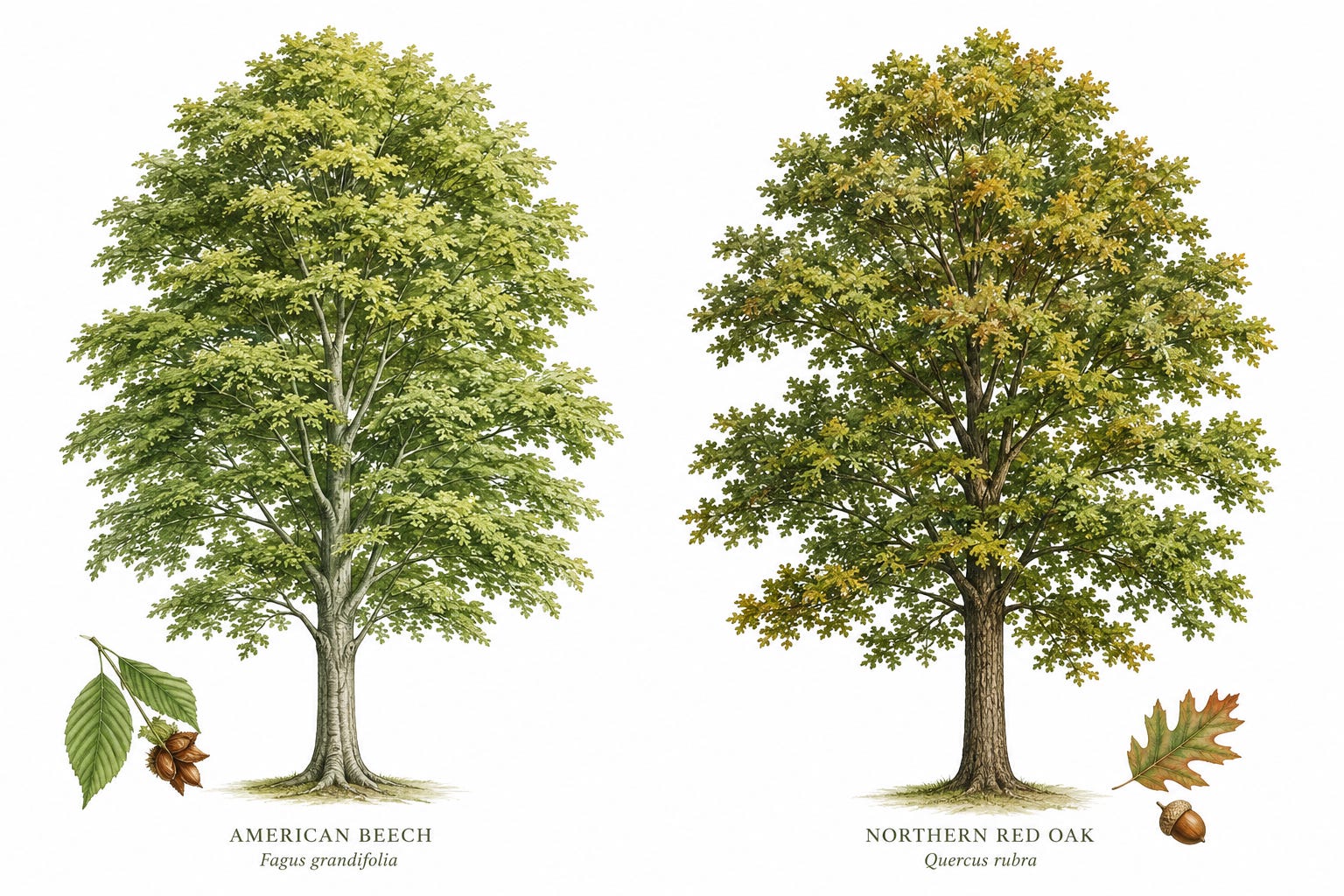
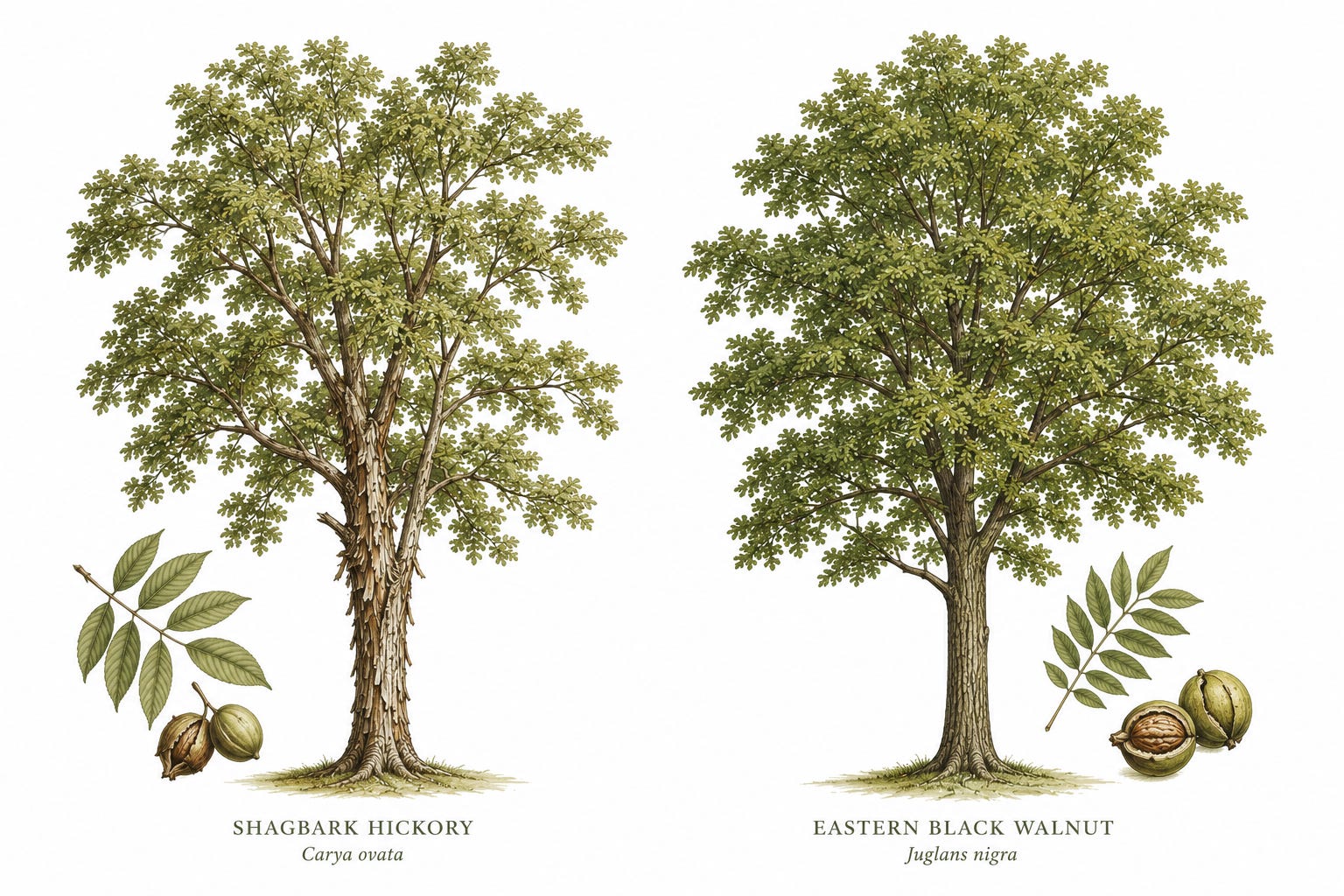
You will notice that I have included some informational illustrations below that were put together for me by HAL as I do not always have suitable photographs of my own to share. The text though, be assured, is all my own work.
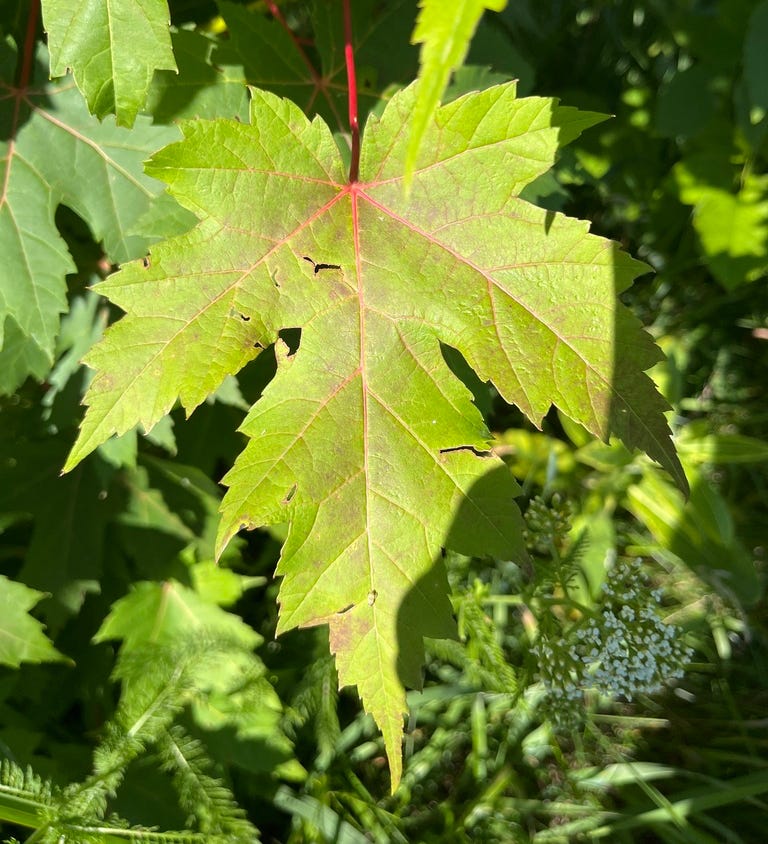
This is Canada, what’s more it’s Quebec, so there are quite a few fine Maple trees to enjoy. Most of them are not hard to find in town but for the best experience go the arboretum and immerse yourself in the oldest sugarbush on Montreal island. If really interested, there are a good dozen species of maple within a moderately easy walk or bike ride. Most of the maples in the world are in Asia, there only being a few native species on this continent, some 13 in total.
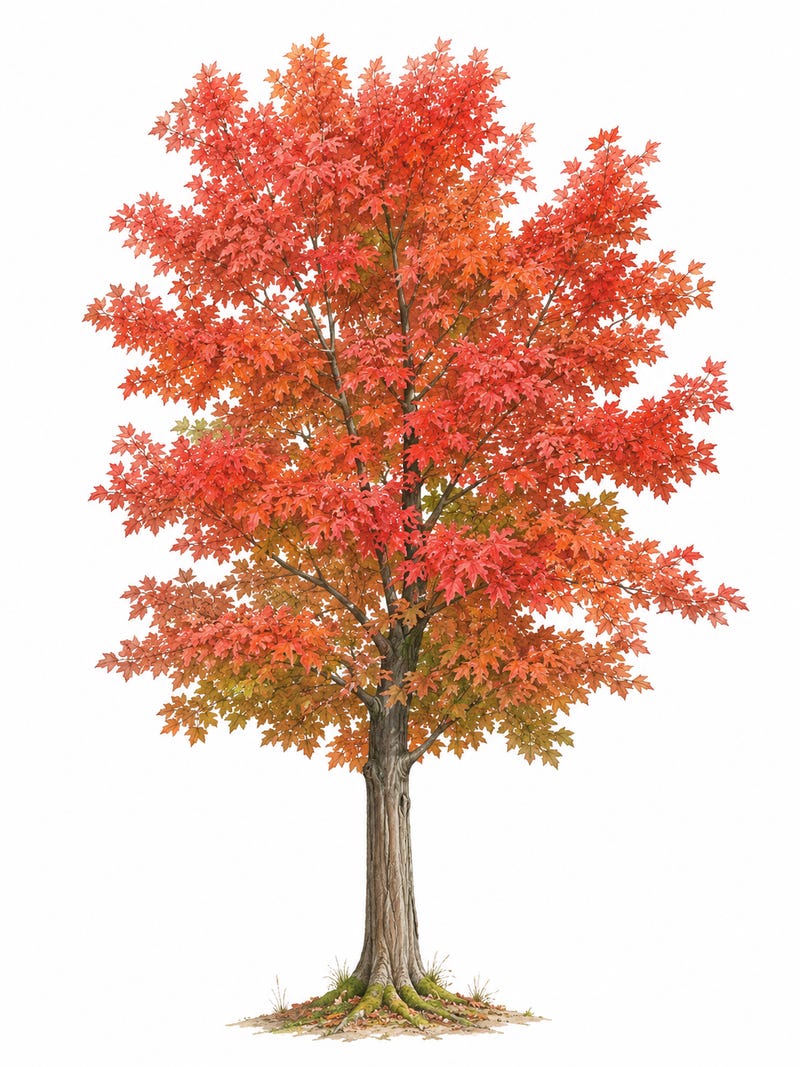
The two famous members of this family are, of course, the Sugar Maple (Acer saccharum) and the Red Maple (Acer rubrum). The first for enabling us to have maple syrup and the second because of the symbol on our flag. Red Maple is a very adaptable species and so is one of the most abundant and widespread trees in eastern North America, from way up here down to the Gulf of Mexico.
Other native maples that you can find are the Silver Maple (Acer saccharinum), the hybrid Freeman’s Maple (Acer × freemanii), Striped Maple (Acer pensylvanicum) and, of course the short lived Manitoba Maple (Acer negundo)
Non-natives maples, often here because they grow well in gardens and parks and so were imported by the horticulturalists, are Amur Maple (Acer ginnala) and Norway Maple (Acer platanoides), the second of which seems keen to try for world domination going by the seeds it spreads.
Maple species are distinguished by their leaves which differ from species to species in details such as the number of lobes they possess. Sugar Maple, for example has leaves that are between 3-5 inches wide and with five lobes. They have a bright green upper surface and a paler green lower surface. Red Maples on the other hand vary from 2-6 inches width and only have three lobes. There are small “teeth” along the margin and mature leaves have a whitish appearance on the under surface. You get the idea.
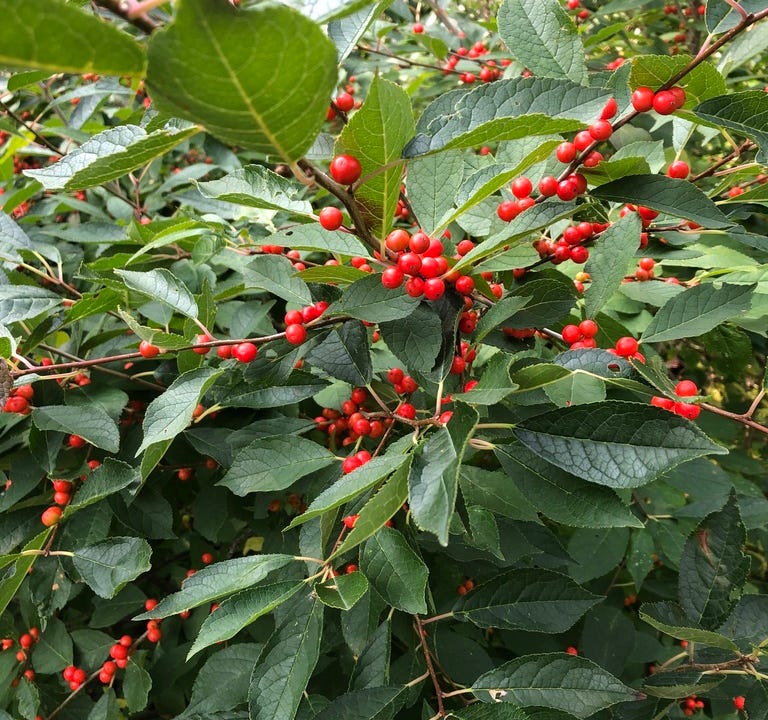
Winterberry (Ilex verticillata) is the sole species from the Holly family that we have growing wild here. This shrub is similar to the exceptionally prickly-leaved traditional Holly form of Christmas cards, but without the prickles. They are just green bushes in summer but by winter they carry heavy loads of bright red berries which stand out in the snow and provide important food for wildlife. Winterberry is supposed to like damp semi shade. I was involved with planning and planting the copse in the arboretum a decade ago, situated in fairly full sun and on dry loam, underlaid by deep sand (we took a chance with that). At the same time I purchased from the same nursery a few winterberry for my own garden - damper and shadier. Guess which ones thrived and are covered in berries each year and which have declared they are “not playing”. Yes, the arbo examples growing in sand.
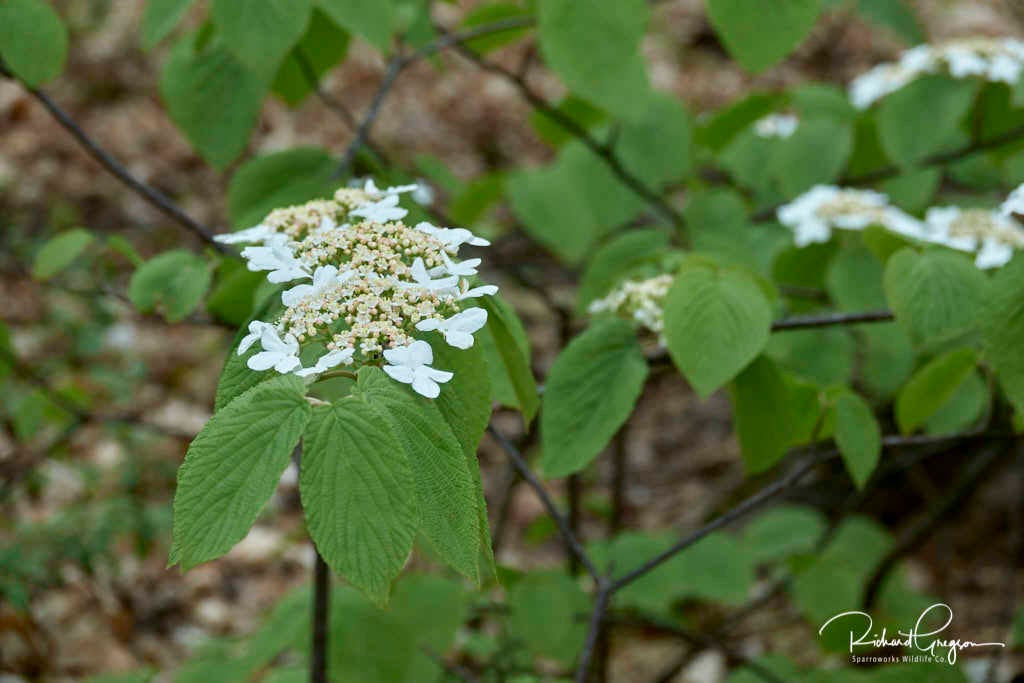
There are at least four species from this family. The Red-berried (Sambucus racemosa) and Common Elder (Sambucus canadensis). Viburnums are the Hobblebush (Viburnum lantanoides) and the Wayfaring Tree (Viburnum lantana). In gardens there are also several other “horticultural” varieties of Viburnums with especially large and shiny red berries unfortunately, while a lot of those garden forms look splendid their berries are rarely taken by birds until all the native wild species berries have been eaten for preference. Squirrels like them though. The flowers are spectacular. They have complex flower heads 5–15 cm across, white, cream or pink, with small, five petalled miniflowers. Some species also have a fringe of large, showy sterile flowers around the perimeter that act as pollinator “targets”. Large bunches of berries develop and often stay into the winter months when cold temperatures concentrate the sugars and make them more palatable to wildlife.
Elderberries (which make splendid country wine, by the way) are often found growing near old farms and cottages where former organic waste disposal provides the nitrogen they require. Fast growing with a reputation of being ‘an instant hedge’. They will virtually grow anywhere that sufficient sunlight is available.
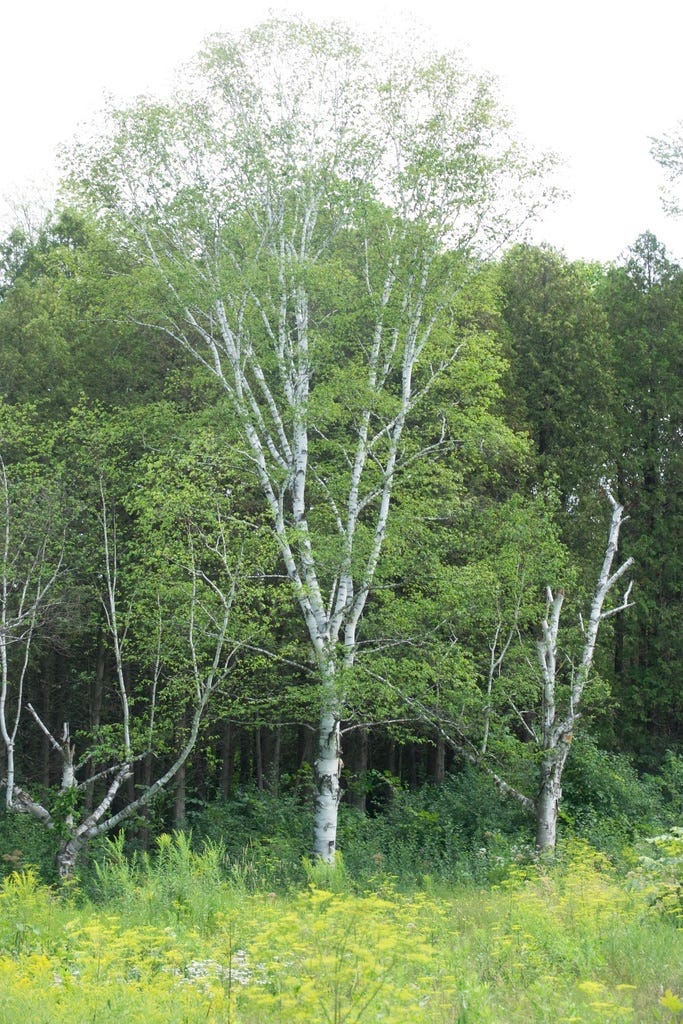
The Birches also includes alders, hazels, and a few other genera. They are all deciduous species that bear nuts. The one we all know is the native Paper Birch (Betula papyrifera) which can be confused with the less hardy and non-native Silver Birch which is common in gardens and parks. There is a single example of the rare Cherry Birch (Betula lenta) on the Canada 150 trail in the Arboretum - usually passed by because few know what it is.
Other members of the family include European Black Alder,(Alnus glutinosa) and a number of Hazel (Corylus) species.
An important group of tree species that support a wide number of insects, birds and mammals. Some live on the trees, some nest or lay eggs there and others eat fallen fruits/nuts from the forest floor. Typically they have simple leaves with pinnate venation, unisexual flowers in the form of catkins, and fruit in the form of nuts - acorns for example.
American Beech (Fagus grandifolia) are important native trees of eastern North America They have a smooth, gray bark “like an elephant’s leg”. Sometimes they grow in stands of beech that contain nothing else, but more often they grow in association with sugar maple, in a beech-maple climax community. Less frequently they can be found with trees such as birches and hemlocks Beech trees prefer shady situations on moist well drained slopes and rich bottomlands. It is rare for American beech to produce any seed before it is at least 40 years old and good crops will not form much before the age of 60. Older Beech produce huge quantities of seeds (beech mast) which are scattered on the forest floor. It is very nutritious and so it is important for the animals that eat it - as a consequence very little beech seed actually manages to survive to germinate and grow into new trees … fortunately the beech has a strategy to deal with that - most of the younger ones are clones of the mature older trees and arise from the roots of mature trees, spreading out far to the sides. No seeds involved.
There are several species of Oaks. Northern Red Oak (Quercus rubra) often grows near the beech trees. Fast growing and very tall the bark has ridges that appear to have shiny stripes down the centres.
There are four, at least, species to be found near my home. Eastern Black Walnut (Juglans nigra) can best seen in the Arboretum where a large plantation of huge, mature trees is found. Very much worth taking the effort to visit them. A related species, The Butternut (Juglans cinerea), is rare to uncommon but there are specimens to be found - often in corners of gardens. We had one that succumbed to old age, they are not long lived, but it was loved by the squirrels.
Related members of the family are two species of Hickory - the Shagbark Hickory (Carya ovata) and the Bitternut Hickory (Carya cordiformis).
Both male and female flowers appear on the same plants, and are wind pollinated. Now, fascinating factoid for the botanists … the fruits of the Juglandaceae are often confused with drupes (that would be cherries and plums etc) but are actually accessory fruit because the outer covering of the fruit is technically an involucre and thus not morphologically part of the carpel; this means it cannot be a drupe but is instead a drupe-like nut. Now you know.
This is a diverse family including all the species of Olives. The principle distinguishing feature of the family from others is indistinct - while the flowers are radially symmetrical, the number of stamens is reduced to two.
Ash trees have been in terrible trouble in the past decade or so because of Emerald Ash Borer beetles which are killing them everywhere. A plague, indeed. Good luck if you can still find any alive. There are three Ash species local to this area: White Ash (Fraxinus americana), Green Ash (Fraxinus pennsylvanica) and Black Ash (Fraxinus nigra). Hopefully, you live somewhere that the beetles have not arrived in.
In the same family are rather more common Lilacs (such as Syringa vulgaris) and Common Privet (Ligustrum vulgare)
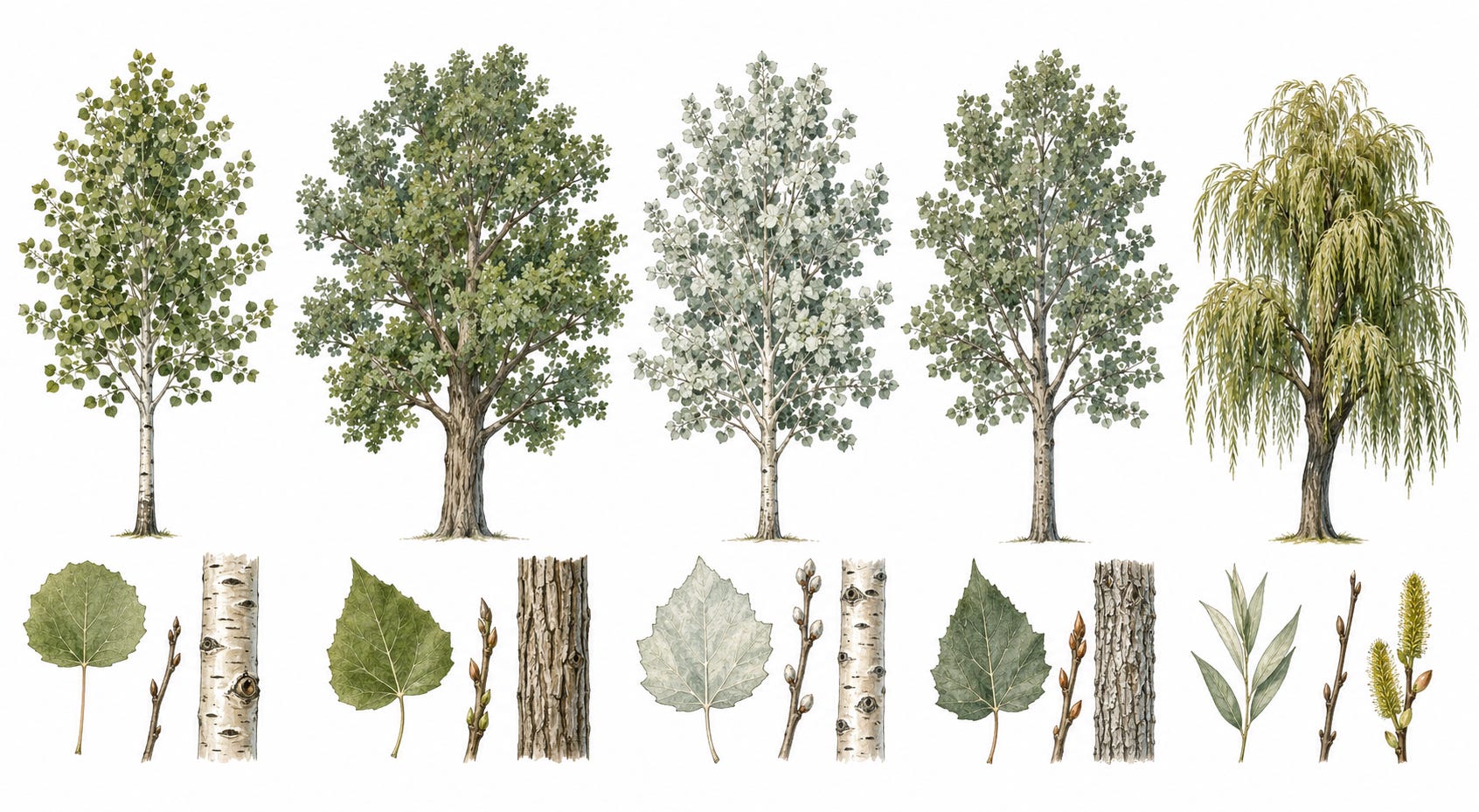
Includes all the Willows, but also Poplars and Aspens. One definitely non-native Willow hereabouts, and only one specimen that I am aware of at that, is in the Arboretum next to the Black Walnuts. Visit and pay homage, for this is the famous Cricket Bat Willow, a very specific variety of white willow (Salix alba var. caerulea) which has an exceptionally tough and shock-resistant wood, not being significantly dented nor splintering on the impact of a cricket ball at high speed.
Local species to look out for include the Trembling Aspen (Populus tremuloides), Eastern Cottonwood (Populus deltoides), White Poplar (Populus alba), Grey Poplar (Populus × canescens) and three species of Willow including Meadow Willow (Salix petiolaris), and White Willow (Salix alba).
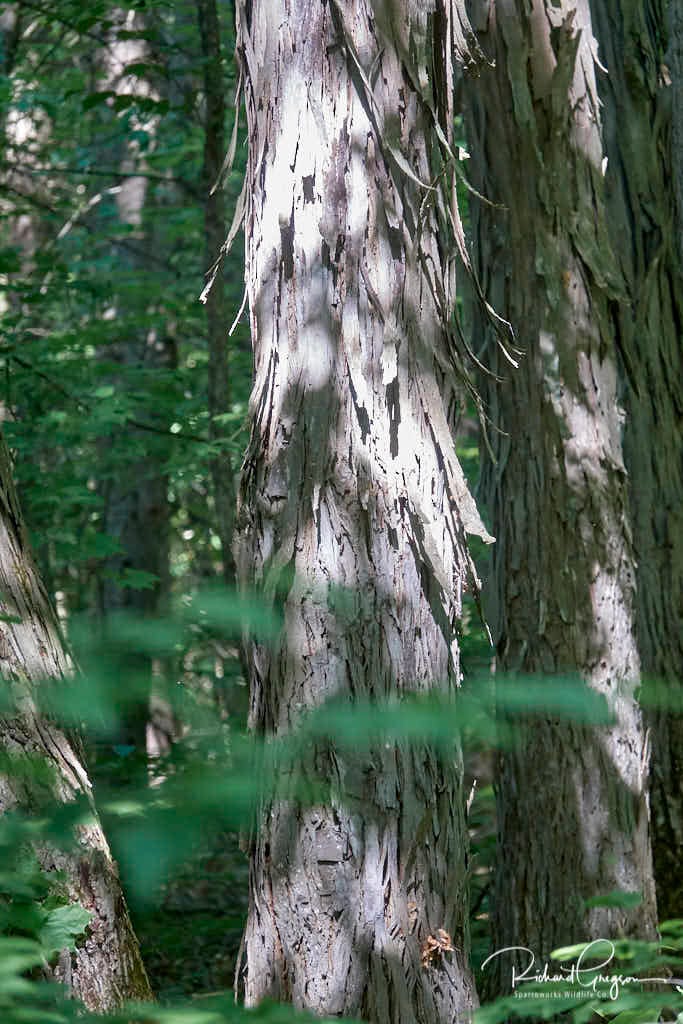
There seems to be only a single species from this family around here - Eastern White Cedar (Thuja occidentalis). A small to medium sized tree with red, furrowed and peeling bark. In the wild it tends to grow in swampy or damp and rocky locations where competition from other evergreen trees is not great.
There are around 30 genera, including junipers and redwoods, and some 130–140 species in total. They are trees and shrubs up to 116 m tall. The bark of mature trees is commonly orange- to red-brown and of stringy texture, often flaking or peeling in vertical strips, but smooth, scaly or hard and square-cracked in some species
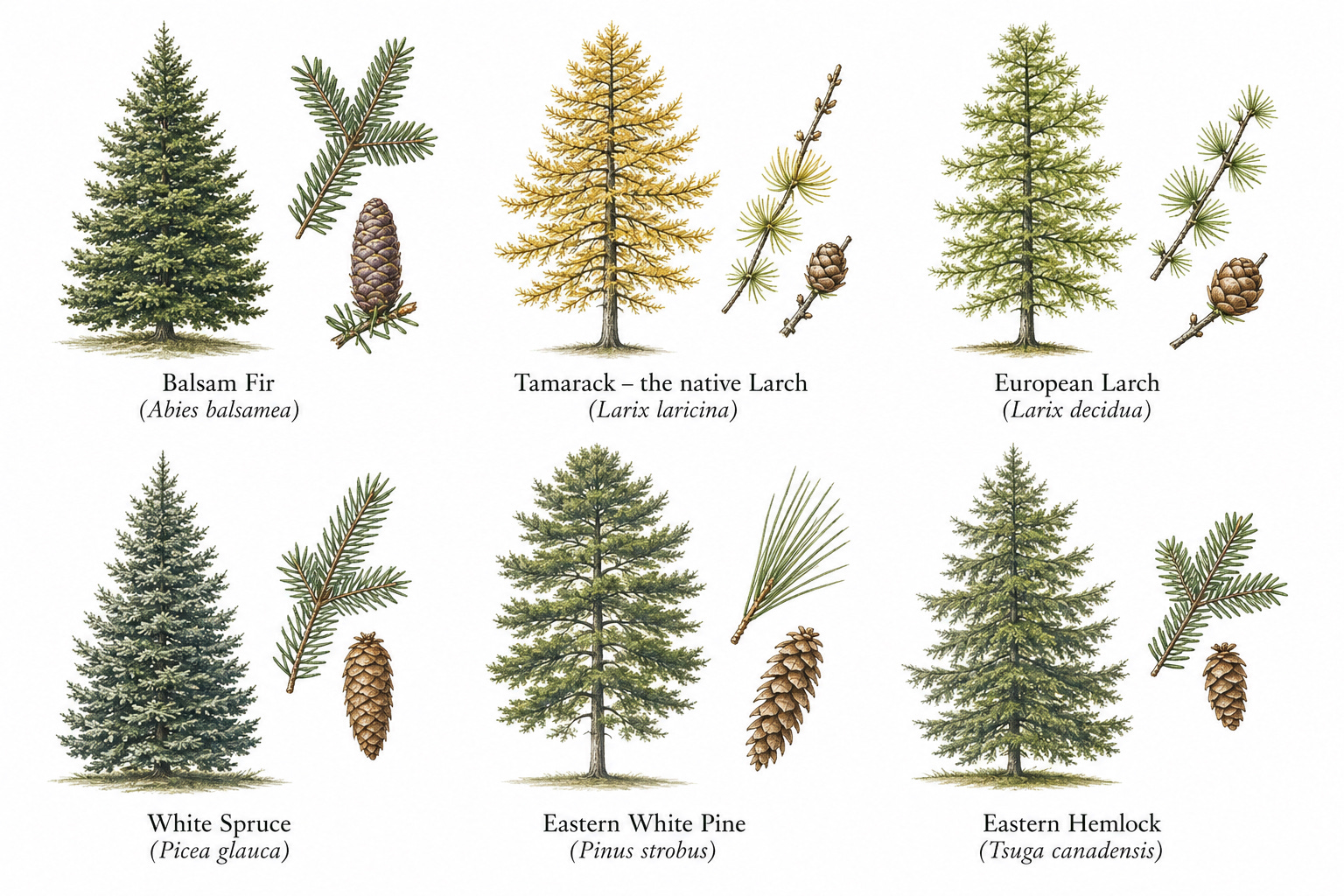
Includes many of the commercially grown tree species such as cedars, firs, hemlocks, larches, pines and spruces. Mostly tall with variably sized cones. The Larches are not evergreens but almost all the other 132 species are. Maybe a dozen species can easily be found here, some native and others imported for the timber trade. Many of these conifers have adaptions for winter such as a narrow conical shape, and downward-drooping limbs which help them shed snow. Some species seasonally alter their biochemistry to make them more resistant to freezing.
Examples to look for include Balsam Fir (Abies balsamea), Tamarack - the native Larch (Larix laricina), European Larch, White Spruce (Picea glauca), Norway Spruce (Picea abies), Scots Pine (Pinus sylvestris), Eastern White Pine (Pinus strobus), Red Pine (Pinus resinosa), Jack Pine (Pinus banksiana), and the Eastern Hemlock (Tsuga canadensis).
There is really only one species from this family around, the Canadian Yew (Taxus canadensis). Generally they prefer shade in moist, cool soil in rich woods, hardwood and conifer forests, swamps, ravines and banks. The stems that reach down and touch the ground will root and colonies can be formed. It rarely grows over 5 feet tall.
I believe there are three species of Elms to be seen - American Elm (Ulmus americana), Slippery Elm (Ulmus rubra), and Siberian Elm (Ulmus pumila). Of those the true native is Ulmus americana though its population has been severely depleted by Dutch Elm disease.
Slippery Elm is native to the continent, but originates much further south and is presumed to be an introduction here. On the other hand Siberian elm is definitely a non-native, but it is resistant to Dutch elm disease and is being used to try to breed resistant hybrids of the native species. You do what you have to do.
There are some trees and shrubs that have outlier tree species in families that are otherwise primarily herbaceous. The commonest example, perhaps, being:
A number of Rosaceae species grow into woody shrubs and moderate sized trees. There are many species of Hawthorns (Genus Crataegus) for example and all the many species of Plums and Cherries (Genus Prunus). Then we have the Mountain Ash species of the genus Sorbus, both native and the naturalized, and often garden grown, European mountain ash (Sorbus aucuparia) which is the host in early winter to many fruit eating birds such as American Robins, Waxwings and European Starlings. The European Mountain Ash is also known as Rowan and the wood of it is said to ward off witches and makes the perfect staff for a wizard - if you missed last weeks edition, I wrote at some length about Rowan trees..
Apologies - in hindsight that was far too long, but if you made it this far I hope you found something of interest. I promise not to be quite so prolix in the future.
Any comments would be appreciated - is this stuff of interest to you?
Comments
Nothing yet. Say the first thing.
Sign in to join the conversation.