
Regular readers will have seen my earlier posts about a colony of black Dead Man’s Finger fungal bodies growing on a decaying tree stump. Yesterday, the ground around the stump was liberally scattered with tiny pale-pink granules which were identified as the first emerging signs of Fairy Ink Caps (Coprinellus disseminatus).
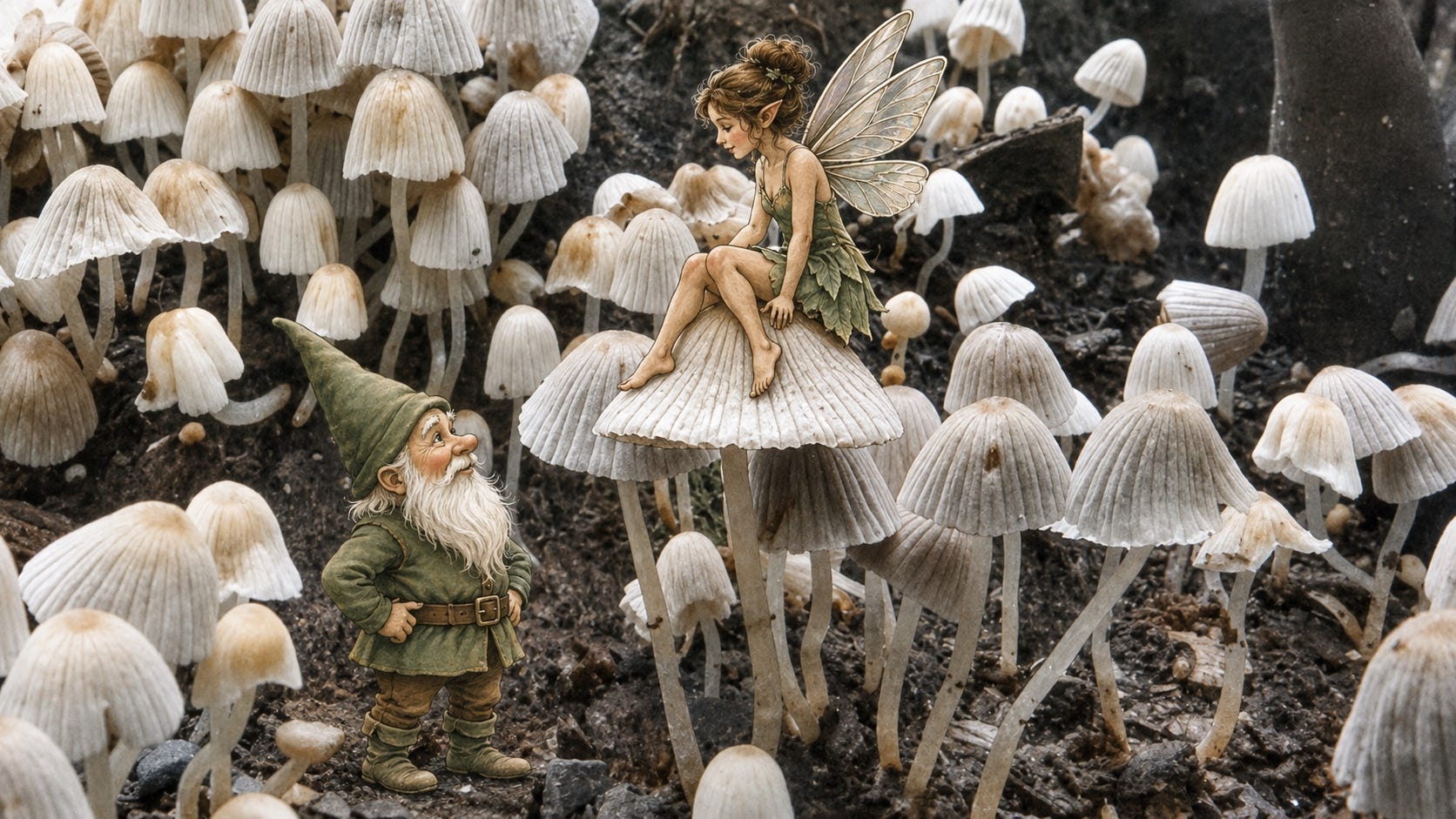
Needless to say, and of no surprise if you know me, we returned late this morning to find that the Ink Caps had pushed upwards and were now bedecked with “proper” fungal caps. Which were being closely guarded by the forest security squad … though in this image captured by HAL it seems that the fairy is looking decidedly rumpled while the gnome is slightly censorious - “what are you doing now?”
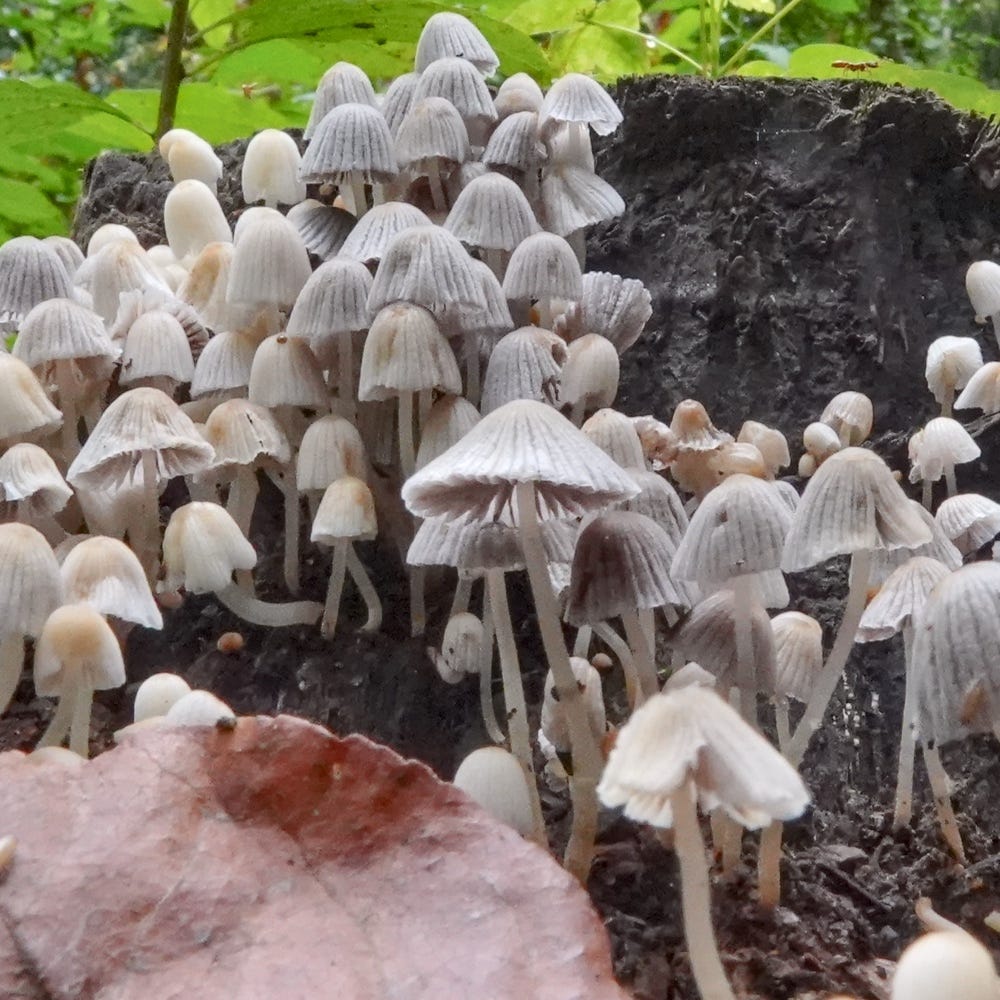
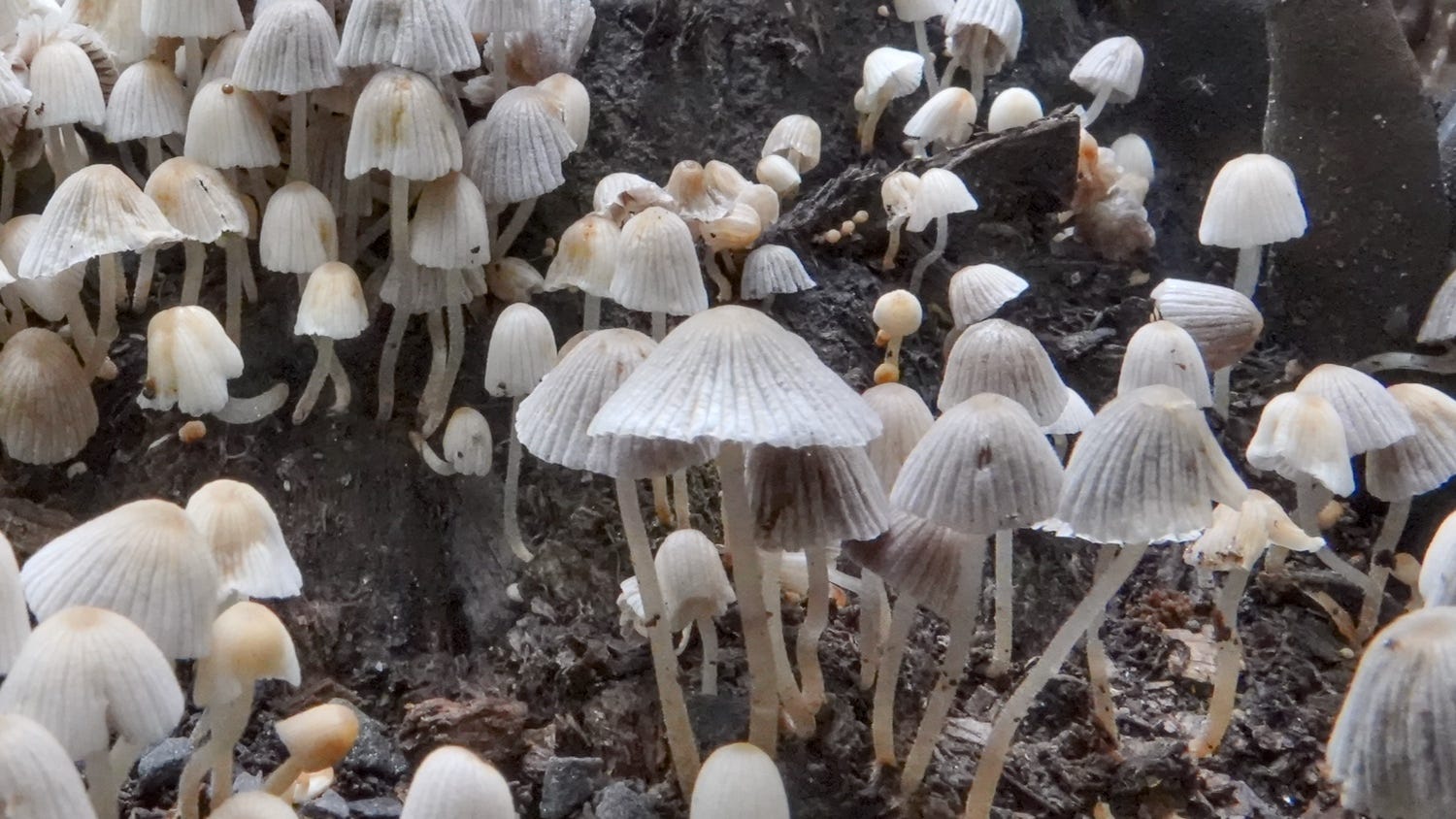
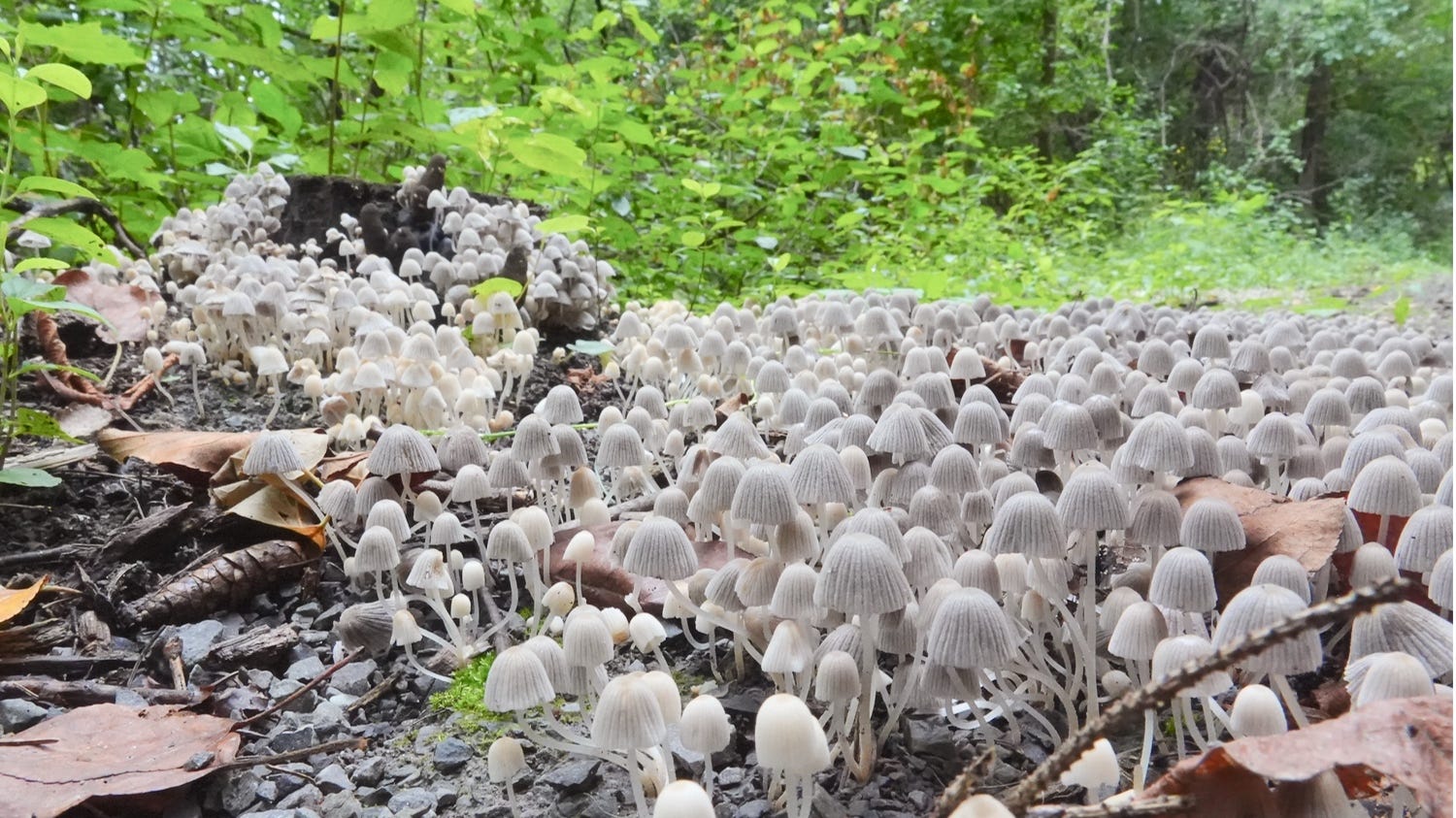
Fairy Ink Caps are also known colloquially as Fairy Bonnets, Trooping Crumble Caps, Non-Inky Coprinus, and Little Helmets. They grow in large clusters on rotting wood. Because someone asked me yesterday, I would mention that they are edible (and nonpoisonous), but its tiny, fragile nature makes it more of a forager’s curiosity than a culinary delight. It can be eaten raw or cooked but doesn’t preserve well.
Unlike many other inkcap species, the gills of this species do not deliquesce and dissolve into an inky fluid with age but crumble away. Although many species of Coprinellus, as the name of the genus implies, commonly live on dung, this is one species found growing on rotting wood.
They have a very complex life … while most species have but two sexes, this fungal species apparently has 143 “mating types” which can be considered as the fungal equivalent of genders. Don’t believe me? Read all about it here:
https://www.nature.com/articles/s41559-018-0597-0.epdf
Many isogamous species exhibit multiple sexes, known as mating types. This provides many options for choosing a mate. For instance, the social amoeba Dictyostelium discoideum has a total of three sexes and each sex can mate with either of the other two. The single-celled eukaryote Tetrahymena thermophila has seven sexes, giving each sex a hefty choice among the remaining six. The estimated 143 mating types of the mushroom Coprinellus disseminatus offer even heftier choice. Overall, as the number of sexes increases, so does the proportion of the population available for mating — half in two-sex systems, two-thirds in three-sex systems, and so on.
Admit it - that’s quite fascinating, is it not?
Comments
Nothing yet. Say the first thing.
Sign in to join the conversation.