
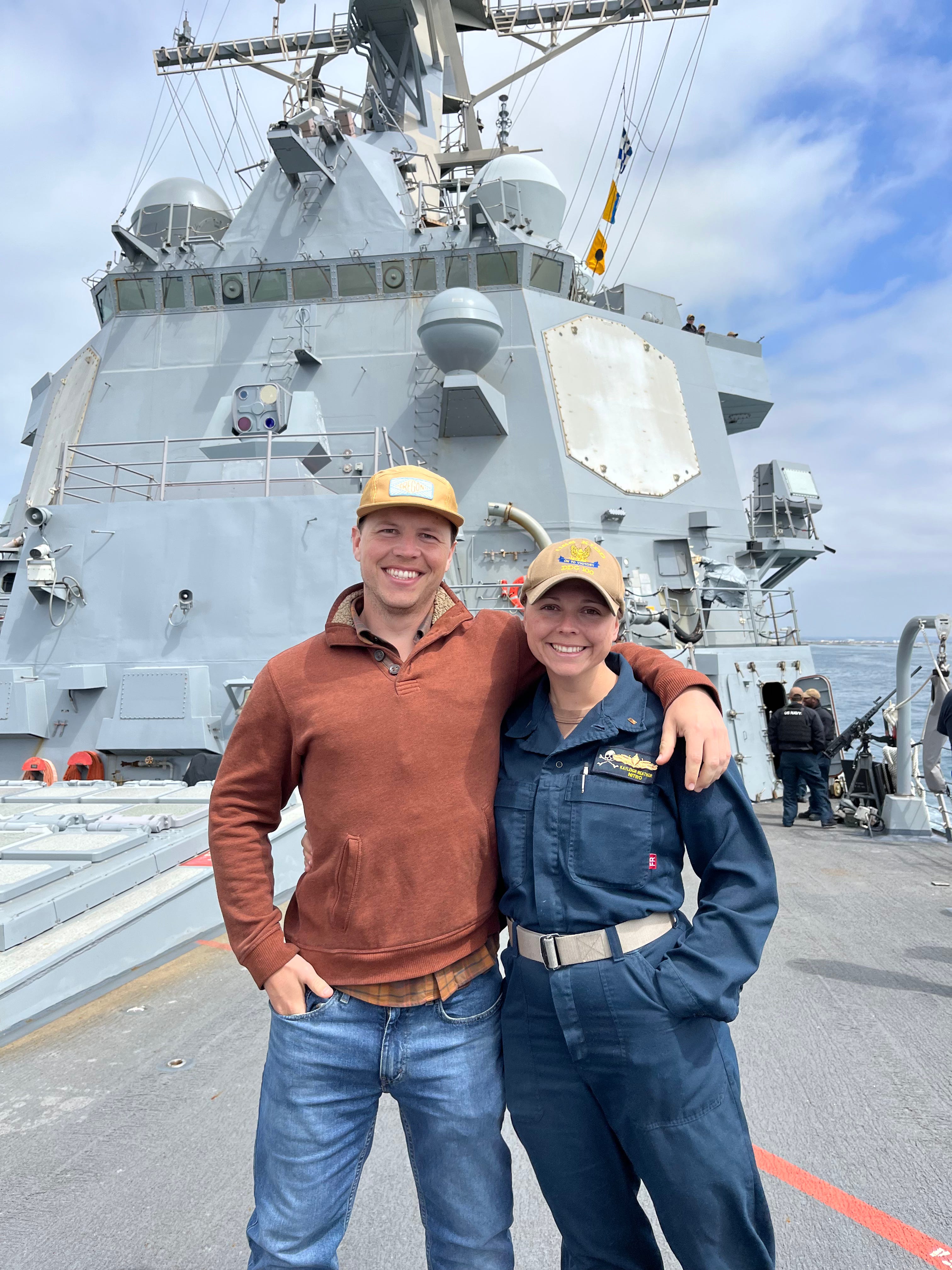
I met Kayleigh through our mutual friend Amanda. All three of us spent time at the same family camp, Montecito Sequoia, growing up. Kayleigh is extremely involved in her community in the Pacific Northwest, in part because her long stretches at sea as a member of the Navy means that she doesn’t take her time on land for granted. Kayleigh and I chatted about the importance of social connection and how showing up for other people sometimes can mean just listening. She talked about how her horse has been in her life longer than he hasn’t, and how Dallas showed her now-husband, then-boyfriend who was boss the first time he rode.
Kathleen: Can you tell me how long you’ve been in the Navy, and what your journey was to get there?
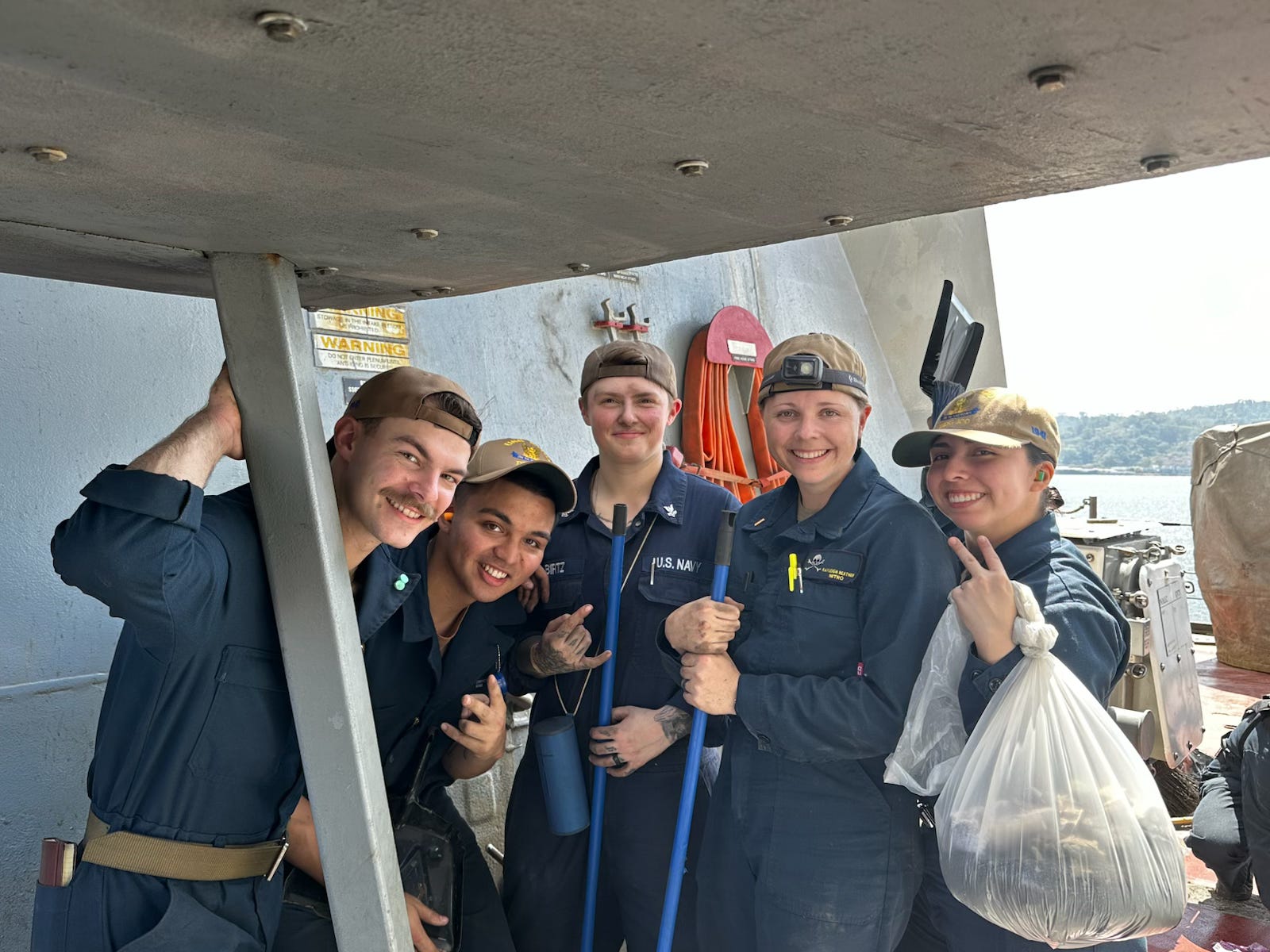
Kayleigh: I just hit four years in the Navy. When I was in high school. I wanted to figure out how to pay for college. And I learned that the Navy did full ride scholarships that you could apply for and was able to get into one of those scholarship programs. I ended up commissioning as a Surface Warfare officer. I’m on my second tour on the USS Kidd. I’m the damage control assistant. My first tour, I spent about 15 out of 22 months at sea, and then now on my second tour, we’ve been in the yards the whole time. It’s been quite the journey.
Kathleen: Tell me about being at sea.
Kayleigh: It’s really interesting because you disconnect from the real world. Some ships now have Wi-Fi where you can get on your phone. But our ship did not have Wi-Fi. You get into this rhythm. You work every day. As a surface warfare officer, you stand about six hours of watch in a position, which has nothing to do with your actual job. After that you have to go do your actual job, which for me is managing people and equipment for one of the divisions on board.
On my first tour, I was in charge of main propulsion, so I owned all of the engines, generators, fuel, lube, oil shafts, main engine rooms. Those are all my responsibility. And then all the people that maintained them were also my team. It was a lot of learning. There is also something really cool that happens when people have to rely on each other because you’re all you have for seven months. It creates these really strong bonds, but it can be very tough coming back to real society when you’re in and out so much.
Kathleen: Transitioning to land, I heard you’re on the Human Services Commission for your town. I’ve never heard of that. What does that look like?
Kayleigh: In college, I did an internship in DC with Congressman Rob Wittman, and it got me really into politics and how we structure government. When we came back to land and I knew that my ship was going to be in the yards, my husband and I bought a house outside of Seattle and I was like, okay, I want to get involved in my city. I want to give back. I want to be a part of my community because that was something I really missed being gone for 450 days. You don’t get to have any hobbies or to be involved in anything.
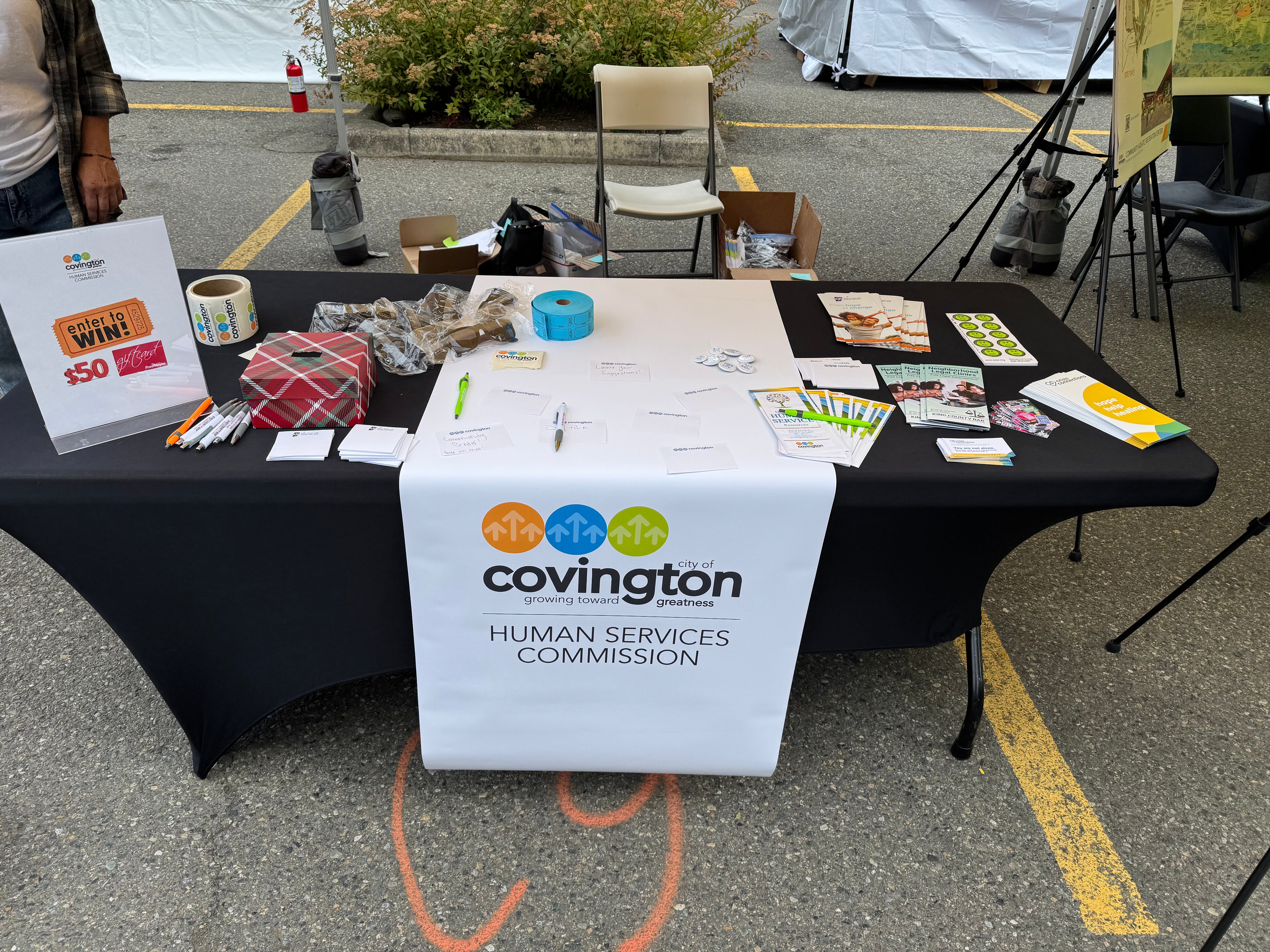
I looked up how our government is run. We have a city manager, a City Council, and then I believe seven different volunteer commissions of seven people. The volunteer commissions are in all different areas, and they make recommendations to the City Council. The Human Services Commission gets to review grants, and then we get a budget for us to try to recruit services to come to Covington. Our recommendations to City Council might be, we think you should give this much money to this food bank that’s requesting it, this much money to the King County Legal Bar Association. Our big push this year, which has been my pet project, has been this organization called Sound Generations, and they do senior transport.
Our metro transit system operates on the county level. We only have one bus that goes through our city, and the access transit bus is super tough to get onto the list for. Sound Generations has 13 different buses that operate at no cost to you if you meet the criteria of being 55 or above or having a disability. You don’t have to prove it. It’s no questions asked. You can sign up and it is free from 8am to 4pm Monday through Friday, and they will take you and one other person wherever you need to go within the city limits and select places outside the city. We have a lot of senior homes and community living in Covington, but we don’t have any form of transportation for them. It’s been a huge issue of helping keep them involved in the community because they can’t get anywhere.
Kathleen: That’s incredible. Are you pretty close to being where you want to be with that?
Kayleigh: Yeah. We just got buy-in from the city to financially support the program, and we have a meeting with Sound Generations in September and a joint meeting with the council where we’re going to sit down and hammer out what support the city wants, because they also have other grants. We’ll hopefully launch in 2027. We have good traction, and it’s super exciting.
Kathleen: That’s great. Congratulations on the progress and on the upcoming launch. What do you like most about the PNW?
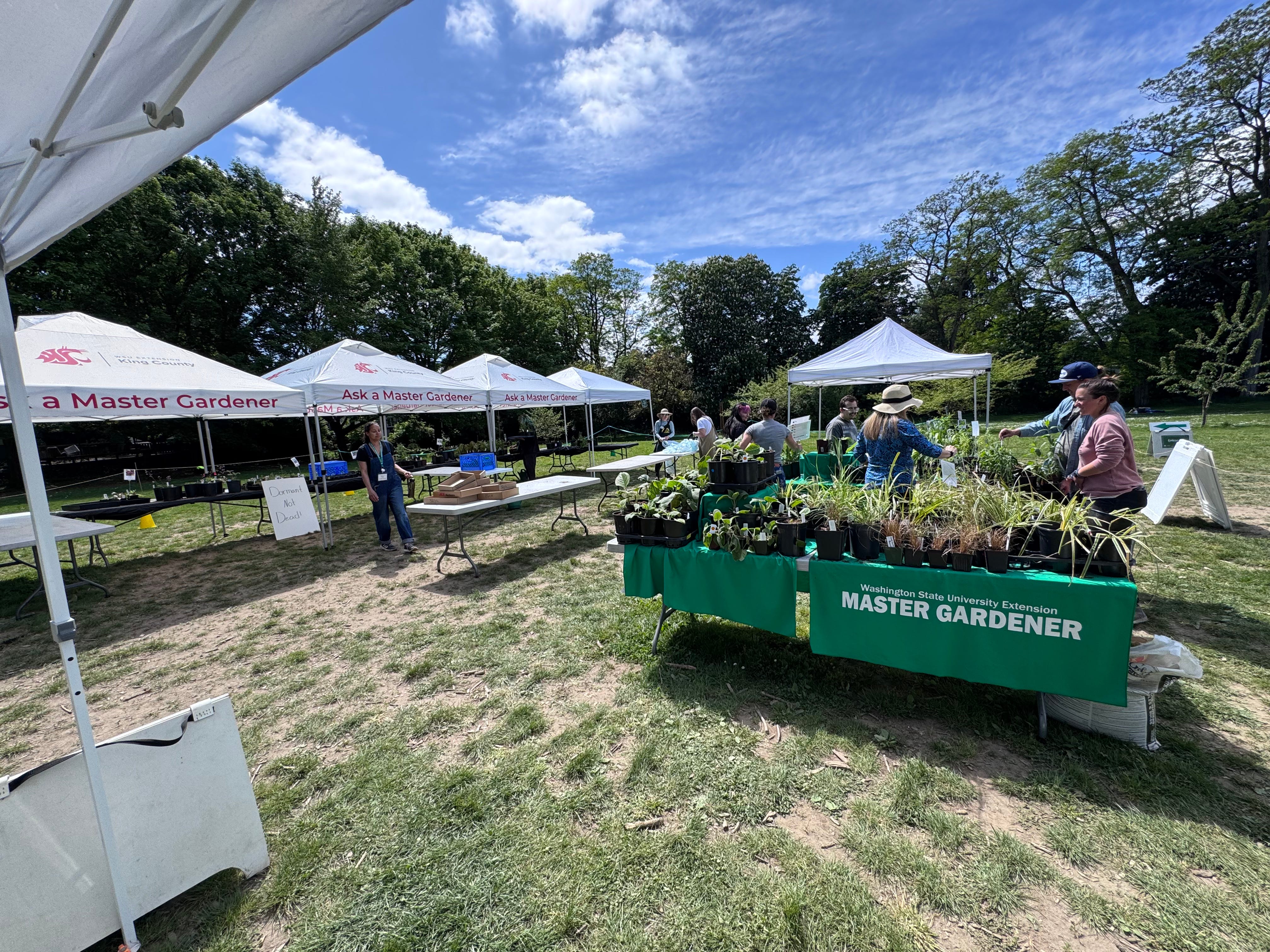
Kayleigh: I love big trees. I love the mountains. I also love the PNW sense of taking care of each other. I’m also a master gardener, and I volunteer with a community garden that serves refugees so they have a place to commune and grow culturally appropriate food. It’s through World Relief Organization, an organization that helps refugees transition to America and set up. A lot of times they have to move into an apartment, so they don’t have any room to garden. But in so many communities and cultures, gardening is so important.
The garden where I volunteer is in an old parking lot with a bunch of raised bed plots that were donated. I help maintain the grounds and help host events. It’s really cool to get to see people hang out with each other, talk with each other, share different foods. They share seeds. That sense of finding a place of belonging again is really cool. You see that all over the Pacific Northwest, not that other places don’t do it. But I just feel it’s so prevalent in how the government and organizations and people allocate time for it.
Kathleen: I love how intentional you are about being part of your community when you’re on land. It seems like the fact that you aren’t always here means that you really make it a priority, which is very cool.
You’ve also ridden horses most of your life. What do you like most about riding?
Kayleigh: I like the freedom and the teamwork aspects. Sometimes it’s frustrating because you’re with something that you can’t really communicate with and it doesn’t know what you’re thinking, but you can kind of bridge that gap. Some days they have more of their idea of what they want to do, but it is really cool when you and this other being that don’t share a language can learn to understand each other. Horses can very innately pick up on human emotions. And I recently just got my childhood horse because the people who had him didn’t want him anymore.
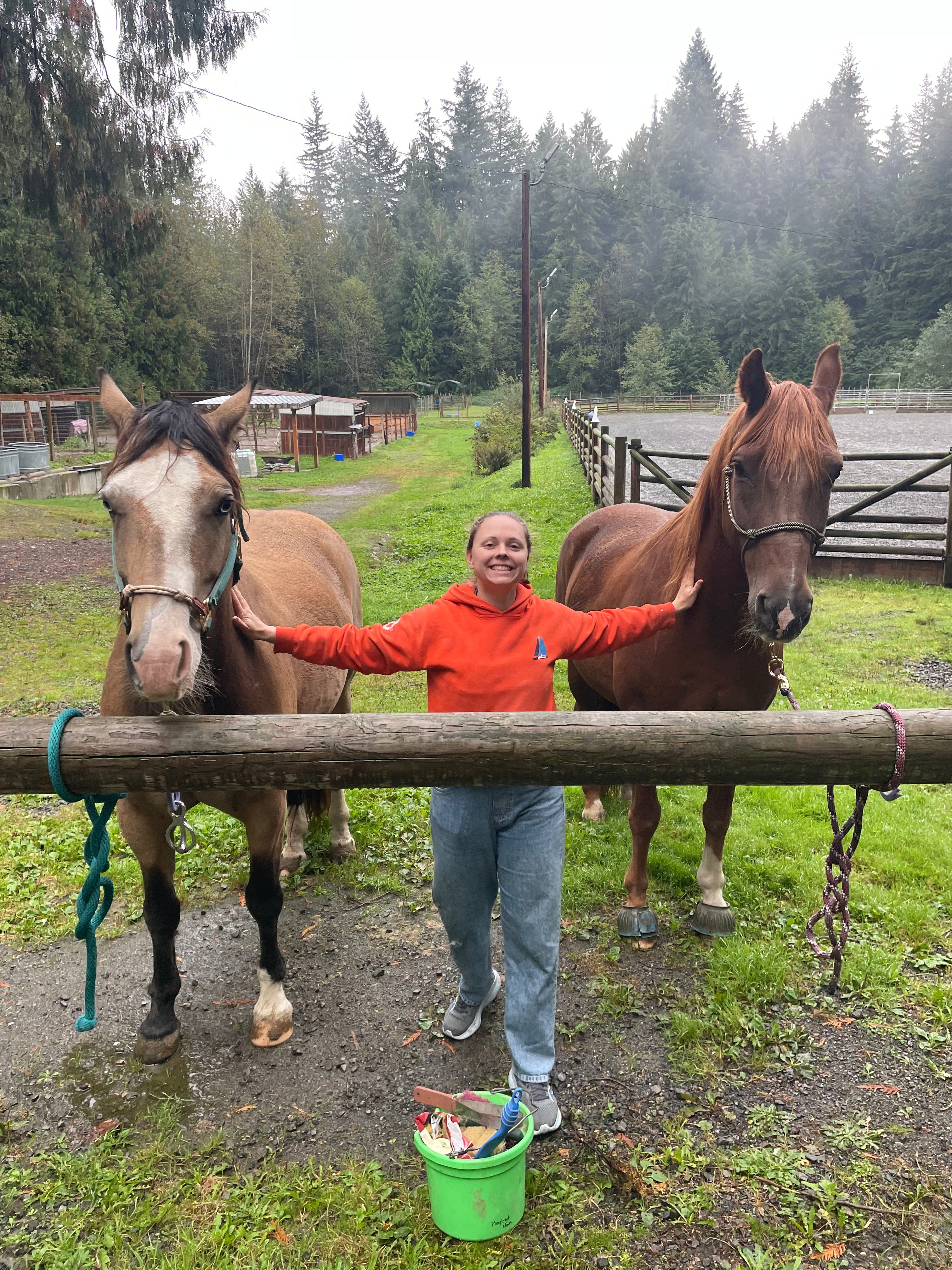
I met him when I was 11 and he was seven. I’m 27 now. We’ve been in each other’s lives longer than we haven’t been.
Kathleen: That’s beautiful.
Kayleigh: He’s very in tune with my emotions. We are very connected in that way. He’s a very smart horse and he loves to kind of mess with people sometimes. The first time my now-husband, then-boyfriend ever rode, he was angry and I was getting annoyed with him. So I was like, here, get on Dallas. Dallas refused to turn left because he could tell that Vince was angry and mad. Dallas was just kind of being an ass. He wasn’t being unsafe. He wasn’t bucking. He wasn’t running. He just refused to turn left.
It was so funny because it was such an equalizer. At first my husband was frustrated, and then it just washed away because he was like, what am I doing? And then he was like, okay, can you teach me how to have this horse turn left?
Kathleen: That is humbling for sure. Last question: you’ve named many things that bring you joy on a regular basis. Anything else that you didn’t name?
Kayleigh: Being outside and being able to share stuff with people, I think we’re getting increasingly more divided and more individual. With technology, it’s so easy to hole yourself away and think of your place in society as in your room behind your screen. Being able to get outside and share not only my love for the outdoors, but love for each other and love for hobbies brings me joy.
My husband and I started doing joint journaling, and last night our topic was, what inspires you? Letting people find what inspires them and helping foster that is so important. Kind of like what you’re doing—finding people who don’t want to be isolated, who want to be together in whatever capacity they have, because sometimes it’s not a lot of capacity. And that’s okay. But just showing up.
I was at an event recently where there was a drawing table and I said, what does showing up for others mean to you? For a lot of people, it just meant listening. It meant checking in and calling people and listening with whatever capacity you have. I think sometimes when people think about showing up, they think they have to do these grand gestures, when what it boils down to is sometimes people just want to be listened to.
Comments
Nothing yet. Say the first thing.
Sign in to join the conversation.