
Becca has a unique talent of making heliophysics accessible and relevant to broad audiences. That’s also part of her job as the outreach director for NASA’s Multi-slit Solar Explorer (if you don’t have any idea what that means, Becca will explain!) and as a lecturer with expedition ship companies. Becca and I chatted about her journey to get a PhD and the importance of first knowing, and then leveraging your skills when determining your career trajectory. Becca also shared what her many and varied travels have taught her and how they’ve increased her empathy for the many challenges immigrants face.
Kathleen: I would love to talk to you first about being the outreach director for MUSE, NASA’s Multi-slit Solar Explorer. Can you talk about what that means?
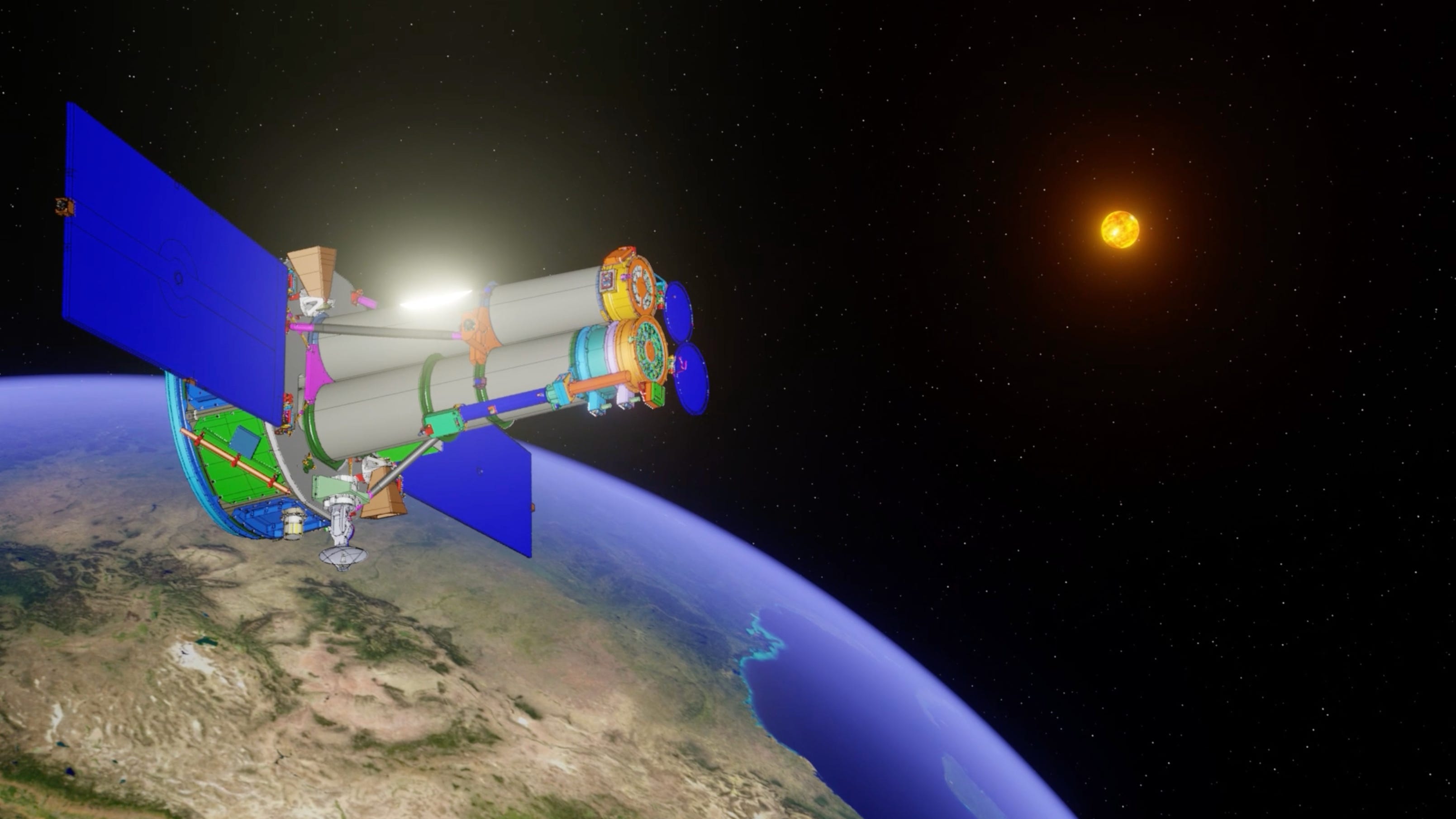
Becca: NASA’s Mult-slit Solar Explorer is one of the upcoming missions for NASA’s heliophysics division, which encompasses everything about the sun-Earth system. MUSE is exploring the sun’s atmosphere, which glows very brightly in types of light that we can’t see. MUSE looks at extreme ultraviolet light, similar to the UV light that gives us sunburn, but this version of ultraviolet light is so extreme that the Earth’s atmosphere actually absorbs all of it, so we have to launch into space to see it.
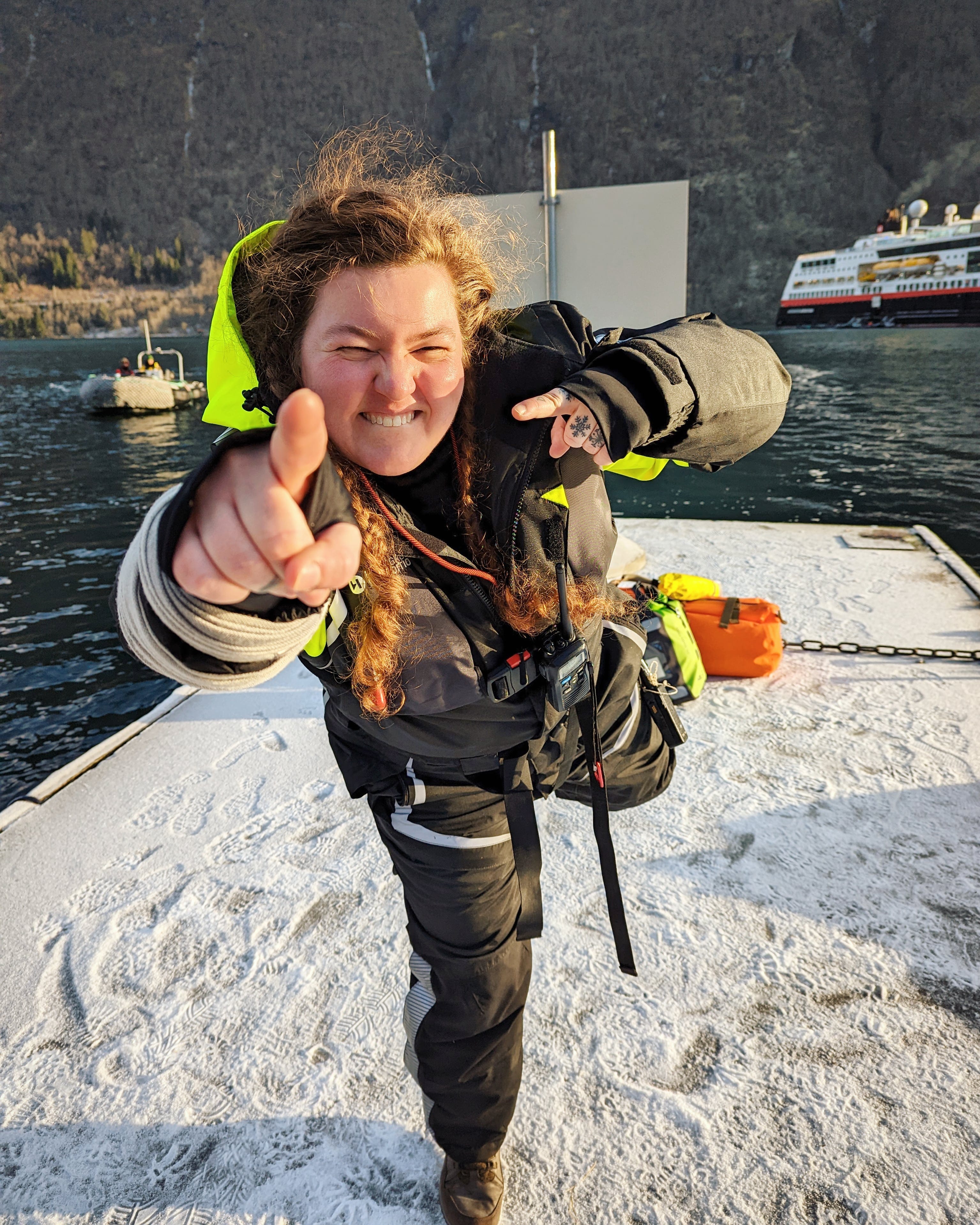
My job as the outreach director for this mission is to use my heliophysics training to try and convey solar physics concepts in an accessible manner to a variety of audiences, from the littles to our elders. I communicate the relevance of solar physics and exploration to our everyday lives, as well as MUSE’s potential role in helping us understand how to predict space weather events more clearly and with more precision.
MUSE is a California-based project that’s being physically built with many partners, but primarily at Lockheed Martin’s Solar and Astrophysics lab in Palo Alto, California. The outreach program itself is headquartered a few miles down the street at the SETI Institute. I work with science centers like Chabot Science Center in Oakland, California, and California Academy of Sciences in San Francisco. I also created and run a paid high school internship for the Boys and Girls Club of East Palo Alto. This fall, we’re expanding that to San Leandro. The kids are paid to design outreach products for the mission, things like stickers, infographics, hoodies. This coming semester, we’ll create a promotional multimedia video to promote our launch.
Kathleen: You’re great at explaining what you do, which makes sense because that is a key part of your job. Talk to me more about the relevance, for people for whom heliophysics seems very far away.
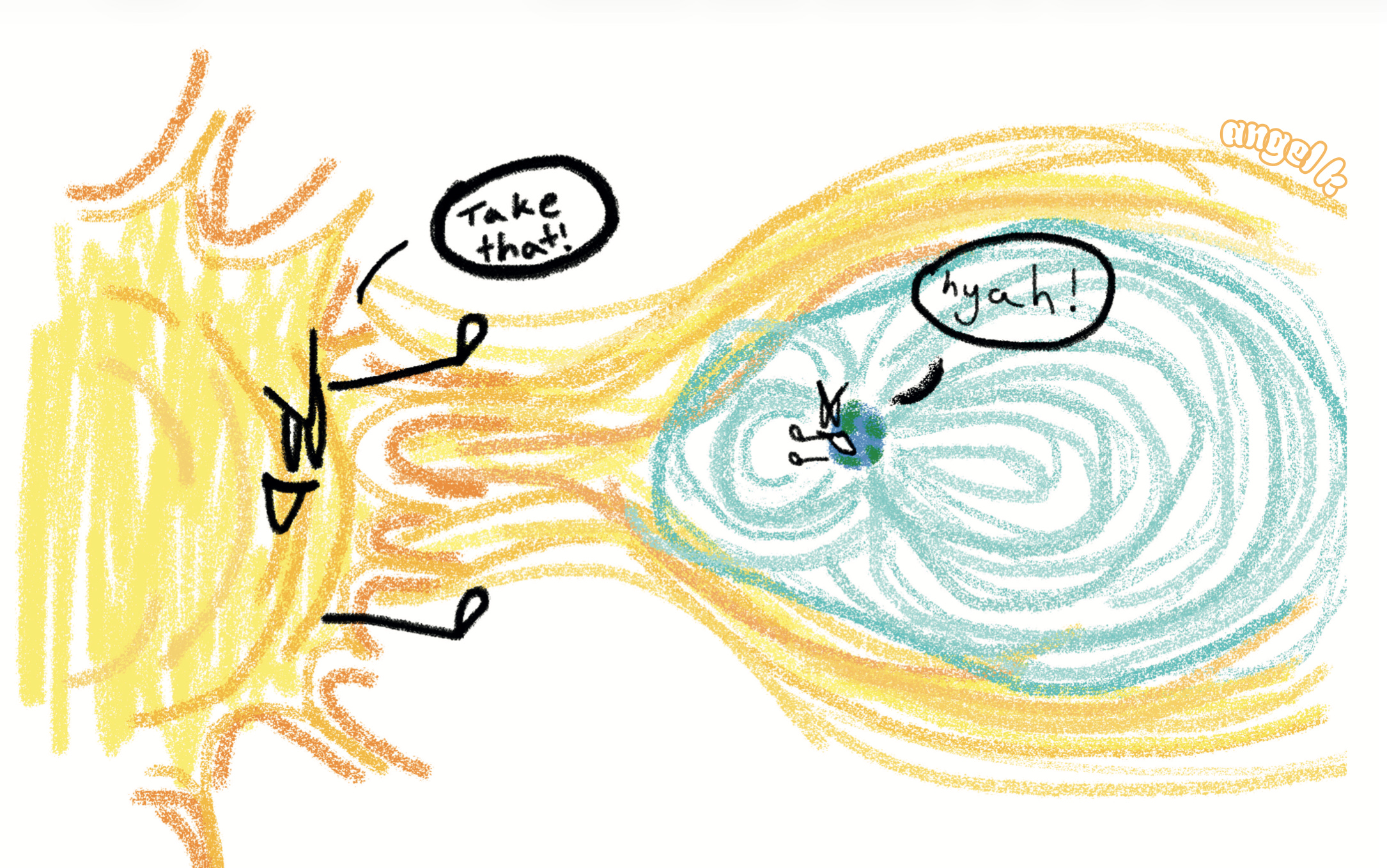
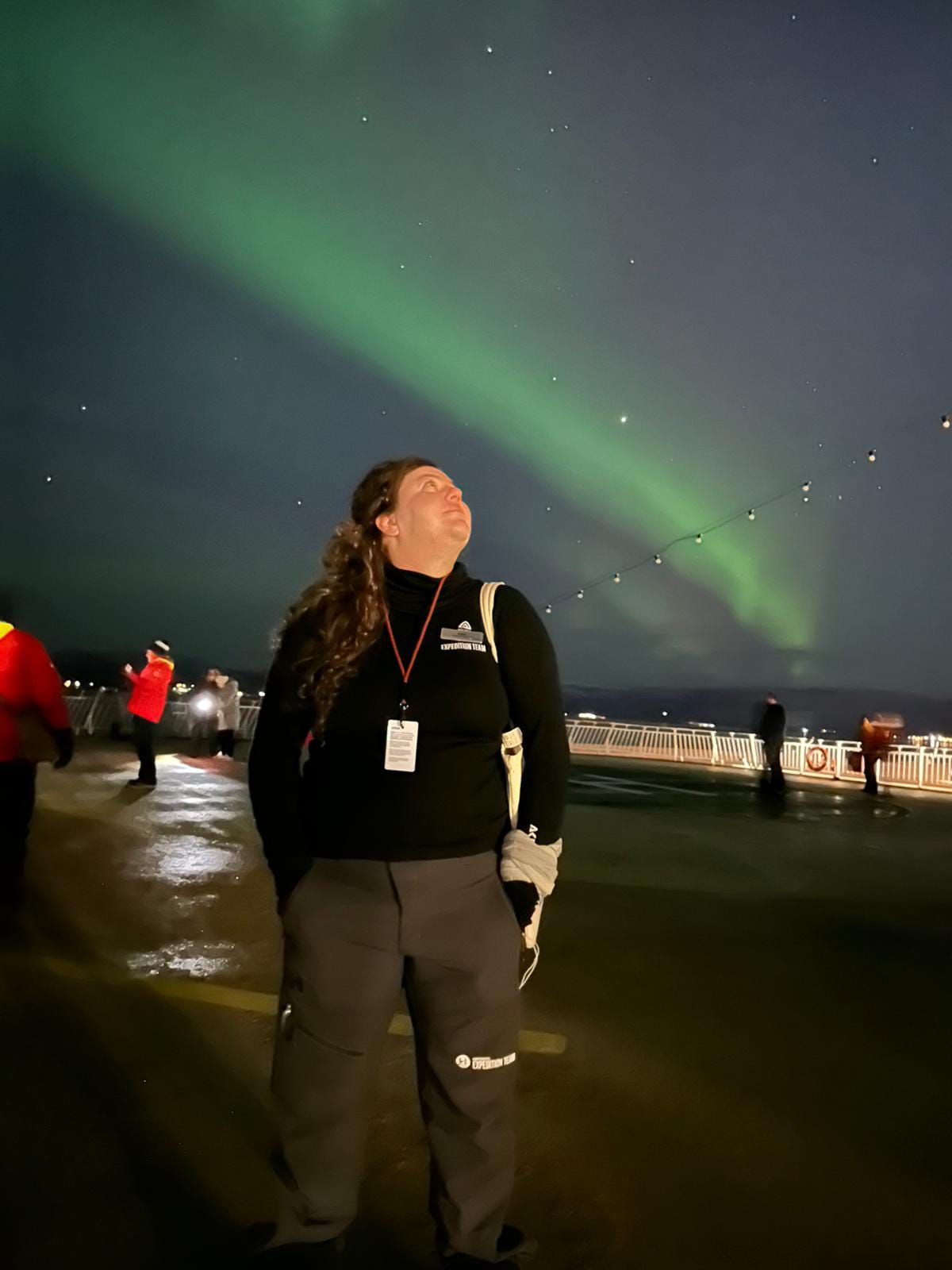
Becca: Solar plasma has a lot of effects here on Earth. It can start thickening our atmosphere. It can disturb our magnetic field in very dramatic ways. It can create new global electrical currents that we didn’t have before that can stay for years on our planet. During geomagnetic storms, big plasma shock waves dump electrons into the atmosphere, causing what we call “auroral substorms.” That’s the northern lights and southern lights. It’s nice to know where your auroras are coming from, but there’s another side to that coin.
When you have an atmosphere that is so intensely thickened by extra electrons, extra plasma that lives in the air between us and space, then space-borne satellites have a hard time getting their signals efficiently down to the Earth. In particular, communication satellites and GPS satellites have a hard time getting signals cleanly through the air down to GPS receivers, for example. In May of 2024, we had a geomagnetic storm called Gannon (ed. note: named after the late space physicist Jennifer Lea Gannon!) and that particular storm had a snowball effect on the corn harvest in the Midwest.
Kathleen: Wow.
Becca: My cousin is a corn farmer in the Midwest. A lot of Midwestern farmers use GPS-driven combines. They’re automatic; they’re not driven by a person. And the GPS signal was so discombobulated during that storm that the combines were completely out of whack. You can’t rely on what you need in a corn field, which is centimeter accuracy or inch accuracy, and you just don’t have that during these geomagnetic storms. If you’ve set your machine to run on GPS, it needs to shut down during these storms because it will not be correct. These are things that we need to know how to predict with more precision in terms of when they’re going to arrive, how strong they’re going to be. Imagine you’re trying to land a plane with incorrect GPS. Imagine you are drilling an ice core with incorrect GPS.
Kathleen: That is fascinating. As someone who is personally directionally challenged, I know, like when I’m in New York City and my GPS stops working because of the tall buildings, I’m in trouble. And New York is a relatively easy city to navigate.
I would love for you to talk to me about your career trajectory. How does one become a heliophysicist? Obviously a lot of school, but also being a communicator is such a key part of your job. How did you end up deciding to combine those things into a career?
Becca: That is a great question. My career trajectory has been very non-linear. I was about to say it’s atypical, but it actually is typical to be non-linear. I did my undergrad and then tried graduate school in the United States, but I ended up not thriving in that particular environment for a variety of reasons. I needed to medically withdraw and then spent a couple of years recovering from that experience. I wanted to go back to school and I didn’t see myself having a meaningful career without a PhD, at least in the fields I was interested in.
I did my master’s in geophysics, specifically in glaciology, which I did not know anything about. I moved to Iceland to do my master’s, which broadened my horizons in so many different ways. It helped me understand what it means first and foremost to be an immigrant, and what challenges immigrants might face. I left with even more empathy for folks that have challenging immigration stories and a lot less patience for folks that do not have challenging immigration stories, but very, very harsh opinions on immigration.
Scientifically, it also helped me understand how computer models work, because that had never clicked for me before. During my time in Iceland, I learned that computers break big problems into tiny little steps and they iterate just one step at a time. Once I learned that, the whole world of how to simulate nature opened up to me. And as a glaciologist, you get to do field work. As an astrophysicist or a heliophysicist, you very seldom get to do real field work where you actually touch your subjects. Then it took quite a bit of persuasive power to get into a solar physics PhD program with a master’s in glaciology.
It took me quite a long time to get a position, but I eventually did. I’m not somebody that comes from a tremendous amount of financial means, but I found ways to survive. I found ways to work remotely so that I could be where I needed to be in the world. Because again, as an immigrant, you are constantly in the crosshairs between immigration law and tax law of your home country and of the country that you live in. I filled my time and kept surviving until I successfully got a PhD position in Norway.
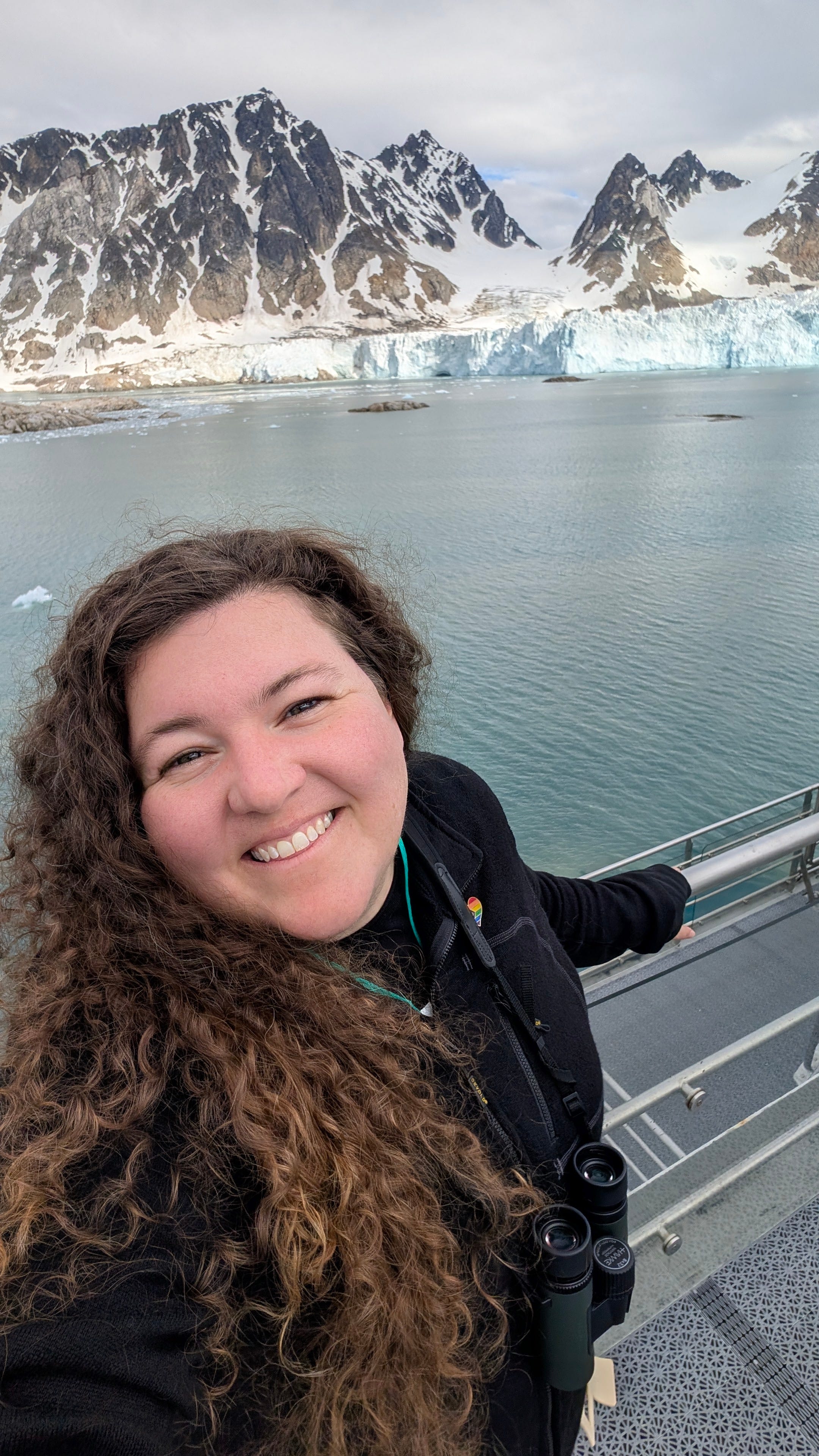
I also formed a relationship with the chief scientist of the expedition ship company HX Expeditions, and I sailed with their expedition ships up and down the Norwegian coast, giving lectures about solar physics and northern lights to the passengers. And that is something that I do to this day. I’m actually in Svalbard right now, about to board another ship for three weeks, talking about the sun and how we define things like the Arctic Circle and what it means to be in midnight sun season and what the flip side of the year looks like in polar night. I’m working on moving back to Norway on a more permanent basis while retaining my jobs, because my life is a lot more stable over here, and my wife is Norwegian and so it’s also easier for her to be over here.
What I like to tell young people about this story is that it’s not really about what happened to me. It’s about learning how to leverage your skills. In order to leverage your skills, you must first learn how to identify your skills. And that’s really hard. That’s especially hard when you’re a young person trying to figure out an identity, full stop. What I encourage young folks to do is think really long and hard about not only what you’re good at, but what you enjoy doing. And is there any overlap there? Because I love to travel and I enjoy communicating. There are ways to get paid to do that. Which is super rad.
Kathleen: That’s incredible. And such a good point about the importance of leveraging your skills after knowing them first. I want to ask you about your travels. You’ve lived in Iceland. You’ve traveled so much in Norway. You were also the resident astrophysicist for Badlands National Park. Is there anything your travels as an aggregate have taught you? And how do you stay connected to your community—your wife, other family members, friends—when you’re going to very remote locations for your job?
Becca: Traveling the world is certainly one of the great privileges of my life. I recognize and acknowledge that the majority of folks around the world are not able to do that. As I’ve seen different corners of the world, it has given me a sense of two things. First, how we live so differently from one another and how we all have different names for the same things, and second, how alike we are after all. It’s been so fun and engaging and eye-opening to meet new people, to figure out my own place in the world, and to try to reconcile different tensions in different cultures. Maybe your presence in a certain country isn’t good for the locals. Or maybe your presence in a certain country is great for the locals. It’s something that is desperately needed, for folks to wrestle with these questions.
It’s helped me tie the world together in times of deep propaganda that aims to divide us and keep us hating each other, which I think has been very effective in the US. One of the things that makes it challenging for me to be back in the US is frankly, how much disdain we seem to have for each other. But I don’t think that that is all necessarily real. I think a lot of it is manufactured. It makes it even more important to remember to hold on to the people that you do hold dear and have open and honest conversations about how you’re feeling.
The silver lining is that I’ve been able to see my family a lot more since coming back to the United States. And I have two baby nieces that are a little bit over one year old. That has been a real high point and a real blessing for the time that I’ve spent in the US. Long-distance relationships are hard. It’s not something that my wife and I are good at, frankly. And it has taught us a lot about ourselves as people and a lot about ourselves as a pair. It seems to me that it’s difficult to have it all and do it all at the same time. Doing it all requires a little bit of not having it all, whether that’s money or relationships or what have you, and having it all kind of requires not doing it all, right? Because you need help. You need community and you need support.
What I’ve started to do is really dive into relationships that I’ve formed over the past almost two years of this job. Identifying mentors and folks on whom I can lean and who have been through similar things with their careers and with their spouses and with their families who can tell me their stories and tell me their opinions, and then I get to take it or leave it. That’s my choice. But I’ve really been enjoying identifying folks who are smarter than me and who have lived longer than me and have wisdom to share, then learning from them how we can support each other and get a little bit better together.
Comments
Nothing yet. Say the first thing.
Sign in to join the conversation.