
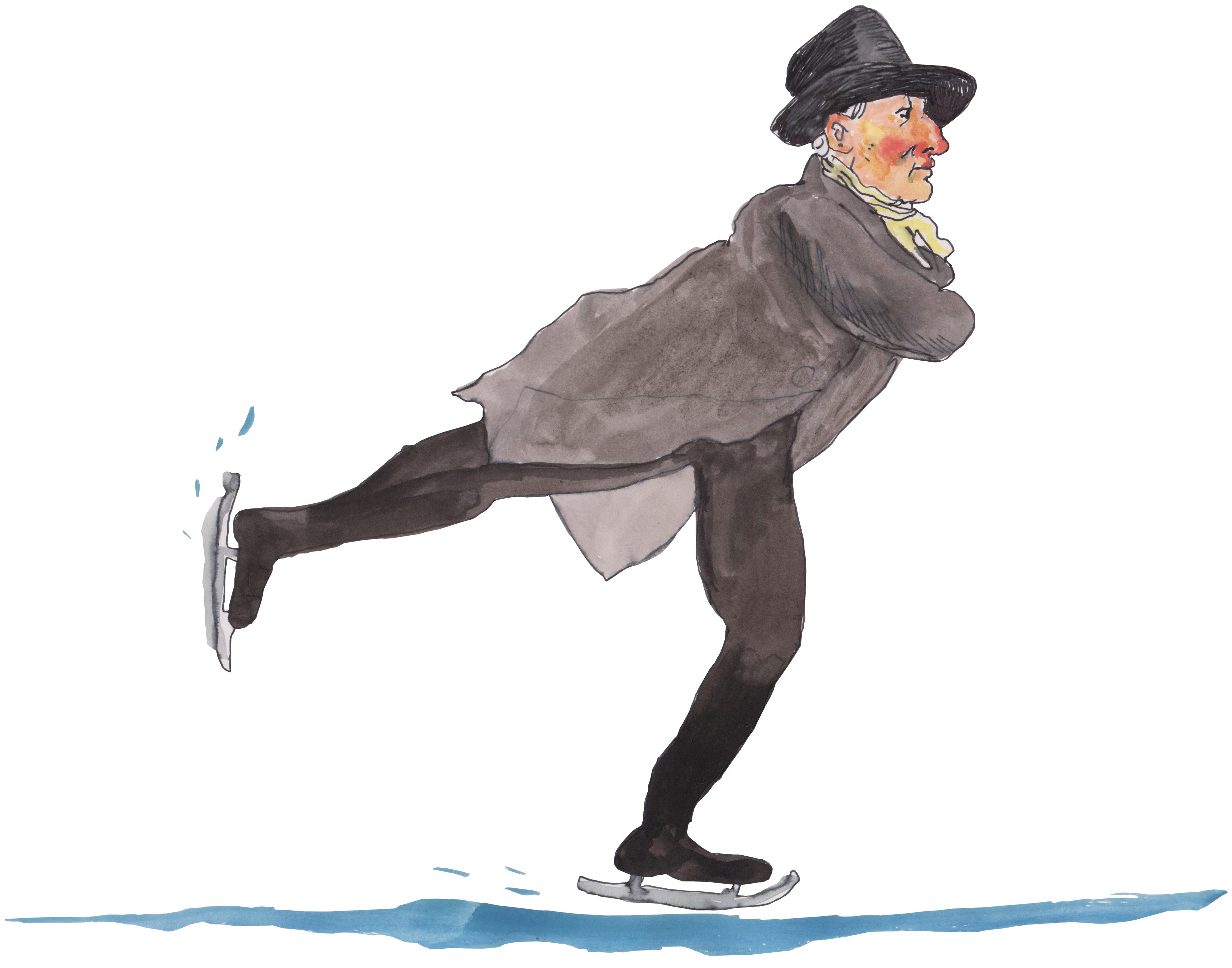
Last week we watched a rerun of Mastermind, wherein a man wearing spangly, horn rimmed glasses was asked what the Reverend Robert Walker was doing on Duddingston Loch. He didn’t know. Many generations of Scots have asked the same question. ‘Baptising someone?’ The man guessed. We laughed, there could be no more Calvinist baptism than a near death dook in a frozen loch.
In Scotland’s-Greatest-Painting we see a stoney faced man skating alone through a mire of Turner-ish fog. The good reverend is relaxed, graceful, and is stifling even the smallest smile.
Last week also saw the publication of Independence in the Modern World: Wealthier, Happier, Fairer: Why Not Scotland?, the first in a series of white papers intending to outline the road to Scottish Independence. The paper quickly outlines a standard criticism of the moribund UK economy, then compares the UK to similar sized countries, and concludes by admitting that Scotland ‘could not be transformed to match the success of the comparator countries overnight.’ Lastly, the paper promises further papers which will contain the Scottish governments proposal to ‘improve performance.’ Perhaps to its credit, perhaps not, the last lines welcome contributions from across Scotland, calling for a national debate on the future of the nation.
Staring at the dour Reverend as he skates across the frozen waters, it’s hard to imagine the surface of the Loch is completely smooth. Any frozen pond or river that I’ve ever walked across has been rippled and cracked, pierced by reeds and hidden rocks. Balanced as he is, on one leg, leaning all his weight on the toe of his left skate, all it would take is one wee pebble. You’d be forgiven for laughing when eventually, he falls on his face.
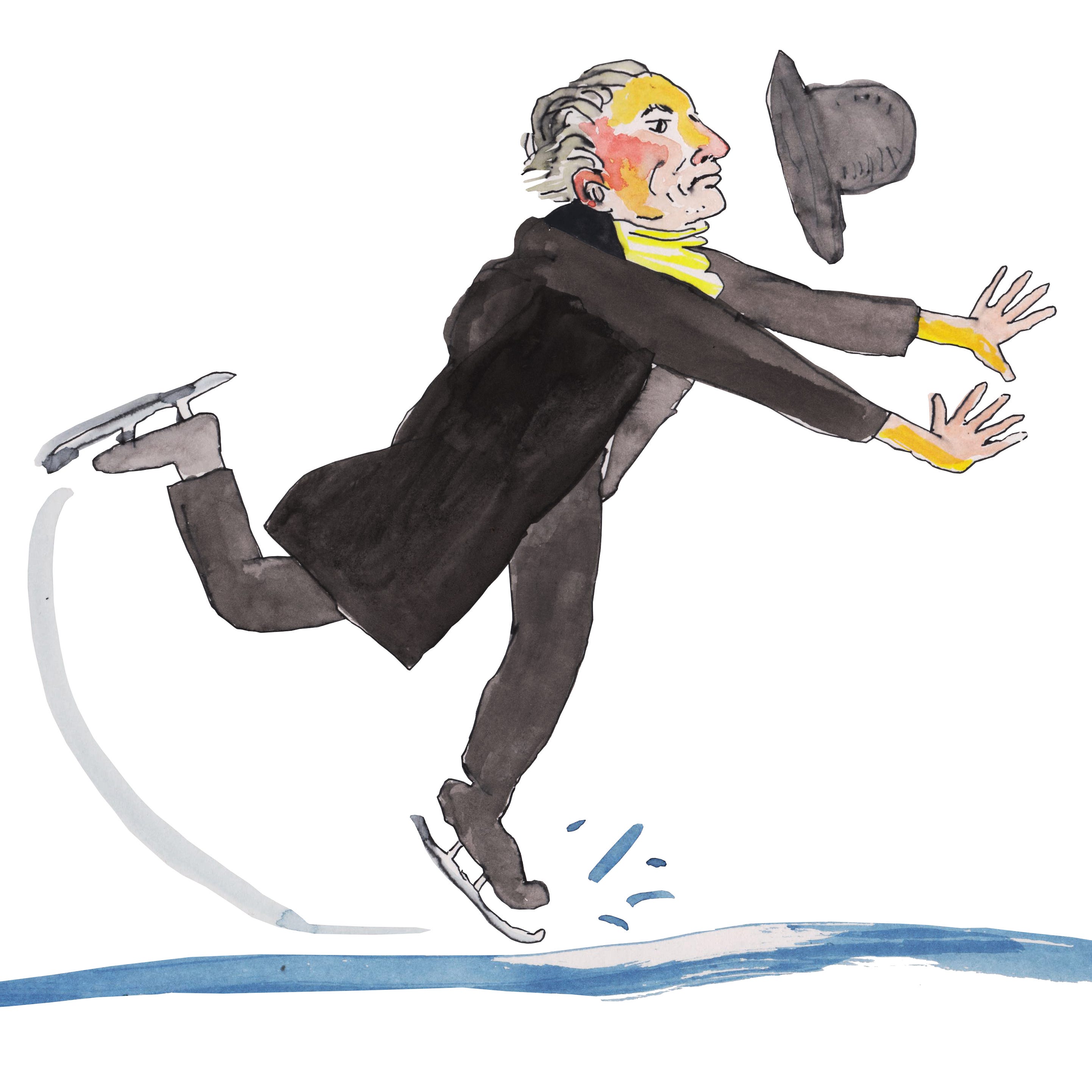
To anyone who lived through the 2014 referendum, the arguments in the white paper will be familiar. The future of Scotland is negatively defined against Westminster, supported by winks and suggestive glances at the Scandinavian countries. At times, the whole ordeal has felt like pointing to empty spaces on the map while saying, ‘just imagine how much social-democracy you could fit in there.’
As the white paper states, ‘The comparator country models discussed here – especially the Nordics – have benefitted from virtuous cycles created through persistently high investment in their people over time.’ Described as virtuous cycles, the reader could imagine that Scotland could imitate these comparators by legislating a rerun of the 20th century and voting for a government which would make repeated virtuous decisions. Described as historical forces, they might seem a little harder to summon into existence.
The slow demobilization of the wider independence movement, gradually narrowing behind the SNP, puts increasing pressure on these promised white papers, and the campaign which supposedly lies somewhere in the Turner-ish fog behind them. In the hands of the current leadership, an independent Scotland would immediately hand its monetary powers to the Bank of England, its defence strategy to NATO and its trade policy to the European Union. Presumably its national anthem will be decided at Eurovision and its flag will be drawn by whatever amorphous collective or limited company wins the Turner Prize. All that hassle for this?
Valueless ‘normality’ is already embodied by Britain, whatever condition it’s in. To justify tearing apart the Union, the terms will have to be a little more high-stakes than ‘improved performance’. Maybe the upcoming white papers will be hefty enough to roll them up and use them as a kind of cudgel. Or fold them into a great paper plane. Maybe the Free-Church element in the SNP will prevail, and the next white paper will be a call to sign onto a second National Covenant. You never know.
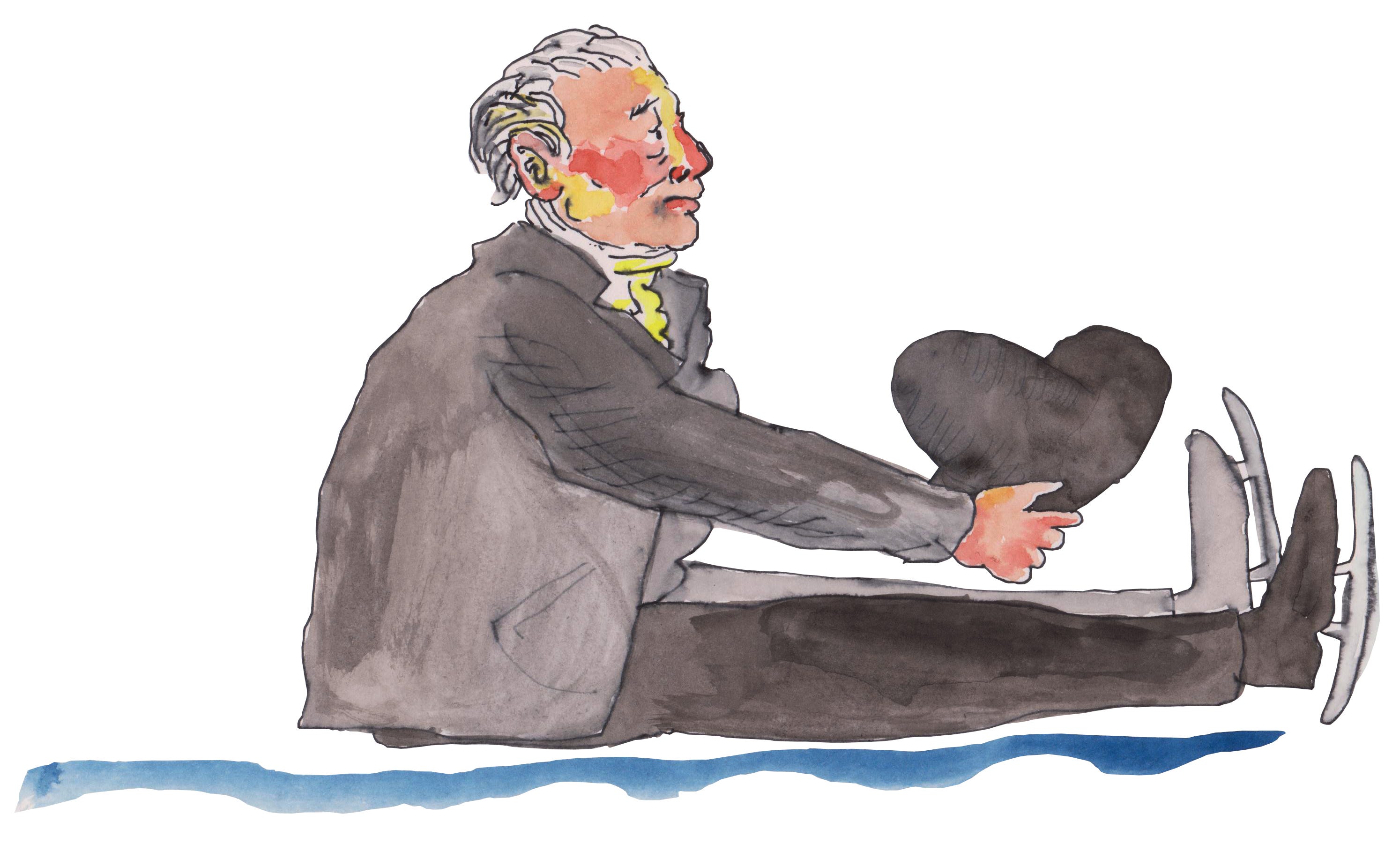
But I suspect that this whole chapter of the independence movement will eventually be left much like the Reverend Robert Walker, struggling to his feet on the cracked ice of Duddingston Loch. Far too stoic to call for help, he trods home in his socks, soaked to the skin, hoping to avoid the embarrassment of facing his parishioners. Back in the manse, wrapped in a half dozen blankets, the good Reverend sips his whisky and reflects on his youth, when it didn’t hurt so much to fall over.
No posts
Comments
Nothing yet. Say the first thing.
Sign in to join the conversation.