
I saw this reel last week from Tia Petch where she talks about the amount of male followers she got after she started posting content “mum content.”
A lot of people in her comments were shocked but it’s safe to say that I wasn’t because I’ve talked to many family vloggers and mom influencers who have told me that they know predators are watching their content.

The first conversation I ever had about this was with Adrea Garza, the mom behind @ garzacrew, who have 5.3 million followers on TikTok. In a story for Cosmopolitan, Adrea told me that she knows predators are watching her content of her twin 8-year-olds but she has her limits. That’s how she tries to control for the worst case scenario.
This is what she said: She would never show anything related to puberty like bra shopping, she says, and she tries to limit how much she shows one of her daughters in her dance uniforms after noticing how many saves and shares that content gets (!).
“I might post her dancing maybe four times a year,” she says. “Because she is still proud of it and I’m proud of her. But again, we have a large audience and I don’t necessarily want to be putting her out there in a way that’s going to elicit any weird people at all.” But, still, she posts, despite her worries about who the posts may attract. “There’s going to be sick people in the world, and I’m not going to let the small percentage of the freaking sickos out there dictate how I live my life.”
The logic here is flawed to the point of senselessness. Adrea has noticed that content with her daughter in revealing dance clothing has more saves and shares than other content and to deal with that, she’s decided to only share it a few times a year. In my reporting of family vloggers and mom influencers, I honestly have a lot of sympathy for these creators but then I hear things like this and it’s hard for me to understand.
Adrea also told me, later, that though she limits how much she posts dance content, she still posts it “because 95% of our followers are little girls that are just fans. And so if there’s some sicko out there that twists and is weird about stuff, he’s going to do that whether we’re online or we’re at the park and he takes a picture.”
This kind of logic is something I heard from several parents, including Lottie Weaver, who runs a TikTok account that prominently features her 3 young daughters and has 3.1 million followers. “If someone is going to sexualize a child, someone’s going to do it, whether it’s your brother, whether it’s your grandma, whether it’s a stranger. You know what I’m saying?” she asks. She’s quiet for a moment before she speaks again. “Maybe that’s a way for me to justify it in my mind.”
In the study “Work It Baby! A Survey Study to Investigate the Role of Underaged Children and Privacy Management Strategies Within Parent Influencer Content,” researchers found that“parents may minimize the risks related to influencer sharenting behaviors to resolve conflicting beliefs and behaviors. By minimizing privacy concerns, they can rationalize their behavior and reduce the tension that may result from the discrepancy between belief and behaviors.” Another study found that momfluencers perceived privacy risks as “relatively abstract and distant because the majority of them have not (yet) personally experienced them.”

In the reporting of my book Like, Follow, Subscribe: Influencer Kids and the Cost of a Childhood Online (which you can buy wherever you get your books) I asked every parent creator I talked to about the prospect of predators and they all told me it wasn’t only a prospect – it was a reality.
A former family vlogging parent (who asked to remain anonymous and whom I call Sam in my book) told me, “sex sells. And so what ends up happening is when parents try to skirt that line between exploiting and benefiting off that well-known fact, but without crossing the line into what would be largely deemed as inappropriate.”
Sam told me they knew another vlogging family whose parents were approached ahead of their daughter’s 18th birthday by employees at OnlyFans who told them that if their daughter joined, she would make several million dollars a year on the adult website. “And [the parents] were so livid,” Sam remembers. “They were like, ‘Where would they get that idea? Like why are they singling us out?’ And the rest of us were kind of, like, rolling our eyes, you know, because we knew. We knew exactly why.”
One family vlogger told me that they once received a comment on a photo of their young daughter from an older man. “He wanted her to pull up her skirt so he could see her underwear,” the mom vlogger said. I asked mom what they did when they saw the comment. They told me they blocked the man’s account and reported his comment. “That’s all you can do,” she says.
I can’t help but think: Is that all you can do? Should she have taken Molly off social media entirely after that incident? Or would that be an overreaction, to limit this means of expression because of what is hopefully a rare occurrence?
But here’s the thing that really got me: the mom then went on to tell me that she sat her 8-year-old daughter down and told her about the comment. Her parenting philosophy, she says, is one of openness and transparency.
“We sat her down like, ‘Hey, listen. There are very broken people in the world, and they can be very, very, very disgusting-minded, and they’re unsafe. They’re not good people. And we’ve had several of these comments about you guys,’ and she was like, ‘Oh, my gosh.’ And we’re like, ‘That’s okay. We’ve got you. You are safe. We have you. We just want you to know that this is what’s happening.’
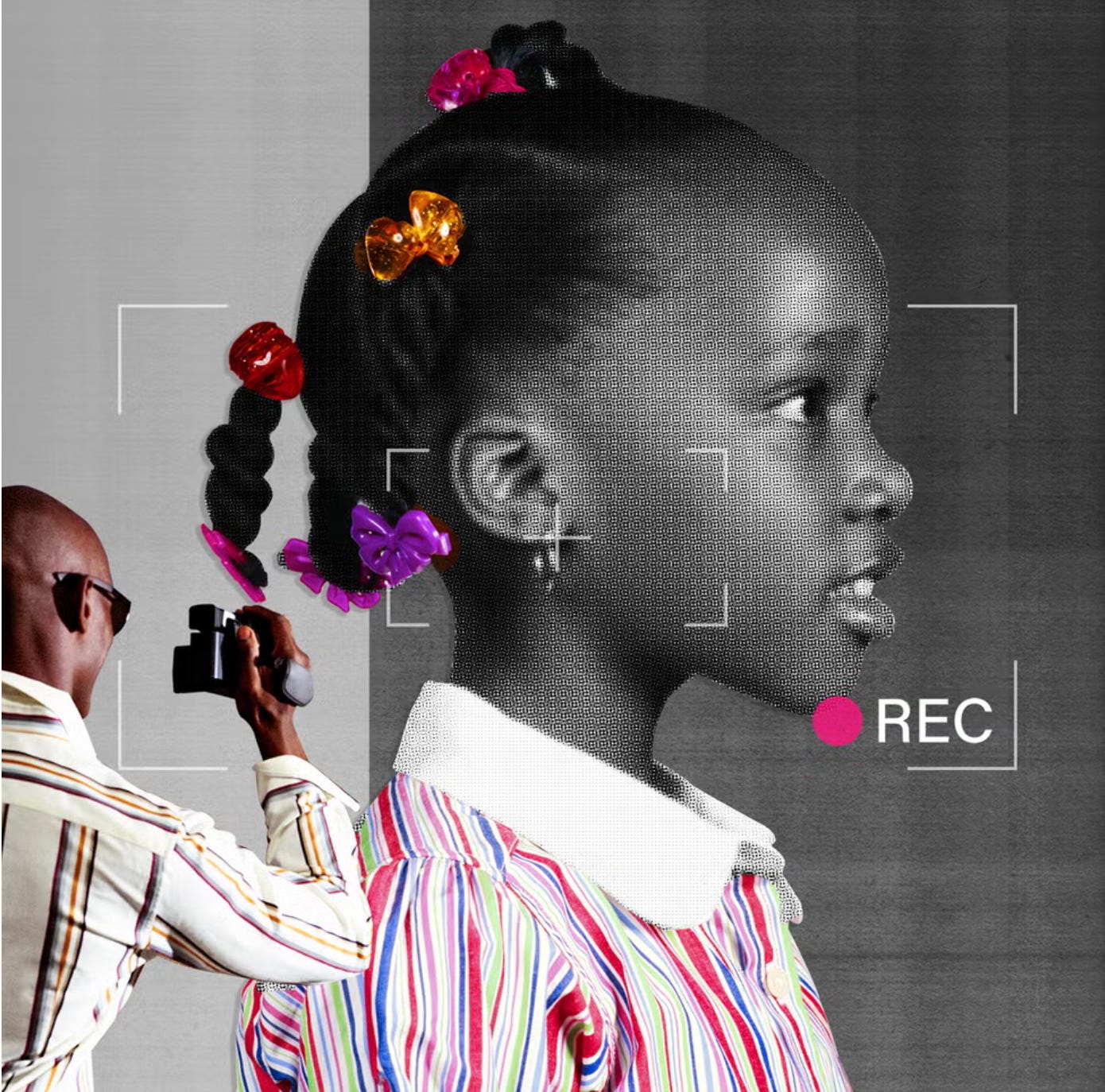
There are so many things I found in the reporting of my book that I will never forget but I’ll leave you with this: I talked to someone from the FBI to ask them whether the risk of predators watching child influencer content is an issue. “It is a risk for sure,” he says.
More than a risk, it’s a reality: A 2025 study that interviewed nineteen influencer parents found that “every interviewed parent, except one, had dealt with pedophiles. Particularly, several mothers have received messages, photos, and/or videos from pedophiles, sometimes on a very regular basis.” So why do they keep posting? “[Parents] are incentivized financially to do it, and that might supersede a safety matter,” says the FBI source, who asked to remain anonymous because they weren’t cleared to speak with me. “Some of the stuff that’s out there, it never goes away. And it could come back and be a predator’s dream. Half of the FBI might go out of business if the internet went away. We can hardly even keep up with the number of platforms and ways that these people can get into children’s lives.”
If you’re interested in more of my work about family vlogging and mom influencers, give these pieces a read –
the new litmus test for parenting: what you share (and hide) online
influencers are selling a delusional fantasy of being postpartum. why is it so easy to believe?
I figured out why there are so many Mormon influencers
influencer kids are having babies and not showing their faces online
– or grab my book which has been called a “stomach-wrenching exposé” into mom influencers, family vloggers, and child influencers – Like, Follow, Subscribe: Influencer Kids and the Cost of a Childhood Online – at: Amazon, Barnes & Noble, Books-A-Million, Bookshop, Hudson Booksellers, Target, Walmart and more.
No posts
Comments
Nothing yet. Say the first thing.
Sign in to join the conversation.