
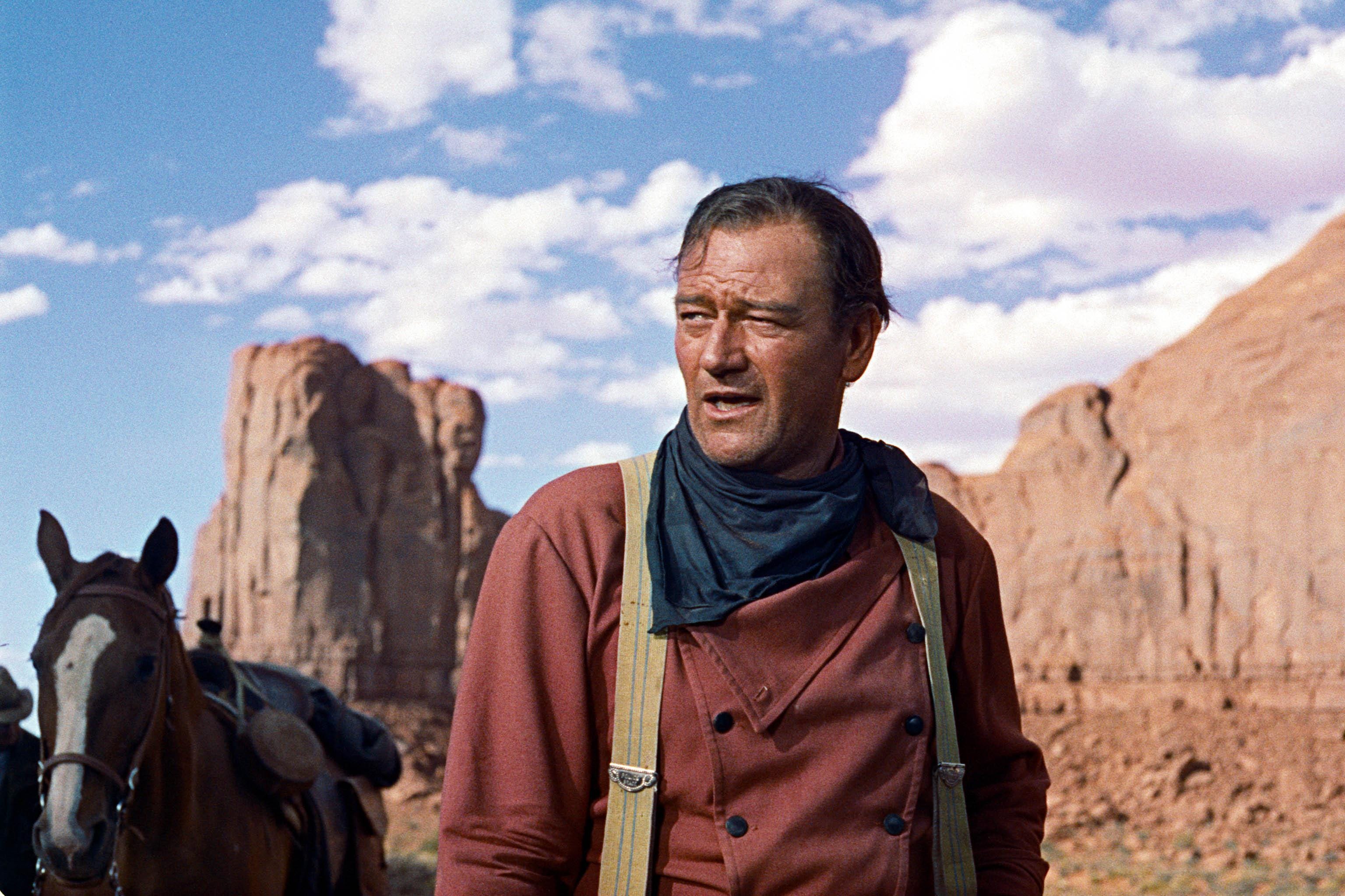
The Searchers (1956) is available now on 4K UHD steelbook from Warner Bros. Home Entertainment. Trigger warnings for discussions of racism and sexual assault.
It’s always interesting to go back and reassess classic films with modern eyes. While separating the art from the artist is an imperfect ideal that has enabled a lot of ‘cancelled’ stars to continue having successful careers, when we look back, there must be an acceptance that times and attitudes have changed.
Should this excuse horrific language or imagery within a film? No, but in building a canon of influential films we must occasionally take an objective view of the skill involved. The Birth of a Nation (D. W. Griffith, 1915) is thematically abhorrent, and yet the methods of filmmaking utilised on that set changed cinema forever.
What does this have to do with The Searchers? After rewatching the film, I was intrigued by what modern audiences had made of it. It is certainly an uncomfortable film at times. The blatant racism of Ethan Edwards (John Wayne) and his discussions around purity, the depictions of indigenous Americans as savages, and the allusions to sexual assaults have been dragged over the coals in some recent reviews.
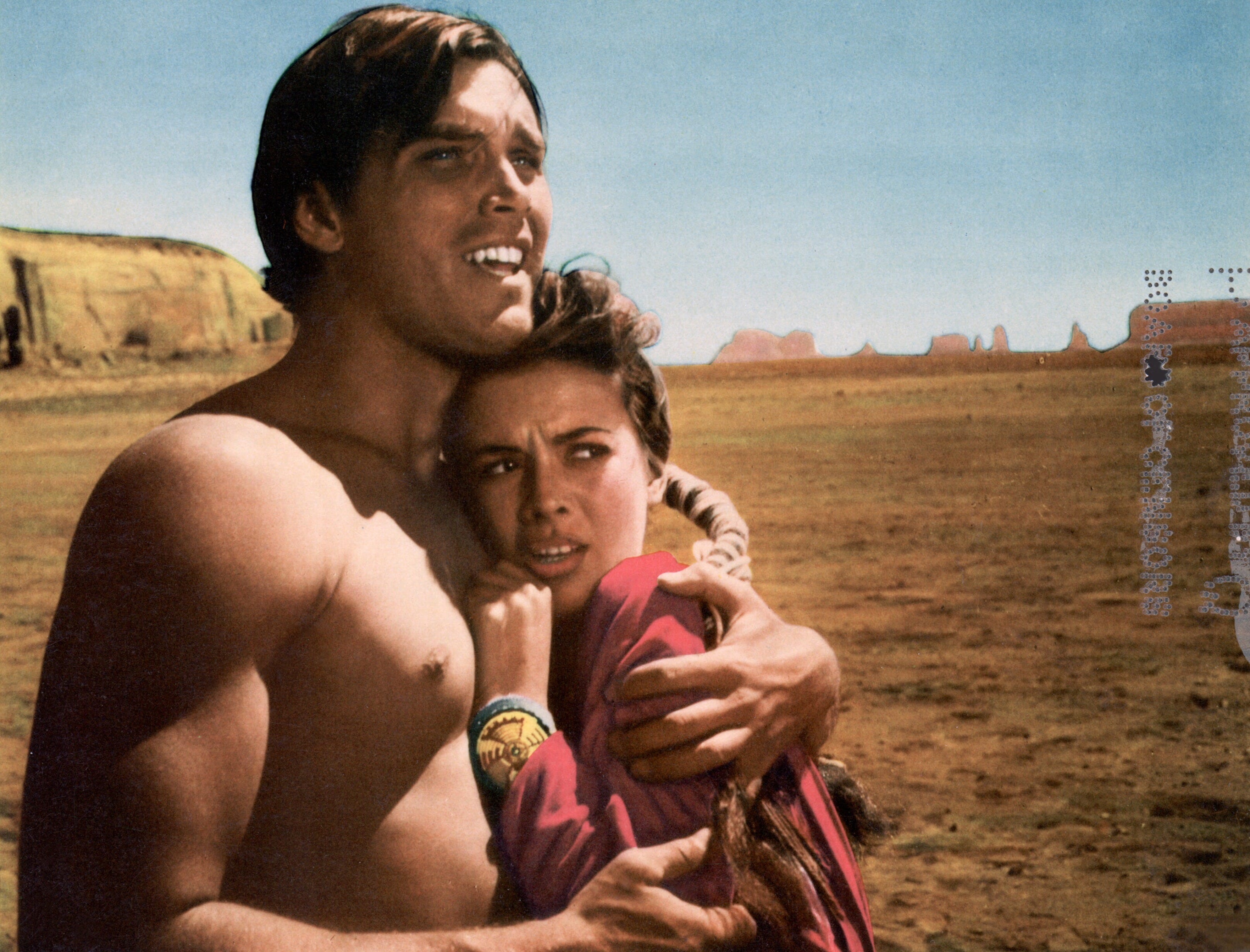
Yet, while these moments are certainly difficult, I think it misses the point of The Searchers. If we start with the obvious first, it’s frankly incredible that Wayne agreed to play this part. A man who has gone on record with some truly awful comments about indigenous populations and people of colour, shedding that heroic lawman image to play a cold, beaten-down racist. Edwards is a proud confederate, with utter disdain for the native tribes he is hunting. There is little heroic about the man, and the film never shies away from this.
Then there is the depiction of the Comanche tribe in the film. Edwards categorises them all as savages, but we find out that it is a single, rogue group of raiders that instigated the events in the film. Their own brutality is often exceeded by the posse of white men tracking them.
While certainly not perfect in its representation - the brown-facing of both Natalie Wood and Henry Brandon towards the end of the film is still shocking – the film is far more progressive in its treatment of racial tensions than many before it, and many films after it as well.
As Martin Scorsese says in the documentary included on this release: ‘This was the first time we had seen subtext. Where we started to understand that more was going on than what was on the screen.’
Ethan returns to his family’s homestead – years after the Civil War has ended. He agrees to track Native Americans who have rustled cattle from a nearby farm, only to realise too late that the rustling was a ruse for the tribe to attack the town.
In a scene that George Lucas would take wholesale for Star Wars: A New Hope, he turns to find his brother, sister-in-law and nephew dead, and his two nieces missing. This kickstarts a five-year hunt, as Ethan, accompanied by various people but primarily Martin Pawley (Jeffrey Hunter), who is an eighth Cherokee and bears the brunt of Ethan’s bigoted views.
The crux of the story – Ethan’s increasingly grey motivations for the search – is captivating, and while its occasional interruptions, notably Martin’s love interest (played by a wholly underutilised Vera Miles), add little, they do not take anything away from the film.
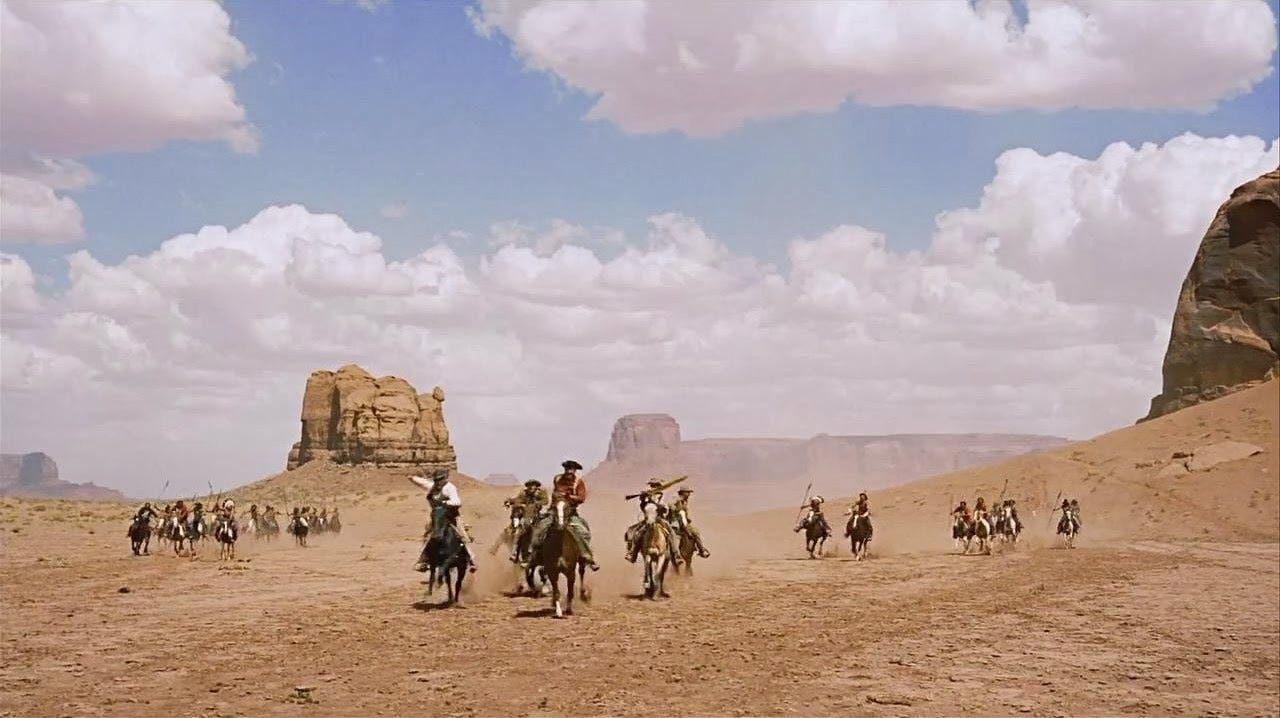
You can almost draw a direct line from the Golden Age of Westerns, which director John Ford arguably brought in with Stagecoach (1939) and bookended with The Searchers, and the revisionist and Spaghetti Westerns which would dominate the 1960s and 1970s. The more complex characters, the increase in violence, and the questioning of American values are rarely bettered than in The Searchers.
And it looks incredible. This special edition steelbook contains a 4K remaster of the original VistaVision print, with liberal use of wide shots to highlight the gorgeous scenery and keep the characters small within the frame. In this way, the American landscape becomes a character, larger than the squabbles between men.
Warner Bros haven’t included a huge number of extras; surprising considering the impact of the film. We get an appreciation of it and the 1998 documentary narrated by director John Milius. There’s an introduction by Patrick Wayne, son of John, who played Lt. Greenhill, and an archival commentary track from Peter Bogdanovich.
While more information about the film would have perhaps given context to modern audiences, this is a beautifully put together package, containing one of the greatest Westerns ever made.
Director: John Ford
Writer: Frank S. Nugent. Based on the novel of the same name by Alan Le May
Starring: John Wayne, Jeffrey Hunter, Vera Miles, Ward Bond, Natalie Wood, John Qualen, Olive Carey, Henry Brandon, Ken Curtis, Harry Carey Jr., Antonio Moreno, Hank Worden
Comments
Nothing yet. Say the first thing.
Sign in to join the conversation.