
Spoilers for Neither the Sea nor the Sand (1972)
The only feature to be directed in the cut-short career of Fred Burnley, Neither the Sea nor the Sand is a tonally uneven, but fascinating film. It spends the first half building an intense romance between Anna (Susan Hampshire) and Hugh (Michael Petrovitch), before lulling into a folklore-tinged tale of reincarnation.
Anna has recently separated from her husband and travels to Jersey, in the Channel Islands, to take time for herself. Her meeting with Hugh at the Corbiere Lighthouse starts a theme that runs throughout the film; the dangerous power of water. The lighthouse is separated from Jersey by a causeway, which quickly becomes covered as the tide comes in.
While never explicitly mentioned, this power; the risk of being swept away is ever-present. Hugh notes that before the lighthouse was built, the rocky coastline and rough tides meant that many ships were lost in the area.
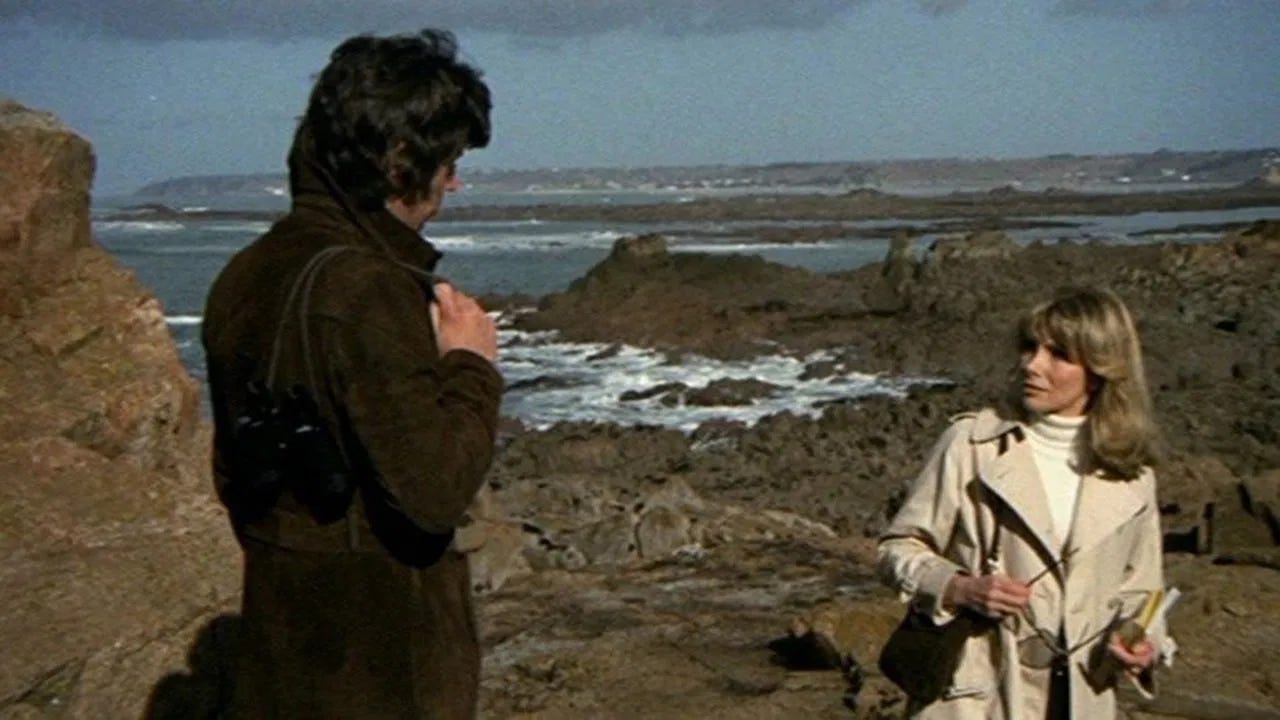
The sea also represents escape, something both characters are looking for. Anna is shown to be unaccustomed to the rural lifestyle on the island that she has absconded to, and her respect for nature manifests as fear. On the other hand, Hugh is more in touch with the natural world, but his work at Jersey airport suggests a desire to put some distance between him and the Channel Islands.
When we meet his overbearing brother George (Frank Finlay), it’s not hard to see why. George raised Hugh after the sudden deaths of their parents and disapproves of Anna’s rapid infiltration into their lives. The film does fumble this relationship. While the closeness of the brother’s is explained by their shared loss, George’s instant suspicion of Anna is only here as a folk horror cliché. The idea that any outsider is to be watched closely and never trusted.
You could make the argument that, like the tide at the lighthouse, Anna and Hugh are swept away by the intensity of their relationship. The film shows this as a physical risk when they travel to Scotland together. Hugh takes Anna down to a secluded cove and runs into the sea, only to be chased out when the tide comes in. It’s a disturbing sight for Anna, who fears for Hugh as the tide rises.
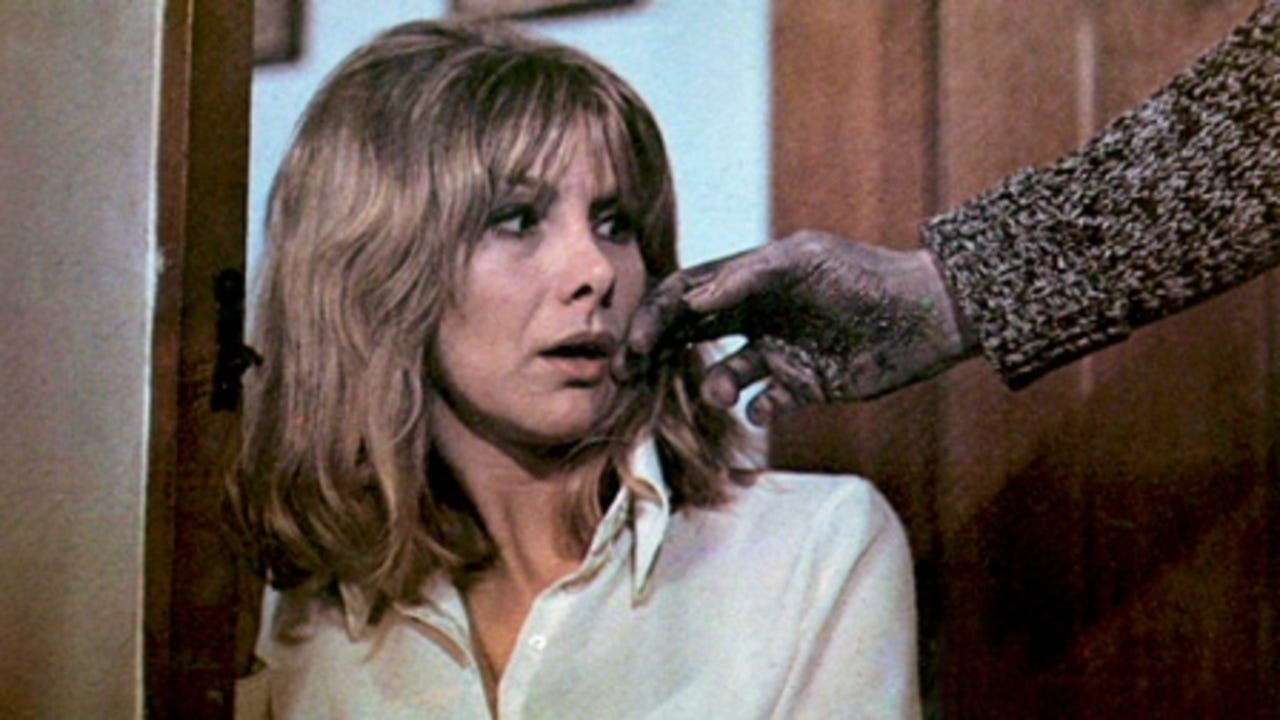
Yet it is not the sea that rips them apart, despite the various visual cues. Hugh collapses on the beach; a sudden death that Anna cannot comes to terms with. Her despair, and the implication that this was a true love of sorts, is enough to bring the body of Hugh back to life – a mute, volatile body that must communicate with Anna through telepathy.
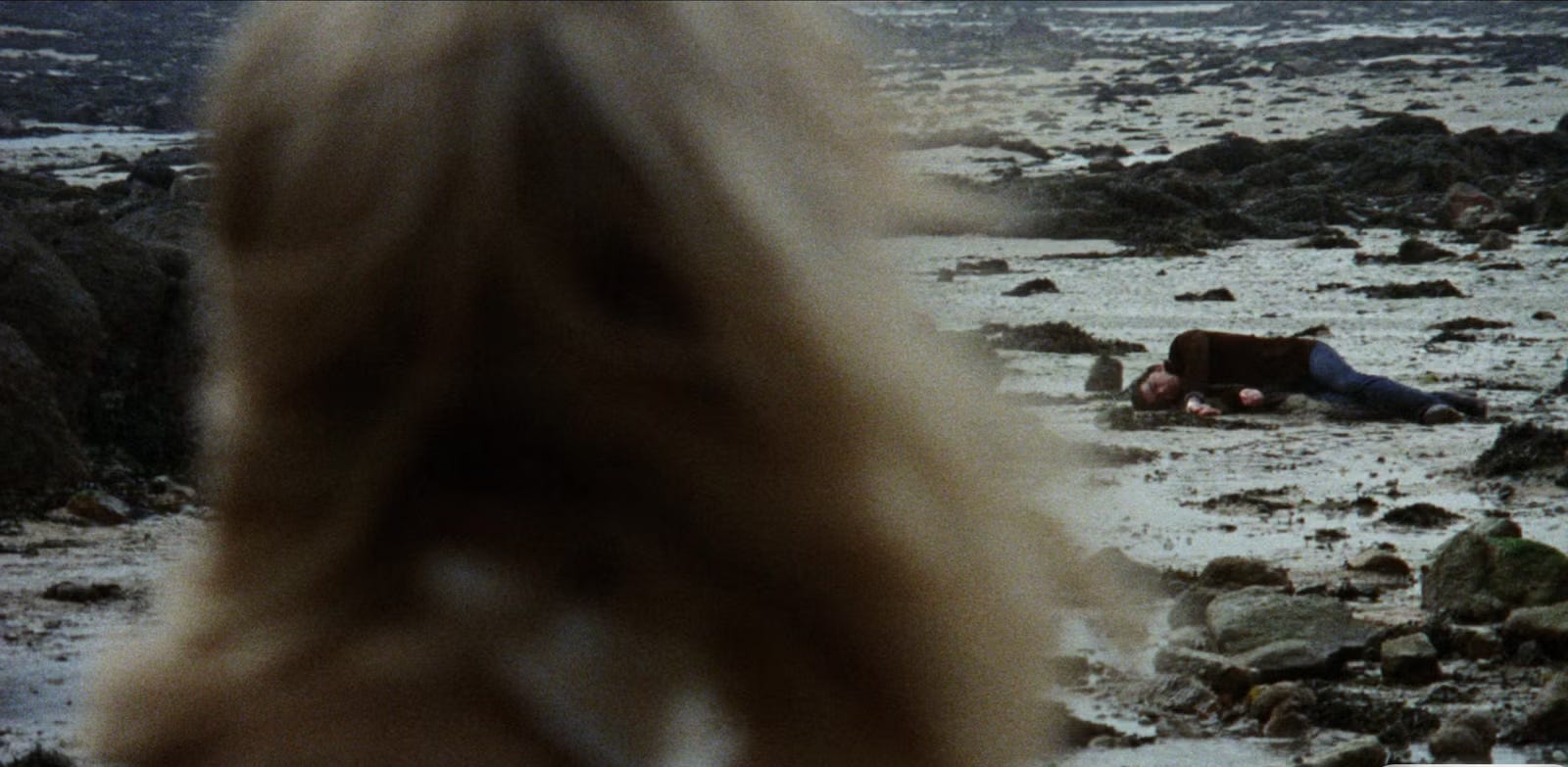
This is wonderfully visualised by a sequence that feels heavily inspired by Whistle and I’ll Come to You (Jonathan Miller, 1968). Anna runs and stumbles across the beach, while Hugh’s body haunts her in the foreground, much like the spectre that appears to Professor Parkin.
The rest of the film falls apart somewhat. Anna manages to transport Hugh back to Jersey and locks them both away in his family’s home while lying to everyone around her. This part drags and repeats itself and includes a ridiculous sequence between Hugh and George that does little to further the plot.
But the final sequence, when Anna decides she does not want to continue without Hugh and walks onto the causeway as the tide rises brings the film around thematically. Afterall, it was the causeway that brought them together. The sea was never the threat, it was the solid ground, the reality of life, where holiday romances don’t last and we all have to go back to our jobs, our marriages, our lives, that threatened to pull Anna and Hugh apart.
This is how the film fits within the folktale template, despite its greater focus on the romance between its leads. Folktales, and folk horror, focus on the old ways. Of man leaving in harmony with, and fear of, nature.
There’s also something to be said about Hugh, who transforms from a gruff, monosyllabic local into a more modern man when paired with Anna but is dragged back to his old ways when reincarnated. Was he going against his nature, by being infatuated with Anna? The film remains ambiguous. A flawed, but nevertheless, interesting look at love and horror.
Director: Fred Burnley
Writers: Gordon Honeycombe, Rosemary Davies. Based on the novel of the same name by Gordon Honeycombe
Starring: Susan Hampshire, Frank Finlay, Michael Petrovitch, Michael Craze, Jack Lambert, Betty Duncan, David Garth, Tony Booth
Comments
Nothing yet. Say the first thing.
Sign in to join the conversation.