
This is the second of three July articles focused on life with a disability. The first was How to Buy an Accessible Vehicle.
“Disability Pride Month is observed every July to celebrate disability identity and community, mark the anniversary of the Americans with Disabilities Act (ADA), and push for full inclusion in everyday life.”1
I never thought much about doors before becoming disabled. Now, I think about them constantly. If you think that sounds silly, believe me, I get it. But the reality is that doors are among my top accessibility barriers in everyday life!
I bet you’ve experienced something similar, even if you’ve never tried to navigate through a door using a walker, cane, wheelchair, or other mobility assistance device, and even if you aren’t disabled.
Maybe you went on a shopping spree and you tried to carry all your bags through the door into the house at once. Or you were carrying a sleeping child and only had one hand to unlock and open a door. Or you’ve navigated the world pushing a stroller. Perhaps you received a large box in the mail, and you needed to transport it into another room.
It’s like that, but slightly more complicated.
Every time I encounter a new door, I have to do a quick assessment before I make a plan of attack.
Does it open in towards me, or out away from me?
Is the hinge on the left or the right?
Will the spring inside that hinge cause the door to come swinging back at me when I open it, or will it remain open on its own?
Is there a raised threshold on the floor that’s part of the door frame, which I will have to step or roll over as I pass through the doorway?
How heavy is it?
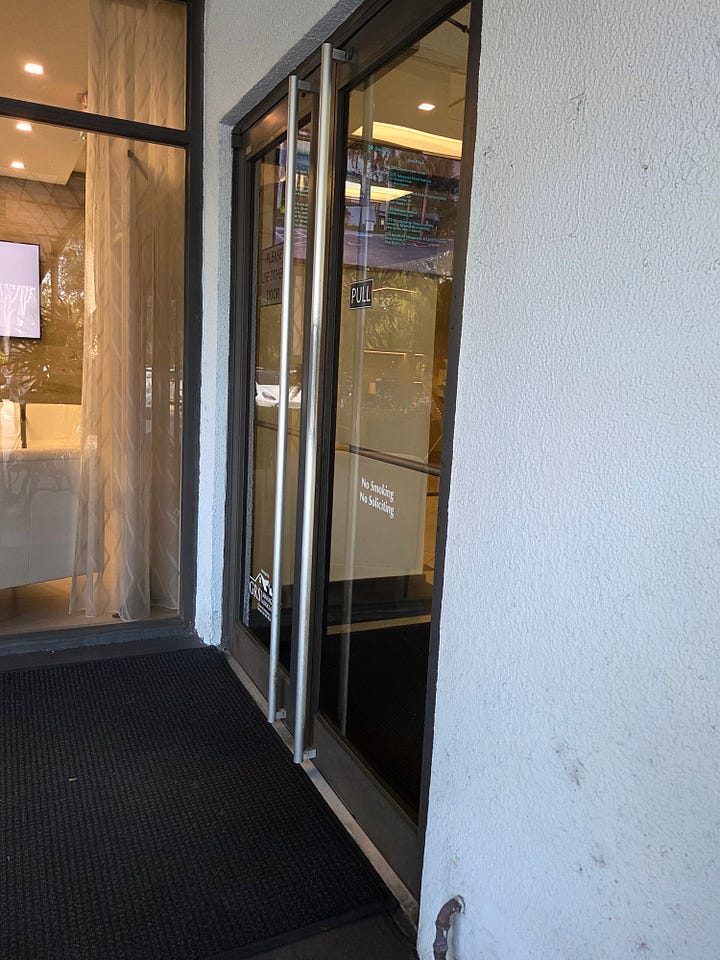
Is the handle placed in a location that will help me gain leverage, or is it decorative?
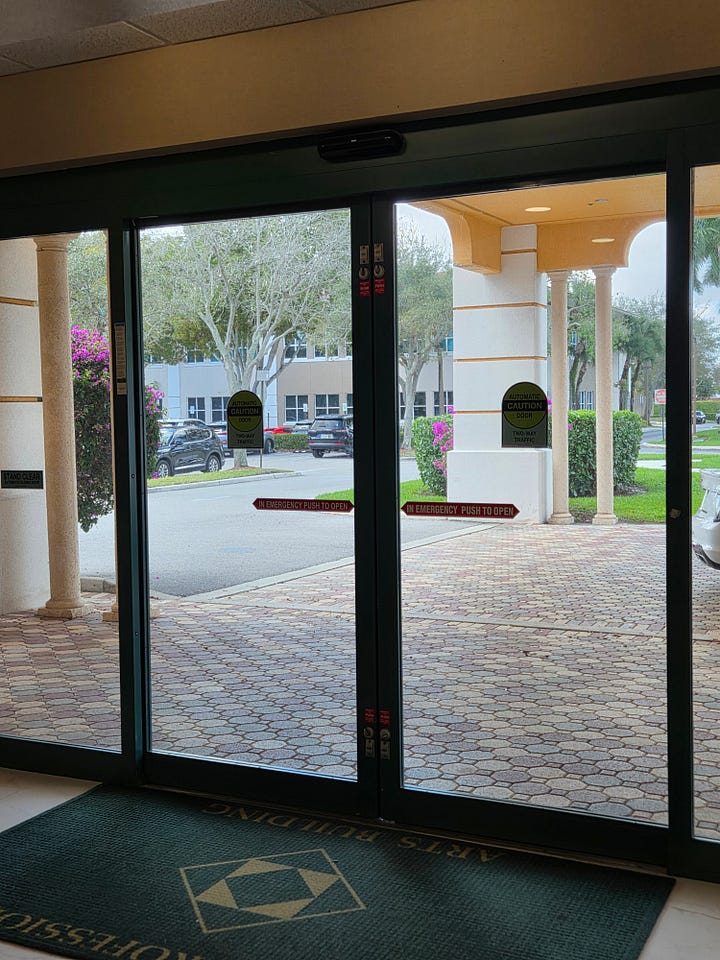
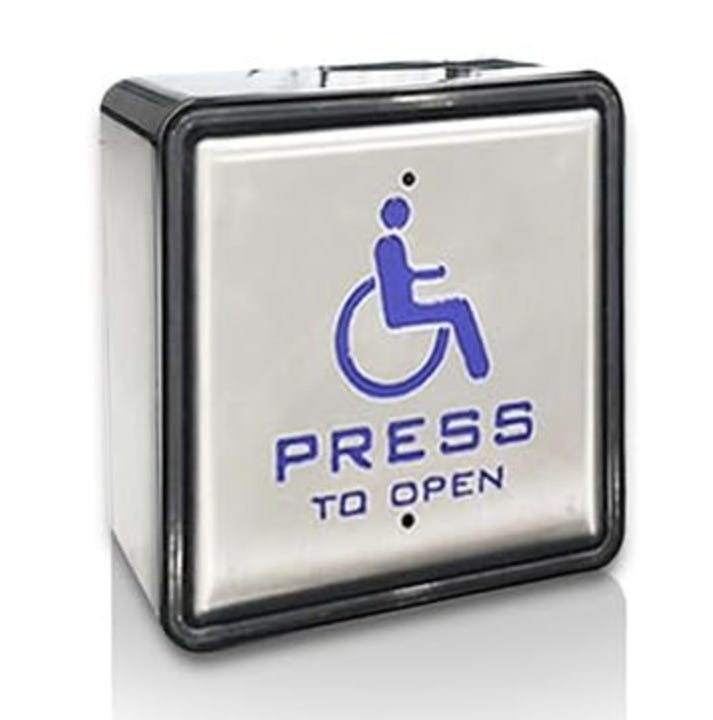
If it’s an automatic door, will it open as I approach, or do I need to find a button to push?
See, there’s lots to consider!
Before I was discharged from the inpatient physical rehabilitation facility where I spent most of the summer of 2019 due to my autoimmune sensory neuropathy, I had to learn to get through doors on my own. I was mostly wheelchair-bound, but on a daily basis, the physical therapy and occupational therapy teams had me using the walker and testing my ability to navigate doorways. Even if it was going to take time before I could execute their technique on my own, it was important to them that I learned it before I left the hospital.
That technique is as follows:
I walk up to the door.
I open it as wide as I can.
I stick my butt out.
I wedge myself and the walker into the open space between the door and the door frame.
I stop the backswing of the door with my back, butt, or, if I’m carrying one, my purse backpack.
I squeeze myself the rest of the way through the door and into or out of the room, letting the door close itself behind me.
If I’m being lazy, I ditch this technique, choosing to push my walker through the doorway going forwards, instead of butt first. I nearly always regret that choice.
While the recommended technique is good, its effectiveness varies, depending on the weight of the door.
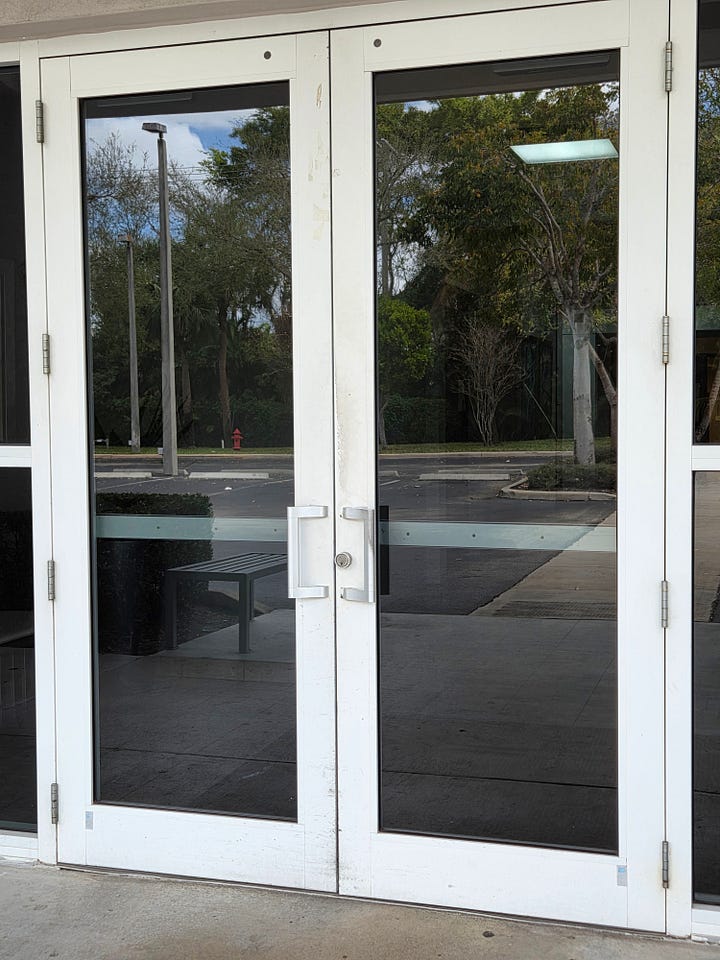
With lightweight doors such as the one at my physical therapist’s office, it can swing back at me rapidly…sometimes before I have time to get between the door and the door frame. I’ve been hit by it repeatedly, which can be dangerous when I’m passing through absent-mindedly.
When the door is heavy, it’s a real battle to pry it open. It increases my nerve pain too. At my acupuncturist’s office, the practice manager listens for the sound of my walker coming down the hallway and pre-emptively holds open the heavy office door for me. I’m sure the door is that heavy for some fire code-related reason, but goodness is it difficult without her help. My acupuncturist herself holds it open for me as I exit after my appointment. It’s a nice system they’ve worked out for me.
The hardest door for me to manage used to be the entrance to the local imaging center. It’s surprising enough that a building dedicated to medical offices doesn’t have an automated entrance, but these specific doors are so heavy that, for a while, I couldn’t open them on my own at all and had to wait for other visitors to provide assistance. Now that I’m a little stronger and a bit more agile, I can open the door, but it’s still a struggle. That door has been an interesting measure of my progress or setbacks.
Automatic doors, on the other hand, are such a relief, when I encounter them. Especially when they are sliding doors that are triggered as I approach. However, when it’s an automated door that requires the push of a button, that button is often unreasonably far away from the door itself. So, a person like me who has trouble walking and is trying to minimize the distance traveled, has to go out of their way to use the “accessibility” feature and then walk all the way back.
Also a relief are the kind of doors that stay in place once you open them, unless you take action to close them again. In that case, I can open it as wide as I need to, and I don’t need to employ any kind of special technique to pass through.
As independent as I want to be as I navigate the world, my biggest exception is doors. Having to wait for someone else’s help with a tough door, or relying on the kindness of strangers if I am alone, can feel frustrating. Holding the door for me makes a big difference in my day. But more often than not, people try to let me go first. They think they’re being polite and helping, but they are making things harder and then then have to go around me anyway.
When friends or family, or even a stranger, anticipate that they should walk ahead of me and open the door, without me having to ask for help every time, I’m always grateful.
I see doors as a metaphor for accessibility challenges of all kinds. You never know what kind of barrier to entry to expect at a new location, and you have to find ways to navigate each.
Maybe this takes the metaphor too far, but while I was writing this, I thought about some pop culture doors. Songs like “Love is an Open Door” from Frozen, “Close Every Door” from Joseph and the Amazing Technicolor Dreamcoat, and “Opening Doors” from Merrily We Roll Along all ran through my brain. And I couldn’t help but think of the 1998 Gwyneth Paltrow film “Sliding Doors.” In these examples alone, doors represent turning points or transitions, opportunities missed or taken, access or lack thereof, opposing choices, or safety and security.
As Alexander Graham Bell said, “When one door closes, another one opens.” In my case, I just hope they’re both automatic doors.
While this piece is comprised of personal anecdotes, if you want to check out what the real ADA Requirements for doors are, click here.
Each issue of “What’s Her Problem?” includes questions for further discussion. Leave a comment below!
This week’s questions:
How much time do you spend thinking about doors? Is there another structure or household object that unexpectedly creates an accessibility barrier for you?
Up Next:
Disability Pride Month Article #3. On Accessible Parking.
Comments
Nothing yet. Say the first thing.
Sign in to join the conversation.