
Researchers at the University of Nevada, Reno recently explored whether cattle could help restore degraded rangelands by dispersing perennial grass seeds through their manure. Funded in part by the Public Lands Council, the lobbying organization representing ranchers who hold federal grazing permits, the research found that specially coated seeds could survive passage through a cow’s digestive system, prompting researchers to investigate further as to whether cattle could someday help disperse and germinate native (and disturbingly, non-native) grasses across degraded rangelands. The idea is that spreading perennial grasses would outcompete cheatgrass and restore the ecosystems.
That would be a remarkable turn of events, and would require us to overlook the inconvenient fact that the Bureau of Land Management has attributed land health failures on more than 37 million acres on the 56 million acres it has assessed to livestock grazing.
This study represents a familiar pattern. As the ecological costs of livestock grazing become harder to ignore (and they are), new research or initiatives arrive offering a fresh rationale for why cattle aren’t actually degrading public lands, but are, in fact, the wondrous cure-all for what ails the ecosystems of the arid West.
So riddle me this: if cattle are the solution to so many of our ecological woes, why do the problems keep getting worse? Livestock grazing is the largest commercial use of public lands, after all, and has been for 150 years.
Let’s start with cheatgrass, the focus of the study.
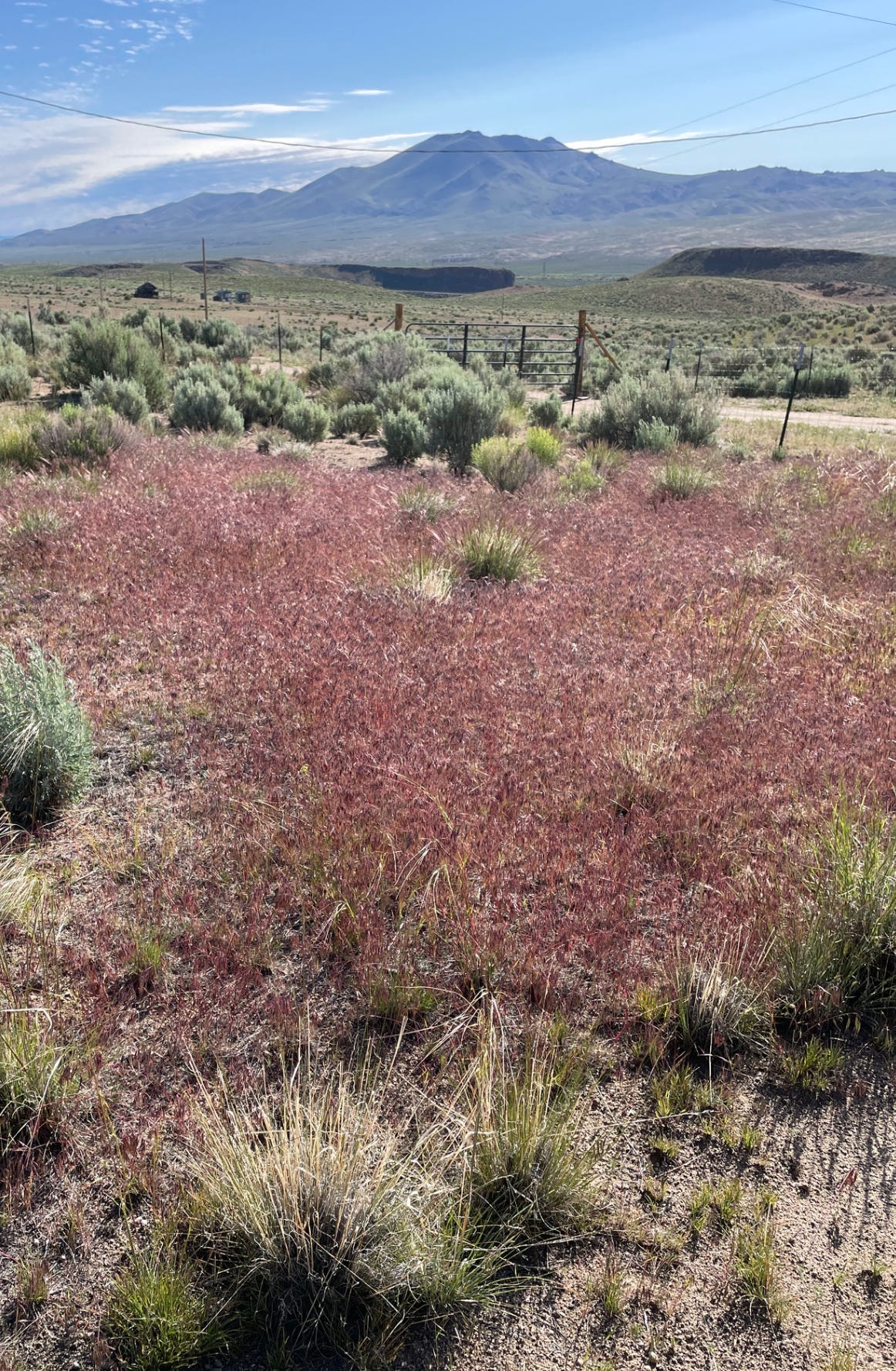
Cheatgrass didn’t invade healthy, intact ecosystems. It spread into landscapes that had already been degraded by decades of intensive livestock grazing.
In 2024, we published a review synthesizing more than 500 studies spanning a century of cheatgrass research. The conclusion was remarkably consistent across decades of published science: livestock grazing removes the native perennial bunchgrasses that compete with cheatgrass, trampling destroys the biological soil crusts that resist invasion, and chronic disturbance creates exactly the conditions cheatgrass is adapted to exploit. Once established, cheatgrass alters fire regimes, suppresses native vegetation, and reinforces its own spread. That conclusion stands in stark contrast to the optimism surrounding the latest study: current livestock grazing continues to reinforce the ecological conditions that favor cheatgrass.
Is adding native seeds to the cowpies really enough to counteract all the other ways that livestock facilitate non-native invasions? It would be awfully pretty to think so.
Across the West, livestock grazing has reshaped public lands well beyond invasive grasses. Riparian areas, the most biologically rich habitats in the arid West, remain among the habitats most heavily degraded by grazing. Streambanks erode, water temperatures rise, and habitat for native fish, amphibians, birds, and countless other species declines.
The consequences of domestic cattle on the western public lands ripple across entire ecosystems. Greater sage grouse lose nesting habitat. Prairie dogs are poisoned, taking black-footed ferrets with them. Wolves, grizzlies, and cougars are killed following conflicts with livestock. Beavers disappear from an area as willow and aspen decline. Native trout lose the cold, shaded streams they require. Bighorn sheep contract deadly diseases from domestic sheep. Fences fragment migration corridors and kill wildlife ranging from pronghorn to lesser prairie chickens. Golden eagles are captured to protect lambing operations.
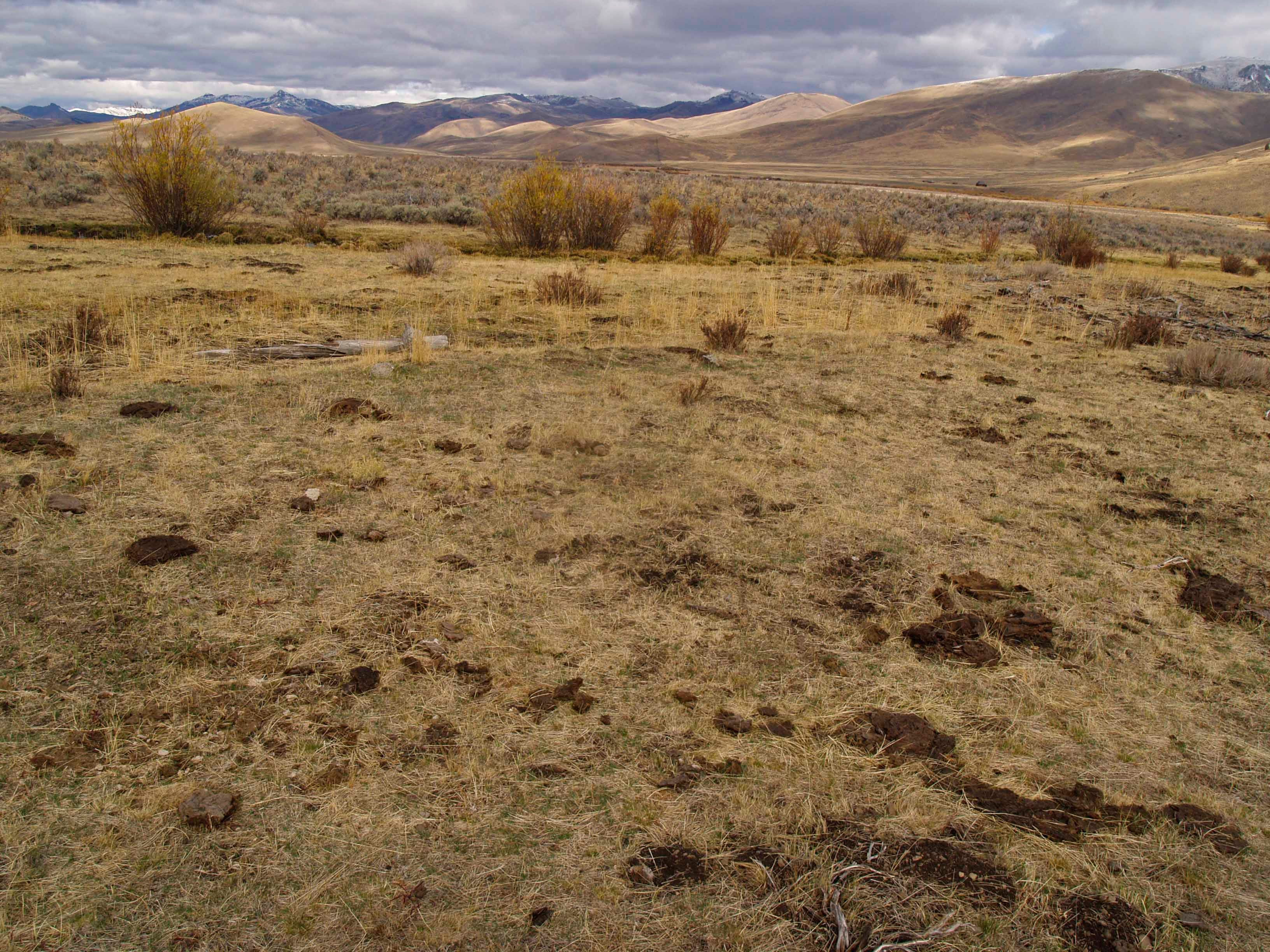
These are not separate conservation issues. They are different expressions of the same land use.
The researchers in the recent study note that conventional restoration often fails and ask whether cattle might make reseeding more efficient. That’s a reasonable technical question. But efficiency is only part of the equation. The study used seeds coated with artificial polymers to show that re-seeding can occur from grass seeds traveling through the four-chambered stomach of a cow. How is that even relevant to cattle grazing on cheatgrass-infested public lands? They’re not going to encounter bluebunch wheatgrass or bottlebrush squirreltail with polymer-coated seeds out in the wild. It failed to address the real source of seed transport on cattle and sheep: Cheatgrass and other seeds hitching a ride in the curly hair of livestock in a process called “epizoochory.”
Native perennial grasses have a diverse array of dispersal strategies that do not depend on cows: some seeds are adapted to transport in sheetflow during a rainstorm; other seeds fall out of grass stalks that roll along in the wind like little tumbleweeds; still other native grasses like needlegrasses are adapted to drilling into small cracks and crevices in the soil. They don’t need cow manure to disperse.
Restoration succeeds when the underlying causes of degradation and unnatural disturbances have been addressed. Otherwise we’re simply scattering more seeds into landscapes where the ecological conditions that favored cheatgrass remain largely unchanged.
If we’re serious about restoring western ecosystems, we should stop asking how cattle can fit into landscapes they have profoundly altered and start asking what those landscapes actually need to recover.
Because cheatgrass isn’t a disease. It’s a symptom. So are degraded streams, disappearing bunchgrasses, declining biodiversity, and escalating wildlife conflicts.
Until we confront the ecological conditions that allowed cheatgrass to dominate in the first place, restoration risks becoming an exercise in treating symptoms rather than causes. Coating seeds may improve germination. It won’t restore landscapes that continue to experience the same chronic disturbances that drove their decline.
No posts
Comments
Nothing yet. Say the first thing.
Sign in to join the conversation.