
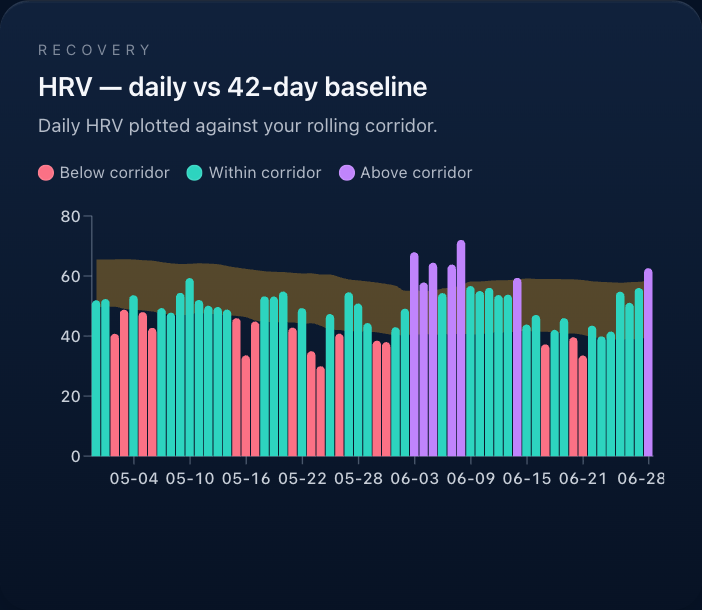
I had a good week of training despite poor sleep and a heatwave. I managed to get out every day and cover some kilometres, finishing the week with just over 11 hours of training and around 100 km. Overall, I’m happy with where I ended up, even if I’m still a little behind where I had hoped to be.
Most of that came down to work commitments spilling into the weekend, a minor knee niggle (now thankfully gone), and temperatures that made some of my planned training sessions impractical. On balance, I probably got as much out of the week as I reasonably could.
One consequence was deciding to downgrade my Race to the Stones entry from the 100 km to the 50 km distance. I’m still figuring out the logistics of getting home afterwards, but the shorter race feels like the sensible decision given how training has unfolded.
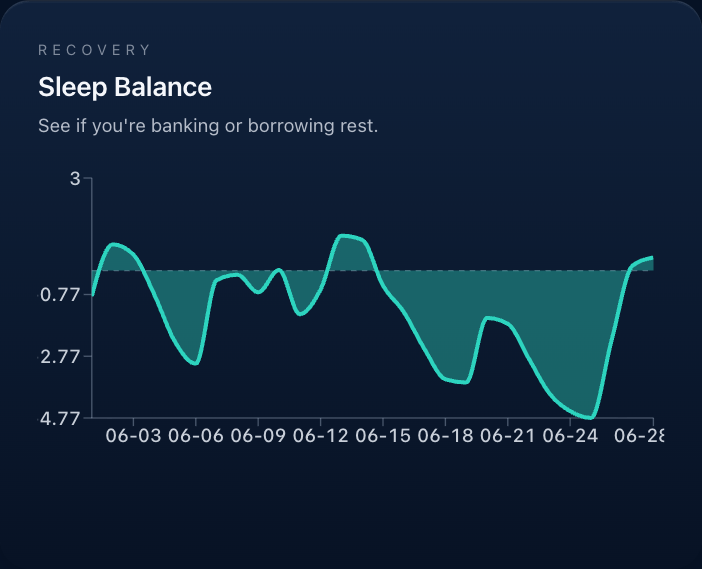
The positive news is that I managed to catch up on sleep over the weekend with a couple of naps and finally climbed out of the sleep-deprivation hole I’d been digging for myself. Assuming temperatures are a little kinder and I can keep sleeping properly, I should be able to reach my target of 110 km next week.
Over the past week I also spent some time simplifying Atlas, my personal AI agent.
Originally, Atlas relied on a collection of named specialist agents. That worked well enough, but it increasingly felt like unnecessary complexity. I have now moved to a cleaner operating model centred around a single orchestrator with interchangeable workers.
GLM 5.2, via OpenRouter, is now the primary reasoning model, with Kimi K2.6 acting as the fallback. It felt like the right moment to move away from Kimi as the primary model. GLM delivers frontier-level performance while costing roughly the same as Kimi and a fraction of Opus or GPT.
The specialist subagents have been replaced with a pool of four generic workers running on DeepSeek v4 Flash. The result is a much simpler architecture: one orchestrator, a pool of parallel workers, explicit fallback paths, and far less personality-based routing. In practice, it behaves like a frontier model while operating at a fraction of the cost.
I have been building a personal second brain that is boring at the storage layer and unusually useful at the interface layer.
The core idea is simple: keep the source material as Markdown, compile it into an Obsidian-compatible wiki, and let an LLM act as the researcher that can ingest, maintain, and query that wiki. Around that, I built a graph app so I can inspect the knowledge base visually, but the important part is not the UI. The important part is the contract between raw items, compiled notes, and the agent that works over them.
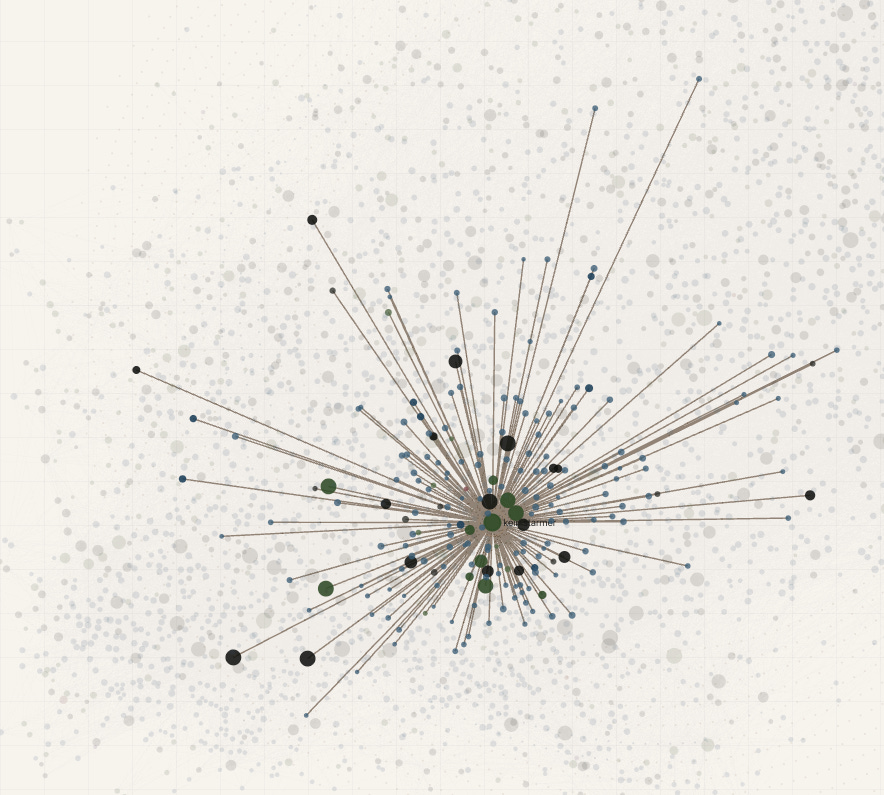
At the time of writing, the wiki index contains 4,922 wiki files, 2,875 raw files, 7,791 nodes and 35,203 links. It is large enough that folder browsing is not the right interface anymore. I need retrieval, synthesis, contradiction handling, and provenance. That is where the LLM becomes useful.
The repository has two main layers:
news/raw/contains source documents. These are treated as immutable evidence.news/wiki/contains the compiled knowledge base: source summaries, concepts, entities, comparisons, maps, an index, and a log.
The compiled wiki uses normal Markdown and Obsidian-style [[wikilinks]]. A concept page might link to entities, source pages, maps, and adjacent concepts. A source page links to the ideas and institutions it mentions. The result is a portable wiki that works as files, as an Obsidian vault, as input to an agent, and as a graph.
The Next.js app reads news/wiki and news/raw, parses wikilinks, computes outgoing links and backlinks, and renders a force-directed graph. I can search notes, filter by type, inspect backlinks, open source references, pin notes, build a workbench, and find paths between ideas.
But the app is downstream of the more important workflow:
Capture or save raw material into
raw/, this is done via Codex.Ask the wiki skill to ingest it, this is done via Claude.
Claude creates or updates source, concept, and entity pages.
It preserves links back to source files.
It updates the index and log.
I query the wiki through Atlas when I want synthesis and explore paths.
The wiki answers “what does my knowledge base currently support, where is it uncertain, and what source trail backs that up?”
The LLM is not the database. The files are the database.
The LLM is the compiler and interpreter. It turns unstructured reading into durable wiki pages, notices when a new article belongs on an existing concept page, flags contradictions instead of smoothing them away, and answers questions by reading the index first, then following the most relevant links.
That gives the system a few properties I care about:
Provenance: claims should trace back to
raw/files.Portability: the wiki is just Markdown and relative links.
Incrementality: new sources enrich existing pages instead of replacing them.
Contradiction tolerance: disagreement becomes part of the record.
Agent usability: the instructions are explicit enough for an LLM to maintain the wiki consistently.
The last point is the quiet trick. A second brain becomes much more useful when it carries its own operating manual.
The following excerpt is adapted from my repo’s SKILL.md. This is the part I would copy into another knowledge-base project first, because it defines the contract between raw sources, compiled wiki pages, links, and query behavior.
This gives the model a small institution to inhabit: what counts as evidence, where pages belong, how links should work, what not to touch, and how to answer without hallucinating beyond the vault.
I ask Atlas questions that assume the wiki is the source of truth.
Q: Help me understand the connections to Keir Starmer resignations.
A: Here's the picture the wiki paints, tracing the connections outward from Starmer's resignation. The resignation itself happened in stages across June 2026. The triggering event was John Healey's resignation as Defence Secretary (alongside Al Carns, a defence minister) over inadequate defence funding — Starmer's own "guns-versus-butter" fiscal trilemma. Healey's departure was uniquely damaging because he embodied the competence and seriousness Starmer claimed for his government; his measured resignation letter ("Our adversaries don't follow timetables set by the Treasury") was more damaging than a theatrical attack would have been. That directly opened the attack line that rivals exploited. The cascade runs through several connected nodes: 1. Mandelson vetting scandal (April 2026) — the original wound. Starmer appointed Peter Mandelson as US ambassador despite failed security vetting, blamed the civil service, and Sir Olly Robbins was forced out. This seeded the leadership crisis and made every subsequent shock harder to absorb. 2. UK Political Risk Cascade — a feedback loop where political instability directly reprices sovereign risk. Gilts hit 5.81% on 30-year (highest since 1998), sterling weakened, bank stocks sold off. The political crisis and the fiscal/bond-market crisis became the same story. 3. Andy Burnham's leadership bid — Burnham confirmed he'd challenge Starmer if he won the Makerfield by-election (which he did decisively: 24,927 votes, 55% vs Reform's 35%). He recruited an economic brain trust (Jim O'Neill, Andy Haldane, ex-OBR chief Richard Hughes) and pledged to keep fiscal rules to avoid a Truss-style break. Markets priced him as a macro variable — he literally cancelled a hedge-fund call during the campaign because investors were scrutinising every signal. 4. Wes Streeting as the alternative succession path — positioned as the market-credible centrist, but ultimately endorsed Burnham, which actually rallied gilts and sterling because investors preferred a cleaner succession. 5. Rachel Reeves — blocked the defence uplift Healey resigned over, arguing she "very much hopes" to fund defence without immediate tax rises. Her fiscal rules became the credibility anchor that every candidate had to engage with. 6. Reform UK / Farage threat — the external pressure. Labour lost 1,000+ councillors in local elections; Reform's rise panicked Labour MPs into thinking Starmer couldn't win the next election. 7. Trump's intervention — pre-empted on Truth Social: Starmer "will resign," having "failed badly" on immigration and energy. The end state: Starmer resigned, saying he'd "heard the answer" from his party. Nominations opened July 9. Burnham is expected to become the UK's seventh PM in a decade. The wiki's post-mortem frames Starmer as "the architect of his own fall" — winter-fuel cuts, botched welfare reform, business tax rises, and the "catastrophic" Mandelson choice. Beneath the list of errors, the deeper failure was an inability to offer hope or optimism. The wiki flags an open contradiction: gilt stress could theoretically force a dovish surprise or liquidity intervention, and a new leader could restore confidence quickly — but Bloomberg frames Burnham's inheritance as a "poisoned chalice" with the same fiscal, political, and economic constraints that broke Starmer. Want to dig deeper into any of these threads?
Q: Which nodes connect to Starmer?
A: That's a wide web. Here's the full picture of what links to
[[keir-starmer]]across the wiki. Entities (14 direct links): • [[andy-burnham]] — successor, leadership challenger • [[angela-rayner]] — potential soft-left successor • [[wes-streeting]] — rival candidate, then kingmaker • [[john-healey]] — defence secretary whose resignation triggered the end • [[peter-mandelson]] — the vetting scandal that started it • [[olly-robbins]] — forced out over the Mandelson affair • [[tony-blair]] — warned Labour against moving left • [[rachel-reeves]] — chancellor, blocked the defence uplift • [[pat-mcfadden]] — cabinet member • [[kemi-badenoch]] — opposition leader • [[nigel-farage]] — external pressure via Reform • [[king-charles]] — the King's Speech backdrop • [[labour-party]] — the institution • [[makerfield-by-election]] — Burnham's route into Parliament • [[united-kingdom]] — the state Concepts (16 direct links): • [[uk-political-risk-cascade]] — the feedback loop between politics and gilt markets • [[uk-political-risk]] / [[uk-political-shock]] / [[uk-politics]] — political risk framing • [[uk-political-fragmentation]] — Reform rise, electoral collapse • [[uk-fiscal-policy]] — the fiscal constraints • [[uk-economy]] — stagflation, borrowing costs • [[gilts]] / [[sovereign-risk]] — bond market repricing • [[defence-supercycle]] — the spending pressure that broke the government • [[transatlantic-relations]] / [[uk-us-relations]] — Trump pressure, Mandelson ambassadorship • [[single-market]] — Brexit rejoin debate reopened • [[british-politics]] — the broader system • [[social-media-regulation]] — Starmer's under-16 social media ban • [[electoral-reform]] / [[local-elections]] / [[local-government]] — the local election disaster • [[political-risk]] — generic concept page • [[andy-burnham-leadership-bid]] — the succession mechanism Maps: • [[uk-political-fiscal-loop]] — a concept map of the political-fiscal feedback loop Sources: ~150 pages spanning April 18 through June 27, covering the arc from the Mandelson scandal through to the resignation and post-mortem. The densest cluster of connections is the triangle between Starmer, the UK Political Risk Cascade (politics → gilts → fiscal space → BoE constraint), and the Andy Burnham Leadership Bid (the succession mechanism). Almost everything else feeds into one of those two: the Mandelson scandal and Healey resignation as triggers, Reform/Farage as external pressure, Trump as geopolitical pressure, and Reeves/gilts/sovereign-risk as the fiscal binding constraint. Want me to pull up the concept map or dig into any specific node?
Q: What’s the connection between Starmer and a possible interest rate hike in the UK?
A: The connection runs through what the wiki calls the UK Political Risk Cascade — a feedback loop where Starmer's political crisis directly tightened the conditions under which the BoE could or would move rates. Here's the chain: 1. Political crisis → gilt sell-off → higher borrowing costs As Starmer's leadership unravelled (Mandelson scandal → local election collapse → Healey resignation), gilt yields surged. 30-year yields hit 5.81% (highest since 1998), 10-year above 5.1%. Sterling weakened. This wasn't just a market reaction — it actively tightened financial conditions, doing the BoE's job for it. The political chaos was effectively a de facto rate hike. 2. Stagflation trap The Iran war energy shock pushed UK CPI to 3.3% (March), then it eased to 2.8% by May. But growth was simultaneously collapsing — GDP fell 0.1% in April. This is the classic stagflation bind: the BoE can't hike aggressively without crushing weak growth, but can't cut because inflation is still above target and energy prices remain a risk. Megan Greene (MPC) argued the BoE should lean proactively against second-round effects; chief economist Huw Pill pushed against the "wait-and-see" approach. But the majority held. 3. BoE paralysis as a direct function of political instability The wiki captures this explicitly: BoE policy sensitivity to the Iran conflict was "tied to Starmer's political pressure and UK bond market jitters." The central bank was paralysed not just by inflation data, but by the political-fiscal backdrop — if it hiked while the government was collapsing, it would amplify the gilt sell-off and fiscal squeeze. If it cut, it risked a sterling crisis. So it held at 3.75% throughout. 4. Where it landed By late June, the dynamics shifted. Softer data (CPI at 2.8%, cooling labour market, weak GDP) trimmed rate-hike bets to just one by year-end. Bloomberg Economics now expects the next move to be a cut, likely in 2027. Bailey's approach was compared to the "Maradona effect" — credible optionality doing policy work without actual rate moves. Starmer's resignation and the clean Burnham succession actually eased gilt pressure slightly. 5. The divergence point The wiki flags a sharp monetary policy divergence: while the BoE held, the ECB raised 25bp (its first hike since 2023), and the Fed held but turned hawkish. The UK was the only major central bank where political crisis was a binding constraint on monetary policy — effectively subordinating rate decisions to sovereign-risk management. The open question the wiki leaves: does the UK now carry a permanent political-risk premium on rates after Truss and Starmer? Or does a credible Burnham premiership compress that premium back? Citi's read is that Burnham inherits "a precarious fiscal situation with few tools" — so the constraint may not lift easily.
Q: Is there a connection between inflation and AI?
A: The wiki draws a clear and quite rich connection between AI and inflation, running in both directions — AI is currently inflationary, but the promise is that it becomes disinflationary over time. Here's the chain: 1. AI as a near-term inflation source (the demand side) The most direct link is physical: the AI buildout is driving up prices for memory, chips, energy, and data-center infrastructure. The wiki captures this explicitly in [[2026-06-22-the-cost-of]] — software and computer accessories rose 14.5% YoY, memory prices surged ~200%, and Bloomberg Economics estimates this adds to headline inflation. Fed governors Lisa Cook and Alberto Musalem flagged AI-related pressure through chips and electricity. Technology goods are "no longer a simple disinflationary force." 2. AI capex as a bond-market inflation driver (the capital side) Bloomberg's argument in [[2026-05-21-ai-inflation-bond-market-warsh]] is the sharpest synthesis: four large tech firms are spending $700B+ this year on AI. Microsoft, Amazon, and Alphabet have collectively issued hundreds of billions in debt to fund it. The Dallas Fed estimated the issuance impact is "comparable to a material increase in long-duration Treasury supply." In other words, AI capex is crowding bond markets and pushing yields higher — a direct inflation transmission through the capital markets, not just through goods prices. 3. The productivity-vs-cost timing mismatch Charles Goodhart (captured in the wiki) argues AI is "unlikely to offset demographic pressures near term and is currently inflationary via data centre and energy demand." The promised disinflationary productivity gains are real but lagged — the costs come now, the benefits come later. The wiki frames this as the central contradiction: AI may be inflationary short-term but disinflationary long-term, and markets currently price stage one. 4. The 5y5y real rate signal Bloomberg noted the 5-year, 5-year real rate suggests policy rates may still be too low relative to inflation — meaning the AI investment boom is happening in an environment where monetary policy is still stimulative, amplifying the inflationary impulse. The historical parallel drawn is to the late-1990s dot-com era under Greenspan. 5. AI cost discipline as an inflation feedback loop The newest layer (June 27 ingest) is [[ai-cost-discipline]] — companies like Amazon, Walmart, Cisco, Uber and Meta are now capping employee AI usage because token-based billing has made compute a material cost. Sam Altman said cost became a "huge issue" this year. Deloitte: "Compute costs are now beginning to enter the minds of both CFOs and boards." This is the demand-side confirmation that AI is pushing costs through the economy at the enterprise level, not just at the infrastructure level. 6. The central-bank implications The wiki connects this directly to the Warsh Fed: AI-driven inflation makes the 2% target harder to hit, and the Fed can't easily look through it because it's not a supply shock in the traditional sense — it's a capital expenditure boom that's bidding up inputs (chips, energy, labour) across the economy. Warsh used his debut presser to warn the Fed "will not tolerate high inflation," and economists flipped to betting on a 2026 hike after the May CPI print of 4.2%. The open contradiction the wiki flags: the AI-inflation link could be transitory (once data centers are built and productivity gains materialise, AI becomes deflationary). But the scale and duration of the buildout — $754B in 2026, $905B projected in 2027 — means the inflationary phase could last years, not quarters. And the productivity payoff is uncertain: the Bank of Korea study found AI cut work time 3.8% without clear output gains — a "Jevons paradox in bureaucracy" where faster paperwork just generates more paperwork.
Q: What’s a non-trivial signal linked to AI that sits in the wiki but not as apparent?
A: Here's one that's buried in the wiki but is genuinely non-obvious: the link between AI and the erosion of human judgment — "cognitive surrender." The wiki captures a chain that runs from AI adoption → cognitive dependency → systemic decision risk, and it has three layers that make it more than just a "be careful with AI" warning: The core signal: Experimental evidence shows people consult AI in more than half of decision scenarios, and decision accuracy declines when AI is wrong — not because the AI is often wrong, but because humans stop verifying. The wiki calls this the shift from "originator of thought" to "validator of outputs." People default to AI-first workflows, and cognitive effort declines over time. The neuroscientific evidence (June 27 ingest): This is the part that's easy to miss. A neuroscientist had students wear EEG headsets while using an AI agent. In most students, the high-frequency gamma oscillations that mark cognitive effort collapsed within minutes. In a few who argued with the machine, gamma "lit up." The taxonomy: "automators" (copy-paste), "validators" (seek confirmation), and "cyborgs" (spar with machines). The damning line: generative AI is "by design, a machine for producing the feeling of competence without the substance of it." Why it connects to the broader wiki: This isn't isolated. It links to: • [[ai-cyber-arms-race]] — Mythos can discover zero-day vulnerabilities but humans must still decide whether to deploy them; cognitive surrender in security decisions is catastrophic • [[circular-ai-economics]] — if hyperscalers are funding AI labs that recycle capital back into hyperscaler infrastructure, and decision-makers are cognitively surrendering to AI-generated analysis of those same companies, you have a closed loop with insufficient independent scrutiny • [[ai-concentration-risk]] — concentration risk in markets is partly a cognitive concentration risk: if portfolio managers, analysts, and risk officers all use the same few AI models to reach conclusions, diversification of judgment collapses alongside diversification of holdings • [[pope-leo-xiv]] — the Pope warned AI can become "a tool of domination if humans are reduced to data points," connecting cognitive surrender to [[human-dignity]] The non-trivial takeaway: The wiki is quietly building a case that AI's most underpriced systemic risk isn't the bubble, or the capex burn, or even the cyber arms race — it's the possibility that the humans running institutions, markets, and governments are systematically degrading their own judgment while feeling more competent than ever. The EEG evidence suggests this isn't speculative — it's measurable, and it happens within minutes. That connects back to your earlier questions too: if BoE policymakers, gilt traders, and political advisors are all using AI tools that produce "the feeling of competence without the substance," the political-fiscal cascade you asked about earlier has an additional, invisible transmission channel.
Q: What is a less apparent connection between the war in the Middle East and inflation transmission beyond the obvious impact on commodity prices?
A: The non-obvious transmission the wiki captures is the energy → fertiliser → food → inflation channel, which operates with a lag that markets systematically underprice. Here's the chain: 1. LNG and gas → fertiliser production shutdown Natural gas is the primary input for nitrogen fertilisers (urea, ammonia). When the Hormuz crisis disrupted LNG flows, fertiliser plants were literally priced out of gas markets — they couldn't afford the input. The Gulf accounts for a disproportionate share of global fertiliser exports, and ~30% of seaborne fertiliser trade transits Hormuz. Urea prices jumped 65%, ammonia 40%. This isn't a commodity price move; it's a production shutdown in a market with no global stockpile buffer (unlike oil, which has strategic reserves). 2. Fertiliser → crop yields (the lag trap) The critical part: missed fertiliser application windows permanently reduce yields. If farmers can't afford or access fertiliser during planting season, the damage is locked in for that harvest cycle. The wiki notes that even a six-month disruption could impact the 2027 crop — meaning the inflation shows up in food prices 12-18 months after the energy shock fades. Farmers also switch to less input-intensive crops, further reducing supply of the affected staples. The wiki calls this a "distributed famine" risk — hunger without geographic concentration, making it harder to detect and respond to. 3. Cross-commodity freight contagion This is the part that's easy to miss. The Hormuz disruption didn't just affect oil tankers — it crowded out bulk carriers. Oil tankers outbid dry-bulk ships for slot priority, pushing grain shipping costs up 50-60% with delays of up to 40 days. Panama Canal congestion rose in parallel. So the inflation transmission ran through freight logistics, not just commodity prices — food that physically couldn't move affordably, even where supply existed. 4. Biofuel diversion feedback High oil prices incentivise crop-to-fuel conversion. When oil spikes, ethanol and biodiesel blending becomes more economically attractive, diverting corn and vegetable oil away from food. This creates a feedback loop: energy inflation → food inflation → biofuel demand → less food supply → more food inflation. 5. The persistence problem The FT editorial captured in [[2026-05-26-the-energy-shock]] makes the sharpest non-obvious point: reopening Hormuz doesn't fix this. Shut oilfields take up to seven months to restart. LNG infrastructure needs repairs. Stranded vessels need repositioning. Shipping lanes need demining. S&P Global estimated supply would remain below pre-war levels for months after reopening. So the inflation transmission persists long after the geopolitical event resolves — the energy shock embeds itself into fertiliser costs, into planting decisions, into freight contracts, and into food prices for the next harvest cycle. 6. The political risk link back This connects to the Starmer question too: UK food inflation was a direct channel through which the Iran energy shock hit household budgets (£500 worse off per household), which fed into the cost-of-living crisis that weakened Starmer's political position, which triggered the gilt sell-off, which tightened BoE conditions. The fertiliser-food lag means that even after Hormuz reopened and oil prices fell, food inflation kept climbing — arriving just as the political crisis peaked. The wiki's open contradiction: the UN estimated up to 45 million additional people in acute food insecurity, but markets treated the energy shock as transitory because oil prices recovered relatively quickly. The food impact — arriving on a 12-18 month lag — was systematically underpriced because it didn't show up in the headline CPI prints until months after the initial shock, by which point the political damage was already done.
This is how it looks asking the same to Google:
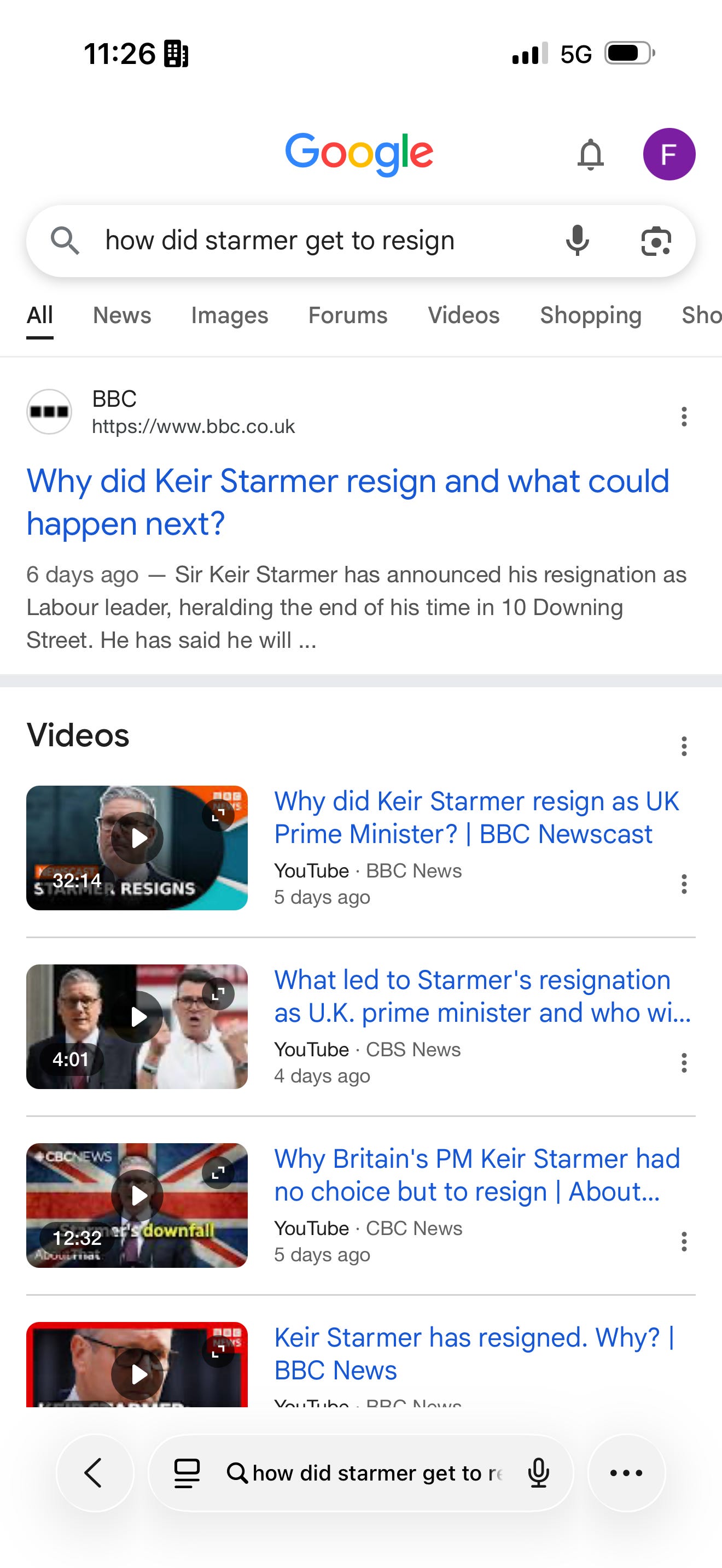
The system is not trying to make the LLM remember everything. It is trying to make the LLM read and maintain a memory system that exists outside the model.
I am not asking, “what do you know about AI infrastructure?” I am asking, “what does my wiki currently say about AI infrastructure, based on the material I saved, and where are the tensions?”
The answer can be wrong, but it is inspectable. I can open the source page. I can follow the wikilink. I can see whether the concept page was built from one weak source or twenty strong ones. The knowledge base stays legible to me, not just to the agent.
That is the version of “second brain” that feels useful. The abstraction here is that you can build this on top of anything. One could dump institutional memory as a set of sources, and have Claude or GPT build the second brain on top, with links and connections.
I think this is one of the most interesting uses of LLMs because one could just go and use the brain, rather than having to learn from scratch.
I finished reading Tim Cook by Leander Kahney, which I found particularly inspiring in the way it connects design, operations, and supply chain into a single competitive advantage. It reinforced the idea that great products are often the consequence of great operational decisions rather than the other way around.
I also started reading More Money Than God by Sebastian Mallaby. So far it has been a fascinating look at the history of the hedge fund industry, not just through the personalities that shaped it, but through the evolution of investment ideas, risk-taking, and markets themselves.
On the entertainment front, I watched Project Hail Mary on Vision Pro, which remains my favourite way to watch films. The sense of immersion is still unlike anything else I’ve tried, and it continues to convince me that spatial computing has a genuine place in media consumption.
Comments
Nothing yet. Say the first thing.
Sign in to join the conversation.