
Many were excited that technology would “fix” education. Programmers began pumping out software. Schools rushed to implement the latest learning technology. Now the headlines read “Screens are failing our students.” What happened?
My high school uses many ed tech programs as well as an LMS. When my district first implemented Schoology, it was meant to solve the problem of lost/forgotten paper packets, heavy backpacks full of textbooks, and the endless excuse “I didn’t know that was due.”
So we gave every student a laptop. And soon after, students started watching YouTube Shorts in the middle of math class.
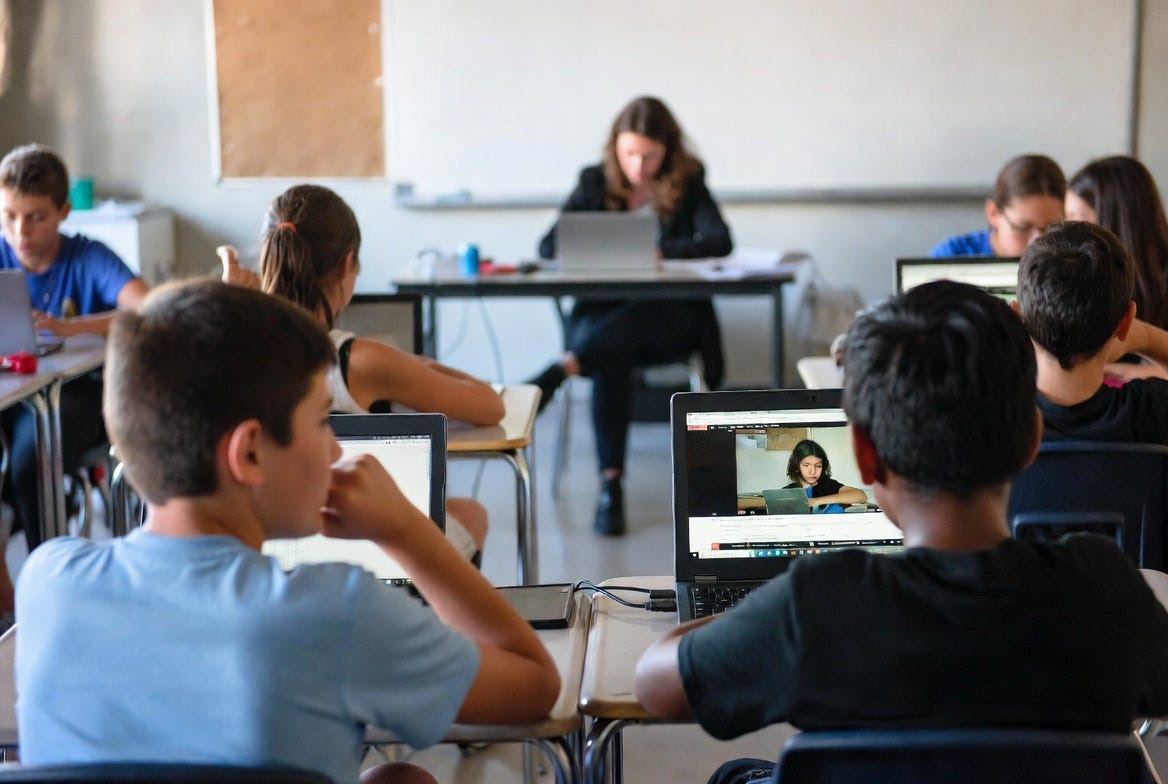
Naturally, the answer was to add new tech. We recently started using Lightspeed to monitor student devices. Administrators told us, “Now you don’t need to circulate around the room to make sure they are on task. You can close windows from your dashboard.” Perfect!
Oh, wait, now students bring their own laptops to bypass Lightspeed.
We keep throwing tech at a problem without addressing the underlying issue: the system itself, which is built around compliance, passive learning, low accountability, age-based grouping, and standardized pacing.
Self-Determination Theory says motivation requires autonomy, competence, and relatedness. Most of that is lacking in traditional schools. We shouldn’t be surprised that students are not motivated to engage with ed tech or exert real effort. All we did was modernize the worksheet and lighten the load in the backpack.
But kids love screens. Why isn’t this working?
The technology kids voluntarily spend hours on gives them autonomy, choice, creativity, and a sense of progress they control. Most educational platforms give them a digital worksheet with points attached and tell them exactly what to do, when to do it, and at what pace.
The culture and environment of the age-old system didn’t change.
Most students have spent years learning that school is something done to them. Sit down. Wait for instructions. Complete the assignment for points. Turn it in late and still get partial credit. Fail a test and retake it endlessly. Move on regardless of mastery. Just get through it.
If we want students to actively engage with the technology, we have to change the entire system. The role of the adult, the incentives, and what is expected of students all need to be redesigned. That requires buy-in from parents, teachers, administrators, school boards, and students. It also requires questioning assumptions that conventional education has treated as untouchable for decades.
Maybe students should not all move at the same pace because they happen to be the same age.
Maybe mastery matters more than seat time.
Maybe we need to look closely at motivation, because it is not possible to force learning,
Maybe “screens” aren’t failing kids.
Maybe “screens” are the scapegoat for a 200 year old system that needs to be updated.
Putting a fresh coat of paint on a cracked foundation doesn't fix the house. At some point, we have to decide whether we're serious about fixing it or just serious about appearing to.
No posts
Comments
Nothing yet. Say the first thing.
Sign in to join the conversation.