
In the Maine Woods, the past month has been a long, slow transition from winter to spring. Spring’s advances have been hesitant - a step or two forward, then a step back - with winter seeming very reluctant to depart. Though it’s been two weeks since the last snowfall, a significant patch of snow lingers at the edge of the wetland west of my cabin. So far, there have been just a few warm, sunny days; over the first three days of May, the temperature remained in the thirties and forties Fahrenheit. But gradually, one by one, signs of the new season are manifesting.
Birds were the first to herald the approach of spring, as they began to return from the south for breeding season. My first encounter with the new arrivals was on March 30. I heard honking overhead, and looked up to see four Canada geese. I couldn’t resist shouting “Welcome back!”
Over the past five weeks, many more migrants have returned, with numerous others still en route. Of course, I have my favorites, the birds I eagerly look and listen for every year. My all-time favorite avian singer is the hermit thrush. The male’s song makes me think of a flute meditation played by an angel. Instead of the larynx we humans use to speak and sing, thrushes have a syrinx, which allows them to sing two notes at a time. This means a solo thrush can harmonize with himself.
On a mild evening in mid-April, around sunset, I was walking along the gravel road that borders my land when I heard a hermit thrush’s haunting voice drifting through the trees. In birding parlance, he was my FOY, my first of the year – a special delight. I paused to drink in his song, a succession of slow, pure, spiraling phrases of varying pitch.
Since then, a hermit thrush has taken up residence just west of my cabin. He’s the earliest singer in the dawn chorus. Two days ago, I happened to be awake to hear his first notes of the day, at 4:40 AM, about forty-five minutes before sunrise. Other birds eventually joined him. I heard the energetic melodies of a song sparrow and a ruby-crowned kinglet, the sweetly whistled “fee-bee” of a black-capped chickadee, the mechanical-sounding trill of a swamp sparrow, and the discordant honking of Canada geese. They blended into a mini-symphony that nourished my spirit.
To me, the hermit thrush’s song sounds ethereal. But for him, it has a practical purpose. He’s proclaiming his territory and expressing his desire for a mate. I wish him well in his quest. I hope his descendants will live here for many generations to come.
When songbirds go to sleep, loons take over as musicians of the night. About a week ago, just before 3 AM, I overheard what was likely a territorial dispute. I took this as good news: it suggests that multiple pairs of loons are planning to nest and rear chicks on the lake. The argument started with a male’s aggressive yodel. Then I heard a wail and the crazy-sounding laughter through which loons express alarm.
According to writer John McPhee, the Cree described the loon’s wail as “the cry of a dead warrior forbidden entry to Heaven.” The sound is mournful beyond words. Have you ever stood alone in the dark on the shore of a remote lake as a loon’s wail drifts over the water and echoes from the surrounding trees? To me, it’s a primal, soul-piercing experience.
Of course, for the loons themselves, the wail has a more prosaic function. Because it carries well over long distances, it allows mates to remain in contact when they’re apart.
Birds are not the only creatures whose thoughts turn to procreation at this time of year. My amphibian neighbors are also eager to breed. A week ago, on a warm, sunny afternoon, I heard a sputtery quacking coming from my wetland: wood frogs. They spend the winter alone, blanketed under leaf litter on the forest floor. In spring, they congregate in vernal pools swollen with melted snow and ice. Hopeful males loudly advertise their urge to reproduce, and mating frenzies ensue.
A couple of days later, I noticed a pool beside a gravel road about a mile from my cabin. What was the slimy green patch floating on its surface? I cautiously made my way down a short slope covered with slippery fallen leaves to get a better look. I was excited to find a raft of wood frog eggs. The frogs’ recent partying had served its purpose. The raft consisted of multiple egg masses, each laid by an individual female, that had fused together. It contained thousands of small, transparent, spherical eggs. I could see a developing embryo at the center of each one.
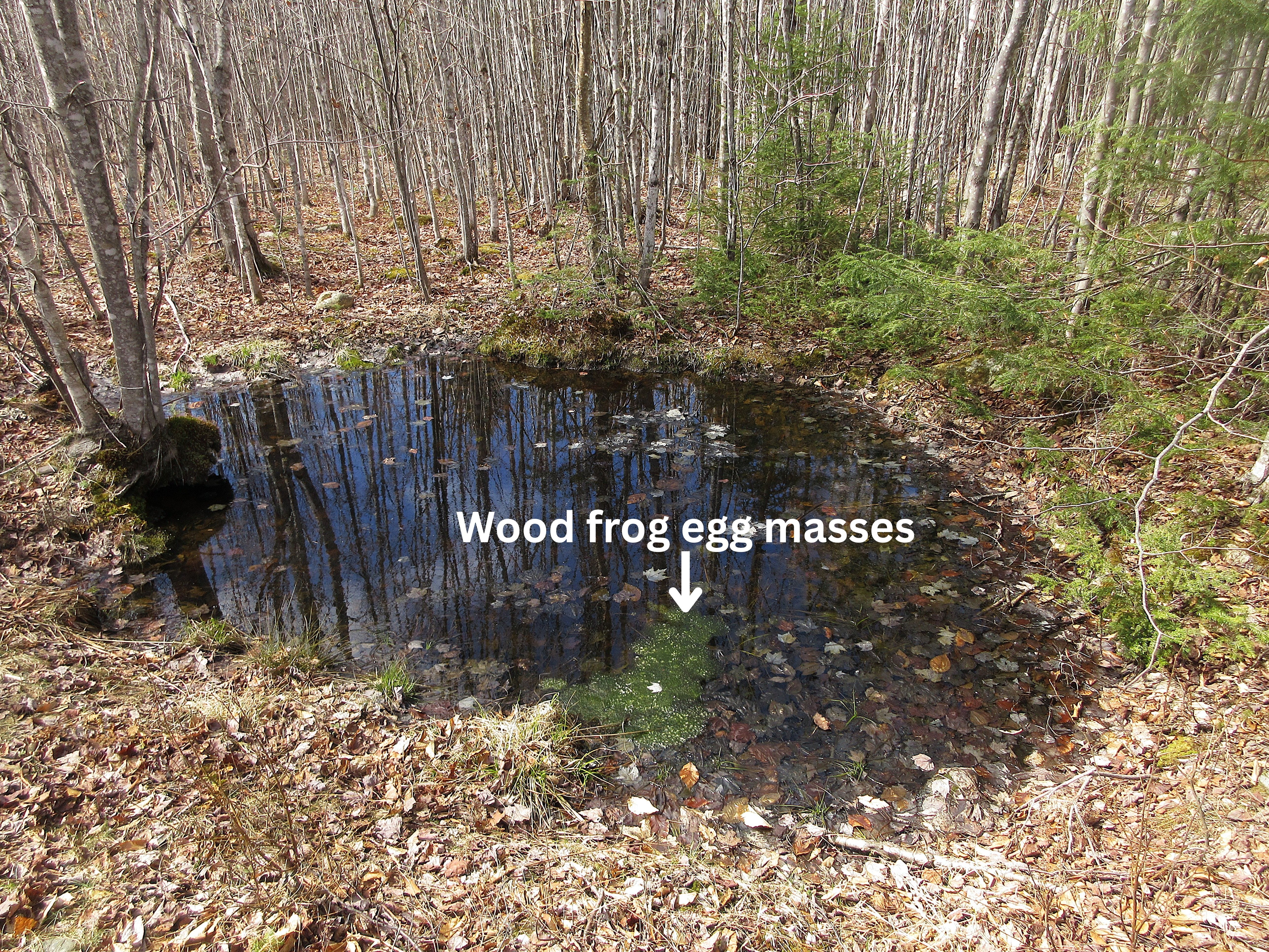
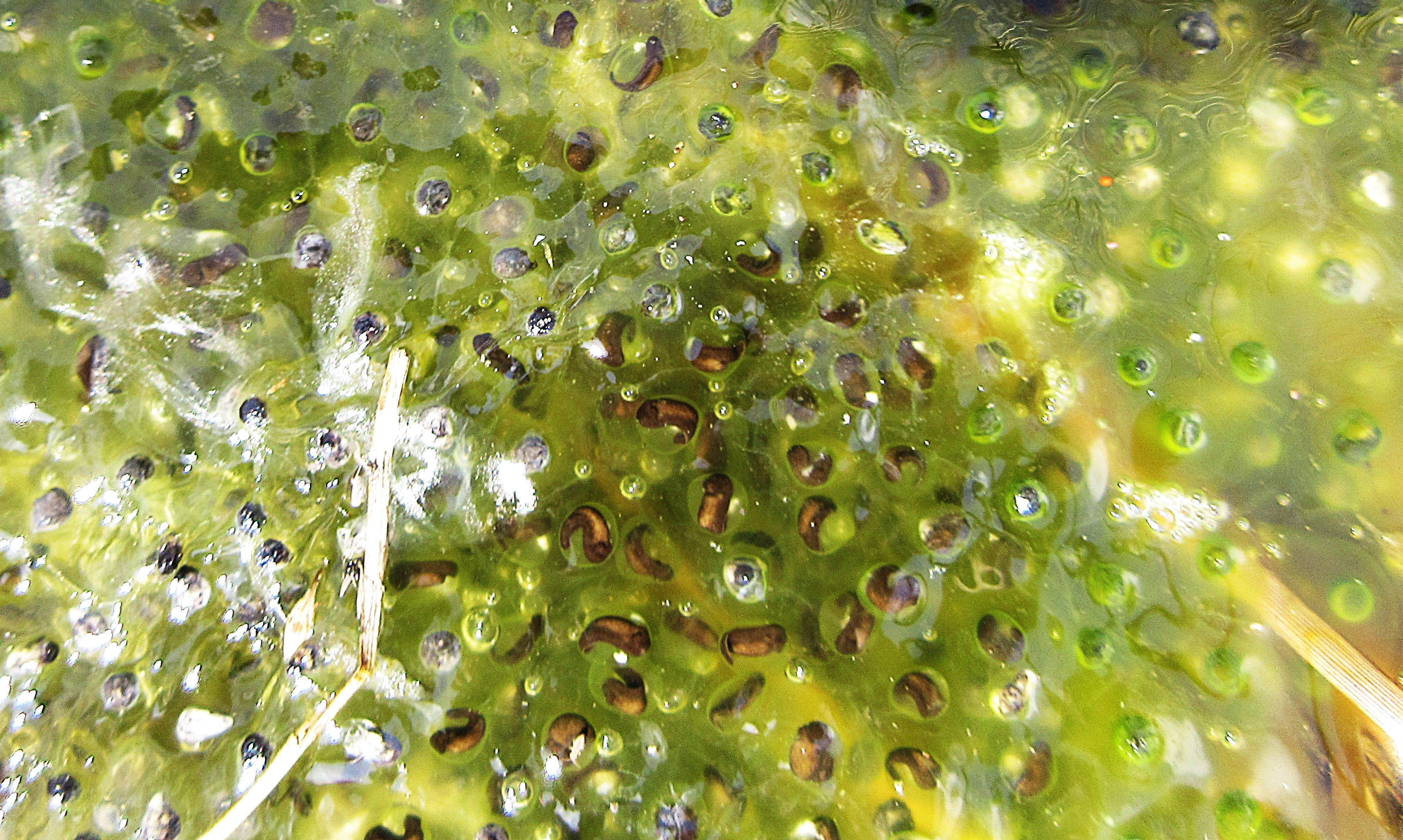
Nearby, attached to underwater vegetation, I spotted smaller egg masses, with each mass encased in thick gelatin. An online search revealed that these were salamander eggs.
What joy this small discovery brought me! I could easily have walked by without noticing. I try to be mindful, but I confess to spells of straying thoughts. How many small miracles have I missed?
Any day now, I will be hearing from another species that breeds along my shore: spring peepers. These tiny tree frogs with mighty voices emit a nightly chorus of wild, high-pitched whooping. Spring nights here are always peaceful, but they are not necessarily quiet.
Is there a single point at which we can say winter is definitely over? I’m guessing many people who live near a Maine lake or pond would choose ice-out as that point. (That being said, I recall a rogue snowstorm a few days after ice-out in 2020, during the pandemic lockdown.) As each winter draws to a close, the probable ice-out date becomes a subject of much discussion and speculation.
Each body of water has its own ice-out criteria, set by locals “back in the day.” For my home lake, this is the definition: you must be able to navigate a boat without hindrance from the dam at the west end of the lake to the public boat launch at the east end. Some ice may still remain in random spots outside the navigable channel.
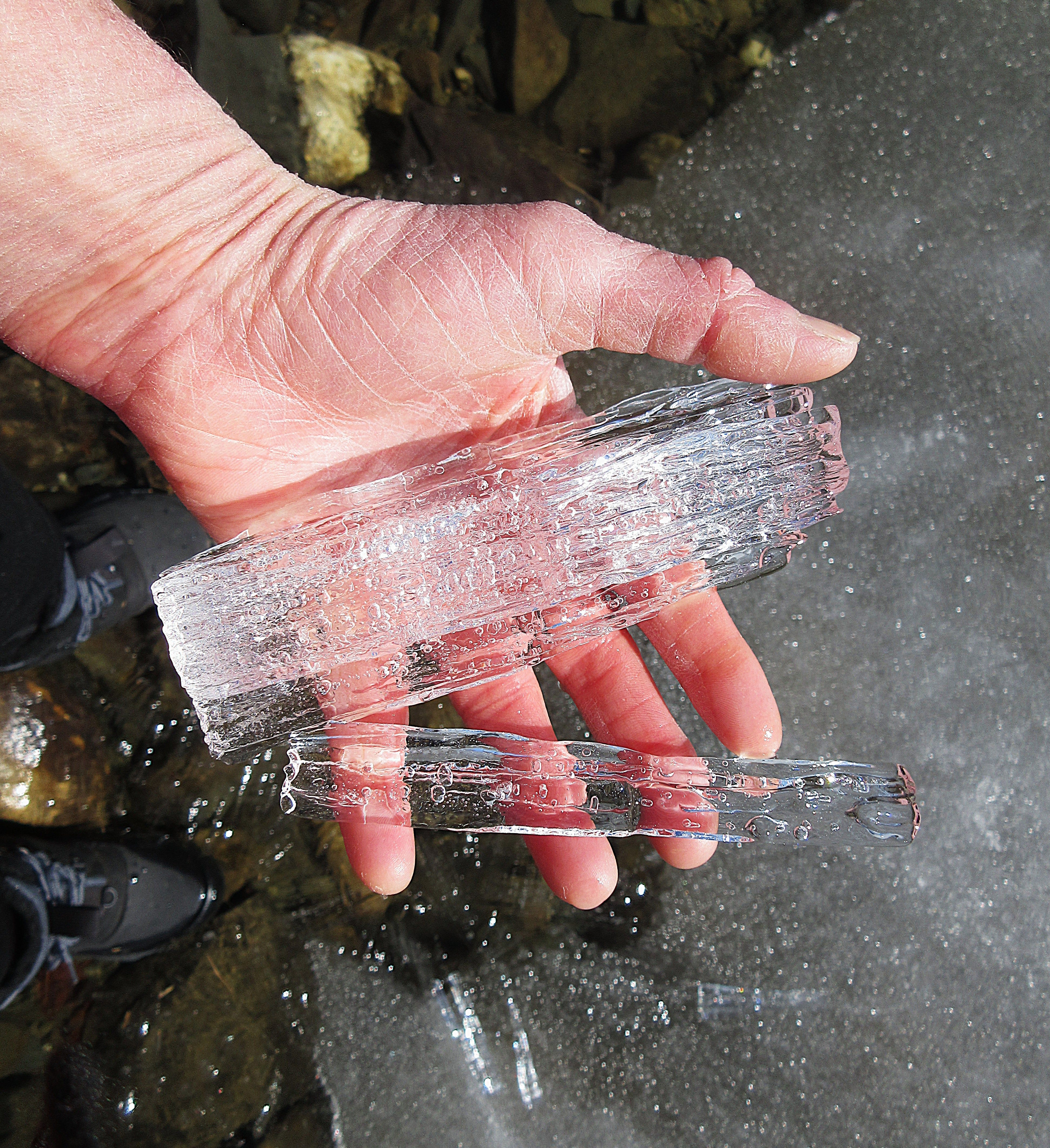
As the month of April progressed, the ice on the surface of the lake grew grayer and more sodden. Stretches of open, ice-free water emerged and expanded. On April 26, I examined a patch of ice floating along my shore, and found that it had “candled.” Though it was still several inches thick, it had separated into a honeycomb-like structure of slender, vertical columns: a clear sign of decay.
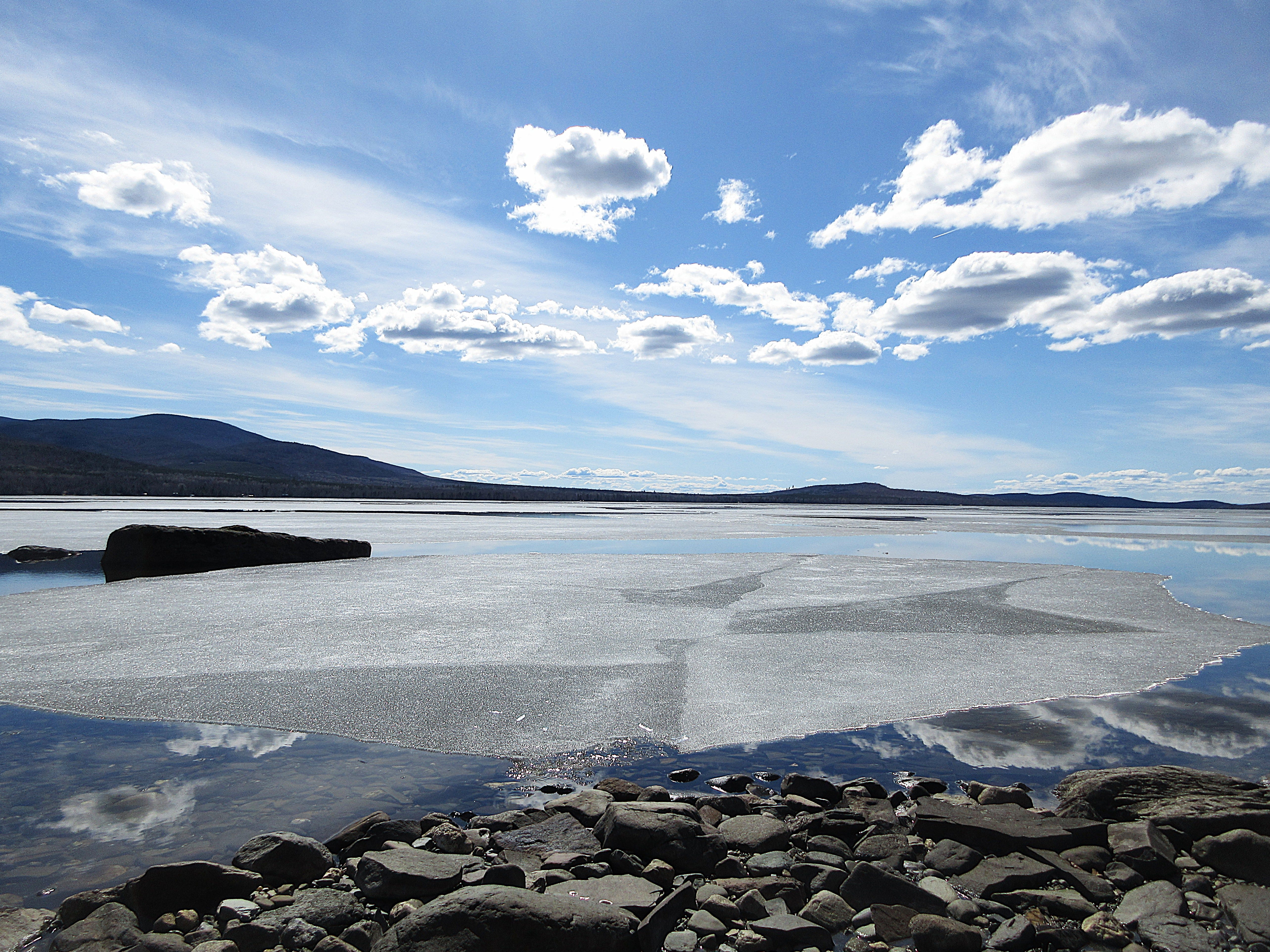
On the morning of April 28, my binoculars revealed a persistent icy band extending across the lake west of my cabin. By afternoon, it appeared the central part of the band was gone, suggesting that a boat could safely pass. I thought the ice might be out, but I knew I couldn’t see all the way to the western end of the lake from my shore. A Facebook friend has since told me that her husband reported lingering ice at the western tip that day.
Rain fell on April 30, and I’m almost certain it dissolved any significant remaining ice. The rain evidently made the difference for Moosehead Lake – Maine’s largest lake, a few miles west – where ice-out was officially declared on May 1.
But even now, most of the trees and spring wildflowers seem to be holding back, apparently waiting for more consistent warmth to blossom. So far, I’ve found just four plant species that have flowered.
About a week ago, I noticed that shrubby speckled alders had bloomed along my shore.
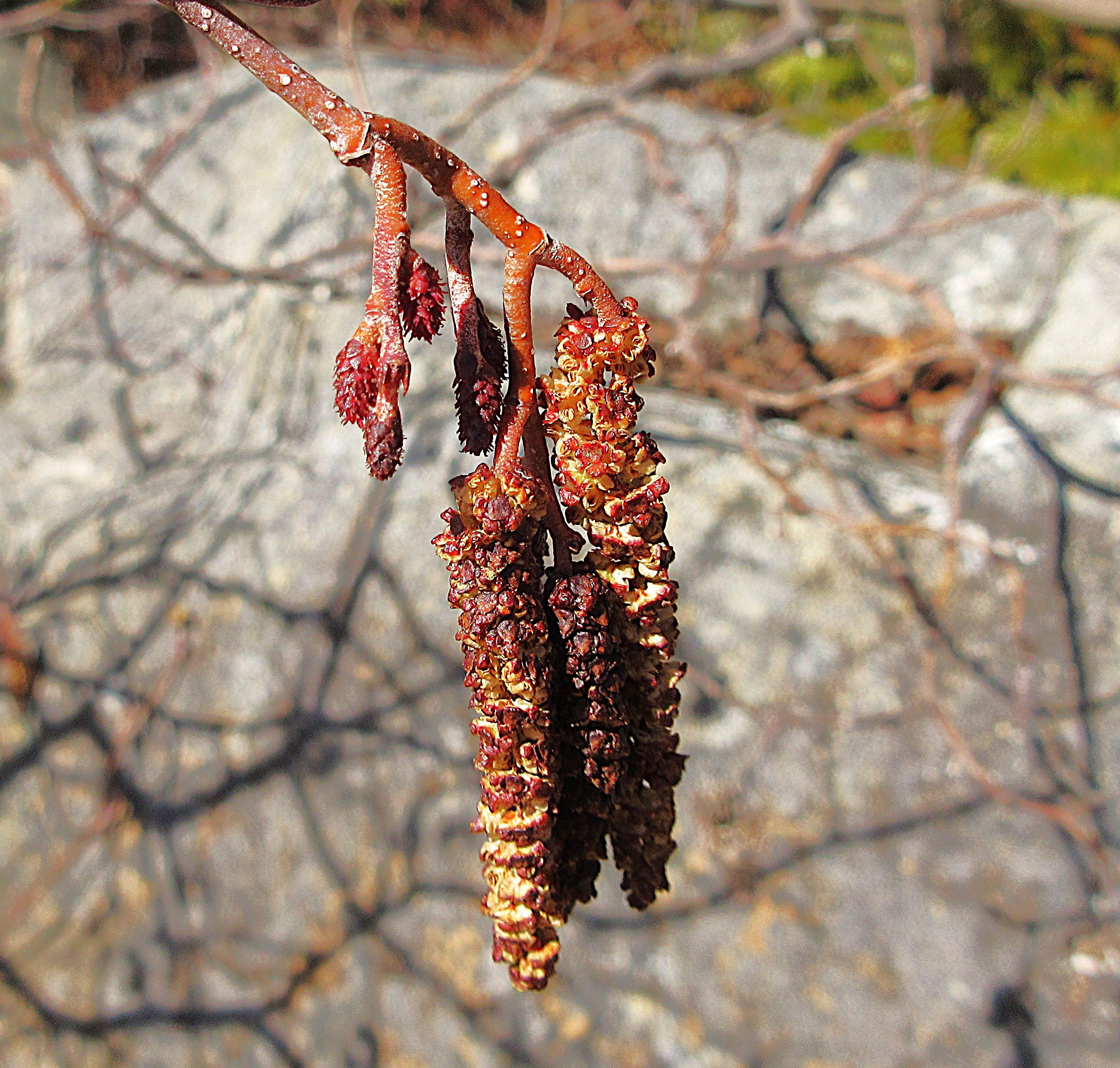
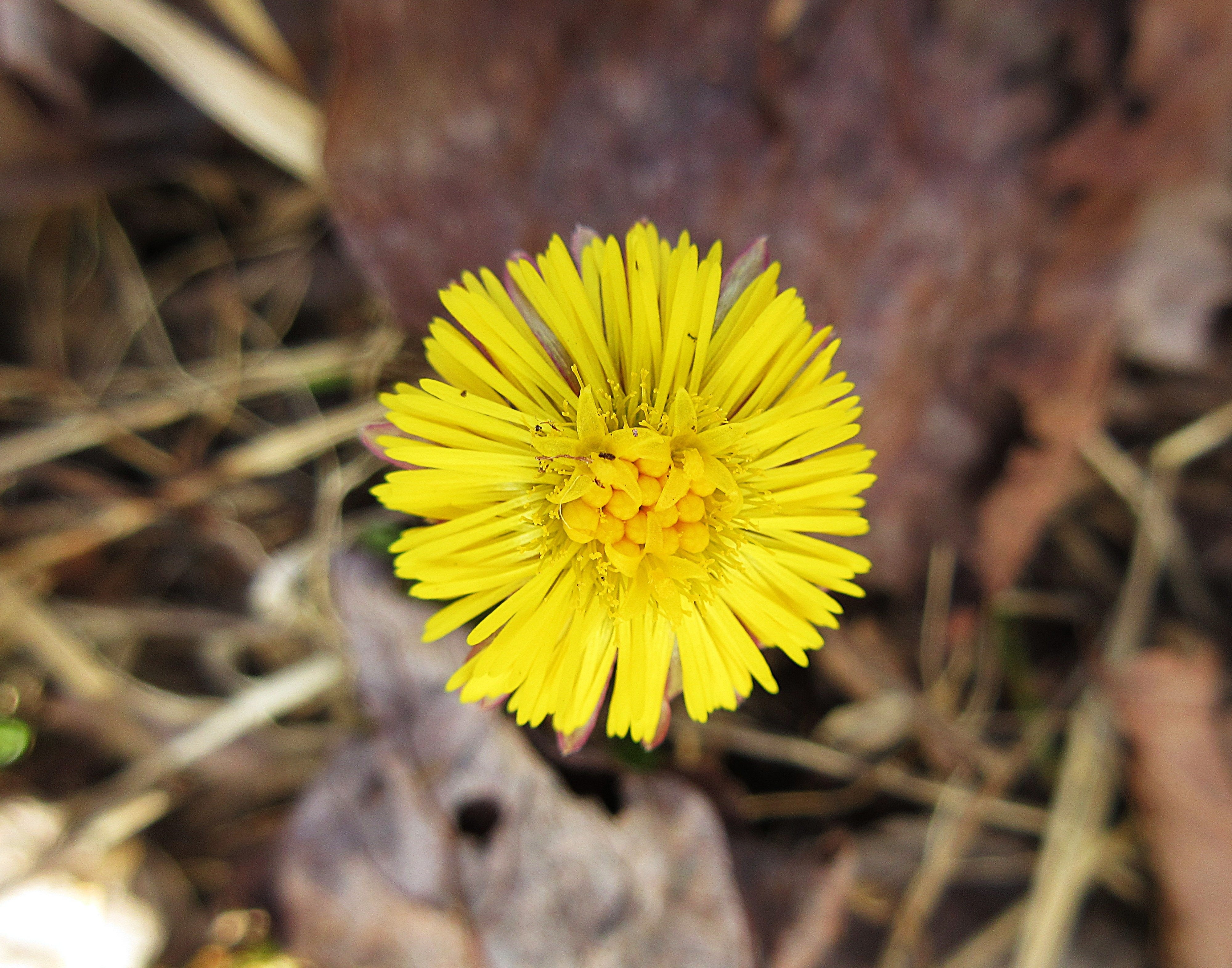
In the woods, the popples (quaking aspens) are adorned with fuzzy, silvery catkins. And on my gravel driveway, a few coltsfoot plants have emerged from the central stripe of leaf litter and opened their sunny yellow blossoms.
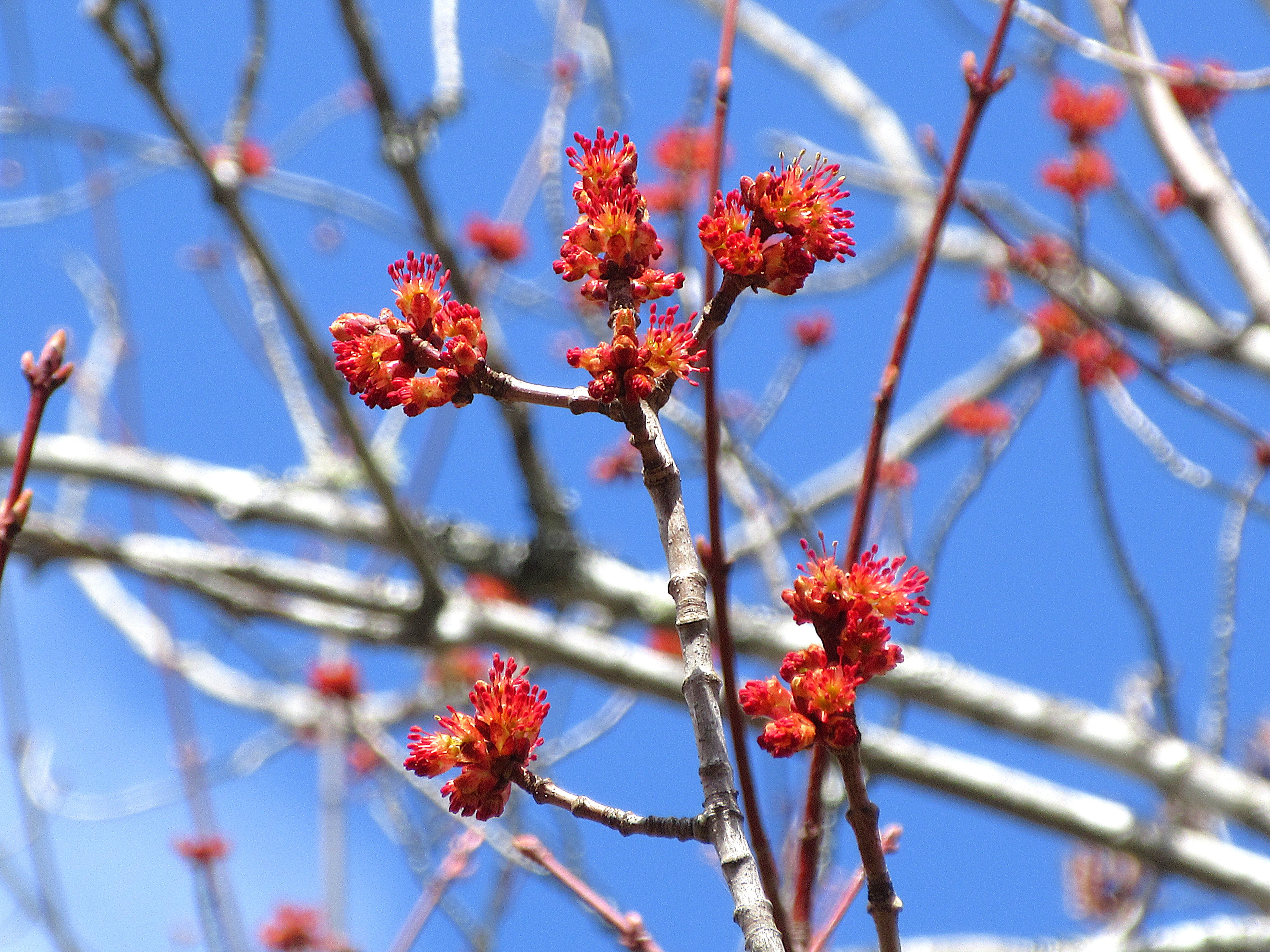
Over the past few days, red maple flowers have begun to bloom. So far, it seems that only trees with greater sun exposure have been so daring.
To date, nary a leaf has appeared on my trees. With warmer weather predicted over the next few days, I expect the popples – the first trees to leaf out – will unfurl their tender, vibrantly green foliage.
Because my spring is unfolding so slowly, I’ve remained on the alert, watching and listening closely for signs of progress. I rejoice in each new manifestation. Each bird, each frog, each flower is a reason for gratitude. I take nothing for granted.
The woods and waters are full of wonders that multiply the more deeply we look. And at this time of year, they’re burgeoning with new life. People sometimes ask me if I ever get bored, staying by myself at my cabin for weeks on end. How can I, when the world around me offers new gifts each day?
My advice to someone who finds the woods boring would simply be this: Open your eyes. Open your ears. Open your heart. Joy will flow through your senses and into your spirit. Joy is the antidote to boredom.
No posts
Comments
Nothing yet. Say the first thing.
Sign in to join the conversation.