
Part of embracing my inner child has been learning how to play again. She has told me that I have a “serious problem,” meaning that I take life too seriously and don’t spend enough time playing. She’s right.
Has it been too long since your last playdate? If so, I hope this post inspires you to schedule one soon. Here are a few ideas you may want to consider:
Longer vacations are great ways to play, but aren’t possible often enough (if at all) for many of us. But you can probably devote a single day to play, and chances are good that you live within a couple of hours’ drive of someplace you’d like to go.
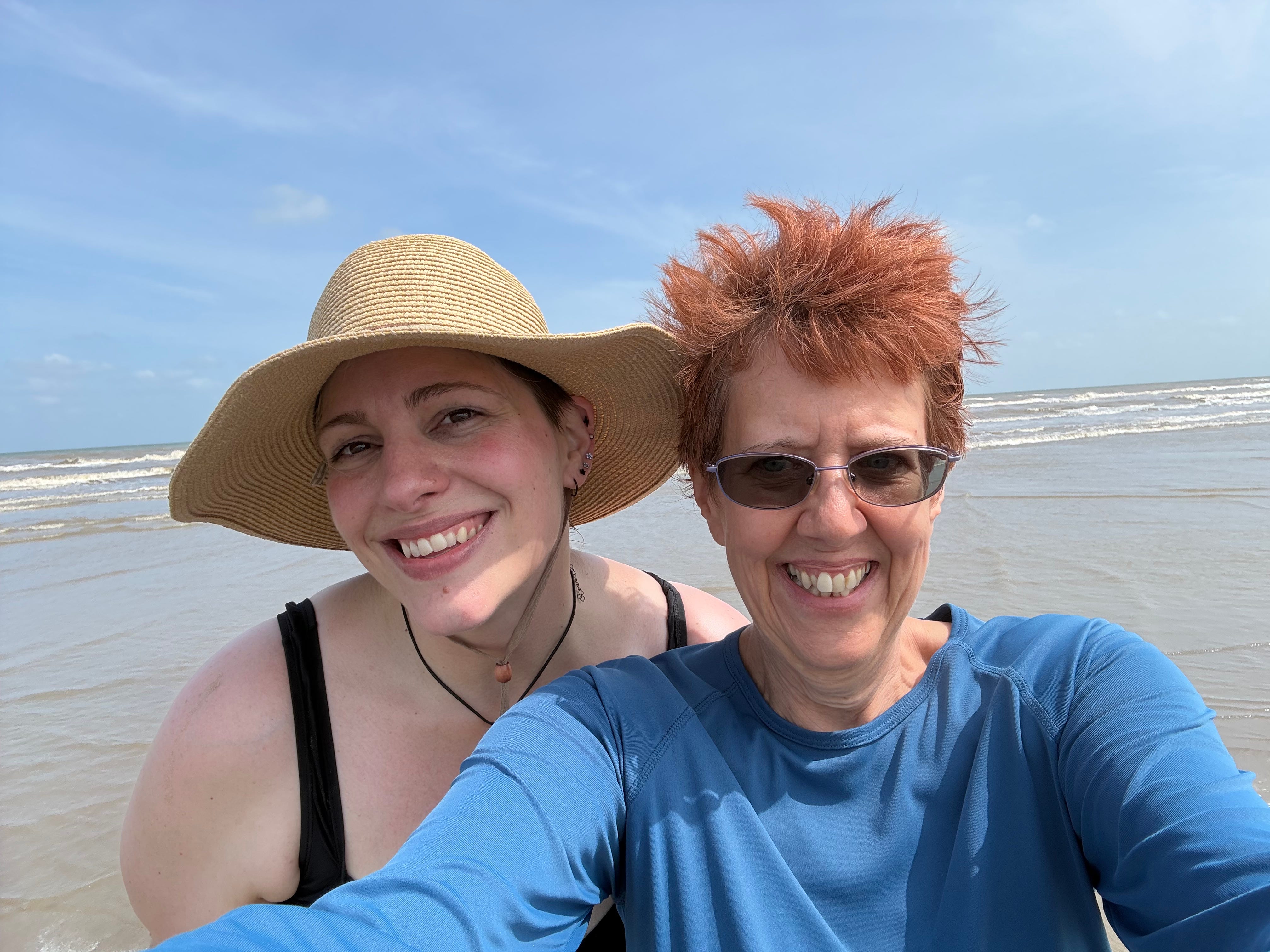
I live less than two hours away from Galveston Island, which has an oceanfront state park. So on Wednesday, my friend Katie Bryan, my husband Steve, and I (along with another friend who met us there) had a beach day. We set up our canopy, chairs, and cooler full of water and snacks on the sand and then played in the waves for several hours.
Our day also included brunch and dinner out. Brunch was at Gypsy Joynt, a restaurant with a unique vibe and decor:
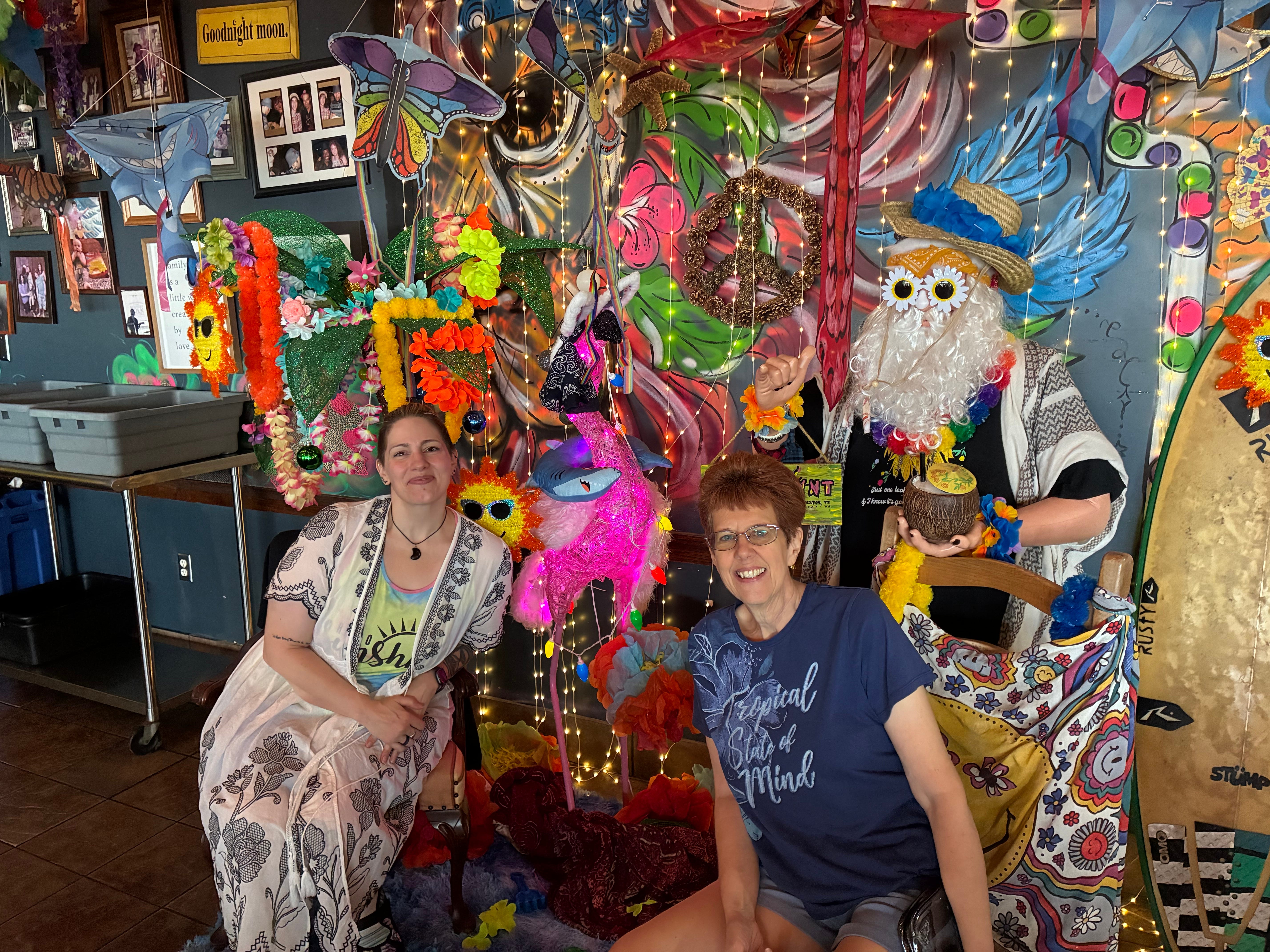
We got home at 10:30 PM, exhausted but happy.
Remember when you were a child and had conversations with dolls or stuffed animals, built “forts” out of bed sheets, or went on adventures with your imaginary friend? As a kid, my stuffed animal collection included a mouse, a raccoon, and a dolphin.
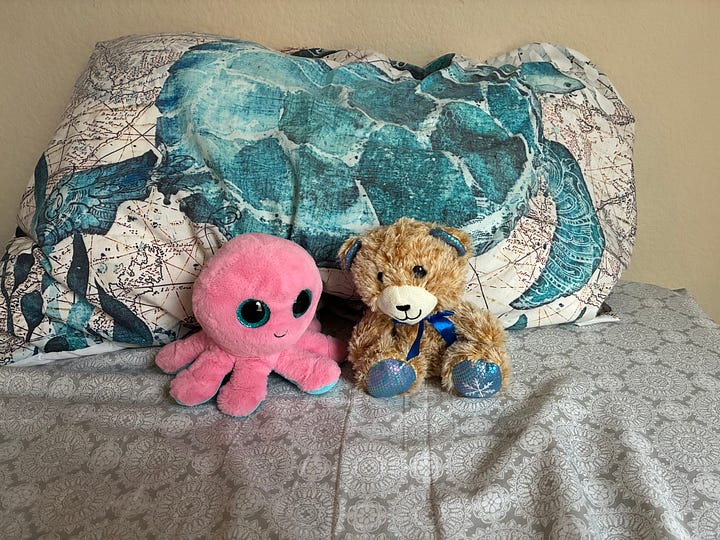
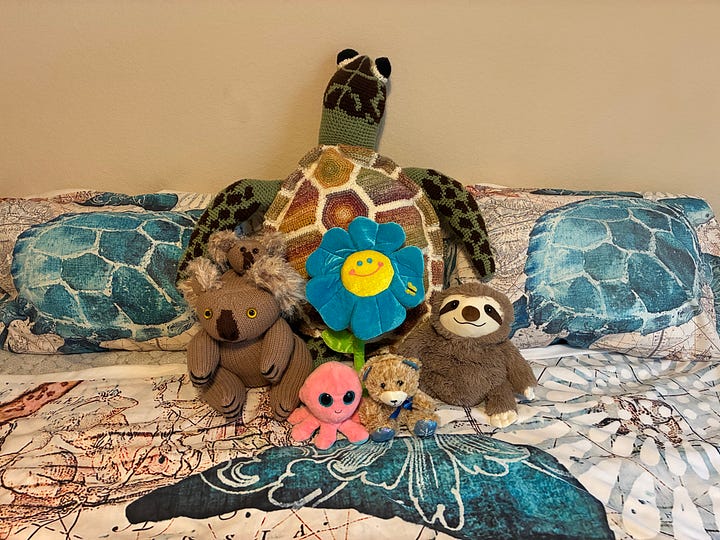
As an adult, my collection includes a turtle, a sloth, a koala, and an octopus.
I’ve written before about Octavia, the smiling pink octopus that is my inner child’s representative. My husband Steve has a bear. Every night, Octavia and Bear get together. They fly (with help from our hands) along to flute music and ask each other how their day was, then ask us how ours was.
My husband and I used to play cribbage often. Lately, we’ve been playing a card game my mom taught me (Shanghai) when I visited her last month.
When I lived alone, I enjoyed playing solitaire. Other at-home game options one person can enjoy include crossword or jigsaw puzzles, video games, and/or Wordle.
Sports are also games that many people (not I) enjoy. My husband’s sister and brother-in-law love to play pickleball. They even flew from Oregon to Dallas to watch a pickleball tournament!
Some cultures encourage play. Mine (the United States) idolized productivity at all costs. Overworking (especially if one gets overtime pay) is considered admirable; in some cases it’s a requirement of employment.
That means some of us feel guilty if we take time to play, especially if we haven’t finished our work. And there’s almost always more work that we could be doing.
If you have a hard time giving yourself permission to play, this may help. Cas Holman, author of Playful: How Play Shifts Our Thinking, Inspires Connection, and Sparks Creativity, notes that adopting a playful mindset and engaging in activities with no obvious goal or purpose helps us do things like:
Overcome fear of failure and embrace new ways of thinking
Destress, reset, and connect with each other
Grow our creativity at every stage of our lives
Find joy in bleak times
Dr. Sue Varma’s praise for the book includes these words:
Play is a powerful tool (and prescription) for emotional resilience and brain health. It boosts dopamine, lowers stress, and builds social connection. Far from frivolous, play enhances creativity and cognitive strength. It’s not a pause from life—but rather its very essence.
So if you have a “serious problem,” tell yourself that you need to play because it helps you to be healthier, more creative, and less anxious.
Ideally, though, you won’t need an excuse to play; the fact that play is fun is reason enough to make time for it!
P.S. If you find it hard to play because you don’t think you deserve to feel joy, check out my self-love workbook. It has journal prompts and other simple practices to help you overcome that limiting belief.
Comments
Nothing yet. Say the first thing.
Sign in to join the conversation.