
By Steve Gabriel, Wellspring Forest Farm - visit our farm store to pre-order willow cuttings for the coming season with selected varieties for agroforestry projects.
It began innocently enough; we were focused on water management in the early years of Wellspring Forest Farm, having inhabited a mess of water flowing over a degraded forest landscape. Much of the paths it had chosen to weave through were covered in thick, scrubby vegetation, and large rain events would overwhelm these areas, causing flooding elsewhere. As we looked at our sloped field, gully erosion from years of compacting soil was obvious.
So we set to work, mapping contour lines, digging swales, and learning to work with our slope instead of against it. After the initial dig, what we needed were plants; a quick cover for hundreds of feet of bare soil, and cheap (or free) material that could take a beating and still hold a hillside together.
Someone pointed us toward our neighbor, who worked at the USDA Plant Materials Center in Big Flats, not too far down the road. These institutional phenomena have been under decline for decades, but were originally intended to develop plants suitable for conservation and agriculture uses within different ecoregions in the US. According to the website, there are still 25 sites in operation today. It seemed that part of the ethos, at least at this local center, was to offer plant material to projects on farms, and we were pleased to find synergy with them to harvest a trailer full of willow shoots, long past the time they could have been coppiced and regenerated. This is where Willow first entered our story.
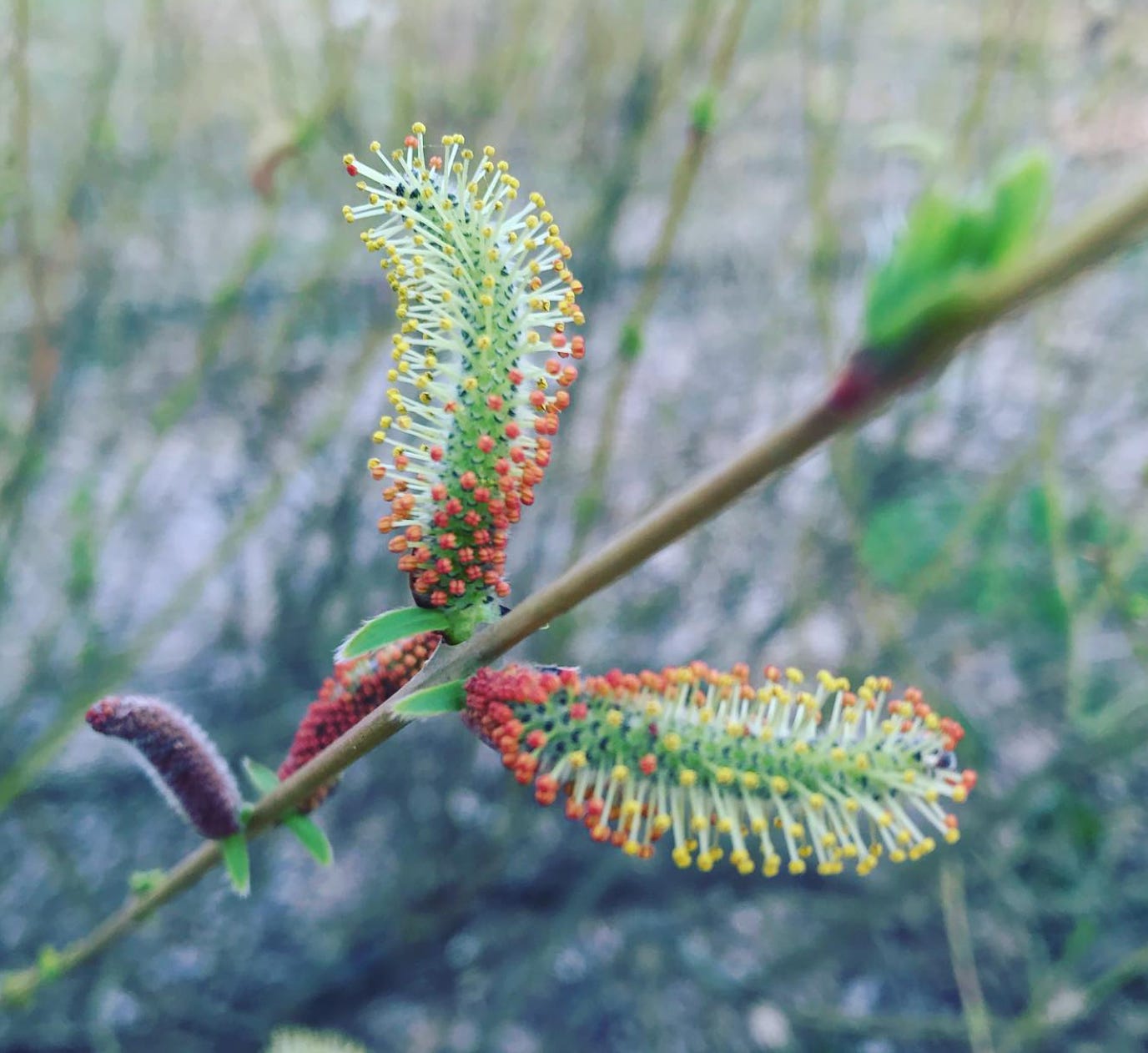
At the time I didn’t know much—only that what we brought home was a basket style variety called Streamco (Salix purpurea), a long-established conservation cultivar selected for its vigor and ability to stabilize banks. As we’ve learned more, it was an introduced cultivar from Europe, brought to the US in the mid 70s, and developed from a naturalized stand found in the SAME county we live in, Schuyler County NY. The selection from this original stand was preferred as it has excellent resprout vigor and being well suited for streambank stabilization. It is also exclusively a male clone, which means it doesn’t spread by suckering.
I had had one previous and profound experience with willow; during an apprenticeship at an intentional community in Oregon, I’d one morning been directed to “prune the shower,” which was a surprising request. I found a beautiful structure that effectively offered privacy and was periodically woven together. I loved the simplicity of the form, the synergy of the wash water feeding the roots of the willow, which helped the shower grow and thrive.
Back at the farm, after digging and shaping our swales, we cut each willow whip down into 18–24” stakes, and set to work, pounding the stakes into the freshly dug berm for our water holding swales. We didn’t know the power of what was to come next. Perhaps my favorite aspect of farming are these types of actions; the innocent discovery of something that is such a perfect fit, set into motion long before realizing the gold within. It is tempting with our excessively rational minds to become obsessed with researching, planning, forethought before action - which certainly has its place - yet there is a profound beauty in the happy accidents that humble and teach us, that reveal how little we actually know. Twelve years ago I never imagined this willow would become a keystone of our agroforestry system, and it took this time for its power to unfold across the land.
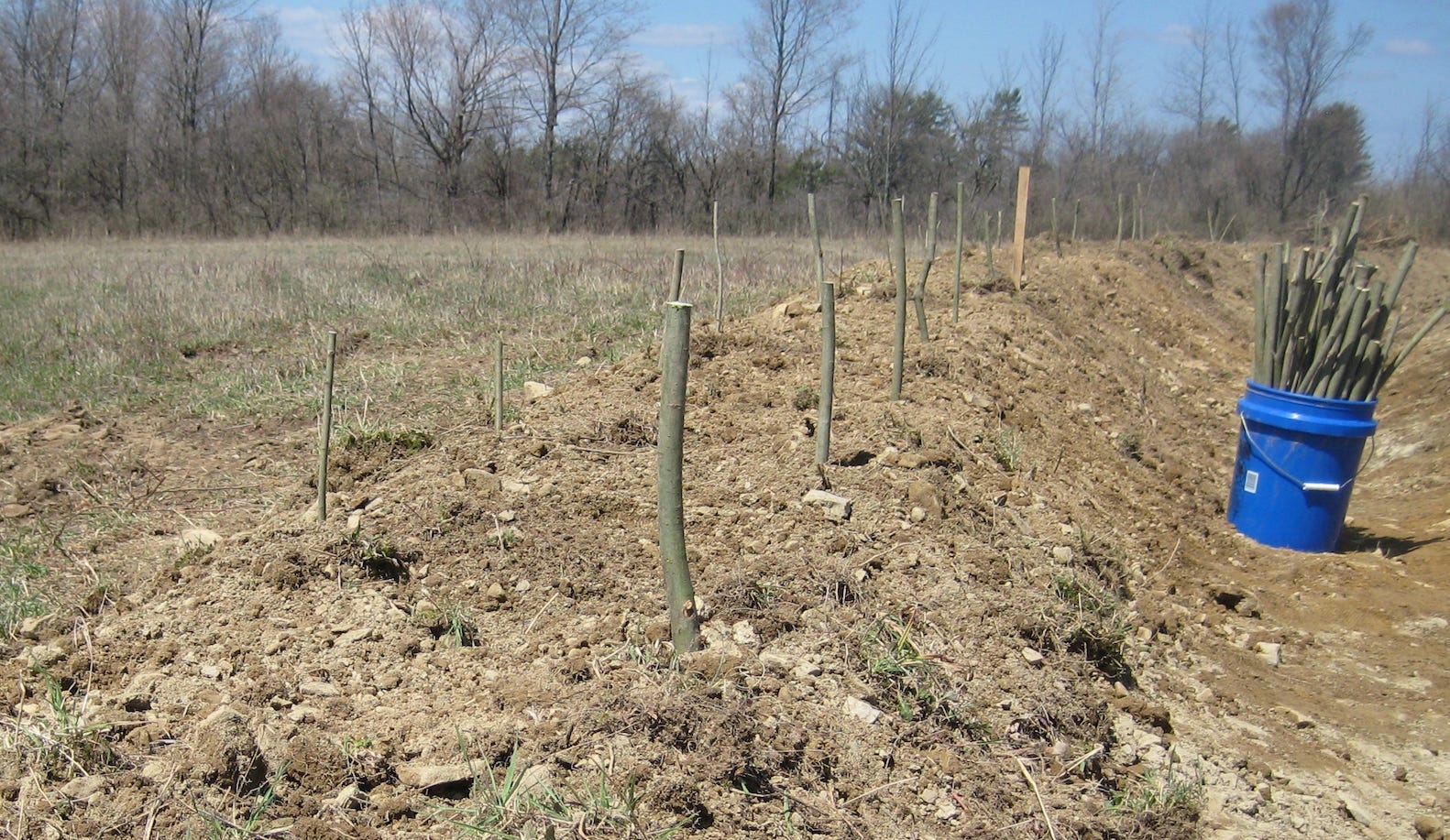
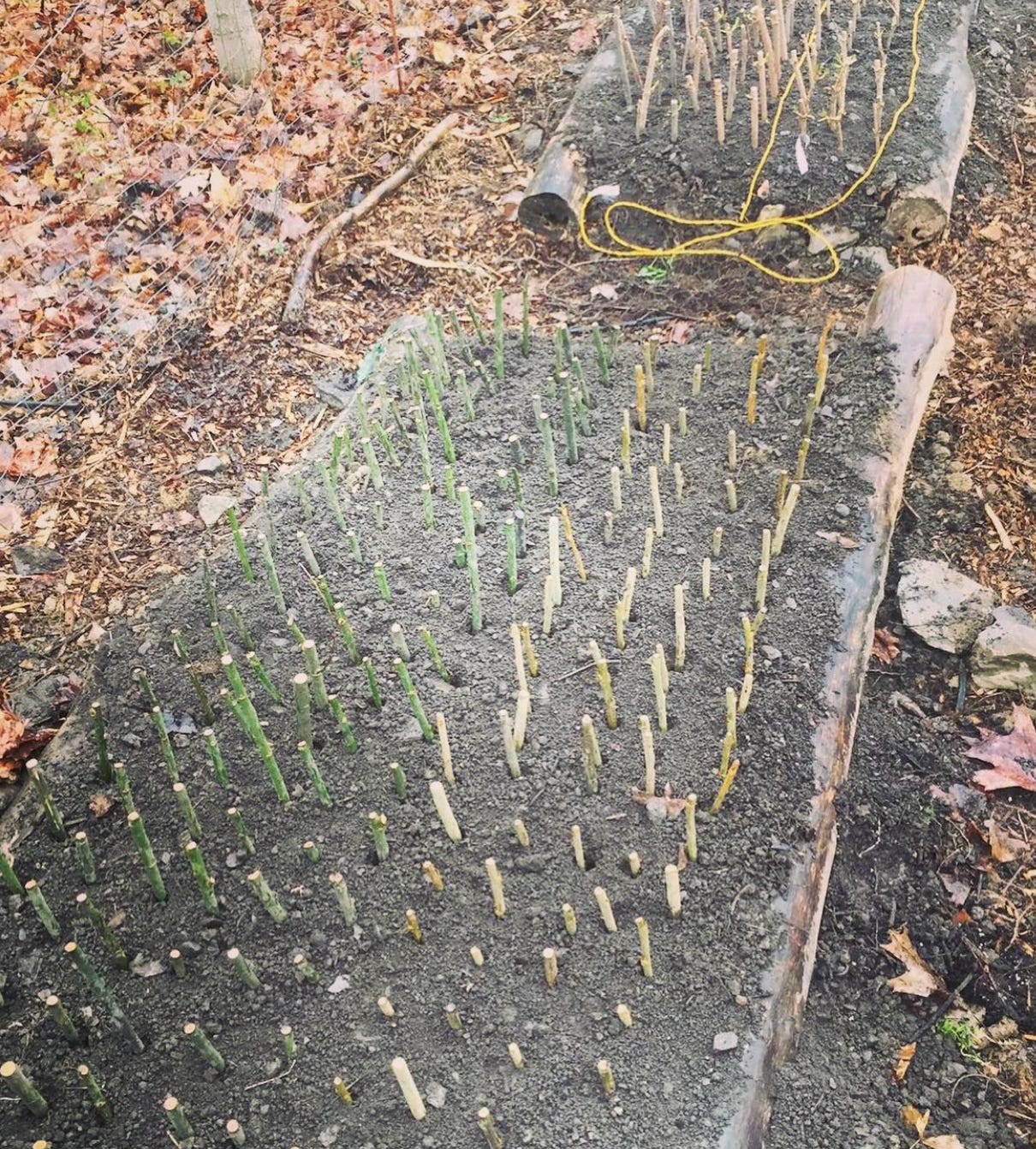
We planted that first planting in 2014; rows of skinny green sticks with not much to look at. We laid out an offset pattern of two rows, each stake being three feet apart. This turned out to be a perfect arrangement, giving the upright growth character of this type ample space to grow, while creating a dense thicket of vegetation.
Even though we planted over 500 feet of swale, there were leftovers, and with those we did what farmers do: we played. We pounded some to encourage a little living arch over a path in the garden. We tucked random plantings tucked into wet corners. Liza pounded a few along our “food forest” garden along the edge of the driveway (and some were even mistakenly pounds upside down). And the rest we dumped at the edge of the large pond we shared with the neighbors, in theory to use later. They never moved, but instead growed into a remarkable visual screen that also anchored the pond bank.
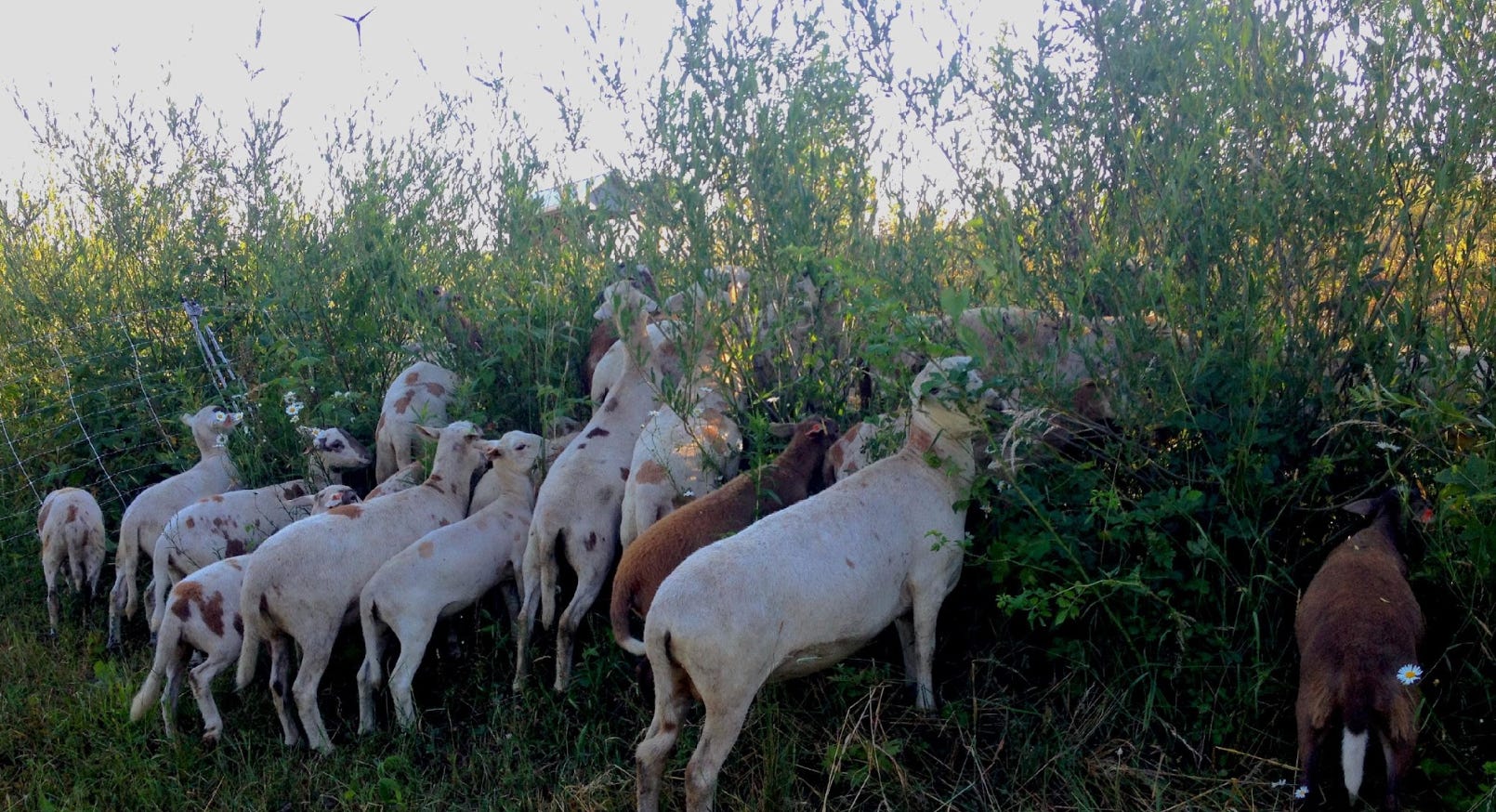
Then came 2016—the drought that turned pastures crisp and pushed all of us to rethink forage. The willows, though? Still green. So we gave sheep access to them, and they devoured them. Until they didn’t. After a bit of time of enthusiastic browsing, the flock slowed their intake, then stopped—completely self-regulating. That’s when tannins entered our vocabulary. Willow is rich in condensed tannins and salicin compounds that not only add minerals (zinc, copper, magnesium) but offer medicinal benefits… in moderation. Our sheep seemed to know instinctively how much was enough. This observation led to a whole world of discovery, deepening our understanding of animal nutrition and the natural wisdom of grazing animals to balance their diet in diverse landscapes. (I highly recommend the work of Fred Provenza in unpacking the science around this).
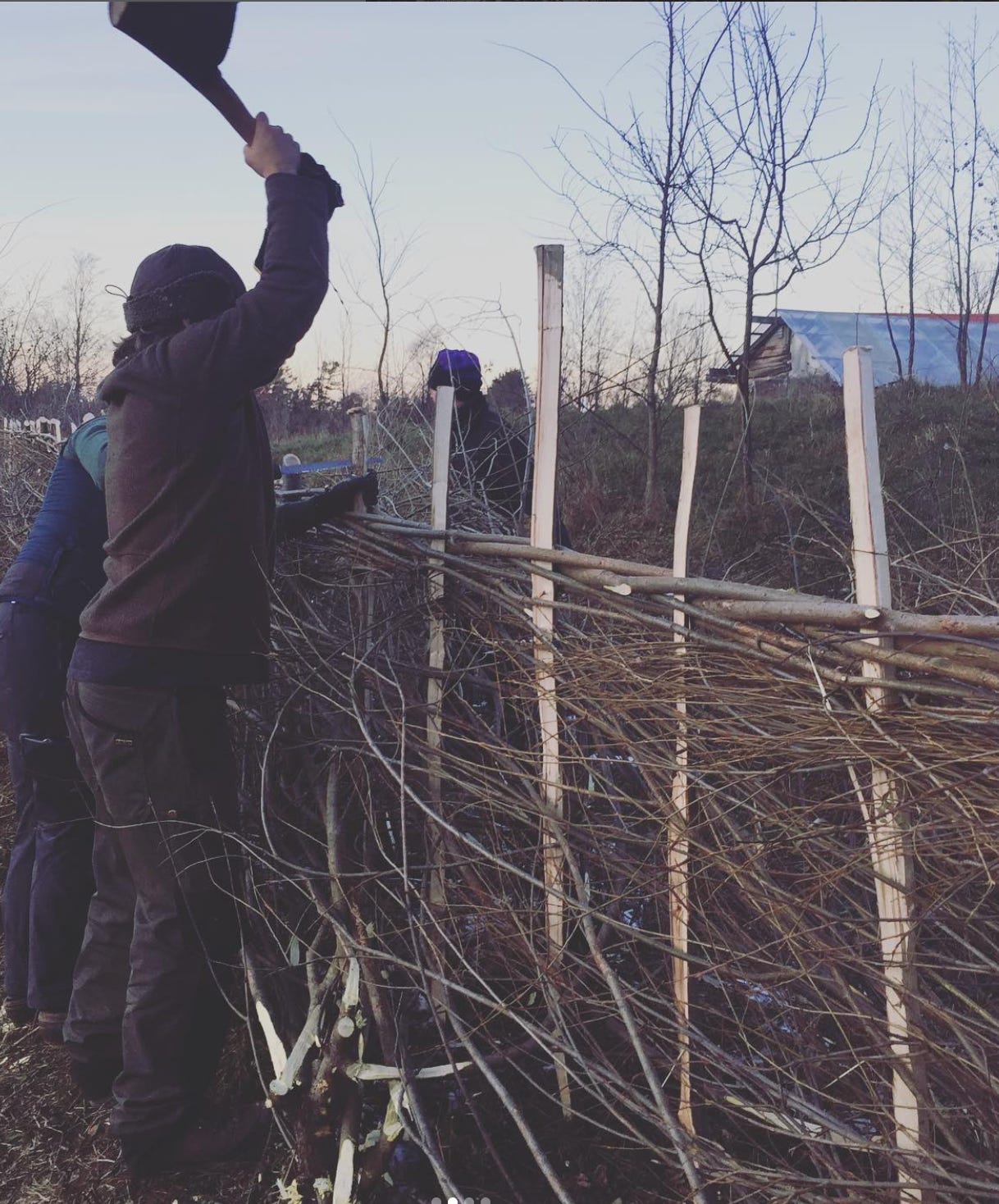
By 2019 we were deep into hedgelaying, restoring an old craft and testing whether willow could be woven into a living, functional fence. During a class at the farm, we laid our Streamco stands into dense, woven walls—alive, resprouting, and ready to feed sheep in every season. Suddenly that cheap windbreak had become a living sheep fence, a fodder reserve, and a medicine bank all at once. And that’s the thing: with willow, every door you open seems to lead to three more.
Willow isn’t just a tree, it’s a system builder, a bridge species, and a deep companion to a range of agroforestry settings—silvopasture, riparian buffers, windbreaks, and hedgerows. Sometimes called a “gateway” tree, it offers a comfortable starting point for folks new to tree planting. If only all species could be started by pushing or pounding a stick into the soil!
While generally willow offers amazing options, it’s the wide array of cultivars, wild hybrids, and adaptability that makes the possibilities exciting. Our experience working with a range of Salix species over the past decade plus suggests that a combination of sourcing from “known” selections, coupled with observation of wild species and their propagation creates a robust, resilient presence of willow in the farm landscape. Let’s get a little more nuanced into some of the most valuable ways we see willow playing a part in a biodiverse system:
The use of willow as a fodder appears to be long-standing and wide reaching, with instances of use wherever it is found growing. In NE-SARE grant FNE 19-930, we quantified the general forage value of the Purple Osier mentioned at the top of the article, alongside five other common tree species. We found it to be rich in trace minerals, offering solid scores for Magnesium, Zine, and Manganese, and overall scoring well in feed values, with a protein content of 15 - 17%, and ADF (Acid Detergent Fiber) and NDF (Neutral Detergent Fiber) values which translate to being highly digestible and palatable, likely to be enthusiastically browse by grazing livestock.
Additionally, the real magic of willow comes not from the primary compounds that form the above characteristics, but the secondary compounds; specifically condensed tannins and salicylates, which all Willows possess at varying levels. Research offers a range of benefits, with tannins helping reduce parasite loads and improving nitrogen use efficiency (especially in ruminants like Sheep and Goats), while the salicylates act as anti-inflammatory compounds. Of course, it’s all about balance and moderation, which animals used to foraging in a diverse landscape seem to mostly handle just fine.
And, as discussed above, we found a lovely synergy in the weave-ability of the osier willow, coupled with these values, resulting in a multi-functional structure that keeps our sheep where we want them, and offers beneficial food and medicine at once.
The fast growth and movement of willow across landscapes has caught the attention of many other sectors interested in its value as biomass, or the total amount of living or recently living biological material, usually expressed as dry weight. Folks in the energy sector have explored how this aids in generating lots of material that could be converted to electricity or heat at scale, with varying successes bringing it to fruition.
On a smaller farm scale, the rapid accumulation of wood fiber lends itself to a wide range of benefits. On the most basic level, willow’s growth and regeneration supports an impressively dense, fibrous root system, composed of both fine and coarse roots. The repeated root turnover that comes from frequent cutting stimulates root exudates and deposits carbon into the soil. That belowground investment is a big part of why willow is often discussed not just as “biomass aboveground,” but as a soil-building plant.
Further, Willow is often cited as a “Bridge tree,” defined as a woody plant that rapidly establishes and hosts robust fungal communities (especially mycorrhizal fungi), helping “carry” fungal inoculum and functional soil biology into spaces that can support other tree species that are slowing growing. Willows are especially interesting because many species are strong hosts for ectomycorrhizal (ECM) fungi and, in some contexts, can also host arbuscular mycorrhizal (AM) fungi. In early succession research, established Salix shrubs hosting ECM fungi have been shown to facilitate subsequent seedling establishment of later successional woody species—i.e., a “nurse/bridge” role mediated by fungi. (Nara, 2004). Willow root and rhizosphere studies also document ECM dominance and diversity associated with Salix, reinforcing that willow can be a serious fungal host rather than just a fast-growing shrub/tree. (Faubert, 2022)
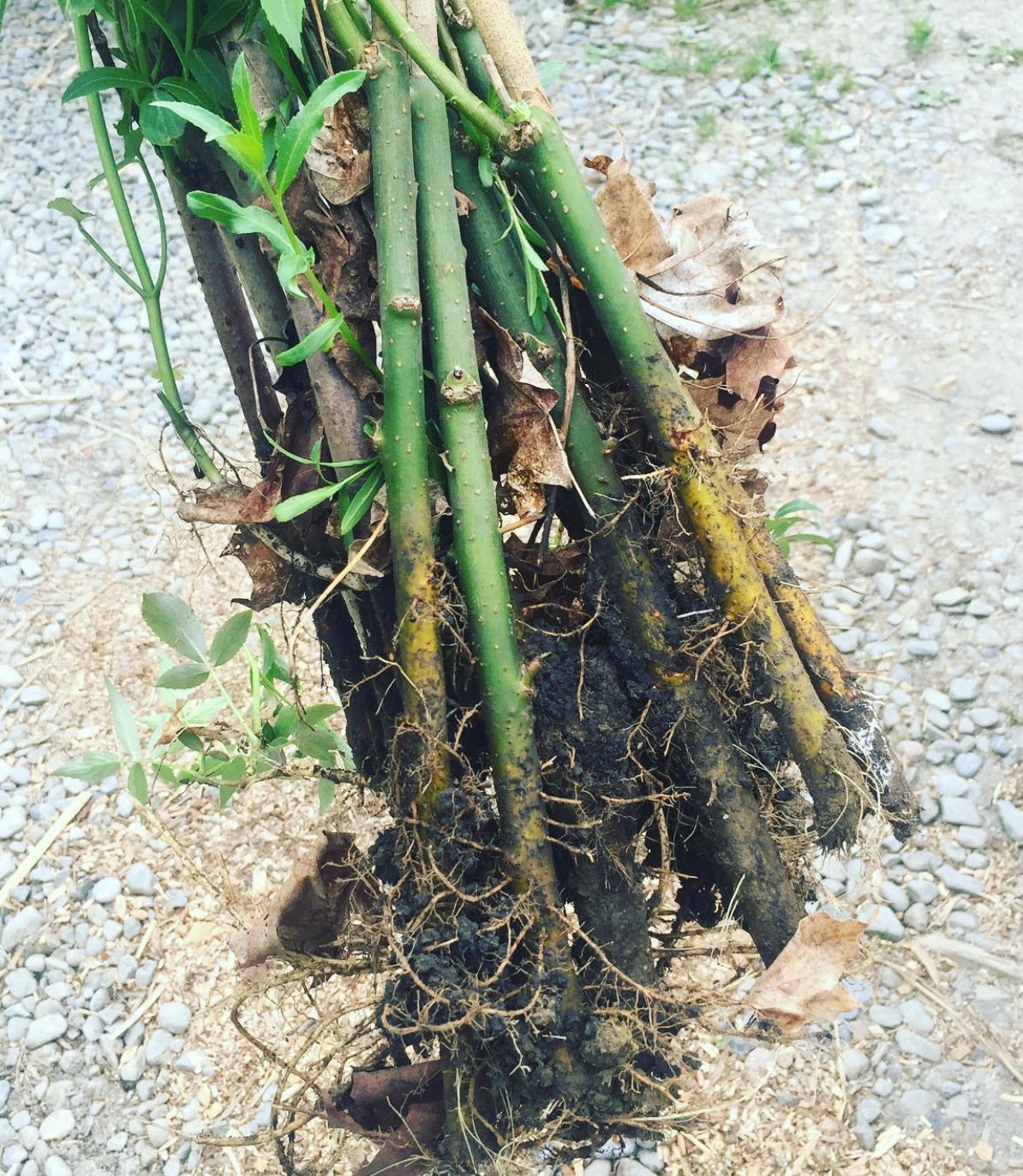
A final view on these amazing soil benefits brings us back to the above-ground material, specifically known as Ramial chipped wood (RCW) and referring to chips made primarily from young branches and twigs versus older not trunk wood. The small-diameter branch material carries relatively high amounts of nutrients and biologically active compounds compared to older wood, and that when applied as mulch or lightly incorporated, it can stimulate soil food webs and support longer-term humus formation. A classic RCW work associated with Gilles Lemieux (Université Laval) describes RCW as a pathway to transfer some “forest soil functions” into agricultural soils through woody ramial inputs. (Lemieux, 2000)
At Wellspring, the above knowledge has translated into our general haphazardness and willingness to encourage willow everywhere! We see willow plantings as islands of fertility and soil biology, and value this presence amongst all the other farm elements. Recently we’ve been playing with an aspect of this, harvesting and amplifying what are known as Indigenous Microorganisms or IMOs, through old techniques that mirror much of the ways we cultivate edible fungi on the farm. Boxes of cooked rice are buried into established willow patches and left to draw in diverse communities of the living biota; fungi, bacteria, and others, and then grown through a series of steps to feed this community and expand it before bringing the finished product into our nursery production system.
Willows are unmatched among woody plants for their ability to stabilize streambanks, dry wet ground, and slow runoff while increasing infiltration. Their unique qualities lend them to even being recognized by US agencies, who use the over-technical term “soil bioengineering” to describe a suite of techniques using willow (and other species) to reduce erosion and improve slope stability in riparian areas. Unfortunately the norm for roadsides, ditches, and streambanks is still more about rock and metal than willow, a nod to the understanding, values, and capacity of the current system. Imagine a world where we grew willow to fix our roads and streams!
Willow’s utility extends beyond structural stabilization, playing an important role in buffering agricultural runoff by intercepting and processing nutrients such as nitrates and phosphates before they reach waterways. Research from Prince Edward Island (PEI), Canada demonstrates that shrub willow (Salix viminalis) planted downslope of intensively fertilized potato fields can effectively intercept agricultural runoff and absorb excess nutrients, particularly nitrogen and phosphorus, into root and shoot biomass. (ScienceDirect, 2024). Related PEI research also shows that willow buffers influence nitrogen cycling and greenhouse gas dynamics at the field–riparian interface, reinforcing their role as functional nutrient sinks and soil-water protection systems in leachable, sandy agricultural landscapes (ResearchGate – N₂O mitigation study).
It’s also important to note that liking water does not mean willows require inundation. Many willow clones, such as the previously mentioned Streamco, exhibit broad ecological amplitude and thrive along a continuum of soil moisture conditions, from seasonally wet riparian margins to mesic uplands. Other willows, like sandbar willow (Salix exigua), are often more tolerant of well-drained soils, while species such as weeping willow (Salix babylonica and hybrids) appear to flourish with abundant water. This adaptability is part of why willows are versatile in both landscape restoration and agricultural buffer applications.
Part of the appeal of willow is this propensity to work well in places where other things won’t. In scanning our landscape, we find plenty of areas that act as seasonal drainages, which were overgrown and causing flooding. Over time, we’ve shifted the composition of plants towards a variety of wetland and riparian species, with a focus on testing willow varieties and establishing strategies as a “fodder block system” that we could cut material from for our sheep. This provides a mutual benefit as the drainage is adjacent to much of our silvopasture areas, but not itself grazable because of its sensitivity. The results of our establishment trials were studied through project FNE 22-010, Establishing Willow Tree Fodder Blocks for Resilient Livestock Feed and Flood Mitigation in a Silvopasture Riparian Buffer.
Willows are among the earliest flowering woody plants in temperate regions, producing abundant pollen and nectar at a time when few other floral resources are available. Their early catkins are especially important for native bees, bumblebee queens emerging from overwintering, flies, and early-season pollinators, helping bridge the nutritional gap between winter dormancy and spring bloom. Because pollen is a critical protein source, willow catkins play an outsized role in supporting pollinator population health early in the season.
The dense, flexible branching structure of willows provides excellent nesting and cover habitat for birds, particularly in riparian and edge environments. Many songbirds use willow thickets for nesting, protection from predators, and shelter from wind, while the high insect abundance associated with willow foliage supports insectivorous birds during breeding season. Willows also contribute to browse, cover, and thermal refuge for a wide range of wildlife.
Beyond its ecological functions, willow has a long and living relationship with humans as a vital craft tradition, one of the oldest woody-plant crafts in temperate regions. Its flexibility and ease of cutting make it well suited for simple items like wreaths and decorations, many of which can be made with fresh, green material and minimal tools. These low-barrier projects are accessible to children and beginners, offering an entry point into plant-based craft, seasonal awareness, and land connection. Willow basketry is a whole step further, where willow is typically harvested, dried for storage, and rehydrated for weaving that holds its shape and has more longevity over time. Basketry traditions emphasize renewable harvest cycles and long-term stewardship of willow stands, making it a natural companion activity for agroforestry systems.
In some cultures, willow has even been used for woven coffins and burial structures, valued for its strength, lightness, and biodegradability. The process of building these can be a powerful way for family and friends to gather and share in their joy, grief, and sadness around the loss of a loved one. While we are not intimately engaged with these ways of the willow, we see them as important elements to weave into our future. During our kids camps and programs on the farm, we’ve accessed rods as a fun way to get kids to connect to the land and its gifts.
Friends have hosted workshops that taught us and others how to weave with willow, and in doing so shifted how we think about managing our rotations. These experiences highlighted the reciprocity between human needs and land stewardship, encouraging more frequent cutting and renewal—an approach that aligns well with the growth habits and regenerative needs of many willow varieties.
Finally, our most recent discovery and curiosity in this journey has been around the potential medicinal benefits of willow for humans. Our farm already has an established line of medicinal tinctures including lion’s mane, immunity mushrooms (shiitake, oyster, turkey tail), and elderberry. Each of these offers a baseline element to support health and well-being, offering the best benefits with a low dose on the daily. Willow bark fits well into this equation, as it contains the compound salicin, a salicylate precursor that the body metabolizes into salicylic acid, a compound with analgesic and anti-inflammatory activity, with a complex link as the the original inspiration for aspirin.
The amount of salicin in raw willow bark varies widely by species, age, season, and plant part, with one review noting reported concentrations from as low as ~0.04 % up to ~12 %, meaning actual medicinal dose from simple bark is inconsistent. Standardized willow bark extracts used in clinical studies are typically formulated to deliver about 120–240 mg of salicin per day. This compares to an equivalent of approximately 80–90 mg of aspirin, while a typical over-the-counter aspirin dose for pain is 325–650 mg.
This means that willow extracts are not a direct replacement for aspirin, but instead offer potential benefits at a lower intensity, delivered alongside a more complex suite of companion compounds that may provide additional, complementary support. Willow’s anti-inflammatory effects likely come from multiple compounds (salicin + flavonoids/phenolics), and its overall action is generally milder and broader, tending to have less impact on platelet aggregation (blood thinning) and gastrointestinal irritation than standard aspirin, which reflects their lower and more complex pharmacology.
All this to say, we are curious to see how the willow varieties we’ve assessed for agroforestry might also offer another yield in the form of medicine for people. Curiously, as we’ve begun to research, our original friend S. purprea seems to potentially have some of the highest concentration of this medicine, though every research paper notes the high variability that seems to be a part of the phenomenon. We are currently seeking funding to help test some of our varieties and see if there is a notable difference in spring versus fall harvested bark. We are also learning how to efficiently harvest, strip, and prepare bark for tincture extracts as well as a dried product for tea. Since inflammation is a chronic condition of our modern way of life, we see willow as offering a low, consistent support to reduce it and all its associated issues that can show up.
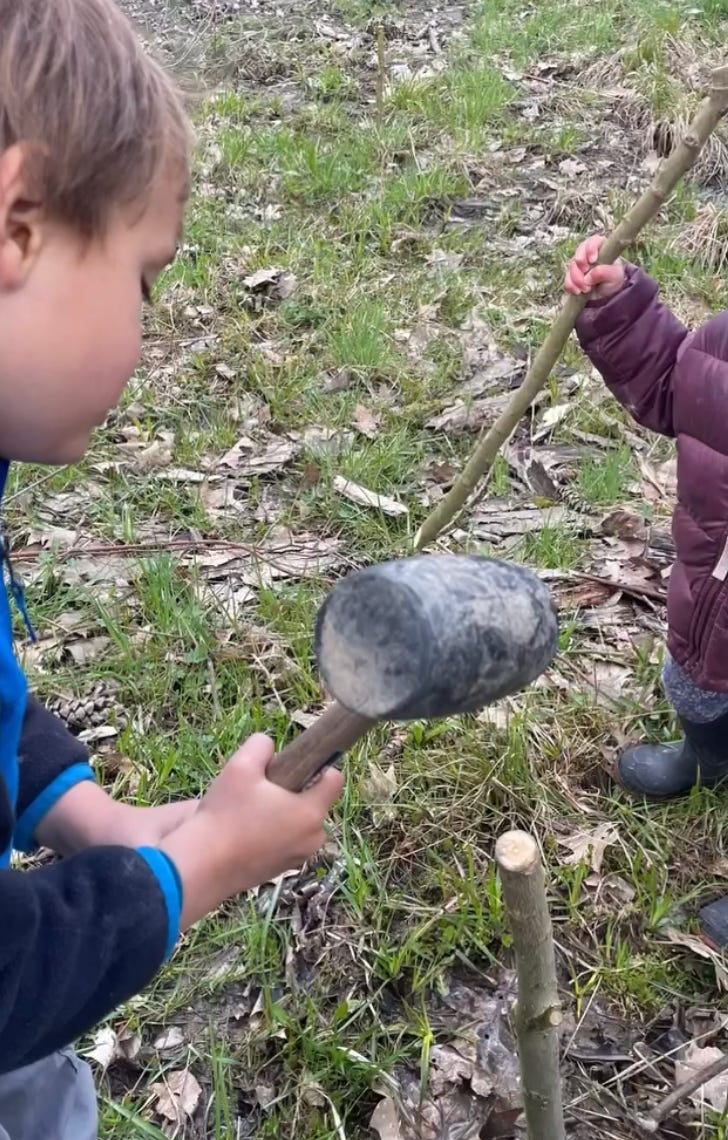
When we planted those skinny Streamco sticks a decade ago, we were just aiming to stop erosion and maybe get a windbreak out of it. We had no idea we were planting a remarkable teacher, friend, and collaborator that checked off so many of the boxes for our ecological and production goals.
Fifteen years in, we find that willow has become a staple fixture in the landscape; shaping water, feeding animals, hosting fungi, and offering more opportunities that we can keep up with. We’ve added many subspecies, with a total collection around 20 varieties and growing at the pace where we can learn the unique habits of each one for these multitude of uses.
We plan to continue to observe, evaluate, and learn more deeply all that we can with these beings. What started as a cheap fix turned into a lifelong fascination. And in future articles, we will continue to dig deep into willow, including more on how to effectively propagate, establish, and manage through cutting for resprout. (coppice).
In the end, we are both deeply humbled and grateful for this collection of woody plants and all they inspire. We don’t interact, plant, and harvest from them as a mere act of productivity, but in a deeper sense of relationship, connection, and reciprocity. This is not something our culture has taught us, but we are grateful that the willow is helping us re-learn. In the phenomenal book Braiding Sweetgrass, Robin Wall Kimmerer speaks to this; “Harvest is made honorable when it sustains the giver as well as the taker,”
This framing resonates deeply with our experience of tending and harvesting willow: regular cutting and care support the plant’s vigorous health; diverse plantings provide food for pollinators and safe nesting habitat for birds; fibrous root systems stabilize soil, foster microbial life, and absorb excess nutrients; and the rods we harvest become woven objects that carry stories—and, one day, may even hold our bodies as we return to the soil.
No posts
Comments
Nothing yet. Say the first thing.
Sign in to join the conversation.