
It was just over ten years ago that I took my wife to the hospital for emergency surgery. It turned out to be a tumor of alarming size, requiring immediate attention, followed by months of chemotherapy and many, many more months of doctor visits. Eventually, we found our way back to steadier ground, and she has now been cancer-free for many years.
By that point, mushrooms had already been part of my life for nearly a decade. I had been growing them, teaching about them, and selling them as food. I understood their role in forest ecosystems and in healthy diets. My interest was largely practical and ecological—edibility, marketability, nutrient cycling. When students asked whether mushrooms were “medicinal,” I would nod in agreement, acknowledging the idea without getting too specific.
It was only after the sudden illness of someone I loved deeply that I plunged headlong into the complicated world of medicinal mushrooms. Sure, I knew mushrooms were medicinal. But knowing that something is true and understanding how it works are very different things. I quickly learned that navigating the medicinal mushroom world is anything but straightforward.
What follows is not a set of instructions or medical advice but rather a framework, a way of thinking about medicinal mushrooms that respects both what we know and how much we still don’t. Our farm has been on a long journey of learning, testing, and refining our approach, always striving to offer the best possible conditions for mushroom medicine. We expect this journey will continue to evolve long into the future.
Before getting into the nuances of medicinal mushrooms, it helps to begin with a basic tour of their biology. A mushroom is not the organism itself. It is the fruiting body of a much larger organism known as mycelium—the true body of the fungus. Like an apple tree, there is the body (the tree) and the fruit (the apple). The fruit is produced for reproduction, not for sustaining the organism day to day.
Mushrooms reproduce through spores rather than seeds. These microscopic particles are released from gills, pores, or teeth, often with surprising force. For medicinal purposes, spores are generally not relevant. What matters far more is the distinction between the fungal body (mycelium) and the fruiting body (the mushroom), and how each expresses different compounds.
This biological distinction is foundational. Before talking about powders, tinctures, or extracts, it’s important to distinguish which part of the fungus is being used. Medicinal mushrooms are first defined by biology, not by processing.
Fresh mushrooms, the fruiting bodies we cook and eat, are the most familiar form and often the most overlooked from a medicinal standpoint. Consumed regularly, they provide a complete amino acid profile, significant minerals, fiber, enzymes, and meaningful amounts of polysaccharides and other compounds associated with immune regulation and gut health. In this form, they are not a targeted therapy, but they form a powerful foundation for health.
One point demands emphasis: mushrooms must be cooked. Their cell walls contain chitin, which our digestive systems cannot readily break down. Cooking for five to eight minutes on moderate heat dramatically improves bioavailability. This applies to all mushrooms, regardless of how often they may be served raw in salad bars across North America. Fresh mushrooms are food first; but good food is often the quietest form of medicine.
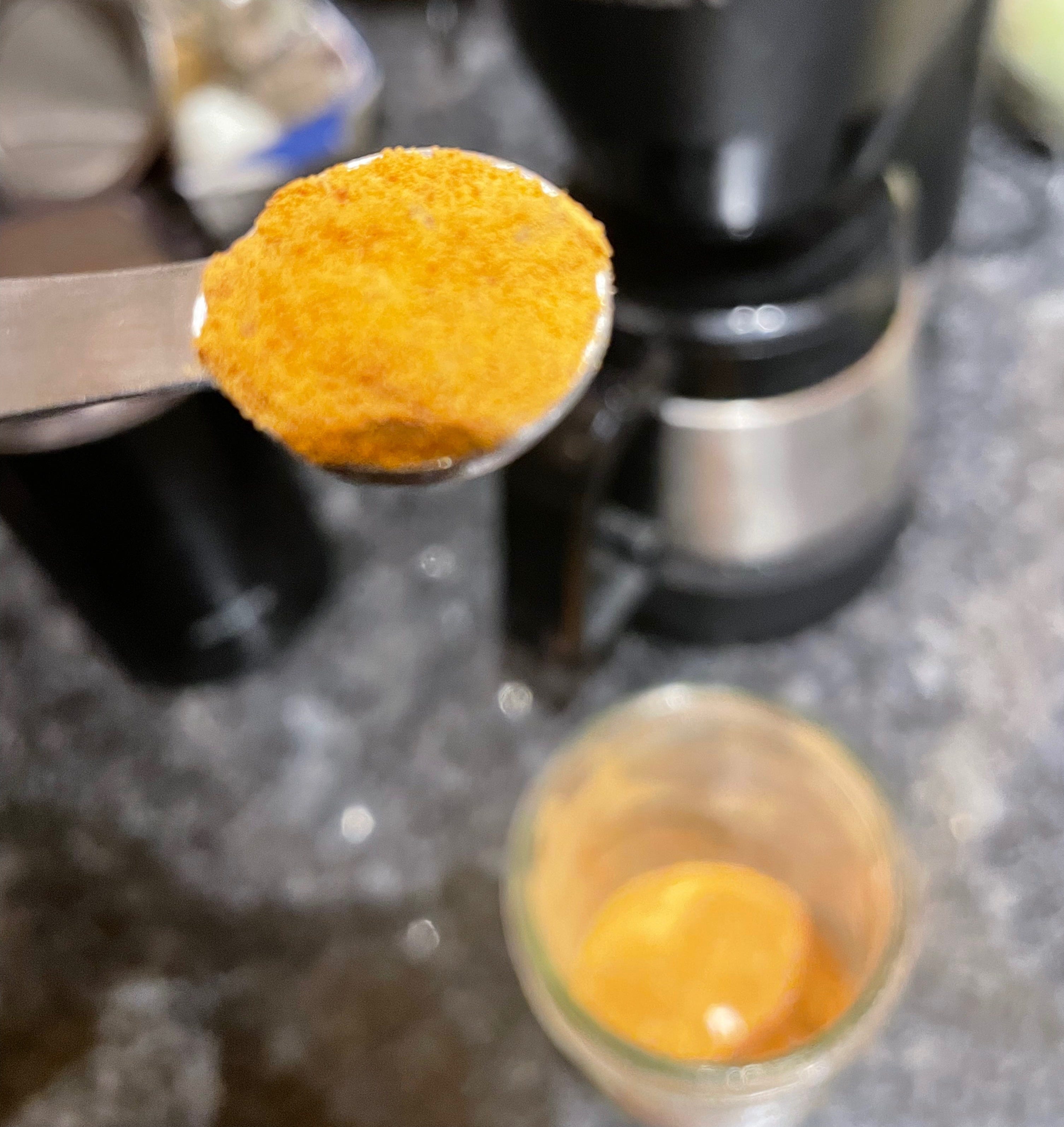
Mycelium is the living body of the fungus: a branching, responsive cellular network that grows through wood, soil, or other substrates. In medicinal products, mycelium is commonly cultivated on sterilized grain, then dried and powdered if being used for medicinal products.
Mycelium does contain biologically active compounds, and it remains an area of genuine interest. However, compared to fruiting bodies, its medicinal chemistry is far less studied, and many well-characterized compounds appear in lower concentrations.
The process matters. When mycelium is grown on grain, the final dried product contains both fungal tissue and grain starch. Consumers are often unaware that they may be purchasing a product composed largely of grain when making an expensive purchase.
Extracts from mycelium are very different from this dehydrated product. In these cases, the mycelium is used as a living biochemical factory, rather than as a dried material. Through controlled growth conditions, selective substrates, and extraction processes, specific compounds can be encouraged, concentrated, and isolated from fungal tissue itself rather than from the grain it grows on. There is real promise in some of these approaches, though they remain less standardized and less studied than fruiting body extracts.
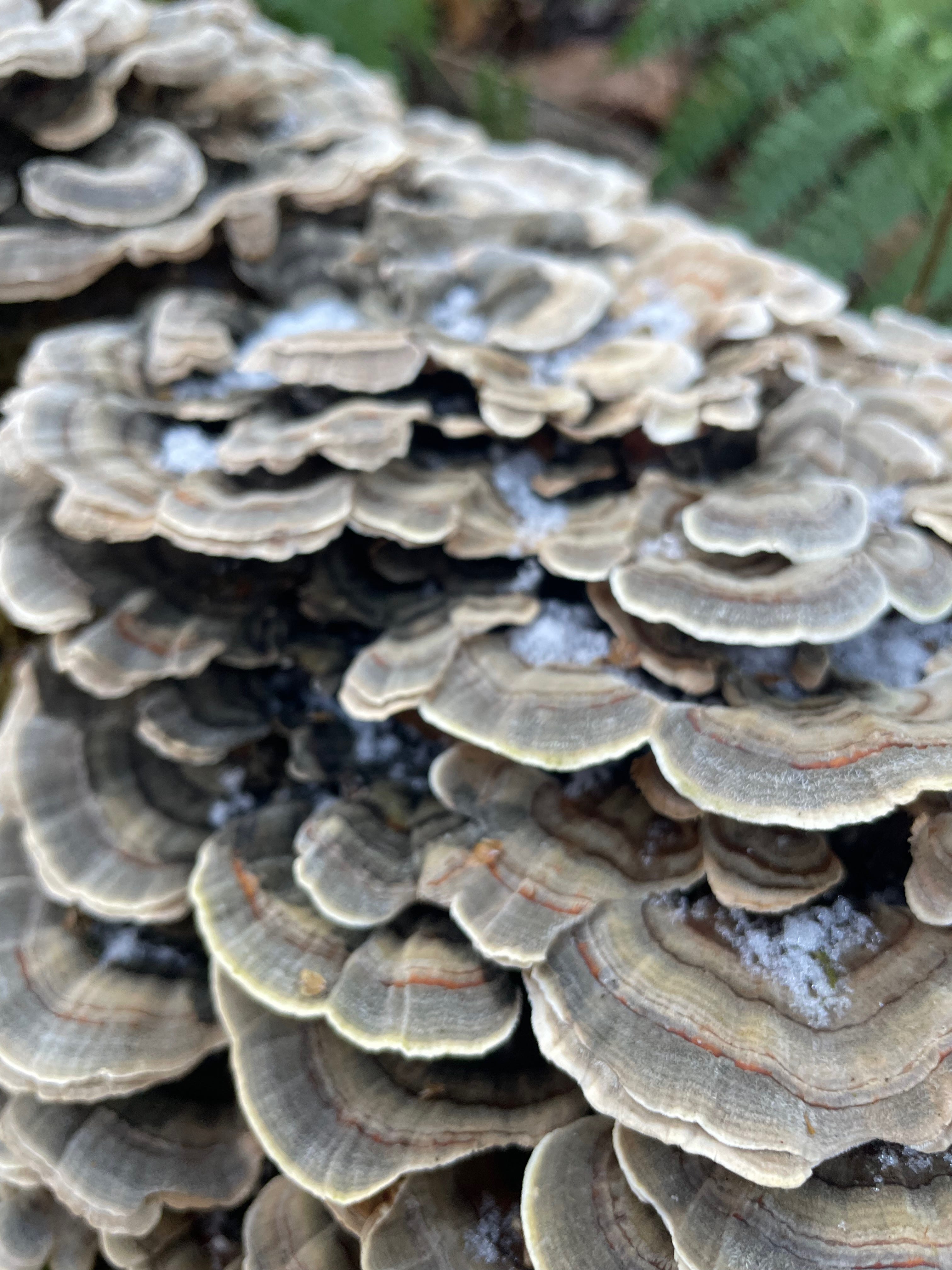
Fruiting bodies, the mushrooms themselves, are where the majority of traditional remedies and modern medicinal mushroom research have focused.
Across both traditional medical systems and contemporary scientific studies, fruiting bodies consistently show higher concentrations of well-characterized compounds such as beta-glucans and triterpenes. Because these compound classes are relatively easy to measure, extract, and correlate with immune outcomes, they have shaped the direction of research for decades. As a result, fruiting bodies form the backbone of most clinical and pre-clinical studies and remain the most clearly documented form of mushroom medicine.
This focus, however, reflects a narrowing of inquiry as much as it reflects superiority. By centering research on polysaccharides and triterpenes, science has naturally gravitated toward fruiting bodies, where these compounds are most abundant. Yet these are not always the compounds one is seeking. In Lion’s Mane (Hericium erinaceus), for example, much of the interest lies in neuroactive diterpenoids such as hericenones and erinacines—some of which are produced preferentially, or in different proportions, in mycelium grown under specific conditions. In such cases, mycelium may offer distinct advantages, not because it is “stronger,” but because it expresses a different chemical vocabulary.
This does not make fruiting bodies inherently superior in all cases. It does make them better understood. Both forms have value, and neither is universally “better” in every context; the current evidence hierarchy simply favors fruiting bodies due to historical use, biochemical accessibility, and methodological momentum. As research expands beyond a narrow set of target compounds, that hierarchy may continue to evolve.
Once we distinguish which part of the mushroom is being used, a second layer of decision-making emerges: how that material is prepared. This is where much of the confusion (and deceptive marketing) enters the picture. Broadly speaking, preparations fall into two categories: dried or powdered forms, and extracts.
Drying mushrooms (whether fruiting bodies or mycelium) is the simplest and oldest method of preservation. Once dried, mushrooms can be stored whole or ground into powders and added to food, capsules, or beverages. In this form, mushrooms retain fiber, minerals, and a wide spectrum of compounds in roughly their natural proportions. They are shelf-stable, accessible, and easy to integrate into daily routines. When comparing like for like, dried whole fruiting bodies generally contain a greater density and diversity of beneficial elements than dried mycelium grown on grain, which necessarily includes a substantial portion of substrate.
That said, drying alone does not automatically make mushrooms medicinally available. Many of the compounds most often associated with therapeutic effects, particularly polysaccharides such as beta-glucans, are locked within the fungal cell wall. These structures evolved to provide strength and resilience, and our digestive systems are not especially good at breaking them down unaided.
For this reason, preparation matters. In our own practice, we often shred and freeze mushrooms prior to dehydration, a step that disrupts cell structure through ice crystal formation. This is followed by a brief exposure to steam at high temperatures, which further weakens chitinous cell walls before final drying. This multi-stage preparation increases the accessibility of water-soluble compounds, without fully isolating or concentrating them, sitting somewhere between raw food and true extraction.
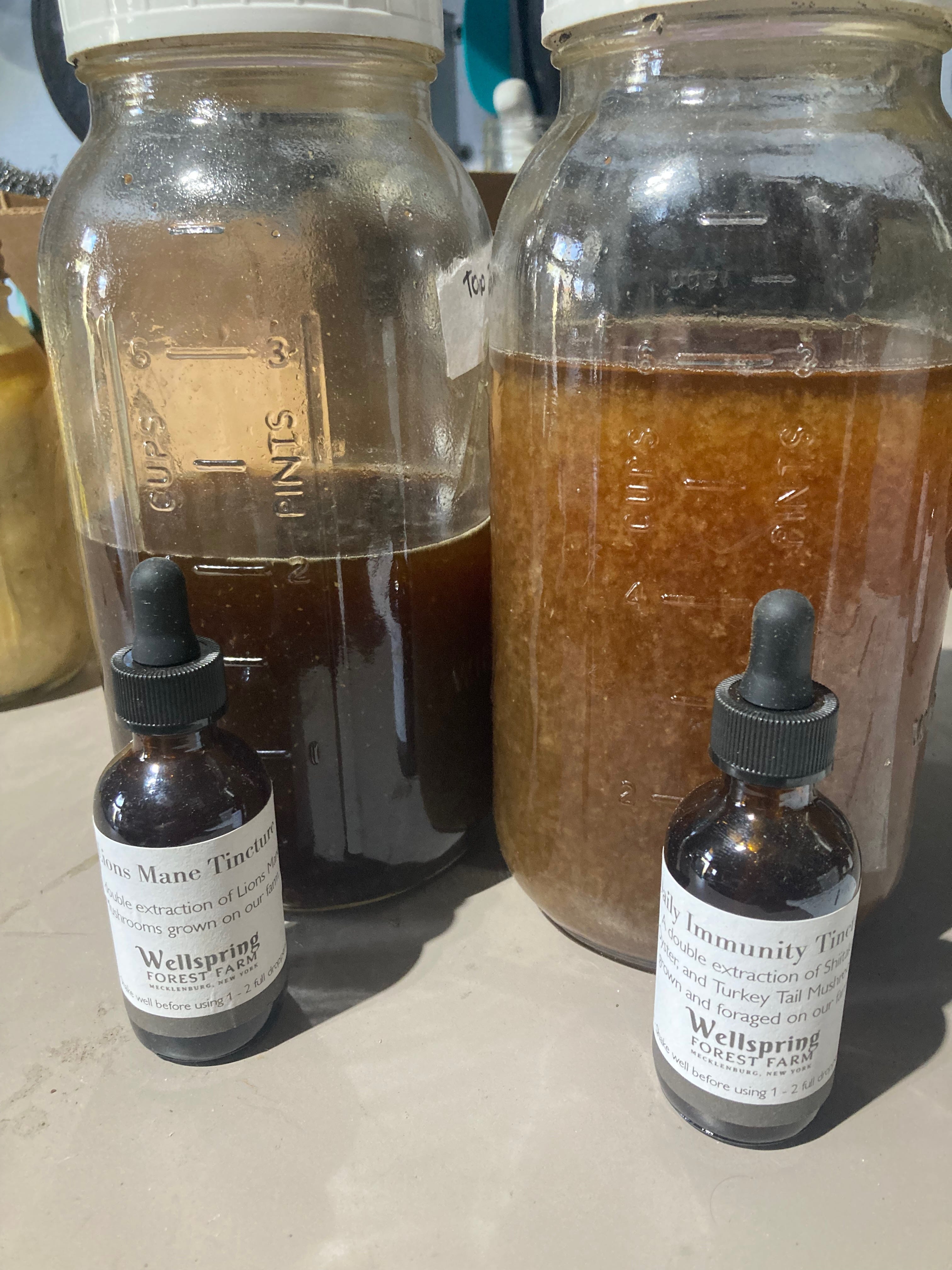
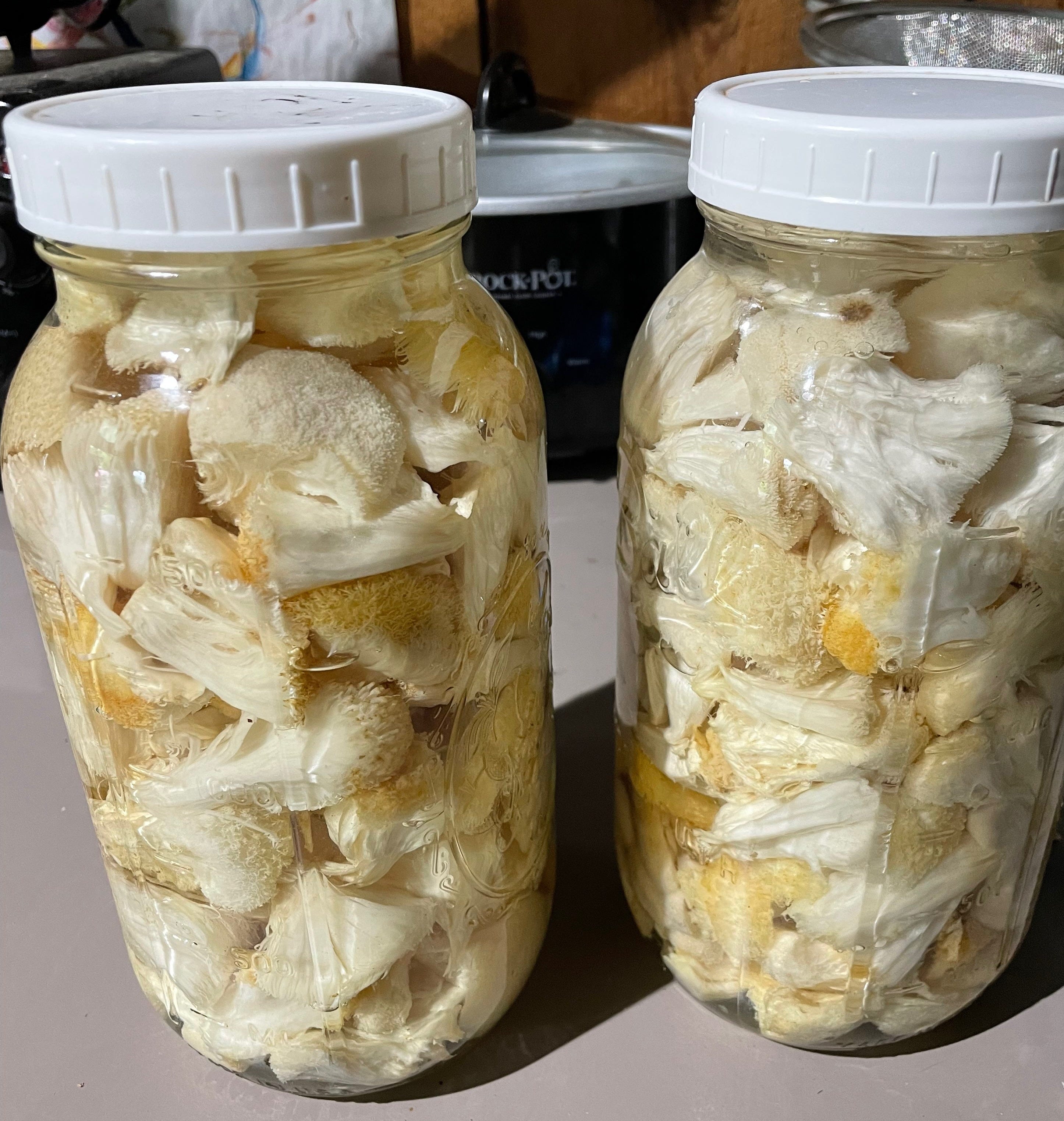
Extraction is a way of selectively isolating and concentrating certain compounds from mushroom tissue, making them more bioavailable. In most cases, mushrooms benefit from a dual extraction utilizing both hot water and a high-proof alcohol.
Hot-water extraction via and low and long simmer or decoction is the oldest and most widely studied method. It is particularly effective at extracting polysaccharides, and forms the backbone of both traditional Chinese medicine and much of the modern scientific literature. Alcohol extraction pulls out a different suite of compounds, including triterpenes and other alcohol-soluble constituents. Dual extracts combine both approaches in sequence to capture a broader chemical profile.
Not all extraction methods are equal. More traditional methods that rely solely on time can yield less consistent results, while modern techniques such as pressure extraction, ultrasonic pulsing, or refined concentration processes, can increase efficiency and repeatability. These methods do not fundamentally change the goal: extracts concentrate compounds and make them more accessible for the body to absorb.
For us, the journey of refining our extraction process has been long, shaped by both practice and study. What began as a slow, patient approach, making medicine for ourselves with time as the primary ingredient has evolved as we’ve engaged more deeply with research and tested a wide range of protocols.
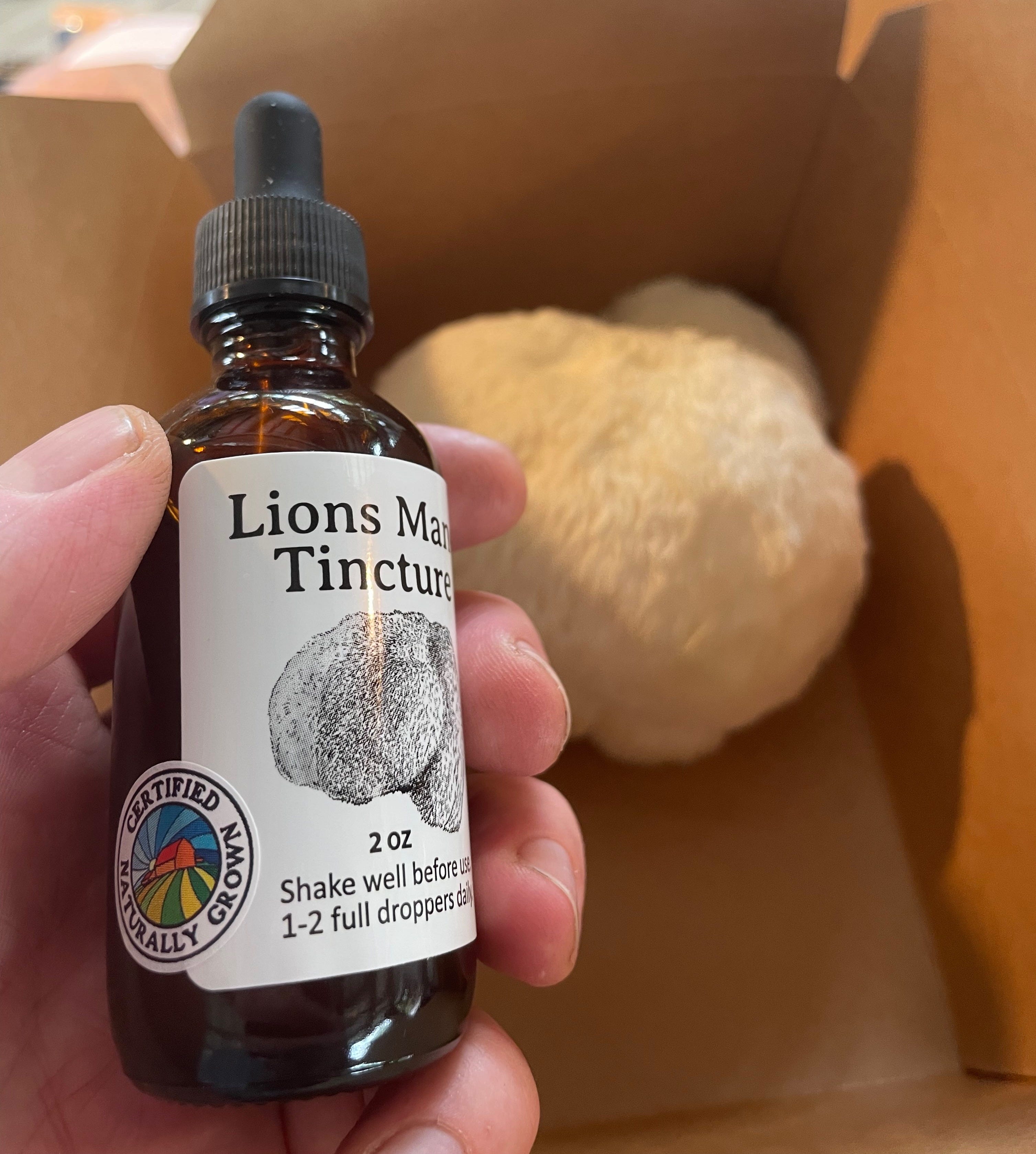
Today, we focus on an efficient and consistent method that incorporates ultrasonic pulsing. This allows us to increase the amount of mushroom material represented in each bottle by running water and alcohol fractions through multiple rounds of extraction rather than relying on a single pass. The goal is not speed for its own sake, but repeatability and density, getting more of the mushroom’s chemistry into the final extract while maintaining control over the process.
All of the mushrooms we extract are grown by us under Certified Naturally Grown standards, using substrates and inputs we can fully account for from start to finish. We extract in small batches, keep careful records, and prioritize transparency over claims. In a field where it is easy to promise certainty, we aim instead to offer well-made medicine, rooted in good biology, careful process, and an honest understanding of what mushrooms can, and cannot, do.
In the United States, mushroom-based medicines occupy the supplement category: outside formal pharmaceutical approval, lightly regulated, and heavily shaped by marketing. Every product comes with a story, special extraction method, a proprietary formula, a lineage of knowledge. Some of these stories are grounded in real science and long traditions of use. Many are not. For consumers, it can be difficult to separate clarity from salesmanship.
Some of the most common issues include:
Cheap imported powders sold as tinctures, where powders are simply dissolved into alcohol without true extraction
Dehydrated, grain-based mycelium used as filler, offering minimal benefit when sold as medicine
Unclear or undisclosed sourcing, with real risks of heavy metal or environmental contamination
Unknown amounts of mushroom material in the final product
Overemphasis on isolated compounds, particularly beta-glucan percentages divorced from context of the whole mushroom
Promises that outpace the evidence, in a field where outcomes remain highly individual and situational
After years of working with mushrooms as food, medicine, and farm crop, a few guiding principles rise to the surface again and again:
Context and timing matter
Local, known origins
Transparency in processing methods
Diversity—and approaches you can actually sustain
Mushrooms do not work in isolation from context. The same mushroom that may be helpful during recovery may be inappropriate during active chemotherapy. Antioxidants can protect healthy tissue, or blunt the intended effects of radiation or certain cytotoxic drugs. This is why broad claims about “anti-cancer mushrooms” are misleading. Cancer is not one disease, and treatments vary widely. Bodies in turn, respond differently to.
During my wife’s chemotherapy, one of the clearest challenges was maintaining white blood cell counts, particularly neutrophils. In that specific context, Maitake extract appeared to support immune resilience, and her counts remained remarkably stable throughout treatment. Was this solely due to mushrooms? Of course not. Diet, physical conditioning, stress, movement, medical care, and luck all played roles. Mushrooms were one part of a much larger picture.
Mushrooms are powerful accumulators. That is part of what makes them ecologically valuable, and why sourcing matters so deeply. Heavy metals and contaminants can concentrate in fungal tissue, particularly when substrates and growing conditions are unknown. Whenever possible, source mushrooms and products grown close to home, by people you can talk to, on substrates you can understand. Transparency reduces risk and builds trust.
Whether mushrooms are dried, powdered, or extracted, the method matters as much as the material itself. Clear information about what part of the mushroom is used, how it is processed, and how much ends up in the final product allows for informed decisions rather than reliance on branding.
All forms of mushrooms offer some benefit. What matters most is integrating them into routines that actually fit your life. Consistency, more than intensity, allows their effects to accumulate. There is no ideal protocol. The best approach is varied, modest, and repeatable, one that lets mushrooms become part of the background rhythm of nourishment and care.
As with many aspects of health and healing, what we do not know still outweighs what we do. Mushrooms do not offer certainty, but rather promise and potential - grounded in biology, tradition, and a growing body of research.
As chronic disease becomes more prevalent, mushrooms may play an increasingly important role as adjuncts to conventional care. For this to happen responsibly, we need good education, access to clean and local products, and continued research.
Even with these limitations, mushrooms deserve a place in a diverse, integrated approach to health and healing. My hope is that this article provides clarity in a complex landscape, and serves as a foundation for deeper exploration in the future.
In the coming posts we will outline more specific strategies for certain conditions and also more deeply profile the unique compounds and benefits of individual species.
No posts
Comments
Nothing yet. Say the first thing.
Sign in to join the conversation.