
For many of us, winter carries a certain weight. With less sunlight, our mood and energy can dip—and naturally, we reach for comfort.
Supplementing with Vitamin D can help and may make a meaningful difference to overall wellbeing. But beyond that, food becomes more than fuel. How we feel shapes what we reach for. Sugar, in particular, offers a quick and accessible lift, triggering a release of dopamine that gives us a fleeting sense of ease. So if your intake of cakes, pastries, or sweet drinks has increased over the past couple of months, you’re not alone. I feel out of rhythm slightly this winter.
We’re also, in many ways, wired to eat more starchy foods during winter. These foods help the body feel nourished and supported through colder months. It’s no coincidence that nature provides an abundance of squash, beets, carrots, potatoes, and other root vegetables during this time. This is great and in essence helps us round out a little to keep us warm. But the modern diet also includes too much refined carbs, excessive fats and salt, which overloads the body in different ways (not just added weight). For me, a diet high in sugar leads to more inflammation, brain fog and fatigue, even if I maintain my weight.
Now the season has shifted, we too can have a renewed approach to nourishment.
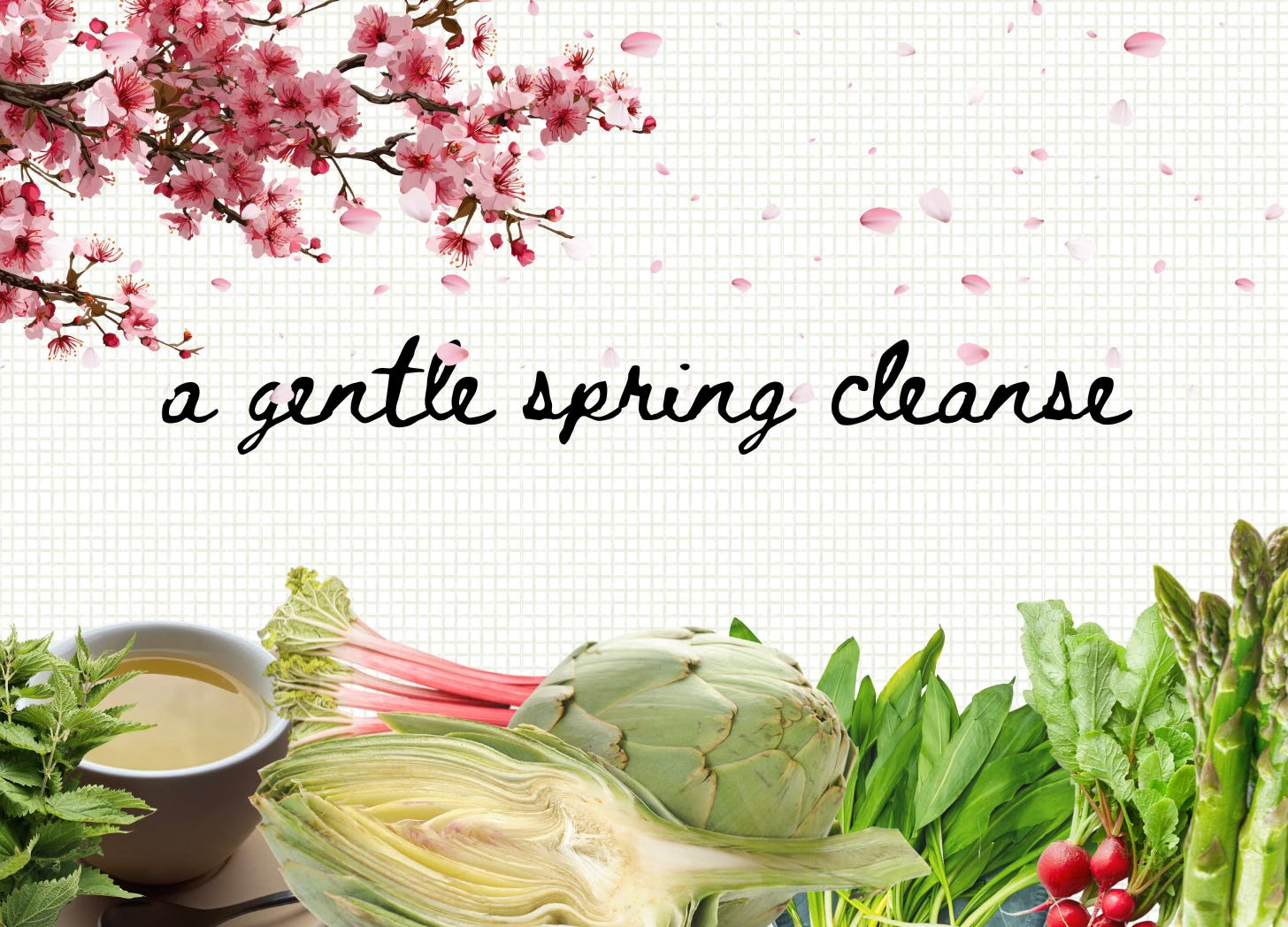
Spring offers something entirely different. Its harvest is more bitter, tart, fresh, and fast-growing. Asparagus, wild garlic, artichoke, nettle, and rhubarb begin to appear. These bitter, often overlooked plants subtly support the body by stimulating digestion, helping to stabilise blood sugar, and gently supporting the liver in clearing what winter may have left behind.
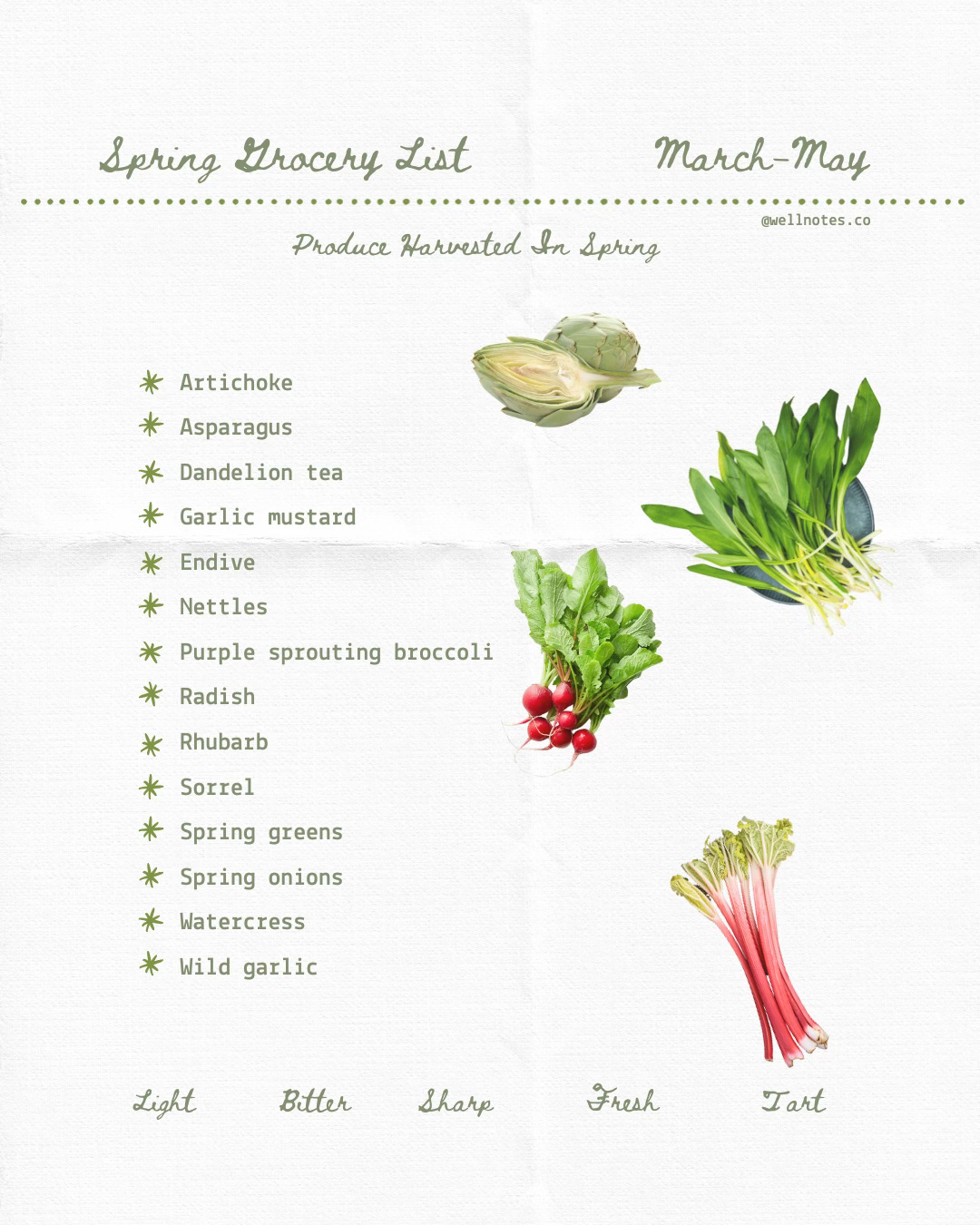
If we focus on locally grown food (I’m in the UK), there are still winter vegetables in circulation. Stored apples and pears and overwinter cabbage are still available in the supermarkets. So it’s normal to eat these typical winter foods while beginning to incorporate more spring vegetables and herbs alongside them. A simple example is my red lentil stew made with carrots and red split lentils, topped with wild garlic, which I recently shared in Digest (Wellnotes recipe archive).
Today it can be difficult to recognise seasonal shifts in food, due to the globalisation of our food system. Ingredients from entirely different climates and growing conditions are available year-round. While this helps bridge the natural “hunger gap” of early spring—when local harvests are lighter—it can also blur our connection to seasonal rhythms.
Eventually, we begin to eat as though we’re in a different climate altogether.
As the light extends and the cold thaws, it’s tempting to reach for iced drinks and tropical flavours, even while the air is still cool and the wind still sharp. Over time, this subtle mismatch between what the body needs and what we’ve become used to consuming becomes harder to notice. The body may be asking for support, but we rarely consider eating out of sync with the season as part of the picture.
My approach to supporting my mind-body-spirit this spring is gentle and meandering. More forceful protocols, like 10-day juice cleanses or water fasts, often promoted in wellness spaces, can feel harsh and punitive. Eating (or not eating) should never feel like punishment. Emotions are consumed, too.
For me, this is about slowly guiding the body into a new rhythm of eating because I feel where winter has left its mark:
My stamina feels lower.
My movement has been inconsistent.
My focus, at times, scattered.
And honestly—my centre is a little rounder.
Rapid transformations often lead to a rapid return to habits we once let go of. So this reset is all about supporting yourself back into a rhythm that feels lighter, clearer, and more alive.
If your body has been asking for a gentle reset this is for you.
I’ve created a 7-day Gentle Spring Reset Guide, now available for paid subscribers (only £4 per month). Or, you can also unlock the post for one-time access.
Comments
Nothing yet. Say the first thing.
Sign in to join the conversation.