
“The only way human beings can win a war is to prevent it.” — George Marshall
North Korea is sending thousands of soldiers to the Russian-Ukrainian front to support the Russian military against Ukraine. There are about 8,500 North Korean troops currently in Russia, including roughly 1,000 engineers and mine-clearance specialists, as well as around 400 drone operators. Altogether, some 25,000 North Korean soldiers have joined Russian forces since late 2024. In return, Russia provides North Korea with food, energy, money, military technology, and diplomatic backing. North Korea, meanwhile, is gaining modern combat experience and a significant economic boost. Now consider the tensions between North and South Korea, and imagine what happens when the practical experience North Korean soldiers are gaining in Russia—especially in drone warfare—is eventually transferred to the border between the two Koreas. The implications are not encouraging.
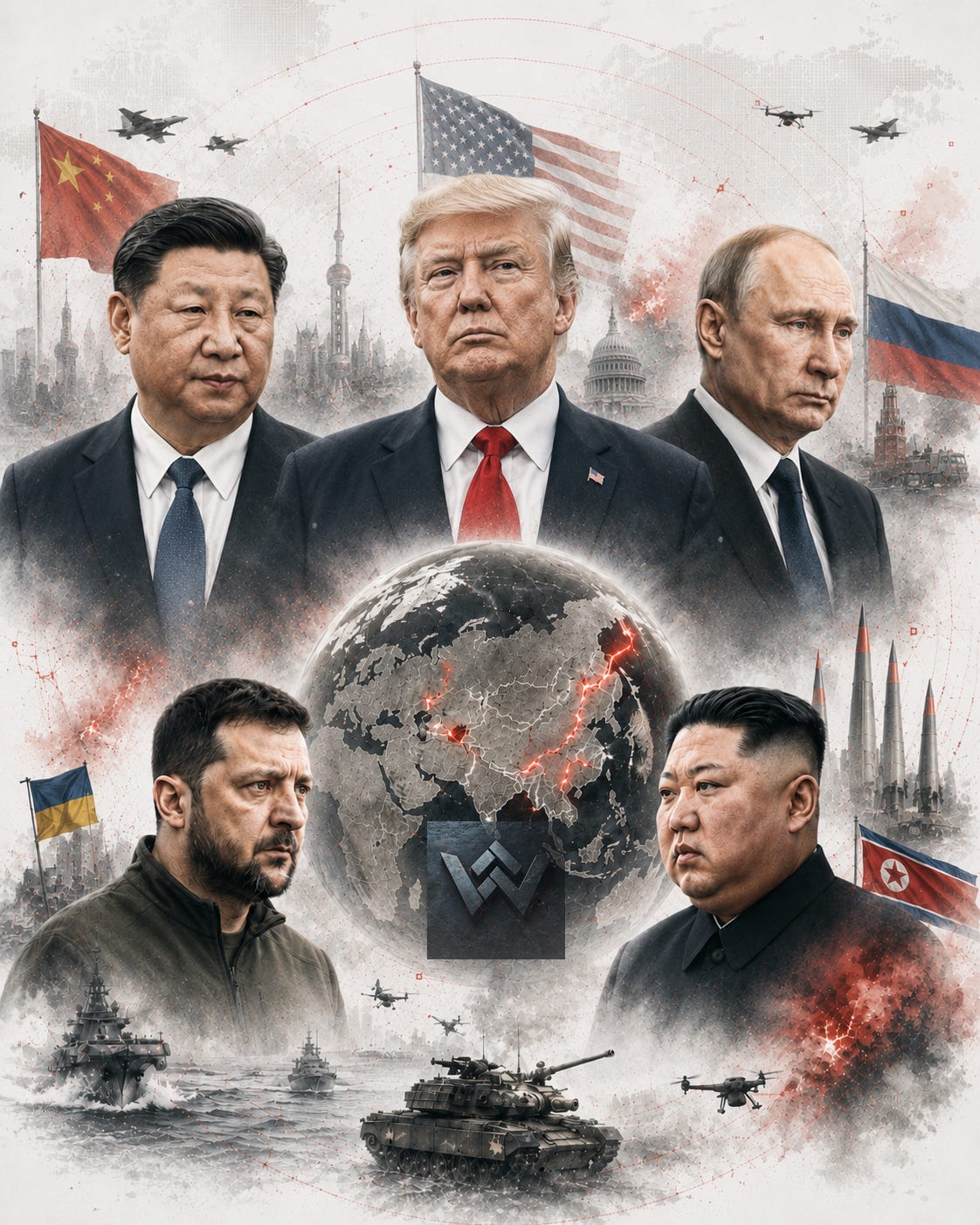
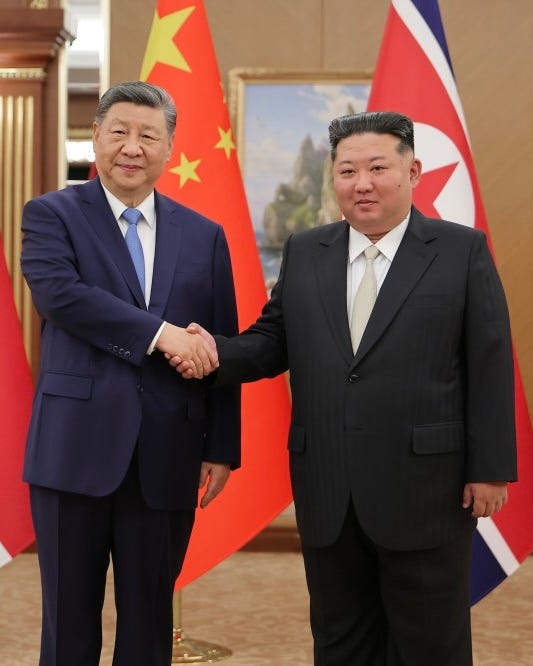
China is not watching this growing relationship with indifference. For decades, Beijing was North Korea’s principal patron, its main source of trade, energy, food, and diplomatic support. But the war in Ukraine has given Pyongyang something new: an alternative to China. Russia needs artillery shells, missiles, and soldiers. North Korea needs money, food, energy, and military technology. Suddenly, the two countries have developed a relationship that does not run through Beijing.
That is one reason Xi Jinping’s visit to Pyongyang in June was so significant. It was his first visit to North Korea in seven years and his first trip outside China in 2026. China has no intention of leaving North Korea to Russia. According to an analysis by CSIS, one of Beijing’s main objectives was to restore its influence over Kim Jong Un after years in which Moscow had become an increasingly important military partner. The war in Ukraine is beginning to function as a training ground connecting the European and Asian fronts.
A war that began in February 2022 as Russia’s invasion of Ukraine is now linking security systems that were once largely separate. North Korean soldiers are gaining combat experience against an army that is extensively equipped and trained by NATO countries. North Korean drone operators are learning what advanced drone warfare looks like in practice. North Korean missiles are being fired at Ukraine, providing Pyongyang with information that no weapons test on a training range could ever provide. In early August, there were even reports of a North Korean missile unit being deployed in western Russia, with the potential to operate as many as 120 ballistic missiles and six launchers.
While North Korean soldiers are gaining real battlefield experience in Ukraine, something very different is happening on the other side of the Korean Peninsula. In August, Trump instructed the Pentagon to significantly reduce joint military exercises with South Korea. He argued that the drills were expensive and sent a hostile message to Pyongyang, while once again referring to his good relationship with Kim Jong Un. The result is an almost paradoxical picture. The North Korean military is training in a real war while the United States reduces military exercises with the ally that may one day have to face it. The American effort is similar in objective to China’s: keep North Korea from moving even closer to Russia. China is using diplomacy, while the United States is reducing joint exercises. Either way, both major powers are worried about North Korea’s growing strength.
For many years, North Korea has also been a major exporter of military technology to countries facing severe U.S. sanctions, including Iran, Syria, Libya, and numerous African states that somehow remain below the global radar. This week brought an almost physical reminder of that North Korean proliferation network. Syria informed the IAEA about several tons of nuclear material left over from the Assad era. The material is now being investigated alongside sites associated with Syria’s secret nuclear program, the same program centered on the Al-Kibar reactor, which the IAEA said was built with North Korean assistance and was destroyed in an Israeli strike in 2007.
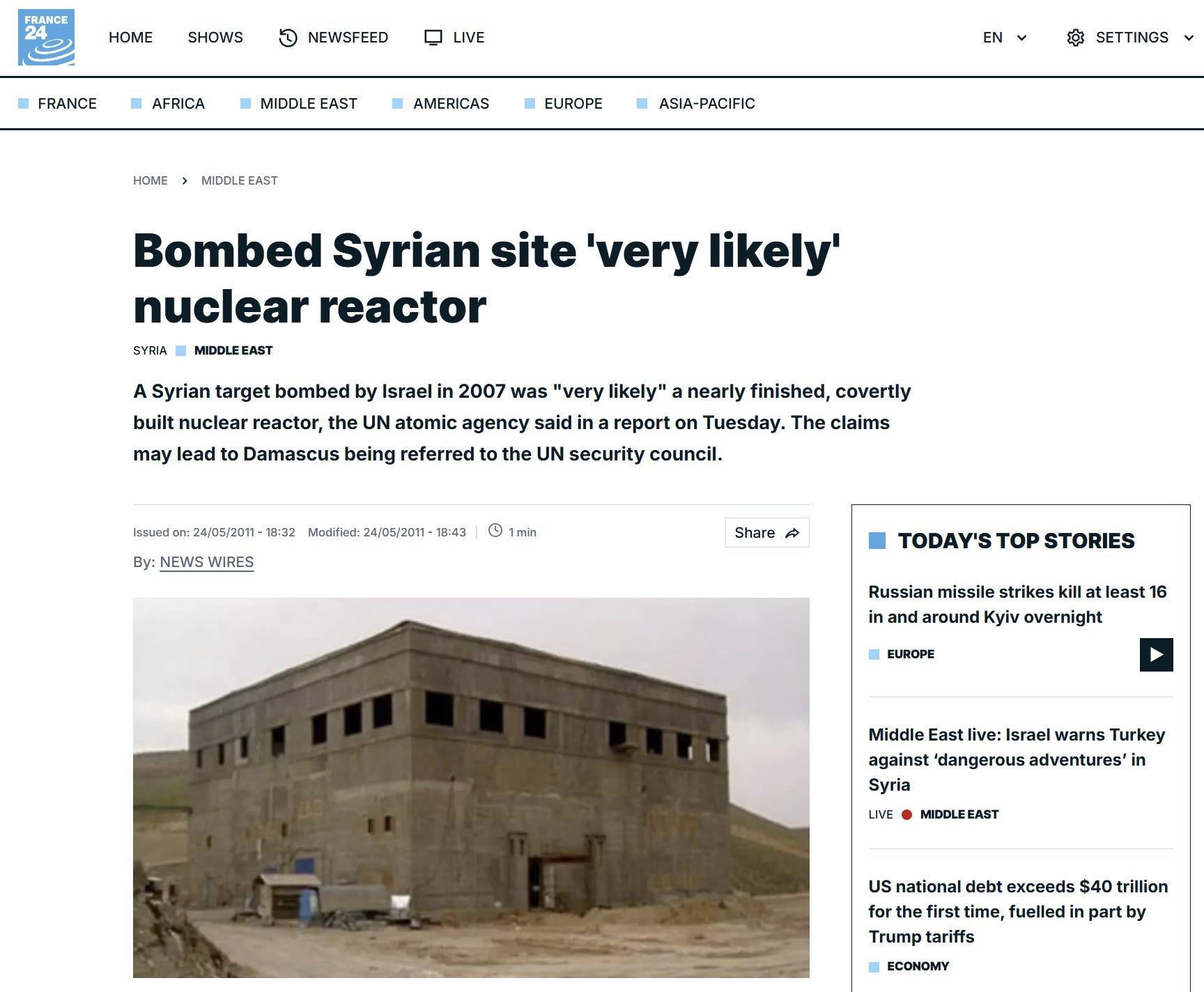
In other words, almost twenty years after the reactor was destroyed, physical remnants of that same network of nuclear knowledge and proliferation are still being uncovered in Syria.
There are now tens of thousands of foreign fighters on the Russian-Ukrainian front. A study published in April 2026 estimated that Russia had recruited at least 27,000 foreign nationals from more than 130 countries since 2022, sometimes through questionable recruitment schemes or outright coercion. Ukraine has separately reported fighters from Africa, Asia, and Latin America. The danger posed by the war in Ukraine is not simply that the conflict may spread geographically. It can also spread through people and knowledge. Tens of thousands of foreign fighters from dozens of countries are passing through one of the most technologically advanced battlefields in the world. They are learning to operate drones, explosives, mines, and modern weapons systems. At the same time, enormous quantities of weapons are circulating across the front. There is still no evidence of a significant flow of those weapons to cartels or terrorist organizations around the world, but Europe is already preparing for the possibility that the real problem may begin on the day the war ends.
While the world watches the trenches in Ukraine, hundreds of miles to the north NATO is already training for the next war. This week, the alliance concentrated stealth aircraft, strike aircraft, AWACS surveillance planes, aerial refueling tankers, and an advanced electronic-warfare aircraft over Poland and the Baltic Sea, right on the edge of Kaliningrad, the Russian exclave between Poland and Lithuania.
Kaliningrad is both a threat and a trap. From there, Russia can threaten much of the Baltic Sea with missiles and potentially attempt to cut off the Baltic states from the rest of NATO through the Suwałki Corridor. But in wartime it would also be an isolated piece of Russian territory, surrounded almost entirely by NATO members. So both sides are already practicing for the same question: who controls the Baltic Sea if the war in Ukraine crosses the border? NATO itself is moving from supporting Ukraine toward explicit preparation for a possible war along its own frontier with Russia.
The war is no longer stopping at Ukraine’s borders. Russian drones have repeatedly entered Romania, a NATO member. Some have been shot down by alliance fighter aircraft, and one even struck a residential building this year, injuring civilians. This week Romania also destroyed an explosive maritime drone near one of Europe’s most important gas projects. At the same time, Poland and the Baltic states are increasing security around critical infrastructure amid fears of Russian sabotage.
For months, the conflict has also been expanding into the Caspian and Black Seas, where critical energy infrastructure has been hit, including infrastructure connected to American companies. The Black Sea is no longer merely a secondary theater of the war in Ukraine. It has become a junction where war, trade, energy, and NATO meet. Russia attacks the ports of Odesa, agricultural export infrastructure, and vessels connected to Ukraine. Ukraine, in turn, attacks Novorossiysk, a major Russian naval base and hub for oil and export infrastructure. As a result, the war is directly affecting global grain, oil, and gas routes.
Novorossiysk is also the export point for the CPC, the pipeline carrying most Kazakh oil to global markets. That means a Ukrainian attack in the area can hurt not only Russia, but also Kazakhstan, American companies such as Chevron and Exxon, and global oil supplies.
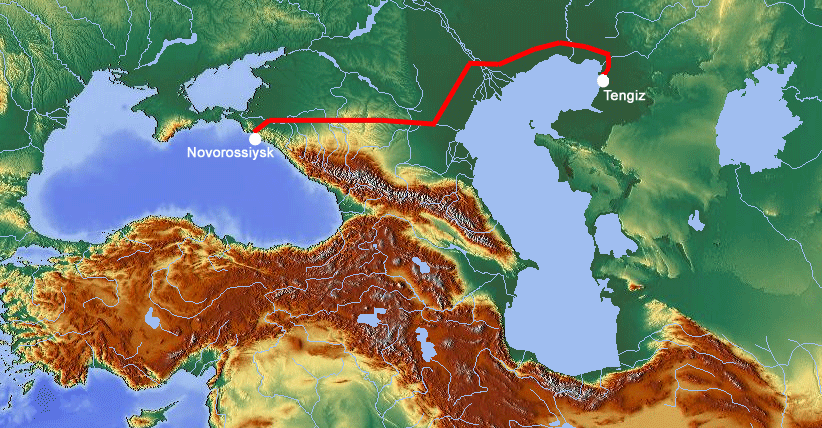
For years, the Caspian Sea was a relatively secure rear area for both Russia and Iran. That is changing. Ukraine has already demonstrated that it can send drones hundreds of miles and strike Russian oil platforms, ports, and vessels in the Caspian region. The importance is not limited to Russia. The Caspian is part of the logistical connection between Russia and Iran. Ports, ships, and the North-South Transport Corridor enable goods and equipment to move between the two countries. So when Ukraine attacks there, it is effectively expanding the war into the rear of the Russia-Iran axis.
This also connects Azerbaijan and Kazakhstan, because the Caspian is a critical energy region. Any increase in security risks there affects oil, gas, pipelines, and alternative export routes that bypass Russia. The Caspian is not some forgotten body of water somewhere on the edge of the war map. Oil and gas originating in the region eventually reach Israel and Europe. Azerbaijani oil flows through Turkey to the Mediterranean and from there also reaches Israel. Kazakh oil flows through Russia to the Black Sea, while Azerbaijani gas moves through Turkey into Europe. So as the war in Ukraine spills into the Black and Caspian Seas, it begins to touch the energy security of Israel and Europe directly.
The Caspian and Black Seas are connected to supply chains for some of the most basic products in the physical economy: diesel, jet fuel, fertilizers, grain, metals, helium, and industrial raw materials. When those routes are disrupted, the effects move very quickly from energy into transportation, agriculture, food, healthcare, and industry.
The next front in this emerging global conflict is China and the troubling developments in the South China Sea. If the Black Sea and Caspian represent an existing war expanding outward, the Chinese theater is almost the opposite. There is no direct war yet, but the parties are rapidly building the infrastructure, doctrines, and alliances they would need if one begins.
This week, Taiwan proposed increasing its 2027 defense budget by about 18 percent, to a record roughly $31.4 billion and more than 3 percent of GDP. Among the areas receiving priority are drones, missiles, and submarines. At the same time, the latest Han Kuang exercise included, for the first time, scenarios involving a naval blockade, internet disruption, and attacks on civilian infrastructure. In other words, Taiwan is preparing not only for an amphibious invasion, but for the kind of complex war China could wage around the island.
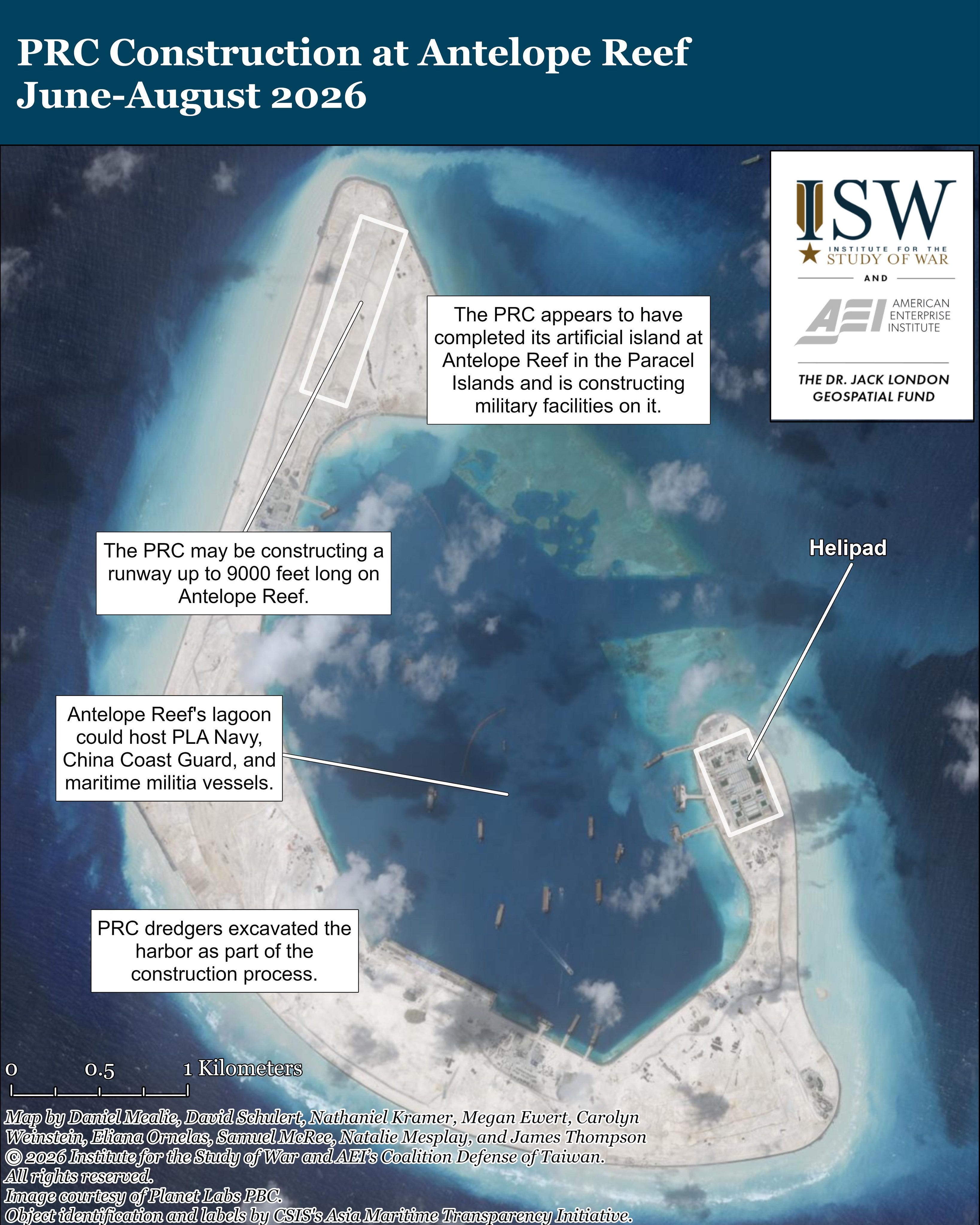
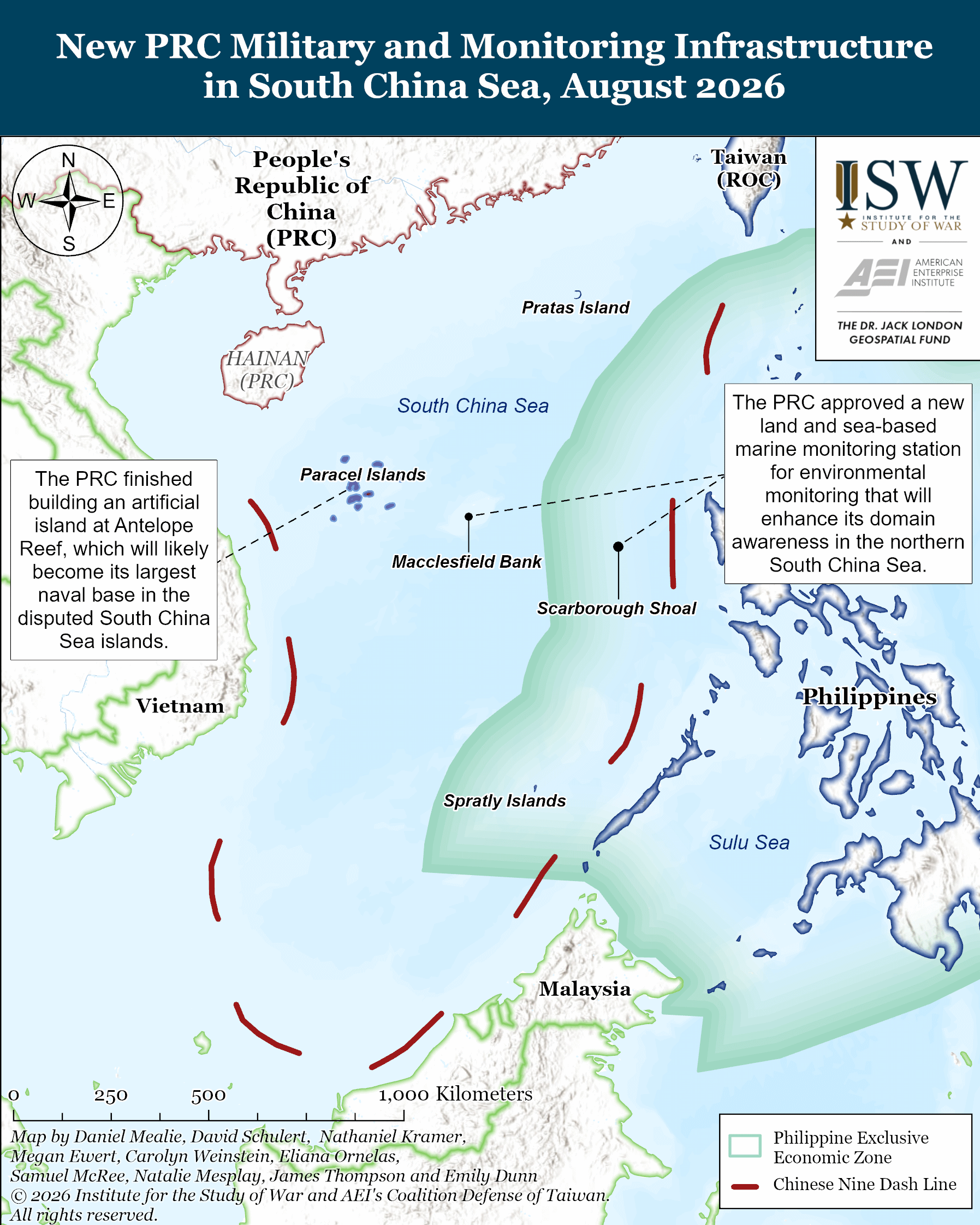
The second circle is the South China Sea. Here, China’s effort goes deeper because Beijing is physically changing the geography. According to satellite images published this week, China has completed the first stage of building an artificial island at Antelope Reef in the Paracel Islands. The island is roughly six kilometers long, with a harbor, piers, a helicopter landing area, and infrastructure for a runway that could eventually exceed three kilometers. Analysts estimate that it could become part of the largest Chinese military base in the South China Sea.
Most importantly, its location helps China extend its layers of defense and control far beyond the Chinese coast. In a war over Taiwan, such a base could support surveillance, submarine protection, aircraft operations, and perhaps even long-range bombing missions. Reuters has even raised the possibility that it could serve as a more protected area for Chinese nuclear submarines. This means that the old American assumption that Chinese forces would need hours to move from the Chinese coast toward Taiwan no longer fits comfortably with the doctrine Beijing is developing through its artificial islands. The old American concept is becoming increasingly irrelevant.
In Ukraine, the world is learning what modern warfare looks like. In the western Pacific, China and Taiwan are already building the next war around those lessons. America’s weakness in the Pacific is not simply the number of ships it has. It is logistical and geographical. The U.S. Navy faces manpower shortages, maintenance delays, and aging support equipment, while operating thousands of miles from home and depending on other countries for access to ports, airfields, and storage facilities. China, by contrast, operates close to its own shores from an expanding network of bases and fortified islands.
The U.S. challenge vis-à-vis China is not merely the size of the Chinese fleet. It is the fragmentation of American power. Russia requires a continued U.S. presence in Europe. The campaign against Iran consumes aircraft carriers, destroyers, and missile interceptors. The Middle East demands ever greater protection for bases and shipping lanes. Every ship, missile, and interceptor sent to those theaters is an asset unavailable at that same moment in the western Pacific.
Trump and Xi Jinping are expected to meet again in September, and to a significant extent this may be a meeting intended to prevent another front from opening. The United States is already spreading its resources across Russia and Europe, the campaign against Iran, the protection of shipping lanes and the Middle East, while simultaneously trying to contain North Korea’s growing strength. Trump needs relative calm with China, cooperation over Iran and Korea, the continued flow of critical raw materials, and the prevention of escalation around Taiwan.
Xi, for his part, knows that American power is stretched across several theaters and therefore comes to the negotiating table from a more comfortable bargaining position. The major question is what Beijing will demand in exchange for that stability, and whether the price will be greater freedom of action in the South China Sea and around Taiwan.
Perhaps world wars no longer begin in a single moment with a declaration of war. Perhaps they begin when regional wars, alliances, armies, energy routes, and weapons technologies that were once separate start connecting into a single system.
If that is how we measure things, then the front is certainly expanding.
Thank you for reading! If you enjoyed the article, you’re invited to like it and share it with others.
No posts
Comments
Nothing yet. Say the first thing.
Sign in to join the conversation.