
“The only common interest they have is to limit China.” — George Friedman
Alongside the deepening military support for Ukraine and Turkish involvement, Russia has intensified its attacks on Ukrainian ships in the Black Sea. The Russian attacks are targeting ports and vessels connected to Ukraine. According to Reuters, many shipping companies have stopped calling at ports in the Odesa region because of the risk, and Ukrainian grain exports in the first half of August fell by around 75%–76% compared with last year. Around 90% of Ukraine’s wheat, corn, and sunflower-seed exports usually pass through the Black Sea.
The attacks have almost completely halted Ukrainian exports and imports. In practice, commercially speaking, Russia has managed to make much of Ukraine’s access to the sea almost unusable. In addition, supplies from Turkey are raising tensions between Ankara and Moscow even further, despite Ankara’s various attempts to maneuver between the two sides since February 2022.
Between Russia and Turkey there is an energy supply system, TurkStream, which is effectively the only active pipeline route carrying Russian gas to Europe. At the same time, Russian LNG, mainly from Yamal, continues to arrive in large quantities at European Union ports.
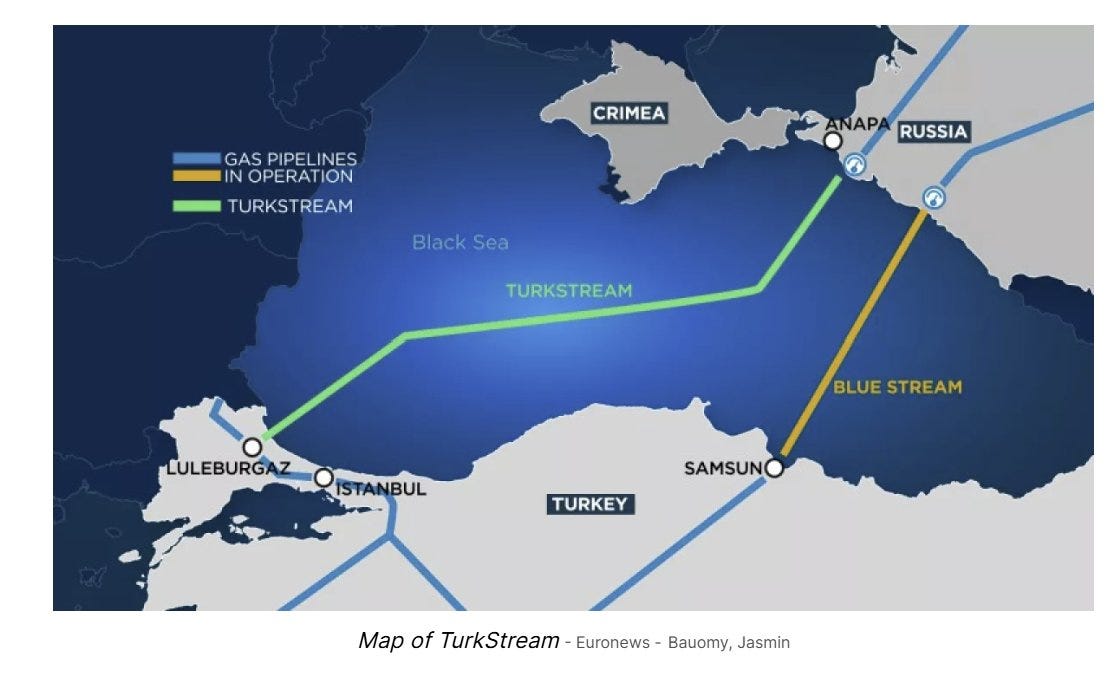
How much longer will Moscow continue supplying energy to a Europe that is arming against it and supplying weapons to Ukraine?
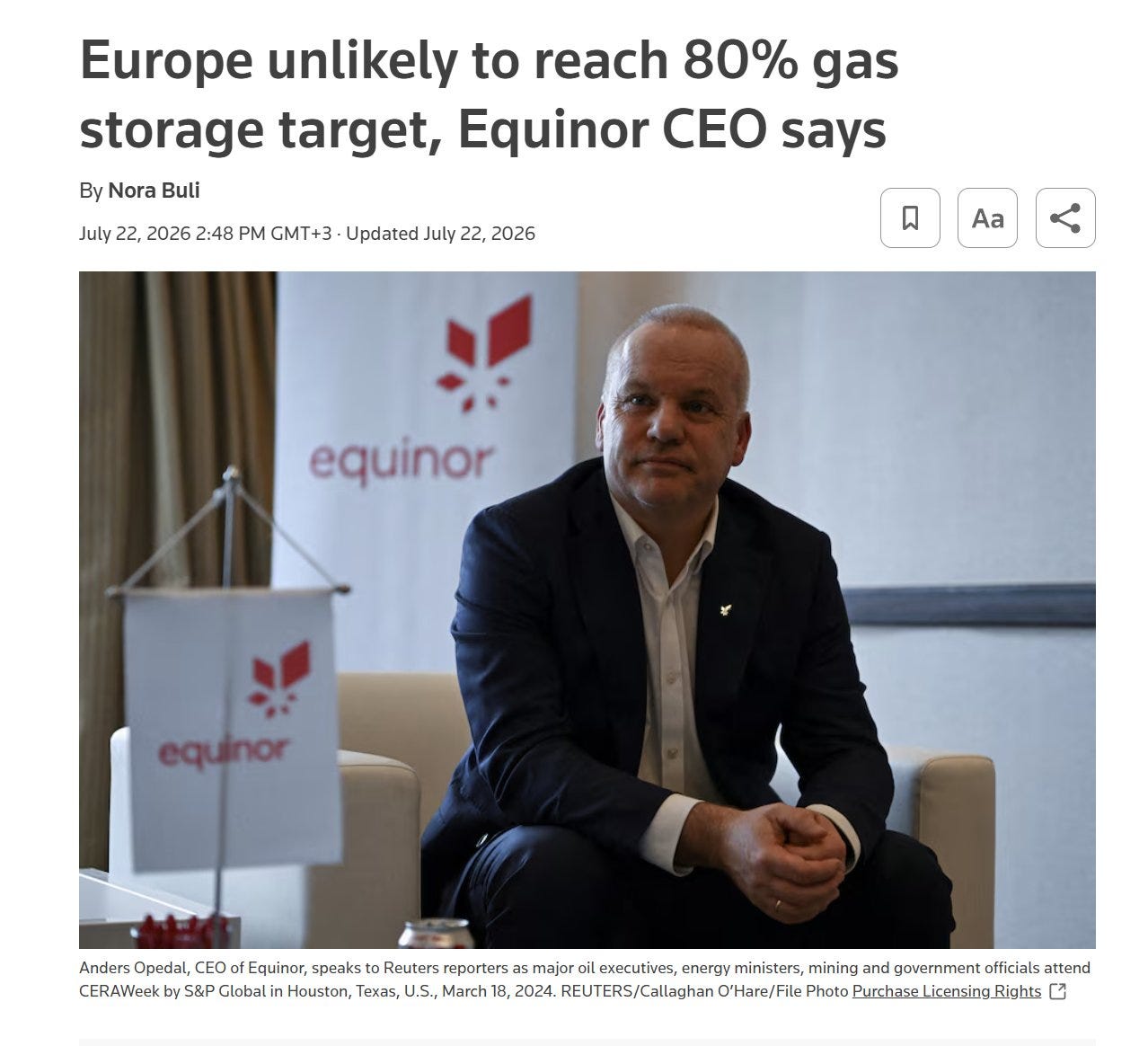
As of today, Europe is facing another energy crisis, one that I believe could be more severe than the previous crises it has experienced. Falling river levels in Europe are hurting hydroelectric production. High river temperatures are forcing reductions in electricity generation from nuclear reactors. Current gas storage levels ahead of winter are lower than in previous years, and above all, the Hormuz crisis is forcing LNG importers to compete for the same tankers against Asian countries that are also experiencing an energy crisis. Europe’s weakness is not expressed only in military and industrial terms, but at the foundation of every economy: the availability of and access to cheap energy.
Further Turkish intervention in favor of Ukraine could lead Putin, as he watches the storm developing in Europe, to use energy as a geopolitical lever against the European Union and especially against Washington.
Ukraine is now proposing a ceasefire regarding attacks against it in the Black Sea, mainly because Russia is trapping it inside the European continent. Continued attacks on Ukrainian vessels could destabilize the global food chain, which has already been damaged by low fertilizer exports through Hormuz to Asia.
Another front is the war that has slowed down somewhat in Hormuz against Iran. At the beginning of the war, I said and wrote that whenever you read about Iran, think about China.
Beijing’s support for Tehran is part of the great-power race. Because Iran is located between the Persian Gulf, the Caspian Sea, the Caucasus, Central Asia, and the Indian Ocean, it is vital to Beijing as part of the Belt and Road Initiative. Its regime is anti-American, and its natural resources are ideal for industrialization on an enormous scale. Chinese support is therefore intended to cultivate a coalition that will stand beside Beijing during a crisis, much like Chinese support for Pakistan. Pay attention to who the mediators are in the memorandum of understanding.
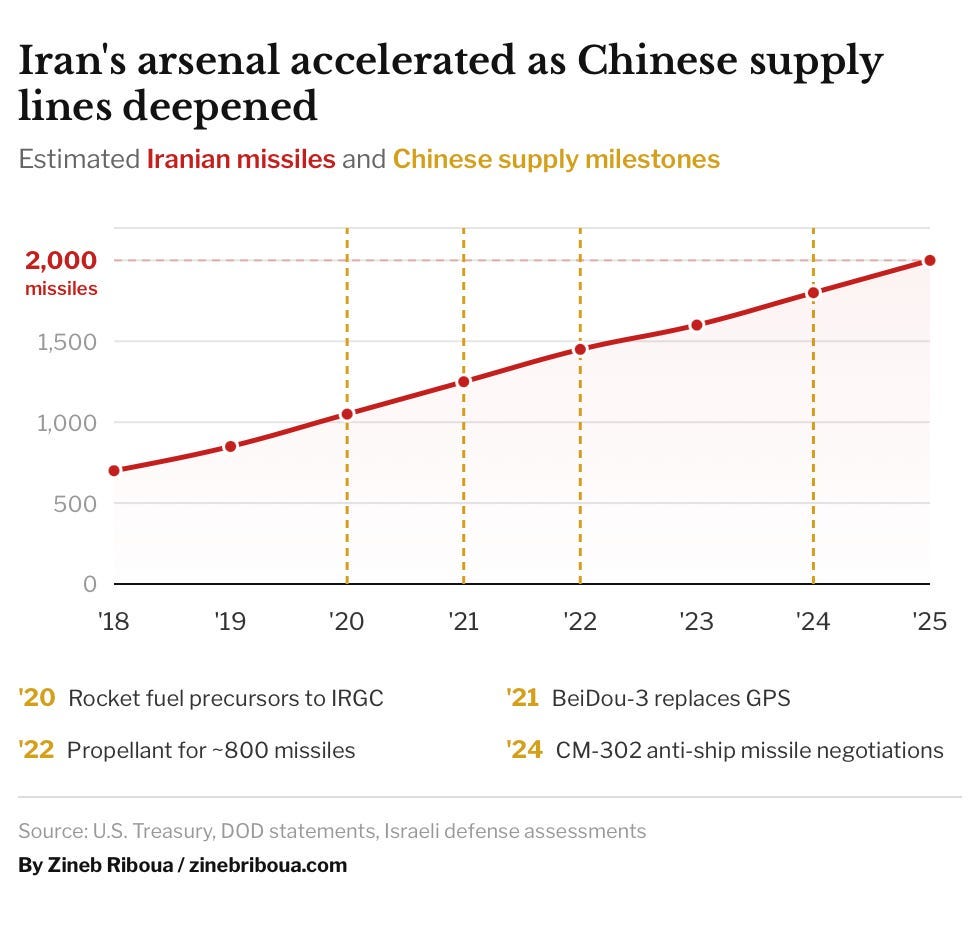
Just so you understand how closely Iran and China are connected, especially in recent years: Iran’s missile industry is based on raw materials imported from China. In December 2025, the U.S. Navy intercepted and stopped a ship carrying advanced Chinese-made weapons to the Revolutionary Guards.
Iran’s arms buildup before the war that began in February 2026 was impressive. U.S. Secretary of State Marco Rubio said that Iran was producing around 100 missiles a month while the United States was able to produce up to seven interceptor missiles in a single month. Without Beijing’s support, it is highly doubtful that the Iranians would have been able to reach such a high production rate.
If you think, for example, about the Houthis, then the crisis in the Red Sea is part of China’s strategy, through Iranian proxies, to draw the United States into regions that are far from China. The activity of Iranian proxies in the Red Sea forces the United States to invest ships, munitions, and attention in the Middle East instead of concentrating them in the Indo-Pacific region.
The problem is that this policy contains a mechanism of self-destruction because it creates a region that becomes less vital to the world’s economies, which are then forced to build alternative systems. This will not happen tomorrow morning, but it has already begun.
Decision-makers in Asia understand that their enormous dependence on Hormuz and Red Sea shipping puts them in a difficult position, including the Chinese. In other words, the Iranian proxy in the Red Sea is also a double-edged sword.
From this perspective, the crisis with Iran is not a short confrontation, but part of a continuing struggle between China and the United States. The United States is moving at an accelerated pace to build a coalition in Asia whose purpose is not necessarily to fight China, but to prevent it from becoming the regional hegemon.
India, Japan, Australia, Vietnam, the Philippines, and Indonesia are gradually deepening security, maritime, and logistical cooperation. They do not need a formal Asian NATO. Geography is already doing part of the work.
China depends on maritime routes passing through the Indian Ocean, Malacca, and the island chain to its east. If you think about it, China is the country that depends most heavily on globalization.
The stronger China becomes, the more reasons its neighbors find to unite against it.
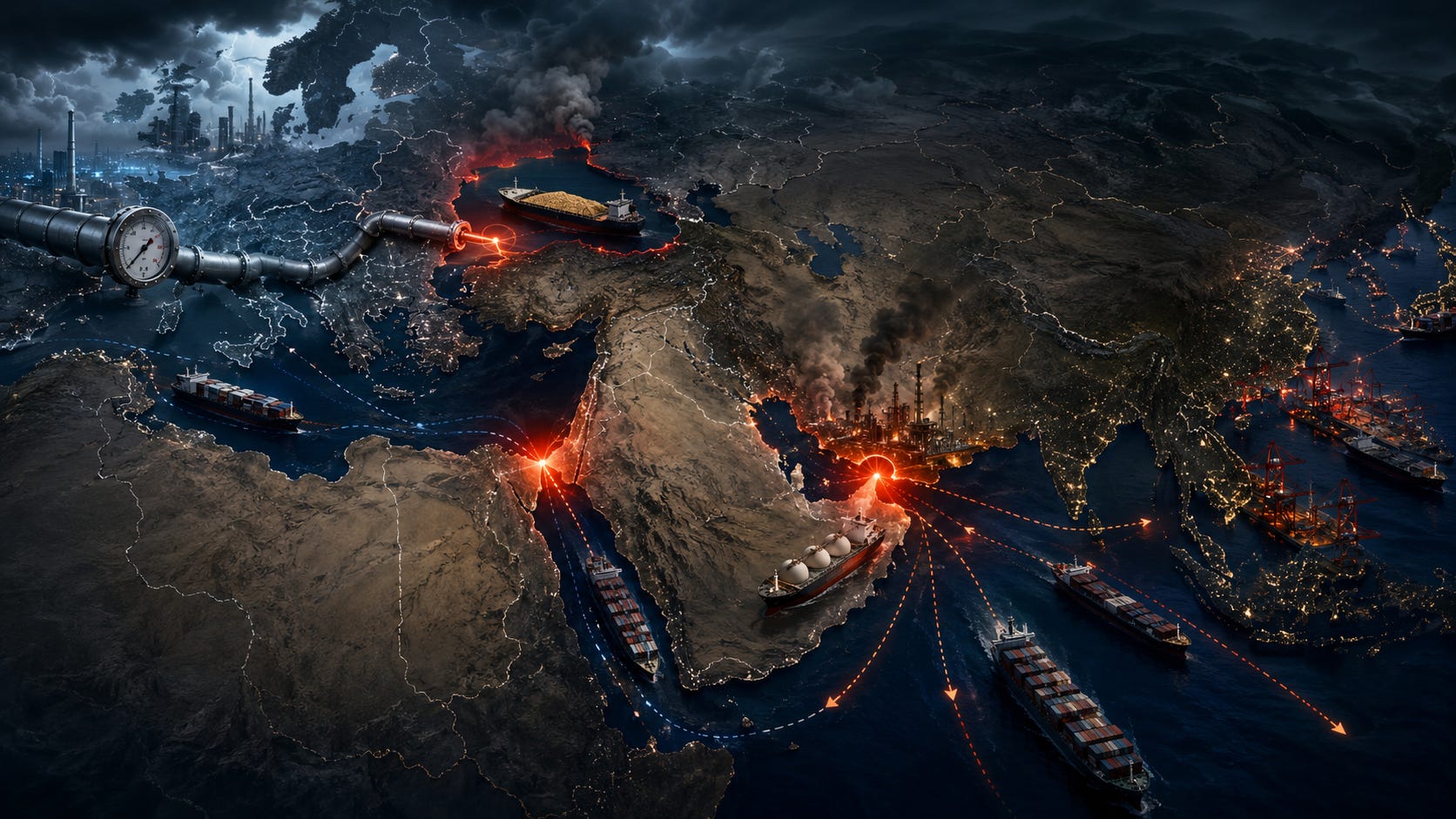
Perhaps we are looking at separate wars because we still think in terms of borders. But the war is global, and it is increasingly being fought over the system that connects those borders: energy, food, industry, money, and maritime routes. Previous world wars were fought over territory. The current war is also being fought over the arteries that allow those territories to exist.
Thank you for reading! If you enjoyed it, you’re welcome to like and share it with others.
No posts
Comments
Nothing yet. Say the first thing.
Sign in to join the conversation.