
In the previous articles, we have discovered the importance of the red and white blood cell parameters in your Complete Blood Count laboratory test. Let’s dive in to understand the platelet parameters.
Platelets are essential for hemostasis—the process of stopping bleeding when blood vessels are injured.
Platelet Count
What It Measures: The number of platelets per microliter of blood.
Normal Range: 150,000 – 450,000/µL
Why It Matters: Platelet count is the gatekeeper of bleeding risk.
Below ~150,000/µL, spontaneous bleeding is unlikely but surgical bleeding risk rises.
Below ~50,000/µL, significant bleeding with trauma or surgery becomes likely.
Below ~10,000–20,000/µL, spontaneous intracranial or GI hemorrhage is a genuine danger.
Low (Thrombocytopenia) Immune-mediated (ITP—immune thrombocytopenic purpura), drug-induced (heparin/HITT, quinine, sulfa drugs), viral infections (HIV, HCV, dengue), liver disease/splenomegaly (sequestration), DIC (disseminated intravascular coagulation), TTP/HUS, bone marrow infiltration (leukemia, metastatic cancer, myelofibrosis), nutritional deficiency (folate/B12), or congenital disorders.
High (Thrombocytosis) Reactive (post-infection, post-surgery, iron deficiency, inflammation, splenectomy) or clonal/myeloproliferative (essential thrombocythemia, CML, polycythemia vera). Paradoxically, very high counts can cause both clotting and bleeding tendencies.
---
Mean Platelet Volume (MPV)
What It Measures: The average size of individual platelets, expressed in femtoliters (fL). Younger platelets tend to be larger.
Normal Range: 7.5 – 11.5 fL
Why It Matters: MPV provides information about platelet turnover and function. Larger platelets are generally younger and more metabolically active—and often more reactive/aggregatable.
Low MPV: Suggests decreased platelet production (bone marrow failure, chemotherapy, aplastic anemia) or increased peripheral destruction with replacement by smaller, older platelets.
High MPV: Indicates accelerated platelet production (peripheral consumption/destruction with marrow compensation), higher platelet reactivity (increased cardiovascular risk association), or may be artifactual depending on collection tube type and delay to analysis.
Emerging Research: Elevated MPV has been linked to increased risk of coronary artery disease, stroke, diabetes complications, and poor outcomes in several inflammatory conditions—though causality remains unclear.
---
Plateletcrit (PCT)
What It Measures: The total volume of platelets as a percentage of total blood volume—conceptually analogous to hematocrit but for platelets. Calculated as platelet count × MPV ÷ 10,000.
Normal Range: 0.108% – 0.282%
Why It Matters: PCT integrates both platelet quantity and size, providing a composite assessment of total platelet mass. It’s less routinely reported but can be helpful in specific contexts.
Low: Reflects thrombocytopenia or microthrombocytosis.
High: Reflects thrombocytosis or macrothrombocytosis.
---
Large Platelet Ratio (P-LCR)
What It Measures: The percentage of platelets classified as “large” by the analyzer.
Normal Range: Approximately 13% – 43% (lab-dependent)
Why It Matters: Similar to MPV, a high P-LCR suggests increased production of young, large platelets—often seen in peripheral destructive processes where the marrow is compensating vigorously. Useful adjunct to MPV in evaluating thrombocytopenia etiology.
---
Numbers make more sense when viewed in context. Here are common patterns your physician may encounter:
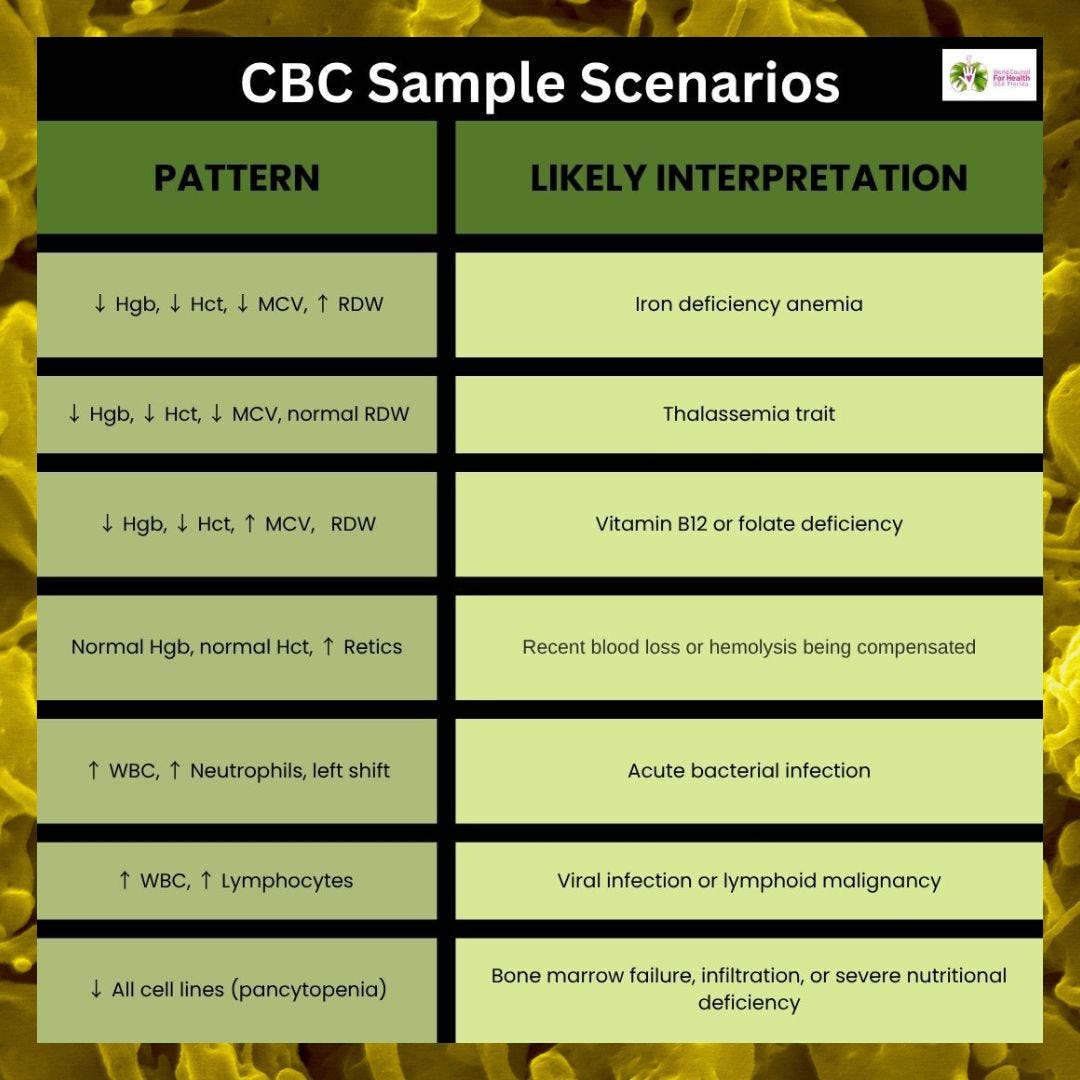
Not every abnormality signifies disease. Several benign factors can temporarily alter CBC values:
Dehydration: Artificially elevates Hgb, Hct, and RBC count
Pregnancy: Plasma volume expansion dilutes RBC parameters (physiologic anemia of pregnancy); WBC count naturally increases
Altitude: Chronic hypoxia stimulates increased RBC production
Smoking: Elevates WBC count and can mildly increase Hgb/Hct via chronic CO exposure
Strenuous exercise: Temporarily raises WBC (especially neutrophils) and Hct
Time of day: Minor day-time variations exist for some parameters
Medications: Corticosteroids raise neutrophils but lower lymphocytes/eosinophils; NSAIDs can affect platelet function
Lab-to-lab variation: Different analyzers and reference populations yield slightly different ranges
Always share your complete medication list, lifestyle habits, and recent activities with your healthcare provider to ensure accurate interpretation.
The CBC may seem like a wall of intimidating numbers, but each value tells part of your body’s story. Understanding what these components measure—and what deviations might signify—empowers you to engage meaningfully with your healthcare provider rather than leaving your results shrouded in mystery.
Remember: no single CBC value should ever be interpreted in isolation. Patterns, trends over time, and clinical context are what transform raw data into meaningful medical insight.
Schedule your next CBC. Review your results with your doctor. And don’t hesitate to ask: What does this number tell us about my health? Because sometimes, the answers hiding in plain sight could be the ones that matter most.
You may wish to check out Part 1 (Red Blood Cell Parameters) and Part 2 (White Blood Cell Parameters).
Disclaimer: Reference ranges provided are approximate and may vary by laboratory, methodology, age, sex, and population. This article is for educational purposes only and does not constitute medical advice. Always consult a qualified healthcare professional for personalized interpretation of your lab results.
Thank you for reading.
If you found value in this article please consider sharing and/or subscribing. If you want to become a member of the World Council for Health USA-Florida, please click this link.
No posts
Comments
Nothing yet. Say the first thing.
Sign in to join the conversation.