
I don’t remember a time when Imtiaz Ali wasn’t somehow present in my life. I remember being a child and returning home from school to watch Jab We Met with my aunt on a rented CD, not fully understanding why I loved that world so much, only knowing that there was something comforting about it. Years later, when Tamasha came into my life, it felt less like a film and more like a conversation I had been waiting to have. As someone trying to make sense of a creative life, I saw too much of myself in Ved, in his desire to become who he really was beneath all the performances demanded by the world. Imtiaz Ali’s films have always found me at different stages of my life, and perhaps that is why I walked into Main Vaapas Aaunga not merely as a viewer, but almost like someone returning to an old friend. I knew the story. I knew it was about a man who had left Sargodha during Partition, carrying with him not just memories but also a promise made to the love of his life, a promise that gave the film its title. Yet as with all Imtiaz Ali films, I realised very quickly that what I was watching wasn’t really a story about history or even about love. It was about memory itself, about the things that refuse to leave us even when our minds begin to fail, and about the strange ways in which love outlives geography.
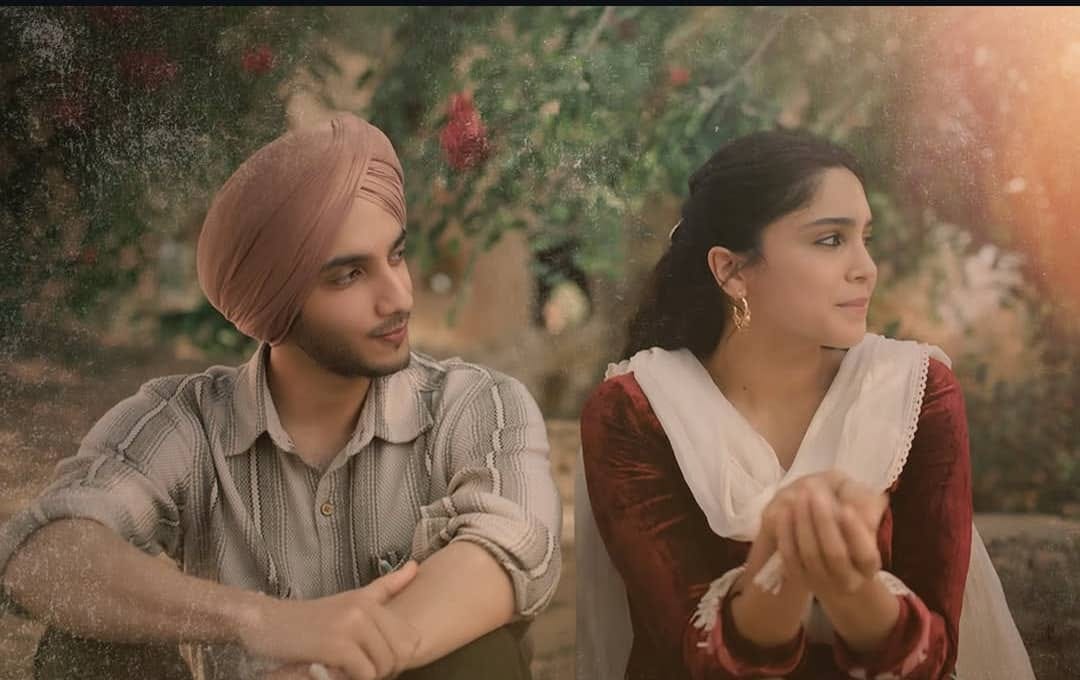
When the film ended, I sat in silence. I don’t think I spoke much for the rest of the day. There was sadness, yes, but sadness feels too small a word for what remained. There was longing, grief, nostalgia, tenderness, and above all, an ache that only Imtiaz Ali seems capable of creating. His films have always understood that human beings are made of contradictions. We spend our lives moving forward and looking back at the same time. We heal and carry wounds simultaneously. We love people and miss versions of ourselves that no longer exist. Somehow, he finds a language for emotions that otherwise remain impossible to articulate. The brilliance of his cinema lies in the fact that he never explains feelings to us. He simply allows us to sit beside them.
There is a scene that I have been unable to forget, not because it is grand or dramatic, but because it contains a kind of gentleness that feels increasingly rare. The old man, slipping in and out of memory, tells his grandson that the people who brought hatred and violence into their world were not ordinary human beings. They were Martians. Strange creatures from somewhere else came and disturbed the peace that had existed between people. I remember smiling through tears when I heard that because there was something heartbreakingly innocent about that explanation. And yet, the more I thought about it, the more profound it seemed. In a world obsessed with assigning blame and simplifying history into sides and slogans, Imtiaz Ali chooses something far more difficult. He chooses tenderness. He chooses to believe that hatred itself is unnatural. That perhaps ordinary people simply wanted to live their lives, celebrate festivals together, speak the same languages, share meals and stories, and that something monstrous entered their world and convinced them to fear each other. In lesser hands, this story could have easily become an exercise in accusation. But Imtiaz Ali understands that history is already filled with enough anger. What it lacks is compassion.
There is another moment that broke me. When the grandson, desperate to understand what happened, turns to the old man’s brother for answers, he is told something devastatingly simple. He says that what happened came with him and it will die with him, because the younger generations will never understand. They will only see hatred. I have thought about those words constantly since watching the film. Perhaps that is true. Those who lived through Partition carried memories too complicated for slogans. They remembered neighbours before they remembered enemies. They remembered friendships before they remembered borders. They remembered songs, languages, jokes, afternoons and ordinary acts of kindness. But history, when inherited second-hand, often arrives stripped of tenderness. We inherit wounds without inheriting the love that existed before the wound. We inherit anger without inheriting affection. We inherit borders without inheriting the world that existed before they were drawn.
Perhaps that is why the film affected me so deeply. Because I realised that Partition is not only about displacement. It is about the tragedy of forgetting that we once belonged to one another. History books speak of migration and violence, but they rarely speak about the ordinary beauty that existed before everything fell apart. They do not speak enough about the people who laughed together, celebrated together, borrowed spices from one another, spoke in the same idioms, listened to the same songs and shared the same sky. They do not speak enough about love. Imtiaz Ali’s film insists on remembering that love.
What moved me even more was watching a man whose mind had begun to betray him still hold onto one promise. Memory itself had become fractured, names had become blurred, reality had dissolved into fragments, and yet somewhere beneath all that confusion remained one certainty. He had promised that he would come back. There is something almost sacred about that. Because perhaps that is what love really is. Not grand gestures or perfect endings, but the stubborn refusal to let go even when everything else has been taken away. Even dementia could not erase longing. Even time could not erase affection. There was something deeply beautiful about the idea that the heart remembers what the mind forgets.
The film also made me rethink what home means. We often speak of home as though it is an address or a structure, but watching this old man travel back to Sargodha through fragments of memory made me realise that home has always been people. Home is the sound of familiar voices. Home is the smell of food being prepared by someone who loves you. Home is the tree outside your window, the language that arrives naturally on your tongue, the roads that know your footsteps and the seasons that raised you. Home is not architecture. It belongs. Which is perhaps why exile hurts so much. People do not mourn walls. They mourn worlds.
And maybe that is what stayed with me most about Main Vaapas Aaunga. It is not really a film about Partition. It is not even a film about lost love. It is a film about kindness. About the idea that beneath all the identities we cling to and all the divisions we inherit, there existed a world where people simply lived together. It is a film that dares to believe that hatred is learned and love is remembered. And in times like ours, where outrage has become easier than empathy and certainty easier than understanding, there is something quietly radical about that belief.
The title itself has haunted me ever since. Main Vaapas Aaunga. I will come back. The man says it to the woman he loved, but perhaps all of us are saying it to something. We are saying it to our childhoods, to grandparents who are no longer here, to old houses, to summers that ended too soon, to friendships that faded without warning, and to versions of ourselves that we abandoned somewhere along the way. We spend our lives promising to return, not because we believe time can be reversed, but because we cannot bear the thought that something beautiful can disappear entirely.
And perhaps that is what memory really is. Not an attempt to live in the past, but an act of love. A way of telling the people and places that made us, “I haven’t forgotten. I still remember. And in some quiet corner of my heart, I am still trying to come back.”
No posts
Comments
Nothing yet. Say the first thing.
Sign in to join the conversation.