
She stayed in the passenger seat after the lesson, hands folded in her lap, thumb rubbing over the edge of her sleeve, waiting for the question.
‘How was the reverse park?’
She looked out through the windscreen at the parked cars, at a strip of wet pavement, then said quietly that she didn’t think it had gone very well.
The instructor glanced at her, then lowered her eyes to the clipboard. She held the pen between two fingers, tapped once, and wrote something down.
The pupil felt better for it. Leaving things unfinished was easier. A failure could be carried forward, returned to; it left room that a success didn’t. A success would close something off, and she wasn’t sure she was ready.
So when the letter with her licence arrived the next morning, she left it unopened. For now, it could stay where it was, just out of reach, not quite real.
She gave herself reasons: confidence, traffic, not being ready to drive alone. None were a complete fabrication, and the instructor didn’t question it.
So it continued, and the woman beside her didn’t hurry the silences. When she spoke, it was only what was needed.
Keep left.
Slow down.
That’s fine.
Again.
Otherwise, she let things be.
Sometimes, when the car was stopped at lights, or waiting to pull out, the pupil became aware of her in small, uninvited ways. The way a strand of hair had come loose near her temple. The way she rested her hand lightly at the bottom of the wheel. Once, the faint trace of something clean and unfamiliar when she reached across to adjust the mirror.
None of it meant anything.
The pupil came to prefer the quiet. She was shy, yes, but that was not quite the reason. Here, the silence didn’t ask anything of her or need filling. There was a sense, at times, that she was being held without examination. The instructor saw her clearly enough, but chose not to look too closely.
At home, silence gathered weight, and pointed to calls not made, messages unanswered, plans that had thinned out or never formed into anything of substance.
In the car, there was only what was happening.
She learned, by chance, that the instructor lived nearby. They stopped once outside a newsagent; the instructor crossed the road for coffee and mints, keys hooked around one finger, paper cup balanced carefully in the other hand, coat open against the wind.
The pupil watched her longer than she meant to.
There was nothing remarkable in it, really. The wind catching her hair and lifting it away from her face. The ease of her, when she wasn’t instructing.
The pupil looked away before she could settle on the thought that followed.
In rare moments, she had the quiet, disorienting sense that this was not entirely one-sided. That the instructor, in her own way, allowed the same stillness to exist between them.
Perhaps she knew about the test; it was hard to tell. There were moments she looked at the pupil with a steady, unreadable attention, as if she had noticed something and decided to leave it untouched.
That, more than anything, made her easy to trust.
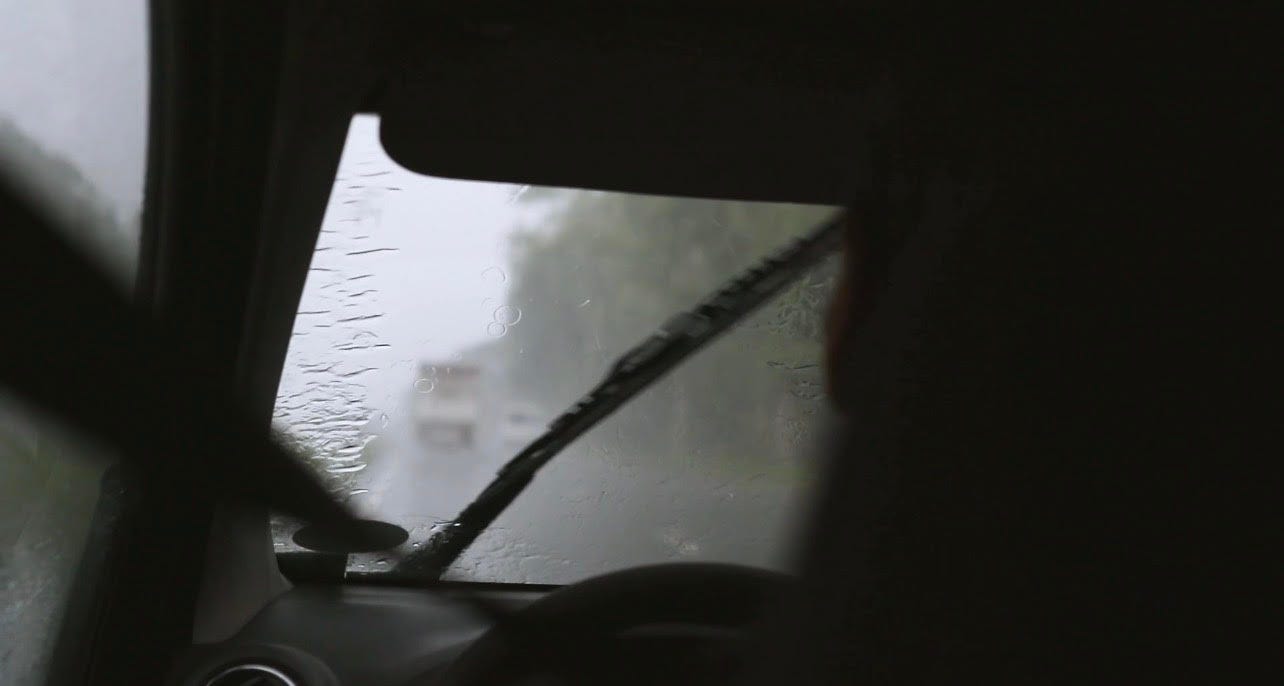
On rainy afternoons the car seemed to draw in around them. The edges of the windows blurred; the wipers kept time. Instructions came softly: turn here, move off, take the next left. And the pupil followed them, grateful for their clarity.
Once, at a roundabout, she nearly stalled. Heat rose quickly to her face.
The instructor didn’t react.
Again, she said, without edge or reassurance.
But when the pupil managed it the second time, there was the smallest pause before the next instruction, something gently acknowledged. That settled her more than praise would have.
It wasn’t just driving she was learning. It was how to sit beside another person without explanation, without adjustment or defence.
By the end of one lesson the rain had cleared. The road held the last of it in a dark sheen, and lights were coming on in the houses along the street. The instructor pulled up outside the flat and turned off the engine.
They stayed there a moment before the instructor removed her glasses and folded them.
You’re driving well, she said.
The pupil looked at her hands.
I still get nervous.
Everyone does.
You don’t need many more of these, she added, almost as an afterthought. It was said lightly, too lightly to follow.
The pupil glanced up, but the instructor was already looking ahead again.
She nodded but didn’t reach for the door.
Something about the moment felt unfinished. She was aware, suddenly, of how close they were in the small space of the car. The quiet between them no longer felt empty. It had become something she didn’t want to break by moving too quickly.
She thought of the pass slip in her bag, and the unopened driving licence at home.
Still looking straight ahead, the instructor said nothing.
For a second, the pupil thought she might say something more. About the long silences, the repetition, the way these lessons had shifted into something she couldn’t name.
But she didn’t.
Her hands rested lightly on the wheel. And the pupil understood: this, too, was a choice.
She opened the door and stepped out.
On the pavement, she paused while the instructor adjusted the mirrors and pulled away. The car moved slowly to the end of the street, stopped, then turned left.
She didn’t wave.
But she watched until the car had gone.
And the pupil understood then, not all at once, but enough, that this had never been uncertainty. The way the instructor had left things unsaid. The questions she had not asked.
As if the ending had been there for some time, and both of them had agreed, without speaking, not to arrive at it.
Comments
Nothing yet. Say the first thing.
Sign in to join the conversation.