
About six months ago, I was involved in a very surreal incident at my gym.
A man standing opposite me in the changing room stood up too enthusiastically and smashed the top of his head into the corner of an open locker door. The crack was so loud I instinctively grabbed my own head to check it was still attached.
He went to reception to ask for first aid and shortly afterwards wandered back with blood streaming down his face. The gym staff were lovely, but first aid didn’t seem to be their specialist subject.
I went and asked for the first aid kit. I’ve learned from experience how to just get on with it in unexpected situations. I cleaned the wound as best I could, put a dressing over it and told him he really needed to go to hospital.
“Will do, mate.”
I continued getting changed, but ten minutes later, he was still there in the changing room. Again, I told him he needed A&E, and he assured me he was going.
Then another gentleman walked in. They exchanged a few words, money changed hands, and so did a brown package. My patient said, “It’s good stuff,” and fist-bumped the other man, who then left.
It wasn’t subtle. I almost felt like I was rudely interrupting a business meeting while standing there drying underneath my armpits with a towel.
He turned back to me. “Thanks again, mate,” and walked out of the gym.
I haven’t thought about that incident for a while, but it entered my thoughts the other day. Within ten minutes he’d gone from an injured man needing help to a Class A drug dealer.
But in reality, he hadn’t changed at all; he’d been both all along.
One of the unexpected consequences of spending twenty years working in homelessness, mental health, drug and alcohol, and youth services is that I’ve lost the ability to divide people into neat categories.
I’ve known people with criminal records who became exceptional support workers.
One former drug dealer I worked with had communication skills most senior managers would die for. He could build rapport with absolutely anyone. He remembered names, faces, stories and tiny details about people’s lives. He could diffuse conflict in seconds.
In my line of work, something we think about a lot is ‘asset-based practice’.
Instead of asking, “What’s wrong with this person?” we ask, “What strengths do they already have?”
Sometimes those strengths have simply found the wrong outlet. Skills like organisation, leadership, sales and influencing don’t have a moral component, but the direction they’re pointed in does.
Last year I found myself somewhere I never imagined I’d be.
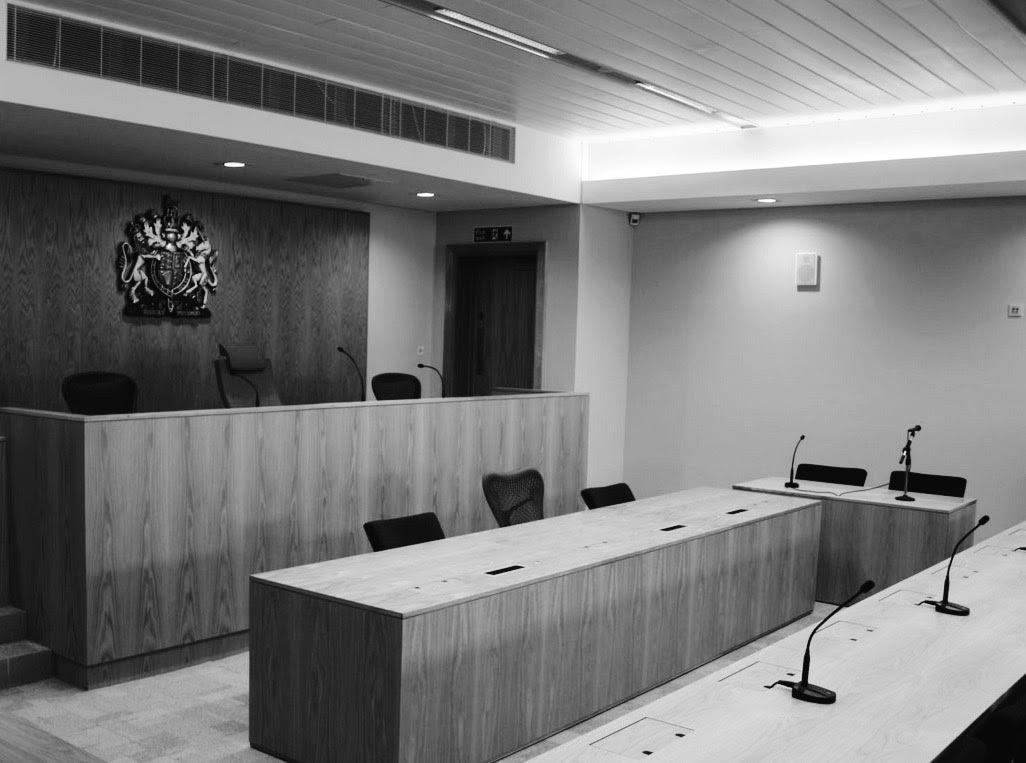
Sitting in a court waiting room.
Before anyone imagines me as a Pablo Escobar type character, I should explain that I’d been caught speeding. It was one of those roads where the speed limit changes unexpectedly, I’d misread it, already had points on my licence, and found myself hauled before a judge.
Some people I know found this hilarious and one asked me if the judge knew I was a senior person in a charity.
To be honest, I’m not claiming to be a comedian, but one of the funniest one-liners I’ve ever dropped was in that court waiting room, and I’m not going to skip over it to ‘keep the word count down’.
There were six of us waiting when the bailiff came out and asked who was pleading guilty. Apparently, the process moves faster when people plead guilty, don’t know why.
The first four people quietly admitted they were.
“Not guilty,” I announced.
Everyone looked at me.
I paused.
“Only joking,” I said. “Just wanted to be different.”
The waiting room burst into laughter.
“There’s already enough guilty people in here,” I said.
Anyway, the man sitting next to me was there for punching a police officer.
For the next two hours we chatted about his drug addiction, his attempts to get clean and, at considerable length, his theory that cats stare into mirrors because they can see into other dimensions, and sit on newspapers to absorb information covertly through their bottoms.
I wasn’t convinced, but I politely went along with it. What struck me wasn’t the conversation, but the role I occupied in it.
Officially I was another defendant waiting to stand before a judge. Mentally, I kept slipping back into being a support worker. Listening, encouraging, asking questions and trying to help.
The courtroom had labelled me one thing, but my career and training kept pulling me back into another role.
Early in my career I worked with somebody who helped shape me as a manager. They believed in me long before I believed in myself. Years later they were convicted of stealing money from vulnerable older people. They were literally taking over their bank accounts. You could have knocked me down with a feather when I found out.
I’ve met famous people whose public image is built entirely on warmth and kindness who turned out to be deeply unpleasant once the cameras stopped rolling. In particular, one popular UK children’s entertainer, but my lawyer instructed me to delete the section I wrote about him.
I’ve also met rough sleepers who shared the last of their food with somebody they barely knew. I was with someone a few days ago who is always broke for the precise reason that they give everything they have to people with less.
This is now the point where this essay takes an unexpected turn, like my car swerving into a side road when I see a speed camera.
One of my favourite episodes of The Simpsons is Rosebud.
For years Mr Burns was Springfield’s cartoon villain. Greedy, miserable, selfish and ridiculously wealthy. In Rosebud the writers quietly reveal that the thing he wants most in the world isn’t another billion dollars. It’s a battered old teddy bear called Bobo, which is strangely moving.
For twenty minutes they refuse to let Mr Burns be a caricature. They don’t redeem or excuse him, they just remind us that before he became Springfield’s villain, he was a lonely little boy who loved his teddy bear.
Victor Hugo understood the same thing in Les Misérables. Jean Valjean spends almost his entire life trying to escape a single label: convict. No matter how much good he does, people insist on reducing him to the worst thing he has ever done.
Unfortunately, labels have a habit of becoming identities. Listen carefully to the language people use, especially when someone no longer describes an experience as something that happened to them, but as who they are.
A person who once slept rough stops saying, “I experienced homelessness,” and starts believing, “I’m a homeless person.” A teenager who made one catastrophic mistake becomes convinced they’ll always be a criminal. We don’t just reduce other people to labels; we do it to ourselves.
The reason asset-based practice is powerful is that it asks a wonderfully subversive question: “What else is true about this person?” Not what they’ve done. Not what’s happened to them. What else? Because that answer is always more interesting than the label.
A few weeks ago, somebody asked me whether I thought people were fundamentally good or fundamentally bad. Twenty years ago, I’d probably have tried to answer. Now I think it’s the wrong question.
Just think of me: depending on which room you met me in, I could have been a charity worker or someone sitting in court waiting to be sentenced.
Neither would have been the whole truth.
I don’t know what happened to the man in the gym, and whether he’s still dealing drugs. What I do know is that, for ten minutes, he was simply another human being standing in front of me with blood running into his eyes.
Helping him was easy, but understanding him is much harder. Maybe that’s because people aren’t problems to be solved or labels to be attached.
We’re stories, and stories are never judged by a single chapter.
POSTSCRIPT: If anyone is wondering, the court gave me six points on my licence and a hefty fine after I told a sob story about why I needed my licence for work and family responsibilities. I didn’t write this from a high-security prison in between cracking rocks with an axe.
Comments
Nothing yet. Say the first thing.
Sign in to join the conversation.