
This year, Bryant Park’s woodcocks have achieved super-fame, attracting the kinds of crowds that in New York of 2026, are usually reserved for…cronuts? Shakespeare in the park tickets? It’s been a while since I did anything cool enough that I had to wait in a line. My friend Gabriel Willow, who has led bird tours in the park for years, had over 650 attendees on a recent tour, which is a lot. Those woodcocks are magnetic, goofy, and charming, in addition to being easy to see without binoculars in Bryant Park’s plant beds. They’re also surrounded by reflective glass and bright lights, which, while probably a drag for the birds, makes them near-perfect ambassadors for the problems many birds face in urban environments. In short: I’m delighted by the sudden popularity of these woodcocks, which are bringing lots of joy to people, and helping New Yorkers learn about the natural world.
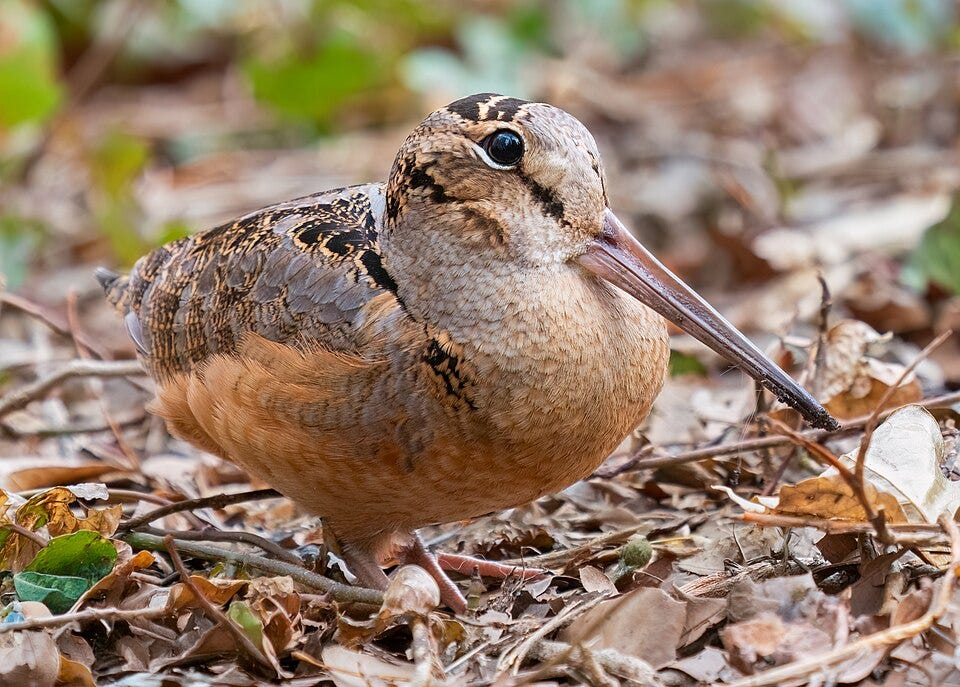
I’m also thrilled at the prospect of a new wave of local nature enthusiasts. If that’s you: welcome, friend. Some birders talk about something called a “spark bird,” which is the bird they saw that opened their eyes to the entire amazing world of birds that had been hiding in plain sight all along (as a generalist nature-lover who leads a lot of bird walks, I sometimes tell people my “spark bird” was a striped bass, which is the animal that sent me down this rabbit hole). Woodcocks, unlike the Central Park Mandarin Duck of years-past, or Flaco the owl, are annual visitors, native to this part of the world and a regular part of the incredible tapestry of animal life that passes through New York City every year, but they’re just the tip of the iceberg.
If the Bryant Park woodcocks are your spark bird, and the sight of these strange animals has pulled the wool from your eyes, revealing a glimpse of the marvelous natural worlds right in your backyard, you might be wondering: what‘s next? Luckily for you, New York City’s parks, beaches, and waterways host spectacular wildlife all year long, much of which can be seen with relatively little effort. Here’s an incomplete list of amazing encounters you can have in a natural New York City year.
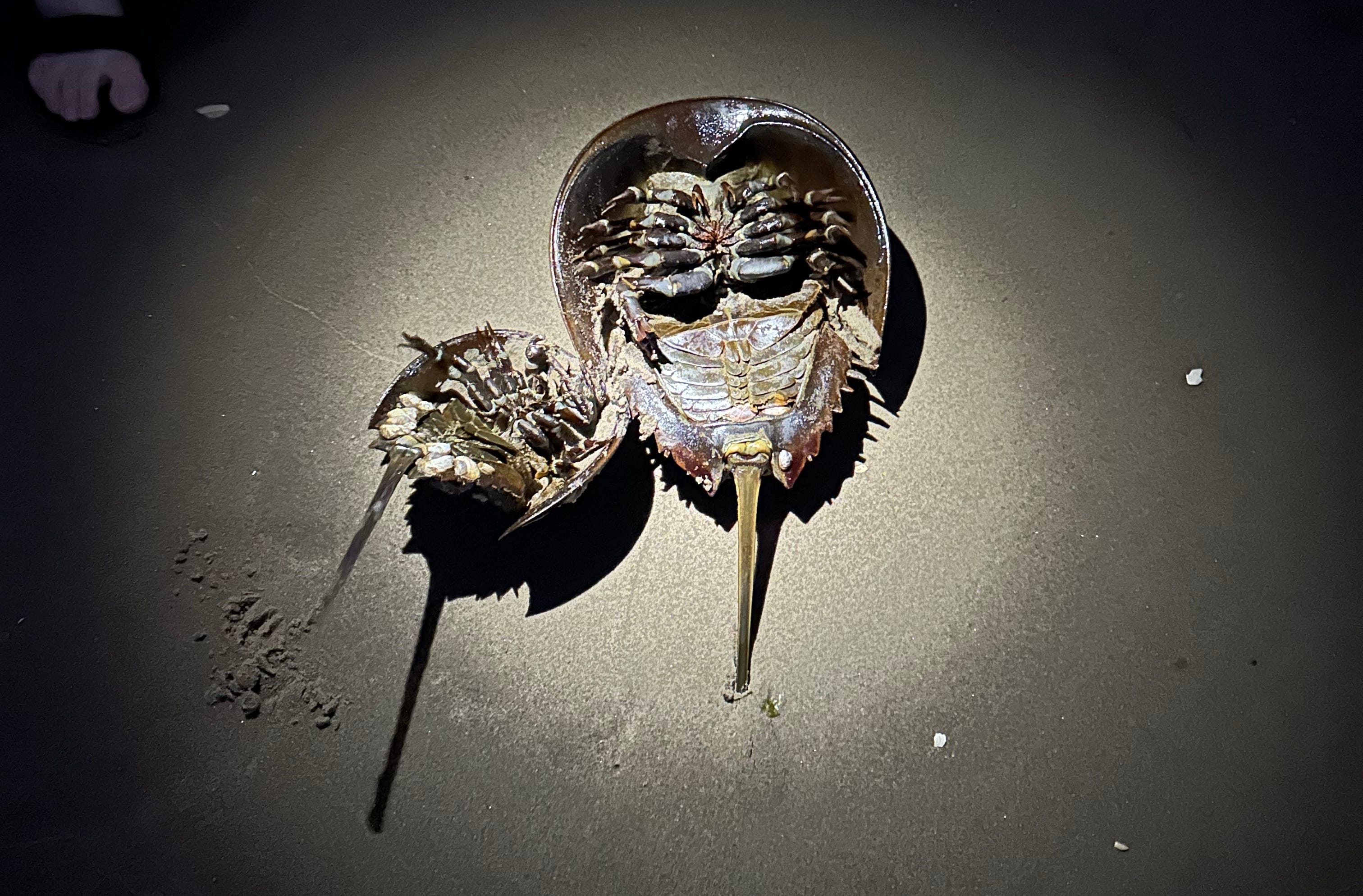
Horseshoe crabs are incredible, 450-million year old arthropods, and in late Spring and early Summer, hundreds, sometimes thousands of these prehistoric marine arthropods come right along shore at once to spawn on the city’s bay beaches. I’ve written about them here at Landlubber in the past, and I will again, because I love them dearly. Every year, I travel out to the shore to see them, and every year, I hear people who have never seen them before literally gasp at the sight. The big high tide nights in May and June are the largest gatherings, but if you go within a few days of those evenings, even during the day, to any number of the shallow, protected coves and sandy bay-beaches (Pelham Bay Park, Plum Beach, Bayswater Point State Park, Marine Park, etc.), you’ll likely find some of these amazing living fossils lumbering around in the shallows. If you’re interested in joining Landlubber’s friends and subscribers horseshoe crab nature walk, it’s coming up in May, and paying subscribers will soon get an invitation here.
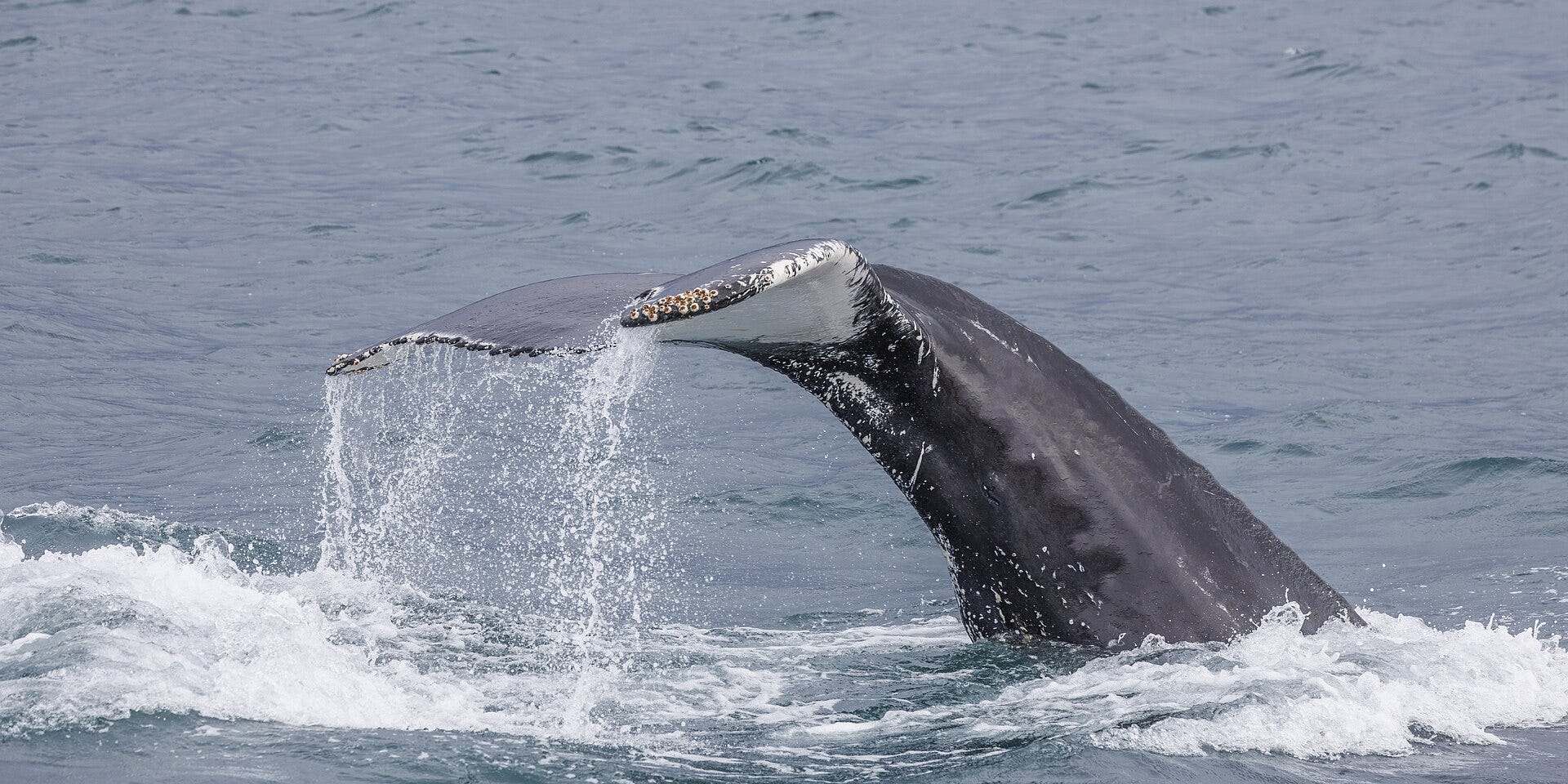
It’s possible that of all the life forms that share this wonderful planet with us, whales have the best PR team, so I won’t spend too much time extolling the virtues of these huge marine mammals, but they really are great. Unlike whales, NYC’s whale watch tours are still sort of under-the-radar, departing from Sheepshead Bay throughout the week all Spring, Summer, and Fall. The relatively recent return of the whales to these waters in large numbers is a triumph of conservation, and the boats go out regularly all season. You can book your trip here!
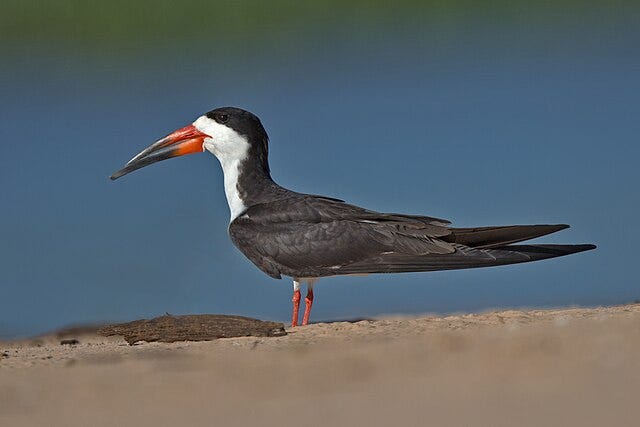
Black skimmers give woodcocks a run for their money in the funny-looking-birds department. They have ludicrous underbites for skimming fish off the surface of the water, and while their bills look pretty slick while black skimmers are actively feeding, they are (and I say this with affection) absurd-looking when the birds are just sitting around on the beach to nest. Some years, over a dozen pairs of these living muppets set up shop on the beaches of Edgemere, in Rockaway, usually in the eastern part of the preserve near Beach 44th Street. The Rockaway Endangered Shorebird Nesting Area also hosts breeding piping plovers, American oystercatchers, common terns, and least terns. I’ll be leading a series of free NYC Bird Alliance walks out there, passing along the boardwalk to observe birds and exploring the relatively new Arverne East Nature Preserve on the return trip, as I did last year, so keep an eye out for those dates, which I should have up here soon!
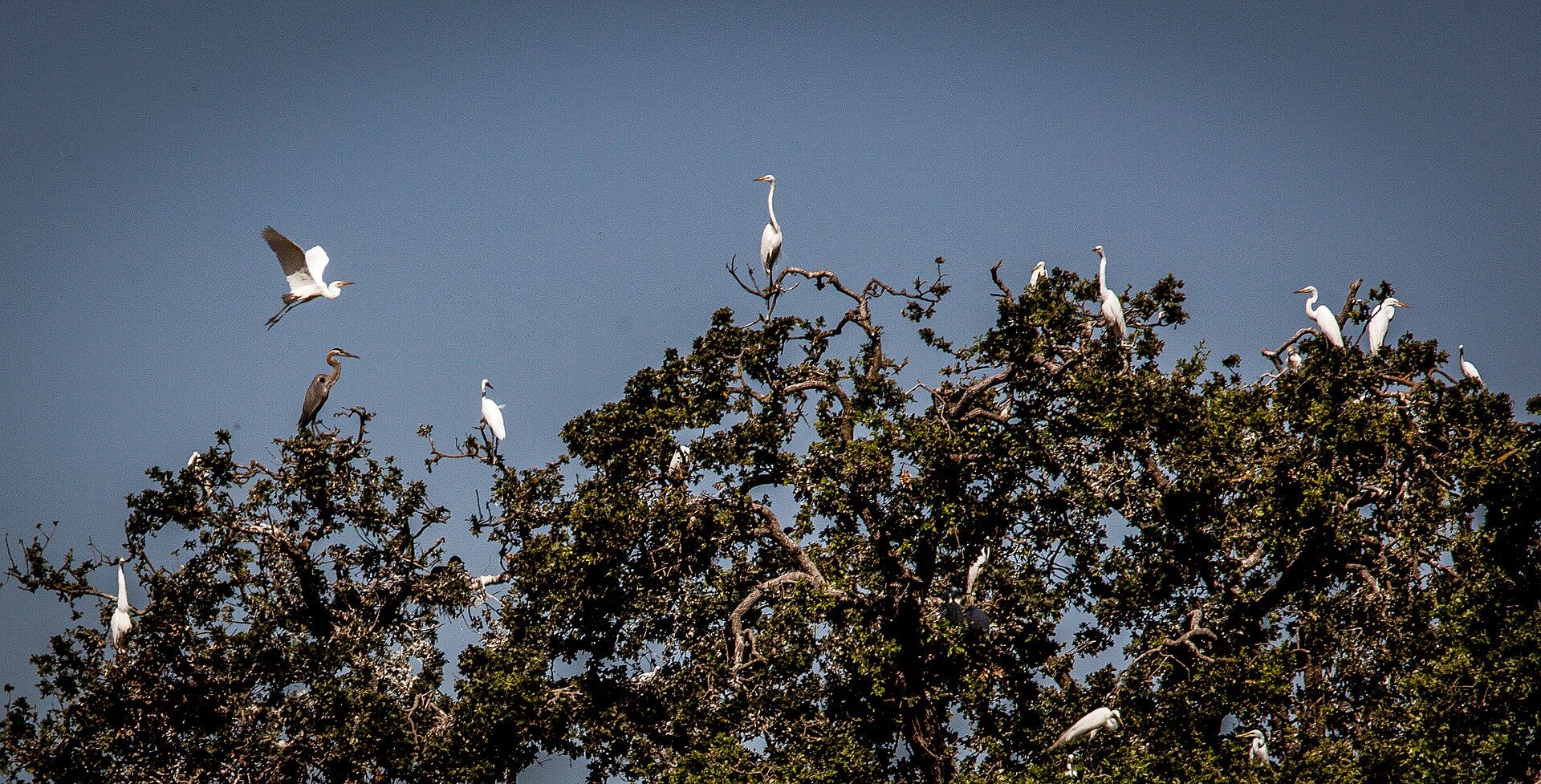
Great egrets, great blue herons, black crowned night herons, snowy egrets, and double-crested cormorants (as well as a few other less-regular species) nest in incredible mixed-species communal sites known as rookeries. Rookeries are basically the avian equivalent of apartment buildings, with dozens, sometimes, hundreds of birds cohabitating on the same stand of trees, packing their stick nests in little groups that are more or less sorted by species. I’ll be leading some Classic Harbor line tours that visit several during the summer, traveling up the East River and Hell Gate by boat to Mill Rock, U Thant Island, and North and South Brother Islands. The tours are pretty special, and tickets include a free beer or wine and food, as well as my commentary about the history and ecology of the city’s waterways and abandoned islands. I’m doing most Sundays in July and August, while the rest of them are being led by the inimitable Gabriel Willow. You can book those right here!
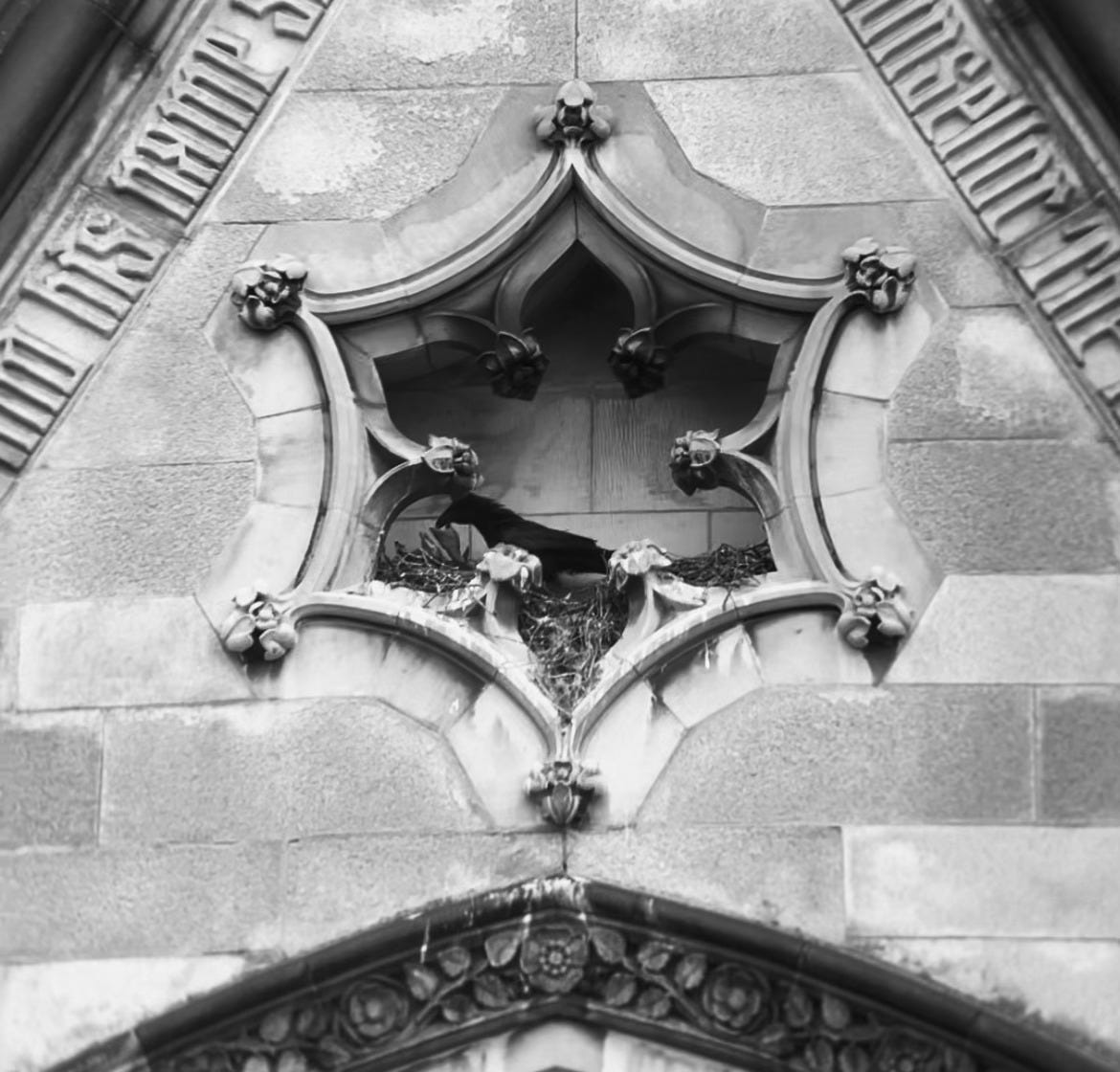
Along the ledges of buildings around the city, peregrine falcons, red-tailed hawks, ravens, American kestrels, and other assorted birds fashion nests by tucking eggs into gaps in concrete and tin, or stuffing sticks into crevices, cornices, or fire escapes. Chimney swifts—incredible denizens of an invisible aerial biome—nest in the old brick chimneys scattered around the city. Once you notice that the gargoyles have living birds for neighbors, you’ll begin to see these creatures everywhere (although some nests are more ostentatiously displayed than others). The peregrine falcons at Riverside Church have nested there for years, as have several other red-tailed hawks and falcons scattered around the city. Look up this time of year and you’ll start to notice that world! If you want to see a nest, but don’t want to live in a perpetual urban scavenger hunt the way I do, there’s a wonderful raven’s nest tucked into a recessed ornamental feature above one of the doors at Saint John the Divine. I’ll also take this opportunity to share, once more, my latest in the Architecture League’s outlet Urban Omnibus, which is all about that avian life.
A flock of gannets feeding is one of the most spectacular things you can see in your short time on this earth. It resembles…a war? A freak weather event? Gannets fold themselves into a kind of missile shape, falling stories through the air into the water before exploding on the surface, sometimes by the hundreds simultaneously. On really busy days, you can watch a constant cascade of them raining out of the sky into the ocean. I took the video below with my phone one December from a beach in Queens!
Outside of breeding season, which finds the northern gannets of the Western Atlantic nesting on the rugged cliffs of Newfoundland and the Gulf of Saint Lawrence, these birds wander along the ocean just offshore, following schools of small fish at sea, which means that you have to get kind of lucky to see them in their full, frenzied glory. That said, in October, November, and December, as well as early Spring (right now!), they often show up off NYC’s ocean-facing beaches on days with a substantial sea breeze (I’ve even seen them from the subway). I’ve extolled the virtues of getting out to the water’s edge in cold months, and gannets are about as good an excuse as any. Occasionally, they can be seen from Bay Ridge, just off the Verrazzano Bridge
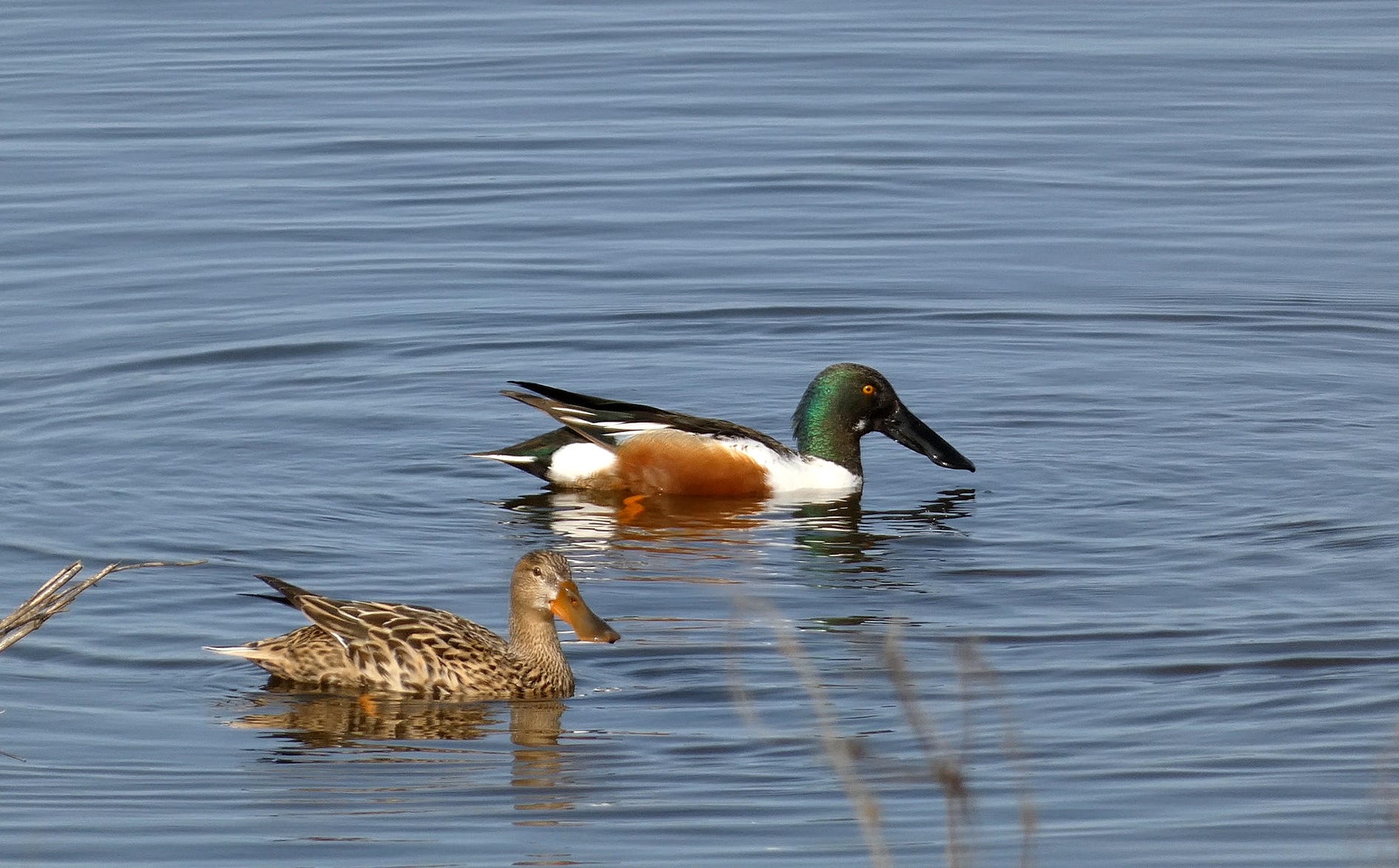
Every winter, when the trees are bare, and the subways fill up with all of our gloomy black coats, a stream of colorful, eccentric bird life pours out of the frigid northern lakes and coastlines to populate New York City’s lakes, bays, and coastal waterways. Buffleheads and hooded mergansers with bright white head-flashes, northern shovelers, with their outrageous long bills, common and red-throated loons, and an assortment of grebes suddenly appear in waters around the city. Those animals are really special to me. Many of those species, when you get a good look at them, are every bit as silly and wonderful as our woodcocks. Snow geese, which are one of my favorite winter birds, soar out of the upper-arctic in enormous flocks, landing on the open marshy areas of Jamaica Bay by the hundreds. Take a winter walk out at the Jamaica Bay Wildlife Area, or just walk to the reservoirs and lakes in city parks to see these birds.
What more can I say about New York City’s seals here on this newsletter? They’re incredible, but the tours, sadly, have concluded. I hope I see you next year on more seal tours, which usually start around January!
If you haven’t seen the woodcocks yet, there are free tours through the Spring in Bryant Park led by Gabriel Willow every Tuesday at 8:00 AM, and Thursdays and Fridays at 5:00 PM. You can also just go see them on your own, of course, and they’re pretty easy to find these days because of all the woodcock admirers, but I will say, it’s really great to have someone knowledgable to tell you about the wildlife you’re looking at, and answer your questions. Gabriel also does a ton of programming around the city all Spring and Summer, too, so you should definitely check out his schedule here. This year, I am fully committed to attending one of his after dark tours of Prospect Park.
Ryan Mandelbaum is another wonderful local naturalist who leads a lot of tours in the city, and their newsletter eyy i’m walkin here is full of amazing stuff about environments both near and distant. They also wrote a spectacular guide to NYC’s natural environments called Wild NYC that you can order here.
Sabrina Imbler’s newsletter Creatures NYC is a phenomenal resource, both because Sabrina is a wonderful writer and because they take the time every month or so to compile virtually all of the nature/wildlife programming taking place around the city, something I tried to do once before realizing that was a herculean endeavor requiring much more focus and energy than I had in the tank. If you’re into oceans, it’s also worth checking out Sabrina’s book How Far the Light Reaches.
NYC Bird Alliance has a ton of programming throughout the year, including tours that I lead, and the link at the beginning of this sentence will take you straight to the calendar for those events.
There are also some great nature related writers on here and elsewhere, and while I can’t list all of them, I’m always a fan of Robert Francis’s Bird History, and Nathaniel Bowler’s newsletter Birding with BillBow. Chris Allieri, of NYC Plover Project fame, has a lovely newsletter called Plover, devoted entirely to the little shorebirds that New York City’s local beaches every year. Alexandra Tey’s recent write-up of NYC’s first ever tundra swan was great, too.
On Tuesday April 14th, from 8:30 AM- 10:00 AM I’ll be leading an NYC Bird Alliance walk on the High Line. This tour has limited space available, so if you want to come, register at the link above.
I have two Intro to Birding walks in Marine Park this spring. Those are:
And
June 6th, from 9:00-10:30 (Marine Park is encouraging people to bring kids/babies to this one, and I might even have my kid there!)
Nature Writing in Cities, at the New York Botanical Garden, begins NEXT WEEK, and will consist of three sessions (two online, and one in-person) where we read a bunch of nature writing, talk about it, and then write some stuff and workshop it in a supportive, constructive environment. The online sessions are April 16th and April 23rd, from 5:30-730 P.M., and the workshop day will be at the garden on Saturday, April 25th from 11:00 AM- 2:00 PM. This class was a ton of fun last year, and I’m very excited to teach it again!
I also recently published another installment of my series about anthropogenic habitats for the Architecture League’s online magazine Urban Omnibus. This one is about the emergent avian ecosystems on buildings around New York City! If you’ve missed the earlier installments, you can find them all here:
As always, there are more wonderful Millie von Platen illustrations in these.
Comments
Nothing yet. Say the first thing.
Sign in to join the conversation.