
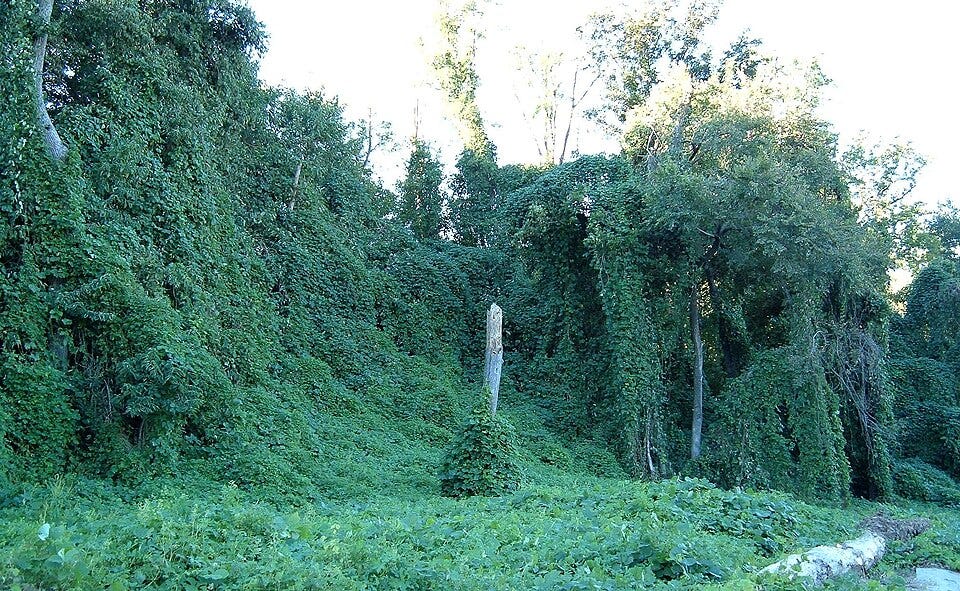
Recently, both online and off, I’ve encountered people who purport to be interested in the wellbeing of animals and/or plants who are questioning whether the concept of an “invasive species” is a good framework for understanding and taking care of the environment.
As someone who cares about plants, animals, ecology, etc., and has worked on projects large and small involving the restoration of native plant habitat (including by removing invasive species), I was interested enough to hear these people out, read what they’ve written, and consider their thoughts in good faith, but I quickly became disheartened by the conversation. Few, if any of the participants in this debates seemed to have done any of the assigned reading! In fact, in many cases, they didn’t seem to know what invasive species were, or have a totally clear idea of what they thought people meant when they used the term. Beyond that, they didn’t seem to have a coherent vision for what the goals of conservation and environmental stewardship ought to be. The only thing they seemed certain about was that everyone else was doing it wrong!
But as far as I could tell, they were voicing opposition to a sinister version of ecological science and restoration work that they had more or less imagined!
I don’t know exactly where this conversation started, but I found a few long pieces of writing in Current Affairs and Aeon that seemed to contain all of the major arguments that I saw being put forward elsewhere.
A sample from the Current Affairs essay:
Some introduced species, like the European honeybee as well as most of our crops and livestock, might fit the textbook definition of “invasive” but are the backbone of our food supply. Amidst these shifts, the distinction between “belonging” and “not belonging” becomes harder to sustain in strictly biological terms.
And now from the Aeon one:
Fighting against so-called invasive species is a heavy-handed way of micromanaging ecosystems. By being more open to alien newcomers, we allow ecosystems to respond to change in their own unpredictable way. The war against invasive species tends to fail because the very ‘wild’ features that make those species invasive also make them effective at resisting human management and control.
I don’t mean to pick on these two writers in particular—they’re just a useful way for me to spare Landlubber readers extensive recaps of debates that are largely happening on social media—but the articles, and the people arguing about this stuff elsewhere, get a lot of stuff wrong! The pushback seems to be based on several overlapping misconceptions, and from that foundation, to branch out into a few different sub-arguments. Some of those sub-arguments are totally erroneous—refutable with a ten-second internet search—while others are founded in valid concerns that nevertheless have little to do with the concept of an invasive species. I’ll do my best to address the various inaccuracies, and then engage at length with some of the arguments where I feel like there’s an interesting discussion to be had.
I’ll note that not everyone participating in the conversation seems confused about all of this stuff, but most of the people who are arguing against the validity of the entire concept of an invasive species seem confused or uninformed about at least something! If we clear up the basic question of the definition of the term and dispel a few factual inaccuracies, there are still a few interesting philosophical conversations to be had, but I think it will be clear that a total reordering of how we understand ecosystems and the problems they face, which seems to be what most of these people are pushing for, is quite simply not in the cards.
At the center of this is, in my opinion, some confusion about the ecological concept of an invasive species. Here’s the most widely embraced international definition from the International Union for the Conservation of Nature (note that outside of the United States, the word “alien” is included, even though we don’t really say that here):
The most important thing to note here is that “invasive species” is largely an ecology term, meaning that it’s a term used to discuss how organisms interact with one another in nature. It doesn’t have a whole lot of utility outside of that context! It describes species that, when they are introduced by people outside of their natural range, have the effect on the new ecosystem around them of reducing its biodiversity to the detriment of the other life that exists there, including people.
The definition is worded so as to include declines in “ecosystem services” and “human economy and well-being” as impacts that are separate from biodiversity loss, and they definitely can be, but in most cases the mechanism for those impacts is really just the aforementioned reduction in biodiversity. A basic definition that will do just fine in nearly all cases is: “an invasive species is species introduced by people to a place outside of its natural range that reduces the local biodiversity, thereby diminishing the productivity of that environment.”
One thing that just about everyone who is upset about this concept seemed not to understand is that the term “invasive species” isn’t a moral designation. It’s not a synonym for “bad species,” or “evil species.” Just as the categories of “insectivore” and “herbivore” might help you understand certain things about various life forms, and the categories “fish” and “bird” might help you understand other things, “invasive” is a category that can help you shine light on some, but not all, of the traits of a given life form. It’s a lens for understanding how a species relates to the environment.
I’ve compiled some of the common arguments that tend to come up in this discourse, followed by my personal thoughts on why these arguments aren’t sufficient to merit a reconsideration of the category.
This is a common refrain among the people who want to toss out the term “invasive species,” but if you look at the definition of “invasive species” above you can see that it has nothing to do with fault in that sense! The ecological concept of an invasive species is about biodiversity and ecosystem services. It’s a scientific term that asks you to look at changes in:
the number of species in a given ecosystem; and
the services that ecosystem provides
The question of “fault” on the part of invasive organisms lies entirely outside of this framework, and therefore makes no sense as a criticism of it. That said, it’s true that it’s “not their fault!” By definition, invasive species are introduced by people! It’s our fault!
This is also true! There are many invasive species that you and I enjoy in our day-to-day lives as food, medicine, shade, building material, and all manner of other things. You can hang a hammock on an invasive tree as easily as on a native one. Invasive species can also provide services to other plants and animals. But take another look at the definition of invasive species above! It’s not about whether or not a species provides any services, but about whether its presence increases or decreases the total availability of services! If I take five apples, and give you back two apples, it’s easy to see that you have three fewer apples than you did before! If an invasive plant pushes out three other plant species that had been providing food and shelter to twelve species of animals, but manages itself to provide food and shelter for two species of animals, the biodiversity and productivity of the landscape has, in a way that is not really up for debate, declined. Invasive species are by definition species that reduce biodiversity and/or ecosystem services!
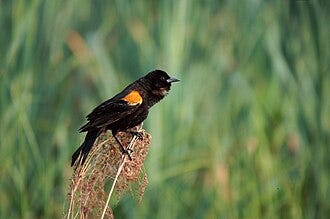
Consider phragmites, a pervasive wetland grass that takes over the edges of wetland environments. Can wildlife use it? Sure, some animals can! Red-winged blackbirds love nesting in that stuff. Does it reduce the overall biological diversity of a given environment? To a staggering degree. Compared to the patchwork of grasses, floating aquatic species, cattails, lilies, rushes, and various other wetland plants that would normally exist along the shore of say, a pond, in North America, creating a variety of niches for various life forms, habitats that are overgrown with phragmites are practically barren. Can you still kayak on them? Sure!
Another sub-section of this debate has to do with practices around curtailing invasive species. This is fair to discuss, but I must say, when I dive into the “discourse” here, I find myself astonished at how little the flag-bearers of this crusade seem to know about current practices! It makes sense that a lot of people with backgrounds in, say, politics, philosophy, and art don’t know very much about the ins-and-outs of stewardship and restoration, but it makes less sense to me that they’d develop such strong opinions about that work without first reading up on it. There’s an incurious streak in this movement to rethink the ecology!
There’s a whole range of strategies for mitigating invasive species and stopping their spread to new places that are rarely mentioned at length by these critics. These strategies include restoring previously disrupted features of a given environment such as water, soil, or topography, as well as initiatives concerning the inspection of common vectors (boat-bottoms, firewood, etc). Occasionally mitigation consists simply of simply planting native stuff as a buffer to prevent invasive species nearby from expanding. These strategies are typically applied in conjunction with one another, often after extended, thoughtful deliberations on the part of the people doing the work.
Another thing that a lot of people who dislike the idea of removing invasive species would be surprised about is how often people making decisions about this stuff decide that doing nothing is the right course of action! It’s not always practical (or a reasonable use of one’s time) to get rid of every invasive species, and as we’ve already discussed, a given section of invasive growth might have a secondary purpose that’s unrelated to the local biodiversity (a stand of trees that prevents people from accessing a sensitive area, or is holding together another feature of the landscape with its roots, or creating privacy, to name just a few random examples).
I’m not saying everyone always lands on the perfect solution, either. Power companies deal with invasive species by drenching landscapes under the power-lines in glyphosate, and I don’t think that’s a good management practice. If removed incorrectly, or at the wrong season, the removal process itself can broadcast seeds or rhizomes of invasive plants out into the broader environment, worsening the problem elsewhere! Even the most thoughtful stewardship initiatives and organizations consist of human beings, and everything from profit incentives, to staffing issues, to inaccessibility of certain habitats, can prevent people from landing on the ideal approach. Generally speaking, however, people working on these problems really do spend a lot of time weighing costs and benefits of various approaches, and catering them to specific moments and places.
There are also existing differences of opinion amongst people who work in ecology about the tradeoffs and relative merits of various strategies. There’s a lot of room for debate there! For some reason, however, a vocal segment of people who purport to be interested in this topic aren’t jumping into those conversations. Instead, they want to argue that actually, the entire field of ecology has this backwards. I don’t think that’s true!
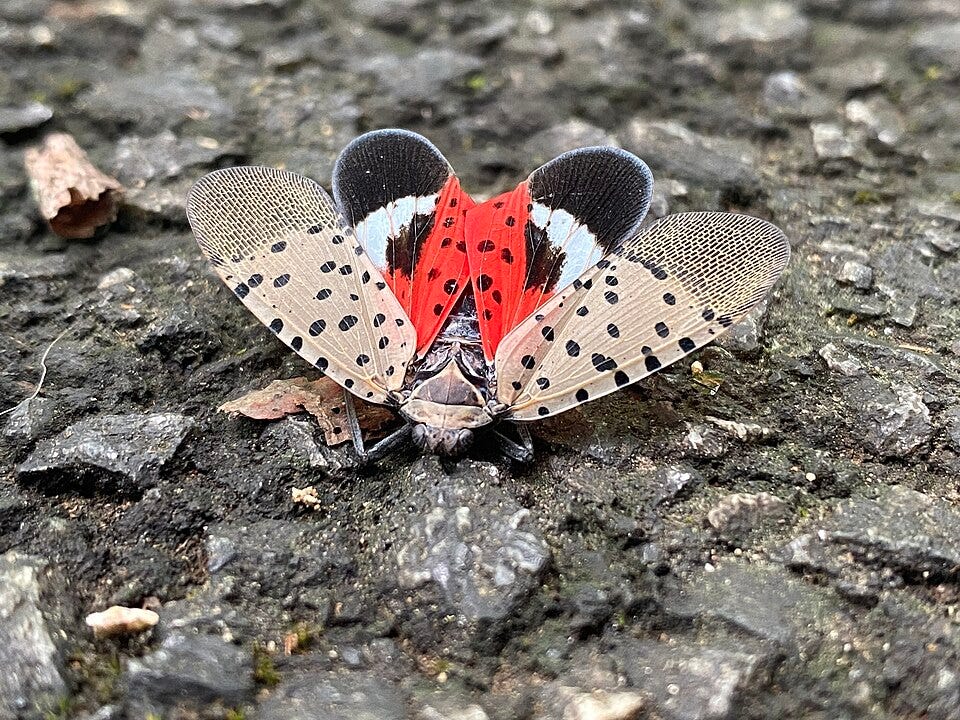
I suspect that a good deal of the backlash is rooted in New York State’s public communications about the spotted lanternfly, which essentially amounted to instructing everyone to kill on sight. It’s true that sometimes the removal or mitigation of invasive species involves mass culling, but it’s not the norm, and arguably, it’s something we avoid too much because it’s controversial!
This is untrue and it is easily disproven! I hesitate to say “look it up” because it sounds sort of rude and catty, but I don’t know what else to say. There are examples of habitats that have been restored by removing invasive species all over the world. Some examples include entire nations, but invasive plant removal has also succeeded in small patches of green space such as parks, gardens, ponds, backyards, etc. When people say stuff like this it is instantly clear to me that they have not done even a cursory amount of research on this topic. Sorry, but: read a book!
A reasonable thing to say would be “not every strategy for mitigating or eliminating invasive species works in every situation,” or “some scenarios will require perpetual work to prevent invasive species from reemerging,” but these more qualified statements do little for someone trying to argue for a maximalist, paradigm-challenging position that we should toss out the entire category. I really am open to having conversations about what works well in which circumstances—I believe that New York’s spotted lanternfly guidance, for example, was imperfect—but I have very little patience for this type of blatant misrepresentation by people who don’t know what they’re talking about!
I suspect that this is an animating grievance (if not the animating grievance) for most of the people who want to rethink the concept of invasive species. And I get it! Life is precious. Animals are sentient! Plants are probably also somewhat sentient! I decided fairly quickly that casually stomping on spotted lanternflies was not for me! But this argument about animal suffering tends to overlook the immense amount of suffering that invasive species inflict on the ecological communities around them.
When biodiversity declines, and habitats stop providing the resources they did before, things get grim for for animals. Birds, fish, and insects make hopeless journeys to vanished or inaccessible seasonal habitats, exhausting themselves as they search in vain for communities of life that can support them. Baby birds starve on the nest as their their parents fail to find sufficient food for them. Fatigued animals succumb to predation and illness, drown from exhaustion over open water, die of thirst and of desiccation, starve, and succumb to all kinds of other horrible fates, most of which entail pain, suffering, and stress on grand scales. Even when a given animal does figure out how to cobble together enough of their basic life-functions to get by in these less productive habitats, they often live a permanently diminished, more precarious existence. It’s fine if you feel bad about squashing bugs—I certainly do—but if you’re going to look at this from a moral perspective, I think you’re obligated to consider the larger ecological picture.
This one tends to come up in these long essays about why this term is bad, and I’ve gotta say, it is just not my experience that invasive species are “demonized.” Occasionally I see people get frustrated when dealing with say, an individual patch that is being smothered by a plant that keeps returning, but it doesn’t strike me as accurate to say that there is anything hateful or cruel in the language people use to discuss these plants and animals, or that that language is outside the bounds of acceptable everyday conversation on any number of other topics. Do people complain about invasive species? Sure, sometimes. Do they do so in a way that is fundamentally different or more sinister than the way they complain about: weather, traffic, noisy neighbors, crowded subway cars, and potholes? I don’t see it!
Speaking for myself, I’m amazed and impressed by plenty of my local invasive species. They’re resilient, hardy, full of traits that allow them to barrel through the ecological boundaries that keep other species in check (those are the very qualities that allow them to thrive to the detriment of nearly everything around them!) On many occasions, watching them take over has opened my eyes to the mechanisms by which organisms succeed and fail in general! I don’t think we have to tolerate wetlands choked in phragmites, but I’m happy to tip my hat to phragmites itself, whose fast growth, and prolific seed dispersal have allowed it to spam its way across wetlands everywhere!
Many of these organisms are also stunningly beautiful! Who could resist the intricate black and red patterns on the wings of spotted lanternflies? I can’t! But these points fail, like so many birds trying to nest in a landscape overgrown with kudzu, to successfully challenge the invasive species concept, which is, once again, a term that is almost exclusively concerned with ecology, and doesn’t have much utility otherwise.
Still, the argument that there is an undercurrent of hatred in the way ecologists and everyday people use this term seems to be a staple of this discourse, and while I hesitate to dwell too much on it, it’s really is prominent. I’ve gotta say, I find it to be intellectually dishonest and more than a little distasteful!
Here’s the Aeon piece:
Local environmental agencies declare war on these plants, employing fire, herbicide and chainsaws in a perpetual battle.
Even seemingly benign organisms, like fungi, get blacklisted.
Now the Current Affairs piece (from a longer section comparing the public response to the appearance of spotted lanternflies to the public response to the spread Covid-19):
Labeled by Donald Trump as the “Chinese virus,” the pandemic was repeatedly framed through tropes of foreign contamination, porous borders, and biological threats. The campaign to control the lanternfly, whose arrival in the U.S. was broadly assumed to also come from China, echoed the same vocabulary. Maps tracking its spread, like those developed for COVID-19, visualized the breaching of boundaries in real-time. The politics of biosecurity migrated easily from human bodies to environmental landscapes, reinforcing an immunological fantasy: that boundaries can be kept intact, that the world can be sanitized, that our ecosystems can remain pure. The effect was an emotional doubling, with both intruders rendered through the same lens of defense, sovereignty, and nativism.
Sorry, but if either side of this debate is guilty of importing language reserved for discussions of the mistreatment of human beings, watering that language down to fit their own purposes, and weaponizing it, it seems pretty clear to me that it’s the iconoclast thinkers hoping to “disrupt” our shared framework for describing ecology. One tell here is that the sections of these essays in which the authors are trying to expose the “inherent violence” of the terminology or whatever rarely seem to draw on direct quotations from ecologists who are using the term in context. Instead, the writers themselves seem always to be articulating the concept of an invasive species in the most problematic language possible, then pointing at their own words and saying “see? There’s something morally suspect going on here!” That, my friend, is a mirror!
Additionally, I find the term “ecological nativist,” which is their chosen derogative for the ecologists and habitat managers who use the concept of invasive species to inform their practices (the vast majority) to be pretty offensive: an insult to those doing the hard work of trying to protect the environment from human-caused harms, but also to the human beings caught up in the very real violence and persecution caused by nativist worldviews as we typically define them, whose suffering is trivialized by that kind of language.
Of all of the various facets of this debate, this is the one that I find most interesting. It’s true! Ecosystems change, and habitats change. Patches of soil, water, sky, and rock undergo incredible, dramatic transformations between various states. This happens on timescales that are short and long, and in ways that both increase and decrease the biodiversity of a given area. It happens to little patches of grass, and vast expanses of primeval wilderness. Forested areas turn into beaver-ponds. Trees fall down with age, creating light gaps in the canopy and ushering in new “succession species” whose seeds were waiting in the soil. On longer timescales, of course, species themselves transform, evolving to fit the world around them! Change is constant and eternal!
It’s also pretty undeniable that some strange, interesting anthropogenic ecosystems are emerging around us, with certain plant and animal species succeeding nicely in our human-altered world. Wildlife has worked its way into unlikely habitats, finding shelter in the nooks and crannies of skyscrapers, and food amid the effluent that we aggregate in our sewer systems (check out my latest piece in Urban Omnibus!). Certain plants and animals are working their way quite successfully into this world that we’ve created, their populations exceeding, in some cases, the numbers they’d be capable of reaching without anthropogenic changes to the environment.
And some animals, yes, even find food and shelter in landscapes that have been taken over by invasive species. Organisms that find ways to succeed in these circumstances are fascinating, inspiring, worthy of study and reverence. But these examples are irrelevant to the validity of the invasive species concept, which is defined by (everyone together now) the decline of biodiversity caused by non-native species introduced by people!
Just as building a parking lot on a natural landscape transforms an ecosystem by reducing the number and variety of the organisms that exist there, the introduction of invasive species is by definition something that does the same. If a species is introduced that does not do this, then that species is not an invasive species. It’s a pretty narrow, technical term, describing a particular type of transformation, and many of the attempts to “debunk” this concept on these grounds begin with this sneaky expansion of the definition to mean things it doesn’t mean!
As interesting as the animals and plants that do well in areas dominated by invasive species may be, they are by definition the exceptions. Landscapes dominated by invasive plants contain fewer species than comparable landscapes that aren’t dominated by invasive species. Anyone with a little bit of an eye for wildlife and some time to kill can observe this easily for themselves, but it is even more dramatic at the insect levels of ecology, which can be easy to miss without careful study.
Invasive species are a serious, well-documented cause of the global decline in biodiversity, second only to direct habitat destruction such as logging, paving over natural environments, etc. If you want to say “the decisions we make about how we manage the environment should not be based on trying to prevent a decrease in biodiversity” that’s fine (or at least, it’s honest)! But it’s a conversation that doesn’t have much to do with whether or not the category of “invasive species” is a legitimate one, because the category of “invasive species” is about biodiversity!
If someone wants to make more precise arguments about when and where various types of interventions should be employed, or whether or not certain species should be considered “invasive” based on observations about how they impact other organisms, I don’t have any problem with that. But that work requires study: careful observation of ecosystems and how they change over time. Until the people pushing against the idea of “invasive species” are willing to put in that effort, or at the very least read the work that other ecologists have done, they’re committing the most basic intellectual discourtesy: demanding to be heard without listening.
Comments
Nothing yet. Say the first thing.
Sign in to join the conversation.