
Editor’s note: Links added after original publication.
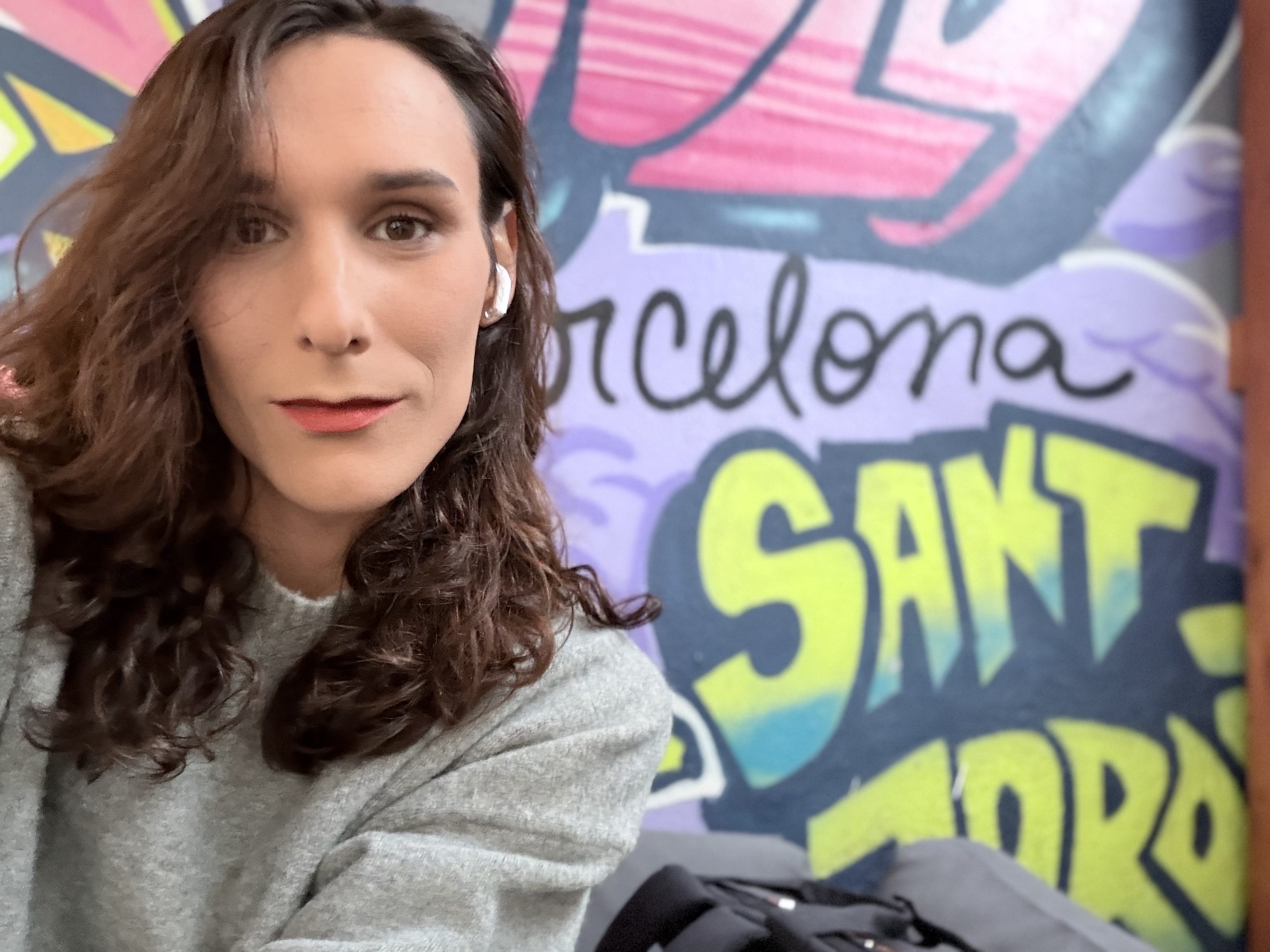
According to Kate Isett, the reality began to hit her as she stood inside the Half Price Books with a box full of her records.
She remembered all the nights she’d slip a vinyl onto the platter of her record player, flip the tonearm into action and dance ballet in her studio apartment overlooking the country hillside in Austin, Texas. She had danced ballet since she was 12 after all, and made some of her closest friends performing onstage for years.
When she returned to her apartment, it seemed barren. Her artwork was moved and the dust underneath it swept away. Her closet was empty, she didn’t have many clothes to begin with, she mostly thrifted them all, but some sort of emotion hit her as she packed her unnecessary shirts and pants in donation boxes. Whatever it was she felt, she swallowed it and kept on moving.
This studio apartment, which she grew to call home, was now empty.
It had been building for a while but the epiphany hit her: as a transgender woman, Kate Isett was going to seek asylum from the United States.
While more transgender Americans are seeking international asylum than ever before since President Trump’s executive order impacting gender classifications, fleeing the US remains difficult for the LGBTQ+ community as it’s still widely classified as a safe country. Transgender asylum seekers are also required to provide evidence of experiencing “credible fear” based on their identity, and must navigate a number of other challenges, such as increased scrutiny toward documentation and extensive backlogs, making the process more restrictive.
Although successful asylum claims by U.S. citizens remain exceptionally uncommon, Isett is not alone in attempting the process. Last year, a trans woman named Hannah Kreager left Tucson, Arizona, and sought asylum in Canada where, as of May 2026, she still awaits a decision on her case.
Cassandra Whitaker, a Maryland poet familiar with Isett’s story online, said she’s seen an increase in transphobia in the modern climate, while noting her personal perspectives on trans safety in the US. Whitaker shared accounts of LGBTQ+ Americans being discouraged from seeking asylum because it challenges the perception that some parts of the U.S. are relatively safe for queer folks.
“I know other people who have tried to find asylum and they’re mostly told by members of the community, ‘you’re not going to get that asylum because the U.S. is still one of the better countries for LGBTQ+ people,’” Whitaker said.
Isett had flirted with the idea of leaving her home state of Texas for years, but leaving the country was a new one. She had been convinced to relocate to Chicago, where her sister lived. Isett had saved her money, visited the city and had interviews with two Michelin Star restaurants. Just a week before her planned domestic relocation, the National Guard was deployed in Chicago generating more concerns and unrest.
Her lifelong friend, Will Walkup, had also been extending the offer for Isett to relocate to his new home state of Massachusetts for years, saying “it was no mystery she needed to leave Texas.” He noticed a “stark” difference in her demeanor almost overnight following the 2024 election results and noted she seemed more fearful.
“That was kind of a reality to me,” he said. “It was like something I don’t have to worry about or be so concerned about– it really opened my eyes to look into it and to really see it for what it is….
Brandon Sims, a friend of Isett’s for over 20 years now, shared Walkup’s sorrow that Isett was “forced out of the community.” Sims and Isett were both raised in what he described as a “deeply conservative homeschool Christian culture,” in Lubbock, Texas, and recognized how common prejudice toward the LGBTQ+ community is in such environments.
“In American culture, there, of course, are enclaves of communities that can be safe, but it’s so difficult to the point that, sadly enough, people like Isett find it best to leave the country and seek asylum elsewhere,” Sims said. “....I’m grateful that Kate, and people like her, are empowering others to be more open and obvious, and continue to set [an] example.”
Isett recalled how, growing up, she faced ridicule for her feminine behavior, small stature and higher-pitched voice, which stopped her from coming out until her adult years. She has openly identified as a trans woman for years, although many– including her father– still choose not to acknowledge this identity, she shared. Now, her friends who have long supported her are wrestling with her desire to leave the US.
“For me, I think it’s a testament to how naive a lot of us are,” Walkup said. “And by us, I mean people that just don’t have to think in those terms. I won’t even necessarily make those judgments right now, but like I said, it was as much a surprise to me that she would need to make such a drastic change until I just turned around and saw why.
“And that’s a contributing factor to the problem itself. That not everywhere is safe for everyone.”
Isett questioned her epiphany for a moment, asking herself ‘is now a good time to be brave?’ That same October night, she decided it was.
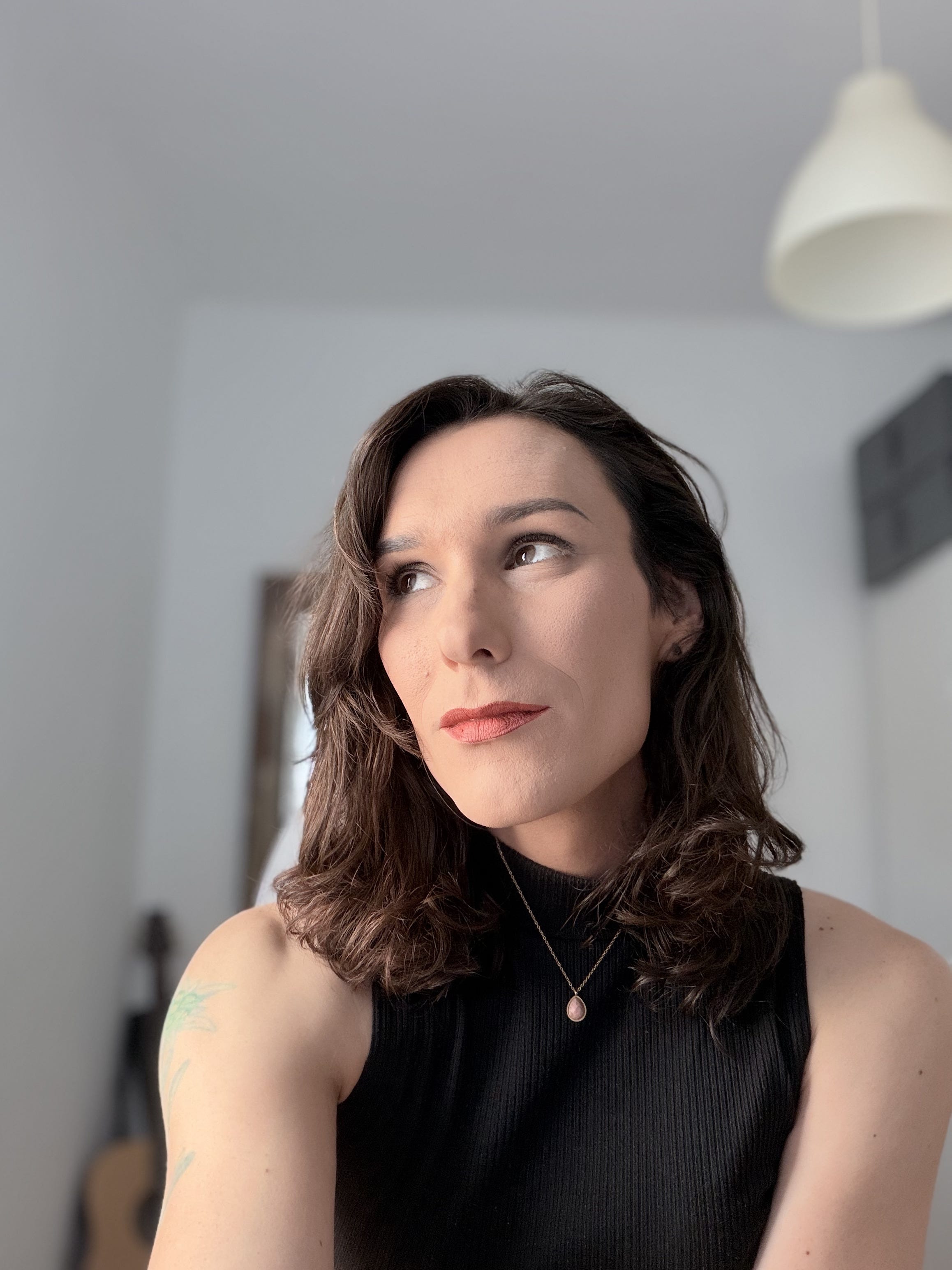
After serving dinner to the family and watching them get up from their table and out the front door of Southerleigh, Isett grabbed their bill in the midst of all the used plates and scattered cutlery. The tip line read: $0.
It wasn’t what she imagined working 50-hour weeks to save money for her relocation, but a part of her had come to expect such treatment as she remembered all the times her customers had asked for a different server– or even left the restaurant entirely, she shared. Isett cleaned the dirty plates off the table with a smile on her face, an attitude her coworker Mary McKelvey-Johnson praised.
“She definitely provided a level of service, at least in hospitality, that is truly unique and very much appreciated,” McKelvey-Johnson shared. “Myself and my coworkers all really enjoyed having her around because she was “A-type” in a sense that she provided a lot of structure for us, and a lot of organization.”
Isett had just left her position at the University of Texas, but still commuted from Austin to the restaurant in San Antonio in an effort to save money to relocate. She was only able to last eight months working at the university, because changes in the state’s bathroom policy through Senate Bill 8 and the executive order targeting DEI policies contributed to the job being “unmanageable” for her. She also filed harassment claims against a fellow employee but felt it wasn’t taken seriously at first, getting to the point where she was “followed around campus.”
“There are only so many safe spaces that I have, and if I lose the bathrooms, then what happens if he’s just like creeping in one of them around the corner?” She asked herself.
According to StalkingAwareness.org, LGBTQ+ individuals are more likely to become victims of stalking than cisgender and heterosexual individuals. Documented LGBTQ+ victims also tend to have higher rates of mental health issues from impacts of stalking, which researchers theorize stem from discrimination, prejudice and stigmas.
This instance isn’t the only time Isett had been sexually harassed. She explained how she’s seen a pattern of oversexualization of trans women throughout society, and has experienced it first-hand.
“People think that you’re, by proxy of being trans, a sexual object and a sex-crazed fiend,” she said. “A nympho and all of this, and that those sexual advances are warranted and accepted very easily.”
A survey of over 80,000 transgender and non-binary respondents conducted by UCLA in 2022 found over 5% of all intended demographics had experienced a physical attack, and 64.4% of transgender people reported at least one attack they experienced was related to their gender identity. 21.8% of all respondents who were victims of physical violence in the same survey reported experiencing sexual assault.
Marisa Matinez, one of Isett’s best friends and her former manager at Southerleigh, described all the weekends Isett visited her home– when the smile she wore in the restaurant would fade. The nights she saw Isett in “fear of living here and being herself.”
“We’re losing a person who cares about family and friends, the person who cares about service and upholding values,” Matinez said. “And a person who just, I feel like really loves to express acts of service and community.
“And because the community couldn’t accept who she is, we are losing somebody who was trying to pull that all together.”
Matinez was there when Isett cleared the last of her belongings from her apartment, and was the one to drop her off at the bus station as she left the country.
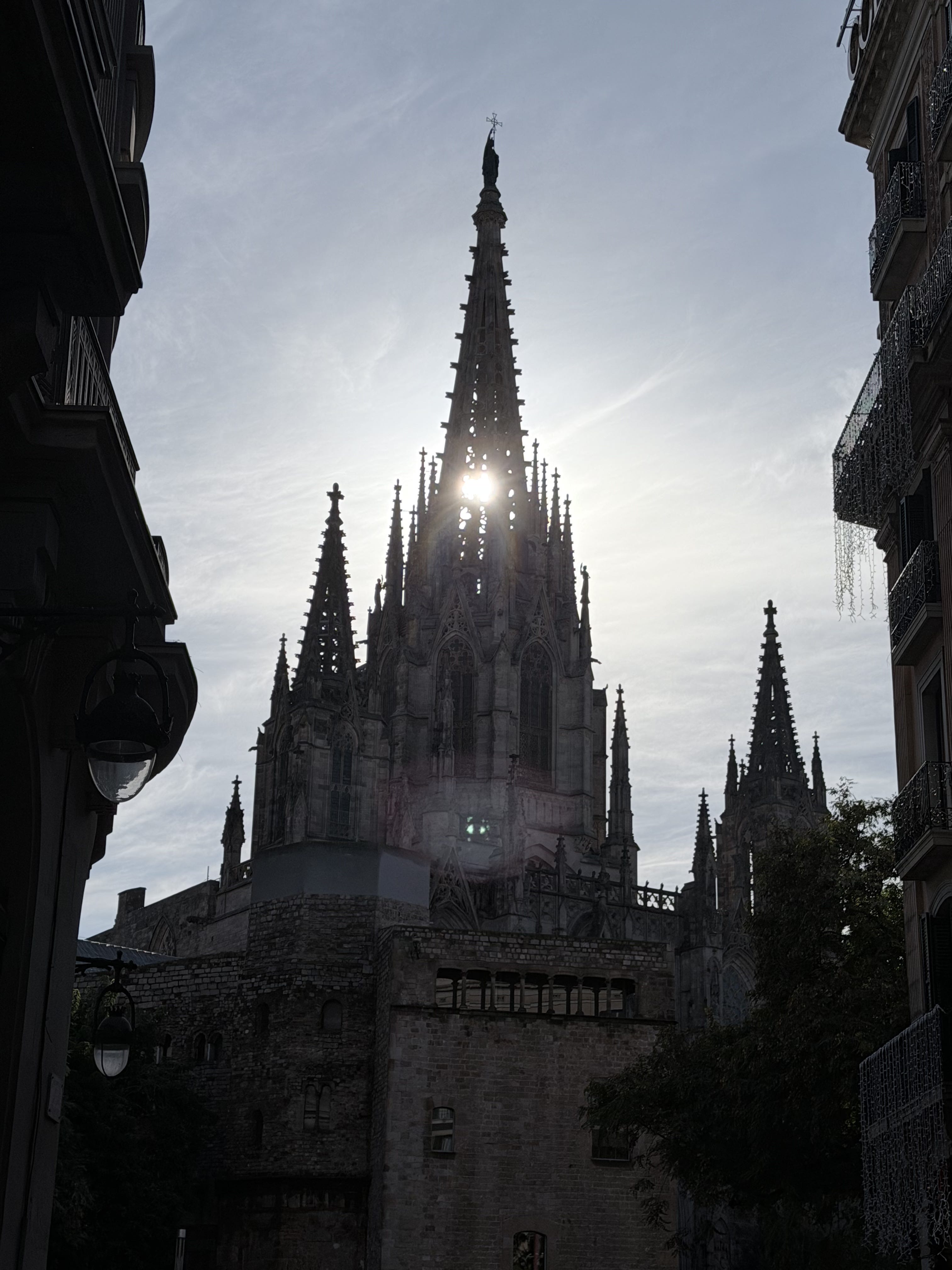
Isett landed in Barcelona on Dec. 16, unsure of where she was going.
She spent a week in Lisbon, Portugal and fell in love with the city. She had connected with a queer community through a mutual friend from her hometown, but a push for anti-trans laws in the country during her visit made her reconsider.
“They were kind of following suit of the UK, who was following suit of the US,” Isett said. “And I just noticed the pattern upfront and was like, ‘well that’s not going to be it.’”
The three proposed anti-trans bills– focused on restricting healthcare for trans and intersex children, requiring medical diagnoses and barring those under 18 from changing their gender marker and name on documentation– currently await further debate. All three bills were approved by the Portuguese Parliament on March 19 and March 20, but Isett had long been gone.
With her limited finances, she returned to the city she landed in. Barcelona, after all, had been one of her first choices when traveling to Europe.
“I think the quality of life here that I see from other people is very high, and people here generally seem very joyous, and I want to be around that kind of energy,” Isett observed. “And there’s just like a really good scene here for queers, for people that are foodies, for all of these other things.”
She’s resided there since.
“Hey, I heard that you’re gonna go and apply for asylum in Spain. Do you have any information about that?”
The conversation which occurred outside Southerleigh with a coworker while Isett took a smoke break now replayed in her mind in Barcelona. After arriving in Spain, she submitted her asylum application, and endured the three hour interview, she started to think about sharing her experiences with others looking for information.
In reality, Isett created a checklist for her friend’s transgender son wanting to provide him a resource if it was ever necessary. She already emailed them the information in a .zip file, and now she thought of the small mailing list she curated within her community in Texas of those interested in her experience.
“If I start doing this stuff for [my friend and his son], then I might be able to start doing it for other people,” she said.
Eventually the mailing list grew into an idea to start her own asylum-seeking resource.
“I was watching people on the other side of the world, like the people that I care about, hurting and not having any sense of hope whatsoever,” Isett said. “I wanted to at least give them a little bit, or maybe a fighting chance.
“So, I just said, ‘hey, I have this information. I am not a legal counselor. I’m not a financial advisor, but I can at least help you and answer questions if you want, and we can try to figure out what the best ways to relocate are.’”
Isett was debating on creating a larger platform to spread asylum-seeking information for weeks, and was finally prompted to do so when Kansas revoked 1,700 drivers’ licenses belonging to transgender residents. Multiple states, including Texas, had signed recent laws prohibiting people updating their gender markers on their drivers’ licenses and birth certificates but this Kansas law invalidated legal identification already issued. With this development, Isett oofficially founded LGBTQ+ Assoc. Far. (“FAR”)) and made a social media post sharing her story.
“There was part of me that was waiting until I was ready to stand the organization up, but I knew that at that moment if I made the post that I did that there would probably be enough traction with, inside of the algorithm to get the volunteer support that I needed to be able to do this,” she said.
Almost a decade ago, Isett was living with alcohol and substance-use disorders, both recognized medical conditions. She eventually moved to San Antonio in an effort to escape her environment, and soon became sober. It took her another three years to come out as transgender.
Isett’s latest restart began in January 2025, when Trump signed an executive order proclaiming there are two biological sexes. The law also ensures single-sex spaces, like prison, are designated by sex and not gender identity– something that concerned Isett.
“It paved the path for them to start putting trans women into men’s facilities,” she explained. “And given the fact that I was an addict before, I had to spend a couple of times in jail and that’s a place that I never want to go back to.
“But given everything that was happening, I started to get really scared just because what happens if I get picked up?”
LGBTQ+ individuals are reportedly 2.25 times more likely to get incarcerated within the last twelve months compared to heterosexual individuals in 2019. A report from the Center of American Progress claimed LGBTQ+ members are more likely to become homeless due to housing discrimination, making them more susceptible to law enforcement counters. The organization also attributed the increased criminalization of the queer community to discriminatory enforcement of laws and harmful policing strategies pushing them toward the prison system.
Now that Isett was in Europe working on “FAR,” a new concern was dawning on her. The labelling of left-wing anti-fascist political movement Antifa as a “domestic terrorist organization” by the White House made her think about how “FAR” could be seen in America.
“Is what I’m doing right now potentially going to put me at risk of being a leader of a domestic terrorist organization?” Isett questioned. “Like that seems farfetched, but is it at this point? And, I go back-and-forth and gaslight myself on whether or not that’s a real fear that I need to have. “
“But if I were to go back to the United States right now after gaining a bunch of followers, after setting all of this up and everything– I have a fear that I’m already put on a list or something along those lines, and I think that’s a fairly reasonable fear…”
National Security Council Senior Director for Counterterrorism Sebastian Gorka released a counterterrorism strategy memo earlier this year labeling “pro-transgender ideology” among the targets of the United States’ counterterrorism priorities.
“In addition to cartels and Islamist terror groups, our national [counterterrorism] activities will also prioritize the rapid identification and neutralization of violent secular political groups whose ideology is anti-American, radically pro-transgender, and anarchist,” the memo notes.
The document follows Russia’s Supreme Court ruling in November, 2023 declaring LGBTQ activists should be designated as extremists. Russian state media also announced the “LGBT movement” was added to the country’s list of extremist and terrorist organizations in 2024.
Still, Isett wants to pursue this nonprofit in an effort to help others that need their own restart, even if hers still isn’t guaranteed. She recites a philosophy that helped her overcome her struggles years ago, ‘noblesse oblige:’ the noble are obligated.
“Whenever I came into my sobriety, you know, it shifts. Your mentality on life shifts and you realize that you’re not going to be able to get better unless you lean on other people to be able to get better,” Isett said. “And so you have to ask for help, and then that in itself allows you the opportunity to start helping others.
“I think that it’s just this trickle down effect that you get. And so I think that’s where a lot of this stems from and just knowing that if one of us is in trouble, we all are.
“This is systemic. This is real.”
Comments
Nothing yet. Say the first thing.
Sign in to join the conversation.