
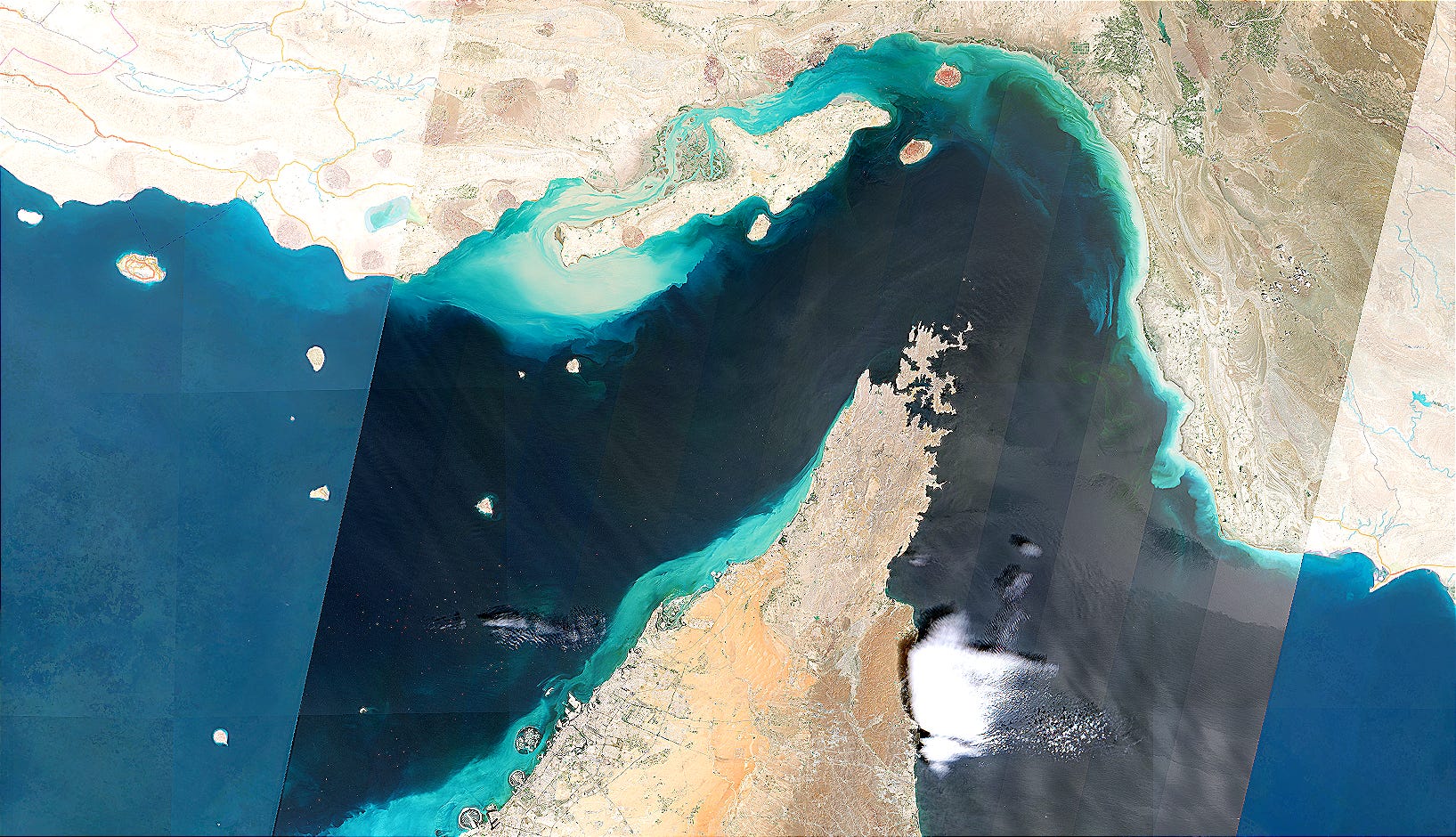
With just hours to go before Trump’s deadline to Iran, a two-week ceasefire was announced between the United States and Iran.
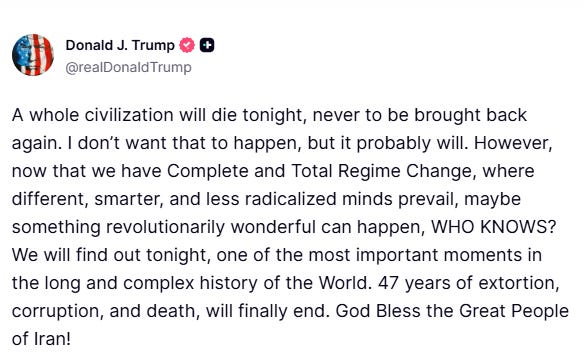
Earlier the same day, in a post on TruthSocial, President Trump stated that “a whole civilisation will die” if Iran did not agree to his terms to end the war.
In response to Trump’s threat to target infrastructure and power plants, the Iranian regime called for ‘human chains’ to be formed around power plants across the country. Images shared on social media showed that in some areas, there was a response, with large groups of civilians linking arms around power plants.
In the first hours of the ceasefire, it was unclear what the deal would cover, with initial reports suggesting that it was narrow and the combat in Lebanon between Israel and Iranian proxy Hezbollah would not be included. It was later reported that it would be.
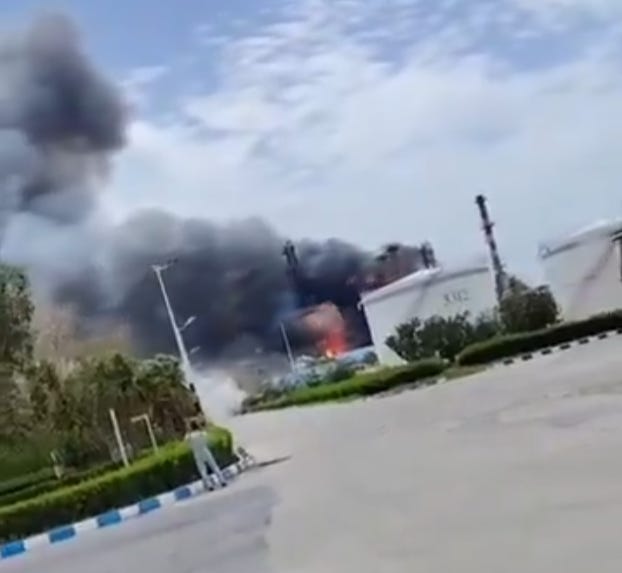
It now appears that it doesn’t matter what parts of the conflict were intended to be included, as neither side has ‘ceased firing’. In fact, strikes have largely escalated. In Lebanon, the IDF carried out over 100 strikes in just 10 minutes, the largest wave of airstrikes on Lebanon since the start of the fighting. Iran launched waves of missile strikes on Israel and drone strikes on the Gulf states. The UAE carried out airstrikes on an Iranian oil refinery in retaliation for Iranian drone strikes.
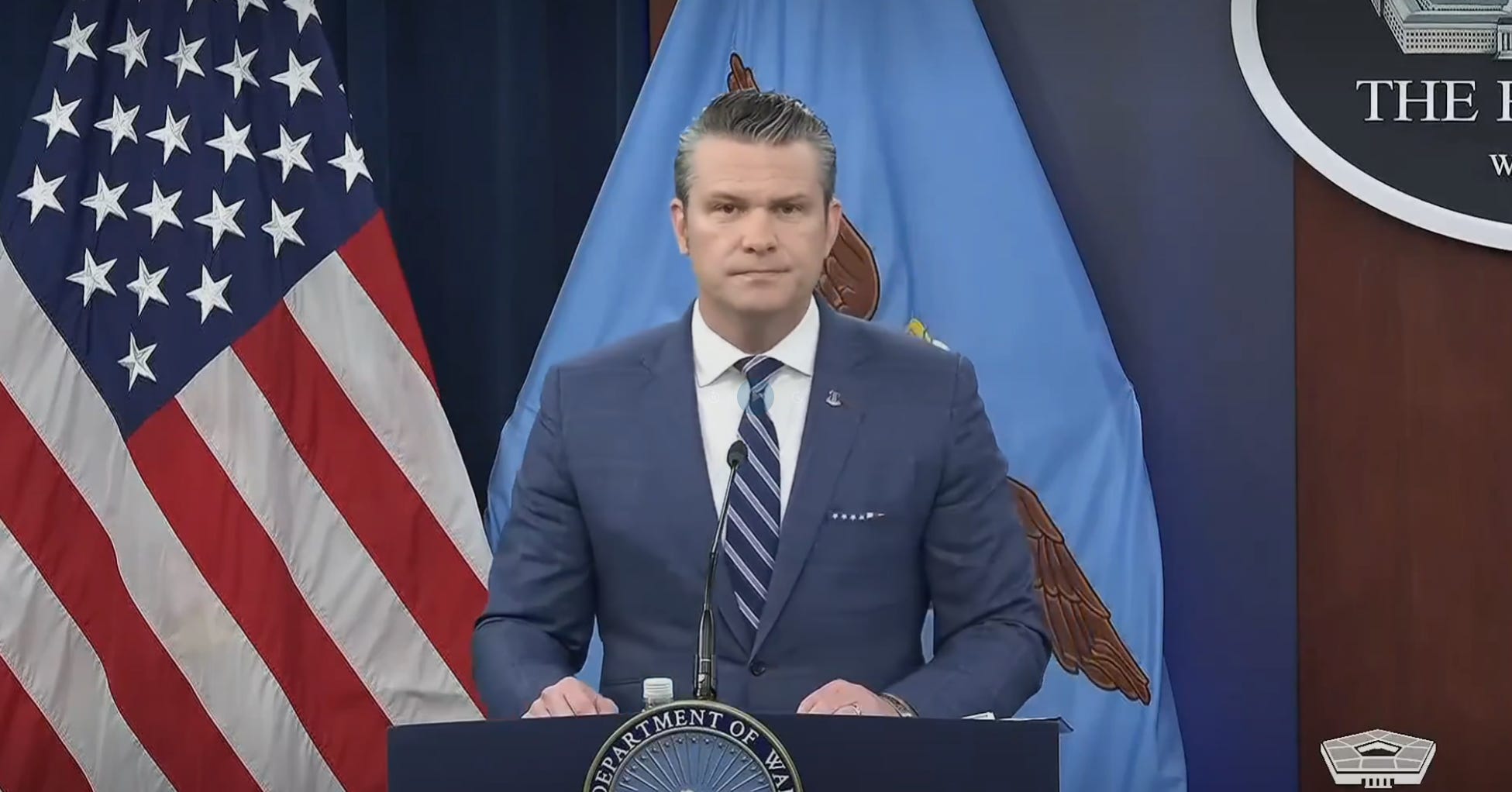
Both sides have framed the agreement of a ceasefire as a victory. The US Secretary of Defense declared Operation Epic Fury “a historic and overwhelming victory”. Meanwhile, Iranian officials have declared it an “undeniable, historic, and crushing defeat” for the United States.
Iran’s declaration of victory is based on the fact that it had already rejected the terms Trump had set forward and presented their own 10-point plan as a counterproposal. As Trump did not follow through on his threat and agreed to negotiate, they see this, or at least present it, as a fundamental agreement to their terms.
The Iranian foreign minister announced that Iran would allow safe passage through the straits of Hormuz. Since the war began, the straits have been effectively blocked with an average of 3 ships passing through per day, down from over 100 per day seen before the conflict began.
A senior Iranian official has since told Reuters that any opening of the straits would be ‘limited’ and require vessels to ‘coordinate with the Iranian military’. They also stated that it would not be reopened until Thursday or Friday.
Iran’s Navy announced to ships anchored in the area:
"You must receive permission from Iranian Sepah Navy* for passing through the Strait. If any vessel tries to transit without permission, [it] will be destroyed"
*The Iranian Sepah Navy is the IRGC naval force.
According to TankerTrackers.com, there has been little change to commercial ship movements so far in the straits since the announcement of the ceasefire.

TankerTrackers.com, Inc.@TankerTrackers
Ten hours later: We're not seeing much happening. Left: Unfiltered view of all vessel traffic on AIS. Green icons are bulk/cargo, container ships while red are tankers. Right: Filtered view showing vessels which began their voyage in Iran. #OOTT #IranWar #Tankers
9:52 AM · Apr 8, 2026 · 132K Views
40 Replies · 281 Reposts · 1.13K Likes
According to the Iranian Fars News Agency, an Iranian state-affiliated outlet, the Iranian 10-point plan is as follows:
A complete halt to any aggression against Iran and allied resistance groups.
The withdrawal of American combat forces from the region, a ban on any attacks on Iran launched from bases, and refraining from adopting a combat posture.
Limited daily passage of ships through the Strait of Hormuz for a period of two weeks, under the title of a safe passage protocol, subject to monitoring and specific rules set by Iran.
The lifting of all primary, secondary and UN sanctions.
Compensation of Iran’s damages through the establishment of an investment and financial fund.
Iran’s commitment not to build nuclear weapons.
US acceptance of Iran’s right to [nuclear] enrichment and negotiations over the level of enrichment.
Iran’s agreement to negotiate bilateral and multilateral peace treaties with countries of the region in line with its own interests.
Extension of non-aggression to all aggressors against all resistance groups.
The termination of all Board of Governors and UN Security Council resolutions, and the codification of all commitments in an official UN resolution.
Many of these positions would be non-starters for the US administration. The only points that would likely be acceptable to them would be the end of hostilities and the commitment not to build nuclear weapons.
Interestingly, though, Iran’s 10th point would remove the Board of Governors’ resolutions against Iran. The Board of Governors is the governing board of the International Atomic Energy Agency (IAEA), which enables inspection of the Iranian nuclear program to monitor whether enrichment is for civil or military uses. Removing these resolutions would make the verification of point 6 challenging.
The Financial Times has reported that part of the agreement would involve a toll collected by Iran from ships passing through Hormuz. The reported toll would be $1 per barrel. This would work out to approximately $20 million per day or $7.3 billion per year.
The operational confusion on the ground is, in many ways, beside the point. We have seen that vague negotiations towards a possible concrete deal are agreed in time to push back hard deadlines set by the Trump administration. We saw this with tariffs and trade deals, and similarly with negotiations with Russia over the war in Ukraine. For the war in Ukraine, the US set deadlines for a peace deal to be agreed between Russia and Ukraine. As the deadlines neared, Russia indicated openness to negotiation, and the deadlines were pushed. Almost a year on, and the war in Ukraine seems no closer to ending.
In Iran, it seems to be very similar. As part of the pressure tactics to bring Iran to the table with favourable US terms, Trump gave them a deadline with the threat of severe consequences. Iran, however, called his bluff, forcing a brief change in approach. It wouldn’t be surprising if the negotiations over the next two weeks don’t lead anywhere and a new deadline is created, pushing the threatened consequences ever further down the road.
We can be almost certain that the US will not agree to the terms, and the terms will either change substantially over the next two weeks, or the ceasefire will simply be a way around the hard deadline, and the conflict will carry on as it was. The clock, as it has before, will just reset.
Comments
Nothing yet. Say the first thing.
Sign in to join the conversation.