
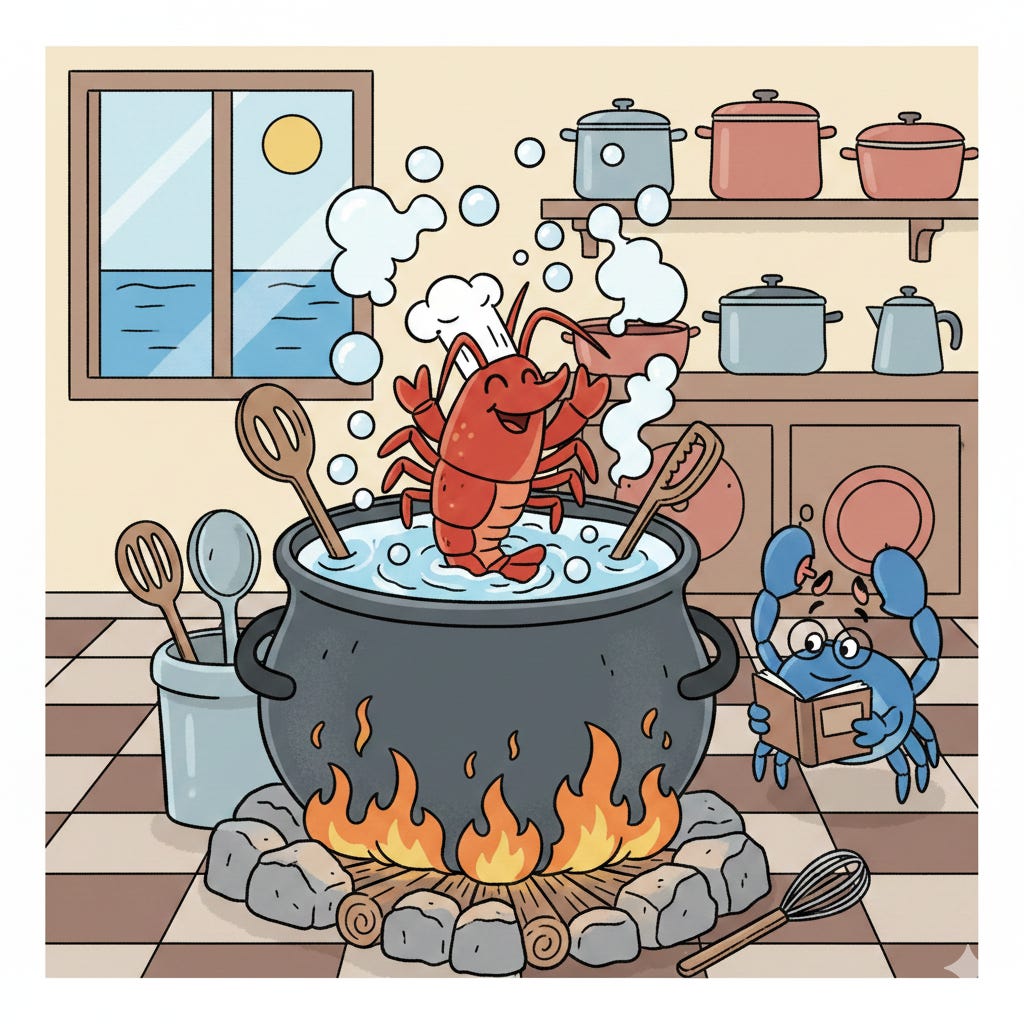
This week, following the whole Clawdbot/Moltbot meltdown in which people were giving a brand new, highly vulnerable tool full access to their bank accounts, login codes, and email, I wanted to take a step back and think about what the implications are of where we’re headed.
After reading some of these pieces (and gauging reactions), I’m worried we’re heading to a place where AI overreliance and even AI psychosis may become more commonplace. For clarity, I don’t think we should get all existential quite yet. These next few years will be transformative, but there’s a lot we can do to protect ourselves and our community.
There are things we can do. Wikipedia publishes a community page about the Signs of AI Writing.


This article, covering elements of writing like content, language & grammar, style, and citations, is verbose and is intended for Wikipedia’s army of content editors. But it has lessons that apply to anyone.
We’re already at the point where AI is integrated into the information we consume on a daily basis - whether it’s the neural net powering TikTok or Instagram Reels or LLM slop writing in sales pitches and on social media. We’re expecting to see it everywhere we look. The ensloppification is upon us!
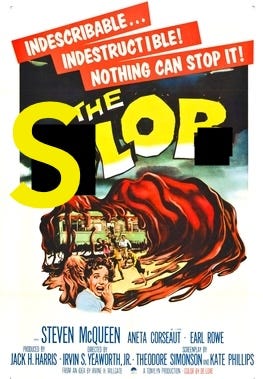
But I think we can start to raise eyebrows when we see it in places we don’t expect.
Why is my best friend texting me with an em dash (—)? He never uses any punctuation.
→ Is that really your friend or their Clawdbot that’s talking to you?
This email looks legit. But it’s telling me to Reset My Password Now. Why Are They Speaking To Me In Title Case?
→ Don’t click. A threat actor used an LLM to write that template for the phishing email.
Why does this Kindle book on Amazon I paid $9.99 for keep over-indexing on notability (“featured in”, “cited in”)?
→ It’s AI-generated. Get a refund from Amazon.
I’m certainly not an AI doomer, and I’m not against using it in the right places, like technical docs, taking notes, or content fixes (like when editing these posts).
It’s that overuse of the same output styles is turning literature and earnest writing into a homogeneity of the same euphemisms, stylistic traits, and errors. For the linguists out there, how will the English language change in the next few years? Or has it already started?
→ Will speaking with basic copulatives ("is"/"are" phrases) be like hearing Shakespeare in 100 years?
I’ve speculated that unsupervised training on previous models’ outputs has gotten us to where we are today.
But there are things we can all do (agents reading this be damned).
In other words, be human.
Read books (yes, the ones being dissected and scanned by the millions into frontier models).
Use social platforms that ban or require disclosure of AI content
Wikipedia: Using an LLM to generate an entire new article is a violation.
Medium: AI blog content cannot be monetized.
Steam (Online games): Games developed using AI must be disclosed.
News outlets: Some have internal memos banning the use of AI in articles.
Consider using an AI detector. I’ve heard these can be inconsistent, but so are humans. GPTZero is a popular one from what I can see.
Learn about the tell-tale signs: Read the Wikipedia article
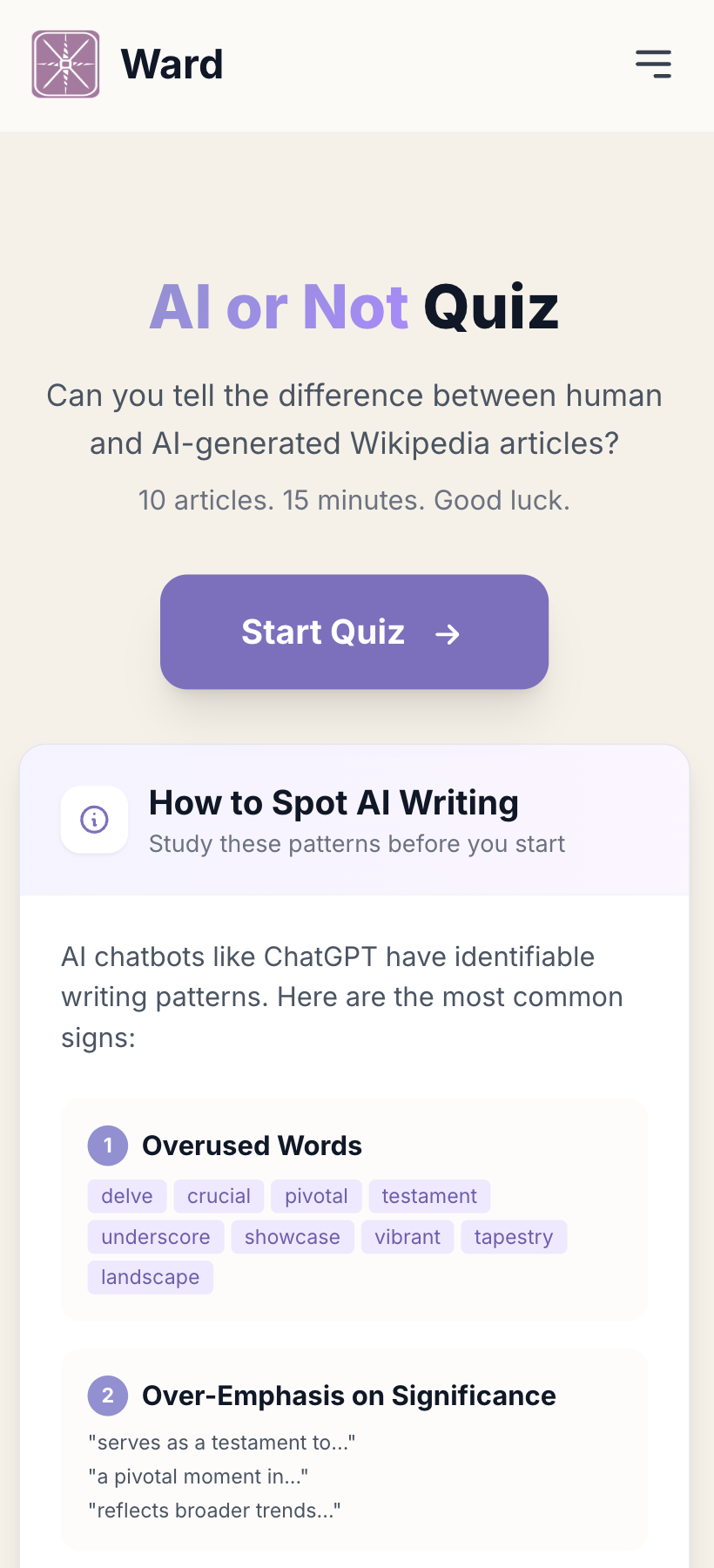
Walls of text are boring. Games are more fun. I turned Wikipedia’s quiz into an interactive game. How good are your skills? I failed miserably, full disclosure.
15 mins. 10 questions.
This was a digression, but I hope you found it insightful. As always, reach me here or by email at cedric@tryward.app. Stay safe!
- Cedric
No posts
Comments
Nothing yet. Say the first thing.
Sign in to join the conversation.