
In 2004, the Design Council formalized the ‘Double-Diamond’ model for design work. Their goal was to demystify design for a wide range of stakeholders, and help them understand that design wasn’t just a simple step in the production or manufacturing process, one to be checked off. The models’s simplicity was its beauty, helping it become a mainstream concept over the last 2 decades - far beyond the Council’s original intent!
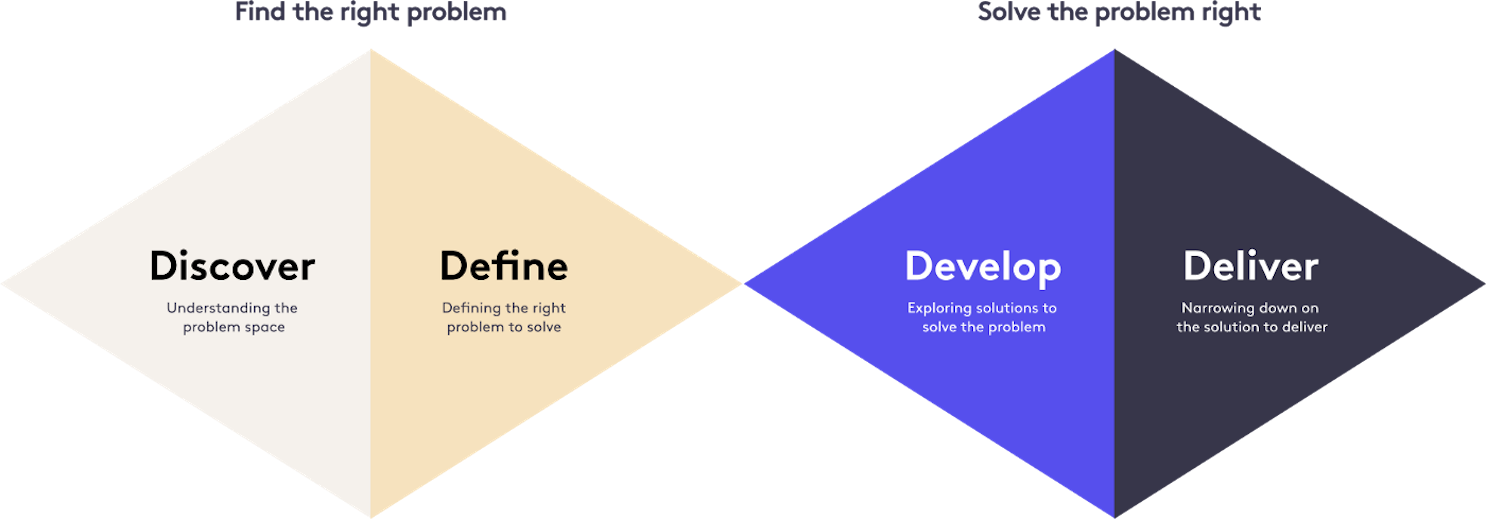
We often perceive the Double Diamond to be a design process or framework. But its core principles can apply to product work broadly: problem definition and solution exploration work are separate-but-connected, working through both need a non-linear approach (i.e. divergence <> convergence), and that this thoughtful approach can get you to the best or most effective solution faster.
As a PM, my experience has been that product decisions often benefit from application of similar principles too. Specifically, for any meaty or complex product decision, you can benefit from defining the decision to be made first, before making the decision. A Decision-Diamond may look something like this -
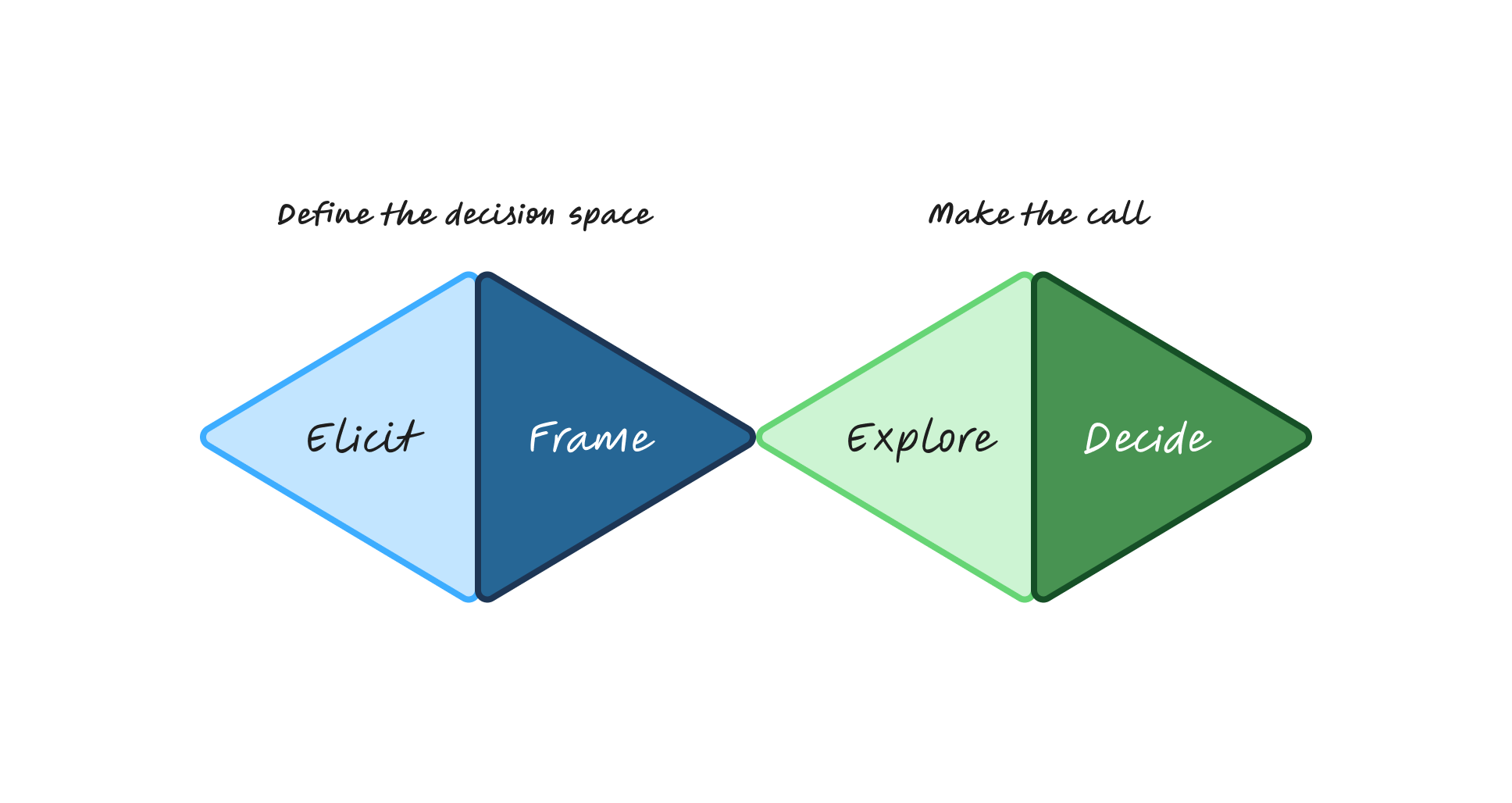
Elicit all the key factors influencing or impacted by the decision
Frame the decision to be made based on its key characteristics (ex: who’s the decision-maker, is this a Type 1 or Type 2 decision, etc.)
Explore all available options and their tradeoffs/mitigations
Decide the best course of action → execute
It is easy to think of decision-making as a linear process - or even a singular moment in time (ex: “we’ll make this decision in next week’s product review”). But major product decisions can benefit from applying craft too - as if you were designing the decision. It can help you avoid common mistakes we run into every day - forgetting to understand or set context, missing key stakeholders’ input at different points, or jumping to the first decision/option that comes to mind.
Similar to the Double-Diamond model, it is easy to mistake this approach as if it slows down your decision-making - or that the steps in this are strictly sequenced. In practice, it can often be the fastest way for you to get to the best decision. Give it a whirl.
Have a question or musing of your own?
Feel free to drop a comment.
Enjoyed today’s musing?
Consider sharing with a colleague or friend who may benefit too.
Interested in more of Waqas’ Musings?
Find all my past essays at https://waqas-sheikh.com, and subscribe below.
Comments
Nothing yet. Say the first thing.
Sign in to join the conversation.