
The school year just ended — the one stretch of the calendar when we all agree children should be left alone. Most of what I've written under the Walled Garden framework has defended the friction inside the task: sustained attention, desirable difficulty, the effortful work through which capacity is built. This piece is about the opposite — the empty space around the task, and why rest, play, and even boredom belong inside a school's design rather than outside it.
Final grades were submitted last week, classrooms were packed up, and a breezy relief drifted through school corridors across Canada. Students, drained of all energy only a month ago, spilled out the doors with an excitement that can only come from knowing they won’t walk back through them again until September. For the next two months, many will revel in the unstructured, unsupervised, and gloriously unproductive time of summer.
We rarely stop to ask why they’re afforded this intermission, this pause, this extended recess. When we do, we often point to half-remembered answers — that summer break is a holdover from the agrarian calendar, when children were needed in the fields — but that turns out to be a myth. The real origins are historically contingent, though somewhat mundane: urban heat, the spread of disease, and the vacation habits of the nineteenth-century middle class. In other words, summer break wasn’t about kids.
But today, we defend it as though it is. If you ask any parent or teacher why kids should keep their summers, you won’t hear anything about harvests or illnesses. You’ll hear that children need time to play, to rest, to be with their friends and family, to be unproductive, and to simply be kids. We arrived at that conviction through our personal, almost sacred, experiences of summer growing up. The sentiment is as close to universal as you’re likely to find.
Even though we hold that conviction for two months of the year, we discreetly abandon it for the other ten. And the summer itself is no longer safe; we fill it with ultracompetitive travel sports, academic enrichment, and the kind of resume-building you’d expect from an ambitious young professional. When September comes and our students walk back through those doors, we make sure every interval of the school day is filled, every student maximally engaged, every moment turned toward something productive.
We all know that rest and play are good for children. But we stopped making room for them. If a fallow season is what summer offers, and it’s what we say we value about the break, then we have to ask ourselves why we’re working so hard to stamp it out.
I’ve written a lot about protecting and preserving the friction within educational tasks. Although students need to encounter and overcome developmentally appropriate challenges in order to grow, we’ve spent much of the past fifteen years smoothing the surface of learning. The best learning occurs when a task engenders a student’s sense of accomplishment, not because the thing is complete, but because its completion requires careful attention and effort.
Walled Garden schools don’t just defend the friction inside a task, however. They also defend the empty space around tasks — rest, play, idleness, boredom — as developmentally load-bearing. Marketplace Mirror schools — those that take their cues from economic imperatives in the name of “preparing kids for the future” — abhor empty time. Human attention, the most valuable raw material of the digital economy, is a function of time. So in an era when tremendous monetary worth is ascribed to attention, the commodification of time intensifies and our agency over its use diminishes.
If my student’s attention is captured every few minutes by Snapchat, TikTok, and WhatsApp notifications, surely my responsibility is to fight to win their attention back, right? When schools fail to control their students’ attentional environments, this is the logic that colonizes and ultimately extinguishes our children’s access to rest, idleness, and boredom. Under these conditions, time is a zero-sum commodity. Digital applications get most of it, teachers get some of it, and students get none.
Consider an analogy: In the absence of (environmentally damaging) industrial fertilizers, farmers periodically leave their fields fallow to restore soil fertility. Continuous cultivation for maximum yield depletes the soil.

Ever wonder why we have a crisis of engagement in our classrooms today? Our kids’ minds never have fallow seasons anymore. Their attention is the target of an uninterrupted competition by social media influencers, the devices we provide them in school, the demands of the teacher at the front of the classroom, their parents’ text messages, and their friends’ group chats.
To an economy that turns attention into revenue, empty time looks like waste — so it gets filled, every interval and every season, until there’s no fallow ground left.
The word scholē is the Greek root of our word “school.” It meant leisure. We have built an institution to fill every minute of a child’s day, and we named it after empty time.
Today, we struggle to see the connection between school and leisure. School is a place where work is done by students and teachers alike, not a place where people relax. But leisure and learning have a long and reciprocal history. Indeed, Aristotle argued that leisure is a prerequisite for the highest form of human fulfillment. It is in leisure, when we have space and time to reflect and contemplate — not the empty, passive relaxation we associate leisure with today — that we might develop habits that grow into virtues of character over time. To Aristotle, traits like generosity, honesty, and courage are not randomly assigned, but the consequence of conscientious habits only practised through leisure.
The twentieth-century German philosopher, Josef Pieper, furthered Aristotle’s thesis, explaining that leisure isn’t a time of recovery for more work; it’s a receptive, contemplative openness that is the very basis of learning and culture. In the absence of leisure, education becomes a shallow instrument of work, of the economy. The kind of deep engagement with ideas that characterizes our most valued contributions to science, the arts, and philosophy requires space for conscientious reflection, even reverie.
With that in mind, ask yourself: What opportunities do we offer for leisurely contemplation in our schools today?
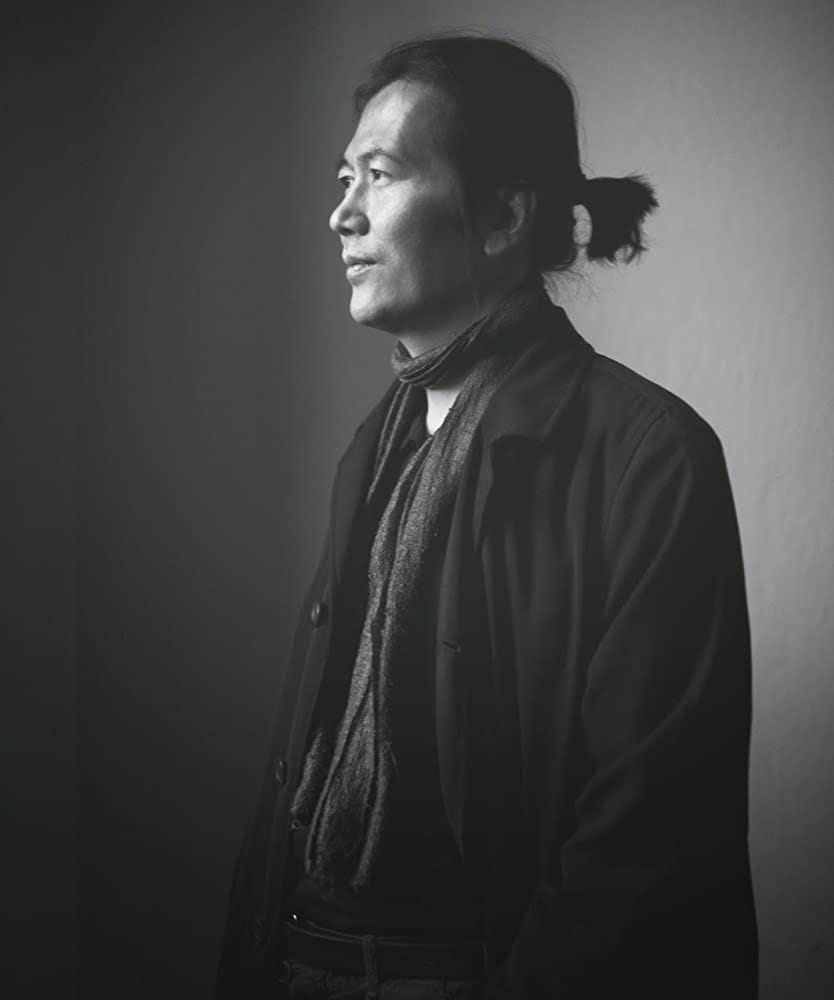
Without leisure, Pieper warned of a “World of Total Work”, describing a society where human value is reduced strictly to economic utility and productivity, transforming people into mere “workers” rather than whole human beings. The Korean philosopher, Byung-Chul Han, updates this idea for the twenty-first century, calling ours as an “achievement society” in which even our leisure is enclosed by economic incentives to brand and sell ourselves. Sounds like the competitive and performative structures of social media, doesn’t it?
This matters for schools in two ways. The first is an opportunity: schools are uniquely positioned to create leisurely space for children at the very moment its developmental benefits have been suffocated everywhere else. The second is a guard against misreading what that space is for. Offering children leisure, properly understood, is not the same as claiming that “breaks make better students.” This isn’t about test scores. The academic payoffs may well be real, but a school that takes leisure seriously does so knowing the point is the holistic wellbeing of the child. It’s about human flourishing.
To extend the analogy, a field isn’t rested in order to be exploited harder next season; rest is part of what a healthy field simply is.
We know that children’s free, unstructured time to play has declined sharply in recent years. We know that this coincides with overscheduled activities that correspond with a rise in depression and anxiety. But we also know that boredom and mind-wandering can be developmentally beneficial, and that rest and recovery are good for learning. None of this is the reason to act — leisure is owed to children whether or not it pays a dividend — but it means we aren’t even getting the trade we thought we were making. So why, then, are we doing this to our children?
Sociologist Annette Lareau calls it “concerted cultivation” — the adult-organized model of enrichment that turns childhood into a competitive process of resume-building optimized for today’s college-application logic. In effect, it trades the developmental necessities of childhood away for career potential in adulthood, failing to notice that the latter is endangered without the former.
The orchestrated erosion of leisure at home, mirrored by its deterioration at school, and amplified by the incursion of algorithmic content on our kids’ private time means they don’t have a fallow field anywhere. Some of our children have hardly experienced boredom, let alone genuine leisure, in years.
Here’s what I suggest schools do about it:
Take back the environment. No phones, no smartwatches, no earbuds. Use computers only when the technology genuinely supports or transforms learning, never by default. This is the precondition for everything else because the screen is the instrument that abolishes fallow time, filling every interval with stimulus.
Return the intervals to children. Lunch, recess, and spare blocks should be theirs again for face-to-face conversation, for boredom, for imagination, and for the unhurried contemplation we’ve removed from the school day. A lunch table should be a site of laughter and eye-contact rather than one child gesturing to another to look at images on a screen. Recess should be a time when imaginations run wild rather than time spent watching a YouTube video in a classroom.
Bring families in. None of this holds if it stops at the school doors. The erosion of leisure is also happening at home, so schools can’t fix it alone. Hold parent meetings. Send letters home. Make the case for what’s at stake, and ask families to be partners in protecting it rather than bystanders to it.
Schools are already understood to be unique environments. We don’t think they should look like shopping malls. We don’t think they should look like movie theatres. We don’t think they should feel like living rooms, glowing with screens. A school is none of these — it’s the one place we set aside for the conditions learning requires. And learning requires attention, just as childhood requires room to breathe. Both need ground left fallow.
It’s summer. We love this season because it gives our children the one thing the rest of the year takes away: the space and time — the leisure — they need to flourish. The task is to stop treating these two months as an exception, and to notice the lesson in them.
We’re sentimental about this time because it offers a counterpoint to Han’s “achievement society.” As kids, it was a season of respite, when we didn’t have to perform for anyone or brace for what was coming tomorrow. We weren’t building a resume toward who we were supposed to become. We had the chance to simply be — here, and now.
Unfettered presence. It’s one of the most beautiful gifts of childhood — one we haven’t done a great job of protecting. But summer is our guide. The task is to stop letting it end in September.
If you teach, lead a school, or are raising a child, you're one of the people who decides how a young person's hours get filled, which makes you exactly who this piece is for. If it resonated, pass it to the teachers, administrators, and parents who set the conditions of childhood alongside you. Protecting fallow time isn't something any of us can do alone; the Walled Garden grows through exactly this kind of shared resolve.
Interested in reading more?
Comments
Nothing yet. Say the first thing.
Sign in to join the conversation.