
This series builds on a case I made last fall in “Why Attention Must Become Curriculum”, “How Attention Becomes Curriculum”, and “Advocating for Attention as Curriculum”, and extended this winter in “When Childhood Conditions Change, Schools Must Adapt”. If you’re new to The Walled Garden, those four pieces provide the perfect foundation for what’s about to follow.
Academic performance has declined, mental health concerns have grown, and classroom engagement has become a perennial issue. These trends coincide with the emergence of a business model that arouses our attention involuntarily, exploits our behavioural psychology to prolong its capture, records nuanced information about our preferences, and sells that data to advertisers for profit. This marketplace of extracted attention — the Attention Economy — is an assault on our as yet unprotected right to cognitive sovereignty, predictably resulting in the diminishment of attentional capacity and mental agency.
We all feel its effects. The vulnerable — our kids — feel it most.
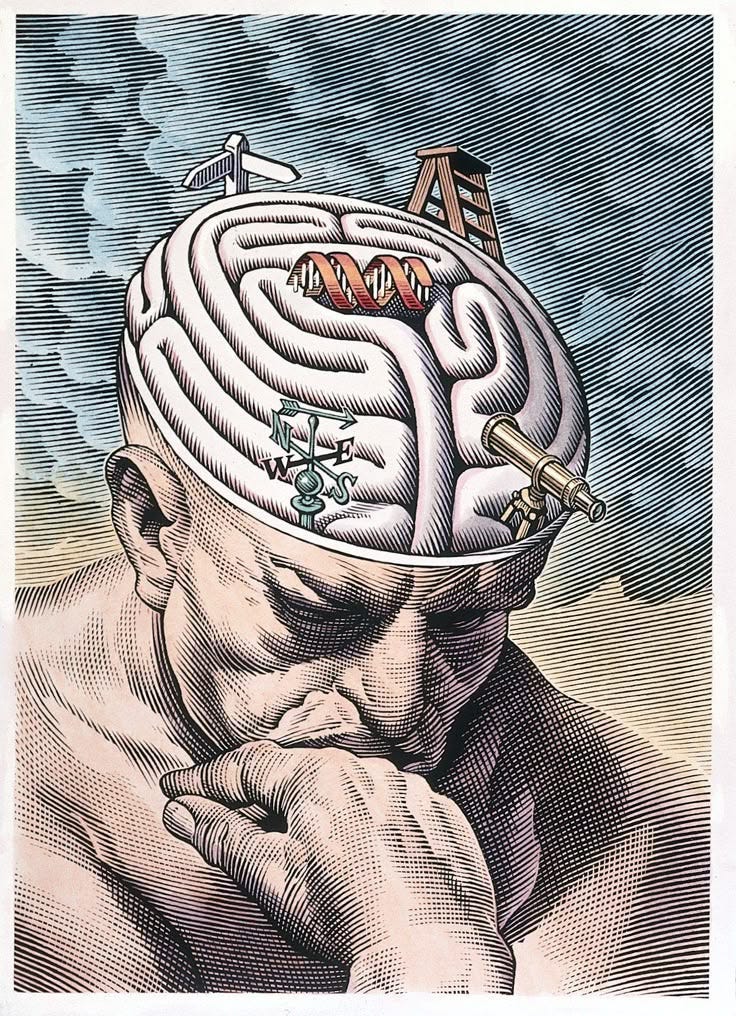
In light of this dynamic, I called on schools last fall to centre attention in their curricula and pedagogies.
That series made the case for why attention belongs in the curriculum, and it offered a first framework for building it. But a framework is not a curriculum. Now, I want to introduce teachers to some of the practices they can implement. I’ll consider how we can prepare teachers to do this work in the first place. I’ll make the fuller case for attention itself — what it is, who profits from its capture, and how learning about these things might affect a young person for the better. And I want to ask what it actually looks like to build that attention ourselves — not as a classroom technique, but as a practice with its own long tradition, in prayer, in meditation, in boredom embraced rather than escaped.
This summer, I’m going back to close those gaps:
An Introduction to “Attentional Literacy” — What Is It and Who Profits From Its Capture
When Attentional Literacy Should Arrive
Meditation, Contemplation, and the Practice We All Share
A Missing Piece of Teacher Training Programmes
Actionable Practices for a Pedagogy of Cultivated Attention
A Conclusion — and an Introduction to Further Resources
I opened this by describing the Attention Economy: an assault on a right we didn’t know we had until it was extracted from us for profit. In schools, this led to fifteen years of decline — in test scores, in mental health, and in the fundamental capacity to sit still with a difficult idea. But those measures aren’t inevitable features of “modern childhood”. They’re the cost of our choice to mirror the marketplace rather than stand apart from it.
This series is the case for a solution; it’s a theory of change. It is not nostalgic, nor a rejection of technology, but a recognition that schools can be sanctuaries where children are not only protected from predatory extraction, but are imbued with the knowledge, skills, and capacity to defend their cognitive sovereignty. A child who practises choice, rather than reflexively reaching for her device, comes to treat technology as something she uses with intent rather than something that acts on her. A child who has learned how attention functions — scientifically and philosophically — is more likely to spend it on the people who are actually in the room with her. In the end, that’s how healthy communities are built: by people who choose those whom they live alongside — physically and locally.
Attention is the wellspring of change. I’ve decided to dedicate my summer to it. I invite you to join me in that project.
Subscribe to receive each piece directly. If this project matters to you, share it with a teacher, an administrator, or a parent ready to stop mirroring the marketplace. The Walled Garden only grows if more of us tend it.
Comments
Nothing yet. Say the first thing.
Sign in to join the conversation.