
One of the themes explored in Fugue of Fire is reformation, and so a deeper look into what The Church of the Muse is to Breheimen is helpful. In creating any ‘fantasy religion’ there is a risk of too close an analogue to actual practices and a further risk of caricature. Fortunately I have some faithful, intelligent early readers and editors, and one feedback I kept asking for was “do not let me get away with ‘Dan Brown-ing’ this story with respect to the church.” With their help, I think I got where I wanted.
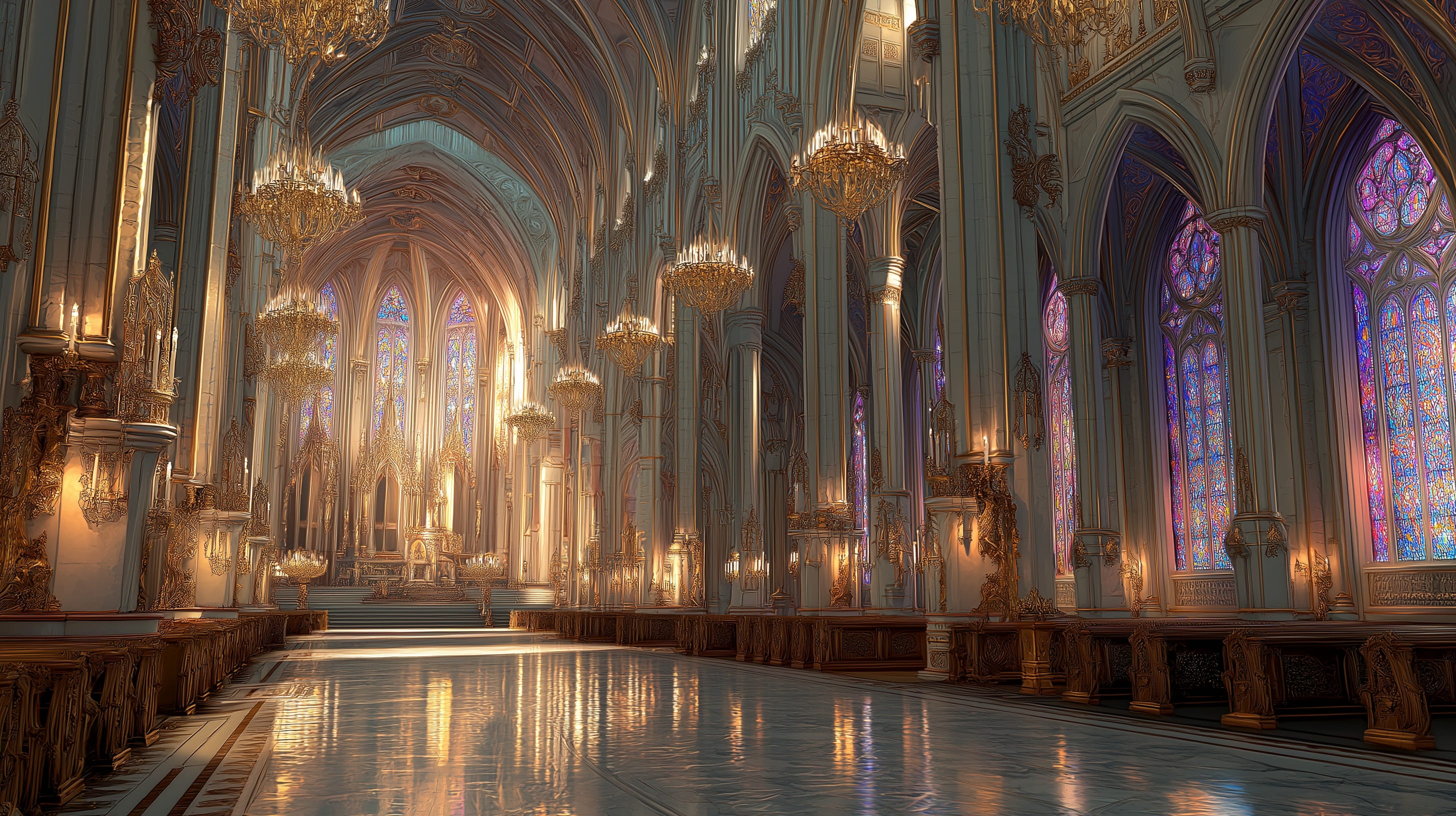
The Church of the Muse and the Custody of Illumination
From De Institutionibus Breheimensis: Crown, Church, and University, prepared for incoming students of the Grand University
To speak of Breheimen as a kingdom of sword and song is to speak incompletely. The Crown may command armies and preserve the peace; the Grand University may order the arts and sciences; yet neither alone can answer why creation matters, nor why inspiration should be received as gift rather than seized as possession. That charge belongs to the Church of the Muse.
It is tempting, particularly among foreign commentators and younger students overfond of tidy diagrams, to place the Church beneath the Crown or within the University, as though it were either a royal chapel writ large or a theological faculty that had forgotten its academic modesty. Such reductions are convenient, and therefore wrong. The Church is neither servant nor rival to the other powers of Breheimen, but one of the three pillars by which the realm has long understood itself. The Crown guards order. The University orders knowledge. The Church teaches the kingdom what order and knowledge are for.
Its power lies not only in chancels, councils, abbeys, or solemn halls, though it has no shortage of these. Its truer influence is woven through the habits of the people: in the blessing spoken before a child’s first lesson, in the song raised over a new forge, in the oath sworn by a Master before accepting an apprentice, in the quiet given to mourning, in the taboo against false Muse-touch, in the reverence paid to a work made beautifully and without vanity. The Church governs not merely worship, but meaning. Where the Muse touches a life, the Church asks what that touch requires. Where beauty moves the heart, the Church asks whether it also moves the soul toward the Virtuous, the Glorious, and the Veritable.
Yet the Church did not descend upon a faithless people. Reverence for the Muse is older than Breheimen, older perhaps than crown, charter, or school. Wherever the Muse-touch has manifested, men and women have bowed, sung, carved, whispered thanks, or fallen silent before the mystery of inspiration. A bard before his audience, a smith before the first heat of morning, a mason setting the keystone of an arch, a mother humming over a cradle: all have known some instinct to honor what does not seem to arise wholly from themselves.
Before the Accords, such reverence remained various in form. Ironmount kept its forge-hymns and hearth-oaths, preserving the old saying: Forge is life. Forge is strength. Forge is home. Forge is hall. In the northern settlements, to let the forge go cold was not merely inconvenience but a kind of communal diminishment, for fire meant work, shelter, armament, memory, and kinship. Hinterhold kept winter rites and oath-songs by which endurance was sanctified. Lyrialia cherished sea-canticles and lyric devotions, understanding longing itself as a kind of sacred tension. Ferrendell blessed gem, hearth, and house, finding reverence in clarity and refinement. Silea favored civic ceremony, ordered procession, stone, light, and the visible dignity of office. Breheimen itself, first city and later capital, gathered these voices as it gathered artisans, diplomats, scholars, traders, and the Muse-touched from every road that touched its gates.
The genius of Karelia’s settlement was not to abolish these older forms, but to harmonize them. The old songs were not silenced; they were tuned.
Thus the Church of the Muse, as Breheimen knows it, belongs to the age after the Accords. Queen Karelia did not invent Muse-veneration, nor did she claim for herself the office of prophet or priest. Rather, perceiving that the newly bound kingdom required common meaning as well as common law, she called together bards, scholars, artisans, holy teachers, and keepers of older rites. From that gathering arose the first ordered liturgies of illumination, the earliest Articles, and the office that would become Praeceptor Summa. It is often said, with more poetry than precision, that Karelia convened, Owein Rhydderch gave voice, and the first Praeceptor Summa gave form. Rhydderch remains to this day the only one to have served as both Court Bard and as Praeceptor Summa (though in separate tenures).
From the beginning, then, the Church was an institution of synthesis. It taught that the older customs of the baronies were not rivals to illumination, but partial answers to it. The forge, the hall, the sea-song, the oath, the gemstone, the carved lintel, the tower bell, the copyist’s lamp: all might be understood as gestures toward the same mystery, provided they were ordered toward humility rather than possession. Yet this harmony was never without strain, for any institution that orders many voices must decide which notes belong, which must be softened, and which it dares name discord.
The Articles of Illumination remain the foundation by which such judgments are made. They are not a catalogue of every ruling rendered by the Ecclesiasticum, nor a rule for every circumstance of worship, craft, discipline, or learning. They are the Church’s first principles: the lamps by which lesser canons are read.
Chief among them is the confession that the Creator is the source of being, order, and beauty, yet remains beyond direct mortal apprehension. No mortal mind may possess the Creator’s fullness. No eye may hold that light and remain merely itself. Mortals therefore receive such illumination as may be granted, and receive it through veils, signs, works, conscience, reason, and, most mysteriously, through the Muses.
The Church venerates the Muses not as the Creator, but as intercessors of illumination: bearers of creative vision by which mortal minds may approach the universe’s meaning, though never master it. Through them, the faithful are drawn toward the Three Lights of Illumination: the Virtuous, the Glorious, and the Veritable. The Virtuous orders desire toward the good; the Glorious reveals beauty as more than ornament; the Veritable binds inspiration to truth, lest wonder become delusion. Where these three sound together, the Church names illumination.
From this follows the Church’s central ethic: creation is vocation and offering, not possession. To make truly is not to claim mastery over the Muse, but to answer what has been entrusted. The sculptor does not own beauty because he has shaped marble; the bard does not own sorrow because he has sung it well; the scholar does not own truth because she has clarified an argument. All true making is received before it is formed. Therefore, gifts that touch the soul must be governed by reverence, lest inspiration become domination, pride, or shadow.
This is why worship in the Church of the Muse has never been confined to sanctuary walls. The sanctuary gives worship its common form, as a vessel gives shape to water; yet the water must still be poured. The faithful gather for canticle, reading, exhortation, silence, and offering, but they are no less bound to worship at bench, loom, forge, desk, hearth, field, and road.
A common rite of illumination begins in quiet. The faithful enter not because speech is unclean, but because attention must be made before song can be truthful. A Cantor, Prelate, or Praeceptor invokes the light granted through the Muses. The Common Canticle follows, and here the whole body of the faithful sings. It is no small matter that the Church requires the untrained voice beside the trained one. If worship belonged only to the excellent, the Church would already have betrayed its own doctrine.
Thereafter come the readings: from the Articles, from approved commentary, from histories of the faithful, from hymns, letters, or accounts of great works made in humility. An exhortation may be given, usually by a Prelate, though Praeceptors speak on high feasts and in times of doctrinal weight. Then may come the Offering of Work, by which a song, carving, tool, loaf, poem, design, repaired vessel, copied passage, or testimony of labor is presented before the congregation. Such offerings are not judged as competitions of excellence, though excellence is never despised. They are received according to truthfulness, humility, and service. A child’s uneven carving may be more fittingly offered than a noble’s jeweled commission if the former is given in reverence and the latter in display.
The rite closes often with Silent Attunement, in which each soul listens according to its capacity, and with the Sending, by which the gathered faithful are charged to create, mend, teach, preserve, and serve.
The Muse is honored in the sanctuary, but answered in the work.
It follows, and the Church has ever maintained, that the Muse-touch is vocation, not measure. The indwelled are not more beloved of the Creator, nor are the unindwelled deprived of illumination. For the Muse indwells few, but illumines many. Beauty may instruct the eye that has never seen a vision; conscience may sound in the breast that has never known indwelling; reason may order truth without the Muse’s inward flame; and reverent participation in song, craft, mercy, study, and contemplation may raise the humblest soul toward light.
Yet here the Church carries one of its subtlest perils. What doctrine distinguishes, custom may exalt. What begins as reverence for the Muse may become reverence for the Muse-touched. The Articles condemn the Error of Reflected Holiness, though common homilists more often call it vessel-pride: the presumption that the honor owed to the Muse may be claimed by the vessel that bears it.
No canon entirely quiets this temptation. The Muse-touched live longer, heal more swiftly, recognize one another, and produce works whose effects cannot be explained by talent alone. Their objects may be certified; their performances may still a room; their discoveries may reorder whole disciplines. They rise, by long custom and formal law, to the highest offices of the University and the Church. Thus the Church declares indwelling a burden, while the world admires it as a crown.
There is also an answering wound among the unindwelled, no less perilous for being less often confessed. If indwelling is mistaken for favor, then the absence of indwelling may be mistaken for rejection. Among houses accustomed to honor, refinement, patronage, and command, this error may take particularly bitter root. A child’s silence before the Muse becomes not mystery, but insult; not waiting, but humiliation; not vocation withheld, but judgment pronounced. The Church teaches patience before mystery. Pride demands an answer. And where pride cannot bear silence, it may come to prefer any voice that answers.
This tension is visible even in the Church’s own offices. A Praeceptor is the equivalent of a Master or Mistress in the other divisions of the Grand University, and all Praeceptors are Muse-touched. They are full theological masters, authorized to teach, examine, interpret doctrine, and bear the greater burdens of sacred scholarship. Senior Praeceptors form the Ecclesiasticum, the governing body of the Church Proper and of the Musae Seminarii. The Praeceptor Summa presides over that body as the Church’s highest doctrinal officer.
Prelates, by contrast, are educated but unindwelled servants of the Church, roughly equivalent to Journeymen in the other divisions. They may be learned, faithful, capable, and wise. They administer rites, govern houses, preach, teach at lower levels, serve bishoprics, tend the faithful, and often understand the ordinary life of the Church better than the Praeceptors who outrank them. Yet they do not sit as Praeceptors, for they are not indwelled. Thus the Church proclaims equal dignity while maintaining unequal authority, and must forever examine whether such inequality is ordered toward vocation or hardened into privilege.
The Church is properly understood in two senses. In its narrower sense, it is the Church Proper: the Praeceptor Summa, the Ecclesiasticum, the Senior Praeceptors, the Praeceptors, the Prelates, and all offices empowered to teach, censure, license, and preserve doctrine. In its broader sense, it includes the many Orders that have arisen beneath its mantle.
These Orders are not exclusively monastic, nor are they uniform in habit, rule, or speech. Some are contemplative houses of prayer and copying. Some are charitable fellowships tending the poor, wounded, mad, orphaned, or newly awakened. Some preserve sacred music; some travel the roads as mendicant teachers; some guard dangerous works; some cultivate arts of healing, illumination, memory, or burial. Each may possess its own titles, vows, insignia, and customs. Yet all owe fealty to the Church Proper. No Order may claim private doctrine above canon, direct possession of the Muse, or exemption from Ecclesiasticum oversight.
The Musae Seminarii stands at the meeting of Church and University. It is the theological division of the Grand University, yet governed by the Ecclesiasticum. Its halls are therefore never merely academic, nor merely ecclesiastical. There the Church’s doctrine is studied with University discipline; there the University’s inquiry is bound to sacred caution. It is one of Breheimen’s most brilliant inventions, and one of its most delicate tensions.
No less delicate is the Church’s relation to the Crown. It is a common error among foreign commentators to suppose that the Sovereign of Breheimen rules the Church as a lord rules a manor, or that the Praeceptor Summa stands apart from the Crown as a rival prince in vestments. Neither account accords with our history. The Church was not founded against the Crown, nor beneath it, but beside it, under the concord first articulated in the years after the Accords.
The Sovereign is named First Guardian of the Church: not master of doctrine, but protector of the realm’s common reverence. The Praeceptor Summa preserves the teaching of the Church; the Grand University orders inquiry into the works of creation; the Crown protects the peace in which both may serve. Thus the Sovereign may convene, admonish, and shield, but may not proclaim dogma by royal will. Likewise, the Ecclesiasticum may censure, instruct, and guard sacred knowledge, but may not sever its judgments from the good of the kingdom entire.
This threefold concord is sometimes called, in later commentary, the Triune Accord. The phrase is imperfect, but useful. Crown, Church, and University are each sovereign in their proper spheres, and each incomplete without the others. When they sound together, Breheimen approaches harmony. When one claims the whole melody, discord follows.
Canon law exists to preserve such harmony. It applies the Articles of Illumination to worship, Orders, teaching authority, vows, Muse-touch ethics, restricted knowledge, sacred works, and discipline. Its ordinary remedies are admonition, inquiry, censure, disputation, restriction, recall, and, in grave cases, dissolution of an errant Order or exile of an errant teacher. The severest remedy is inquisition, and for that reason the Church has rarely invoked it without later regret.
The Cinderglass Inquest remains the most frequently cited warning. In the fourth century after the Accords, the Order of the Sevenfold Pane, once celebrated for devotional glasswork said to deepen prayer and awaken contemplation, came under accusation of inducing false visions through Muse-touched light. The charges were not wholly empty. Abuses had occurred, and certain patrons had begun to treat illumination as spectacle, status, and inducement. Yet the zeal of the inquiry exceeded the wound it meant to cauterize. Works of true beauty were broken beside corrupt ones, houses of honest craft were shuttered, and a generation of sacred glassmakers learned to fear the very Church that had once blessed their hands. The Inquest preserved doctrine, perhaps, but at the cost of trust.
Not every controversy has required so fearful an instrument. The Disputation of the Common Canticle, held in the second century after the Accords, concerned whether local congregations might preserve regional variants within the shared songs of worship. Some Praeceptors feared that improvisation would fracture common doctrine; others answered that a Church built upon reverent creation could not command the faithful to sing as stones. The Ecclesiasticum’s judgment was characteristically Breheimic: the melody was to remain common, but local verses and sanctioned ornament might be retained where they served humility, memory, and truthful devotion. Thus unity was preserved not by flattening difference, but by ordering it.
This, at its best, is canon: not silence imposed upon discord, but discord taught to resolve.
Yet the Church’s failures often arise from virtues grown fearful. It guards restricted knowledge because some knowledge truly is dangerous. Works corrupted by pride can harm the soul; techniques of coercive inspiration invite imitation; records of ancient error may fascinate the ambitious; false illumination can spread more swiftly than wisdom. The Church’s caution is not without cause. Its error, when it errs, is seldom that it loves darkness. More often it fears what light may do when placed too suddenly in trembling hands.
Still, stewardship may become ownership. Custody may become concealment. The hand that shields a flame may also hide it. An institution founded to steward illumination must therefore submit, again and again, to illumination itself.
In every age the Church has stood between reverence and fear. It has blessed the hand of the maker, comforted the unchosen, restrained the proud, preserved works that would otherwise have perished, and taught generations that beauty is not ornament but obligation. It has also mistaken order for truth, hierarchy for holiness, and secrecy for peace.
No honest account of Breheimen can despise the Church of the Muse. No honest account should flatter it beyond recognition. It remains what Karelia’s settlement made it: sanctuary and school, judge and servant, lamp and hand around the lamp. Where the Crown commands and the University questions, the Church teaches the kingdom what its questions are for. Whether it shall be remembered chiefly as faithful steward of illumination or as jealous keeper of a light held too closely to its own breast is a matter no age can settle for the next.
The Muse is honored in the sanctuary, but answered in the work. So too, perhaps, is the Church.
No posts
Comments
Nothing yet. Say the first thing.
Sign in to join the conversation.