
Land is important. I cannot stress this enough. If you are not yet convinced, then read this. In order to further illustrate this point, allow me to tell you a story of two lands—Sabah and Sarawak—and how differences in colonial government resulted in completely different land policies in these two modern states.

On either side of the Lawas-Sipitang border, a paradox divides the lives of Indigenous peoples in Borneo. In Sarawak, native communities can go to court and invoke time immemorial customs of clearing, planting, and inhabiting forests, and judges will recognize these as rights. These rights are not merely empty or aspirational but are legally binding, enforceable, and protected by the common law.
In Sabah, just across the boundary, the same Dusun, Murut, or Rungus practices often meet a dead end: courts insist that rights only exist if the colonial or postcolonial state chose to put its stamp of approval on them. A far cry from the state-guaranteed entitlements that our brethren in the south enjoy. So, how did two territories sharing similar cultures, fairly related languages, dubious ties of kinship, and landscape end up with such divergent regimes of land ownership?
The answer lies less in history but above all, in the contrasting colonial formations of Brooke Sarawak and Chartered Company Sabah. But before we go all the way back, let’s look at two more recent cases.
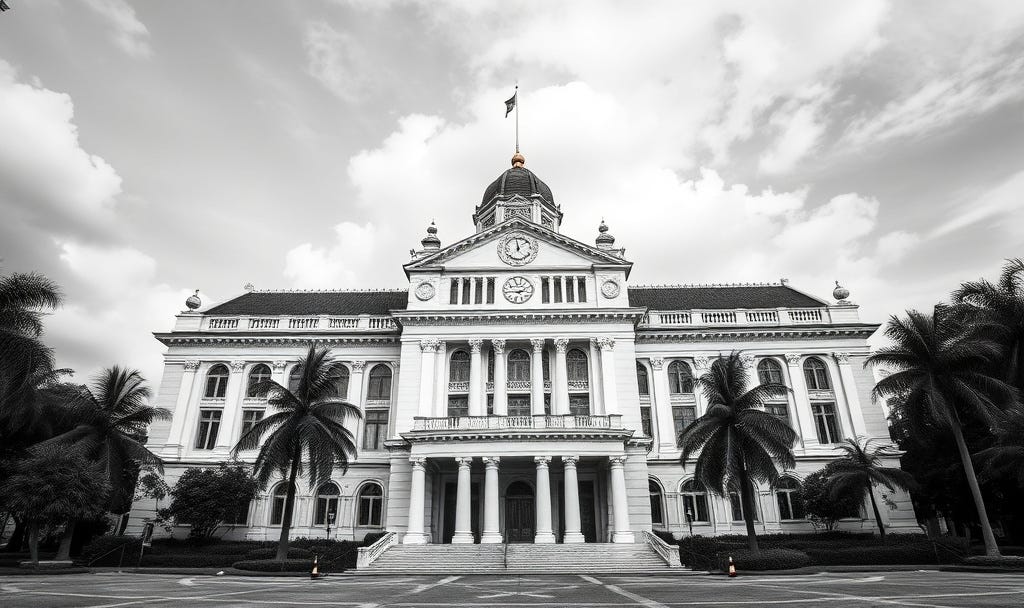
The Rambilin Ambit case is one of the most important legal precedents on Native Customary Rights (NCR) land in Sabah, and it helps clarify how far courts recognize customary tenure under the Sabah Land Ordinance (Cap. 68, 1930). Rambilin Ambit (a Kadazan-Dusun woman from Kampung Tampasak, Penampang) and her family claimed that certain land they occupied was Native Customary Land — inherited and used according to Dusun adat — but the Land Office treated it as State Land because it had never been formally titled. Under the Sabah Land Ordinance, all land belongs to the State unless alienated by title. Section 15 of the Land Ordinance, however, provides that “native customary rights may be created” by occupation, cultivation, or inheritance, but only in accordance with the Ordinance. Therefore, arises the ambiguity: does NCR exist independently of state recognition, or only if recognized through issuance of title?
In 2007, the High Court of Sabah and Sarawak at Kota Kinabalu made its decision. It dismissed Rambilin Ambit’s claim. The judge (Justice Ian Chin) held that: Native Customary Rights in Sabah are statutory, not rights derived from common law. Unlike Sarawak (where courts had recognized NCR under common law), in Sabah they arise only through the Sabah Land Ordinance. NCR cannot exist independently of the Ordinance. Meaning, unless land is officially recognized under the Ordinance (e.g., surveyed, registered, or otherwise acknowledged), customary occupation alone does not establish ownership. The claimants failed to prove they had created NCR in accordance with the Ordinance.
This decision established that there was no common law NCR in Sabah, thus creating a Sabah–Sarawak divergence in how Malaysian courts treat NCR. It asserted that Customary claims in Sabah are only valid if they fall under the categories and procedures of the Sabah Land Ordinance. This case reinforced the state’s control over land in Sabah. This sharply contrasts with Sarawak, where the courts (e.g. Nor Anak Nyawai case) held that NCR exists at common law and predates statutory law.
The Nor Anak Nyawai case is the landmark Sarawak case that stands in stark contrast to the Rambilin Ambit ruling in Sabah. Where Rambilin Ambit confined Native Customary Rights (NCR) to statute, Nor Anak Nyawai recognized them as pre-existing rights at common law.
In the Nor Anak Nyawai case the Iban plaintiffs claimed native customary land based on pemakai menoa (territorial domain of an Iban longhouse community, including farms, forest, rivers, and sacred sites). They argued that their rights predated colonial laws and were not dependent on state recognition.
Since land in Sarawak is governed by the Land Code 1958 (Sarawak), which (like Sabah’s Land Ordinance) vests all land in the state, there. But the Iban concept of pemakai menoa and pulau galau (reserved communal forest) had never been explicitly recognized in statute. The question therefore arose: Do these customary rights exist at common law, or only if created by the Land Code?
In 2001, The High Court judge, Justice Ian Chin (same judge as in Rambilin Ambit, interestingly!) held that: Native Customary Rights exist at common law, NCR are pre-existing rights rooted in native customs and practices, and statutory recognition is not a precondition for the existence of these rights. These rights were not created by statute but were recognized by the common law doctrine that the Crown must respect native rights to land unless lawfully extinguished. In other words, when Sarawak became a British colony, native rights were not erased — they continued to exist as they were recognized by the Crown. The ruling established that the Land Code regulates NCR but does not create them. In other words, the plaintiffs’ NCR to land they had cleared, farmed, and reserved should be recognized by the state even without formal state grant.
While pemakai menoa as a broad territorial concept was not fully upheld (Chin J. said evidence was insufficient), rights to cultivated and reserved lands (temuda and pulau galau) were recognized.
Therefore, from the Nor Anak Nyawai case, we can see that Common law protects native rights because Sarawak inherited the principle that the Crown must respect existing rights unless expressly extinguished.


In Sarawak, the White Rajahs—James, Charles, and Vyner Brooke—were autocrats, but also keen to ground their legitimacy in the recognition of native order. They fashioned themselves as protectors of the “Dayak” against external predation, and while their rule was far from benign, they embedded custom into the very machinery of governance. Native Courts, codified Adat, and a legal sensibility that custom was law. All of these created a jurisprudential soil in which the common law, when it arrived with the British colonial administration in 1946, could recognize native rights as pre-existing, not merely granted after the fact. When Malaysian judges in cases like Nor Anak Nyawai drew on Australian precedents like Mabo v Queensland, they could appeal to a Brooke-era tradition that had always treated native land as something more than vacant forest awaiting survey.
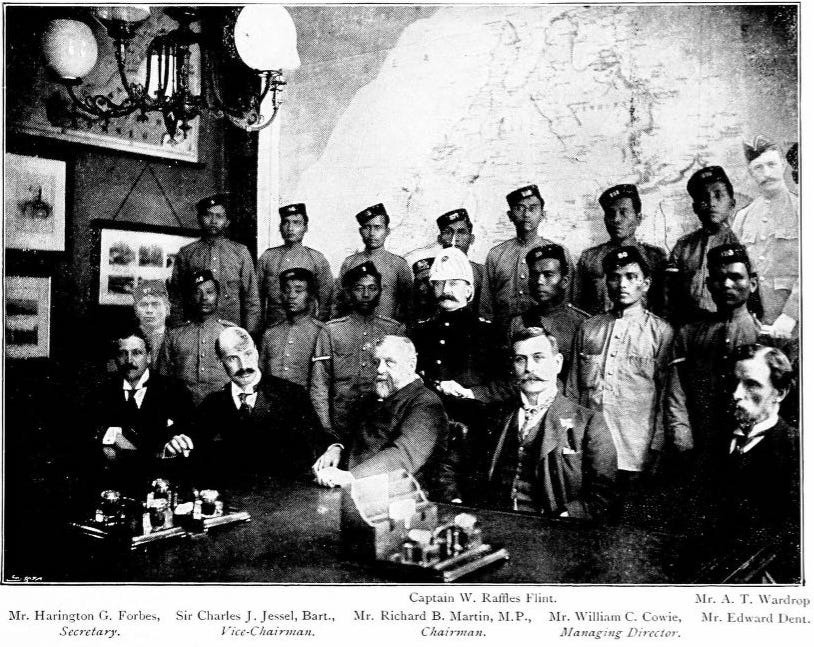
Sabah’s story is strikingly different. The British North Borneo Chartered Company, and later the Crown Colony, viewed land through the lens of concession and commercial exploitation. The very raison d’être of Company rule was to alienate land for tobacco, rubber, and timber. Customary rights were not denied outright—as is evident in Governor Parr’s 1913 Proclamations—but they were circumscribed, bureaucratized, and, crucially, made dependent on state recognition.
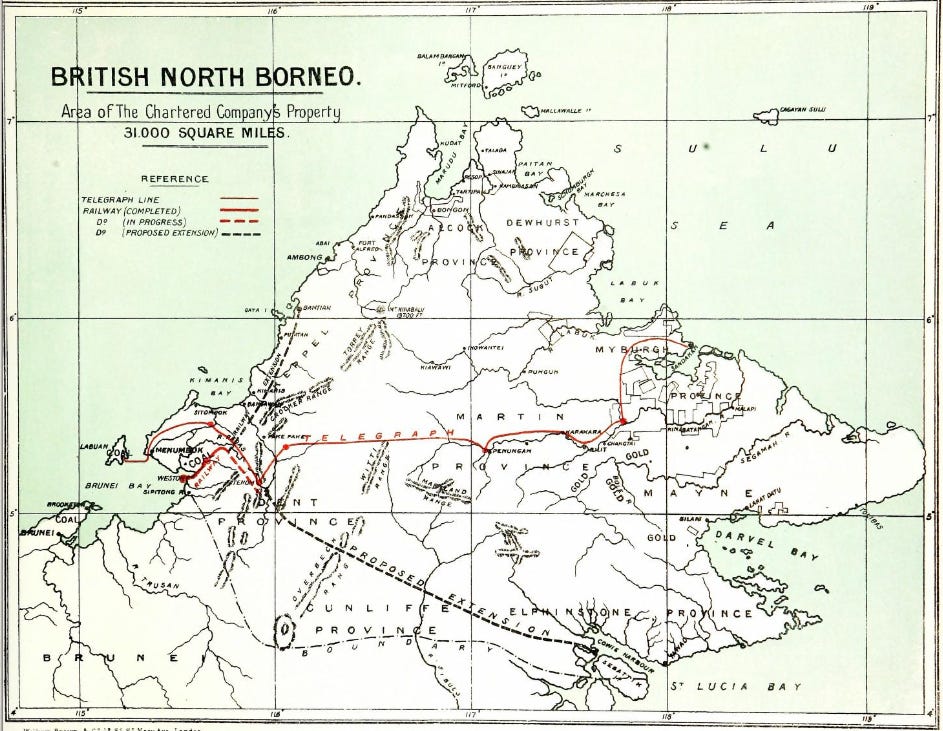
The Land Ordinance of 1930 codified this logic: native customary rights existed only insofar as they were formally established—through cultivation, residence, or explicit proclamation by the Governor. Unwritten custom, the lifeblood of communities, had no independent purchase in court. After independence, Sabah’s judiciary, inheriting this framework, treated statutory recognition not as illustrative of possible ways of recognizing ownership but as exhaustive of it. Thus in Rambilin Ambit, the court could coolly dismiss claims grounded in ancestral practice, insisting that only the Ordinance defined rights.
This divergence is not just a quirk of legal interpretation; it reflects the presence—or absence—of actors willing to mediate between native practice and colonial law. In Sarawak, the Brookes’ paternalism, coupled with sympathetic administrators and, later, judges attuned to the moral weight of custom, kept the door open for common law doctrines of pre-existing rights. In Sabah, the Chartered Company’s commercial ethos, and the absence of a Rajah-style protector figure, ensured that land was first and foremost a commodity, with custom tolerated only at the margins.
What results is a painful irony: common law, which in theory binds the Crown to respect pre-existing rights unless clearly extinguished, thrives in Sarawak but withers in Sabah. The reason lies in history’s contingencies: who ruled, how they justified their rule, and which voices were able to shape law’s self-understanding. Where Sarawak’s natives can speak of pemakai menoa and have the courts listen, Sabah’s natives find their histories met with silence, unless a statute deigns to render them recognition.
Common law originates from the British. Both Sabah and Sarawak formally adopted the common law upon becoming colonies of the Crown. Funnily enough, the state that more strongly adhered to common law now has better rights for their natives than the state that abandoned it. Due to the strength of the common law in Sarawak, Sarawak’s native rights are legitimated. The common law of the British is a sturdy bulwark against injustice. Those who strengthen it, like Sarawak, are able to better safeguard their interests over land.
This is why the Rambilin Ambit case in Sabah ended in no recognition for her rights while the Nor Anak Nyawai case strengthened the legitimacy of native rights to land in Sarawak.
Therefore, the ontology of rights in Sabah and Sarawak differs. Unlike in Sabah, a right in Sarawak need not be legal to exist. A right can exist as a custom rather than as a law. In Sabah, if the right is unwritten, it will not be recognized. Only written laws can be real rights.
No posts
Comments
Nothing yet. Say the first thing.
Sign in to join the conversation.