
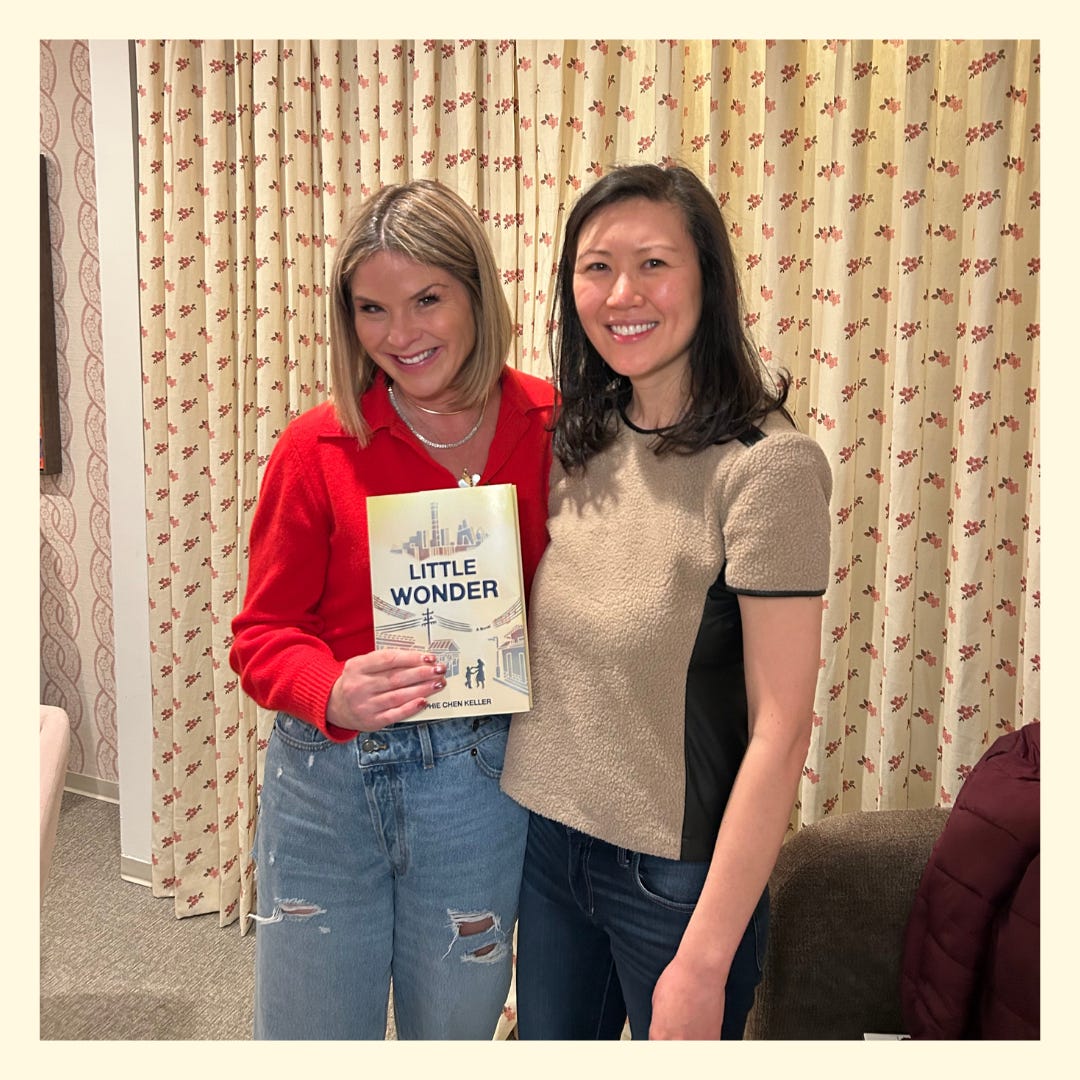
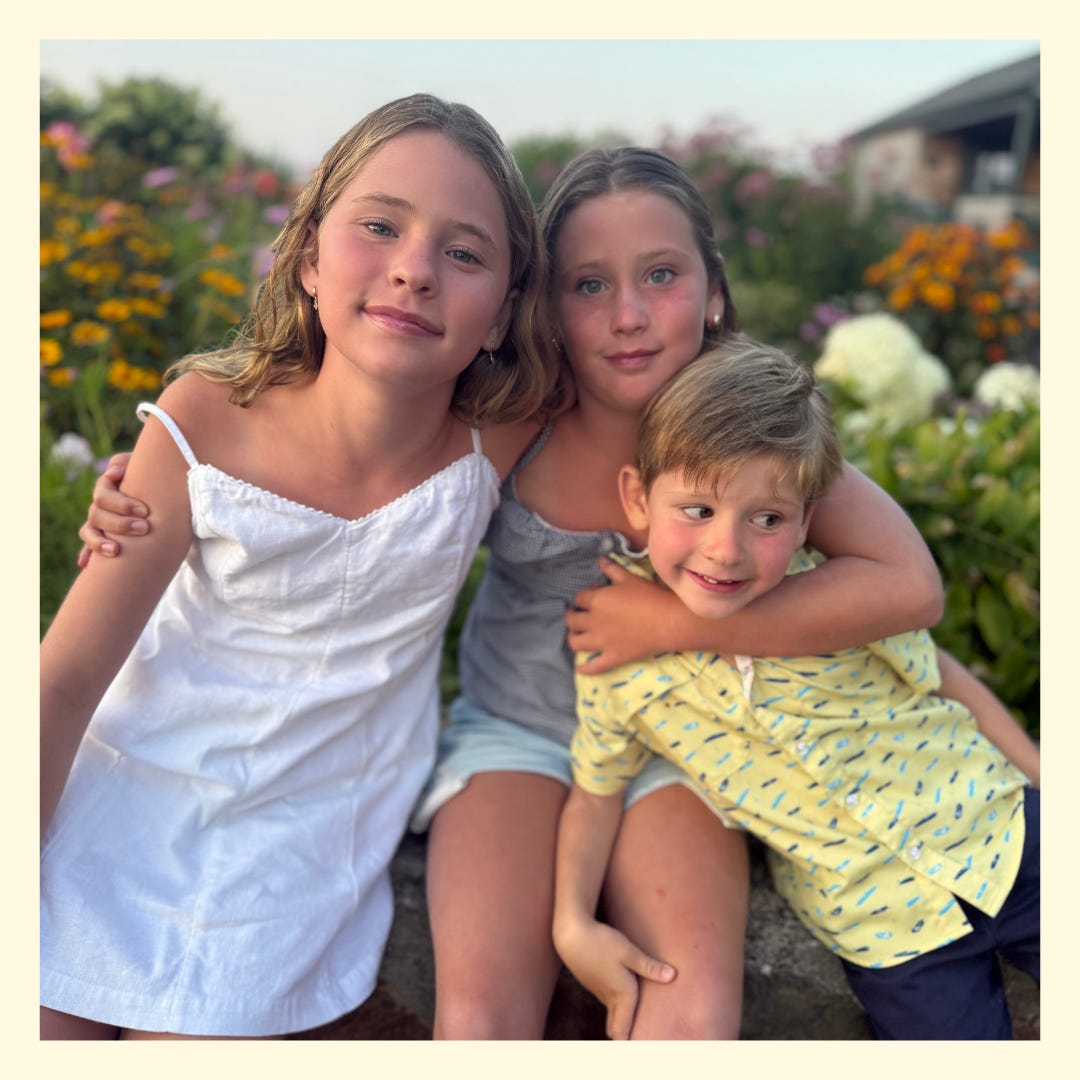
I don’t think it will surprise many people when I say the joy of my life is being a mother, and that the gift of my life is my three children. I’ve mentioned before that the biggest lesson I’ve learned from being a mom is how expansive our hearts are. There is no similar love; it’s incomparable.
That’s one of the many reasons I fell so deeply in love with Sophie Chen Keller’s novel, Little Wonder. This is a story about how motherhood transforms us, how music transports us, and most importantly, how love and hope sustains us.
At the center of the novel are Song and her son, River. Song is a woman from Northeastern China who has devoted her life to nurturing her son’s extraordinary musical talent. At four years old, River first discovered the piano. By eight, he had mastered Liszt’s Liebesträume, and by ten, he sped through Chopin’s Études.
But after a heartbreaking moment at Beijing Railway Station, mother and son are separated and forced onto different paths, carrying with them the memory of one another and the hope that somehow, someday, they will find their way back together.
Little Wonder is a tender story about family, sacrifice, and the unbreakable bond between a mother and her child. It is a reminder that even in our darkest moments, hope has a way of finding us.
Little Wonder is out in the world in one week on June 16. Enjoy an early excerpt below, and if you love them as much as I think you will, I hope you’ll preorder your copy here and share it with someone you love (& remind them to keep tissues nearby).
– Jenna
LITTLE WONDER © 2026 by Sophie Chen Keller. Used by permission of Ballantine Books, an imprint of Random House, a division of Penguin Random House LLC, New York. All rights reserved. Cannot be reproduced or reprinted without permission in writing from the publisher.

Song had cracked herself open and her mother was nowhere to be found. She had asked for help and it didn’t matter because she didn’t matter. The only thing she could do was soothe her crying baby before she left.
She drew the curtain shut and walked with River across the darkened room, a few steps forward to the wall, a few steps back to the hearth bed, and still River screamed with the fury of being helpless. He screamed like he knew she would soon leave him behind.
The childhood instinct rose in Song and she plugged in the dusty radio and turned the dial until a station came through. It wasn’t the Beijing opera she had clamored for as a girl, listening with her father until her brother complained about the racket; it was classical music, where the instruments sounded like human voices but without any lyrics, and that left space for Song’s own thoughts. The next song was Debussy’s Arabesque No. 1, according to the announcer.
At the sound of the piano, River stopped crying and stared at the radio with round eyes, rapt. Only the rope of drool moved, stretching from his chin.
Song turned up the volume and set the radio on the hearth bed and lifted River to her shoulder. She stood in the middle of the darkened room and swayed.
She kicked off her slippers and took off her socks. She swept across the floor, the cement chilling her bare toes. She stepped and she spun, making her hair swish.
Many years ago, she had seen a pianist on TV, performing at the national Spring Festival Gala. In the spotlight in his sparkling purple suit, with the adulation of the audience raining down upon him, no one would’ve guessed that he had come up from a left-behind place like the Lakeyard.
Song had burned with envy, watching him play. She wanted to have the ability to make music whenever she felt like it, whether she was happy or in pain or full of sorrow. Then she would never be powerless; she could always escape.
In reality, only the best escaped, and she wasn’t the best at anything. She would never be that pianist on TV. What she had, for this one moment, was her son, and the music on the radio. It was fleeting but it was still a kind of escape.
She danced with River in their concrete box with the curtain drawn shut, waltzing between the cupboard and the card table, the radio glowing on the hearth bed. They danced until time and money didn’t exist and neither did the room. Around them, a flurry of notes drifted down like leaves, landing in a wistful sigh, and Song lifted her arms to the autumn trees and the crisp sky and the blinding light of her baby, her son.
Then she knew—she had to do it with him. The two of them would leave together and go to Harbin, and there would be traffic on the way.
She placed River on the hearth bed and packed in a hurry, dumping out a drawer and stuffing their clothes and identification documents into a canvas bag. River blinked heavily at her as she pressed the clothespin toys into his moist palms.
“You can sleep soon,” she said, lining the empty drawer with cloth diapers. “And Mama will find the way.”
She dressed him warmly and laid him in the drawer and that would be his cradle. She tucked the radio beside him, and that would be his companion.
As for her, she had the money Blue had given her—she had counted it last night, along with some of the earring money, 362 pieces in total, folded in her pocket and held together by a rubber band—and she had her mobile phone, which was charging on the floor, looking too new for their haggard home.
The phone had been Blue’s wedding gift to her even though he couldn’t afford one himself. Their wedding had been simple, held in a homestyle-cooking restaurant with plastic tablecloths and sticky floors, and she had worn the pale blue suit she’d gotten the previous New Year, the fabric thin and scratchy but the cut flattering, in her opinion, and the color fresh and pretty.
The guests ate fish caught in the lake and served whole and magnificent on platters, and Song’s brother acted as the master of ceremonies, telling embarrassing stories and directing the games—Song blindfolded, feeling her way down a line of hands and guessing which pair belonged to Blue; Song and Blue thrusting their hips, popping the balloon between them. Brother placed a balloon on Blue’s lap and Song took aim and plopped down, missing her target, her bottom hitting the floor instead.
Her cheeks hurt from laughing, her face glowing from the countless toasts—neighbors and old classmates, her parents sitting stiff and sullen on one side of the head table while Blue’s family crowded around the other and spilled out across the next few tables, too—all those siblings and aunts and uncles, Northeasterners as well, but their province bordered North Korea, not Russia.
“Eat, eat.” Song’s mother-in-law reached over Song’s mother and made a show of serving the newlyweds, handing Song a ragged piece of fish with gray edges. A stingy portion. Beside it, Blue’s piece glistened, snowy white, and Song understood something, then, about Blue’s family: They were the kind who only took care of their own. To them, she would always be an outsider. Then Blue switched the plates, and he bounded to the microphone to present his gift.
Rich men wooed their wives with property, high-rise apartments with gleaming white floors, but Song hadn’t expected anything more than Blue’s dimples. She held the gift in the palm of her hand, a gleaming white phone with buttons like pink candies, and her mother-in-law harrumphed, “Too expensive. She doesn’t need such a thing.”
Ignoring her, Song went up to Blue and put her arms around his neck. Her skirt fluttered as he carried her out of the restaurant, past everyone clapping, her glowing cheek pressed to his glowing cheek as they ducked through the doorway and entered their new life.
The memory of that day was warm and compact, as solid a weight as the phone in her pocket, and she felt less alone. In the kitchen, she took a piece of cornbread and sprinkled tea leaves into her water jar, which used to be a sauerkraut jar, and then she hoisted her bag onto her shoulder and carried River in his drawer out of the house.
Her mother didn’t come to her; she didn’t even look, staring into the washbasin and scrubbing as Song stood over her.
“We’re leaving, Ma—River and me. I’ll send home money. Don’t worry.”
“You’ll come crawling home in shame.” Her mother’s words were brittle, cracking against her teeth. “My stupid daughter. You’re going to fail.”
Song’s sweater was too heavy and the drawer dug into her hip and her palms were slick with sweat but she refused to set down the load she had chosen for herself. Her back was a concrete wall, her shoulders barbed wire.
“We’re not coming home. Goodbye, Ma.”
Out in the alley, atop a pile of discarded building materials, Song found a rope and looped it around the bottom of her scooter, securing the drawer to the footboard, where she could keep an eye on River.
As she knotted the rope, she heard her mother in the kitchen, pounding cloves of garlic and cutting a cucumber into matchsticks. When her father and her brother came home, the three of them would sit around the card table and eat without talking—just chewing, just her brother belching, rubbing his bloated stomach.
If River stayed, he could end up like that. She wouldn’t allow it. She crammed her bag into the seat compartment and heaved at the scooter and the engine hiccupped as she hopped aboard.
At the mountain of trash, she turned left. She rode for a while, steering carefully to avoid the walls that lined the alleys and the muddy canal that lapped at her wheels. She went slow, giving her mother a chance to catch up.
But no one chased after Song. The walls fell away, the stench dissipating, and the wind lifted the back of her shirt and dried the sweat on her face. She went fast, outrunning the dust and leaves that snapped at her heels. Her engine whirred with the cicadas. She looked down, at the drawer braced between her feet.
River slept with his arms flung over his head, his mouth settled in a pout, and as she watched, his limbs twitched and the corners of his mouth turned up, like he was smiling back at her. She rode out into the world with the sun blazing overhead, with River, and it didn’t feel like making a mistake. Because she was hopeful, it felt like the start of an adventure.
Watch the trailer here.
No posts
Comments
Nothing yet. Say the first thing.
Sign in to join the conversation.