
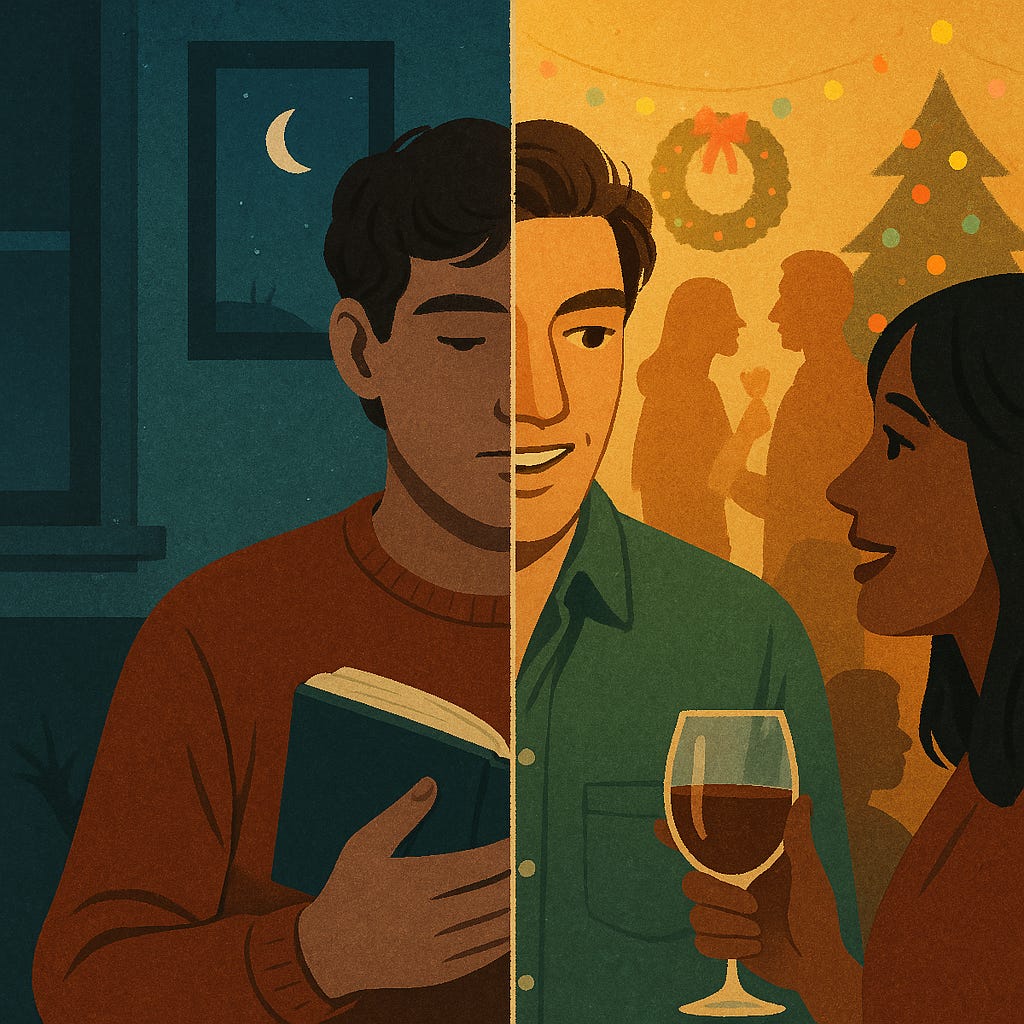
Picture this: It’s Friday night after a long week. A friend texts: “Come out with us—just a quick drink.”
You pause. The idea sounds nice. A part of you knows that once you’re out, you’ll probably have fun. But the real battle isn’t the socializing itself; it’s overcoming the activation energy required to go.
You feel a tug-of-war inside you: one part craving connection, the other craving stillness.
What do you do? Do you rally and head out? Or do you sink into the couch and fire up Netflix?
This is Introvert Inertia: the moment when your inner world pulls back just as the outer world calls your name.
Growing up, I was jealous of my extroverted friends. The popular kids who lit up a room.
I was a bookish kid. I had friends, but felt most at peace studying, reading, thinking.
I became more extroverted in my 20s. I got a job on Wall Street and learned to hold my own at cocktail parties. Alcohol helped loosen my inhibitions. I learned how to “fake it” as an extrovert. But I still fit the definition of an introvert: someone oriented toward their inner world more than the outer one.
I struggled to reconcile my need for time alone with my desire to be social.
A turning point came when I read Susan Cain’s book Quiet. She argues that Western culture has created an “extrovert ideal” that undervalues the strengths of introverts.
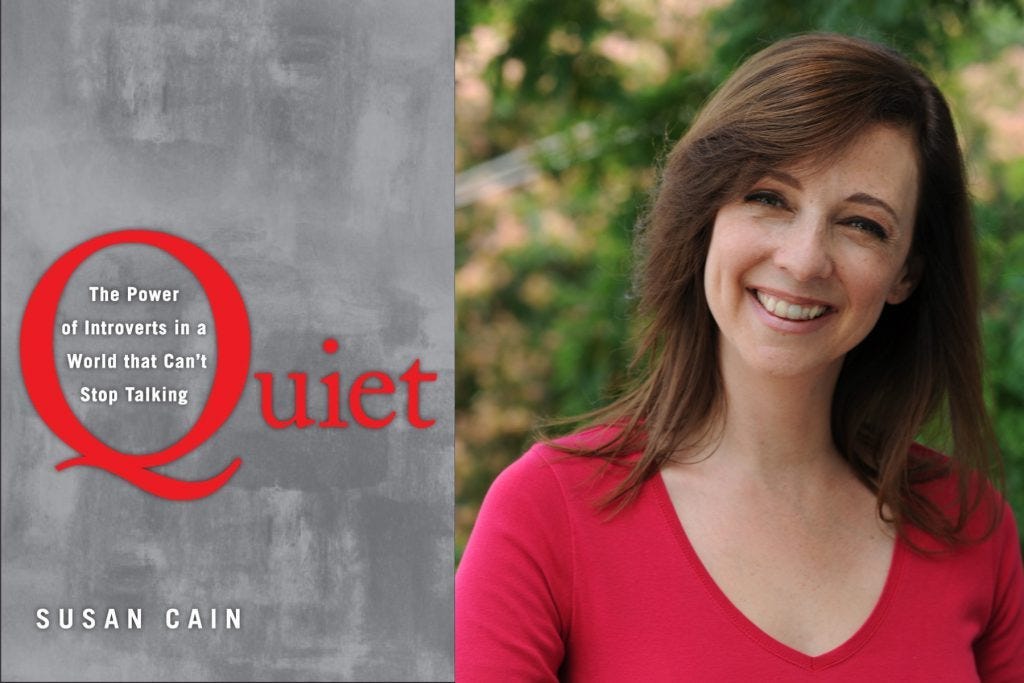
Suddenly, my own patterns made sense. The nights I’d leave parties early just to sit on the couch with a book. According to Cain, introverts’ brains are just wired differently.
And yet — it’s not that simple. Introversion and extroversion exist on a spectrum. You can be somewhere in the middle. You can be an ambivert.
Then I noticed something else. My level of introversion depends on the situation — and what I’ve been doing for the last few hours. Have I been sitting alone working, or have I been out all day with friends and family? The way I present to the world is very different in these situations.
When I’m by myself for a long period, with no social stimulation, I’m like a car that’s been sitting out in the cold. The engine may take a little longer to get started.
I coined a new term to describe this phenomenon: Introvert Inertia.
Introvert Inertia is the invisible force that explains why being alone makes you want to stay alone, and being social makes you want to stay social. Why some days I’m a hermit, holed up alone with a book, and other days I’m hosting 100-person cocktail parties.
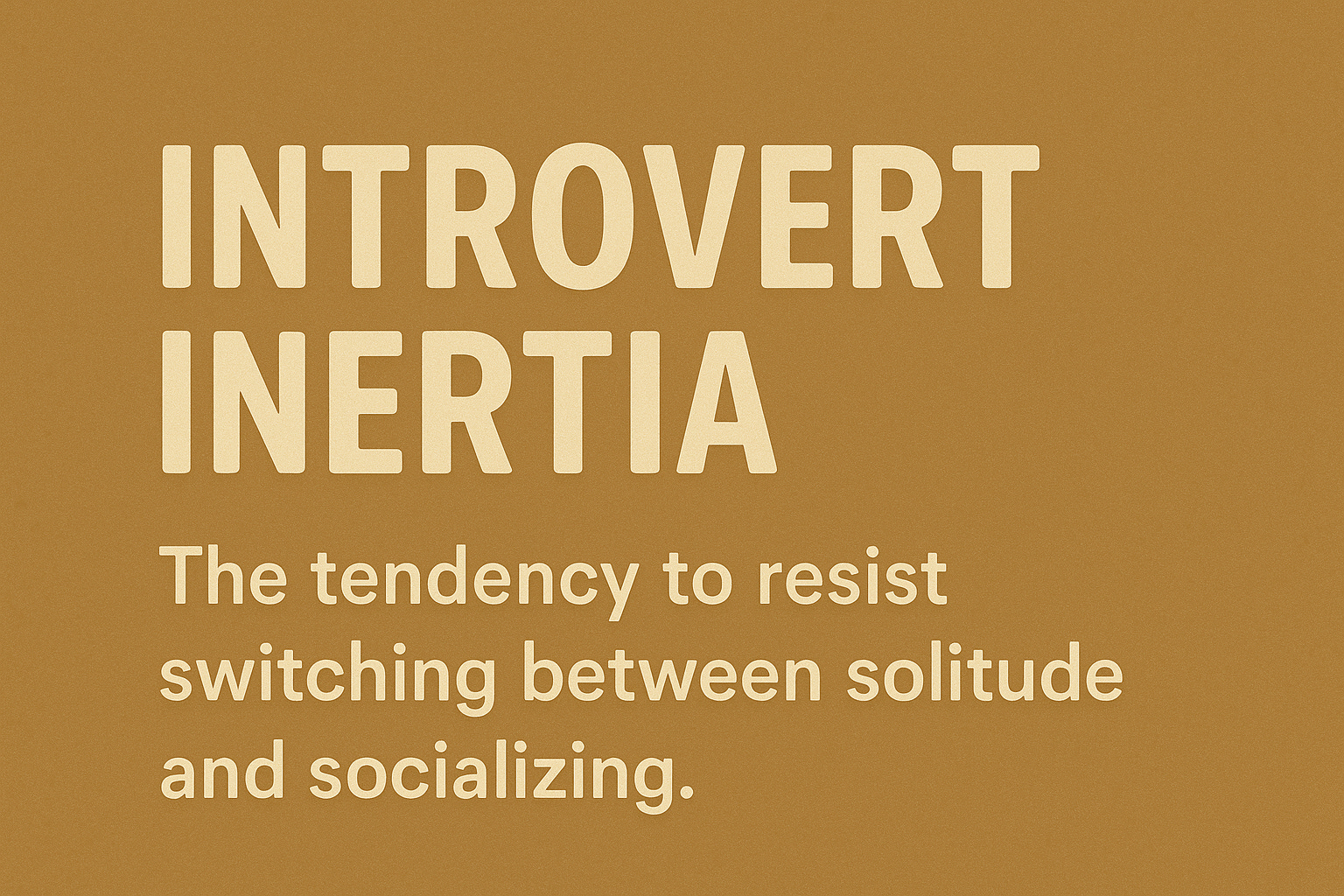
Introvert Inertia is the social version of Newton’s First Law of Motion: an object at rest stays at rest, and an object in motion stays in motion.
Introvert Inertia is the same thing — but instead of physical motion, it’s about social dynamics. Introversion and extroversion aren’t fixed traits; they shift with context.
But to understand Introvert Inertia, you have to understand two underlying systems: dopamine sensitivity and social homeostasis.
Introversion is about more than just “shy vs. outgoing.” Introversion and extroversion are less about who you are and more about how your nervous system processes stimulation.
In short: Extroverts have lower dopamine sensitivity.
Translation: the same party that feels energizing to an extrovert can feel like a sensory assault to an introvert.
Extroverts need more stimulation to hit their optimal arousal level. Crowds, novelty, noise, movement — all of it feels energizing. It feeds their social craving for hits of dopamine, the “feel good” chemical that regulates our pleasure and reward centers.
Introverts have higher dopamine sensitivity. In other words, the same environment floods their system too fast. A crowded party feels overwhelming.
This insight explains why introverts love people and enjoy socializing, yet feel wiped out after 90 minutes in a big room full of people.
The introvert at the party wants friends just as much as the extrovert does — but the noise, movement, and buzz create a sense of overload. The reward isn’t tantalizing enough to justify the energy expenditure.
Dopamine sensitivity explained one part of why I often felt like leaving parties early. But that still didn’t explain my particular paradox: Why was I sometimes very extroverted, and other times quiet, inward, socially rusty?
For that, I needed the second piece of the puzzle.
Neuroscientists have a term for it: social homeostasis. Just like your body regulates temperature or hunger, your brain regulates your ideal level of social contact.
It’s governed by the hypothalamus (social hunger), the insular cortex (social effort), and dopaminergic circuits (reward and motivation).
Think of it like a thermostat:
Under-socialized? You feel restless, lonely, motivated to reach out.
Over-socialized? You feel saturated, fatigued, craving quiet.
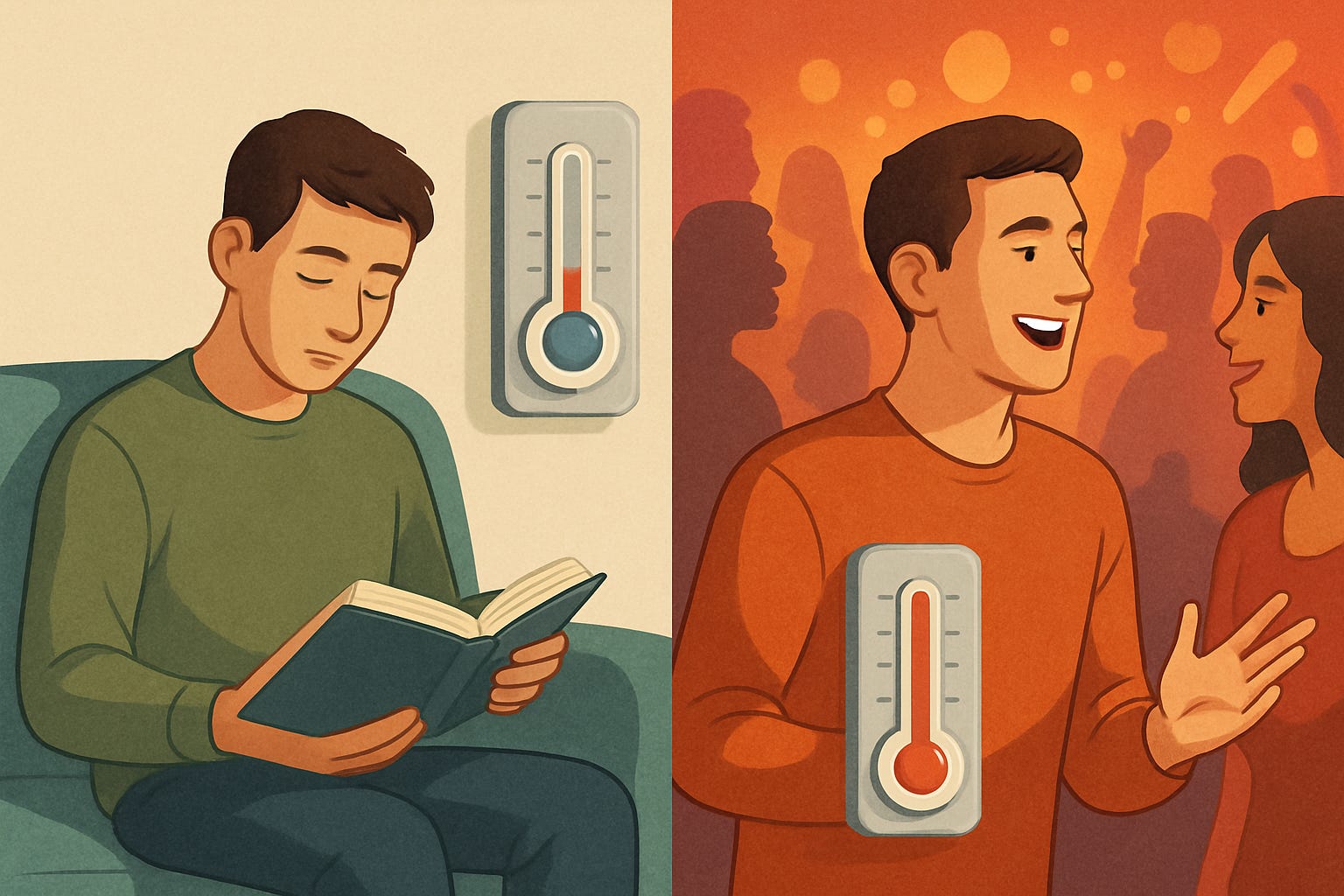
Extroverts have a higher social “set point.” They need more interaction to feel full.
Introverts have a lower set point. They hit their limit sooner.
This is why an introvert might feel emotionally done after a single intense conversation, while an extrovert wants to keep bar-hopping until sunrise.
In short: Introverts and extroverts differ because dopamine sensitivity sets how quickly they become socially “full,” and the brain’s social homeostasis system pushes them toward the amount of social contact that returns them to balance.
But the really interesting part is what happens in transition — moving from one mode to another. That’s where Introvert Inertia comes in.
When I spend hours reading, writing, or working solo, I slip into a low-stimulus, high-focus state. My dopamine baseline drops. My sensory channels narrow. My brain goes deep rather than wide.
In that state, the idea of walking into a loud cocktail party feels impossible. But once I make that transition to a social setting — say, after 30 minutes chatting with friends — something shifts. My conversational gears start turning. My social cognition wakes up. I find the rhythm of the room. I get energized by people instead of drained.
Pretty soon I’m planning the afterparty. Momentum takes over. This is Introvert Inertia in its simplest form:
An object at rest stays at rest; an introvert on the couch stays on the couch.
An object in motion stays in motion; an introvert at a party stays at the party.
It’s physics and neurochemistry. Once your nervous system commits to a mode, it resists switching.
I asked an AI therapist: why do I need to warm up socially before walking into a hyper-social event?
The answer boiled down to this: when you’ve been alone, your brain isn’t in “social mode.” You literally have to switch networks.
Studies show that social skills are like muscles — they can feel rusty after disuse. Engaging in light conversation before a big event primes your brain for social engagement, reducing the mental lag that comes with transitioning from isolation to social settings.
Introverts don’t dislike socializing; they dislike the gear-shift. The transition itself is the painful part.
This explains why calling someone on the phone is hardest when you’ve been alone all day. Why the pregame chat with a friend always feels easier than the main event. Why your best conversations happen 20 minutes into a date — not in the first two.
It’s not social anxiety. It’s neural boot-up time.
I feel my social energy shift every time I travel between New York and LA. It turns out there’s a simple explanation for this: Cities act like external dopamine environments.
When I leave New York and return to LA, it can feel like a crash landing. Gone is the kinetic swirl of Manhattan; in its place, the sweet serenity of palm trees and the beach.
It always takes me a few days to adjust to Santa Monica. The quiet feels too quiet. The air feels too soft. The world feels like it’s moving in slow motion. I feel like I’ve been unplugged from a power source.
Transitions are hard. Even for someone like me who travels a lot.
New York is hustle and bustle. Santa Monica is peace and quiet. The two cities represent distinct polarities: Adrenaline and solitude.

Introvert inertia helps explain why you sometimes feel like a different person in different cities. Your environment is always calibrating your social thermostat.
Cities don’t just shape how we live — they shape how we feel, rewiring our internal chemistry in real time.
So what does all this actually mean for your life?
Put an introvert in a crowded nightclub and you get overstimulation. Put an extrovert in a cabin in the woods and you get isolation.
Tip: If you’re dreading going out, change only the environment first — work from a café, take a walk in a busy park, or call a friend on your way. Don’t white-knuckle it from total solitude to a packed bar.
Baseball pitchers warm up in the bullpen. Theater actors do vocal warmups before going on stage.
We all go through transitions, every day. You don’t have to walk into a situation cold. Just five minutes of conversation before entering a party, or a quick phone call with a friend before a date, can make a world of difference.
So can taking 20 minutes of alone time in nature after a long work meeting. These aren’t indulgences — they’re necessary warm-ups and cool-downs.
Tip: Put a “bullpen” in your calendar. Five minutes of small talk with a friend before a party; a quick voice note before a date; a solo walk after a long meeting. Treat warm-ups and cool-downs as part of the event, not extras.
It’s a predictable, nameable, manageable neurobiological pattern. Once you recognize it, everything changes.
Tip: When you feel the resistance, name it: “This is Introvert Inertia.” That label shifts the story from “I’m flaky” to “my brain is switching modes” — and that alone makes it easier to act.
Most people misdiagnose their social challenges. They have trouble distinguishing between the aspects of their personality that are fixed, and the ones that are shaped by their environment.
Ask yourself:
Do I actually dislike people — or do I just hate the transition into social mode?
Do I feel better once I’m 20 minutes into the event?
Do I secretly enjoy both hermit mode and host mode, just never the moment in between?
If you answered “yes” to those, odds are you’re not broken — you’re just living with a very normal case of Introvert Inertia.
When you understand this, you stop judging yourself. You stop comparing yourself to extroverts with always-on engines.
You start designing your life around how your brain actually works — not how you think it should.
And suddenly, the world feels less like friction…and more like flow.
Thank you for reading this week’s edition of Vitamin Z.
Until next time,
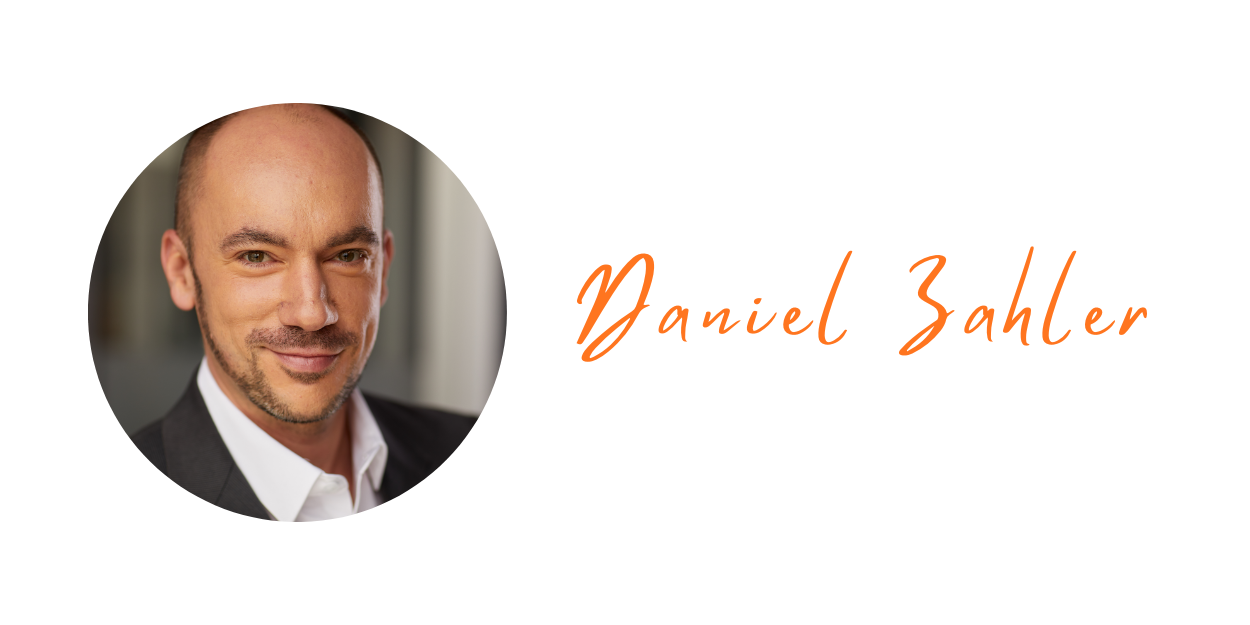
Hi there and thanks for reading. I created Vitamin Z to explore how advances in healthcare, neuroscience, pharmacology, AI, and behavioral science are reshaping what it means to live well — and to live meaningfully. I lead strategic communications at Noom, a digital healthcare company focused on chronic disease prevention and whole-person health.
No posts
Comments
Nothing yet. Say the first thing.
Sign in to join the conversation.