
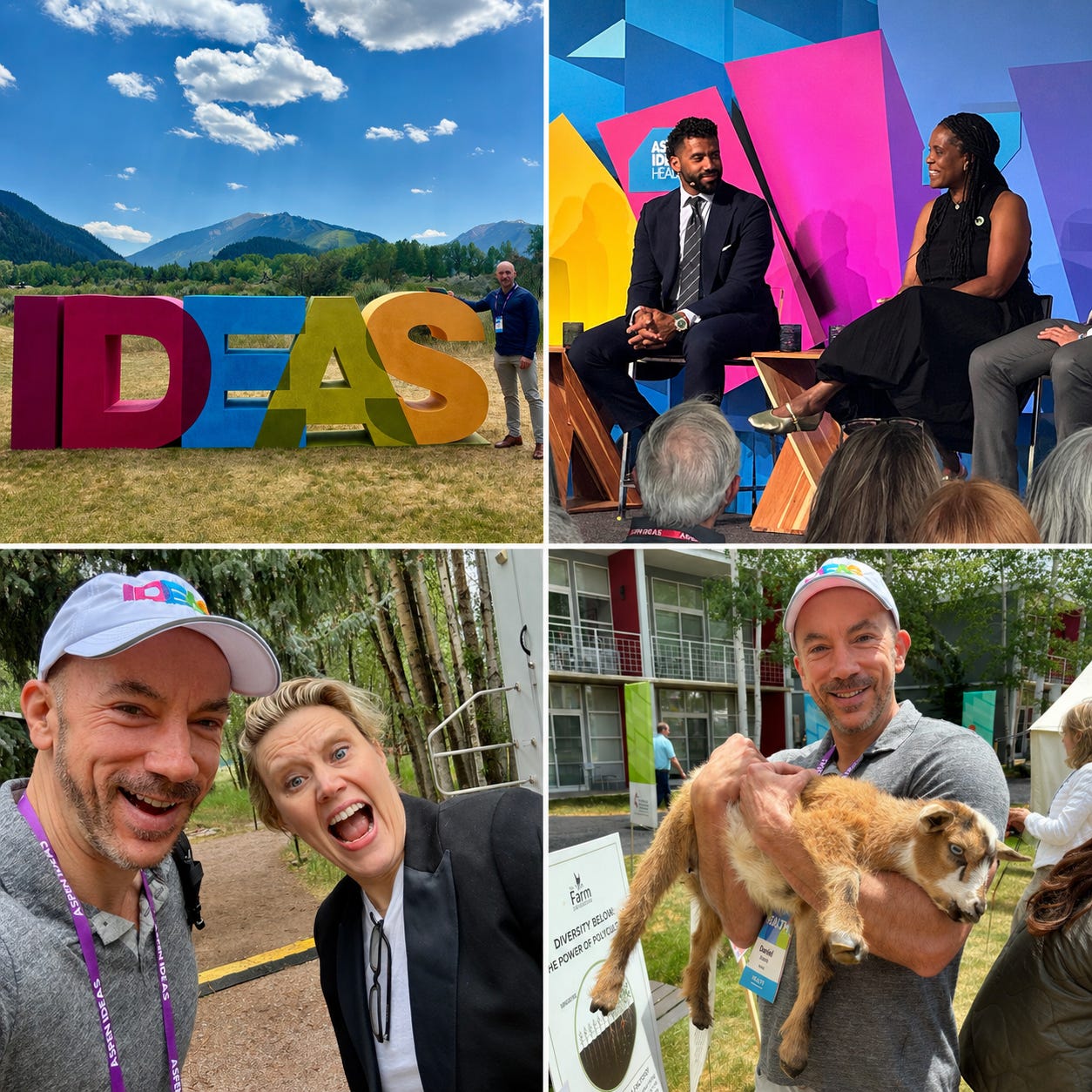
I spent last week in Colorado for Aspen Ideas: Health, where I saw a few things I wasn’t expecting:
🎸An ER doctor interviewing guitar-playing brothers
🧑🌾 Comedian Kate McKinnon talking sustainable food systems
🐐 A picnic lunch where attendees cradled baby goats
That weirdness is what makes Aspen special. For a few days on a remote mountain campus, leaders from medicine, science, technology, policy, business, media, and culture gather to explore bold approaches to better health.
There’s an alchemy that happens when all those worlds collide. Healthcare’s biggest challenges – mental health, chronic disease, obesity – are too complex for any one field to solve alone. They require lateral thinking.
Events like Aspen remind us that radical solutions rarely come from staying in our silos. To solve healthcare’s thorniest challenges, maybe we’ll need to draw inspiration from unlikely places – like comedians with baby goats on a mountain.
Here are six conversations from Aspen I’m still thinking about, and what they say about where healthcare is going.
One clear theme at Aspen was that many physicians no longer see AI as a threat to medicine – they see it as a catalyst for a new relationship between doctors and patients.
Speakers pointed to recent advances in AI-powered diagnostics, predictive biomarkers, and consumer health tools as evidence that medical expertise is rapidly becoming more accessible. The result: patients are arriving with deeper knowledge of their own biology, from advanced blood markers to AI-generated risk assessments.
A panel of physicians-turned-VCs – Thrive Capital’s Nworah Ayogu, GV’s Ben Robbins, and a16z’s Vineeta Agarwala – suggested the conversation is moving from:
“What if AI gets something wrong?”
to:
“What if the greater risk is NOT using AI when it could help patients make sense of their data, ask better questions, and get the right treatment faster?”
Healthcare AI may transform the role of doctors from gatekeepers of information to partners helping patients interpret, personalize, and act on increasingly sophisticated health data.
Ben Robbins said:
“I don’t think AI will replace the doctor relationship, but it may help doctors pull back from lower-acuity situations and focus on things that are more complicated.”
The GLP-1 story is no longer just about weight loss. It’s about second-order effects: consumer spending, food systems, and what happens after the prescription.
PwC’s Ali Furman, in conversation with Eli Lilly’s Laura Steele and Indiana University’s Kosali Simon, explored how these drugs are transforming huge parts of the economy beyond healthcare. Furman cited PwC research showing:
21% of U.S. households include a current GLP-1 user, up from 9% in January 2025.
Per-household grocery spend is down 5.5%, with users shifting away from snacks, sugary drinks, and alcohol toward fresh produce, protein, and high-fiber foods.
73% of current users report a meaningful change in clothing size, and apparel spend is up 10% after 6–8 months on GLP-1s.
If Phase 1 of GLP-1s was about access to the medications and proving they work, Phase 2 will be about everything around the drug: food, coaching, strength training, and long-term support.
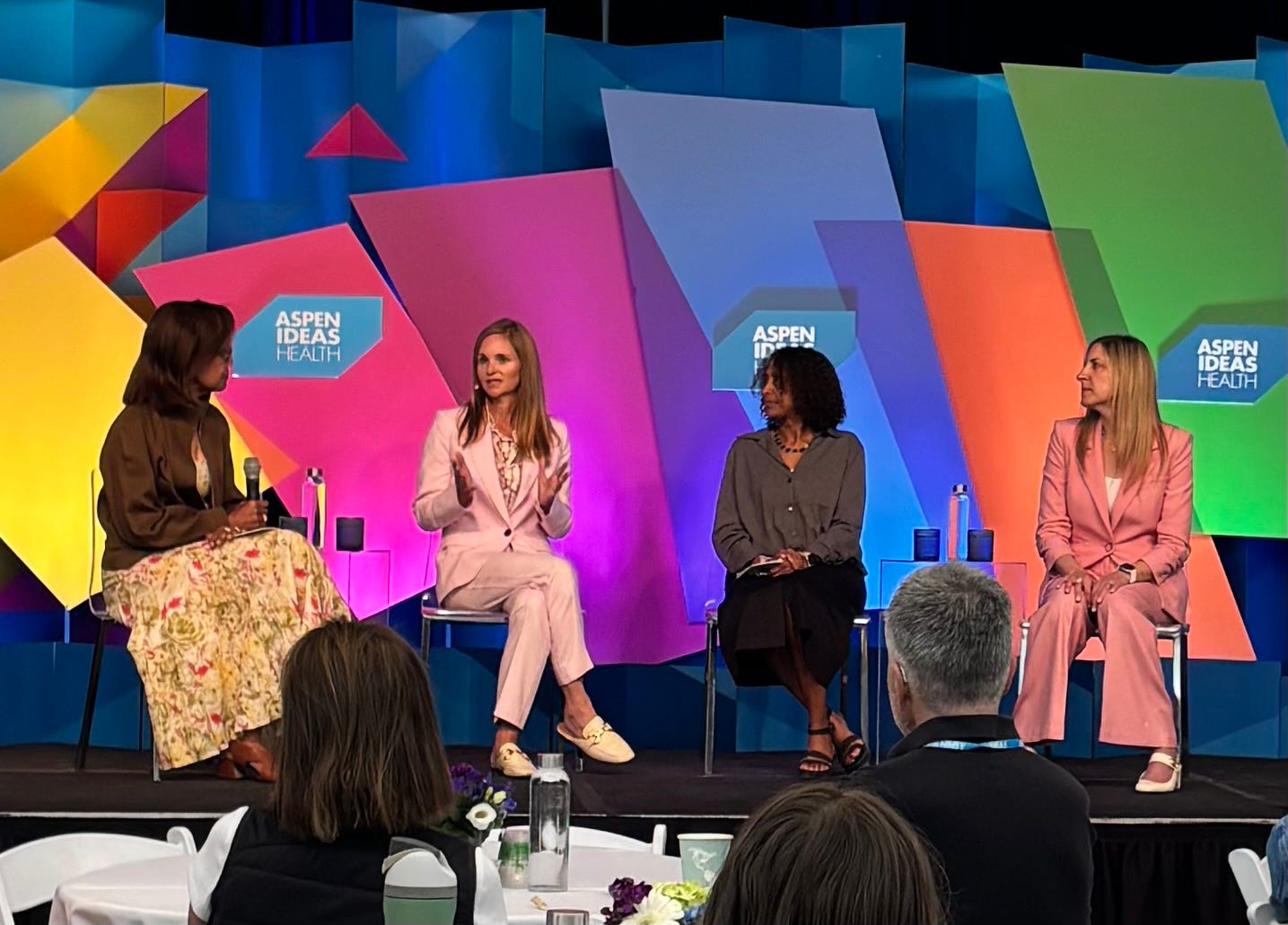
One of the most fascinating conversations at Aspen focused on how we might rewrite the biology of aging.
Dr. Mary Claire Haver argued that menopause should not be treated as a niche women’s health issue:
“It’s the most predictable accelerator of aging in the human body.”
Alicia Jackson of ARPA-H described the central challenge of longevity science: how do you test interventions that may affect lifespan without waiting 20 years for results? There are promising candidates – GLP-1s, SGLT2 inhibitors, rapamycin, and others – but the key is finding biomarkers that can project long-term outcomes in shorter studies.
She also highlighted the promise of “replacement” medicine: from bone marrow transplants to growing cortical tissue that could one day be transplanted into damaged areas of the brain. Her prediction:
“We won’t have a silver bullet, but we’ll have a cocktail of things that will work very well.”
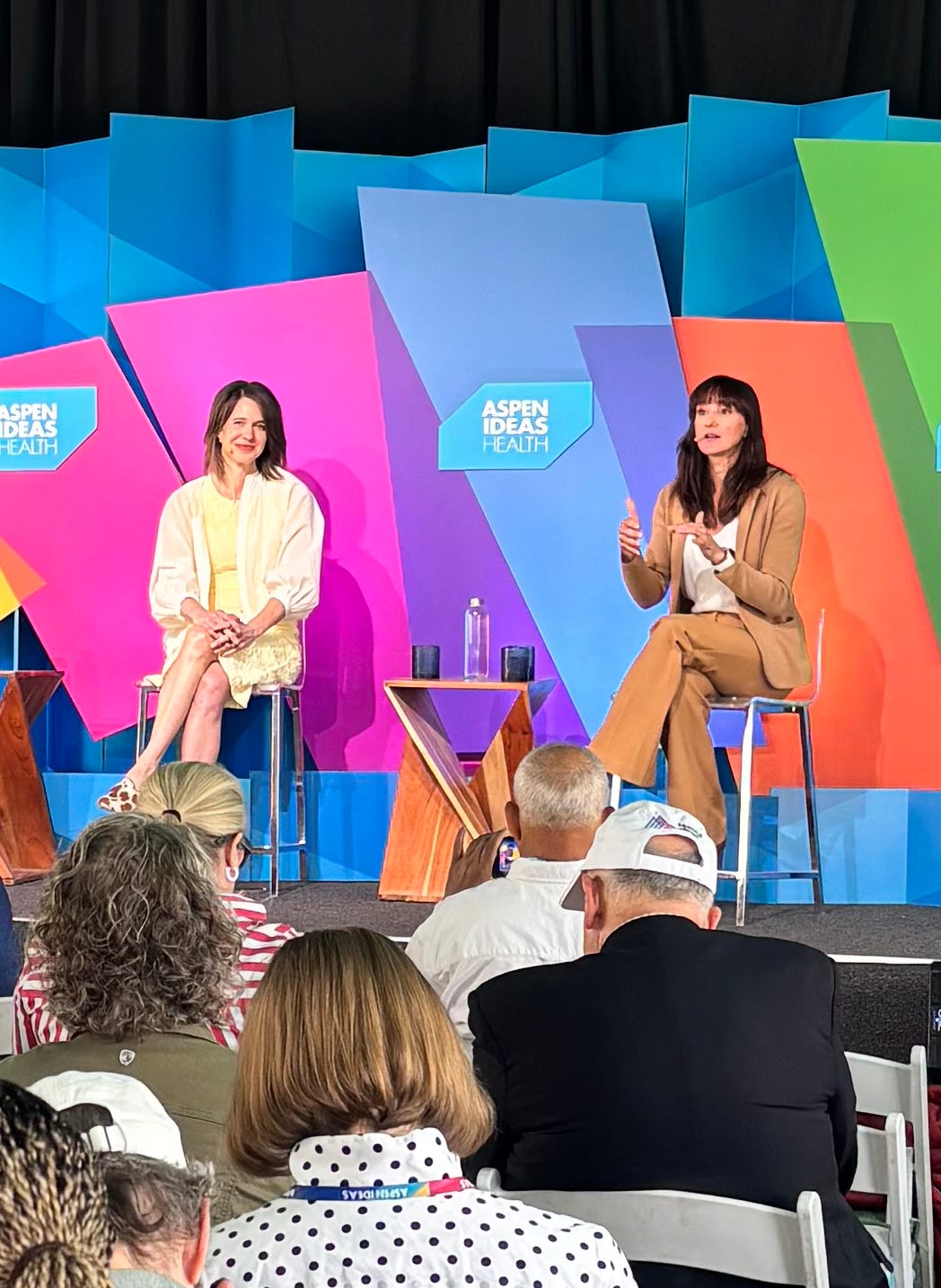
Dr. Jamie Justice of XPRIZE said healthcare moonshots matter because they create permission to aim higher. The best challenges are “big enough but just out of reach” – ambitious enough to inspire radical solutions.
Healthy aging isn’t just about extending lifespan. It’s about redesigning the experience of aging so people can stay independent, connected, and supported for longer.
Dr. Myechia Minter-Jordan of AARP said 70% of seniors want to use technology, but 60% feel it isn’t designed for them. Older adults want to age in place for as long as they can. They want tools that help them communicate with physicians and caregivers from home, and access services like physical therapy without unnecessary friction.
Dr. Zayna Khayat of the University of Toronto outlined a vision for how aging populations can be better served by next-generation care models. She described gerontechnology (aka AgeTech) as having three goals: maintaining autonomy and independence, preserving social connection, and creating, maintaining, or restoring health.
She calls this vision “tech-enabled age fluidity” – the idea that technology can help people stretch the boundaries of what they’re able to do at different stages of life.
Just as washing machines transformed the labor of everyday living when they entered most U.S. households in the mid-20th century, future AgeTech may become invisible infrastructure for aging well – preserving independence, mobility, and connection for longer.
Wearables were a major theme at Aspen – not just as tracking devices, but as tools for behavior change.
Nworah Ayogu of Thrive Capital said:
“I used to think wearables were for the ‘worried well’ – the Aspen crowd.”
But a study of wearables by CityBlock Health in urban underserved populations showed similar levels of adoption and impact. His takeaway:
“People love being able to engage in their health. The tool must be accessible, affordable, and integrated with the healthcare system. Then they leverage it just as much as high-income populations.”
That points to the next phase of wearables: moving beyond data collection to closing the loop between insight and action.
Dorothy Kilroy of Oura gave a vivid example – drinking alcohol, one of the hardest behaviors to change:
“We see this happen when people start wearing the Oura ring, because they see it impacts you for 3 or 4 days afterward. That’s how you change behavior. They reduce or eliminate alcohol, change the time of day they drink, the amount, whether they have it with food and water – and they see the data change.”
Making the invisible visible – that’s the real promise of wearables. The right data, delivered at the right moment, can help people connect daily choices to how they feel – and turn self-awareness into behavior change.
The conversation around longevity tends to be dominated by diagnostics, drugs, and optimization. “The Longevity Mindset” suggested a different frame: longevity isn’t just about living longer – it’s about staying engaged, capable, connected, and joyful for longer.
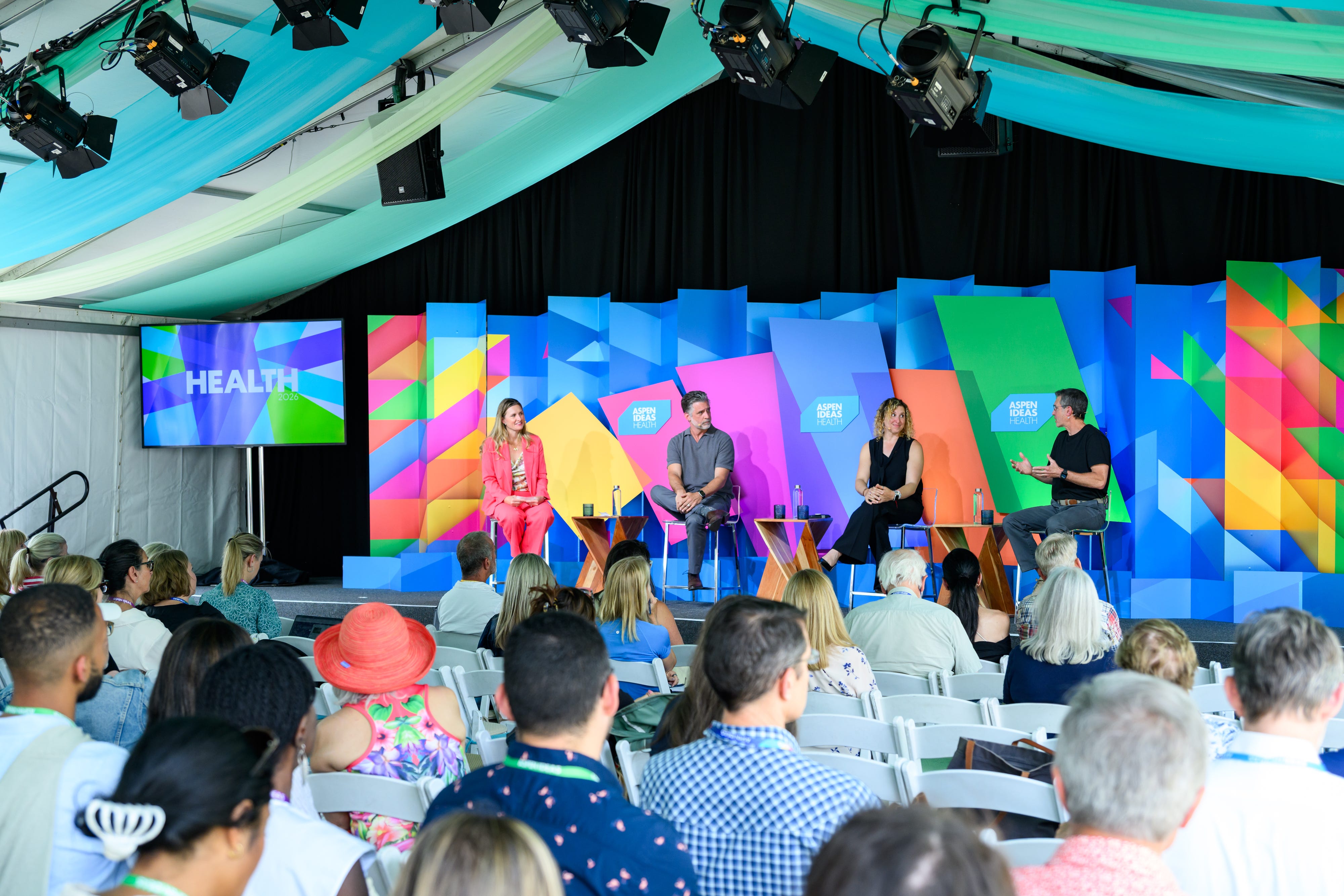
Dr. Jeffrey Egler (Noom) argued that “engagement should be a vital sign,” because the best health plan isn’t the most sophisticated one. It’s the one people can actually follow. He also suggested that happiness should be treated as a meaningful health metric, not an afterthought.
Dr. Sarah Pressman, Professor of Psychology at UC Irvine, said devices should be “a window into our behavior,” not a source of anxiety. She cited research showing longevity is driven by the presence of positive forces – purpose, optimism, joy, and social connection – not merely the absence of disease.
Dr. David Katz (Diet ID) closed with a memorable line:
“Health is a currency you can spend on doing the things you want to do longer.”
That sums it up well. Health is more than wearables, drugs, and diagnostics. It’s about using these tools to have lives that are longer, healthier, more connected, and more joyful. Because no wearable can capture the feeling of cuddling baby goats on a hilltop.
Thank you for reading this week’s edition of Vitamin Z.
Until next time,
Note: These are my own views and do not reflect the views of my employer.
Hi there and thanks for reading. I created Vitamin Z to explore how advances in healthcare, neuroscience, pharmacology, AI, and behavioral science are reshaping what it means to live well – and to live meaningfully. I lead strategic communications at Noom, the leading behavior change company supporting whole-person health.
No posts
Comments
Nothing yet. Say the first thing.
Sign in to join the conversation.