
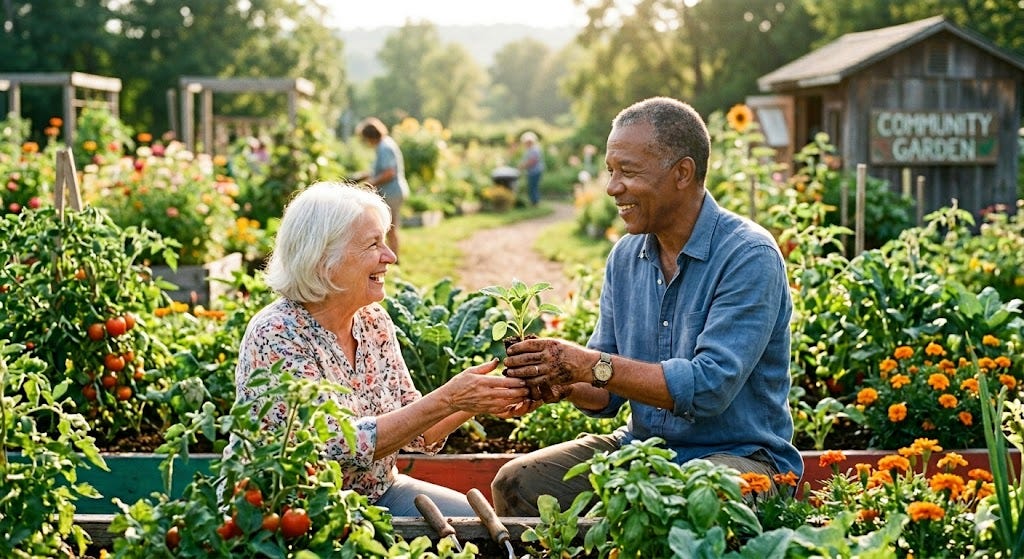
“Think of yourself, not as a mechanic trying to forcefully fix a broken machine, but as a steward of a beautiful, living garden.” — Dr. Rob
Welcome and a warm thank you to all our new Vitality Vibes subscribers. I’m glad we will be sharing the journey to health and vitality together.
If you enjoy Vitality Vibes, click the heart button, and share my message of health with family, friends, and social media. Spread the word!!! As a subscriber, you will receive a weekly transformative newsletter and a bi-weekly Vitality Vibes Kitchen recipe!
Ask your friends, family and colleagues to subscribe to Vitality Vibes. Spread the word about vibrant health, resilience and longevity. People need to hear what’s possible in their lives. Help further the mission of Vitality Vibes!
Some years ago, while at a conference, a Hindu priest shared a piece of wisdom that I’ve never forgotten: “Life is like an overgrown garden. All things are possible.” I’ve never forgotten what he said. And now, as I write this week’s newsletter about anxiety and depression, it has come back to me with power and depth. Each of us is a unique garden of boundless potential needing to be tended with gentle love and compassion. W are not machines. We are each stewards of our own magnificent landscape. It’s in this spirit that I write this week’s newsletter.
I’ve spent many years tending my own garden. I’ve learned some profound truths about life and health along the way. Each day, I would walk through the garden and look for any plant withering. I wouldn’t scold it or demand a better performance from it. I would come close to the plant, sometimes on my knees, check the soil, clear away the weeds, and make sure it was receiving the right amount of sunlight. I would do all I could to nurture it back to health. And then I would be patient. You can’t force health into existence. It needs to be cultivated. Our bodies operate under the same natural conditions. We are an ecosystem that needs cultivation and patience.
When you are carrying the heavy weight of depression, or living with the constant, frayed edges of anxiety, it is incredibly easy to feel as though something is inherently wrong with you. We live in a culture that often labels these painful states as mental disturbances. It is easy to internalize that language, leaving you with a heavy burden of self-blame on top of your suffering.
But when I look at the human body, I see a completely different picture.
Your mind and body form a single, deeply intelligent, integrated living system. Anxiety and depression are not signs that you are broken or defective. Rather, they are your body’s organic defense mechanisms. They are your biological signaling network letting you know that your internal environment is overwhelmed by chronic stress, low-grade inflammation, or isolation.
When your lifestyle inputs change, your biological signals change. By shifting your focus away from trying to fix a flawed mind and toward supporting a burdened body, you take the blame off your shoulders and place the power right back into your hands.
To appreciate why changing your physical inputs is so incredibly powerful, we have to look at what modern neuroscience and nutritional psychiatry reveal about our biology:
Movement Reshapes the Brain: Regular, gentle movement, like a brisk daily walk, stimulates a protein called BDNF. I like to think of BDNF as a natural fertilizer for the brain; it physically strengthens the connections in the regions responsible for regulating your mood and memory.

The Gut-Brain Connection: Approximately 90% of your body’s serotonin receptors are actually located in your digestive tract. When you consume whole, fiber-rich foods, your gut microbes produce anti-inflammatory signals that travel directly up to the brain, calming overactive immune cells and clearing mental fog.
Sleep Resets Emotion: Deep sleep is your ultimate biological waste-clearance system. Without it, the brain’s emotional alarm center becomes highly over reactive, keeping you trapped in a state of chronic anxiety.

Connection is Biological Safety: Loneliness is not just an emotional ache, it is a physiological threat signal. When we feel isolated, our bodies release a steady drip of stress hormones that trigger neuroinflammation. Safe, meaningful human connection is a biological necessity that tells your nervous system it is safe to relax.

Because your body operates as an interconnected garden, these pillars function in a beautiful circle. In a downward spiral, fatigue leads to isolation, which ruins sleep, which drives cravings for inflammatory foods.
The magic of the Upward Spiral is that momentum works both ways. You do not need to overhaul your entire life all at once to reverse the slide. You just need to crack the system open at one single, manageable point. A single positive input creates a domino effect that naturally carries the rest of your system along with it.
This approach is completely flexible, and every entry point is profoundly valid:
If you start with Movement: A simple 15-minute walk in the morning light lifts acute anxiety and sets an automatic biological sleep timer in your brain. This leads to deeper sleep, which stabilizes your hunger hormones the next day, making it easy to choose nourishing foods that heal the gut.
If you start with Connection: If you are too tired to walk or cook, simply sending a text to a loved one or calling a friend floods your system with oxytocin. This hormone acts as a powerful brake on stress, calming your mind so you can sleep better and regaining the energy to move the next day.
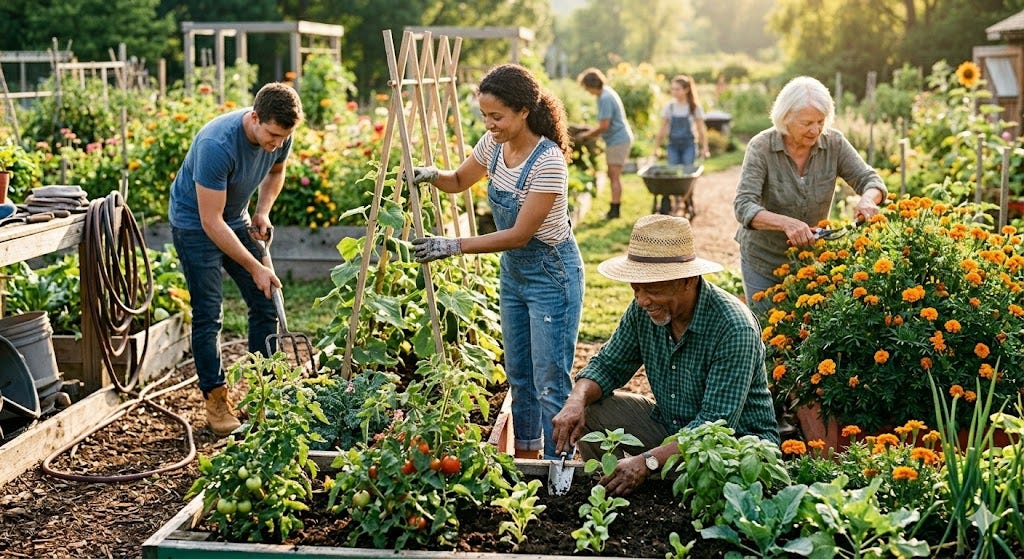
This is exactly where I want you to step into your personal stewardship, which I believe is your most potent tool for healing.
Think of yourself not as a mechanic trying to forcefully fix a broken machine, but as a steward of a beautiful, living garden. A wise steward understands that while they cannot control the weather or the sudden storms of heavy emotion, they have absolute control over how they tend to the soil.
You cannot simply command your brain to stop feeling anxious or depressed in this exact moment. However, as the steward of your garden, you can choose to take a short walk, you can choose to add something nourishing to your plate, or you can choose to reach out to a friend. By deliberately managing these physical inputs, you actively nurture your internal environment from the bottom up.
As your helper on this journey, I want to share a deeply important truth: tending to your garden also means knowing when to gather the right resources around you.
The lifestyle inputs we are exploring are incredibly powerful foundation stones, but they are meant to be a complementary part of your overall care. If you are navigating severe emotional distress, reaching out for professional therapeutic or medical help is a profound act of stewardship, not a sign of weakness.
If you are already following a professional treatment plan, please continue doing so. Never stop or alter any medication or clinical plan without directly consulting your provider. True stewardship means using every tool available to you, both the daily habits you control at home, and the expert guidance of professional care.
Do not try to do everything. Choose just one tiny micro-step to focus on this week:
The Movement Input: A gentle 10-to-15-minute walk outside in the morning light to stimulate circulation and anchor your internal clock.
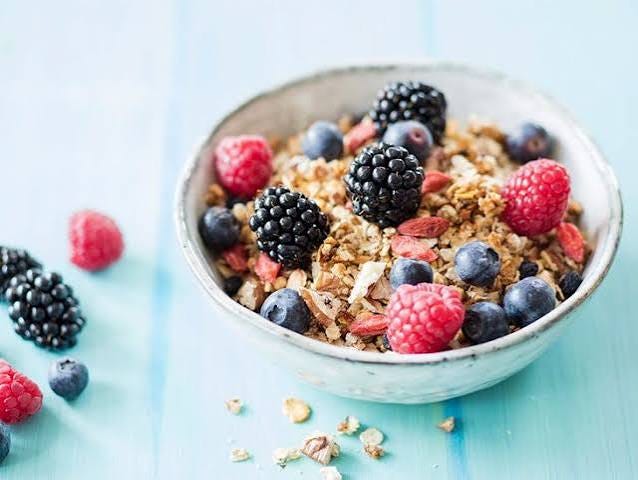
The Dietary Input: Add just one portion of a nutrient-dense, whole food to your day—like a handful of berries or a serving of fiber-rich legumes—to nourish your gut.
The Sleep Input: Protect the final 45 minutes of your evening by turning off the news and putting away screens to let your brain know it is safe to rest.
The Connection Input: Reach out to one person—a phone call, a text, or a brief chat with a neighbor—to weed out the biological stress of isolation.
Light the spark wherever you can manage it this week, tend to your garden with patience, and trust your body’s natural intelligence to handle the rest.
To help you put this stewardship into immediate, delicious action, I want to share a vibrant, plant-forward summer recipe. It requires minimal cooking, keeping your kitchen cool and your energy protected, while flooding your nervous system with the raw materials it needs to thrive.
The Serotonin & Dopamine Support: We want a high-quality protein base rich in tryptophan and tyrosine—the essential amino acids your brain uses to build serotonin (for calm) and dopamine (for drive).
The Cortisol Anchor (Avocado & Pumpkin Seeds): Healthy monounsaturated fats stabilize blood sugar, preventing the glucose drops that mimic panic attacks. Pumpkin seeds deliver a massive dose of magnesium, a mineral that acts as a natural brake on an overactive nervous system.
The Gut-Brain Superhighway (Chickpeas & Greens): Tossed with dark leafy greens and fiber-dense chickpeas, this combination serves as prebiotic fuel for your gut microbiome, creating the short-chain fatty acids needed to protect the blood-brain barrier and lift low mood.
The Tofu or Tempeh Path: Cube firm organic tofu or slice tempeh into strips. Marinate for 20 minutes in the juice of one large orange, one lime, a splash of tamari, a touch of maple syrup, and a pinch of ground ginger. Serve the tofu chilled, or quickly sear the tempeh in a pan for 3 to 4 minutes per side.
The Whole-Food Plant Alternative: If soy isn’t a part of your kitchen garden, toss a half-cup of pre-cooked, chilled French green lentils into your base and top the bowl with a generous handful of chopped walnuts. Walnuts deliver vital omega-3 fatty acids that act as a powerful off-switch for neuroinflammation.
The Chicken or Turkey Path: For those who prefer an animal protein base, a sliced, grilled chicken breast or roasted turkey tenderloin fits beautifully. Chicken and turkey are exceptional biological powerhouses for your nervous system, delivering a dense, highly absorbable supply of tryptophan to directly manufacture serotonin. Simply marinate the meat in the exact same citrus-ginger blend before grilling or pan-searing.
Create a bed of dark leafy greens, add half a cup of rinsed chickpeas, half a sliced avocado, a handful of fresh blueberries or orange segments, and two tablespoons of raw pumpkin seeds. Top with your chosen protein, and drizzle with the remaining citrus marinade as a clean, bright dressing.
Now, Enjoy!
I’m very interested in your comments and reactions to the newsletter and the recipe. Drop me a comment. I answer all questions.
The content of this post is not meant to treat medical conditions or prescribe medications. It is meant for educational purposes only. If you have medical concerns, speak to your health care provider.
Comments
Nothing yet. Say the first thing.
Sign in to join the conversation.