
If you are a father, grandfather, stepfather, godfather or father figure, you have the power to rewire a young man or woman’s brain with just two positive words. Mothers have similar power. But this was written on a Father’s Day weekend to challenge men.
You say you aren’t good with words?
Well, I am. That’s why I created this chart, with AI assistance (detailed below) of 44 two-word affirmations you can start using today.
Feel free to copy, paste, cut out, reuse or repurpose. These words of affirmation require no attribution. Just use them before you lose them, as I’m trying to do with my five grandchildren and as I did with my three children, now adults.
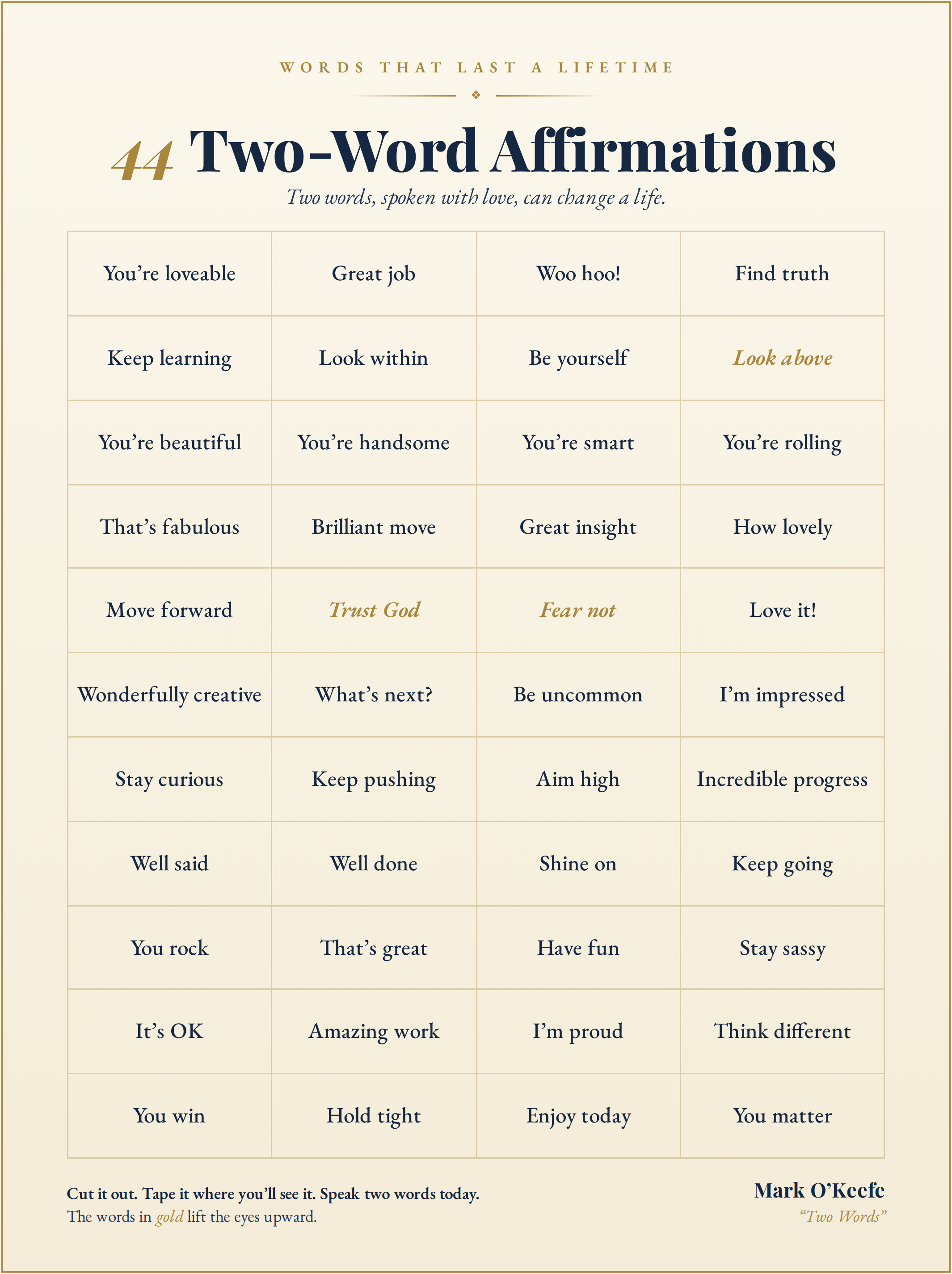
Table above created by the author with assistance from NotebookLM and Claude AI. Use as you please.
When you tell a young person “Amazing work” or “You win,” you are lighting up their brain.
Neuroimaging studies have looked under the hood to see what happens during affirmation tasks. Functional MRI (fMRI) data show that self-affirmation significantly increases activity in key regions of the brain’s self-processing (medial prefrontal cortex) and valuation/reward systems (ventral striatum) (Cascio et al., 2015).
This means positive self-talk isn’t just a mood booster; it physically rewires the brain to value positive future outcomes and shields the individual from the cognitive toll of stress (Cascio et al., 2015).
Summarizing the most important studies, Professor Leena S. Guptha wrote in Psychology Today that:
“Affirmations are positive statements. When properly formed, affirmations can counteract some of our negative thoughts and habits, resonating with the alpha brain waves and enabling us to achieve empowerment.”
Our brains need external validation. If you say it, they will believe it.
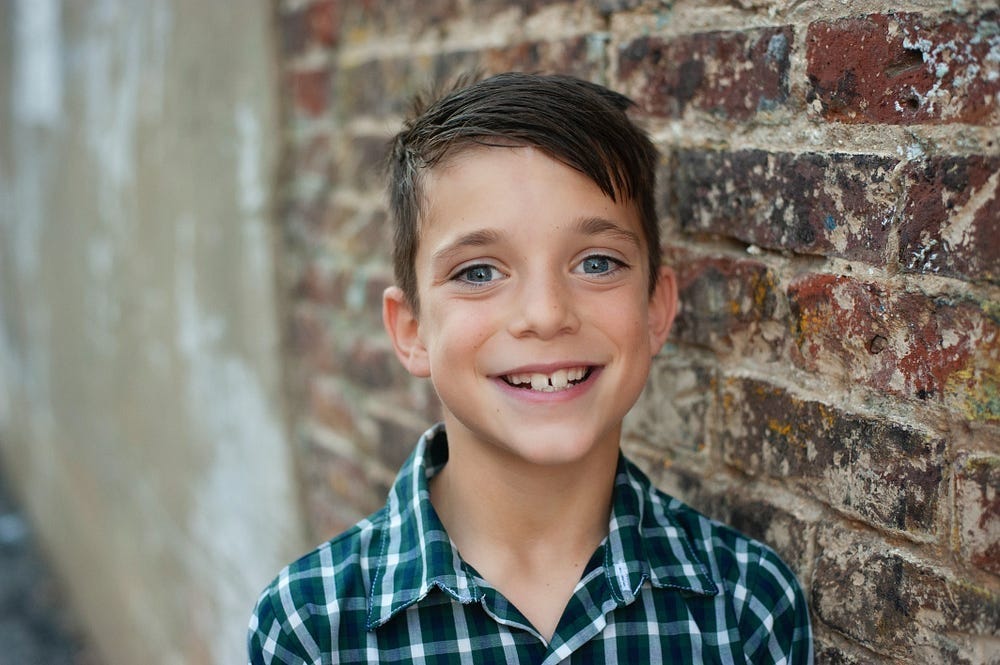
Light up a brain and a face with affirmation. Photo by Garrett Jackson on Unsplash
Like many pre-teen and adolescent boys, I tried to hide my constant insecurity, plagued by the question, “Do I have what it takes?” Making matters worse, I didn’t know “what it takes” meant. I picked up cues from TV, school, friends, books and my own imagination.
(For more on this, I recommend the book, “You Have What It Takes,” by John Eldredge. )
Dad helped me.
I remember the backyard basketball court he made for me, my brother and himself. We would play hours and hours of a game Dad called “challenge.” It’s one-on-one basketball, with each goal earning one point, and the first to three points winning. If you kept winning, you stayed on the court.
I can’t remember what I did one particular day, but I certainly remember what Dad said.
Holding a worn Spalding basketball, he looked me in the eyes with sincere admiration and fatherly pride to proclaim, “You’re clutchy.”
That meant that when the pressure was most intense, in basketball or life, I come through in the clutch.
Those two words, spoken by my father, lodged in my heart, the marrow of my bones and my brain. I still believe them today — 50 years after they were spoken.
Like what you’re reading? Get more in your inbox.
Why just two words?
Cognitive science would call what my Dad said to me a "wise intervention." Short sayings are remembered more than long speeches.
Neurologists have tracked the brains of young people utilizing brief affirmations and found that these micro-shifts physically activate the brain's reward centers, lowering cortisol and building a psychological buffer against failure.
What are you waiting for?
If words don’t come easily to you, a two-word affirmation will have even more impact. Pick one or two or 40 from my chart.
Etch confidence on their brains, and in their souls, telling them they have what it takes with just two words.
Editor’s note: To help me write this, I repurposed parts of an article I wrote on Medium (behind a paywall), years ago.
Comments
Nothing yet. Say the first thing.
Sign in to join the conversation.