
I always suspected that at least one of the purposes behind Tesla’s use of wire — when he went to an electronics shop immediately upon arriving in Buffalo, New York, to conduct his private demonstration of his 1931 Pierce-Arrow electric passenger vehicle conversion — was to wrap this wire around at least some of the “tubes” that Tesla had purchased (which the “Peter Savo” version of this legend has repeatedly informed us). And I suspect this wire-wrapped coil, surrounding each of these “tube/s”, was to magnetically couple an EMF braking action (of sorts) so as to prevent a runaway, explosive escalation of current if Nikola Tesla was doing anything similar to what Konzen had been attempting in Konzen’s use of a self-shorting loop of wire strung around a toroidal magnetic pathway:
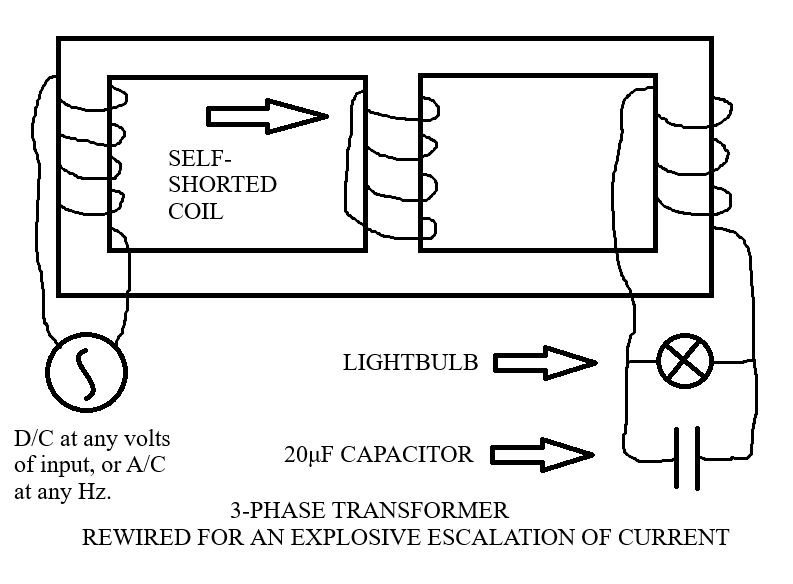
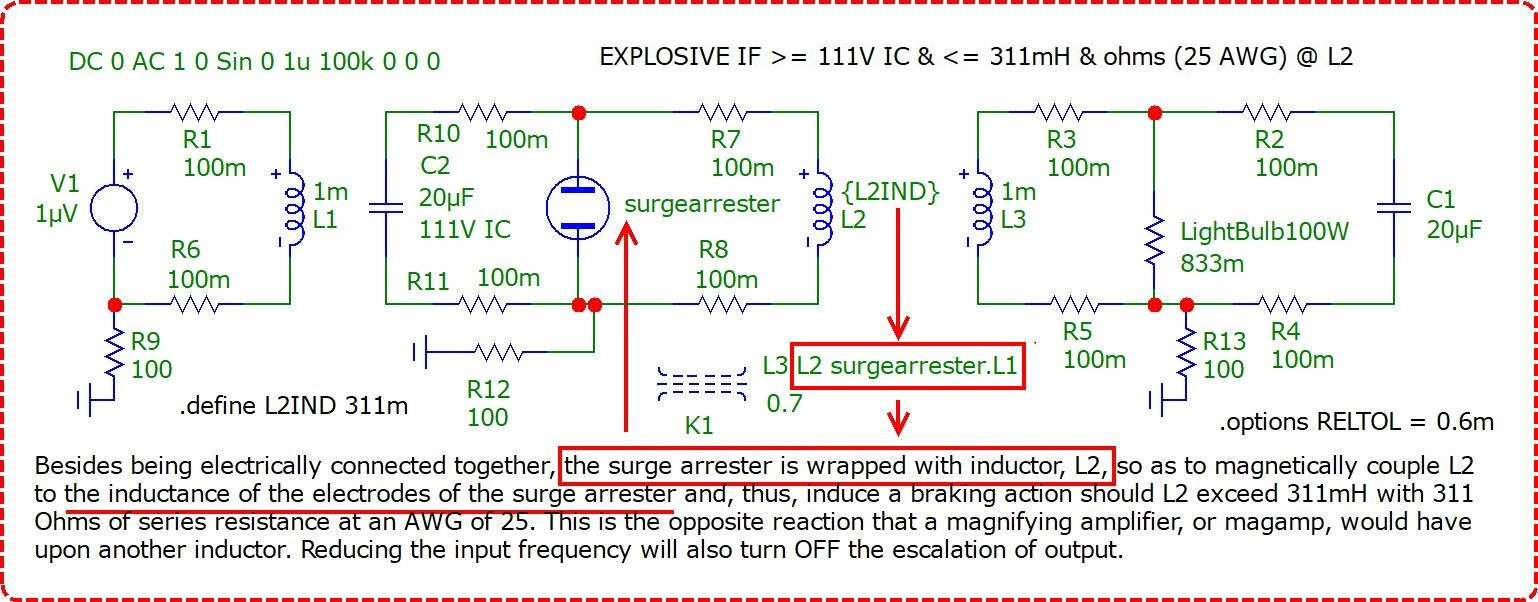
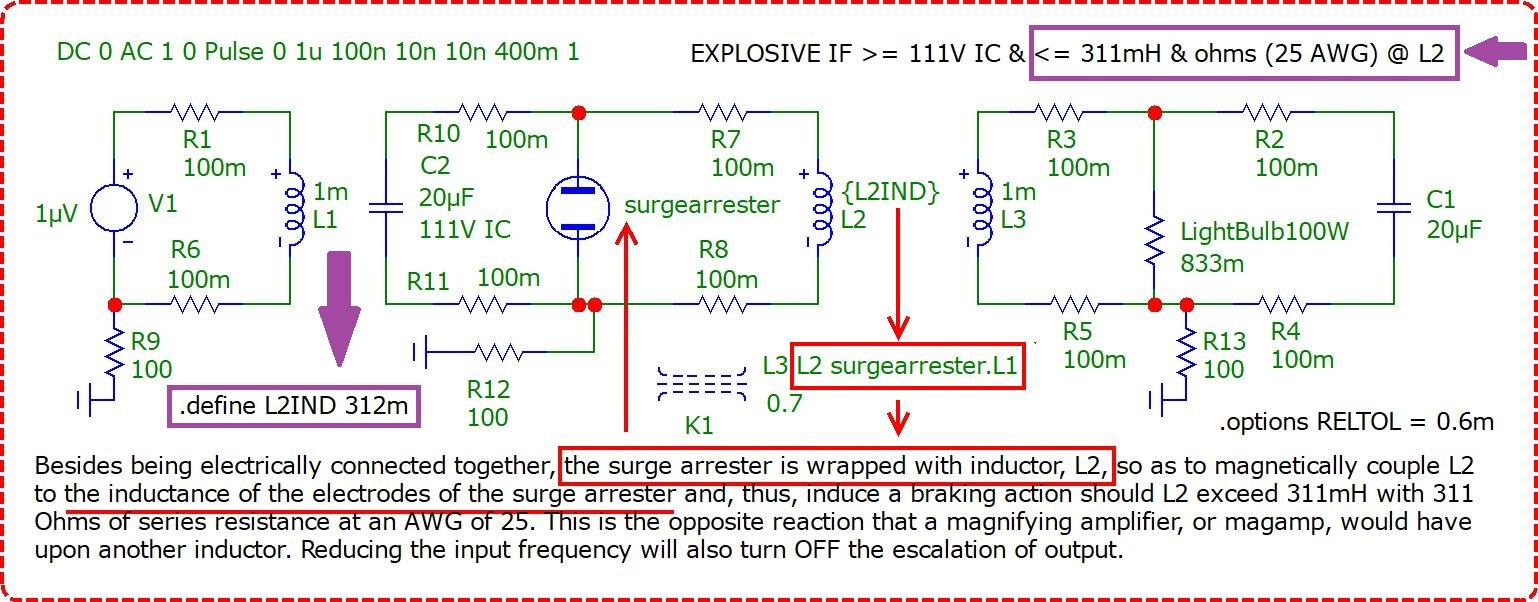
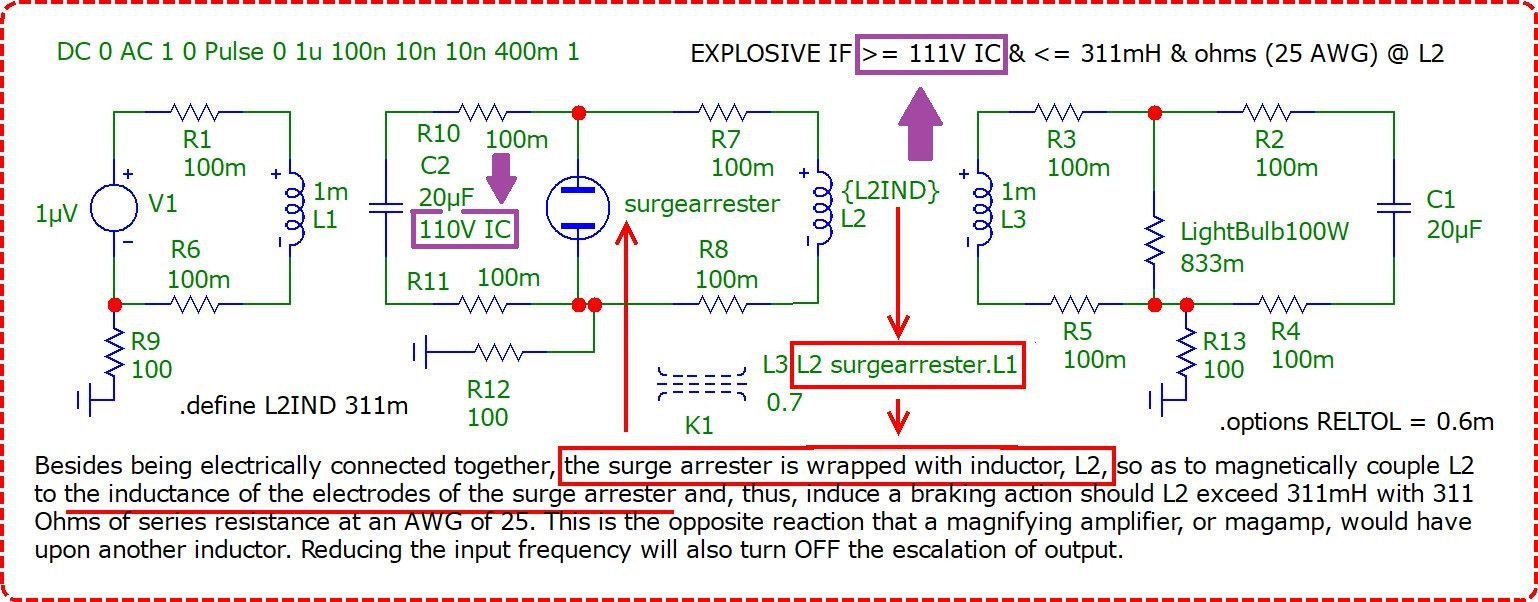
… but with the addition of a surge arrester placed inline with the self-shorted coil in the middle of the following schematic:
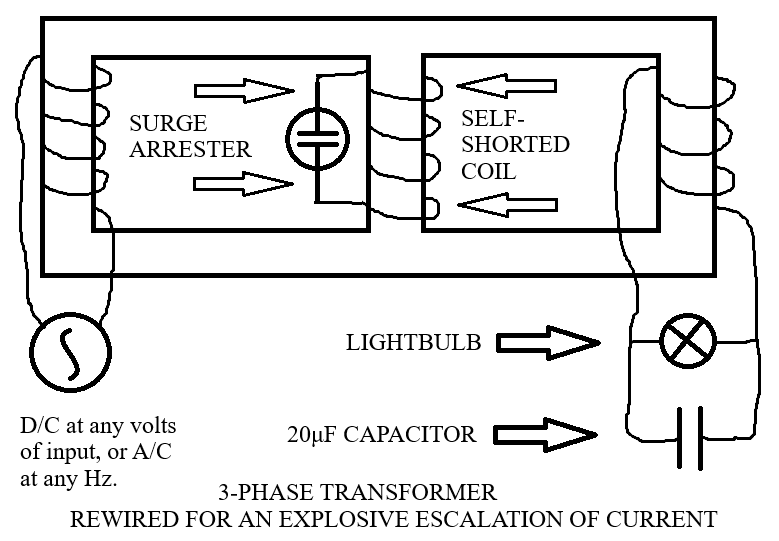
Of course, this idea isn’t new since I’ve already shared with you on several occasions (here on Substack and elsewhere on Quora, etc) Byron Brubaker’s suggestion to Joseph Newman to replace his central, permanent magnet rotors with a rotor made out of a cluster of PVC sewage pipes, each pipe is closed at both ends with a pair of PVC end caps, and filled with a noble gas (such as: helium), and wrapped with an open coil. Except in this instance, the coil surrounding a surge arrester is a closed coil — not an open coil. And it’s electrically connected to itself — through the surge arrester — creating a “dead short” whenever the surge arrester is ‘ON’.
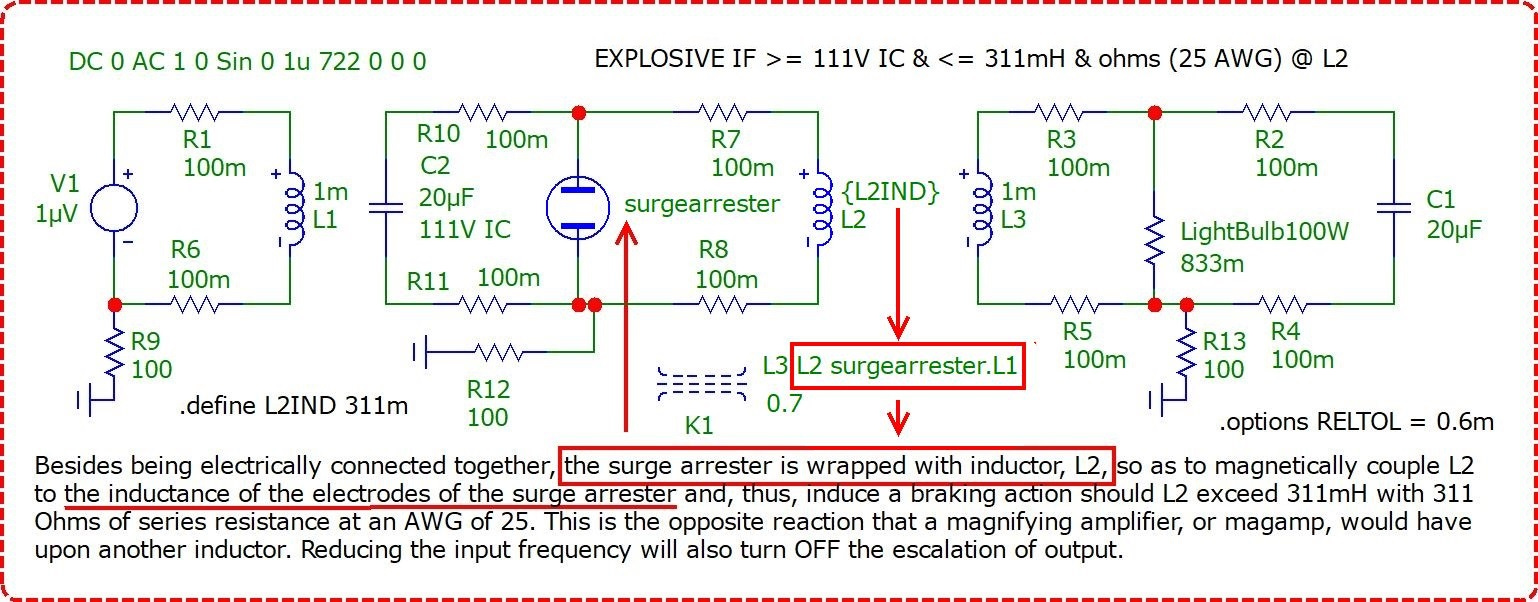
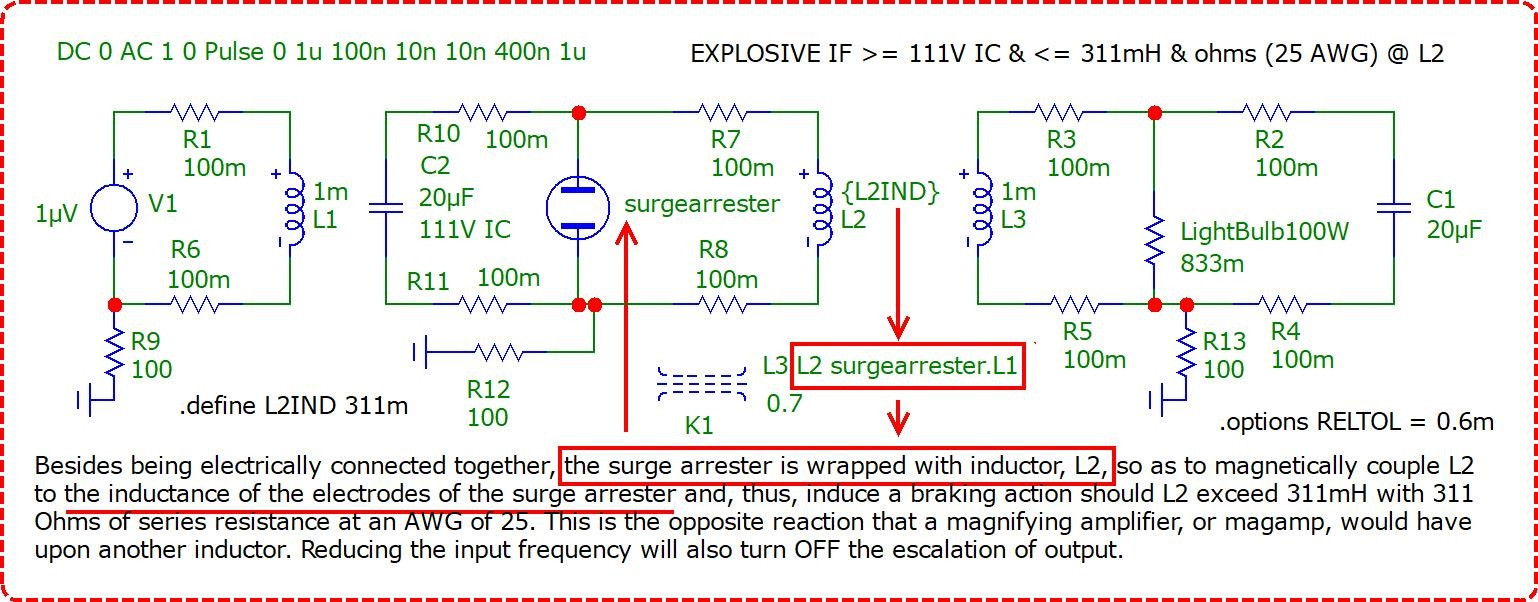
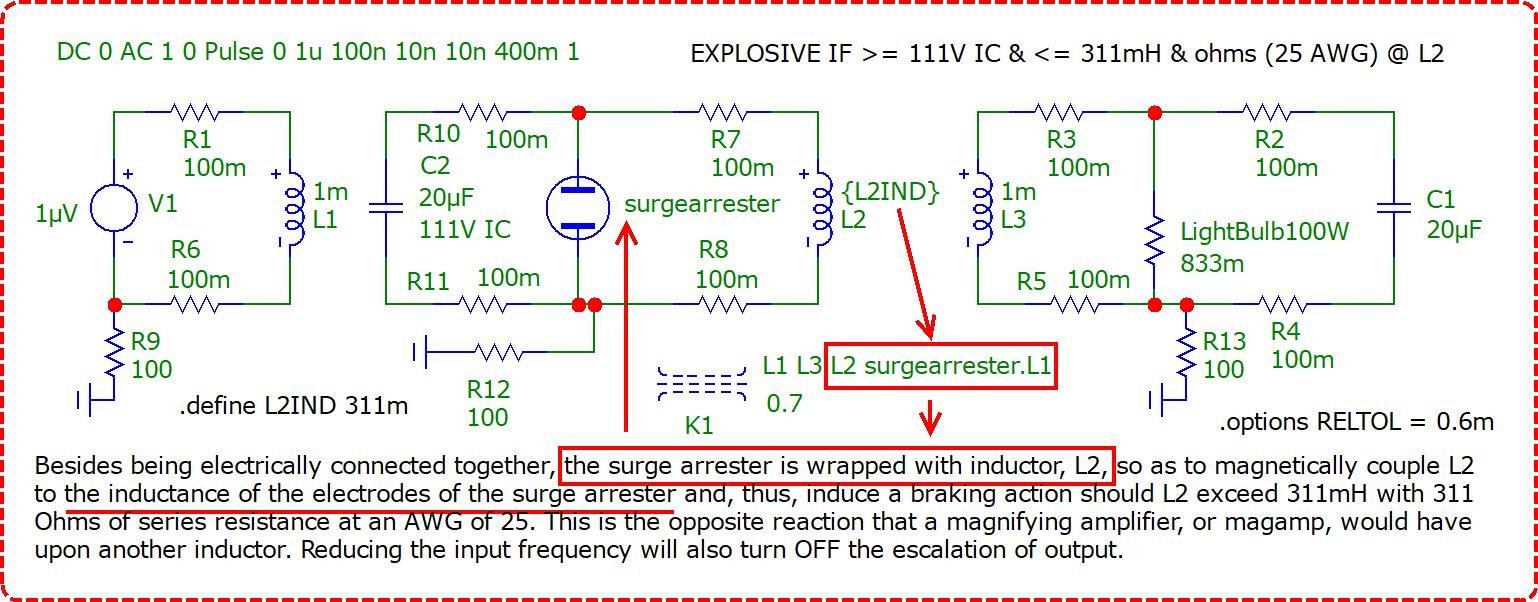
In the schematic (below), I have modeled the wrapping of a portion of this central coil around the surge arrester and have increased this coil’s inductance and have made the total inductance of this coil a variable parameter. This makes it possible to regulate the runaway escalations of amplitude (which are inspired by this self-shorted surge arrester) due to its electrical isolation from the rest of the circuit and the original intentions behind the Konzen design. »
Eric: “The physical relations of magnetism as we use them (for a toroidal core) don’t add up.” — Hints of Dr. Wilhelm?
If all we’re left with are vague descriptions of “counter-space” and the “aether”, then we have a long trek ahead of us before our electrodynamic theory catches up with the entirety of the cosmos instead of limiting our perception to a “commercially acceptable fraction” of the “big picture”.
What is the Aether? What is counter-space? These are highly pertinent questions which we are ill-prepared to answer.
These surge (or, lightning) arresters were designed to increase the intensity of whatever surge passes through them by reducing their impedance such that: the greater the voltage of the surge passing through them will result in a reduction of impedance and an increase of their current. »
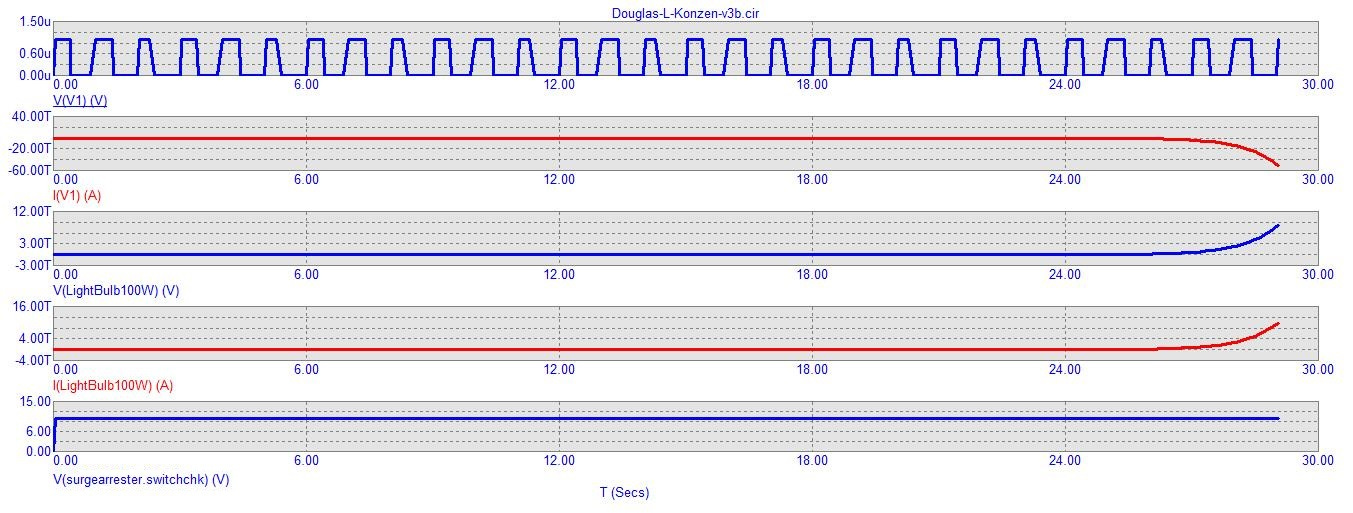
SURGE IS ‘ON’ if the inductance of coil, L2 (the self-shorted coil which is connected to the surge arrester in the center of this schematic), is equal to or less than 311 Henrys. Any value for this coil which is greater than that value (maintaining all other component values) turns OFF the surge condition:
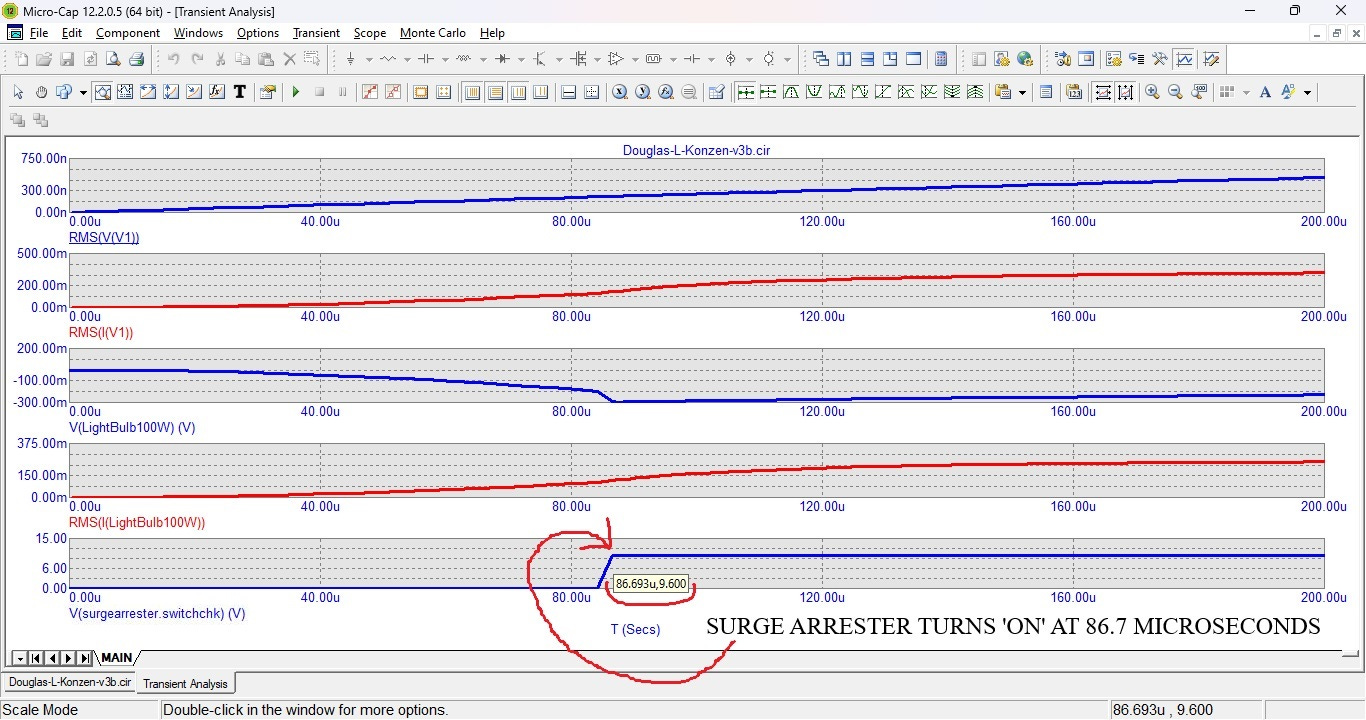
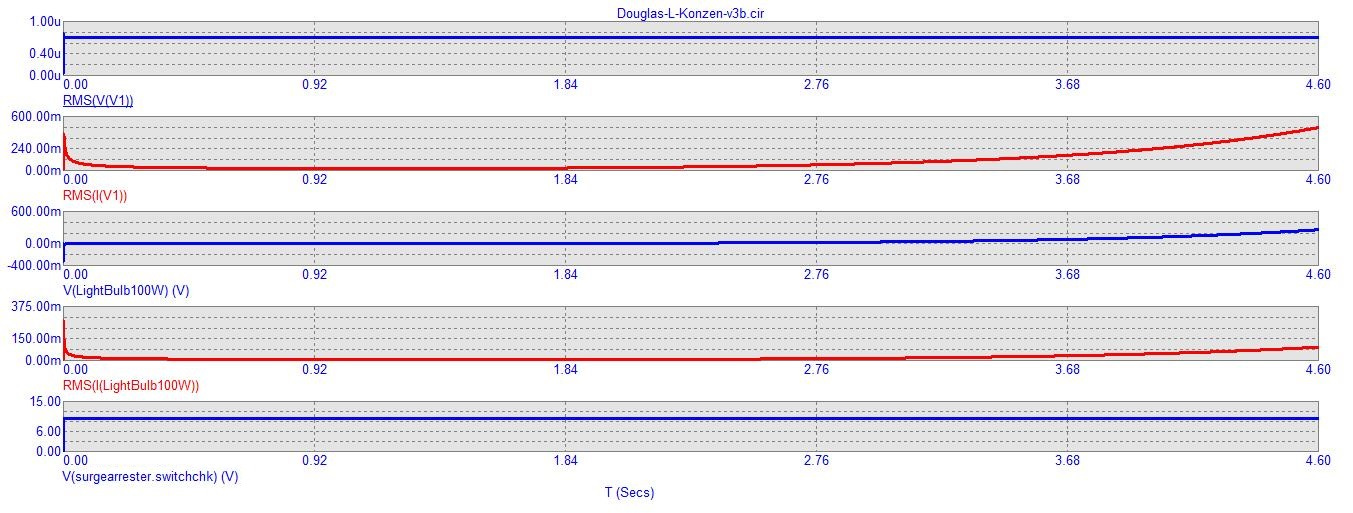
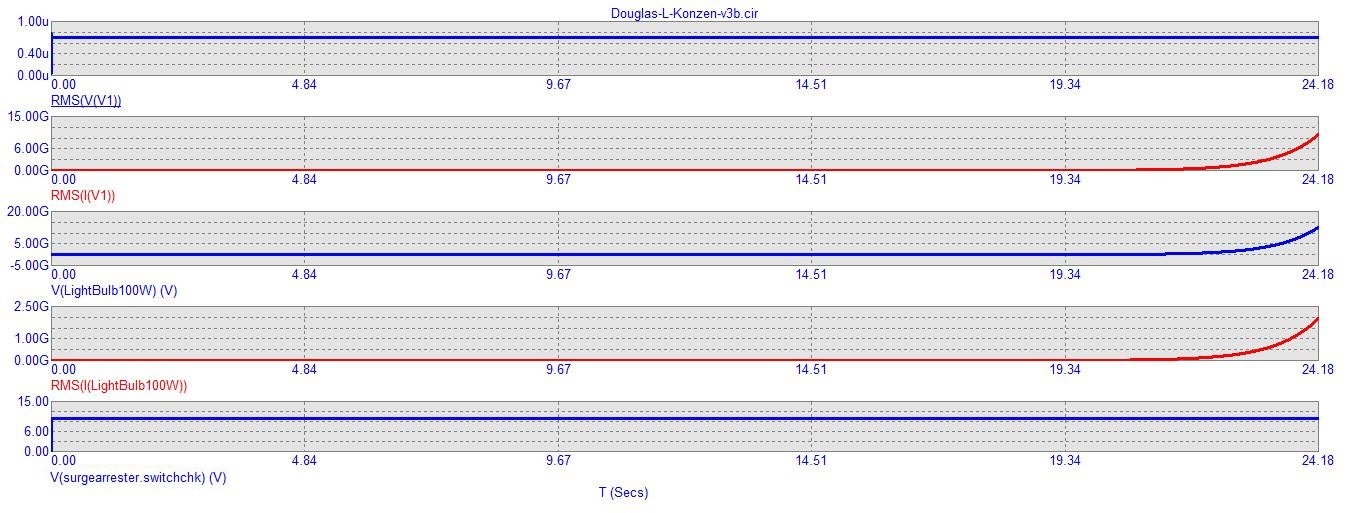
It doesn’t matter if the sine wave input frequency is 100kHz:
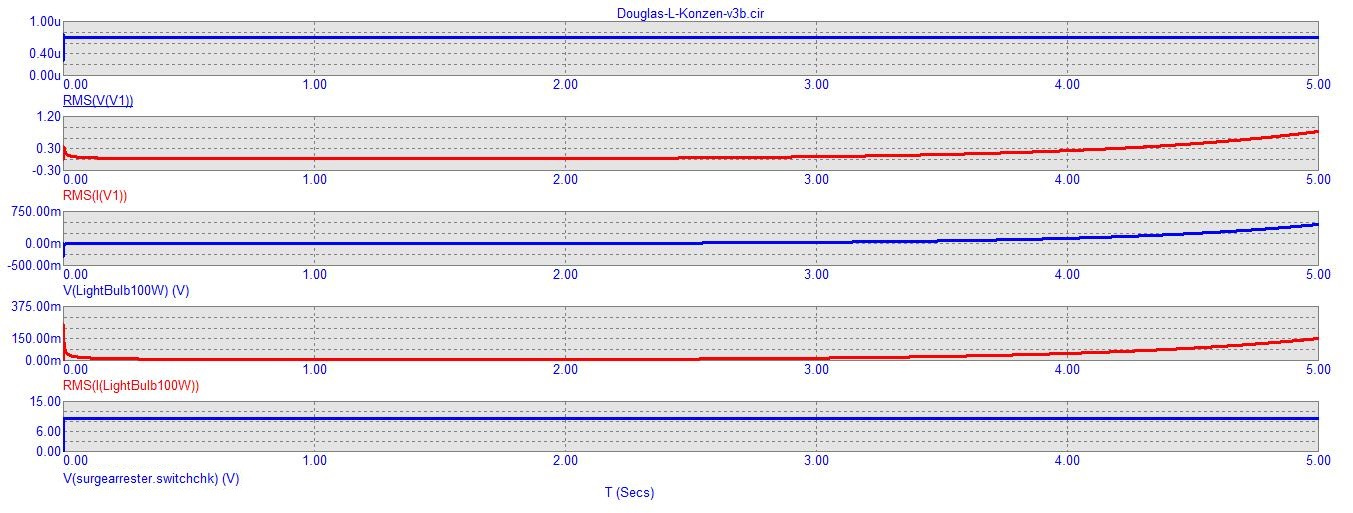
Nor does it matter if the sine wave input is 10Hz:
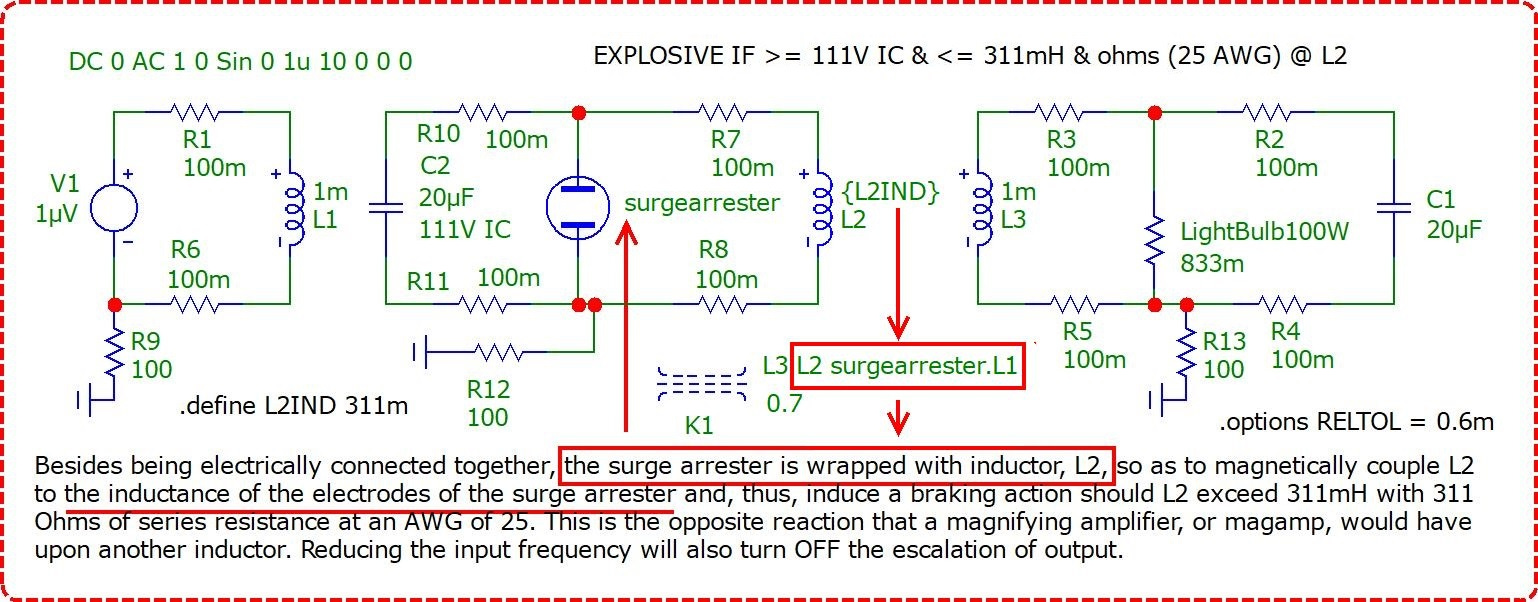
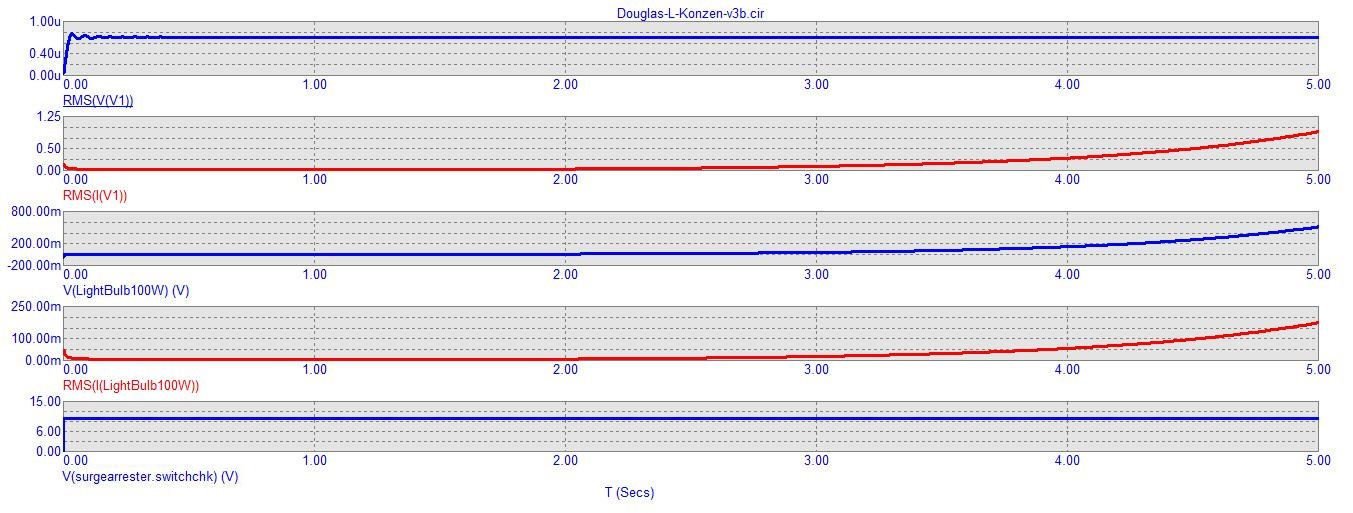
Nor does it matter if it’s not a sine wave (varying voltage amplitude) input. Because if it’s DC, then the non-varying input voltage still succeeds at inciting the stimulation of a surge to develop toward an infinite gain:
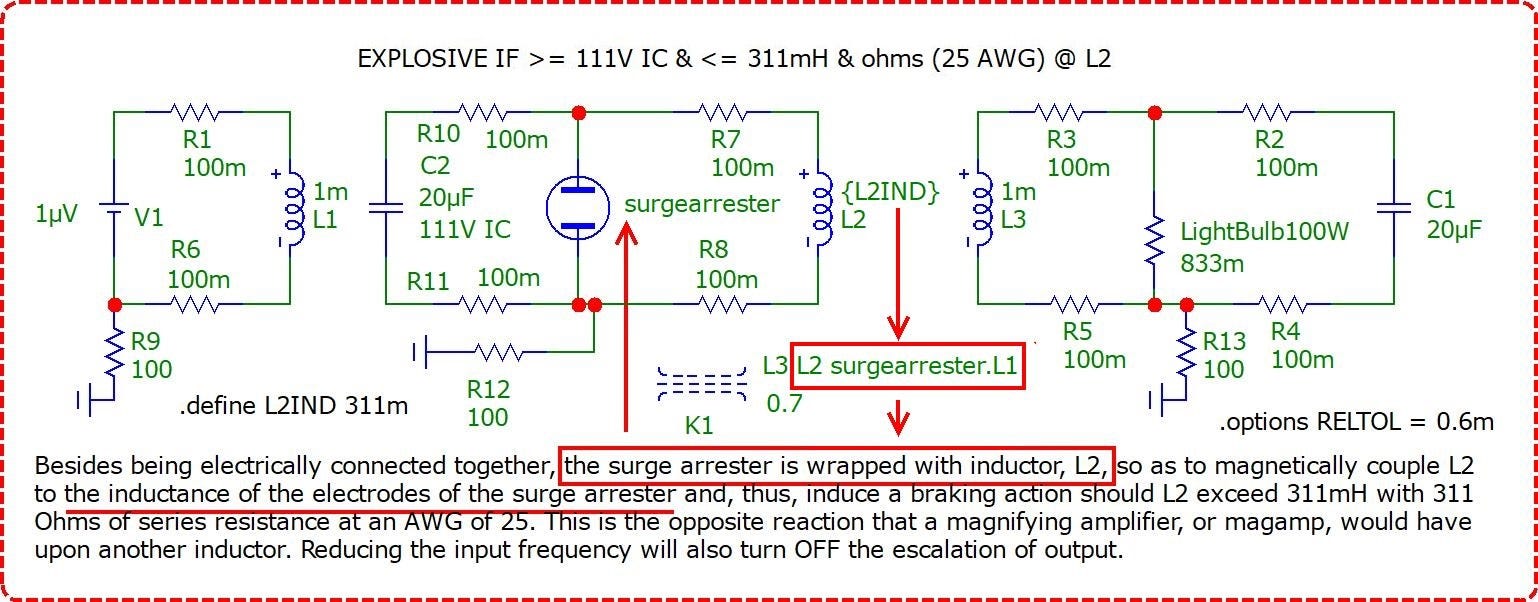
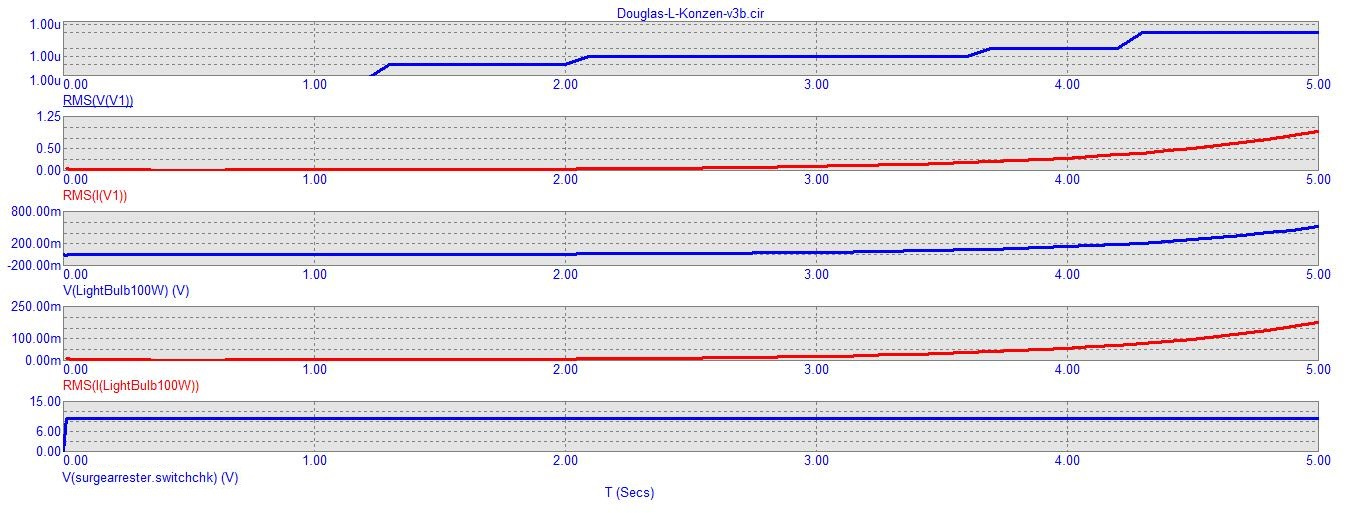
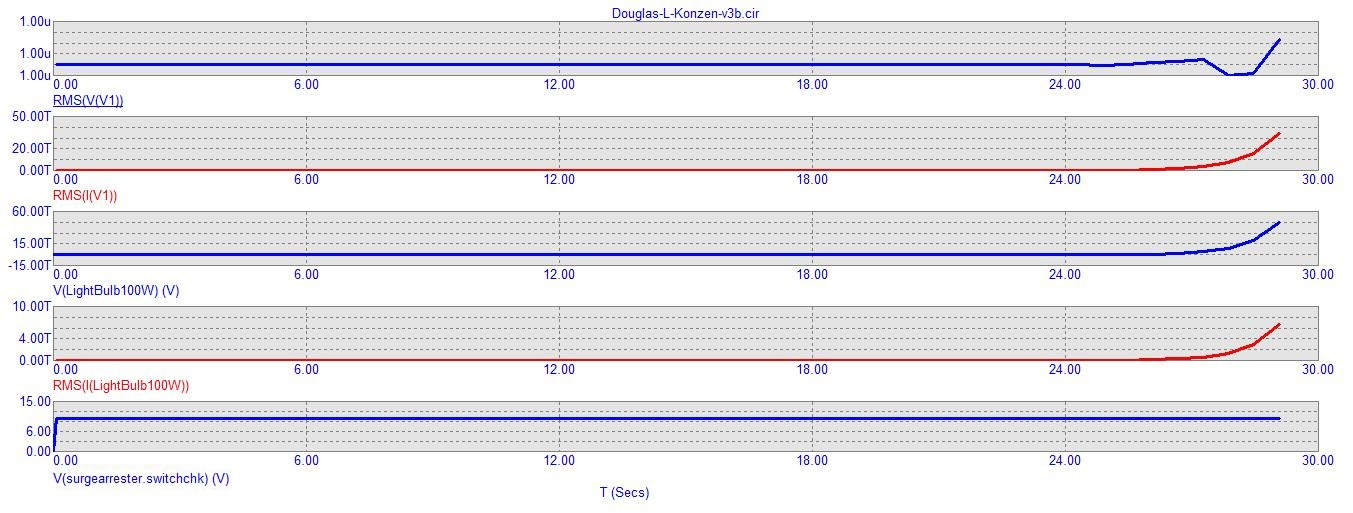
Nor does it matter if the input is a square wave of any frequency:
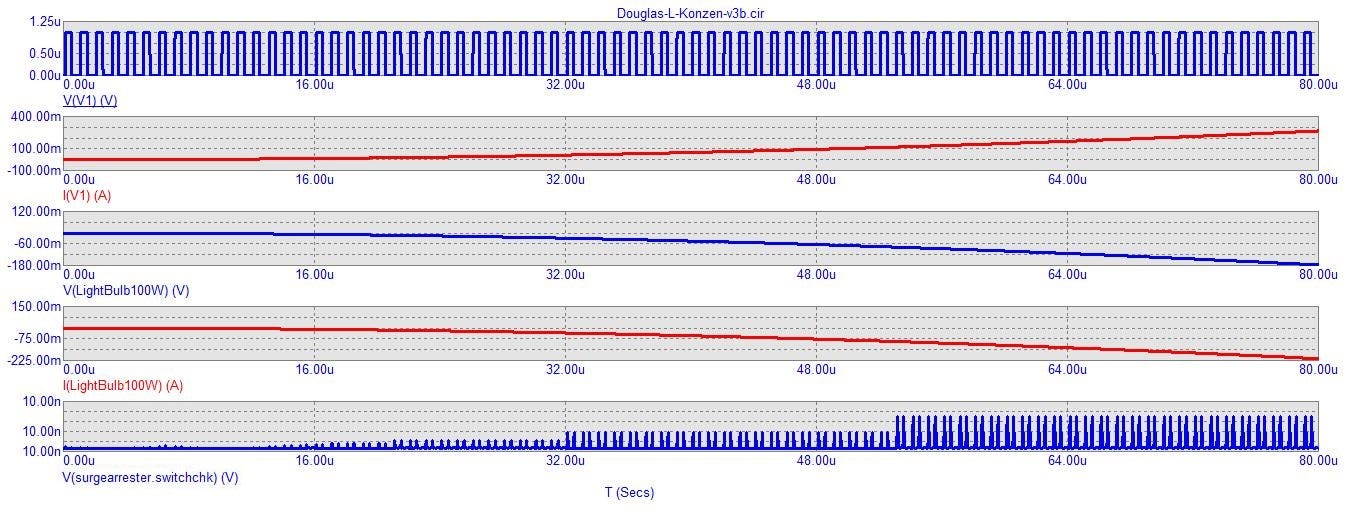
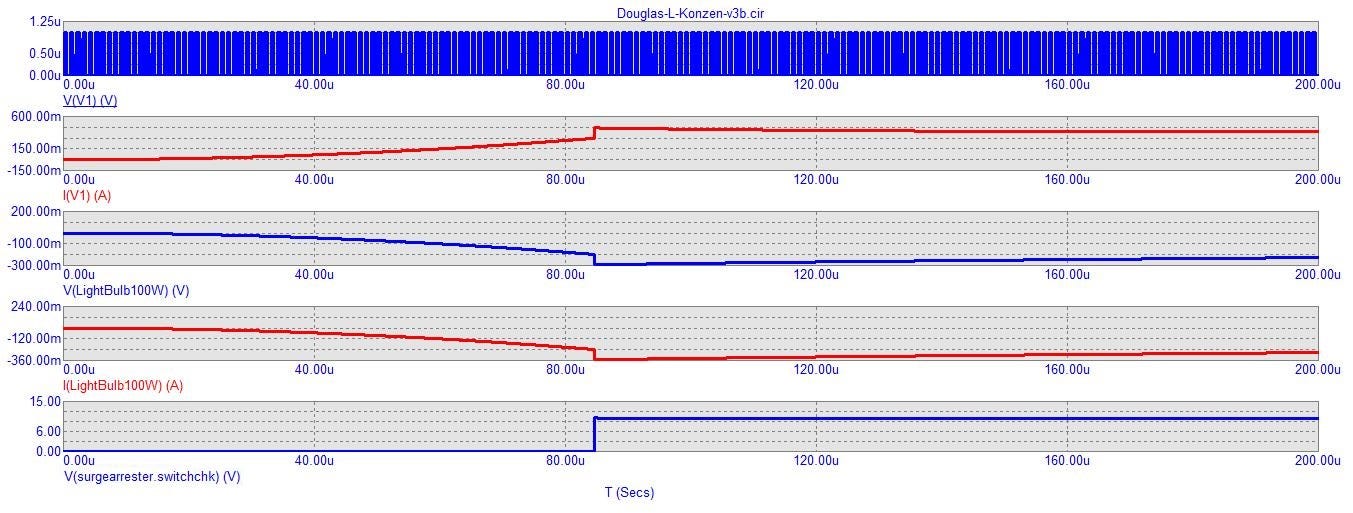
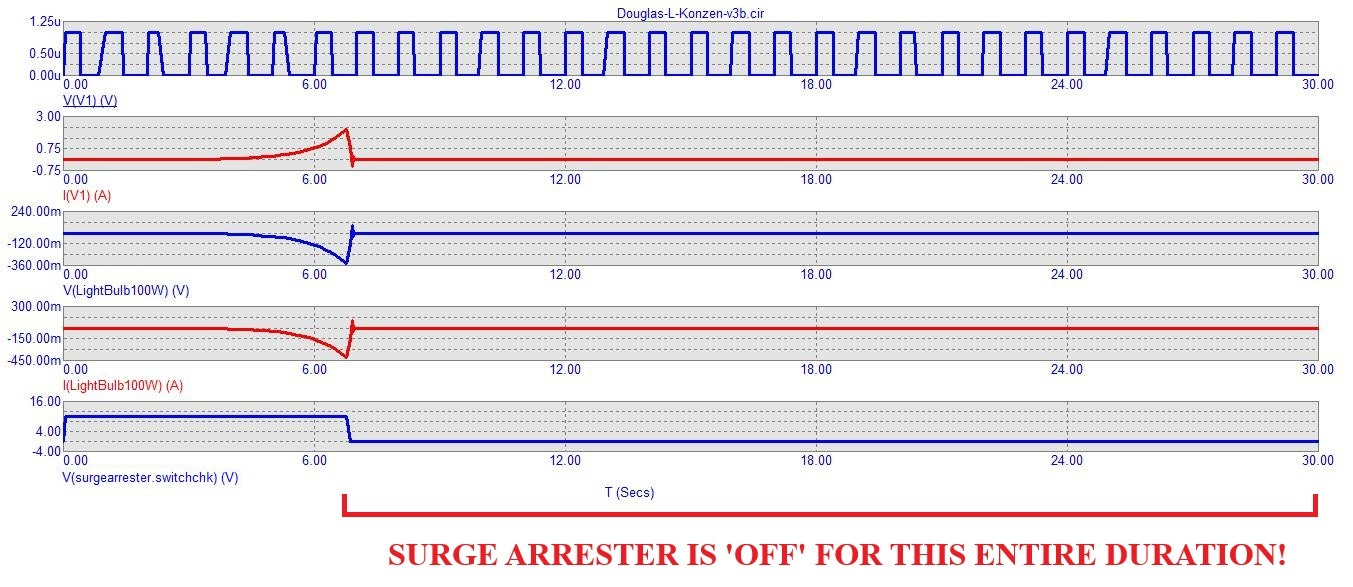
But it does matter if the inductance of coil, L2, is not less than or equal to 311mH since this will prohibit a surge condition:
SURGE IS ‘OFF’:
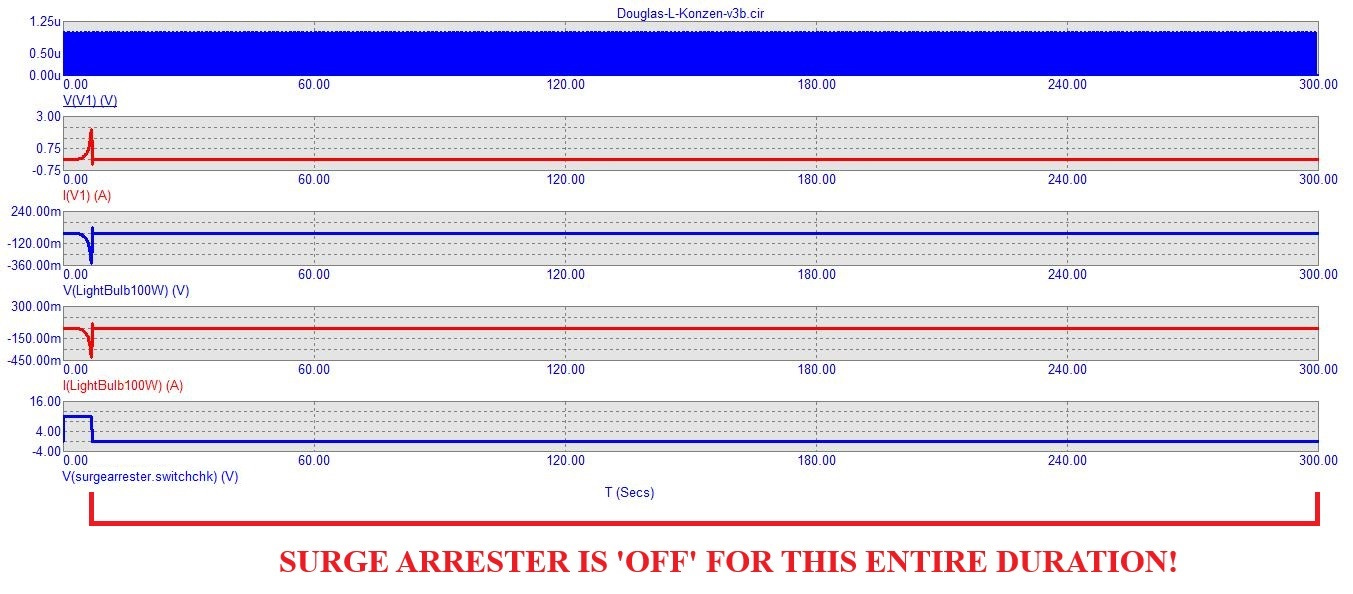
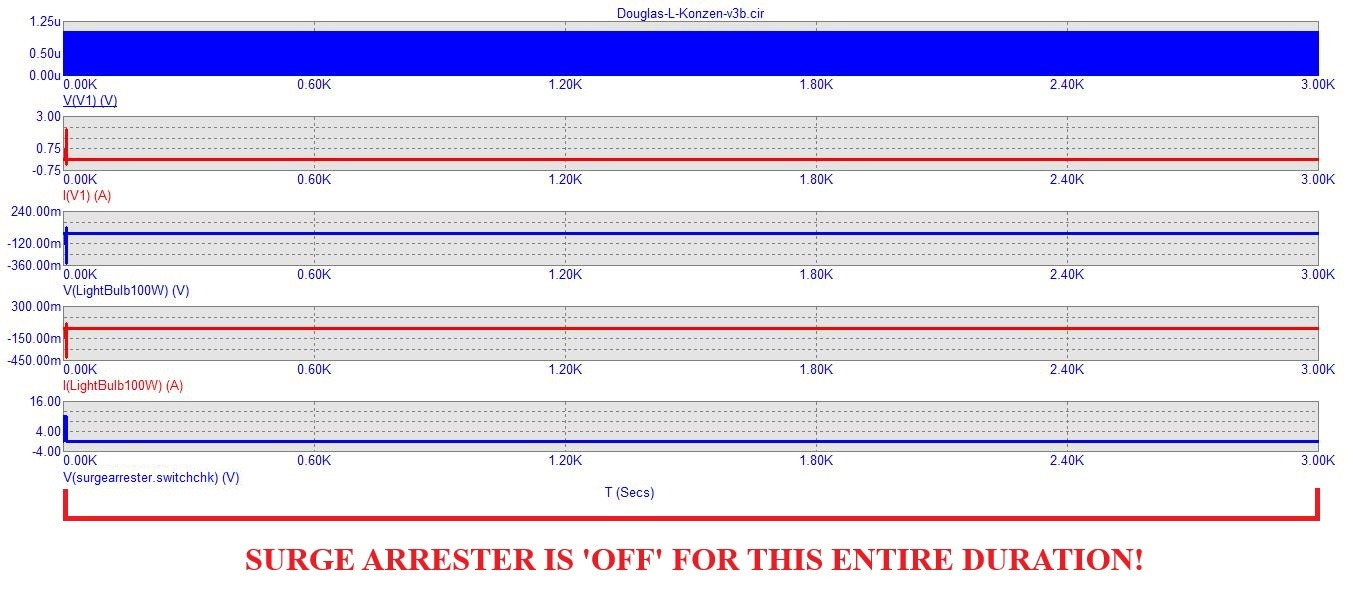
Nor is the surge ‘ON’ if the initial condition (IC) — the precharged voltage — of capacitor, C2, is less than 111 volts:
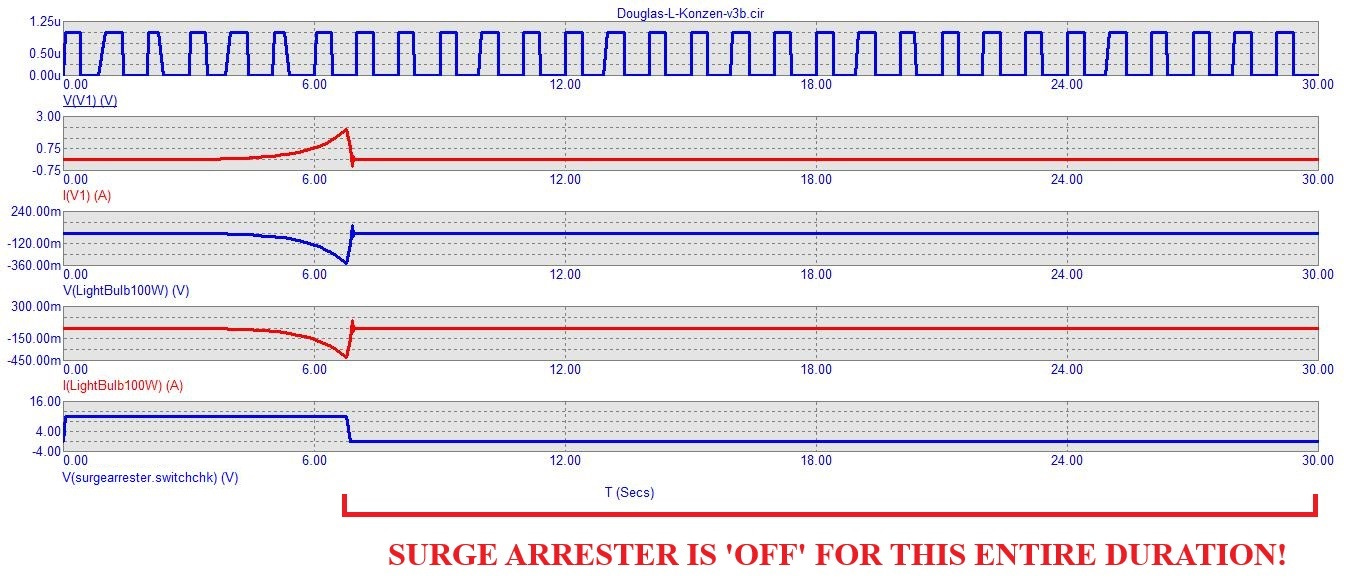
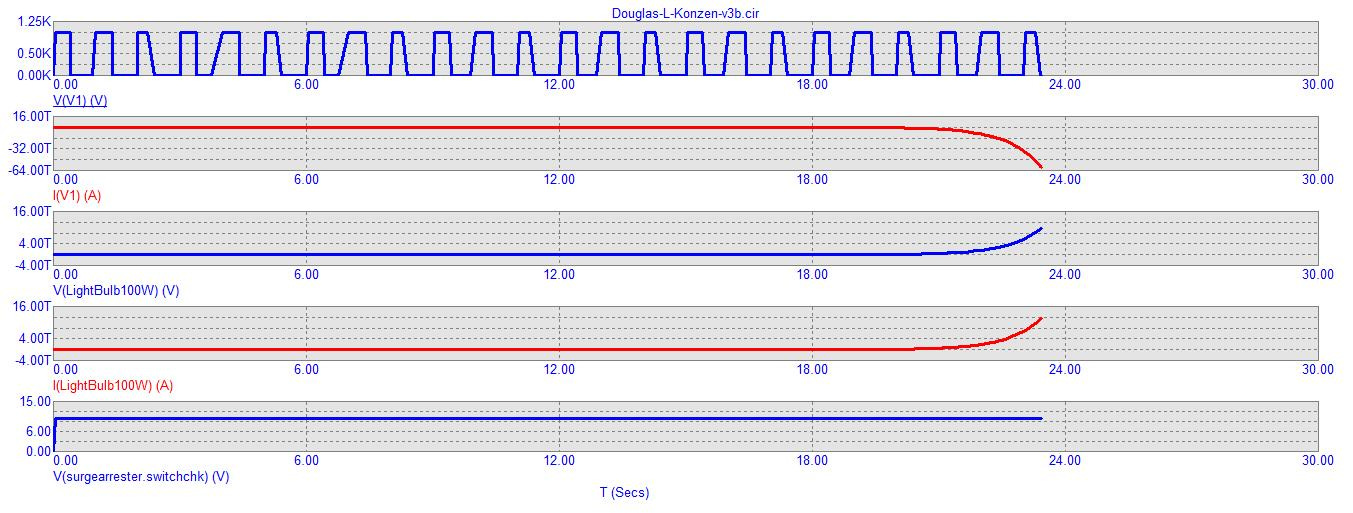
These lack of distinctions among various types of input waveforms (sine, DC, square) indicates that a specific voltage from a ‘source’ is not required to produce a surge. We’ve seen this already in a prior post of mine. But I thought I’d cover this again for reinforcement.
SURGE IS ‘ON’ regardless of the input voltage:
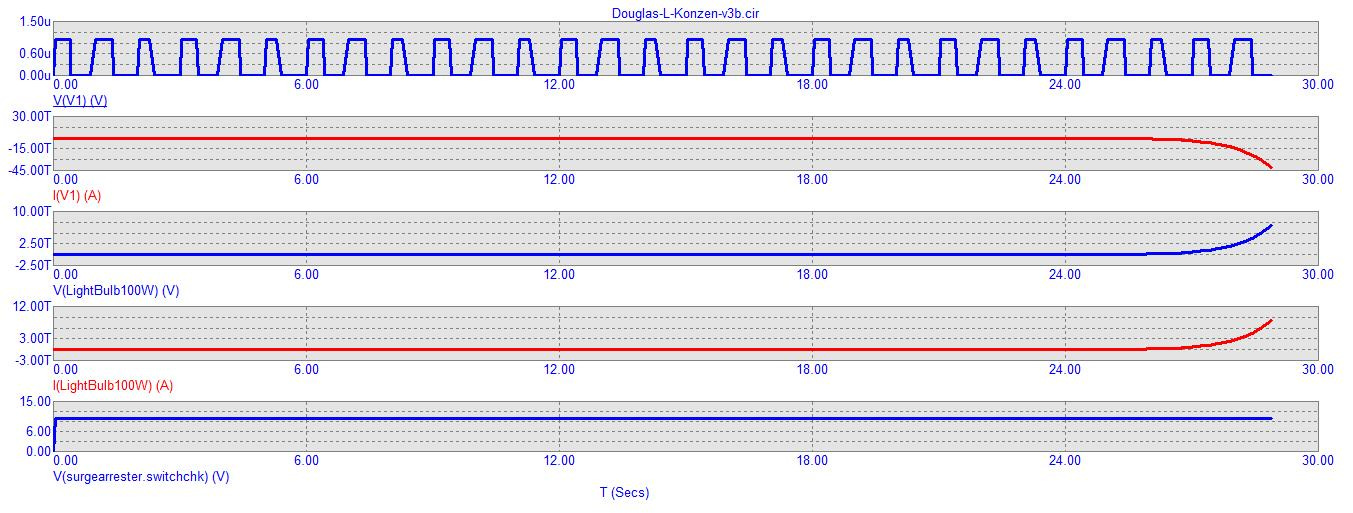
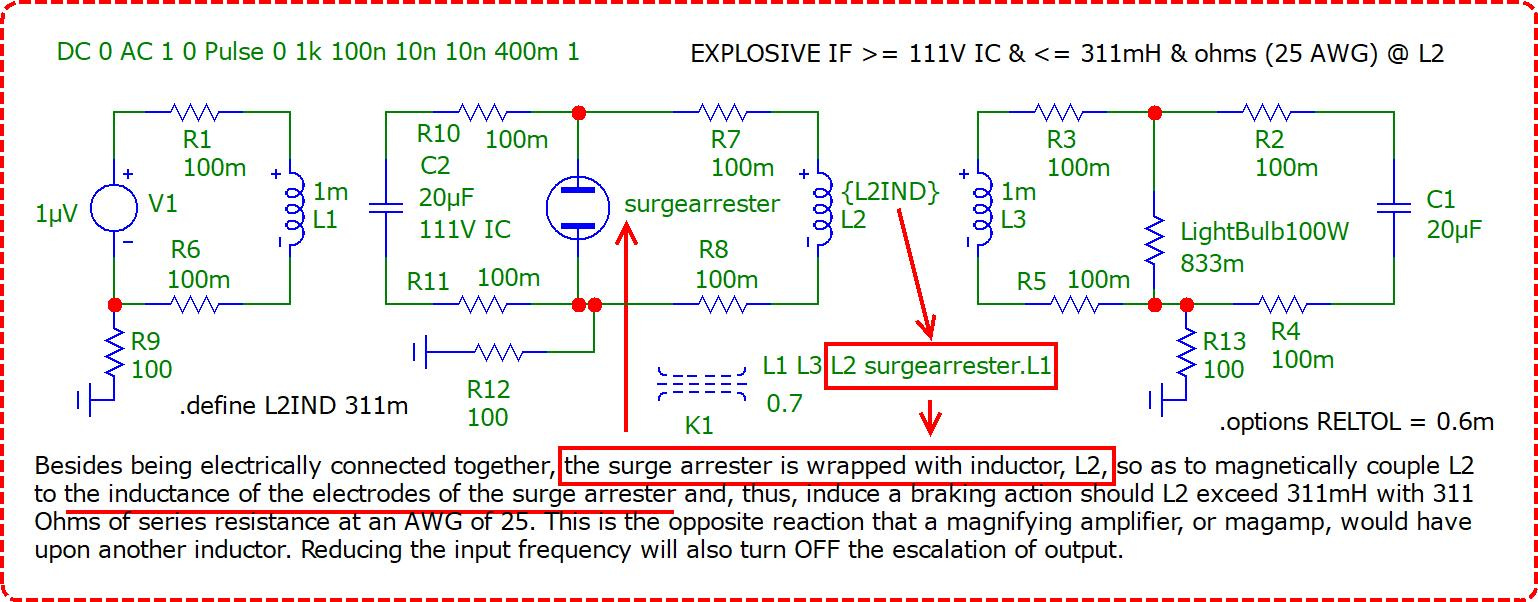
SURGE IS ALSO ‘ON’ even when there is no voltage source:
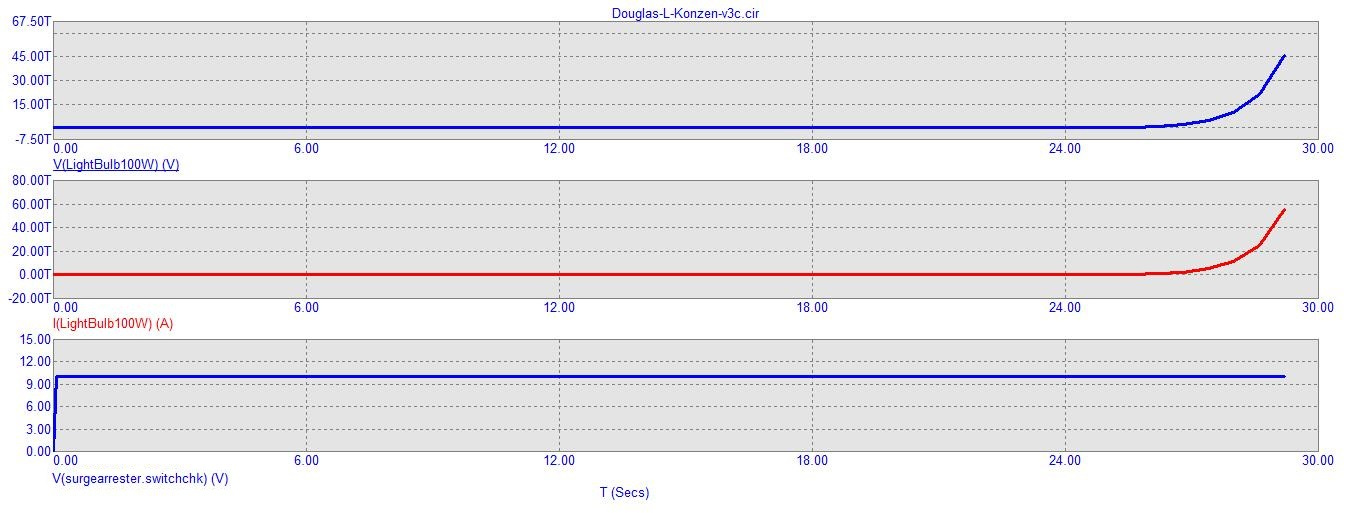
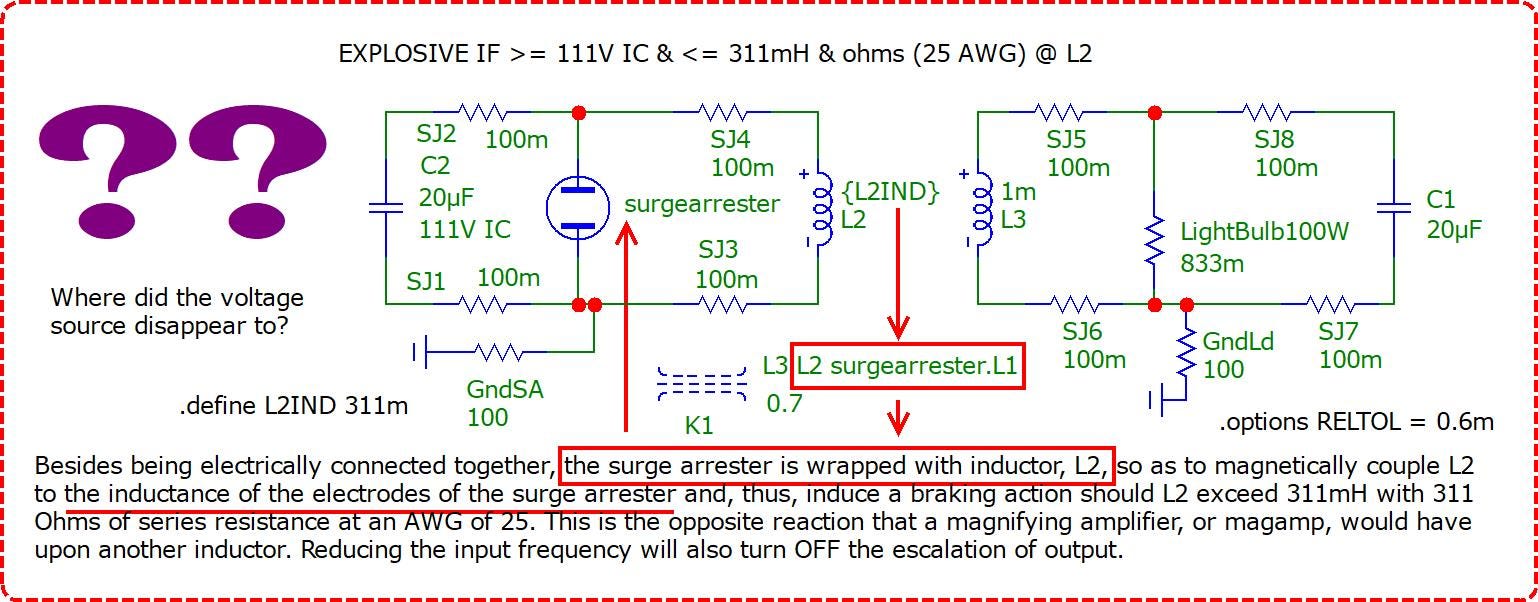

Granted, the ‘real world’ outside of the virtual realm of simulation theory won’t behave exactly the same as what these oscilloscope tracings suggest, nor is it guaranteed that a surge condition will materialize. Yet, electronic simulation theory strongly suggests that something akin to the performance of these schematics may be possible. ;-)
Download this exercise from my website or from my Google Docs account.
Comments
Nothing yet. Say the first thing.
Sign in to join the conversation.