
See Oxyllects #2 for the backstory. Oxyllects do not have any goal—it is as random as a thought.
It is like a first time trip to your dream city in the pre-Internet era. This is not about technology or art or food or the trek, or libraries. You never know where you find that technology park too. This is for everything life around us, in some way, where small is also big.
Think of the people who care for you, and the ones you care for, and think of all of them while reading this post—will something in this post resonate with them? If yes, share it with them.
Read it with zero expectations—it helps us stay calm and in the moment.
The Phone of the Wind was created in Japan by its creator, Itaru Sasaki. What a beautiful thought—read it at the source for a better experience.

“Three pink mailboxes demonstrate the sort of information to be learned, serving as spaces for humans to meet lichen, butterflies, and migratory birds, while recording the data from their encounters.” say Chris Woebken and Elliott P. Montgomery, running Transition Habitats. (A Vice story.)

(Pause.)
One argument is—to build memories with our families. Heather Greenwood Davis writes on how family travel helps us build lasting memories that can bond us forever. (Story by The Walrus)

(There could be an argument for solo travel and other models of traveling but the objective of Oxyllects is to strengthen an opinion even if there are arguments.)
People-centred and participatory policymaking, by UK GOV (link)
The product intelligence is in design, by Vinish Garg (link)
Information patterns and narrative structures in content (and content design), by Lauren Pope (link)
Team memory, organisational sharing and serendipity in distributed workplaces, by Emily Webber (link)
Misty experiences, plus designing for hope, by Kevin Richard (link)
Going down one long street
a structure rises into perspective
not becoming larger but becoming larger
to me. I am reminded
that someone always needs to be
in front of the tragedy
seeing it head-on
as it appears closer
as the street appears to move
but does not.
As life appeared to change but did not.
(Sallie Fullerton, source o bod)
I leant about Fontanesi in this immersive essay by WePresent—Fontanesi is a true optical illusionist. (Link)

Susan Cain on defining the boundaries—saying no.

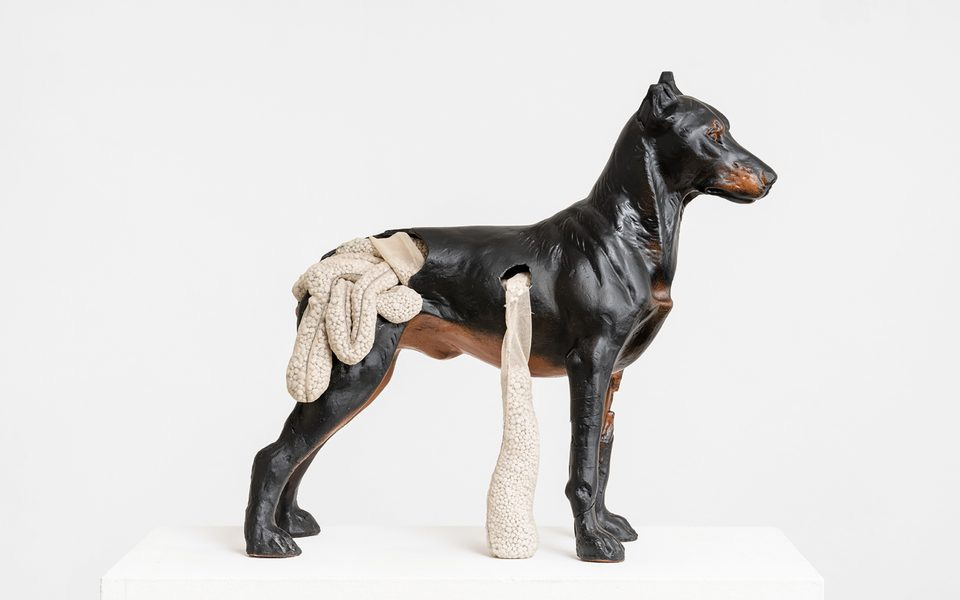
The Traumatic Surreal explores the development of surrealist sculptural traditions by women artists in German-speaking countries after World War II. See the exhibition details—the dates are 22 Nov 2024 to 16 March 2025.
As climate change disconnects products and geographies, CLIMAVORE follows how pastures, groves and vineyards are moving to new grounds.
CLIMAVORE seeks a language for the flavours of the climate crisis.
What does it mean for wine to taste like hot July or for cheese to smell like a flowerless prairie? If Champagne producers are anticipating climate collapse by buying land in the south of England to plant the vineyards of the future, will we celebrate in a decade or two with a glass of Kent?
Know about the Climavore mission.
H u m a n s
Ask culture: "I'll be in town this weekend for a business trip. Is it cool if I crash at your place?"
Guess culture: "Hey, great news! I'll be in town this weekend for a business trip!"
Tell culture: "I'll be in town this weekend for a business trip. I would like to stay at your place, since it would save me the cost of a hotel, plus I would enjoy seeing you and expect we’d have some fun. I'm looking for other options, though, and would rather stay elsewhere than inconvenience you."
Tell culture is cooperation with open source codes.
“All systems are fictions that we project onto our environment for our own instrumental purposes. Those purposes are determined by our mindset, by the way we see the world around us.” says Gordon Brander.
The way you interpret the above statement and make sense of its meaning is also influenced by your system—the system within and around you.
I hope you have enjoyed it.
Comments
Nothing yet. Say the first thing.
Sign in to join the conversation.