
Reframing Feelings and Emotions for Life and Leadership
By Vincent Barlow
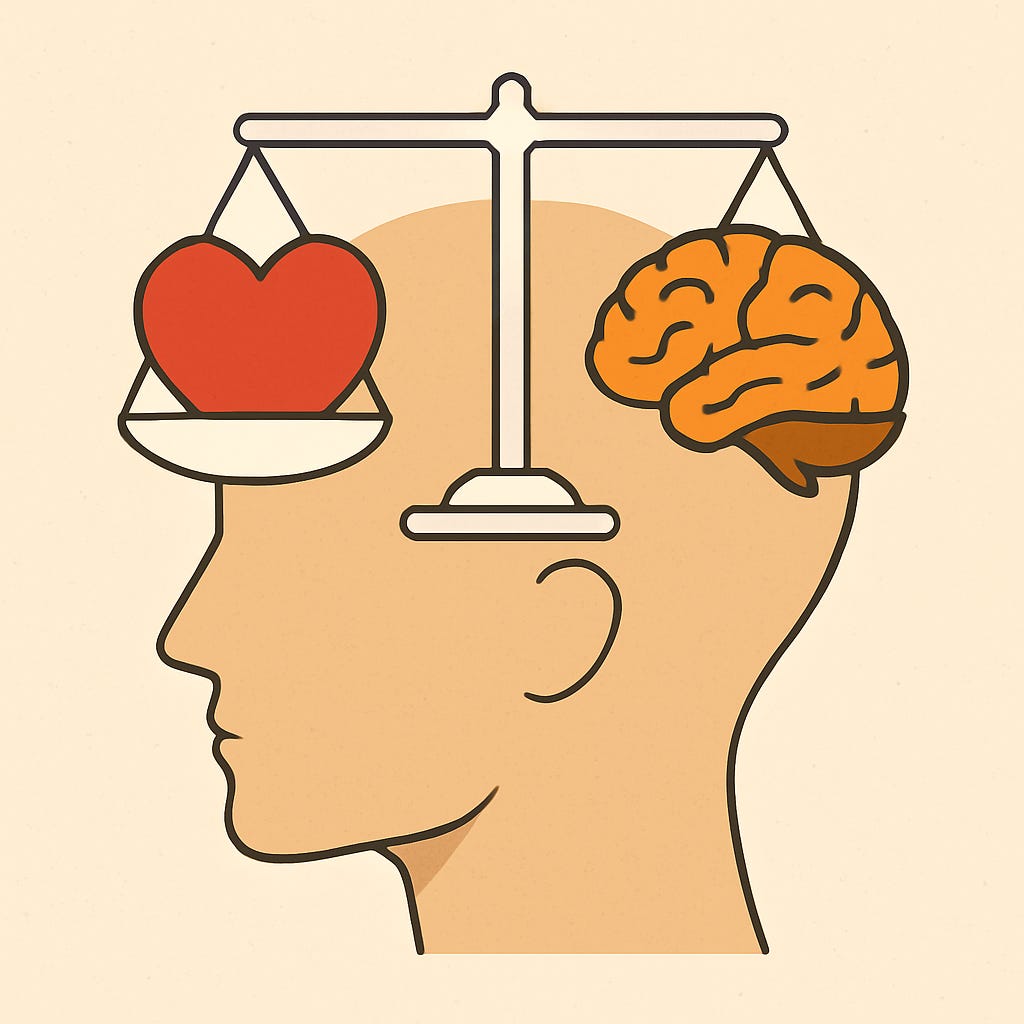
In our emotionally complex world, we often use the words feelings and emotions interchangeably. But what if we paused long enough to recognize that they are not the same thing? The Sensus–Passio Construct is a framework I am developing to help us make that critical distinction. Rooted in classical Latin and supported by insights from psychology, neuroscience, and everyday human experience, this construct differentiates sensus (what we feel inwardly) from passio (how we express or act on those feelings).
As I have studied this topic, I've observed that there is no universally agreed-upon distinction between feelings and emotions. Some thought leaders argue that feelings are what happen to us involuntarily, and emotions are how we choose to respond. Others reverse the terms, using emotions for what strikes us first and feelings for our considered awareness. What matters most is not the label, but the recognition that two different processes are at work: an inner experience and an outward expression. That is the essence of the Sensus–Passio Construct.
Sensus — From the Latin for "perception" or "feeling," sensus refers to the internal, subjective experience of awareness. These are the conscious feelings we name: hurt, joy, fear, hope, etc.
Passio — From the Latin for "suffering" or "emotion," passio refers to instinctive emotional expression or action. It includes the biological and social signals we emit: tears, shouting, laughter, withdrawal, etc.
It's also essential to affirm: feelings are not right or wrong; they simply are. They hit us. We experience them. What we do with those feelings—that is where our power, responsibility, and emotional intelligence lie. No one can truly say, "You made me feel that." While something external may trigger a response, how we act upon that feeling is always our choice.
Understanding the difference between sensus and passio empowers us to:
Become more emotionally intelligent.
Better regulate behavior.
Communicate with clarity and empathy.
Lead with groundedness and wisdom.
Rather than reacting impulsively, we learn to pause and reflect: What am I feeling (sensus)? before deciding How will I respond (passio)?
Freud didn’t offer a strict theory on the difference, but he emphasized that unconscious emotional states can lead to behavior outside of our control. His focus on affect aligns with passio as outward emotional energy. As he wrote in The Interpretation of Dreams (1900):
"The emotions are not amenable to repression in the same degree as the ideas to which they are attached."
Jung distinguished feeling as a function that assigns value and meaning—a rational judgment. In contrast, emotions were considered more primitive and instinctual. This matches sensus as reflective and passio as instinctive.
Modern neuroscience offers even stronger support. In The Feeling of What Happens, Damasio writes:
"Emotions play out in the theater of the body. Feelings play out in the theater of the mind." This distinction is central to the Sensus–Passio Construct. Emotions happen to us; feelings are our conscious interpretation of them.
Note: Some neuroscientists, including Damasio and Ekman, appear to reverse the terms compared to how I use them in this paper. They describe emotions as automatic and primary, and feelings as the subjective awareness that follows. This inconsistency is widespread in the literature. The key is not in agreeing on the vocabulary, but in acknowledging the dual nature of internal experience and outward expression.
Ekman’s research on universal emotions shows that expressions like anger, fear, and surprise are biologically hardwired (passio), while our labeling and understanding of those states (sensus) comes later.
Dr. Joe Dispenza, a prominent voice in modern brain science, teaches that lasting personal change involves becoming aware of and mastering our emotional responses. In Breaking the Habit of Being Yourself, he writes:
"When you think the same thoughts, make the same choices, demonstrate the same behaviors, create the same experiences, and produce the same emotions... your biology stays the same." Dispenza emphasizes that to change your life, you must interrupt your emotional patterns. This supports the Sensus–Passio idea that we can observe our inner state (sensus) and then choose a different emotional response (passio) to reshape our future.
In Parenting: Teaching children to recognize sensus before acting on passio leads to fewer outbursts and more self-regulation.
In Relationships: Naming what we feel (sensus) creates emotional safety and prevents miscommunication driven by uncontrolled emotional expression (passio).
In Leadership: Leaders who distinguish their internal state from their outward response make better decisions under pressure.
In Spiritual Life: Recognizing inner stirrings (sensus) helps align passion (passio) with purpose.
In Trauma Recovery: Healing often begins by restoring access to sensus before managing or transforming passio.
The Sensus–Passio Construct invites us to become more fully human: aware of what we feel, wise in how we express it. In a world desperate for clarity and connection, this simple distinction has the power to transform how we live, love, and lead.
What we call these two aspects may differ from scholar to scholar. Some say feelings are automatic and emotions are chosen. Others reverse that. The greater truth is that we must recognize both the experience and the expression, the stir and the story, the hit and the response.
No posts
Comments
Nothing yet. Say the first thing.
Sign in to join the conversation.