
As I mentioned last week in my article, to respond to the anxieties of our time, I try to improve my quality of life. This work involves applying myself to consume better and to choose goods or services based on criteria of quality, integrity and singularity.

When it comes to music, the Qobuz platform was a true epiphany for me. I belong to the generation that listened to the radio, that knew the cassette, then the CD, then the MP3, then the mainstream streaming platforms, one after another. The quality of the music I listen to (I mean the quality of resolution, meaning the precision of the sound, its nuances, its depth) kept degrading even as, typical paradoxe from our era, I listened to more and more tracks. I listen while driving (I drive a lot), I listen while working (I work a lot), and I eventually realized that music was becoming, for me, mere background noise, a polluting background noise at that.
At Qobuz, high definition goes up to 24 bit and 192 kHz, a resolution level close to what a sound engineer hears in the studio, well beyond CD quality (which is the minimum quality available there). The difference is truly audible, creating a richer sound world, less grating, fuller and more generous. But Qobuz’s advantages aren’t limited to this technical aspect (although it would be enough on its own to win me over). One of the platform’s great strengths, perhaps its greatest strength, is the editorial curation of its music library. You can feel a will not to simply follow the popularity of tracks but to help contemporary artists emerge. From this comes the pleasant feeling of being in good hands, like in the not-so-distant days when the press still had some sway, or even when you were going at the Fnac, where staff would preselect new releases you could sample on in-store listening stations, or discovering new names through Pitchfork in the 2000s, when a good review there was enough to launch a band. Not only is the music better quality, but you also come away from the experience reassured to find that discovery is still possible, that there are still plenty of great musicians out there.
Marc Zisman has been writing about music since the late 1980s, contributing over the years to Rock & Folk, Télérama, Guitare & Claviers and Jazz News, and interviewing hundreds of artists along the way, from Pierre Boulez to Kurt Cobain. He has led Qobuz's editorial team since the platform's founding in 2007, and today serves as its Music Director, overseeing the teams that shape the singularity and eclecticism of the platform across download, streaming and editorial content. He's also the author of a book on the history of funk. I asked him a few questions, both for this edition of my How to Playlist France column and to convince you to give his platform a try.
Qobuz has existed since 2007, in a sector dominated by platforms with resources on an entirely different scale. What do you think justifies choosing Qobuz over another service today?
Simply Qobuz’s singularity! That is, the distinguishing points that shape our DNA.
First, sound quality. No MP3 at Qobuz! At worst, CD quality (16 bit), but above all Hi-Res (high resolution in 24 bit), meaning the highest sound quality there is. The quality musicians record in the studio.
Then there’s our whole editorial side. In its app, Qobuz offers a real magazine, with articles, news, features, interviews, as well as tens of thousands of album reviews. All of it produced by a team of journalists who are experts across every musical genre.
And when I say every musical genre, I mean EVERY musical genre. We cover every style, not just the blockbusters. From metal to opera, free jazz to deep house, indie rock to chanson française, rap to country, everything gets covered and curated at Qobuz. All of this curation, whether for the magazine or for the playlists or for the weekly new-release selection, is done by humans, not algorithms. By humans, for humans, in a sense.
Finally, and this isn’t a small thing, choosing Qobuz means choosing to pay artists better. Where Spotify pays barely more than 2.80 euros per 1,000 streams, Qobuz pays over 18 euros.
People often tell me, if you don’t have 10,000 euros’ worth of equipment, you can’t tell the difference. That’s completely false! Just put on a good pair of headphones, start playing a track in MP3, and then suddenly switch to Hi-Res. The wow effect is guaranteed.
This magazine side is put together by real journalists who work in print, web, radio and so on. Some have even published books. In short, these are genuine specialists we chose for their expertise as well as their writing. That’s also why all our articles are signed with the writers’ own names, not just credited to Qobuz. As for subjects, they can be tied to current events, or they can look back and revisit an artist or a musical movement from the past.
That whole “human” dimension, in the selections, the playlists, and the editorial/magazine side, is the heart of Qobuz. It allows for unique musical discoveries rarely offered by competing platforms.
“Sexuality” by Sébastien Tellier. Produced by Guy-Man of Daft Punk, the perfect fusion of chanson française and French Touch.
“Extraterrestre” by Jul. Twenty sonic assaults in one go, it’s a bit exhausting, no?
“Ma plus belle histoire d’amour” by Barbara. Because it’s the most beautiful love song there is.
“Choke Enough” by Oklou (pronounced Okay Lou). Approved by Billie Eilish, the Poitiers-born Marylou Mayniel (her real name) has crafted a hyperpop marvel, almost drum-free, blending ethereal sensations with a futuristic dancefloor feel.
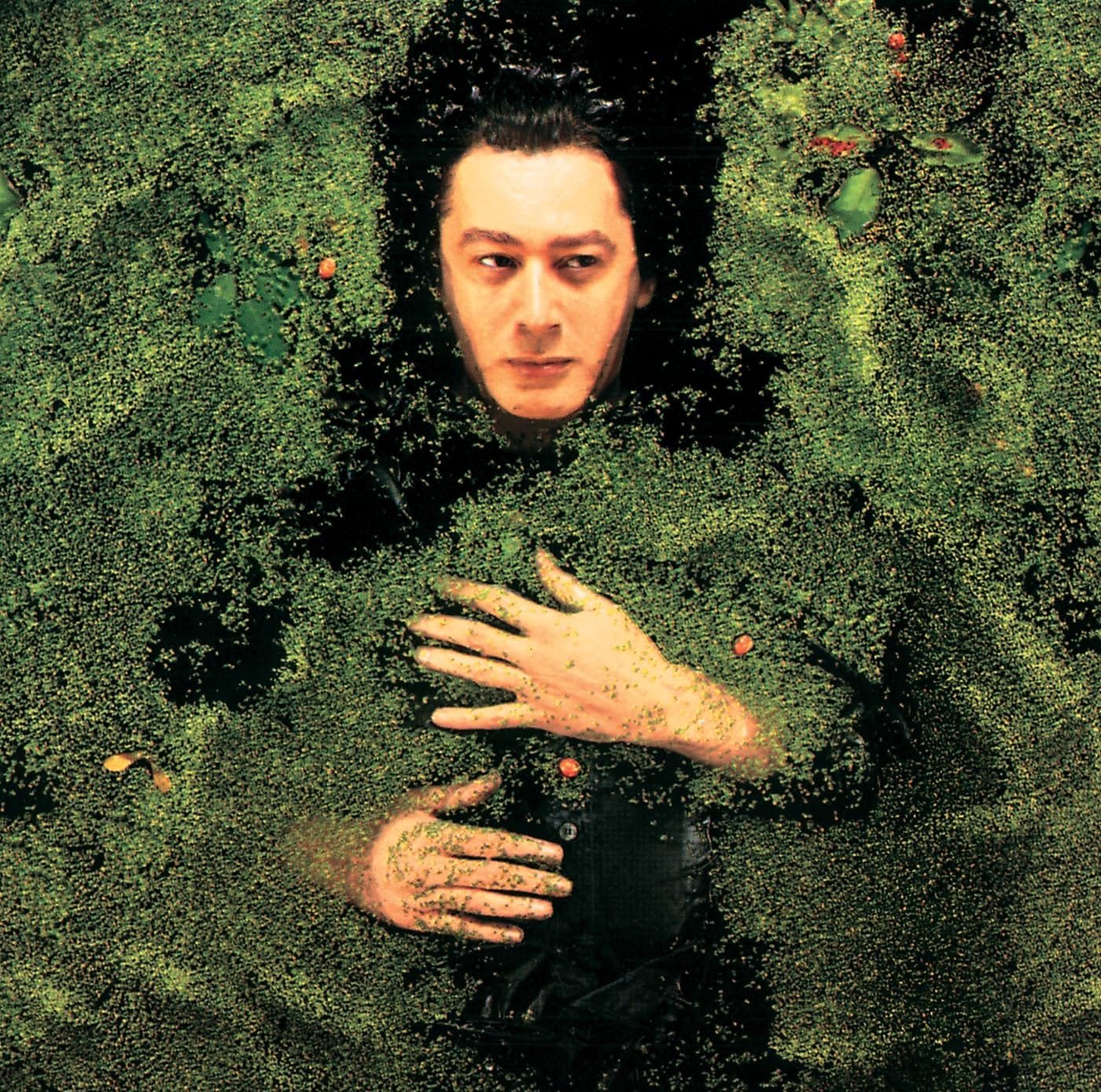
“Fantaisie Militaire” by Alain Bashung, whose cover is by photographer Laurent Seroussi.

The Philharmonie de Paris. The finest setting in which to place your ears.
Jazz à la Villette, August 28 to September 6. A jazz festival, but not only that.
“Papaoutai” by Stromae. For the way it juggles words, rhymes, sounds, onomatopoeia.
“Je t’aime moi non plus” by Serge Gainsbourg. He or she will understand it at 18, and one day. Maybe even before.
Chanson française, because it doesn’t resemble anything else.
No posts
Comments
Nothing yet. Say the first thing.
Sign in to join the conversation.