
Quick note: It’s great to be back writing about a documentary again - the first since Into Eternity, which closed out our atomic season of the film club back in January 😊
I seem to be circling around subjects cloaked in invisibility lately - people, places and concepts that are hidden from the popular view and can feel dauntingly unfathomable. Nuclear waste in Into Eternity, the Western Shoshone experience of nuclear colonialism in my own new film and today, the experience of non-verbal autistic children 50 years ago, almost all of whom were condemned to be locked away out of sight in harsh institutions. But not in this film.
Can’t wait to see what you think of this one…
“What if instead of teaching them to speak, we learned to keep quiet?”
I don’t know about you, but I feel like time’s been hurtling by lately (Easter was surely only two minutes ago yet somehow we’re almost at the mid-year solstice!) So it feels like a kind of relief to be (a little belatedly) bringing you this month’s autism film pick, which is an exercise in slowing down, getting out of our heads and tuning in to a different and, in some deep way, a more fundamental, rhythm.
It’s the oldest film I’m programming in the season and our first documentary too. And while on one level it’s the most simple of all the films we’ll be watching, it’s also perhaps a more challenging cinematic experience, in that it doesn’t spoon-feed the audience in any way whatsoever. To truly get the most out of this film you need to go all in, pay close attention and let yourself feel what it’s trying to convey as much, if not more than, trying to engage with it intellectually.
This is definitely one for you if you’re a fan of Cinéma Vérité and the French New Wave, but it’s also a fascinating slice of autism history and an important, albeit not well known, contribution to debates around neurotypical understanding of and response to autistic life that continue even today, decades after it was made.
And so with that preamble out the way, may I present to you our next movie selection in The Film Thread:
There’s no trailer available for this one (or at least not one I could find), but the entire film is available on YouTube with English subtitles and clicking anywhere within the timeline will instantly give you a feel for what the film is like:
Directed by self-taught filmmaker and Deligny collaborator Renaud Victor, Ce gamin, là took around 3 years to make from start to finish, with around 18 months of actual filming. Though it had a fairly lengthy list of producers, the bulk of the funding came from French New Wave icon Francois Truffaut’s production company Les Films du Carrosse – Truffaut having a long-standing relationship with Deligny stretching back to the late ‘50s when Deligny had helped him with the famous scene at the end of his seminal coming-of-age movie The 400 Blows.
Though there had been a couple of earlier documentaries about autism shown on French television, it’s widely cited as the first theatrical autism documentary in France, premiering at a film festival in Grenoble, where it won a special jury prize in the summer of 1975, before an art-house cinema release in Paris in 1976.
Whilst it did receive some positive reviews at the time, it was generally regarded more as a film of ideas and practice around Deligny’s autism work than as a piece of cinema in its own right. For decades, it remained relatively obscure, the first serious academic appraisal only appearing in 2016, forty years after its release, but it has happily begun to receive greater recognition in the past decade.

The Film Thread is the monthly online film club for discerning cinephiles, curated by documentary director & lifelong film-lover Vicki Lesley, (that’s me!)
Each season, we follow the thread of a single topic through multiple films, from different decades, genres & countries, favouring lesser-known gems over big-name blockbusters and curious questions over obvious answers.
It’s totally free and ALL are welcome. If you’re not already subscribed to my newsletter, why not sign up to get all my film club picks sent direct to your inbox?
Ce gamin, là takes place in a collection of hamlets around Monoblet, a small village in the remote, mountainous region of the Cévennes in the south of France. From the late ‘60s through to the 1990s, these hamlets collectively formed an experimental care ‘network’, set up by French educator and social worker Deligny, where he and a group of working class lay-volunteers lived and worked alongside non-verbal autistic children that the medical and psychiatric establishment had written off as uneducable psychotics - or, as Deligny states early in the film, simply “incurable, unbearable”.
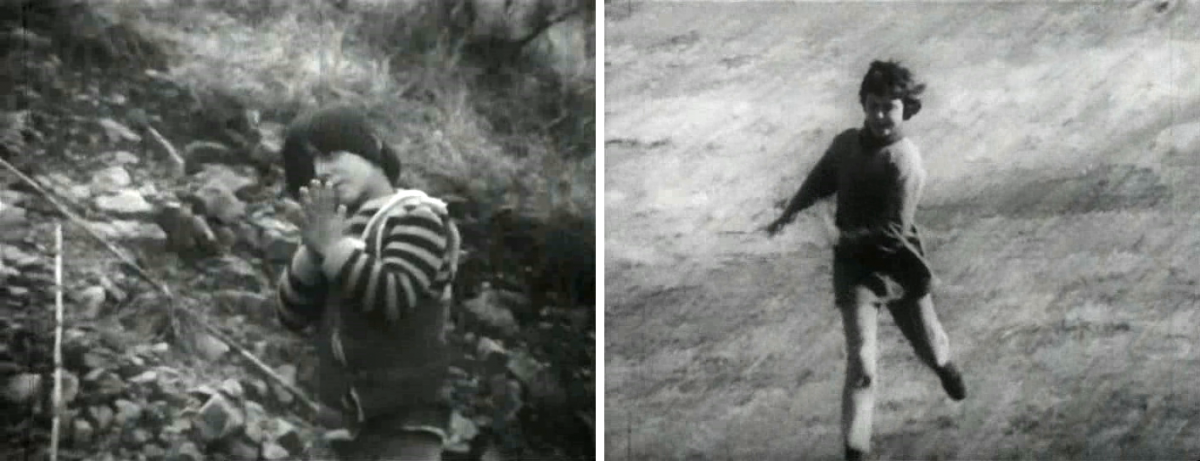
He called their scattered dwellings ‘rafts in the mountains’ – refuges from the unforgiving institutions where these children would otherwise have been destined to end up and to which the network was staunchly opposed. Deligny’s personal experience working in psychiatric asylums and juvenile detention centres during and after World War 2, had had a profound influence on him, as had seeing how people labelled ‘mentally ill’ in fact survived quite well without psychiatric care after leaving hospital in wartime.
The network at Monoblet was one in a series of what he called ‘tentatives’ - attempts at doing something radically different to provide an environment of care. In fact, Deligny completely rejected the idea that the children at Monoblet needed to be ‘cured’ at all. His project was different entirely: to make common cause with them and build an existence together, approaching them exactly where they were, not trying to force them to adapt to external social codes.
At the heart of his approach was a philosophy around what it meant to be entirely without language – as he believed all these children were - and thus how the adults could exist alongside them without trying to impose socio-linguistic expectations he believed were simply outside of their reality.
Most of what we see in the film is the expression of this philosophy, centred around the idea of simply observing and closely following behind the children, without judgement, as they moved unmediated around their physical space, then tracing their resulting “lines of wandering” (“lignes d’erre”) onto physical hand-drawn maps, many examples of which are shown in the film, delineating their trajectories, detours and repetitive circling on particular spots.
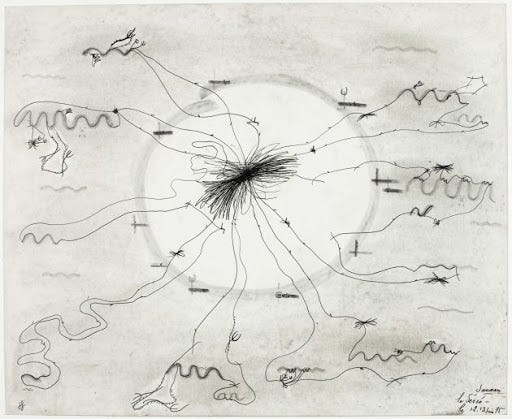
The purpose of these maps is to try to get at some more essential mode of being, without recourse to language and resisting any interpretation or imposition of meaning. They are acts of attention rather than diagnostic tools; an aesthetic intervention, not a therapeutic one.
“By dint of tracing the wander lines of every child there, we managed to see a little of that which doesn’t concern us. I mean to say, that which we struggle to see from our blind perspective of speech.”
At the same time, we see the adults conduct the business of daily living in a remote, rural location – chopping wood, baking bread, washing up, herding sheep, shovelling snow – allowing the children to watch or join in to whatever extent they do, but without any encouragement or direction that they should. Against the austere natural beauty of this mountainous countryside, with its rough stone walls, grazed pastures and clear-running springs, there’s a calming and rhythmic sense of ritual in these small acts, communally performed without any sense of hierarchy.
As the children don’t speak and the adults don’t try to interact with them through language either, the film is filled with long stretches of quiet, though not often total silence, the sounds of pared down rural life - rushing water, crackling fire, a ticking clock, clanging sheep bells - gently foregrounded instead.
These scenes are long, slow and meditative and, outside of a more explicit prologue introducing the backdrop of the traditional psychiatric context, there’s a strong anti-didactic feel through the film. This is only strengthened by snippets of an interview with Deligny himself, interspersed throughout, in which his oblique manner of speech resists easy comprehension.
Ce gamin, là is a compelling film on many different levels, both for those interested in autism and those interested in the theories and possibilities of observational filmmaking. And watching it in 2026 is a fascinating experience, as it feels simultaneously dated yet also remarkably forward-looking.
On the one hand, it’s clearly and deeply a product of its own time – a post-’68 counter-cultural France in which utopian radicals were fleeing the confines of bourgeois city life to go ‘back to the land’. Plus, to a modern viewer, the film stock looks pretty old and grainy, there’s no music or additional sound design and all the still photographs and maps are displayed in a very basic way.
And yet the very things that might superficially make the film seem old-fashioned, are themselves also signs of a startlingly modern sensibility.
In its subject matter, the film presents a snapshot of a crucial moment - and the beginnings of a fundamental debate - in the history of autism, which in the 1960s was still viewed chiefly as a catastrophic failure in parenting, especially on the part of so-called ‘refrigerator mothers’. The late 1960s/early 1970s period from which the film comes was some years away from the introduction of the broader conception of an autism spectrum and autism was still defined much more narrowly than today, referring only to those with very high support needs and often little or no spoken language.
In France, where psychoanalysis reigned (and still hasn’t completely relinquished its crown, even 50 years later), autism was firmly seen as a form of childhood psychosis and children were routinely removed from families, brutalised with treatments to try to force them into communicating, or worse, abandoned entirely, with no attempts made to educate them or include them in broader society at all.
In this cultural context, Deligny’s view – that autism wasn’t a disease in need of a cure, but simply a different way of existing in the world – was profoundly progressive, anticipating the ideas of the neurodiversity movement that emerged decades later, with an absolute commitment to the innate value of these children as human beings, irrespective of their high support needs.
His project wasn’t about forcing them to change to fit the world around them, but for the world around them (ie the adults living alongside them at the network) to adapt to their mode of being – in other words, to make what today we would call accommodations,. As he says in his interview in the film:
“We never really tried to understand what THEY had, what THEY were affected by. We began researching what we might be lacking, what might be missing in us to make us non-existent in their eyes”
But the film is also radical in its conception of itself as a film. It both is and isn’t a documentary. What does that even mean? Well, here’s Deligny, in his characteristically obtuse style, to clear that question up…
“It’s a documentary through and through. And for good reason: you can’t get Janmari1 to do anything other than what he does each day. You can’t make more of a documentary than that. And it looks like fiction because people have never seen anything like it. There’s nothing documentary or fictional about it, there’s what’s habitual, the habitual being real enough to surprise you…” 2
Deligny had been using cameras as a ‘pedagogic tool’ since the ‘50s, when he first started carrying out filmmaking activities with the young people under his care in juvenile institutions. In much the same way that he wanted to disrupt conventional modes of psychiatric care, he took a non-traditional approach to film, rejecting standard markers of cinematic authority, like formal scripts or a single auteur director, in favour of a radically collaborative, embodied exercise in exploring the world.
This approach had already resulted in an earlier experimental narrative film Le Moindre Geste (The Slightest Gesture), about two teenagers escaping from an asylum, co-directed by Deligny and released in 1971. But in Ce gamin, là, he wanted to go even further, with the camera itself actually becoming part of the care experiment, directly intervening in ‘tracing’ the young people’s movements.
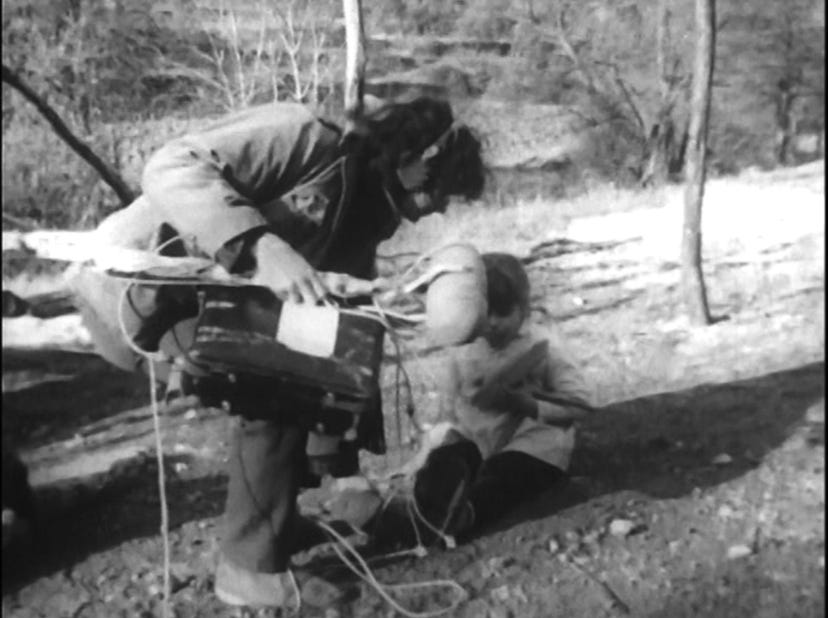
So when he was contacted by Renaud Victor, whose own half-brother was autistic and who’d been moved by Le Moindre Geste, he invited him to come to Monoblet and join the community whilst he worked out how best to undertake the filming process in a participatory manner, as one of the non-professional caring adults Deligny dubbed ‘les présences proches’ (near presences).
The results are a striking mixture of elements of Cinéma Vérité, and Direct Cinema, both then still quite innovative forms of observational documentary utilising lighter, less obtrusive modern filming equipment, the former deriving from France and involving the filmmaker more directly in the action, the latter dominant in the United States with the filmmaker a more passive bystander or onlooker to events.
But once again, there’s a feeling of disruption as the finished film doesn’t sit wholly comfortably in the category of observational film, with its stated intention of bringing the viewer as close as possible to the reality of the scenes they see unfolding.
There’s that extended and weirdly distancing prologue with its mixture of narration, on-screen text, still photos and drawings; there’s Deligny’s oblique interview; and ambiguous elements that call to mind some of the narrative techniques of the French New Wave, like fragmentary editing where sound and picture don’t quite seem to match up (though, as we’ll see, not all of these elements were added entirely by choice).
Throughout the film, it feels like Victor and Deligny are asking us to forego any direct sense of informational meaning and instead attend in a much more sensory way to the sounds and images - in some way perhaps, mirroring the material experience of the children being set before us.
When the network first arrived in Monoblet in the late ‘60s, they squatted in a series of apparently-abandoned houses, only to be repeatedly moved on when the owners showed up. But in 1973, the same year work began on Ce gamin, là , they received an unexpected windfall donation of 10 million old francs (around €120,000 or £100,000 in today’s money) allowing them to buy a small house of their own in one of the tiny hamlets around the village. And the source of this donation? It was none other than Pink Floyd - just then reaching peak fame with the release of The Dark Side of the Moon - and one member of the band in particular with a personal motivation for supporting the radical care work Deligny was engaged in.3 So in a very real sense, this film might never have made it into the world without prog rock!
Deligny and Victor originally conceived the film as a four-hour opus with no narration or other explanatory elements at all. Whilst this would certainly have immersively conveyed everyday life at the network, it would also, frankly, have given the film zero chance of commercial success. And so, as the largest financier, Truffaut insisted they cut it down to 90 minutes and add in both the interview with Deligny and the voiceover - very much against the filmmakers’ wishes. There’s a stark and uncomfortable irony of course in forcing spoken commentary onto a film fundamentally predicated around the inadequacy of verbal language. But Truffaut was probably right that no-one would have sat through that 4 hour version…
50 years on from Ce gamin, là, we now know that in many if not most cases, non-verbal autistic people can and do actually understand language, they just can’t produce it themselves. But Deligny’s interest in the image as an alternative mediating mode - and his ‘metacinematic’ approach to filming using the camera as a tool to ‘decontaminate the gaze’ and complicate simplistic (linguistic) ideas of subject and object - continues to inspire provocative creative responses nonetheless, such as the work of British multimedia artist Imogen Stidworthy, who travelled to Monoblet in 2013 to film with the remaining living members of the network, for her installation Balayer: A Map of Sweeping.4
Yes, I’m aware of the irony of that sub-heading given the ideas at the heart of this month’s film! But nonetheless, it throws up SO many fascinating areas of discussion and so as usual I’m dropping in a few reflection prompts here for you to ponder.
As ever, if you feel moved to share any of those ponderings, either in the comments or just with me privately over email, your thoughts are of course always very warmly received.
There’s a particular focus on the elemental – water, wind, earth, fire – in the film, with Janmari especially showing a real fascination with water. I’ve read suggestions that we might see this as a nod towards a kind of early, pre-linguistic state of humanity, which the children perhaps in a way still inhabit. Do you find that a helpful reading of the film?
Deligny and Victor’s emphasis on a sensorial viewing experience shares some similarities with more modern forms like ‘slow TV’, with its uninterrupted real-time footage of long journeys or natural phenomena, or soothing, process-driven YouTube videos like power-washing, de-cluttering, clock restoration or pottery (though these lack the radical, philosophical underpinnings of a film like Ce gamin, là). Were you able to ‘surrender’ to the lack of narrative and explication or did you find yourself yearning for more traditional markers, like voiceover or music, to help orient you in what you were watching? Did the process of watching this film make you more aware of the ways other films seek to modulate your viewing experience?
One of the central themes the film explores is a sense of uncertainty as carers - about what the children understand, what they feel, what they need. And about how to ‘read’ the response to a form of care that can look to the outside a lot like doing nothing. If you have autistic people in your life, does that uncertainty resonate with your experience and did you take anything away from the film that might inform your own relationships of care?
And that’s the end of our tour into the fascinating world of Fernand Deligny. I know this has been quite a long one, but I truly fell down a deep and mind-expanding rabbit hole after watching the film, wanting to devour as much as I could to help me make more sense of it. And then of course I wanted to share what I learned with you…
I think Deligny’s work brings out something really important about the nature of documentary filmmaking - how do we represent other lives, other voices outside of ourselves, without imposing our own “speech” on them? It’s something I’m grappling with myself as I develop my Nevada film, and in my preparation for the Life-Story Portraits I’m getting ready to launch for my first pilot clients later this year. And watching and learning about this documentary gave me a whole new fresh perspective to add into the pot.
If you enjoyed this deep dive, you can support my independent research with a regular paid subscription or by shouting me a one-off coffee. Or if you have a hidden story of your own you’d like to discuss preserving, just reply to this email.

Till we meet back in your inbox again, have a great weekend. And if you watch Ce gamin, là, do let me know!
love,
Vicki x
A 12 year old mute boy, the only child in the film who’s named directly
Deligny discusses the donation in this clip from a 1980 episode of the long running French arts radio programme Radioscopie. It’s in French and he does have rather an elliptical turn of phrase (!) so I had to get some help from my AI friend Claude to parse this, but essentially he seems to suggest that one of the members of the band (he doesn’t know which one – in fact he’d never heard of the band at all at that point!) had a ‘bad memory’, the exact nature of which he doesn’t specify but which we can probably assume was of some sort of psychiatric institution. And thus having somehow come to learn of the network’s attempt to chart a different path, he felt moved to support those efforts (via Switzerland according to Deligny, so there was perhaps some other more convoluted financial motivation at play too but the exact details are I guess lost to time now…).
Comments
Nothing yet. Say the first thing.
Sign in to join the conversation.