
You probably haven’t seen the headlines. A lot has been going on lately. But as an O-1 visa holder, I definitely did.
OnlyFans models and social media influencers are claiming half
of coveted US visas meant for movie stars
— New York Post
Influencers and OnlyFans models dominate US ‘extraordinary’ artist visas’
— Financial Times
OnlyFans stars and TikTok influencers are ‘dominating’ visas for their ‘extraordinary ability’
— Fox News
O-1B Work Visas For ‘Elite Artists’ Going To OnlyFans Models
— Newsweek
Influencers and OnlyFans models are increasingly requesting O-1 visas:
‘This is the American dream now’
— The Guardian
The John Lennon visa is now the OnlyFans visa
— The Spectator
These headlines suggest that hardworking, “worthy” immigrants who are trying to enter the United States “the right way” are waiting patiently while armies of OnlyFans models are rushing to the front of the line and “dominating” with their follower counts and feet pics.
Here’s what those headlines aren’t telling you:
It’s caused by the proposed $100,000 fee that broke the H-1B work visa system.
A disclaimer: I am not an immigration lawyer nor do I play one on the internet. This is based on my personal experience and research, not legal expertise. If you’re looking for visa application advice, please consult with an immigration attorney.
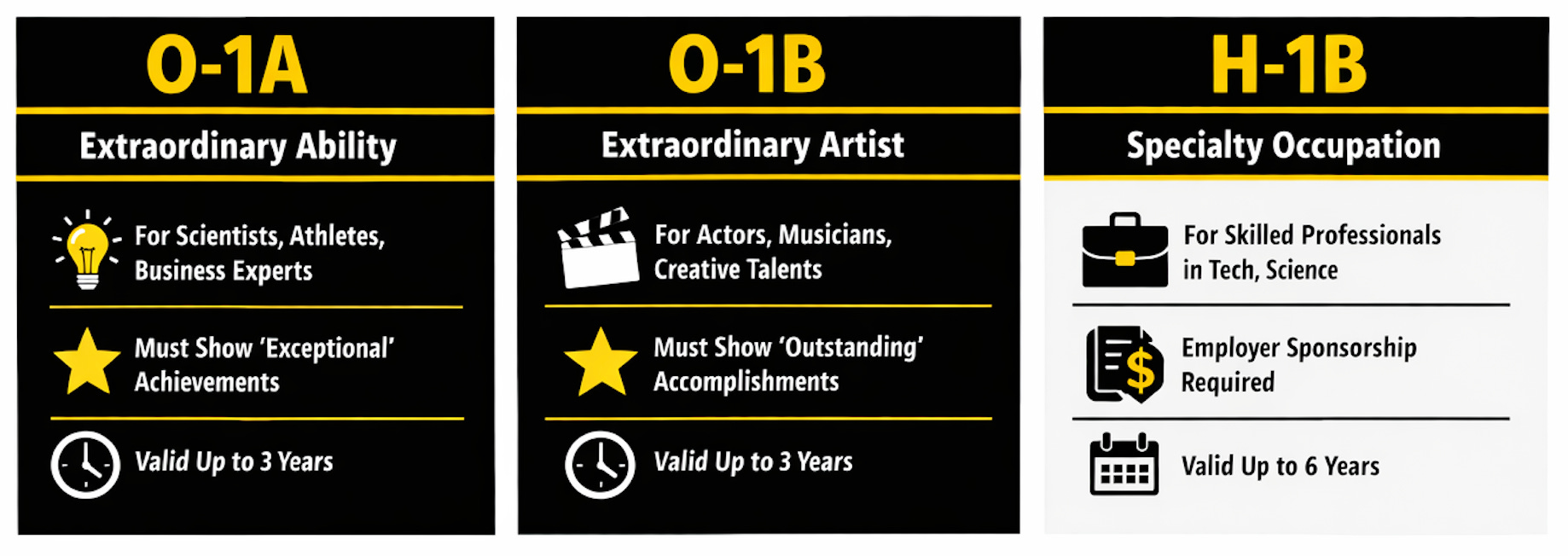
Federal law limits the H-1B lottery to 85,000 new visas per year. It’s a lottery system from which universities and many nonprofits are exempt. A job seeker’s chance of winning? Roughly 1 in 3. Imagine being an employer, spending months interviewing candidates, and then not being able to hire the person you want. Why would any employer want to take the risk?
And now, Trump’s administration has announced a $100,000 application fee for new H-1B applicants (used to be around $5,000) which is already "walloping rural health care" that rely on foreign doctors.
So skilled workers—overwhelmingly from India and other Asian countries—started looking for alternatives. Enter the O-1 visa: no annual cap, no lottery, roughly 90% approval rate. (See USCIS fact sheet)
The government filing fee for an O-1 is around $1,055, plus $2,805 for premium processing if you want an answer in 15 days instead of months. Add immigration lawyer fees, ranging from $5,000-$15,000, and you're looking at roughly $8,000-$20,000 total. Expensive, sure. But compared to a $100,000 H-1B fee with a lottery you'll probably lose? The O-1 starts to sound like a better bet.
O-1A visa issuances to Indians—for individuals with extraordinary ability in sciences, education, business, or athletics—grew from 487 in 2020 to 1,418 in 2023, making them the third-largest recipient group. Overall O-1A issuances more than doubled from 8,838 to 18,994 in the same period, according to the Times of India.
To put this number in perspective, USAFacts states that there are about 50.2 million immigrants in the United States as of 2024. Even with recent growth, O-1s remain a tiny slice of the broader immigration picture.
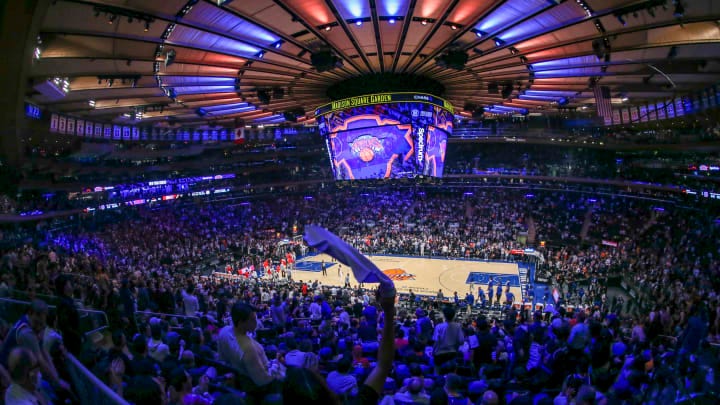
This “boom” accounts for 0.038% of the immigrant population. To math it poorly: if America's immigrant population were Madison Square Garden, the O-1 “boom” would be four people in the nosebleeds. STEM professionals, doctors, engineers, and employers who need them, all zig-zagging in an imperfect system.
But that’s not a headline that gets clicks.
So far the only OnlyFans-ish source is Canadian influencer Julia Ain, who was interviewed by The Times in London. Gotta say, I chuckled at this headline:
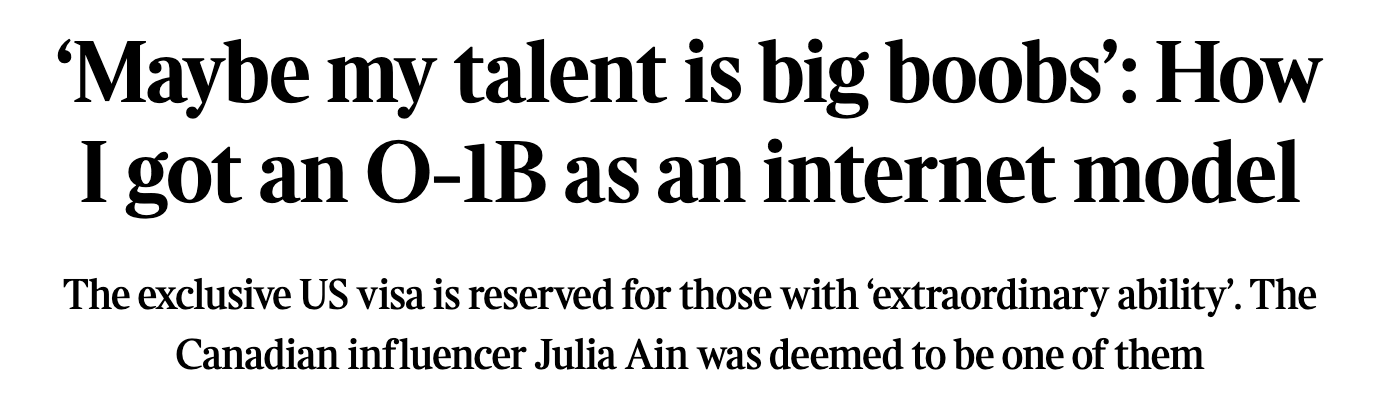
Except even she’s not on OnlyFans, she’s on Fanfix, a nudity-free subscription content creator platform. And you bet this feature is going right into her next visa petition.
If you actually read these articles, the headlines collapse fast. The evidence that OnlyFans models “dominating” O-1 visas consists entirely of quotes from a handful of immigration lawyers saying some of their clients are influencers—and that some of those influencers might also be on OnlyFans.
Not data. Not USCIS numbers. A few lawyers, a lot of speculation, and editors who knew what headline would get clicks.
One detail in The Guardian piece has been haunting me. Buried near the bottom, they quoted a “political analyst and writer” named Dominic Michael Tripi, who declared on X that the OnlyFans trend was evidence of “end-stage empire conditions.” I ran a basic OSINT check, the kind I learned during my training with The Atlantic Council’s Digital Forensic Research Lab. Tripi has no LinkedIn, no digital footprint, and is listed as CEO of “World Independent News,” a YouTube channel with 32 subscribers. A reverse image search of his profile photo returned nothing, a strong indicator the image is AI-generated.
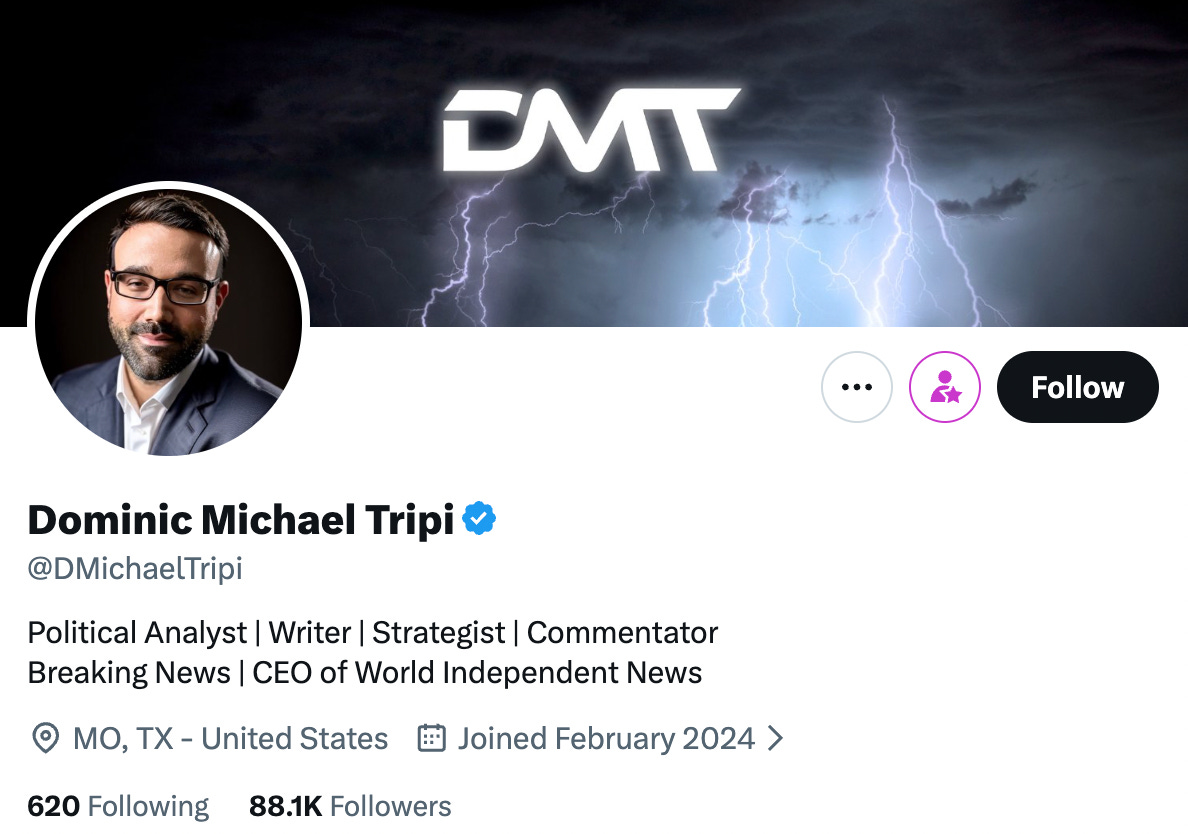
In other words: a bot, dressed up as a source.
I emailed the freelance journalist who wrote the piece, and I emailed The Guardian’s reader feedback inbox. I tried not to be accusatory. I noted that the interviews with real O-1 holders were valuable, and that I was happy to share my findings if their editorial team wanted to dig further.
It’s been weeks and I have not heard back from them. The bot is still in the article. It has since been cited by Fast Company, which used the same quote from the same “source” without checking either.
This is how misinformation travels, with a retweet and a deadline.
I should note here that reporters and writers generally don’t get to choose their headlines. Editors do. I myself had no say in the headlines for the two op-eds in The New York Times.
Never mind that these creators make up a tiny fraction of O-1 approvals. Never mind that the actual data shows the boom is driven by Indian tech workers seeking an alternative to the H1-B.
It’s perfectly reasonable to question what role digital influence plays in today’s creative world. Should likes and follower counts be the only measure of success? Probably not. They can be faked. They’re a lazy measure for artistic merit.
However, if you can create content that engages tens of thousands of people, who are we to say that isn’t art? The Beatles couldn’t have imagined YouTube. John Lennon, whose deportation case led to the O-1 visa’s creation, would probably have a TikTok today.
The question is not whether influencers deserve O-1 visas; the real question is—Why do we slut-shame content creators for navigating an imperfect system imperfectly… While ignoring the systemic failures that created this “boom” in the first place?
Sex work is work, but slut-shaming gets clicks.
The O-1 isn’t just for household names, though plenty of famous people have used it: Lupita Nyong'o, Adele, Priyanka Chopra, John Oliver, Justin Bieber, Trevor Noah, Hugh Jackman, David Beckham, and Lionel Messi have all lived and worked in the United States on O-1s.
But you don't need to be a celebrity. Startup founders, researchers with published papers, artists with gallery exhibitions, and content creators who drive sales and pay taxes can all qualify—if they can prove their work has been recognized by peers.
In the past few years, I’ve had friends and strangers (jokingly or not) tell me that instead of doing it “the hard way” with an O-1, I should get green card married, apply for asylum, or get pregnant.
I understand that most Americans know very little about the fiery hoops their government asks foreigners to jump through to earn a place in the States. Why should they know? Until their neighbors are detained by ICE or their spouses are arrested at a routine green card interview, how could most Americans know that what they offer is not an immigration system, but an immigration industry?
Will I be able to renew my O-1? I don’t know. Every byline, every interview, every bit of work that I think might be of “sustained national or international acclaim” goes into a Google Doc shared with my immigration lawyer.
But here’s the thing: at least I get to try. I’ve tried to help other immigrants navigate this process, including someone who was recently denied even the chance to apply because they’re from Iran, one of the 75 countries on the travel ban list.
The O-1 isn’t perfect. It’s expensive, it’s grueling, and it turns your entire professional life into a bureaucratic case file. But when the alternative is a lottery you can’t win or a $100,000 fee that prices you out entirely, people will take what they can get.
I haven’t stopped carrying my passport on my person since Trump came into office. And I’ve chosen not to cross the border while my visa is valid. My Mom has accepted that I wouldn’t return to Taiwan in the near future.
Earlier this month, a Meta scientist on a valid O-1 visa was denied stamping for re-entry after visiting family in China. He is now relocating from San Francisco to London.
In 2023, I myself had to remotely pack up a decade of my life in Shanghai over a WeChat video call, watching movers bubble wrap bits and pieces of my history because COVID restrictions prevented me from a proper farewell with my friends. It’s not an experience I’d like to repeat.
To see the O-1 visa misrepresented in the current political climate feels like having another barrier to entry. But it also feels like a very first world problem to have… All things considered.
As far as displacement goes, this is the luxury edition.
This will be a regular section where I recommend books, comedy specials, and Taiwan stuff I love. Got recommendations for me? Drop them in the comments!
If you want a good laugh about the absurdity of immigration, check out Haitian comedian TJ’s YouTube special Alien of Ordinary Ability. Follow him here on Substack at TJ or on Instagram.
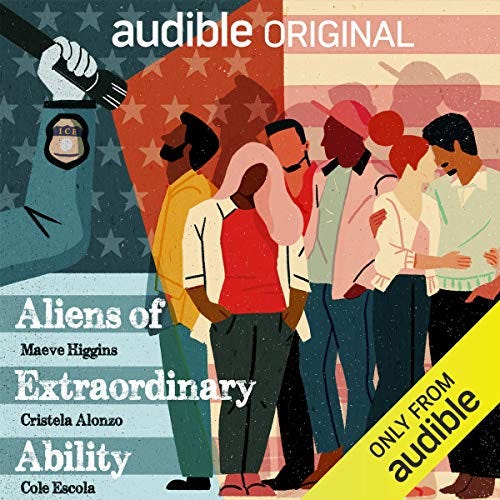
Another great comedy on the O-1 visa comes from comedian Maeve Higgins’ 2019 Audible Original, Aliens of Extraordinary Ability, which I listened to in 2022 while applying for my own O-1. There’s a wonderful WNYC interview where she discusses this project. She’s also written a wonderful op-ed in The New York Times: Upset by the Scenes on the Border? Look Closer to Home, published in July of 2019.
No posts
Comments
Nothing yet. Say the first thing.
Sign in to join the conversation.