
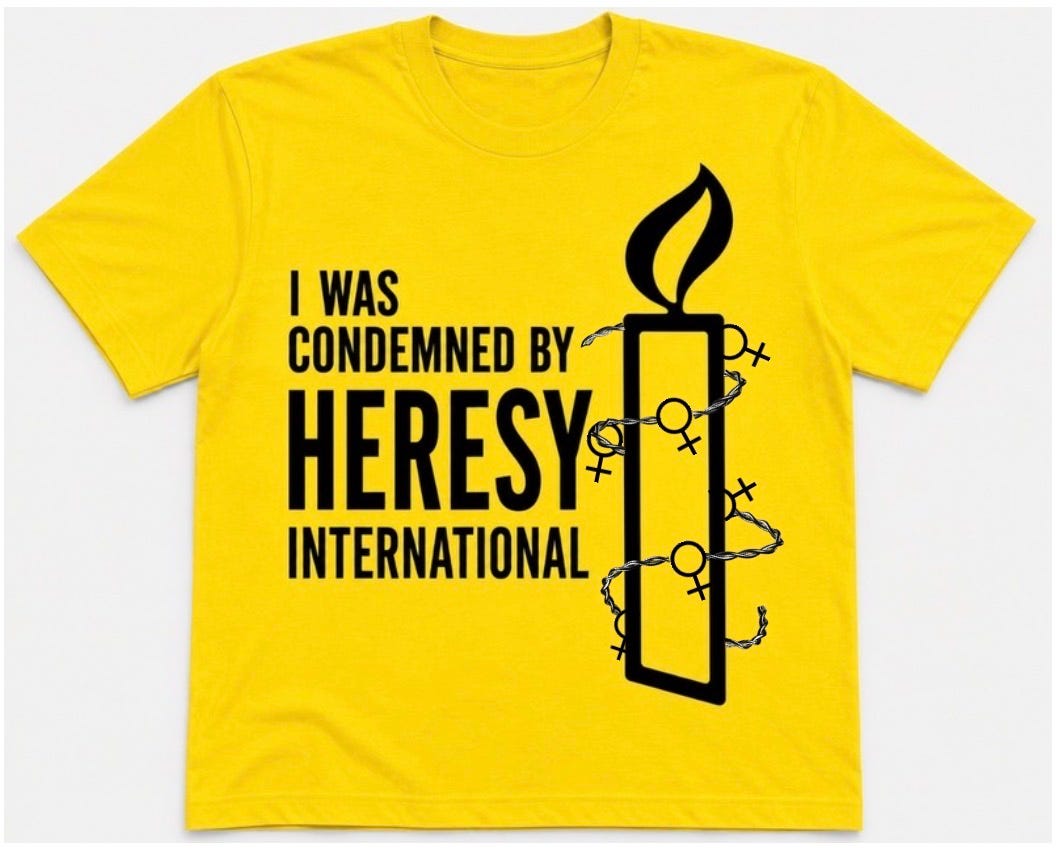
On its 50th anniversary Amnesty said that “the famous Amnesty International candle wrapped in barbed wire was inspired by the ancient Chinese proverb; ‘It is better to light a candle than to curse the darkness’.”
Amnesty has now released a report characterising 51 organisations, including Scot PAG, a group I founded in 2022, as part of an “anti-rights movement”.
The report has been removed, but Wings Over Scotland had archived it, so if you click on that link you can read it. Thanks, Rev.
The report describes an “organised backlash against trans people’s rights” and a “growing movement against the rights of women and LGBTI people in the UK”. It goes on to state that 51 organisations “all share broadly the same goals and appear to closely collaborate and endorse one another”. Later it says that “anti-rights actors seek a society in which women and men have fixed and distinct roles” and perceive the idea that gender is socially constructed as a threat.
I don’t recognise my group, or myself, in those claims.
The report points to organisations signing the same letters, attending the same events, speaking on one another’s platforms and, in some cases, having overlapping memberships. Those things certainly demonstrate contact but do not, by themselves, demonstrate that 51 organisations with very different purposes all share the same goals. Scot PAG is a professional group, Beira’s Place is a rape support service, Virago Women’s Workshop supports women, LGB Alliance campaigns on the rights of same sex attracted people, Sex Matters is a human rights charity, MBM are policy analysts and For Women Scotland campaigns for women’s rights in Scotland, a side impact of which is keeping the Supreme Court in gainful employment. If Amnesty is going to characterise us all as part of the same “anti-rights” movement, I think it should show its workings.
What Amnesty has done, in my opinion, is reduce itself to something almost Abigail-esque: pointing wildly at organisations working in a similar area, and declaring them part of an “anti-rights” movement without evidence proportionate to the seriousness of the allegation. Once named, the burden shifts to eg “Goodie Scot PAG” to prove she is not a heretic.
Amnesty’s little yellow candle symbolises courage in the face of injustice. I reckon it can multi-task and light the pyre beneath the reputations of the hundreds of people associated with the 51 organisations it has chosen to denounce.
Scot PAG a small group of Scottish clinicians, educationalists and social workers who are concerned about the quality of evidence supporting gender interventions and the consequences those interventions have for individuals, organisations and systems. They are a very smart group, who work hard and have been a source of wisdom for me personally. I am proud to know them.
We are another little group of people who have no time, money or funding, despite which, have met with MSPs and MPs, contributed to consultations, taken part in stakeholder groups and round-table discussions, and tried to be useful.
However - by being added to this list of, in my view, heretics, Amnesty have damaged our ability to do that.
Imagine you are one of our new cohort of MSPs. ScotPAG, or a member of Scot PAG, asks to meet you and, as you prepare for the meeting you discover the group has been characterised as part of an “anti-rights” movement by Amnesty UK.
What picture do you form in your mind? What assumptions are you likely to make before you’ve read a single word of our submission? Will you still meet with us? Will you be able to judge our suggestions on their merits?
Words like “anti-rights” carry enormous weight. They are not merely descriptions of policy disagreement. They suggest opposition to the rights and dignity of other people.
If a young person reads that the clinician treating them belongs to an “anti-rights” group, what effect does that have on the therapeutic relationship? If a colleague or employer reads it, does it influence your appraisal? Supposing we wanted to apply to the Wellcome Trust for a grant and they see this, does it matter? Labels attached by globally recognised organisations have a habit of travelling quite far. After all, we all know there is no smoke without fire beneath the pyre, and just look at who laid that kindling…
I’ve been called all sorts of things over the years. One of my favourites was a colleague who foolishly put in writing “If she is capable of that...” (referring to the time I didn’t flash the Scottish Parliament) “...she is capable of ANYTHING.” which I found rather buoying and have kept it in mind ever since. Her grumble was uncovered by an Subject Access Request and showed me that, if I wanted to, I could “go girl”, “reach for the stars”, “run the world” or whatever it is that women who believe in themselves are supposed to do.
This report, produced by one of the world’s best-known human rights organisations, doesn’t simply say it disagrees with us. It attributes to us goals and motivations that I simply do not recognise in Scot PAG’s or in my own work.
I have read those sentences several times and can only conclude that Abigail Amnesty did absolutely no reading about and has no insight into the organisations it accuses. Robust disagreement is part of professional life, but Amnesty UK did not approach ScotPAG for a chat. I don’t know if they spoke to the other 50 organisations or just went straight to moral classification.
If I make a public statement I am expected to be able to support it with evidence. If I publish research, I am expected to share my methodology. If I make a serious allegation, I am expected to justify it.
I don’t think Amnesty should be held to a lower standard.
‘It is better to light a candle than to curse the darkness’
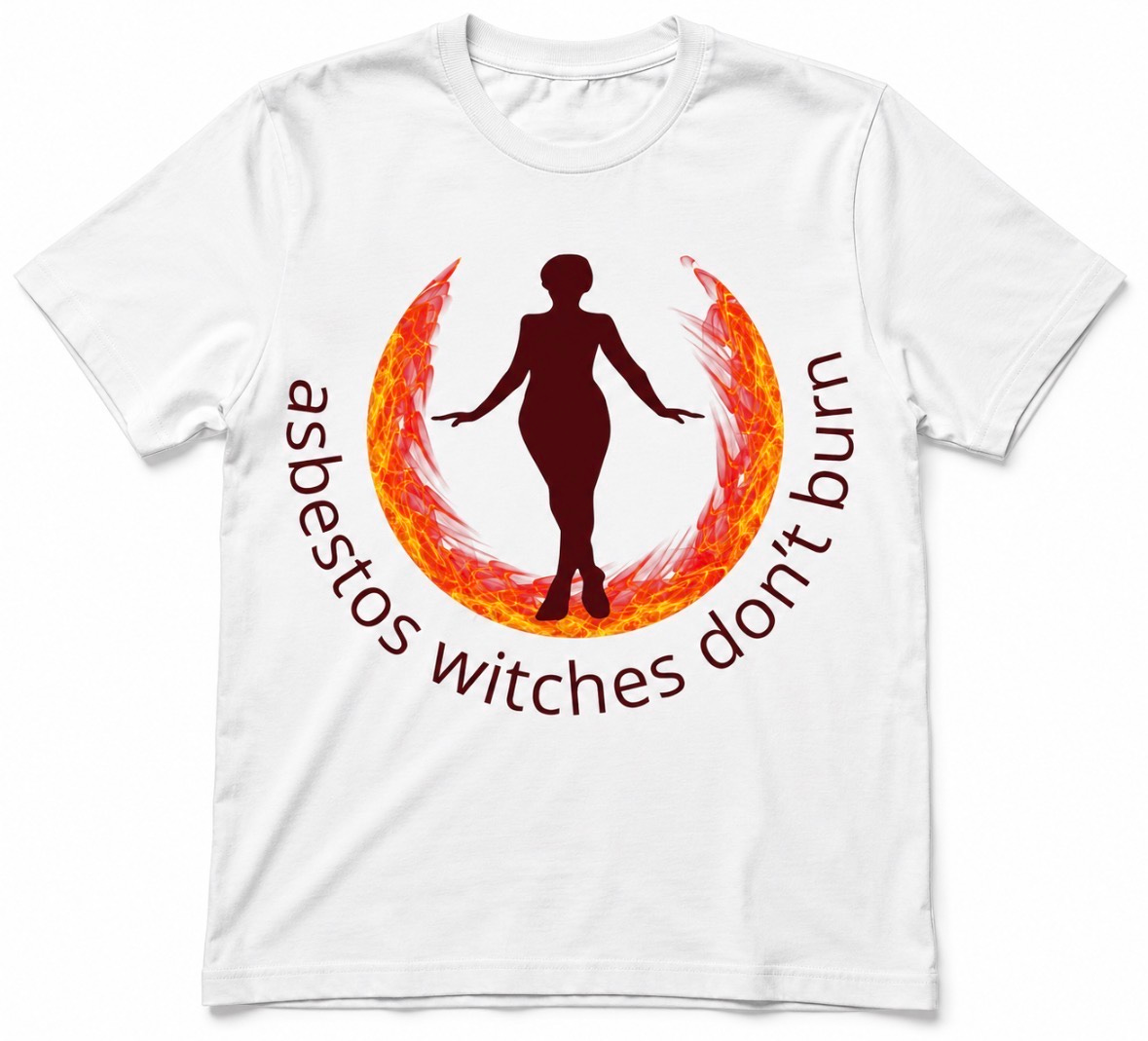
Happily, this isn’t the first time someone tried to burn this particular witch. Indeed, I’m beginning to believe that I’m made of asbestos.
Now, who wants that on a t-shirt?
(Scroll down for SAR info, you might need it)
I should make it clear that the above is my own view and not that of Scot PAG, who will be writing a joint letter to Amnesty. I’ll write a much less tactful version about myself.
I shall also submit a Subject Access Request to see what, if any, data they hold on me as an individual. If you are linked with any of the other organisations (the record so far is one woman who’s in three) then I suggest you do the same.
Draft SAR is below (caveat, I Am Not A Lawyer) and it should be sent by post to:
Data Protection Manager, 2nd Floor, Peter Benenson House, 1 Easton Street, London, WC1X 0DW
Or by email: dataprotection@amnesty.org.uk
[Your Name]
[Address]
[Email]
[Date]
Data Protection Officer
Amnesty International UK
Dear Sir or Madam,
Subject Access Request: Article 15 UK GDPR
I write to request access to my personal data under Article 15 UK GDPR.
Please provide a copy of all personal data held by Amnesty International UK relating to me, including personal data processed in connection with my role as [position] of [organisation].
This request includes, but is not limited to, personal data contained in emails, instant messaging platforms (including WhatsApp, Signal, Microsoft Teams and Slack where used for Amnesty business), meeting notes, reports, draft reports, internal correspondence, databases, and any other records in which I am identified or identifiable.
It also includes any opinions, assessments, characterisations or evaluations relating to me, including any personal data processed in connection with the report A Growing Threat – the Anti-Rights Movement in the UK.
In accordance with Article 15 UK GDPR, please also provide:
- the purposes for which my personal data are processed;
- the categories of personal data concerned;
- the recipients or categories of recipients to whom my personal data have been disclosed;
- where my personal data were not obtained directly from me, the source of those data; and
- the envisaged retention period, where possible.
If you require any further information to identify my records, please let me know as soon as possible.
I look forward to your response within the statutory time limit.
Yours faithfully,
[Name]
Comments
Nothing yet. Say the first thing.
Sign in to join the conversation.