
Welcome to week one of The Hidden Rules. Every Wednesday over the next eight weeks, we unpack one rule from our Capital for Nature report. One rule, one myth flipped, one voice from the people who move money into nature.
The myth: every serious venture raises VC.
It is the default script. Build something, make a deck, pitch investors, raise a round. Founders absorb it from tech media, pitch competitions and accelerator culture long before anyone asks whether it actually fits their business.
For most early-stage nature ventures, it does not.
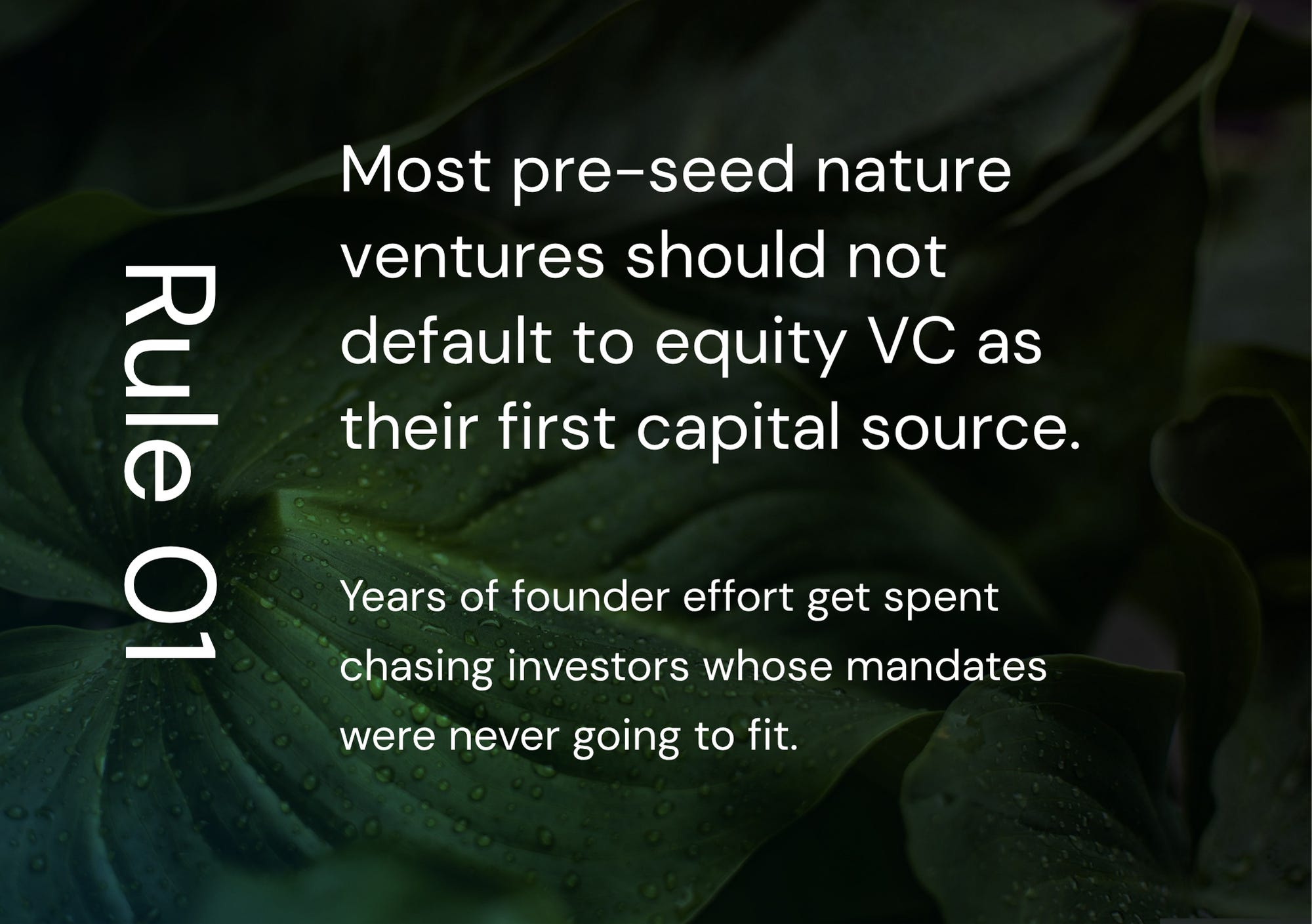
Here is the uncomfortable math behind it. A typical VC fund needs to return its capital within 5 to 7 years, and it needs a small number of investments to return the whole fund. That means every portfolio company is expected to have a shot at a 10x outcome.
Nature does not work on that clock. Ecosystems restore in decades. Supply chains for indigenous crops take years to build. Trust with land stewards cannot be growth hacked.
Kevin Webb of Superorganism, one of the few VCs globally who invests exclusively in biodiversity, was refreshingly blunt in our interview:
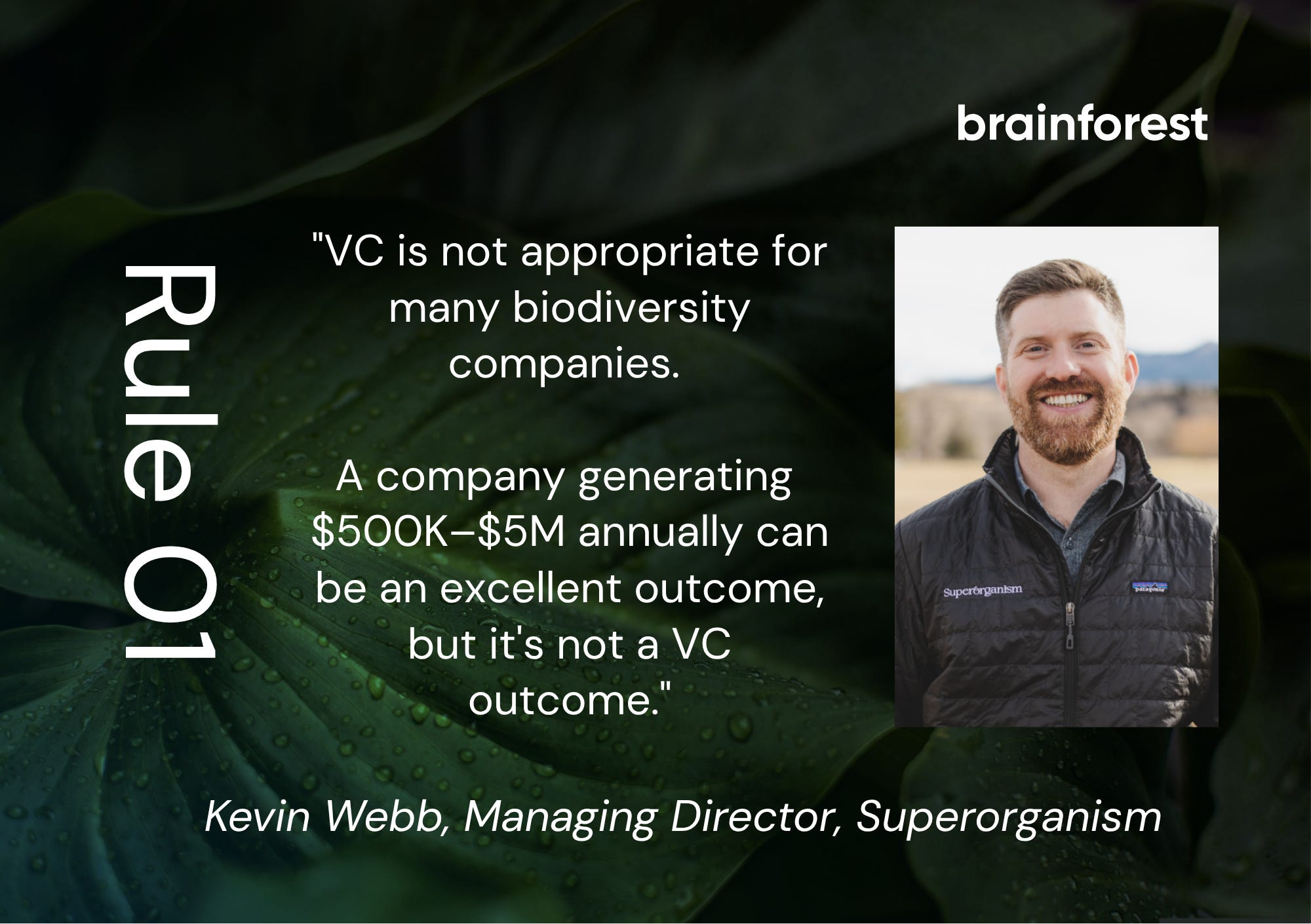
Read that again. $500K to $5M in annual revenue.
A business most of us would call a success story.
And in the logic of venture capital: not an outcome.
That is not a flaw in the founder. It is a mismatch in the instrument.
Kevin goes one step further: he flags business models that depend primarily on biodiversity credit markets as a “major red flag.” Not because the markets will not mature, but because building a company on revenue that does not reliably exist yet is a fragile foundation.
So why do founders keep chasing VC anyway?
Because nobody tells them the rules. Alina Klarner of Impact Shakers sees the pattern all the time: “Too many founders force themselves into the VC model when their business doesn’t fit the return expectations, timelines, or team structure they want.”
Her prescription is what she calls instrumental literacy. Understand what each type of capital actually demands from you. Know what alternatives exist. Then choose deliberately. And if you do choose VC, commit to what comes with it: short timelines, high growth pressure, commercial focus. Ideally, with a business model where commercial scale and impact move together, not against each other.
The cost of skipping this homework is measured in years. Years of founder effort spent chasing investors whose mandates were never going to fit. And there is a second-order effect that hurts the whole sector: when nature ventures keep failing to raise VC, the market concludes that impact and returns cannot go hand in hand. Alina calls it a death spiral. The real problem was never the ventures. It was the instrument mismatch.
And one more perspective that rarely makes it into European funding conversations. Valentin Rudloff of CTCN reminded us that in developing countries, early-stage VC is “far less accessible” in the first place. Grants are a “necessary bridge” at the earliest stages, and for some founders, organic growth or debt is simply the better path.
What to do with this
If you are a founder: map your business model honestly against VC return expectations before you pursue equity. Look seriously at venture debt, revenue-based financing and grant-to-equity sequencing. And if your model genuinely is VC-shaped, own it, and design your cap table and milestones for it from day one.
If you allocate capital, this rule is your to-do list. The sector needs instruments for excellent ventures that will never be 10x stories. Longer horizon funds, patient equity, milestone-based convertibles, revenue-based structures.
One contrarian note to keep us all honest, from David Albertani: “Nature finance is still finance; the fundamentals remain true. Projects need proper teams, CFOs, authorization, and reporting regardless of positive environmental impact.” Choosing the right instrument does not replace building a solid business. It makes building one possible.
The full report, with all 8 rules, 3 gates and playbooks for both sides of the table, is here: https://brainforest.global/reports#capital-for-nature
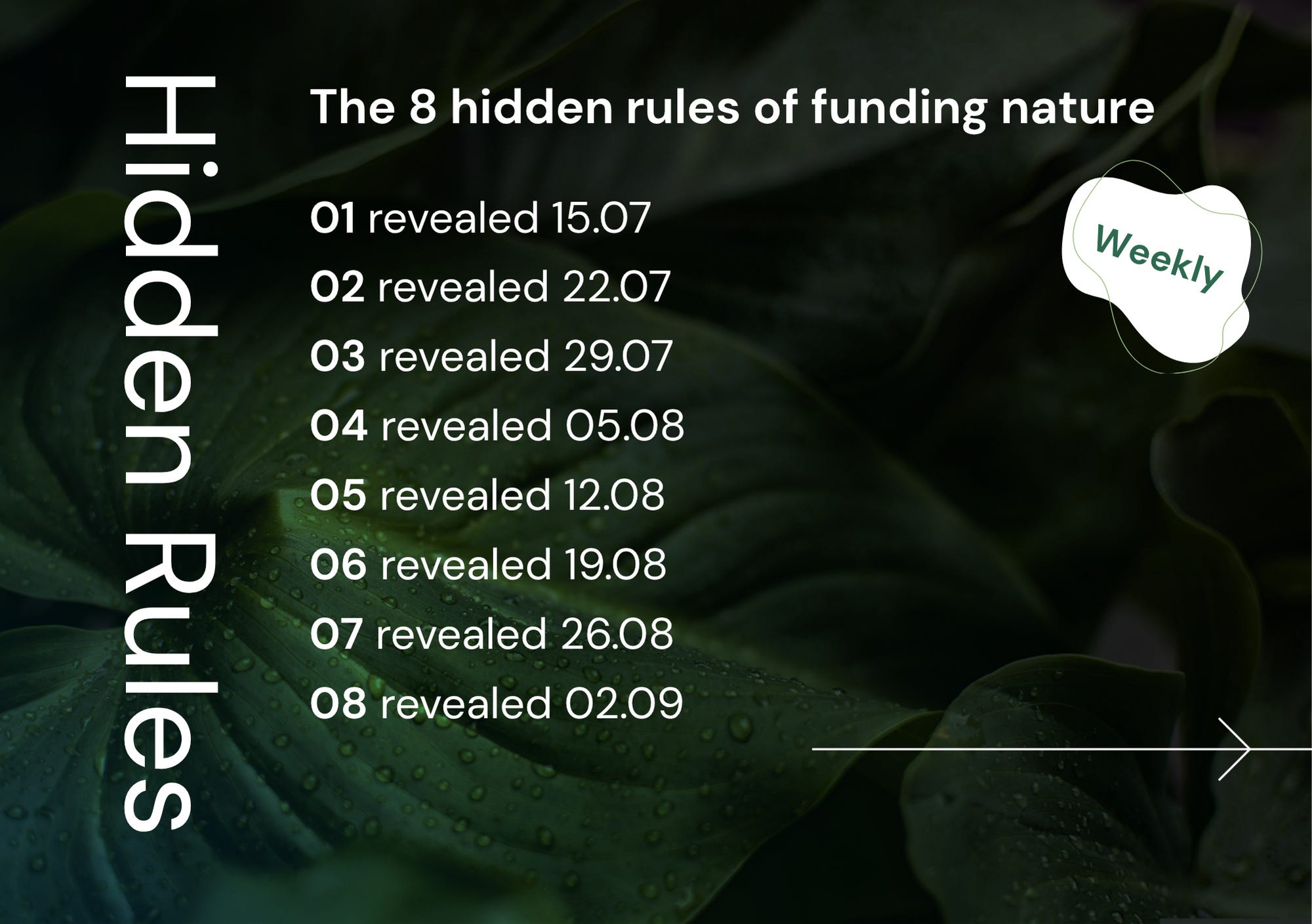
Next Wednesday, rule 02: the safety net that quietly holds up nature finance, and why it is disappearing.
Comments
Nothing yet. Say the first thing.
Sign in to join the conversation.