
Welcome back to Slowly Does It, where we’re diving deep into the murky waters of so called ‘sustainable’ fashion. But first! some Big Fashion related news stories well worth your attention.
Adidas teamed up with Mexican brand Someone Somewhere to work with 150 Indigenous women artisans to embroider Mexico’s $200 World Cup jerseys. The collaboration was called out by a prominent Mexican content creator who went viral for claiming the women were being grossly underpaid. Reporters at the NY Times visited the women workers who unanimously pushed backed against the narrative surrounding them. A pertinent reminder that fashion justice organising should always be led by garment workers and frontline communities.
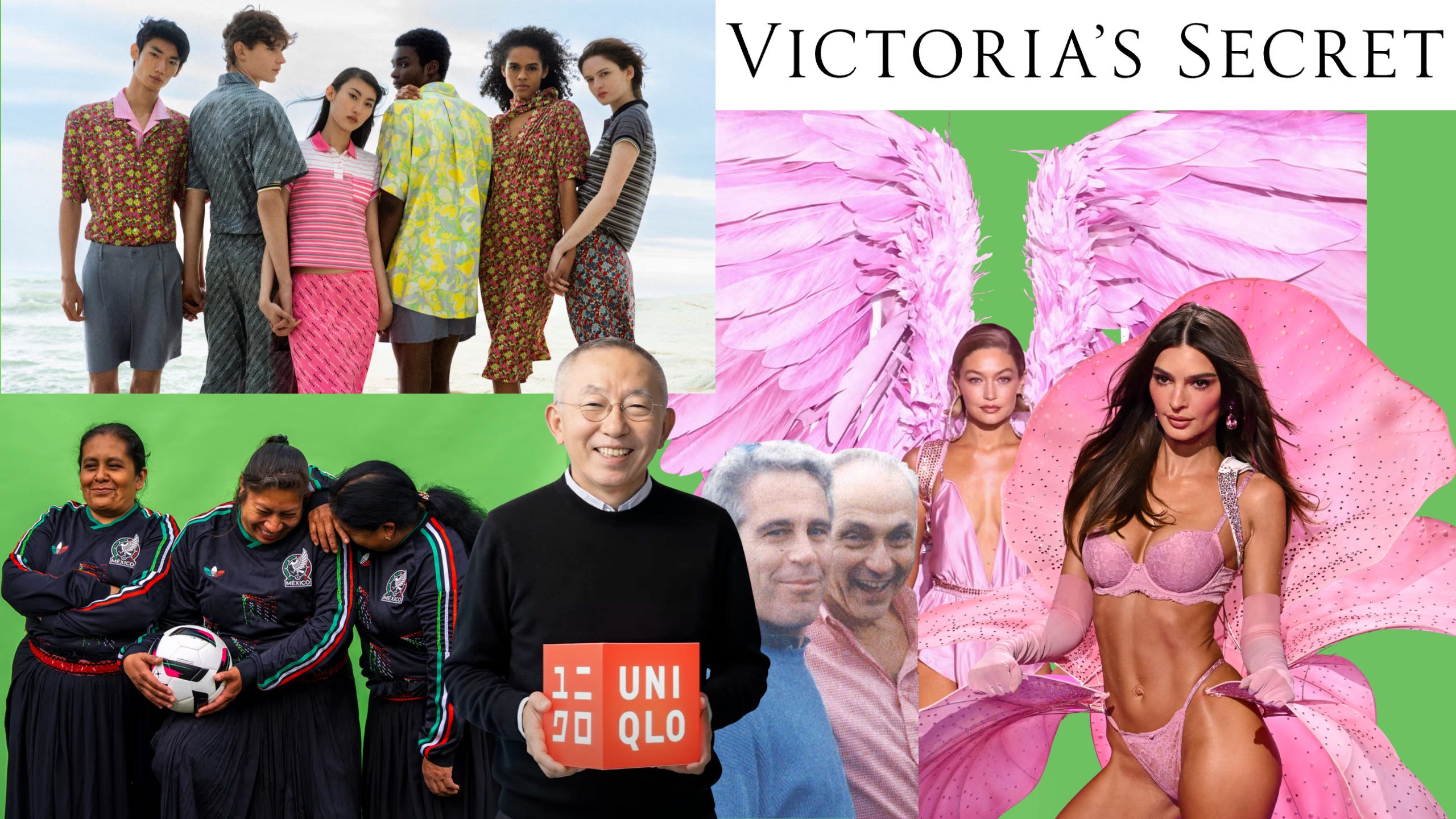
Out of all the major fashion brands, Victoria’s Secret had the closest ties Jeffrey Epstein. But never mind that! Their sales have risen by 15% to $1.56 billion, partly thanks to their so called ‘rebrand’ - which I’ve understood to mean a slightly more diverse display of models on their catwalk with the same extractive supply chains. Despite their ‘commitment to all women’, Victoria’s Secret recently refused to meet with a union representing women workers at one of its Sri Lankan suppliers, just months after one of their garment workers, Paramasivam Pushpalatha, was denied permission to leave her shift early, delaying treatment that might have saved her life. Huge solidarity with the union members and labour rights groups pressuring Victoria’s Secret.
Tadashi Yanai is the CEO of Uniqlo’s parent company Fast Retailing and the richest person in Japan so best believe I poured over this recent profile about him and his multi-coloured empire. In the piece, Uniqlo’s senior VP of global research says “we’re actually pretty slow”, but Yanai disclosed at a public facing talk in 2024 that Uniqlo produces 1.3 billion items annually. Uniqlo haven’t confirmed this, nor have they signed Speak Volumes, but it’s one of the Big Fashion stats that lives rent free in my head. A Pretty Slow brand this is not.
As you may have read in a previous newsletter, climate campaigners have been pressuring Lululemon to switch to renewable energy, creating a fake brand called mumumelon to show them how it’s done. Well, it seems the pressure is working and Lululemon is now planning to switch to 100% renewable electricity in China by 2030. Targeted action works and this is absolutely a step forward.
The Or Foundation released their microfibre report, revealing that Big Fashion’s excessive output is driving a staggering amount of pollution for the local community in Ghana’s capital city, with airborne levels up to 20 times higher than in other global cities. When it comes to microplastics, airborne levels rise to 100 times global baselines and aquatic concentrations soar to 200 times higher.
Gwyneth ‘Gwynicide’ Paltrow has partnered with a ‘luxury’ real estate development in the settler colony of Israel, just miles from where Palestinians are being killed and displaced. Put her, Leonardo DiCraprio and all the billionaires on the same private jet to Mars, please and thank you.

Just a month after Allbirds announced it would be pivoting from merino wool sneakers to AI, Shein confirmed it had acquired ‘sustainable’ US brand Everlane for a reported $100 million dollars.
Both of these stories caused widespread outrage, with many folks expressing disappointment at Everlane as this was the place they relied on to buy better basics, perhaps not knowing that Everlane sold a majority stake to an LVMH backed private equity firm called L Catterton in 2020.
Founder Michael Preysman stepped down in 2021 to focus on electrolyte drinks (because of course) and is using this viral moment to launch another sustainable fashion brand called Still Radical. The name is giving co-optation, but I digress…
Comments
Nothing yet. Say the first thing.
Sign in to join the conversation.