
⛔️Cosmic Disclosure Warning⛔️
True strength of will does not need explanation, it is its own sovereign.
When I was young I would ask my father why he loved westerns so much… he said because back then we were self-sovereigns.

At the time I did not know what that meant…
After today’s article you will too…
You don’t need permission, to want something… you don’t need to explain yourself or build consensus.
You also don’t need to be rude…
Read on to learn the nuances of being your own sovereign.
We will dive deep into the indoctrination of the “slave mentally” a vital first step is reclaiming our sovereignty.
So let us begin today’s adventure…
When was the last time you did something and felt the urge to explain yourself before anyone even asked?
Not because you'd done something wrong. Just... a decision.
A boundary.
A "no." And before the silence even had a chance to sit there, you were already filling it… justifying, softening, building a case for why you were allowed to want what you wanted.
Stop and notice how strange that is.
You weren't asked to defend yourself. You volunteered.
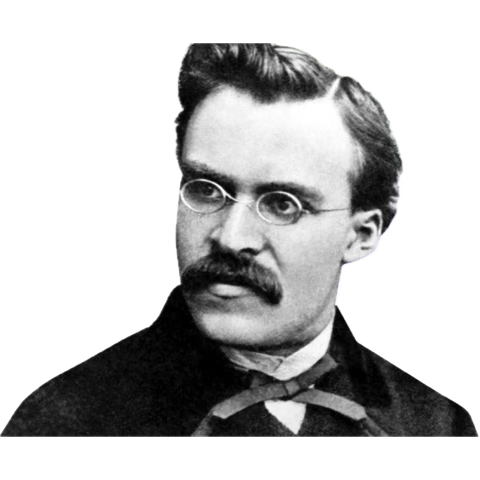
Friedrich Nietzsche looked at this exact habit (this reflex to explain, to justify, to seek permission before we've even been challenged) and he saw something most people never examine: it isn't politeness.

It's a confession. It says, quietly, I don't fully believe I'm allowed to want this. And he believed that single habit, repeated daily, over a lifetime, is one of the surest ways a person hollows out whatever power they might have had.
Let's start with where this habit comes from, because it isn't random, and it isn't a personal weakness. It's trained.
From the earliest age, most of us are taught that wanting something isn't enough… we need a reason, and the reason needs to satisfy someone else.
Why do you want that job? Justify it.
Why don't you want children? Justify it.
Why did you say no? Justify it.
Slowly, without ever naming it, we absorb a rule that Nietzsche described as the foundation of what he called "slave morality"… the belief that your desires only become legitimate once someone else has approved them.
Notice the trade hidden inside that rule. The moment you accept that your wants require outside permission, you've quietly handed the deciding vote in your own life to whoever's in the room. You can still want things. You just can't want them unilaterally anymore. Every desire now needs a co-signer.
Here's what this habit actually costs you, and I want to walk through it carefully, because the cost is easy to miss until it's enormous.
First: explaining yourself trains other people to expect a vote.
Every time you justify a decision that didn't require justifying, you teach the people around you something: that your choices are negotiable, pending their approval. It seems harmless the first time. But do it for years, and you've built an entire relationship (sometimes an entire life) where nothing you want is fully yours until it's been cleared by committee. Nietzsche would say you didn't just lose authority in that moment. You donated it, piece by piece, to anyone patient enough to keep asking "but why?"
Second: the need to explain quietly convinces you your desires are suspicious.
This one is sneakier. It's not just about what other people think of your choices… it's about what the constant explaining does to you. If you have to build a legal case every time you want something, some part of you starts to believe wanting things requires a defense. That desire, left unexplained, might be dangerous, or selfish, or wrong. Nietzsche saw this as one of the great quiet tragedies of the "good" person… someone who has been trained so thoroughly to distrust their own wanting that they can no longer act without first proving they're allowed to.
Third, and this is the one that really costs people their power: explanation invites negotiation, and negotiation invites erosion.
The moment you offer a reason, you've opened a door. And anyone can walk through an open door. Give someone your reasoning, and you've given them a foothold to argue with your reasoning… to poke holes in it, to counter it, to slowly talk you out of the very thing you'd already decided. Nietzsche noticed that truly powerful decisions rarely come wrapped in a defense. They arrive as fact.
Not because the person making them is arrogant, but because they understand something simple: a decision that requires everyone's approval to survive was never really a decision. It was a proposal.

So what's the alternative? Not rudeness. Not coldness. Nietzsche wasn't advocating for cruelty toward the people who ask you to explain yourself… he was advocating for a completely different relationship with your own authority.
He described the kind of person who has escaped this pattern as someone who creates their own values rather than borrowing permission for them… someone who acts, in his words, the way a "sovereign individual" acts: not defiant, not performing power for an audience, simply certain.
Their "no" doesn't come with a paragraph attached, because it doesn't need one.
Their "yes" isn't a request for validation dressed up as an announcement. It's just what's happening next.
Here's the distinction that matters most: this isn't about refusing to ever give a reason. Reasons, shared freely, generously, when you choose to share them, are a gift. The problem was never explanation itself. The problem is explanation offered as a toll… paid nervously, before anyone has even asked for it, because some part of you doesn't believe you're allowed to act without buying permission first.
Notice, next time you catch yourself over-explaining a simple decision, what you're actually revealing.
You're not clarifying.
You're apologizing for existing on your own terms.

I want to be precise about something, because this idea gets twisted easily: none of this means walking through life ignoring the people who love you, or refusing to ever account for your choices to the people your choices actually affect.
Nietzsche wasn't describing isolation. He was describing sovereignty… the difference between explaining because you choose to include someone, and explaining because you need their approval to feel entitled to your own life.
One of those is connection. The other is a quiet, ongoing surrender.
So here's what I'd ask you to notice this week.
Watch for the moment right after you make a decision (big or small) when the urge rises to immediately defend it. And just for a moment, don't. Let the silence sit there. Let the decision stand on its own, unexplained, the way a fact stands on its own.
It will feel unnatural.
It might even feel a little frightening, the first few times… like you've left yourself exposed.
But what you're actually doing is something most people never risk: you're letting your life be a statement instead of a request.
Power, Nietzsche understood, was never loud. It never needed to convince the room. The people who actually hold it simply stopped asking whether they were allowed to.
The only real question left is whether you're willing to stop asking too.
With love always🙏🏼🕊️,
Nemo⚓️
The Nobody

Comments
Nothing yet. Say the first thing.
Sign in to join the conversation.